L129 - Squint CEO Devin Bhushan Shares His Journey Creating an AR Platform for Manufacturers
Devin Bhushan built Squint, an AR platform for manufacturers that works on regular smartphones without QR codes or LiDAR. His customers saw 86% faster training times, and he's now scaling with help from Menlo Ventures and Sequoia's accelerator program.
Chapters
He's CEO of Squint, and I had the pleasure of meeting Devin last year during an event in San Francisco, and he showed me a live demo of what he was working on. I was so much impressed because it was relevant to the architecture and construction industry that I told him, you got to be on my show. So, and after that, a lot of things happened. He did fundraising, he got selected in Sequoia. So there's so many things I wanted to chat, and thanks for being on the show, Devin.
Yeah, thanks for having me. This is super cool. We've been talking about it now for like 6 months, so I'm excited.
Yeah, so Devin, can you talk a bit about your background, like where you grew up, what you studied, and what led to this idea?
Yeah, um, let's see. So my background, uh, I, I currently live in San Jose, California. And unlike a lot of people around here, I actually grew up here. So grew up in the Bay Area, and then I went off to the University of Illinois and studied computer science there. And I came right back because, you know, I've— being in tech, there's a lot of cool attractions here. And so I worked at Yahoo for a number of years, working on a kind of variety of products across like their enterprise product suite as well as Yahoo Sports. I don't know if you can tell behind me, I'm like very passionate about sports. And so working on Yahoo Sports was kind of a dream job for me. And so I did that for a while, you know, got a chance to build products with a lot of scale. So products with, you know, millions, hundreds of millions of users. And then from there went to a company called Splunk. Um, Splunk, if anyone's not familiar, is, uh, kind of a really large data analytics platform that lets you pump in any sort of data, and then you can kind of build dashboards and key metrics and kind of analyze through that afterwards. Um, and my charter at Splunk was really, uh, to figure out a way to surface Splunk data and insights to different audiences. So the typical Splunk user is very technical, and so we started building on this idea. This was very early days of ARKit, um, from Apple, um, early like 2018. And so we started building on some of the, the early AR capabilities, and we, we thought, what if, you know, what, what if there was a world where you can kind of point your phone at a server rack and bring some of the data to life? So what if I could point my phone at that as a, you know, a technician in a data center and see what the uptime, what the RAM was and things like that. And so we, we basically built a tool that transported data from Splunk into this camera view and overlaid it on top of machinery. And that was really awesome. And so I worked on that for about 3 and a half years or so. Got really, really deep into AR, really started to understand the inner workings of it. And that was kind of when it struck me that, you know, we are at the cusp as a society of actually being able to use AR in kind of an everyday sense, and it can actually bring a lot of value. And so that's kind of what kicked off Squint, and I can dive into that if you'd like. But we, I I— that, that's kind of the general background and what kind of led me here.
Got it. And like, I'm also from U of I, so, uh, like, it's, it's great to see like—
yeah, go Illini!
Go Illini! So you, you, you had the experience of working with the AI technologies firsthand for a while, and I was— I'm curious, like, what made you select manufacturing or construction industry? Why not other retailer? Like, what, what was your research? And like, if you can walk us through that process.
Yeah, yeah. So maybe let's take a step back really quickly. I'll talk a little bit about what the original plan for Squint was and then how we started with manufacturing. Construction is actually something we, we haven't really done yet, but we're, you know, exploring the space. And so obviously we'd love your insights there. But taking a step back, the larger vision for Squint is building an AR platform that really becomes the interface to information in the world. So if, regardless of kind of what I'm doing, if I need help with something or if I need to see something, I shouldn't have to go find that information source somewhere in the digital world, right? And so the idea is, can I just, in my field of view, see the right information at the right time? And have it kind of present insights to me in my field of view, you know, just to help me out. So that's, that's kind of the, the high-level thinking that we had early. And then it was this exploratory process of figuring out, you know, where's the best place to start building this. And we kind of surveyed the landscape, and so there were a lot of ideas that we threw around, but the one that really stuck was manufacturing because This is a new industry to me, so I, you know, I don't have a background in manufacturing either, but we talked to, you know, hundreds of people, did a lot of interviews, probably spent 4 months just researching and talking to people and understanding the users and building some of that empathy for what problems we're solving. And the, the things that kind of popped up were It's a time in manufacturing where there's a lot of demand. There's also a lot of turnover in the space. There are a lot of challenges with kind of keeping up with things like on-time delivery, keeping up with training as new people are starting. There's kind of this tension between, you know, I need to train people faster, but I also need to train them better. They need to retain more information, which requires time and effort, but I also have less time and I need to do it faster. So how do you do that, right? Um, so the thinking was, well, Squint can kind of come in here and Squint can be that bridge between the two, and you can train people faster and better because Squint provides a way for you to, as the, you know, as the management staff at a factory, let's say, um, you can kind of create those procedures in Squint ahead of time tie them to real-world machines and steps. And then as people are onboarding on the factory, they see on-the-job training come to life in front of them as they hold up, you know, a device, whether it's an iPad or phone or something, and it will bring up the right training for their role, for their level, what they're doing. So that's kind of the thinking, and we've seen incredible impact. So people, like our customers, have reported an 86% reduction in training time. And so it's been really awesome. And I think we see a really kind of clear path from there where you can bring a similar concept of bringing this information to life in a ton of industries, including construction.
That's pretty great. It tells how much deeper you went to search and to the problem and the pain points. And can you elaborate, like, from the initial idea to the first prototype to customers, like, what was the timeline? What was the bottleneck?
Sure. So the timeline really— so I started working on Squint in October of 2021. That was kind of what I referenced where we had this period of really deep research and validation of the hypotheses that we had in the space. Spent a bunch of time doing that, interviewing users, iterating on kind of early mockups and early ideas. One of the biggest, I guess, hurdles that we wanted to clear before we actually started building it was, I don't know if you've used, have you used other AR experiences in the past?
Yeah. Yeah.
Okay, so like one common theme that comes up in a lot of AR experiences is in order to get started, you either need to scan a QR code or you need to have like a 3D model pre-built. Like let's say you're looking at a statue, this app needs to know what that statue looks like. And then when you point your phone at the statue, like it comes to life and it dances or does something cool, right? Those are kind of the common ones. I guess the third common one is you look at your face and then a face filter shows up. So the industry has really proven out those models, but there's a limitation there which kind of stops you from having open-world AR, right? Where it has to be one of those three things. You have to have a QR code or a 3D model pre-built that's really detailed, or you need it to be a face or a body part because we're really good at detecting those. So what we wanted to do was say, before we actually build Squint, can we solve this problem in a very generic way? On the technical side, deep research that we did was, you know, how can we make it so that there's no hardware required? So any phone can work. You don't need a LiDAR sensor, nothing fancy, because it's got to be accessible. And then the other part was we don't want to have to use a QR code to enter an experience because it's really time-consuming. Like, you have to go put up a QR code in a factory, and guess what? Factories are really dirty. There's a lot going on, this QR code might get ripped up, it might get drawn on, and then it doesn't work. And now all that research and time that you spent building this training thing just like breaks, right? So we wanted to get rid of those hurdles, and so we spent a lot of time on that phase, and that was probably the deep technical dive that we did. Um, and so Squint is actually the first app that can actually present an AR experience without any of those things, and we do it purely from computer vision.
That's amazing.
Yeah. Yeah. Sorry, I didn't even answer your question about timeline.
I can do that if you'd like. No, no, please continue.
Yeah. Yeah. So that was from October to about March of last year. That was when we had the early market that we wanted to address, and we knew really specifically what some of those problems were. We knew what that first version of the app would need to look like and the product would need to be for someone to actually use it and get value. And then we hired out like the initial founding team. And, you know, we were funded by Menlo Ventures working in Menlo Labs, which is their accelerator for like really early stage companies. And from March to about December, we were really heads down just building the product. So building that first version, we continued to meet with, you know, early design partners and working with people in manufacturing, oil and gas, and get to a stage where this product can actually deliver value. So in December, we kind of went live with our first set of customers. And since then, we've just been, you know, rolling this thing out and seeing like really incredible use cases and impact.
So Yeah, that's incredible. And like, I have personally like, uh, gone through the pain point where, okay, you need some reference in AR, it's QR, or it's like with the LiDAR. And yeah, and love the fact where you like went deep into the, like, can we make this a frictionless experience? Because we have seen a lot of VR on-site training or other software, but this like a lot of initial hurdles to get that adoption. So can we reduce that?
Yeah, 100%. I think, like, you nailed it, right? I think it's not worth using the experience if I have to do all these things to get it to work. And then as soon as I get it working, if it's clunky, like, you know, I'm trying to do my job. If I'm an operator in a factory floor I, like, I'm not trying to hang out and use this cool tech. Like, I'm trying to get on with work. So it can't be in the way, it has to be frictionless. So we spend a lot of time really, one of the things that we talk about is like building with empathy and internally, and making sure that we're actually building it so that that user has the least amount of wasted time, right? The software has to be invisible. So it's that consumer-grade software that, you know, we're all used to in our daily lives, but in an enterprise setting, which has different requirements and constraints. So it's a, it's a tough problem for sure.
Got it. And like, once you had the idea and you had the product, I am pretty sure there are like 1,000 different features you could develop in the product. So what were your metrics of prioritizing what to build to get it out to have that initial customers?
Yeah, that's, I mean, it's a really great question. I think that it's a tough thing because you're pulled in a lot of ways, right? So you can, you know, in the early stages you talk to 10 customers and they'll give you like their vision for technology in 10 different ways. And it's like, well, which one do I build? Or do I build them all? Like if you start to build them all, you'll build nothing or you'll build a lot of little things that don't work. And so what we really tried to focus on was, can we distill this down to kind of the problems that they're seeing and the jobs that they need to do? And we started seeing a common thread that, you know, despite them having different directions of solutions that they might see, they all shared, you know, similar problems. And so we really picked up those problems and then we really broke it down by like user pain, right? So how much, how much friction is there here? What's the value of improving this? And finding those like really early, kind of like quick wins, if you will, right? And that's kind of where we started. And then there's just this constant exercise of what's the next biggest pain point that we can fix? And how can we kind of expand the feature set to kind of support more people, right? And you start balancing that. But even today, I think, like, I think companies in general, like my, what my gut tells me and what we've done really well here at Squint is everything we work on, the day it ships, people are waiting for it. They've been waiting for it. They're excited for it and they're going to use it and it's going to deliver value. You should never, at least this is like our philosophy, is you should never really be shipping something that nobody's going to use. So Not 'cause it's cool. You can do things 'cause they're cool, but everything we're doing really has to have value, otherwise it doesn't need to be built right now.
That's such a great statement. Like, I love it. I think this might be a good time if you can walk us through the hack experience of the app.
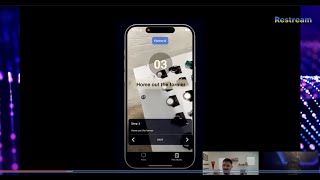
Yeah, sure. So I have a video, it's a really quick video. Oh, perfect. Okay. So let me hit play here. And so this is just a quick use case demo of notes and procedures. So this is in a factory. This is kind of what notes look like in Squint. So this is a note on the switch. It says, "Turn off before you leave." There's another one here that's kind of notated on these knobs saying, you know, "Set the correct speed to 90 RPM." There's some notes here around tightening belts. I'll pause really quickly before we move on, but the idea there is you can communicate with people with almost these digital sticky notes without them being present at the same time. So if you have, let's say, Shift 1 is working and they noticed something with this machine that, you know, is out of the ordinary and they want to leave a comment behind or let someone know a reminder or something like that, that's kind of what's going on. And then when when you have that shift changeover and new people come in, they can at a glance see really quickly like what needs to be addressed or what kind of those handoff points were. That's where a lot of the knowledge gets dropped or, you know, the word of mouth fails sometimes or someone's running late, someone had to leave early and you miss it. That's the kind of idea. But the, I think, really powerful thing that Squint does as well is procedures. And so this actually walks you through step by step how to do something. So I'll hit play again. But just pausing for a second, I'll point out that here you see turn right 5.2 feet. This is a really magical thing that we've been able to do is provide guidance that's live in the view that will take you to the next step. So to turn the air on here, it's guiding you and taking you exactly where you need to be to operate. Telling you exactly what piece of equipment to work with. So that's a quick look. I'll pause that, and if you have another minute, I'd like to show you a really cool application of this that's not manufacturing, because I know a lot of your audience tends to not be manufacturing specific.
Yeah, that's good. Yeah, yeah.
Okay. Let me— can you see this?
Yep.
Okay, so I'll set this out really quickly. So one of our teammates, her name's Allison, she actually owns a plane and she's a really like avid flyer or pilot. And she built a demo with Squint on her plane for the pre-flight checklist. So I thought this was just really cool because This is not what Squint was really built for in this iteration, but it works just fine because really it's just another use case that needs to— you need to provide help to the user, right? That's all we're doing. So here it's walking her around the plane and guiding her through the checks that she needs to make. So you can kind of see, you know, it does things like capture audit trails. So if you need to take a picture of something, in this case she's going to take a photo for evidence that she checked this for later. And so all of these things are really built in and they're more useful when they're present at the right time. So just a quick peek, I won't, you know, make you watch all 5 minutes of this, but there's a bunch of things here that we can do with AR that make this experience much more powerful than the traditional, you know, clipboard and piece of paper.
Yeah, this is like super, super impressive. And yeah, and I must say, like, I, I even saw the live demo in, in November where you like set it up in first place while with anchoring. So even like in 10, 20 seconds, the SLAM technique of spatial anchoring, I think it like, it doesn't show up in the video where how do you set the anchors in first place and like how easy it is for like the operators to do it. But like, that's also a great UI/UX you have.
Yeah, thank you. Um, I think that was one of the big focus areas is like How do we make it really simple for people to just get started? So along the lines of what we talked about, right, like removing that constraint for QR codes and all that, um, this allows you to do basically these spatial procedures anywhere. So for instance, um, this morning my wife was actually using it. She set it up in our gym area, um, because she always like puts stuff away in the wrong place. And so she kind of labeled out like the landing points for the different pieces of equipment, and it took her like 3 minutes, you know. So you can, you can really just orient Squint once, and after you've done that one time, anybody can enter that space and see the, the things that you've placed and the steps you've created, and it'll walk them through it. So, um, yeah, thank you.
Yeah, and, um, I was wondering if you can talk a bit about the accuracy level of this, like spatial anchors, the guidance feature, which is also pretty sick.
Yeah, um, I mean, honestly, it's kind of magical. Like, it, it even blows my mind every time I use it because, like, uh, we're able to get accurate down to, you know, like, 1 inch, um, 2 inches sometimes, depending on kind of the, the richer a space is, the better it does. Now, this is more You know, with where technology is at right now, hardware and software levels, as these phones are getting better, the cameras are getting better, we're able to get even more accurate on some of these top-end devices. But even on, you know, actually yesterday, so this is like maybe spoiler, nobody knows yet, but our Android app is coming out very soon. So yesterday I was trying out the Android app and I thought, well, what should I test on? I should probably test on the oldest device I can find. And so I've been testing on my Pixel 2, which is from like 2017. And it works great. It's very accurate. It's down to the inch. And the whole idea that we built around was just needing a camera. And we really tried to stay away from special hardware, special needs. And it all happens on device. So there's no lag. So we're not— it's not like we're streaming all of the video up to the cloud or anything. we optimize it all to run basically on any device.
Got it. And I was wondering, like, another proxy use cases which would be interesting would be, can you gamify like assemblies or construction, like, uh, yeah, like Lego bricks where you can use it to like teach like students with kids or something like that?
Yeah, totally. I think one of our customers actually did this when they were first— they were running an experiment to see if they wanted to move forward with Squint. And one of the things that they did was they brought a large box of Legos and they sorted them by colors and put them in different buckets. And then they designed out a fireplace with Legos. And they built it, right? And they kind of followed— they wrote down the steps that they took in Squint, and they tagged it on this case. And then they removed— they undid all the stuff, and they handed iPads to 30 people to come in and actually follow Squint to build this LEGO fireplace and build it like to a T, exactly the way this person had designed it the first time. Because I think Imagine, you know, not having Squint for a second. Imagine someone gives you an open canvas and a bunch of Legos and says, build a fireplace. I think if 30 people did it, you'd get 30 fireplaces that look very different, right? So the idea is like, how do you standardize work? That was their lens because they're in manufacturing. So they tried it and all 30 people built the same fireplace and it was incredible. So I think that goes to say, You know, there's a lot of these use cases in everyday life where, you know, for children, maybe it might be the Lego set that they buy. It might be different ideas. Like if you think of, you know, if you have this open Lego set of just a bunch of bricks, children can make some of these designs and actually share them with other people. Like I could see that, you know, being something that's really kind of captivating as a child that gets your creativity going. And you can kind of share that creativity with others that aren't maybe in the same spot as you at the same time. And then there's other things that, you know, this branches out into, like you buy furniture, you get that IKEA manual and it's confusing. There's, you know, like I love IKEA furniture, but you have the manual with the little person, the stick figure, and they're like bending over and like plugging in the back of the thing. And I'm like, so the front is the back, where do I plug it into? It's very confusing. So there's. Endless applications, I think, anywhere you have instructions right now.
Got it. And like, you are streaming and showcasing on the edge devices, like the instructions. So I was wondering, like, what if there is an IoT device and there's like a real-time sensor usage? Can people stream like how hot it is or behind it, or like, can I generate assets on the fly with generative AI? I'm just brainstorming.
Yeah, no, it's really cool. Um, I love that idea. Actually, you're, you're kind of revealing some of our roadmap, so I don't know how much I want to talk about it, but, uh, some of the stuff that we're working on is really building out that integration layer into Squint. So right now everything is user-created, but, um, you know, imagine a future world where you have Squint and you have Actually, I think ChatGPT did like an excellent job of this, of building out plugins, right? But the idea is like, if you have this creation platform, then you can have a ton of plugins for different domain-specific, you know, sources of information and connectors. And we would really think to plug it in the same way, that you can pull special information like from an IoT plugin that talks to a certain kind of sensor. You can pull that data in and then visualize it in the standardized, you know, interface to the world. So the idea is Squint will be that layer that just surfaces any information from anywhere at the right time and place.
Nice. And like, how do you optimize it for on the edge? Like, because you're streaming more information, so are you like dumping it, or like, for the real-time stuff?
Yeah, yeah, yeah. I mean, I think it probably depends case by case. Um, I, I, like, I'd have to get into some more specifics, I think, depending on what we're trying to get. A lot of these problems, I think, are solved by really smart people in other spaces. So one of the things that we try to do is like, we don't want to reinvent the wheel. And I think if, if there are really good platforms that do something well, we would really just want to plug in and, and utilize them and let them kind of do their thing, right? So that's at least the approach we take.
Got it. And I want to shift gears a bit in terms of your fundraising process. So if you can share what was the most challenging part about the journey, how did you reach out and what do VCs look forward when they talk to you?
Yeah, let's see. For me, the, the journey has been interesting because we've raised twice now. So we raised once, really, when I left Splunk, from that October to March period, working with Menlo Ventures. And that was a really interesting process because really it was working kind of with them, which was an introduction made from an old mentor of mine who's actually, his name's Tim Tully. So He was the CTO at Splunk and prior to that, a mentor of mine at Yahoo. And so we've known each other for a long time. He's now a general partner at Menlo. And so he kind of introduced me to their accelerator team. And we worked together and really did a lot of that early validation and had kind of this relationship built up that allowed us to, you know, feel it out and both sides got to know each other. I think it's really important that, you know, you're going to, you're going to be with your investors for a long time. So it's really important that you have a good relationship. And so we got to work together really deeply on both the problem and kind of interacting with customers, you know, wherever I needed kind of resources, they did an amazing job. And that's what cemented in my mind that like, you know, we have to work with these people. And so that was kind of the connection with Menlo Ventures. Now, that maybe is pretty unique in my case, because of this connection I had to Tim already. But, you know, since then, we were just, it was more traditional, like we're just building. And as you're building, I think you tend to get, you know, kind of connected to different investors over time through connections and through things like that. But for us, the focus always remained just building the product for the users. And I think everything else kind of falls into place if you, if you do a really good job of making your users happy. One, one thing I'll share, right, is with AR, it's, it's kind of this space that I think was really hyped in like 2017. And there were a lot of dollars that were put in and then not a lot came out of it and kind of the trend went from like here to like here, right? So for us, we actually have to like fight that like bias a little bit when we're, when we're talking to investors because a lot of the time people will come in and be like, well, AR, like, isn't that like not cool anymore? Or like it's dead, it didn't work, right? And I think one of my biggest takeaways has just been if we focus on building a product that people need, that answers every question, right? It does. Like, any objection that someone will have can be answered by saying, hey, but like, look at, look at our customers, talk to them, listen to what they're saying, and you can actually see the value that they get out of this. And then it doesn't really matter what happened, right, what the trend is. And so I think That's been the biggest thing, like going back to how do you make it happen? It's just if you build the right product, everything else will fall into place despite any biases in the marketplace or if you're not working on something cool or if you are, like still you gotta build the right thing to keep the momentum going. So yeah, I don't know. Does that answer your question?
No, no, that's a great takeaway. Like I was also like, I was reading a book where how you have like unfair advantage based on the location connections you have. And like, as your initial point of getting into the VC, like the early stage incubator with your previous mentor, like also just advise how you make best use of what resources you have.
So yeah, yeah, I think, I mean, networking is really big. That's how I met you, right? We didn't, we didn't know each other. And actually the event that we met at, I didn't know anyone there from anything either. It was just by happenstance. Like I ran into folks, got a connection through someone, got invited to a thing. And, you know, I live in San Jose, so I'm kind of allergic to traveling to San Francisco because it's really hard and far. And I had to overcome that, you know, like, okay, fine, I'm going to go to this happy hour tonight. And the reason I did it was because I wanted to meet people like you. And it was, you know, that's been really helpful. I think if you're just open-minded and you get to meet people, then there's always something you can learn. Yeah.
And how does a day in your life look like?
Well, that's a question. It depends on the day, but let's see. So I think there are themes. At least for me, like, as our, like, from a month-to-month comparison, kind of the biggest thing that the company is focused on tends to be the thing that I'm spending the most of my time on, right? So for instance, we just got done fundraising and we raised from Sequoia Arc. And so as part of that, there was this theme of, you know, all of my time was not— well, not all of it, maybe like 70% of it was spent doing like legal investor, you know, customer input stuff and kind of putting together a bunch of resources to make sure we could close the fundraise and make sure we could kind of land things in a good way and everything was set up so we could focus on the product again. But then, you know, this month, things have shifted. Spending a lot more time with our customers again, we're spending a lot more time with our new investors and some of the resources they've shared, and really starting to, you know, like my, my day now is a little bit different. Usually the top half of my day is talking to prospects. So a lot of sales. Typically, you know, I'm on the West Coast. So all of our customers are on the East Coast. So what that means is I'm usually up really early, Typically calls start around 7. I go probably to like noon Pacific time, just talking to like prospects and customers, a mix of sales calls to follow-ups to, you know, if someone's about to buy, like maybe we're planning an implementation or someone, an existing customer, and they, you know, we're just doing a check-in, trying to understand how things are going, help them kind of plan out like the next rollout or the next kind of set of features that are upcoming they can incorporate. Things like that. And then kind of the second half of the day is very team focused. So, uh, you know, kind of afternoon, typically it's late on the East Coast, so there's not as much customer stuff. That's when the majority of my time is spent, you know, spending time with the team. We, 3 times a week, we do something called team walks, um, which I find actually like really calming, and it gets us really close together because what we do is we all get off the computer, we go outside, and we don't do a video call, but we do an audio call. And the reason for that is like getting away from some of that video fatigue, right? Um, and we just get on the phone and we don't talk about work. We just walk around and we take in the fresh air and we kind of hang out, catch up. Um, and for 30 minutes, it's just like totally refreshing. So I like, honestly, it's probably the favorite part of my day. And then, um, The rest of the afternoon is mostly stand-up and going through like, you know, design review, product review, any whatever else is kind of happening that week.
Yeah, I love it. Like, it's a very unique part of your culture and that's a great idea.
Yeah, I would recommend it if anyone out there is like looking for culture things, like try the team walks. It's really awesome. I think as we scale, it'll get interesting. So we were actually thinking You know, we're, we're 5 people right now. As of Monday, we're going to be 6 people. As of next Monday, we're going to be 7 people. Oh, and in May we're going to be 8 people. So we have, we have people kind of starting to join and the team is growing. How are we going to scale this? And so one kind of idea we came up with to keep this around, because I think like you said, it's a very unique part of the culture, um, one idea we came up with was You know, maybe we do random subgroups and we split into groups of 4 or 3, um, but we keep them consistent across the week. So you get a little window into a couple people's lives. You can keep it really personal. And then next week you talk to a new group of people and we get to kind of, you know, roll in and out of people's, uh, I guess, goings on. Yeah.
Like you sample and change the sample every—
Yeah.
That's, that's interesting. It's like keeping it to a limit where it's like good enough for bonding. Yeah.
Yeah. Yeah. I think the other part of my day that I didn't really talk about, something that I think really helps me and I don't know, I would probably recommend for other founders who are really busy is making time for exercise. So one thing I really like to do is like I work out every day. Like I just have to, no matter how busy I am, I will carve out 30 minutes. Sometimes even if I have 10 minutes, I'll do like a 10-minute really hard Peloton ride. Just getting active, getting away from things. It just like, it accelerates my like brain function, I feel like. So I try to do that every evening.
Yeah, I was about to say you look very fit, so good job.
Thank you. Thank you. I'll, uh, let me send me your Venmo later and I'll, I'll Yeah, and you mentioned about talking to your prospects.
So any tips you can share about your go-to-market and like distribution strategies, how you find this potential client?
Yeah, it's interesting. I mean, we're still, we're pretty early, so we're exploring in a lot of the space. And so actually we just hired our growth lead and so he's gonna be starting in a couple weeks. And so anything I tell you now might be different in like 3 weeks. But, um, we have a lot of ideas. We've tried a few things. Uh, I think most effective for us has been reaching out. Well, okay. So taking a step back, I think the challenge for us is finding people and talking to them in manufacturing because it's not like, you know, unlike technology and venture capital, like I don't just have mentors I can reach out to that work at, you know, Honda or something and be like, hey, like, you guys want to buy this, right? And it's, it's not that easy. I'm kind of an outsider, and our whole team doesn't have that experience. And so what we do is try to solve the problem of how do we get Squint in front of them. And I think once they see Squint, it's, it's really easy from there, because we've tried to build a product that solves their problems. And typically, people share these problems. So, uh, just getting over that hump is really hard. We've tried a few different routes. We've done, you know, like LinkedIn, uh, advertising because, uh, it's a space where you really know the job titles well and you can kind of personify who you're trying to sell to and advertise to specific groups that specialize there. Um, we've also done email marketing. Uh, we've also done just general like SEO stuff. Like we have a blog that we maintain. We try to be really active on our LinkedIn. So, you know, our company LinkedIn page, for instance, we just try to bring some character to it. So every time we push out a new release or a new feature, we make a post. One of the fun things we did was in February, we realized we were releasing a new feature on Valentine's Day. And so our product lead She actually thought it would be a really cool idea if we built a poem. And so she wrote a Valentine's Day themed poem about the features and about the release. And so you can go back and read it. It's on our LinkedIn page, but it was hilarious. And so just like, you know, trying to always keep it fresh and keep this content engaging because oftentimes manufacturing, like product content is not fun to read.
Yeah, that's, that's very creative. And like, you have like, uh, if I am thinking correctly, like the end user who is actually at the job site, the training manager who is like working around, and also depending on the company, they have higher authority who's like generally the decision maker, the buyer. So like, I see. So do you like typically like get from bottoms up or top down approach?
Yeah, that's, that's super interesting. I think we would like to do both, but for now we've been more top down. So starting at, you know, either the plant manager or training manager, which maybe is the middle, I guess, because if you think about, you know, really large, like I mentioned Honda earlier, if you have like a really large auto manufacturer like that, they have hundreds of factories. I don't actually know anything about Honda's, you know, model, but I assume they have a lot of factories. There's a lot of cars. And so it's not like we're starting at corporate where we're selling, you know, to every factory at once right now. We're just kind of too small for that. So we're starting somewhere in the middle, which is at the factory level. We're starting at the top of that factory, usually is the management staff. I think, you know, down the line, one thing that we really do want to try is make it so that operators can incorporate this to help themselves in their day. And so it can be kind of more of that bottoms-up, like productivity tool to start, and then kind of start as you, as you add more people, you can kind of build the networking stuff and and start standardizing procedures. And maybe it starts off as just a note-taking tool and kind of grows from there, right? And then you start plugging in things to the Swint platform, and then those plugins and everything come together and it becomes an enterprise product. Um, it, you know, it's just a journey. And I think for us, the, the product experience has to be perfect, or, you know, really closer to perfect than it is now for us to go bottoms up. So that's why we've kind of started where we have.
Yeah, makes sense. And you mentioned about your founding team, like, which you formed last year. Uh, like, and I know, like, the founding team can make or break the startup. So, like, how, how did you went about that problem? How did you filter? How did you hire?
Oh yeah. Um, it was really easy. I just hired the best people. Um, we, uh, it was really easy because these were really brilliant people that I had worked with in the past. And so, uh, I know, you know, when we're looking back at March, we know what we have to build. Um, one of the kind of, one of the things I, I think is maybe different about my approach is I tend to not look for people who have necessarily done this specific thing before, but rather have like learned how to learn, right? And if you know how to learn, then it doesn't matter what you're doing, but you'll figure it out. So hired the best people I knew from, you know, my experience in the past. And so Dylan and Jim were our founding PM and founding eng lead. And they're just people that I had good experiences with before. And so, yeah, I don't know. I think we actually kind of have taken that philosophy and extended it out where hiring in your network is really, I don't know, a safer way to go early on because you know what you're getting. You know that you're getting really strong talent and people that will get along and people will shape the culture early on in the direction you want it to go. And then I think as we kind of branch out and start hiring folks not from our network, the priority has been to hire people who care about people, right? And then know how to learn. So I think the challenge with hiring people who have done this exact thing before, in our space at least, is kind of, we want them to think outside the box. So if they've already built this one way, they're not going to be as inclined to build it a totally different way, right? And I think what we're doing requires you to build things that haven't been built before. And so that's been one of the priorities, is just to hire the best people you can find. Doesn't matter what experience they have necessarily.
Interesting. So a lot of generalist culture, and you made it sound very easy that, yeah, you can just convince your peers who are best and they'll leave their job and join you.
Oh, I mean, yeah, I mean, I don't know, it's not easy. But I think the power of storytelling helps if you can kind of— if so, like, I have a lot of conviction in what we're building. And I have a lot of belief that if we can bring this to life, then it will change the world. And if I think if other people had that same feeling, why wouldn't you want to build it? And I think the challenge in recruiting ends up being, can you convey that and get someone on board with that thinking and then have them believe it themselves rather than being told it, you know? So how do you like kind of incept that into someone's mind and then like let it be organic, I guess? It's also a good filtering mechanism, right? You don't want folks who like don't believe in what you're building. So that's the biggest thing. And it just so happens that, uh, the people that I knew, like Dylan and Jim, became big believers in this almost immediately. Um, they saw it and they were like, oh duh, like this is like, we gotta build this, this is gonna change the world.
Nice. And, uh, I think I wanted to touch a topic which like is not often discussed where, okay, Once you start, let's say fundraising, you meet multiple VCs, like how much time does it take to close the round? Like how should founders plan accordingly?
Yeah, um, let's see. I don't know, like I've only done it twice and it's not like I've, uh, you know, done this a ton of times, so it's hard for me to say with authority, but I guess I can share my experience. So over the past year since we raised our first round, I've met up with VCs, you know, kind of opportunistically as folks reached out or as an intro was made and we got coffee and we got to kind of know each other and understand like, you know, who would be a really good partner down the line. And then just kind of having that in your Rolodex is helpful so that when you start to go raise, you can, you know, call those people up. There's a relationship that exists. They've hopefully been getting updates from you along the way. So they've kind of plotted out your trajectory and they understand like the upside of this business and why they should invest. And, you know, like at least then it's a little bit easier to dig into specifics and figure out if you can work together for that fundraise. That's what I would recommend. but I've only done it twice and I don't know. So like it might be different next time, but in this case, our, our newest investor also happens to be someone I've known for a number of years. And so we had this background of like her knowing, you know, kind of the trajectory that the team was on and what we were building. And she's kind of seen the snapshots in time, you know.
Got it.
But in other cases, like it could take like from 4 weeks to 3 months, like, oh yeah, I think timeline-wise, I mean, uh, even in our case, it takes a little while. So even for Menlo, like the first one, um, it was probably over the period of like 8 to 12 weeks. Um, just, you know, it doesn't matter how well you know someone, like when, when you're actually fundraising, it's like you have to get down into it and there's a lot of stuff that has to happen. A lot of details and things you have to hash out and make sure you're on the same page. Then there's all the legal stuff that, you know, isn't always pleasant. There's a lot of back and forth there. So even I would say like probably 2 to 3 months is like the right carve out, even if you think, you know, the right person and you are in agreement generally. And so maybe if you're going from a cold reach out to closing a round with someone, I would say maybe carve out even more time, like 4 to 6 months, maybe even longer if you don't really know who you're going to target.
Got it. And like in pre-seed stage, like for pre-revenue, how do you do a valuation of your company? Like, is there a formula?
No, I don't think there's a formula. I don't think it really matters, right? Because early on, like that first investor that you're going to have has to be someone that believes in the vision. So it's more of a matchmaking exercise between the investor and the team and making sure you can collaborate well together, right? And I think the valuation of the company, like it doesn't affect anything besides the ownership early on. And I think it's, you know, there's this age-old concept of like, would you rather have 0% of a big pie or 100% of a small pie or, you know, some large percentage of a small pie? And I think that translates pretty well, like in your pre-seed, it doesn't really matter. There's some standards out there, there's usually industry averages you can look at. So, you know, I wouldn't recommend you selling out, you know, 80% of your company in the pre-seed, but I think it is less about formulaic valuation stuff at that point. If you're pre-product and you're pre-revenue, then it's really just about idea and person. If you have a product, there's some stuff there that you can kind of work out and figure out, you know, from that. If you have revenue, it starts to become a little bit more standardized.
Good. And was for your second round secure, Was the only investor or you had one lead and other sub leads?
Yeah, so we, well, so we participated in the Sequoia ARC program and so they led the round and then Menlo Ventures, our first investor, also participated. And then we brought in a couple of like strategic angels that, you know, we wanted to get in. And yeah, that was kind of how it went down. I think for this, it was easier to not— it moved really quickly. So they, you know, being part of the ARC program was the primary reason to raise this round. We actually weren't fundraising actively. So it just kind of happened organically. And then we wanted to be part of the round, part of the program. And so we had to kind of move things along really quickly. And then it just happened. And then, you know, I looked up and it was over.
So I see.
Yeah.
And like, you don't need to answer this, like, like there are various accelerators like YC, Techstars, Sequoia, like any particular reason you chose this?
Uh, I don't know. I think it's a mix of, it was the right thing for us at the right time. So I think if you had asked me before or after, maybe my answer would be different, but for where we are right now. Working with Sequoia Arc was perfect because we had worked with Menlo a lot on crafting the initial plan and the initial product. We had built the product, we had customers, we kind of started to understand, you know, how to narrow down into that initial, like, ICP that we're trying to sell to. But then Sequoia Arc does a really awesome job at building out, like, structure for company building. And so this, this felt like the right time to transition and really do kind of like a broad, you know, I don't know, evaluation or workshop around things like company values and our strategy and kind of do a refresh. And what better way than working with, you know, one of the best investors in the world. And so we did it For us, it was the right thing at the right time, I guess. I haven't done YC personally or Techstars, so I can't really speak, but I've heard excellent things about them too.
Got it. So it— as part of the program, it's a 3-month journey, like, where they coach you on this aspect, and after that, they provide funding?
Yeah, it's, uh, it's 8 weeks.
Okay.
Um, and It, uh, I think every company at the start of the 8 weeks has been funded. And then, um, at the end of the 8 weeks, you've kind of workshopped with them on a bunch of things. But, um, that's, I would say that's like an additional resource. And they also still get access to, you know, all of the Sequoia Network stuff and, um, working, you know, obviously the biggest thing is you have a new partner to work with and a new investor with new thoughts and feedback and a lot of engagement there is very helpful too. So it's, it's an ongoing relationship from here on out, right?
Got it.
Yeah.
And like, I'm, I'm not sure like a lot of people are aware about this program. So like in YC, they have like partner meetings, they have like also a bunch of startups from peers you can learn. So like, do you have like weekly activities as part of the program?
And yeah. Yeah, yeah, totally. So it's really, there's 3 in-person weeks across those 8 weeks. And this might change, like, I don't know if it might be different next time, but this has been my experience, which is there's 3 in-person weeks. The other weeks are over Zoom. But really, there's a lot of activities around those in-person weeks for networking. So when you're in person, you're, you know, you're constantly meeting people. Either partners or people at Sequoia who maybe, you know, work on the design team or something else, and you get a lot of feedback and expertise there. These are some of the most talented people in the industry. And then on the Zoom weeks, there's kind of, kind of these workshops, I guess, that you could call them. But as a group, the whole cohort comes together. There's a lot to learn and there's a lot to do, and you're working kind of on your company and building out better messaging or figuring out, you know, kind of starting to refine some of your thoughts around, you know, like you mentioned earlier, like product roadmap and things like that. And they have a lot of resources that they provide and work with you on those things. But then, yeah, just every week kind of has a different focus.
Got it. And can you share one thing which excites you in next 3 months and one thing which scares you for the next 3 months?
About anything?
No, no, like about, like, what you have. Yeah, for Squint. Yeah.
Oh, okay. Um, let's see, one thing that really excites me is, uh, we are growing, and so there's, there's a lot of room for us to start building things that we haven't been able to get onto the roadmap that, you know, we're starting to see a lot of customer customer demand around. And we just want to start building those things to help out, help deliver more value to our existing customers. And so I'm really excited about that. One thing that scares me is we're growing. And, you know, so it's exciting and scary, because I think as you grow, there's a lot of, a lot of changes that can happen in culture and in, you know, kind of operationally how we work, like, you know, just the tactical things, like how long is standup going to be? Do we deliver updates differently? Like who needs to be present for which meetings? Because as a, you know, a couple people in a company, you can just all meet every time and everyone can be on the same page, but that doesn't scale. And so there's like all of these, like, you know, dynamic things that need to happen as, as the company grows and culture evolves, practices evolve. And so, um, I'm excited about that too, I guess, but it's a little scary.
I see. What has been your proudest moment in the whole Squint journey?
Oh man, I think, uh, the thing I'm most proud of is when we talk to our customers and I hear things like, hey, we use this and it is amazing. Like, you know, and they, they share an insight that they're able to accomplish something that takes, you know, all this weight off their shoulders that used to be this really challenging problem. And now it just works, right? And now they can just train people or people can train themselves. And it's, you know, it's allowed them to meet their goals and they feel good about their, their work. And I think just being able to build something that makes life easier for people is really, really cool to see.
And for people who are watching this, if they want to try Squint, like, what's the best way to reach out to you or try it?
Yeah, so check out our website. There's a way there you can schedule a demo, and that actually gets you on my calendar. And so if you, if you want to chat, feel free to do that. You can also email me at Devin Bhushan at squint.ai. But yeah, feel free to reach out. I'm happy to set people up, especially if you're in manufacturing, it's a little easier. But, you know, we don't, we don't have like a free trial or anything set up yet. But if you're in manufacturing, we can probably work out a POC or something for, for you.
Awesome. Any concluding thoughts and advice for founders?
Advice. Yeah, I mean, like I said earlier, like big caveat with I'm not that far on this journey and I don't, you know, I have advice that I would give my former self maybe, but that would just be around really continuing, like really early on, focus on your users and kind of try to keep that as a constant throughout. As your company grows, there's going to be new things that you have to like you know, that pull away your attention, um, try to keep a constant touch on what people need. Like I said, everything should solve a problem. Everything you build should— even those, you know, wild experiments that you have that you don't know if they'll work or people need, um, but at some point it should come back to someone has to use this and it will deliver value to them because otherwise you find yourself you know, a little distracted.
So awesome. This has been a great talk. I learned so much. You shared a lot of insights. I'm pretty sure it will be useful to people watching. So thanks a lot, Devin, for your time.
Thanks for having me on. This is awesome. Yeah, I really enjoyed it.
Yeah, have a great rest of your day. Bye.
More from Devin
What If Your Factory Could Think for Itself? Featuring Devin Bhushan of Squint