What If Your Factory Could Think for Itself? Featuring Devin Bhushan of Squint
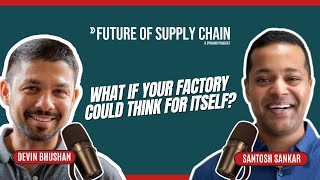
Devin Bhushan, CEO of Squint AI, built a platform that captures factory workers' knowledge using video, voice, and computer vision, then makes it searchable. The goal: scale what your best operators know across all your plants without replacing them. Squint adds audit trails and governance so the AI stays safe on the factory floor.
Chapters
Welcome to The Future of Supply Chain presented by Dynamo. Each episode, we sit down with leaders in the industry as we build the future of supply chain together. Let's get into the show. Here's our host, Santosh Sankar.
Hey, ladies and gents, welcome back to The Future of Supply Chain podcast. I'm your host, Santosh Sankar. Joining me today is Devin Bhushan, founder and CEO of Squint AI. Welcome, Devin. It's great to have you on.
Hey, Santosh, thanks for having me. I'm excited for this.
So first and foremost, congratulations on your recently announced fundraise. That's awesome. Um, thanks. And, uh, I do want to cover a lot of ground today as we kind of COVID topics around manufacturing, what you're building at Squint. But first and foremost, let's level set the kind of knowledge base for the audience here. Give us a bit about Squint and what you and the team are building.
Yeah, so Squint is a manufacturing intelligence platform. We use AI to drive efficiency on factory floors. And, you know, we work with like really massive Fortune Global 500 companies that make the products that you use every day. So from, you know, we like to say from tires to tortillas, but the example is like from Continental Tires, which is a customer, or Michelin, all the way over to Pepsi and food and beverage, right? And so, uh, our customers, you know, prior to Squint, they had no real way to capture kind of the intelligence or that knowledge that was built up on the factory floor in, uh, the heads of operators. And what Squint does is we use AI to kind of, um, build that highway to pull the information from people's brains and into this like centralized manufacturing knowledge repository, and then we use AI to make that knowledge available kind of at the fingertips of every operator. So you have kind of the power of the, the masses at your fingertips. That's the idea.
Amazing. And, and what's your personal story? How did you kind of get into the wild, wonderful world of manufacturing?
Yeah, well, so I, I studied computer science and I was a software engineer early in my career. I was at Yahoo, which was great, worked on Yahoo Sports, dream job for me. And then I followed a mentor of mine over to a company called Splunk where we actually worked with a lot of industrial data. So a lot of our customers were big Fortune 500 companies. They had lots of data that was coming off of the factory floor. So this is, you know, 2017, 2018. When IoT was like really hitting its stride in factories. And what I saw, what we did over the, you know, the 4 years that I was there, like we built the software that used computer vision and AI to really bring that data to life in the hands of operators on the floor. And what I saw in talking to them was they would, you know, I'll give you an example. So our customers might be an operator on a factory they might have been paged to go fix the fan on a machine because it's broken and they'll get there. And what, what, you know, our product did at the time was it surfaced the data from that fan to an augmented reality app that let them hold up like their tablet and it would show them which fan was broken in the array. And when I talked to them, what I really learned was that the problem was not identifying which fan is broken. Though they really enjoyed this like visual interface that we had created, they wanted to know how do I fix it based on the error code? And when I asked them like, where does that knowledge live? They said, well, it's actually in like that guy's head, right? And that story kept coming up and I realized that we didn't, we were very close, but we didn't quite have product market fit. And there was this other larger problem around capturing that knowledge from, you know, the quote unquote that, that person's head and we could actually build a very purposeful application around that concept. And so that, that's kind of where the idea for Squint came from. And, you know, that's, that's my background as well.
And so you've argued previously that kind of the new industrial revolution that we're in the early innings of is about expanding human potential. Rather than trying to automate kind of jobs away. And so I'd love for you to kind of expand on this concept for us. And it sounds like a lot of how you've built Skwin and even kind of how you've sat shoulder to shoulder with those frontline workers really demonstrates that belief.
Yeah, you know, I think like oftentimes it's framed as either AI or machines will do the work. Or the humans will do the work. Right? There's not like, it's often very, like, binary. And I think that's just not the reality of it. Right? I think if you, as I, like, talk to our customers and, and the stories that I hear are that they're really excited for automation because what automation will bring them is the ability to automate the, like, ergonomically unsafe work or the highly repetitive work or the super dangerous high voltage you know, changeovers. So if you had an automated way to tackle those things, then you could have your humans in the factory actually doing things that are safer, both, you know, for them and for the product, and also ultimately doing things that require more human in the loop. And so if you zoom out from these like high danger kind of workflows, like, locking out, you know, the power at a plant and you look at actually where the product is made, that kind of work is actually highly artisanal. So if you look at that, it's like, you know, if some of our customers make Cheetos, so if you're making a Cheeto, like the work that goes into setting up the machine just right into getting the extruder and actually like feeding the, the raw ingredients in and having the right kind of Cheetos come out, that is actually not something that AI can like get rid of, you know, like you actually will need that human with that knowledge. And what we've done is we've made it easier to scale this industry because you can use AI to replicate that knowledge and make it available for other humans. And so what we're doing is we're saying you can stand up 10 factories that now make Cheetos and we can get you up and running with something like Squint and ensure that the performance is up to par. But that's kind of how it plays well together, I think.
Kind of true operating leverage, so to speak. Yeah. If you find a best practice in one facility, you can then scale that out to any number of facilities as you grow effectively. Yeah.
Yeah, exactly. And I mean, the— we also use computer vision and like checking if work is being done on an ongoing basis correctly, not in a way that's like Big Brother, but actually in a way that's like, you know, the, the One of our customers told me once that everyone intends to do good work. Like, no, there's not, not a single operator that is like trying to do a bad job, right? And so the focus for Squint is how do we empower them and give them the confidence to do good work in a way that they know they're doing good work. When you know you're doing good work, you actually work faster and you feel better about your job. You don't leave. There's all these like other byproducts of it, right? Yeah, so with the, yeah, with the tablet and with computer vision, we can help identify like, hey, you did that right, that's positive reinforcement. Or if you did that wrong, let me tell you how to do it right so you don't hurt yourself, right?
What would you say kind of, uh, the, the single most important lesson you've learned around designing software for, for kind of this profile of user, and one that kind of allows them to leverage their problem-solving creative acumen rather than feeling like they're being micromanaged, right? Because they truly want to do good work. And odds are, when you talk about subject matter like manufacturing, they might come from a family who's done that particular trade generationally. If not themselves, they've done it for many years, if not multiple decades.
Yeah, and I think, I mean, That— it's a great point. I think the thing that we try to remind ourselves is this is more art than science, like manufacturing is more art than science. And so our goal is to really empower the operator, right? We— understanding that this is artisanal work, how can we enable them to be creative and do process improvement? Because if you walk into a factory and you look at, you know, two machines that are in theory the same model, Oftentimes what you'll see is that one has like a lever welded on and there's like, you know, something that when a widget passes this point, this like lever spins. And there's little things like that that have morphed over 30 years that it's not just a machine you bought, but someone saw a problem and they realized that they could fix it. And it's actually like a feat of engineering, right? And so we don't want to like bottle that up. And so we've tried to design our software to be very, very consumer grade. And so allow the people who know how it's done to actually capture their creativity and use AI to distribute that rather than, you know, use this as a workflow thing that is like, here's your task, do your task, right? So it's creativity in and standards out. And so we're starting, trying to standardize the best creativity. And I think that shows like, we try to always run customer satisfaction surveys and things. And so, sure. What we've seen is like 91% of operators that perform procedures in Squint, they give us like the smiley smiley face, you know? And I think that, like, that to me is like, that's what winning looks like here. It means you're actually serving the, the people on the floor and not just building an enterprise software product that, sells to, you know, VP of manufacturing kind of thing.
Yeah, yeah. And when you say kind of creativity and input, what have you found is the best medium for these individuals to express and share the knowledge that they have built up over the years? Is it voice? Is it the actual like videos and like draw a little bit from kind of TikTok vibes? Is it something else?
Yeah, I think it's a great question. This is where, like, the magic of GenAI has really helped this industry and what we've tried to, like, take all of the learnings we've had on the floor. Like, when we're out there and we see the way that people interact, what we see is that it's actually all of the above. So our, like, the model is very multimodal. So we can support, you can record a snippet of a video that's like, you know, Santosh knows how to make the best espresso in Tennessee. So I can record a video of you making that espresso, and it might be, you know, 3 hours long with you roasting your beans all the way to making your espresso, and Squint will make the standard operating procedure out of that creativity, right? And then also, like, we've had some customers that like to whiteboard and like have diagrams, and you can feed those in and Squint will understand that. But it takes all of these modalities, whatever is, you know, whatever's the form of creativity that people use.
Yeah. And so in the US, it's not new news that we are seeing an environment where reshoring is accelerating. There's certain public policy and rhetoric that's supporting that. And so we might be kind of in this once in a generation industrial shift. And so kind of what I'm curious to understand your perspective on is what gaps exist to really realize this future as you think about skills, systems, standards, and how do you see kind of Squint practically helping or maybe retooling those brownfields in order to capture this once in a generation opportunity? Opportunity?
Yeah, so I mean, broadly speaking, just, I think things that we see and, you know, I'm sure you see and we're probably aligned on is like, there's a labor shortage right now in this industry. So what, there's two things happening simultaneously. One, you have a lot of investment coming in, whether, you know, it might be encouraged by policy change or it might be that More manufacturers are trying to bring their supply chains closer, but there's a lot of money being poured into new factory construction, and that's leading to, you know, every customer I talk to is launching a new factory somewhere, or there's a new greenfield project going live. But at the same time, this labor shortage is kind of like underneath that, right? And so those two things are at odds because the people that actually understand the processes and that artisanal work, as we talked about, Those people are actually leaving the workforce because people are retiring. It's creating more of a gap of skills. And then you have basically more jobs that you're creating and who are you going to fill them with and what, where's that knowledge going to come from, right? And so that's kind of like, that's like the macro problem statement that Squint is solving for because we are able to capture the knowledge from that workforce before it leaves. And we're able to codify it, and then we're able to use AI and put it in the hands of all of the people you need to actually power these new greenfield plants and projects. And then I think, you know, you said, you also said like brownfield, how do you retool them? And I think to that effect, there's a lot of money being poured into retooling and kind of upleveling the throughput or efficiency in existing factories. And I, I see this especially on the automotive side. Yeah. Where, you know, there's a lot of like focus on efficiency. And I think there where we plug in is actually helping on things, use cases like quality, right? So rather than onboarding and training operators, what we are able to do with Squint is we're able to put AI in their hands that helps ensure that quality checks are done at the right time, helps ensure that preventative maintenance gets done at the right time, and it helps ensure it's done to the right degree so that later you don't suffer from like you know, an outage that leads to 12 hours of downtime or rework on a car door that was being manufactured because you actually just didn't have the right knowledge on the floor for people, or you didn't have a quality check in place at the right spot. And so Squint can help kind of whichever side of that investment you're on, whether it's greenfield or brownfield. There's just different ways that we do it, but I think the broad theme is that we are bringing like consumer-grade product to an industry that's been left behind for decades. And now that we're pouring money into that industry, you really probably should be investing in better technology at the same time. And that's what, that's where Squint comes in.
So, um, one thing you've remarked previously is that at Squint, one of the, uh, the goals you have is to make Squint so intuitive that you no longer need to worry about this concept of search. That we've all grown accustomed to and all of us have grown up with hand in hand with learning how to access the internet and use technology. And I share that because what does this practically look like in practice today, but also maybe how might that evolve over time to your vision?
Yeah, you know, I think the really funny thing is like, I would like get a t-shirt if I could that just said like, let's get rid of search, or like the word search crossed out or something. But that's what I think about a lot. How do we leverage all of the context that these devices, like our smartphones or our tablets, all of the context that they're able to get, and how do we basically predict what you're about to do or what information you're about to ask for? That is like, I, I think software should be able to do this now, and we're just not like there on the consumer level yet, but I think there's enough constraints in place in manufacturing that we can actually make some really great assumptions. So I'll give you an example. If you're an operator, we have a tablet in your hands and the tablet knows who you are, what work you're assigned to do. Where you are in the factory, so what machines you're standing near. And then basically, how is it going? Because we can use the camera, we can understand what you're looking at. And so it's effectively a brain and set of eyes that sees and feels what you see and feel. So why can't we take that and actually predict what you're about to search for and actually bring you that knowledge to your fingertips, right? That's the simplified version in a factory. But like the idea is Squint knows you're stuck. Let Squint unblock you without you ever having to go search. That's so annoying, right? You're, you're already annoyed because you're stuck. Now I have to go type into a search bar. Like, I don't know. I think we're like past that now in 2025. So yeah.
And so how does one practically kind of engineer an LLM that's, that's trustworthy, safe in certain mission critical tasks? Because if you think about fastening or tightening down certain bolts to a certain degree of torque. Like, there are kind of repercussions to hallucinations or improper output from a large language model. But how do you kind of think about it, but also kind of leaving kind of that chain and that auditability as to, hey, this is how we got to the answer if somebody one day ever had to go dissect that or interrogate that?
Yeah, no, it's a great question. I think super important. The thing that I think about a lot when we're thinking about the importance of accuracy here is that I think if you had an everyday LLM like ChatGPT and you asked it a question and 95% of the time if it was right, you would be like really happy. You would be like, oh my gosh, this has solved almost all of my problems. But on a factory floor, if you had an LLM that was only right 95% of the time, that would be like 5% of use cases are devastating outcomes, right? So we actually can't afford to be wrong. And so the way that we've engineered the system is that it's oriented around only providing answers that we know are the right answer. And so we're more likely to say, Hey, I actually don't know the answer, or I can't say for sure what the answer is, then guess and bring you, bring the operator an answer that like actually is going to lead to a devastating outcome.
Yeah.
And then, you know, to your point, I think even if you're doing that, you need to be able to have an audit trail and you need to have versioning and verification. And so we plug into the existing like manufacturing ecosystem for this. So Manufacturing companies have had all of this process for decades. That's how it works, right? You, everything is traceable. There's a paper trail. And so with Squint, we just basically made that digital. So the document control process lives in Squint. There's approvals and, you know, denials and edits, and you can flag things. And when something goes wrong, you can take the batch number and you can trace it through the Squint analytics and see, you You know, where did this come from? Then you can also see like it's an upleveled version of the old way, which is now you have a picture of that quality check when it happened 3 months ago when that batch was being produced, right? And so like interesting things like that that have taken the existing methods and like really brought them into like today's generation of software. And so we've worked that into the background to make this actually just be a seamless shift for manufacturers to adopt.
And so earlier you discussed kind of the importance of tribal knowledge, right? And a lot of what you're doing is kind of extracting that understanding, that know-how from folks who've been doing this for decades more often than not. And so you capture kind of best practice before they walk out the door, hang up their boots for retirement. But equally, what I'm curious about is how have you found one can prevent poor practices or bad practices from permeating and being disseminated in an organization? Because that's equally important as to, hey, we know instinctively or logically you might want to go do X, but actually the thing we found is you don't want to do X. You actually want to do Z before you do X. And how do, how does one think about that? And that might even be kind of statements even beyond Squint as to kind of the certain manufacturing cultures you've encountered or very analog best practices away from technology, but curious kind of what you've run into.
Yeah, there's, I mean, on the manufacturing side, I think we've taken a lot of inspiration from lean best practices. So fun fact, everyone who starts at Squint we get them this book called Lean for Dummies, just so they can start to onboard as well. So we try to like take inspiration from the concept, but I think just looking at that problem of user or that space of user-generated content, there's a lot of best practices out there. So I mentioned earlier, you know, I started my career at Yahoo and worked on a bunch of consumer products and there were kind of 3 things that stood out. For user-generated content in terms of best practice. One was you have to build a very slippery slope for creation and content creation, right? So you need to give agency to the creators. You need to make it very easy and very encouraging for them to go create the content because that's what powers the whole system. So for us, that means in Squint, any operator can create content. You can record videos, you can upload pictures. And it generates the, the AI will use that and work with it to generate the standardized structured version. But then you have governance, right? So part 2 of this system is now you have, you know, document control best practices and revision control history, and it's all the normal governance that any user-generated content system would have. But in the factory sense, it's not, you know, it's not an admin on Reddit. It's actually like, a supervisor or a manager or an SME, someone who actually knows the details behind the machine that you're building content for. And then, you know, the last bit is you need to have a good, really short and fast feedback loop. So easy ways for people who are experiencing that content to be able to report and flag bad content to admins, right? And I think that just as it's true in things like Reddit with upvoting, downvoting. In Squint, we allow operators to flag like, hey, this procedure is stale, or this actually isn't how it works. Here's a suggestion. And those things get captured and fed into the system. So those are kind of the 3 like pillars I think the system is built on.
I'm going to start wrapping us up and bringing us home, but we've talked about kind of the origin of Squint to where you are today, some of the market dynamics you are a participant to and/or trying to change for the better. But what's next for Squint as you look beyond the factory floor, so to speak?
Yeah, you know, I think there's a— what's next for Squint is kind of on both sides of the factory floor. So I would say we right now, we have very strong product market fit and we're scaling to global organizations, Fortune 500 factories across the globe. But where we're kind of headed next and we're seeing pull already is on before and after the factory. So before the factory, what I mean by that is actually the creation process. So the manufacturing design, and we're building a product that's not released yet, but that will actually translate the design phase and assist the manufacturing engineers and R&D folks in building out the specs that eventually get to the factory that become the work instructions that people follow. And then also right now we're running a number of large deployments on the post-manufacturing side, which is actually out in fleet logistics, service technicians so that once, you know, an example of this is like we have a customer that builds automotive vehicles. and so once that vehicle is shipped, it is still powered by Squint in the shipment process. Once it is delivered, it is still powered by Squint in the service process. And so the kind of future of Squint stitches these 3 phases together, which is all the way from design to manufacture to service and deliver, into one holistic platform that can trace, you know, almost the whole supply chain back to where it started. And then our, our goal is to build an AI agent that makes that whole process better.
Amazing. Well, with that, we will wrap up here with a bit of a fun segment. I call this This or That. I'm going to give you 3 pairs of choices. I want you to pick one choice and in about 20 seconds each explain why.
You ready? Okay.
First up, LLM Copilot or a rules-based assistant?
LLM Copilot. Because, uh, you really can't script things in a factory, right? It's a whirlwind. You can't predict it. So you need to be able to react.
Train the people or train the model?
Ooh, both. Um, let's train the model and the people.
Ooh, I like that. You, you are truly a founder, uh, kind of breaking the, uh, convention. Uh, last but not least, long supply chains or short supply chains?
Um, just like you just said. So because I'm a founder, I'll take on the risk for better quality. So short supply chains. Um, let's make it happen.
Amazing. Well, that, Devin Bhushan, thank you so much for spending some time with us sharing the Squint story, but also kind of helping us understand at a deeper level just kind of the volume of knowledge that sits within the frontline workers that really are powering our manufacturing industry today. And we look forward to kind of seeing where you and the Squint team go from design production through to delivery as you articulated your vision.
So thanks, Santosh, for having me on. Appreciate it. Cheers.
Thanks for watching.
Follow us at dynamo.vc for all the latest episodes.
We'll see you next time.
More from Devin

L129 - Squint CEO Devin Bhushan Shares His Journey Creating an AR Platform for Manufacturers