Devin Bhushan, Squint: Accelerating Human Potential with Augmented Reality

Devin Bhushan's Squint uses AR and AI to turn manufacturing equipment into self-teaching machines. Customers like Colgate-Palmolive and Volvo cut training time in half. The company is building an integration layer that pulls data from legacy systems like SAP and Oracle directly to operators on the floor.
Chapters
Hey Devin, thanks for joining me today. To start, do you want to take a minute to just introduce who you are and what is Squint?
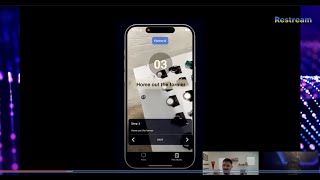
Hey, thanks for having me on, Kieran. So my name is Devin Bhushan. I'm the founder and CEO of Squint. Squint is a product that allows you to create a how-to guide for every machine on the factory floor. I think, you know, today manufacturing is going through a period of really high turnover, and as a result, they're having to hire as fast as they can. So with that kind of the way that they train these workers historically has been this in-person method where they pair them with an experienced veteran, someone who really knows what they're doing. And this person usually watches over their shoulder and walks them through this process for a number of weeks until they've learned. Obviously now this doesn't really scale when you have more new workers than experienced veterans, and that's kind of what's happening right now. And so that's where Squint comes in. So instead of pairing a new employee with that veteran, you can actually give them Squint and they can hold up their phone or tablet at a machine and actually learn how to use it properly and safely with instructions in front of them basically while they work.
Cool. And can you talk a little bit more about just like why you're excited about this opportunity? You mentioned the high turnover in the industry and sort of how the product is used, but yeah, I would love to kind of hear more about, yeah, why you're excited about this.
Yeah, I think it's really exciting for kind of two reasons. Well, there's a lot, but I'll talk about two reasons. I think one is the kind of the technology and the other is the customers. So on the technology side, I think we're finally making an AR product that the world can use for real. And it's actually like changing the game for everyone it touches. I think from an engineering perspective, this is the kind of technology that at least Personally, I've dreamt about for years and I've only ever been disappointed when I tried versions of AR. Squint really works and it's magical and impressive every time I use it even. For that reason, it's really cool to deliver on the promise of AR that we've all envisioned for so long. On the customer side, I think the impact of the product is really felt by our customers. So for instance, we work with manufacturers like Colgate-Palmolive, Volvo, Siemens, and our customers kind of repeatedly tell us that we've cut their training time in half and it's really changing the way that they can plan and hire and train their workforce. And so I think those are the kind of two main reasons on the product side and the customer side that I'm really excited about Squint.
Awesome. And I'd love to kind of take, take me back to the beginning. I remember watching a video from Menlo Ventures and you talked about starting Squint, and one of the first things you did was you researched and scored all the verticals that you could bring this AR technology to. Why did manufacturing grade the highest?
Yeah, I think, you know, like I said, so right now manufacturing has a really high turnover problem and it's a heavily paper-based industry and word-of-mouth based, which really gives Squint an opportunity to partner with these inspiring brands. That have historically been kind of underserved by technology. So, you know, we have customers who just love solving problems. And I think the really interesting thing about this industry is that this problem-solving approach is really ingrained in the way that manufacturing works. So like, for example, most of the machines on factory floors are either modified or entirely custom-built. Because they basically look at, you know, what's coming in and what needs to be going out, and they build something for that specific thing every time. And so as a result, you look at the manufacturing floor and it's a marvel of new technology that's all novel. And I think when you think about the mindset that it takes, that approach to problem solving, it lends itself really well when trying new technologies and being receptive to them, you know, like Squint, for instance.
Cool. And you mentioned some of these brands that you're working with. These are like very large enterprise clients, Volvo, Michelin, Simeons, Hershey's. Kind of curious about the customer side of things. So like when a customer call goes really well and they're sold immediately, like what's the most attractive part of the offering? And then on the flip side, like if a customer is skeptical and they get stuck, like where's the pushback?
Yeah, I think, you know, kind of interestingly, the answer is the same for both of these things. So when we first like show off the product, the first thing that customers ask about is like, hey, this looks really awesome, but how long does this take to actually set up? Right? And historically, if you go and you kind of take a look at the, like the space that we're sitting in and AR as a whole as an industry, It's been very hard to set up and configure. And so with Squint, it actually just takes minutes. The really cool thing is that you map an area, which is how Squint recognizes spaces or objects, and that uses just computer vision. There's no special hardware. It takes a minute. And then basically the next step is that you create a procedure. And the way that works is you film a video of someone doing the work, and then we use AI to write the how-to guide. And so in a matter of literally maybe 5, 6 minutes, you've created a work instruction with an augmented reality guide attached to it. And once we show that off in a sales call or in that follow-up call with customers as they're like exploring the implementation, it really just blows their minds. And I think it goes from being the thing they push back on to being the thing that they're most excited about pretty quickly.
Cool. And Squint's vision is to bring this AR technology to other verticals. So you're starting with manufacturing, but you've teased you want to introduce this in other verticals. When do you expect to start selling into some of these other industries?
Yeah, I mean, right now we're really focused on bringing it to manufacturers. I think, you know, there's still such a large untapped market in this space that there's millions of people that we could really be serving if we deliver on, you know, kind of the promise that we've created here. I think other industries are something that we definitely will grow into soon. I just can't say exactly when. There's certain challenges and things that we have to kind of overcome before we kind of get there.
Yeah. Can you talk about maybe some of those challenges that you foresee when implementing this technology to other verticals?
Yeah, yeah. I think, you know, as, as with anything else, just like we did with manufacturing, you have to do a lot of research in spaces before you actually build, um, you know, something, uh, one thing we say internally is like build with empathy. So in order to really build with empathy, you need to actually do research and understand, uh, what problems someone is trying to solve. So rather than kind of rolling Squint out without thinking about how it will serve these other industries, I think the way we want to approach this is, um, some intentional planning and roadmap adjustments based on what we learn after we do that research. And so That's primarily the thing. And for us, like scaling the team and scaling the product are, uh, are hard things to kind of do while we're also trying to focus on this first industry and really deliver on the initial product.
Makes sense. And a few months ago, I was watching this video interview you did and you kind of teased you want to become sort of like this integration layer, uh, where there'll be plugins to get domain-specific source of information similar to what ChatGPT and OpenAI just did. Can you share more about your progress around building that integration layer and why are customers excited about that?
Yeah, I think, you know, I think of Squint as kind of the system of execution for operators. And so, you know, our customers have invested over the years in various systems, like some examples being SAP, IBM, Oracle, things like that, that have kind of been around for a long time and are built around enough that they really can't move away from these. And so the, the kind of challenge they run into is they don't have a good way to surface all the information across these systems to operators, and then also easily let operators on the factory floor manipulate this data without having to onboard every new operator to all of these systems that they have in the backend that maintain various aspects of the floor. So if you think about it, what we're trying to build with Squint is kind of that single layer that operators interact with, and then behind the scenes, Squint is manipulating and surfacing data from various systems. And so once you put something like this in place and you connect it to all the right systems, the thinking is there's like really one place that people touch and it accesses the existing suite of systems of record.
Cool. And taking a step back, AI and AR technology are fairly new and the advancements in these industries are happening pretty rapidly. Kind of curious, like, what are you paying close attention to in these fields as it relates to Squint and your long-term vision for the company?
Yeah, honestly, everything. I think, like you said, things are happening so fast that The things, you know, I'll pick something. So I think the thing that I love tracking are kind of infrastructure advancements. So on the AI side specifically, I think that's where opportunities will arise for us to use new kind of foundational technology to improve the Squint experience. I think my take on AI and kind of the direction we're headed is that it's always more powerful when you can pick it and kind of adapt it to an existing product and enrich the existing solution rather than offer it, you know, out of the box as like an input/output offering to your customers. And I think that's what we're trying to do with Squint, right? So that's why like infrastructure improvements on the AI side really let us add kind of superpowers to Squint.
Cool. And I want to sort of transition towards questions around the team and culture. So you guys have been around a couple of years, you just raised your Series A, but yeah, kind of curious, like, why is this the right team for this opportunity?
I think we have a really incredible team that's— that there are really 3 qualities that I think we share across the board. So everyone is really product-minded, everyone is really empathetic, and everyone's really curious. I think those are kind of the key traits key traits to putting together that team that can tackle an emerging technology, in this case AI, AR, and actually create a product that really disrupts a space that historically has been kind of behind on the technology side, like manufacturing. So I think, you know, generally speaking, like we need people who can understand these problems and come up with great, like out of the box solutions. And that's what we've done so far is our, Our team is all independently very good at these things.
And when I look at your team, it's very clear that you guys have a lot of expertise in AR technology, but coming in, you didn't really have much experience with manufacturing. Kind of curious in like, in what ways has being an outsider to an industry you're building in impacted Squint?
You know, that's a great question. I was thinking about this kind of the other day. Reflecting on this year. And I think it's forced us to, like this lack of exposure to manufacturing prior to building Squint, this has forced us to really start from zero. And I'm on calls every week and we still just assume that, like, let's not assume that we know the problem. Let's really ask the most basic questions to our customers. And in the process, I think what we've discovered are many use cases and areas to address that, you know, if we'd come in with prior knowledge or prior kind of ideas that we were sticking to, then we would have asked much more advanced or focused questions and completely missed these problem areas. And as a result, we've started building Squint from the ground up with like the operator mindset in mind. And that's what's led to like really quick adoption and the ability to work with really large companies like we've talked about.
Squint is in the process of scaling rapidly. Startups often talk about trying to preserve their early team culture as they scale. Kind of curious if you can talk a little bit more about the culture today and what parts do you want to ensure remain intact as you scale?
Yeah, I think I said this a little earlier, but I think the two most important things that I would love to keep intact are empathy and curiosity. So just like our engineering and product teams right now have been really tackling things from the ground up and trying to create impactful solutions. I think maybe the most important thing is being able to think outside the box and being creative with some of these solutions because there really isn't, there isn't a pattern in this space that we're copying, right? A lot of these gestures, a lot of these interactions We're creating from scratch. No one has really implemented AR well before, at least not in an industrial space. Those are some of the things I'd like to keep. I think one other thing I'll add on to that, and maybe most of all, is that we work really fast. I think at a startup this stage, speed is your moat. I would love to keep those three things around: empathy, curiosity, and speed.
Cool. And you sort of touched on this like out-of-box thinking that you want to have within the team. Can you talk maybe about one of the problems that you guys have run into and maybe one of the solutions that you guys have built sort of from the ground up?
Yeah, I'll give you an example. So when we first built Squint, the, you know, the kind of the full footprint of the product was this ability to create work instructions and kind of that how-to guide step by step. And then really you could take that and you could start pinning these steps and put them around the world and then hand the, the tablet or the phone to an operator and have them walk through it. The end result of this was extremely impactful and that's where we saw, you know, the ability to cut training time in half. But then when we looked at this process that people are following, we, we learned that they were actually spending like actually hundreds of hours coming up with the procedure that they put into Splint. It was something that required a lot of research, so they would take documentation specialists, put them on the floor and say, hey, go watch this procedure. You know, it could be a 3-hour procedure. Watch this like 10 times, take notes on every step, and then go over your recordings, your notes, and try to put together a guide that's a step-by-step flow of exactly what to do. And the kind of repercussion of getting this wrong is like someone gets hurt.
Right?
So it's really high stakes. What we did was we saw that and we're like, wait, I think we can solve this in a better way. Let's take a video and let's take that video of the operator doing the job correctly and let's feed it in and create a multimodal LLM that we can actually, like this flow that we can feed this video into, learn from it and actually write a really good SOP or standard operating procedure. And once we've done that, we've actually unlocked like this whole creation process. And there's nothing like this in market, right? Because no one kind of took this bottoms-up approach to solving this problem.
Great example. And, uh, can you highlight some of the open roles you're hiring for and some of the projects they might be working on?
Sure. Yeah, I think, um, we're hiring across the board. So, um, some of the roles we're hiring for, uh, director of sales, director of product, uh, sales engineering. We're hiring SDRs, accounting executives. We're hiring in engineering and we're hiring designers. So literally all across the company, I think they're all really foundational roles, but if I had to pick maybe two to focus on, I would pick the product and go-to-market leaders as, you know, I think interesting positions where you get to kind of come in and not only grow the existing culture, but also add your own elements in at kind of this like early stage of the company as we're really starting to grow. Um, so it's, I think it's a chance to shape a product and go-to-market motion that's really unique. Um, after all, I think how often do you hear about selling enterprise licenses to a mobile app? Um, I think that's like pretty interested, pretty, um, pretty unique and hopefully interesting to people out there. So, you know, if anyone's interested, please reach out. We're hiring.
Awesome. Great way to finish. I'll make sure to link, uh, your careers page so everyone can find all the openings. But yeah, thank you so much, Devin Bhushan, for joining me today.
Thanks, Kieran. Thanks for having me on.
More from Devin

What If Your Factory Could Think for Itself? Featuring Devin Bhushan of Squint

L129 - Squint CEO Devin Bhushan Shares His Journey Creating an AR Platform for Manufacturers