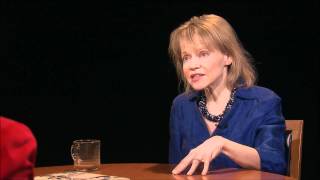
Bill Schaninger Breaks Down The Key Workplace Trends Of 2023

A Diane Brady interview with Bill Schaninger (senior partner, Modern Executive Solutions) reviewing major workplace trends in 2023 and implications for 2024. Key themes: generative AI (dominant topic—use cases, ethical/regulatory uncertainty, private vs. open models, human-centered AI, need for validated data and refresh cycles), DEI reframed as talent strategy despite legal challenges, and workplace dynamics (productivity, hybrid/remote work, outcome-focused work vs. performative presence). The conversation mixes high-level framing, practical advice (e.g., commit to refresh cycles, focus on validated sources), and anecdotes about leadership choices and employee experience.
Chapters
Hi, everybody. I'm Diane Brady. I'm here with Bill Shaninger, who is senior partner of Modern Executive Solutions. Good to see you, Bill.
And you, Diane.
We're talking about the year that was the year ahead. I want to start with what was on your radar for the world of work this past year. What do you think were some of the transformative decisions, moves, et cetera?
Well, I mean, you know, for sure the generative AI stuff has been dominant.
Right, right.
No doubt about it.
But only a year since it basically was launched in the world.
And that's. And all the artifacts that came off that obviously, you know, you and I talked about. Right. The open AI and that the entity.
Yeah.
But also the underlying sense of how it impacts every function, how it can impact most business models. But always coming around towards the idea of the impact on the employee where you have like the branch now of human centered AI. And I think that is still swirling where people are trying to both catch up with the rhetoric, catch up with the technology, and then just come to grips with what are we actually allowed to do and then what do we want to do?
And I think from an ethical point of view, a regulatory. Wouldn't you say both. What is allowed? Okay, both.
I was, I was at a conference a couple of weeks ago on, you know, future work needs AI.
Yeah.
And there were some folks there from Watson. There was really thoughtful folks almost around the ethics of what you put into the large language model. So what's legally sourced, what's ethically sourced, how transparent is it versus what should we be doing? Started looking a little bit how we think about PII for people and the idea of, well, what should be in there. And I think the jury's out, honestly. I mean, it used to be old school governance. This is what's legal, this is regulatory guidance, this is the company rules. This may be best practice. And then here's what is a free for all. I don't think we're clear on that just yet.
If you're a leader in the AI space, when I've talked to people, they're either like they give you a tsunami of things they're doing or there's a certain paralysis you sense of not quite knowing where to make your bets. Do you think that we're. There's more clarity around that now, the people you talk to?
I for sure think we're coalescing around some use cases. I think if you were trying to structure it, maybe the first branch of that tree is do we know what we know? Meaning that Is the material that you could put into the LLM, is it actually Right, Right, right. So if it's open source, okay, that's just a risk because you don't know that everything in there has been validated and is true if it's what you know, it could have been. Right. What's your process for keeping it up to date? But at least you know, at some point it was accurate. So I think the extent to which you have the information going in, it's been validated and then the refresh cycle, I think that has to be worked out. But you can imagine stuff that we used to talk about about like, you know, massively personalizing healthcare education, onboarding training. Well, that might be pretty nice if there's just a function that allows it at some point to be refreshed and you know, it's right.
Right.
I think those use cases will run pretty well. The ones where we start having to get into validating anything, particularly with performance or pricing or sensitive customer information, one degree more challenging because you're like, well, if that goes in the LLM, does everybody have access to it? So I think you're likely to see more fragmented private models that are proprietary. I'm not sure where the open goes on that front. Right. Because we can't give everyone access to it. And in the world, for people, certainly it varies by regulatory environment in how you can make. Remember when we were all talking about machine learning and predictive algorithms for screening just resumes.
Yeah.
There were some country countries, particularly like in the eu, the members of the EU or in the uk where they were like, well, we want a human involved, we don't want a machine excluding people. I'm not sure that we have that one nailed just yet. About what can we use the algo to meaningfully differentiate between people before we move on?
Because it's such a big topic. Is there any advice when clients come to you in the whole realm, it's hard because everything's contextual to the industry, to the person. But any general advice you have as people look out to 2024 as to how to be thinking or where to focus on with regard to gen AI or AI writ large.
I just love the idea of maybe take stock of knowing what you know. And it sounds trite, but if you can draw a line in the sand and say we're going to commit to not if not an ongoing refresh rate, once every six months, once a quarter, out with the new. Yes. Because you can avoid garbage in, garbage out.
Yeah.
Because boy, if you Think about, just think, if you're a professional services firm, let's say, maybe you make pitch packs or deal packs. How much time do you burn on the bright young things you hire out of the best schools in America or around the world where they're pulling slides? That seems kind of dumb.
Yeah. With the date two years earlier.
Right. No kidding.
Data on it.
But I love the idea of the time and capacity that you free up from that mundane activity to be put back into problem solving, apprenticeship, talking about presenting with impact. Well, now suddenly the job is a whole lot better. It's more exciting. Your employee value proposition would go up. Ex is certainly better. And maybe you go back to saying, we might have a smaller group, but they're certainly more developed.
Yeah. Let me ask, let me pivot. Since you're thinking of regulation. I'm actually thinking now of the Supreme Court and the decisions that were made around affirmative action, et cetera. That really struck both a nerve with a lot of employers who now feel a certain, can I do this? Am I allowed to do this? What are you seeing?
So one of the nice things is I have a colleague at Modern named Larry Eamon. He was long time at Gallup.
Yeah.
Senior partner colleague there. And he convenes the most amazing groups of senior leaders, many of them chros, some chief talent officers, and then broadening to include CEOs, chief marketing officers, chief finance officers, et cetera. And I've gotten to participate in several of these, these meetings, these fora, if you will. I've been so impressed and so just enlivened by almost a universal oh, no, we're still doing it. We just don't care. They can rule what they want about colleges. We're committed to diversity.
Right.
We know this is the right way to run an organization and we are committed to doing it, period. The first time I heard that, I was like, oh, thank God. Right. Because you remember they had the roundtable and all the ESG sign offs right before COVID Right. And then immediately after was this first real test and some of them backslid off that. And it wasn't a multi stakeholder perspective. It was fire shut down. Do this right.
Yep.
Excuse me. And I thought, oh, how great. Right now what I do think is interesting is I think many of them are being thoughtful about raving, waving the red cape, that is some of the titles. So is a chief diversity officer just focused on diversity or is that person really the chief talent officer? And they were being thoughtful about the group of people they bring in, in the pools and how they pick leaders.
The word diversity needs a rebrand people. Hello. When you say inclusion diversity mean to everybody wants the same outcome. But it. It evokes a certain bureaucracy and a box checking for sure for sure.
I mean, right or wrong, it has come to be a bit like old affirmative action programs. It's an EEOC exercise. When I think the modern version of it really is around talent. You know, I'm looking for alternative sources of talent and finding ways to be skills focused, not pedigree focused. Well, that's wonderful. Right. And for sure, when diversity is treated as an outcome, not an activity, it has a whole different stance to it. And so maybe we're really turning the corner Better for sure. Yeah. You know, if you think about DE and I E in particular, equitable access to opportunity. Should start upstream and recruiting how you're thoughtful about engaging candidates, how you onboard them, the kind of training, the first placement, all of that. All equitable in access and in the environment you put them into. Don't make them a one, don't make them singular or a token. It's an inclusive environment where you can look around go, oh, I can be here. I can see this. That's wonderful when you do that, particularly the and I together, you get great D outcomes. That's talent. And so I think that's. I think it's nice to the repositioning of that.
I want to the e. I merely think of economy and I am really unclear when I speak to leaders as to how they're thinking about the economy because I keep hearing about more layoffs, concern volatility and yet the economy looks pretty good.
It does.
You know, like technically. So what are people coming to you for? What are you seeing yourself?
You know, it reminds me a little bit, a little bit after not so the sharpness of when the dot com crash happened.
I think there was talking.com crash back 2000.
Right. There was a hyper indexing towards anything that was E dot or you know, whatever. Right. And I think there it was a rebalancing of financial capital and human capital back towards a broader range again of different sectors.
Yeah.
So you had more puts and takes as opposed to everybody just piling into things they shouldn't. In the financial crisis, I felt like the softer landing was a little bit more achieved because we kind of licked our wounds on not understanding risk.
Thank you, big government.
Yeah.
Partly not totally partly for sure.
But a more thoughtful response about how do we. How do we keep Americans to work? How are we thoughtful about how we participate in the global economy and ease our way back in. I also think we might have learned a little bit of a lesson about how not, how not to treat our houses as ATMs.
Right, right. Right.
You know, when you're, when your single largest source of private wealth is suddenly being put underwater, it's problematic from, from, you know, for a consumption economy. Right. This time I have a. You know, clearly I'm not an economist. I mean my PhD is in management. Right. But I know how to look at the economic numbers and it always looks pretty good to me. I'm like well what are we concerned about? I think our hyper fixation on the tech sector in general has made us a little wary of the massive run up and spike that happened when we were all closed in.
Yeah.
And then we're reopened.
You know,.com crash, financial crash. You would argue the next big crisis really was Covid. Are we still in recovery from that? In some ways I think.
But boy, I think more is behind us than is in front of us. That feels that way to me.
Yeah.
I mean the only thing that would be if we got a variant that suddenly the test didn't work on or we needed a real new approach. I think that would be scary.
I'm thinking more the mindset. So like when you think about the concern about the economy is the concern that let's take productivity and the fact that are people fully back to work in the sense of what we're used to seeing pre pandemic.
Right. Well, I think the jolts data would suggest that people who want to work have opportunities full stop. We still have a gap between what's people looking to fill the job and the people who are. That's still there. Right. We don't have enough people still working working in the traditional sense. Let me be clear. We had a lot of businesses start up. I do think this phenomenon of people what was being labeled double dipping. I think that's a thing probably between 5 and 5 to 10% of the.
Workforce working two jobs at once.
Yeah.
Ergo not doing either job that well.
Well, I don't know. I mean look, that's, that's the normal response. You know my former colleague Aaron de Smet and I used to talk about this a lot and saying why do we care about 40? What's magical about 40 hours? Shouldn't we care about the outcome?
Yeah. If you can do it in 15, good for you.
Right. I mean I re engaged on an op ed I'd put out, I don't know, over a year ago. On why not the 20 hour workweek. Why not?
There was a book. The four hour workweek wasn't there. And that was apparently doable for him. But. Well, I think what's interesting is you've got this division between the remote, the in person. I don't know if there's a generational difference. There's been some indication that's the case. But that does seem to create a different mindset for the companies that are pivoting one way or the other. Absolutely not everybody's true, like hybrid. They all lean one way or the other for sure.
And you know, one of the things I had done with my McKinsey colleagues was looking at this and saying, is it age specific, generational, or is it family context? Family context explained way more than age.
I've got kids and I need to be home.
Yeah. Usually it was if you had one mouth to feed and. Or a second major, like sort of claim on your time.
Yeah.
You know, I've got a parent who's ill and I have a child. I have two childs, you know, whatever. That was a big, big, big differentiator in terms of their willingness to leave without. Without another job lined up and their need and desire for flexibility. And flexibility. Here is the expanded version of what I do, how I do it, where I do it, with whom I do it, and when I do it. The nonlinear workday was really a product that I think many people learned was possible during COVID Got to get the kids off to school, feed them breakfast. Oh, but wait, now they're homeschooled. Okay. I can get these hours in at work because my partner's, you know, that sort of juggling.
Yeah.
As opposed to the show up by 9, show up at 5. So I think we are still working that out because now that people have gotten a taste of, I can get the outcome done. The deliverable. Why do you care when I do it? And to me, this is the big. This is the big conundrum. Outcome focused versus performative, which may or may not have the outcome.
Define performative when you. Because I don't think well, being seen.
Being seen to show up at a certain time, being seen at one's desk.
It'S like clocking, you know, punching the clock, basically.
And, you know, it's not universally good or bad. I mean, I will tell you my. I have a 24 year old son who, you know, works in the consulting arm of one of the big four in his intern summer. And in his earliest work, he wants to be in the office Every day he wants to be at the client side.
He wants.
To. Me too. Me too. I mean, I've, you know, modern is. Had been largely remote. Born more out of search.
Yeah.
You know, than the consulting arm. And I have found myself as a new leader learning new people, saying, I just desperately need to see these people.
Yeah.
So I convened them, you know, last week and it was like for me, I needed to fill up. It wasn't like I was coming out of an era with a, you know, with a desk and a bunch of sea of cubes. I just needed to see these people and we could start developing a language and some norms around how we're going to work together. What I worry for organizations now is they continue to allow themselves to be done. Run down the road of a 1 or 0. And I think we have got to find a way to say, oh, you get this. I get this. As if it's the person driving it or the company driving it, as opposed, let's let the work drive it. There's nothing wrong with saying starting new work means we should probably be together.
Yeah.
The company ought to be able to say, I get a day, a month because I want us to celebrate and know what's going on. And the unit work in ought to get together for some coordination. That ought to be reasonable. To this point, it still feels a little bit like a tug of war to me. And when I hear leaders talking about it, it is almost always describing a power dynamic and what they have to do or what they're going to do as opposed to work driven.
More from Diane
BREAKING: Alan Dershowitz Assails Claudine Gay After Harvard Board Votes To Keep Her As President

BREAKING NEWS: Alan Dershowitz Explains Why He Sees No Smoking Gun In New DOJ Charges Against Trump
Mary Callahan Erdoes, Bruce Flatt, Dambisa Moyo Talk Geopolitical Risks | Forbes Iconoclast Summit

This May Be The Real Reason Why China Is Flying Spy Balloon Over US: Gordon Chang | Forbes Exclusive