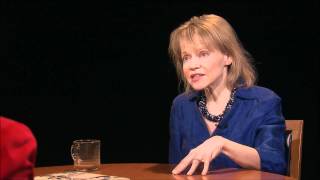
This content was created by Diane Brady. This content was uploaded by Diane Brady. This is a YouTube interview titled "Inside The Company Supporting Women In The Workforce" (created 2022-09-22) in which Diane Brady (assistant managing editor at Forbes, host) interviews Tiffany Dufu (founder & CEO of The Crew). The conversation covers The Crew — an enterprise offering that matches mid-career women into accountability circles to support retention, advancement, and holistic well-being — its growth metrics (about 2,500 members and ~13 corporate partners), the recent acquisition/partnership with Mentor Method to bolster enterprise sales, insights on diversity/DEI and the ‘‘leaky pipeline’’ for women (especially women of color), and advice for employers on supporting employees' lives outside work.
Questions this video answers
About 2,500 members.
About 13 companies.
58% women of color.
Mentor Method (Janice Omadeke and her team).
Diane Brady (host) and Tiffany Dufu (founder & CEO of The Crew).
Chapters
Hi everyone. Welcome to Forbes newsroom. I'm Diane Brady, assistant managing editor at Forbes and I am here with Tiffany Dufu, who is founder and CEO of the Crew. Tiffany, great to see you.
Thank you for having me.
Let's talk about, I know you've got a big acquisition, but let's start with the Crew. And I know you've done label league. You've been in this space of leadership for some time. What is the Crew and what differentiates it from some of the other peers out there?
Yeah, right now, I mean, the Crew matches women in accountability circles to help them meet their life goals. And right now a lot of companies are managing the great reshuffle, the great resignation, the pandemic. We saw many women leaving the workforce. And what the Crew is trying to do is ensure that companies can retain and advance their mid career women talent by meeting their needs. There are three things that folks really are looking for from their employers. One is a sense of meaning. Everyone wants to live a purposeful life these days. Number two is advancement and not just in terms of their salary or their title, but they want to see evidenced evolution of the self. I want to feel like I'm growing and I'm learning. And the third is integrity and not just hybrid worker flexibility. People want to know that the holistic nature of their life is being acknowledged and it's being valued by their employer. And so the Crew does those three things. It meets those three needs for women. And by partnering with companies to match their employees in accountability circles, teaching them peer coaching and giving them personalized recommendations to help them meet their goals, we're.
Really committed to unleashing is an accountability circle. Basically like I get this network, I tell them what I'm going to do and they hold me accountable for doing it. Or what is that?
It's not rocket science. We're 90% more likely to realize our goals when we've spoken them out loud, written them down, that use our goal tracking tool in order to manage their success. And if we meet with people on a regular basis to do exactly that. Diane, hold our feet to the fire.
And is this all in the context of one company or is it, you know, because I know one of the areas that you especially have been strong on is in the realm of diversity and also the struggle that companies have, especially for women in that sort of mid career, to create, I guess, connective tissue and networks. I mean, talk more about why a company would go outside to a group like you versus creating these networks internally.
It's a great question. Part of the reason is that within these companies, a lot of the women, particularly women of color, are underrepresented in the crew. They are not underrepresented. We're 58% women of color. And what they need and want is a safe space for them to acknowledge their professional goals, but also their personal goals, whether it's starting a meditation practice or being on a path to financial freedom. And so having a place where you can. You can help to get the support that you need, but also connect to a larger constellation of women and diverse women is something that's really critical. In addition to that, the crew, of course, is the largest database of women's goals. We know what they want and what they need, and those insights can support companies with developing their DEI and HR strategies.
How large is the CREW right now? How do you quantify? You probably won't tell us how much money you're making, but is there some other measure by which you can sort of talk about your growth?
Yes, absolutely. Well, certainly, we love that we've grown quickly in the wake of the pandemic. Right now we're at 2,500 members and growing, and we work with about 13 companies.
And the Mentor Method, what is that and why did you acquire it?
We're very thrilled to be acquiring and partnering and collaborating with Janice Omadeke and her team at the Mentor Method. The reason why this acquisition was important for our business and why we're so excited about it is because they add fuel to our sales engine. Janice and her team had been selling into enterprise for some time, and so we're acquiring their sales team, their pipeline, and we just can't wait to add that fuel to the work that we're doing. Outside of that, Janice Ilmadake is a superstar, so I'm very happy to have her as an advisor, and she's very good at developing strategic partnerships, and she's going to help us fly.
Great. That sounds good. Let's step back a second and just talk about women in leadership. You said the pandemic was a time of really accelerating your own growth, but I want to get back to just the fact that we have been talking about these issues for many years. You've been working on these issues for many years. What is it in your mind that has continued to basically keep the numbers pretty paltry in the senior ranks when it comes to women and women of color?
Well, part of it is the challenge that the crew is trying to solve for, which is that every company has to recruit the talent, so they've Been able to get them in the door. They have training, onboarding programs. Once a woman gets into the C suite high enough, they can't afford to lose her, so they're going to invest heavily in retaining her. That leaves a ton of women in the middle, generationally, professionally, who are really resulting in a leaky pipeline. And so that's why the crew is here, to really provide an affordable and scalable solution to support women in the middle. That's really been the challenge for companies.
Why is this an enterprise product versus a personal product? Like, I can't go and sign up for what you do?
No, you cannot do that anymore. And part of the reason is that women who are in the middle have a lot on their plate. They're very busy. They're at work, though. And so we decided that meeting her in the workplace is more efficient for her. That's where she learns about the crew. And we can also ensure that her journey in the crew is then supported, supported and endorsed by her manager, by her boss. She no longer has to figure out how she's going to meet with her crew outside of work. Her crew journey and her support of her personal and professional growth is now part and parcel with her experience at work.
Do you have any advice for employers when you look at what companies typically do wrong, because people do want to recruit, they do want to retrain, retain and retrain in some cases. What is it that if I'm sitting here, I'm a CEO or a chro, what advice do you have for me besides engaging the crew? What things can I do that are not being done enough?
Well, the first thing is caring deeply about people's lives outside of work is really important. Everyone wants to bring their full selves to the table. And there are aspects of people's identities that they no longer feel is acceptable to leave at the door in order for it to be acceptable for them to work and be a part of the culture and environment? If someone loves crocheting, they want to be able to start a crocheting club in the office. If somebody wants to run a 5K, they want to be able to train for the 5K. And I think that employers that really understand they've got a value and acknowledge and care about the holistic nature of people's lives is so critical. I think the second mistake that employers make is wanting to keep the talent under wraps, meaning they don't want their talent to be exposed to other companies, larger networks. They're so concerned about someone else recruiting the talent away that they don't understand that in order to invest in your talent, you've got to give them access to opportunities and access to people that may extend outside of the realm of your walls, of your company. And then you build loyalty, brand loyalty, by giving them this accessibility.
Great. Well, thanks very much, Tiffany, and good luck.