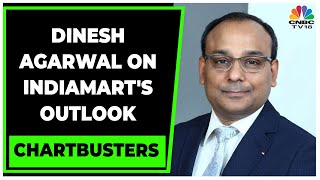
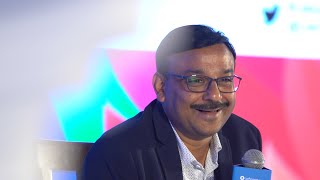
In this interview, Dinesh Agarwal recounts the evolution of India's internet ecosystem from its official launch in 1995 to the present, highlighting the early lack of consumer readiness, infrastructural hurdles, and the role of telecom and smartphones in driving mass adoption. He describes the humble beginnings of IndiaMART in 1999 as a web‑services and directory venture, the strategic pivot to a searchable B2B platform, and the challenges of building a business without early venture capital. Agarwal explains how macro‑economic events—demonetisation, GST, and the COVID‑19 pandemic—forced SMEs onto digital channels, accelerating IndiaMART’s product‑market fit around 2014 and fueling a ten‑fold revenue growth to a ₹1,000‑₹1,200 crore, profitable enterprise. He offers crisis‑management advice centered on hard work and financial prudence, reflects on the transition of the Indian internet from a short‑lived frenzy to a foundational utility, and shares his ongoing appetite for new internet‑based business ideas.
Chapters
I distinctly Remember it was 15th of August 1995. The Prime Minister announced it from Lal Kila that now we are launching Internet here in India. Then demonetization happened which actually forced the market to learn how to survive without in a digital world. Then GST happened and a lot of SME businesses actually got wiped out during these 2, 3 crisis.
Dinesha, thank you so much for joining us today. So the idea of this series is to decode how India's Internet economy is evolving and you saw the arrival of Internet in India. Take us back to 1995. How was, how was the public sentiment around Internet? Were people enthusiastic, cautious or how were people reacting to it?
I distinctly remember it was 15th of August 1995 and I was in US waiting for Internet to arrive here in India. The Prime Minister announced it from Lal Kila that now we are launching Internet here in India with VSNL being the only one. And the very next day I said I'm going back to India packing my bags. It took me two, three months to come back here. When I came back here, by the time we hardly had a couple of thousand Indian Internet users. I think the very few first enthusiast world took onto Internet but then it didn't really become really mass or really even class adoption until around a decade later. While there was a lot of excitement around Y2K and all that, maybe some around Internet bubble in US, but very little here in India. So the media was excited maybe, but businesses were clearly not excited. Very few venture capitalists, very few companies like us were excited. NRIs were excited because they had computers, because India had a very little computer penetration by then and even very little telecom penetration. And telecom was the backbone for Internet arrival in India.
Very interesting. So you said that businesses weren't really enthusiastic yet you decided to build India Mart. 1999 was the launch those four crucial years. How was it like building the company.
Somehow without being money being available like what it is available today, equity venture or angel money. And I didn't really know about it. So for us it was as simple as making a services business with some kind of a support from friends and family. So we started making websites because that was the first thing that comes to your mind. Internet means www or a website. And within first couple of months we kind of came to know that no point making websites for Indian consumers because consumers were clearly not ready and maybe they would have been ready but telecom infrastructure was not ready. The dial up Internet connection was very flaky, the modems will not work, the Internet will disconnect very frequently, it was very slow. So one was the availability of the computers itself. The second was the reliability of the dial up connections. That made it almost me look at it and say next five years nothing much is going to happen for Internet users here in India. So the second best part was exports. And as we started doing for our exports we were taking help of various directories that were available, trade directories that were available. And as we started making website, we found that it is a lot more easier just making a website may not really become a very, very large scalable sticky business. And that's when we said oh, these directories are the key to those stickiness. And these directories have limitations because the directories are not updated, not searchable, had limited number of pages. And what if we can put unlimited size directory with the real time updation and search capability so as to become a minimal search engine. And that's what we started building. So I think the first five years with simply a website making business with some directory being built side by side, an exporter's directory being built. But as the time passed by, the proof of the business started to come. And as we hit about a crore of revenue and that's when we started.
The company B2B E commerce space. I think those are Sola Satra Kajo period was very critical because we saw the launch of 4G, we had demonetization and then came GST. So it sort of propelled SMEs MSMEs to come online forcefully, sort of. Right. Do you think with it major catalyst, the impact that companies wanted to make, that has been made, the ground has moved today.
I think yes, you know, pre 2000, 15, 16, 15. Because most of the people, most of the consumers in India got the smartphone and a reliable Internet connectivity typically from 2015 onward. So between 2005 and 15 I think all the desktop users had got Internet connectivity or laptop users had got dongle and things like that. But that is still limited to maybe 5 crore people, 10 crore people. But then by 2015 suddenly with 5000 rupees or 10,000 rupees smartphone and also the Internet connectivity being 200 rupees, 300 rupees, more than 200, 300 rupees. The reliability of the connection was good. So that actually exploded the market. Then demonetization happened which actually forced the market to learn how to survive without in a digital world. Then GST happened and a lot of SME businesses actually got wiped out during these two, three crises. You know, first demonetization, then GST and after two years Covid happened so effectively in last five, seven years. Last five, seven years between 2006 and 2016 and 2021 businesses have gone through a lot. Lot of good learning, lot of bad things that have happened to them. We have been looking for a product market fit in domestic. We turned domestic in 2010. But I can make a confession that we really struggled between 2010 and 2014 to find a product market fit. Suddenly in 2014 I keep saying that we found a product market fit. I think 50% of that credit goes to this Internet on smartphone otherwise things would not happen and that got further accelerated. So if I say that we made a very unique product, I mean obviously everybody tries to make a unique product but there has to be some kind of a tailwind in the industry that you are trying to do. And who could be a better example than us? We start, I mean we got the product Market fit in 201415 if I remember correctly maybe we were 100 to 200 crore company. Today we are like a thousand to 1200 crore company. So in the last 10 odd years we have grown 10x and profitable too. So I think that that itself is a big validation of what B2B has done.
So if I look at India Mart's journey, there were two major incidents globally that affected the journey of the company. 9, 11 and the 2008 crisis. And the company successfully survived both these four. For businesses today, the geopolitical tensions have not been worse. Do you what will be your, you know, 2 cents on crisis management to the founders or entrepreneurs of today?
I mean two things that you can do much better than so much in your own control. One, you can start to work harder. That's always in your own control. So whenever crisis happened, when it came to survival, I mean you start to work harder. I mean when you start to work hard, I think you get luckier sooner than later. The second thing is, you know the crisis comes with a little Runway because whatever money you have in the bank. So be more cautious on the. I have always been more cautious during the crisis to not lose the money or hold on to the money or be more financial prudent and try anybody around you who is not agreeing to become financially prudent, keep distance from them whether it is employee or whether it is investor or whether it is media. Just because if you don't survive, you wouldn't, you won't fight, you won't. So first thing is your own survival. Survival is very necessary and mehnat is what you can do.
Excellent. I Think merely this will be the biggest takeaway from the interview. How do you react to the current frenzy that we have around startups, funding, valuation, becoming a unicorn, becoming a SUNY Con? You know, there's so much around. How do you just react to all this?
See, I don't think this, this is.
A.
Frenzy now because see, frenzy is something which, which stays for a year or 2 or 5. So in Y2K duration, when in 95 the Internet came, the frenzy was there for 2, 2 years, 3 years when Hotmail happened and when kill.com happened, samachar.com happened, they all got sold for huge, huge valuations. But the frenzied and died. You know, it is not. And then for many, many years it was. And now I think post 2014, 15, I think the dull period has been maybe 9 months rest all the time. It has been frenzy only so effectively. Even Covid could put a break to this frenzy for maybe 6 months. So effectively this is no longer frenzy now. I mean this is the future. In fact everything else could be, could have to adopt now, now it is no longer because 50% of the population is using Internet. World population is using Internet today. I mean that's like electricity, that's like water. So I don't think it's a frenzy anymore. 50% of the Indian Internet users may be using a voice to communicate, write a message or do a search. So it's no longer a frenzy now, it's a business. Computers was no longer a frenzy by y2k or so computers were here to stay. This is here to stay.
One final question, sir. If you have to go back all over again and start a new Internet business, what would that be?
Oh, I have so many ideas. I mean just that if I, if I didn't love this business and I'm not committed for another 25 years, I have so many things to do and I have done almost anything and everything in Internet in, In the first 10 years of my life. Then I kind of stopped and you know, dedicated myself to this only. I mean, but I'm always bubbling with the Internet business ideas.