Dr. Wood Explains the TIPP Program: How We Resolve the Trauma for Good
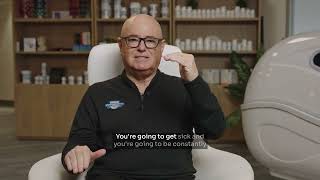
Dr. Don Wood developed a four-hour protocol called the Inspired Performance Program to resolve trauma and its physical effects. The method targets 2-3 traumatic memories with a reset technique, then uses 30 days of daily audio reinforcement. He links unresolved trauma to chronic nervous-system activation, inflammation, and immune problems.
Chapters
Quite often I'm asked, what is tip? What does TIP stand for? Tipp, it's the Inspired Performance Program. And what I have discovered and what we did through TIP is we understood that unresolved trauma creates inflammation. Inflammation compromises the immune system, compromises your neurotransmitters, neuroplasticity. So I developed TIP really because of my daughter. She had been dealing with two very severe autoimmune disorders. And so I had to come up with a solution to these autoimmune disorders to, to try to help her because we were told that there's no cure for it, we don't know what causes it. She's just going to have to manage it for the rest of her life. So TIP was really developed to figure out how do we get to the core issue, which is the trauma. If we can resolve the trauma, can we help alleviate some of these symptoms? If not eliminate them? And so what we're showing is that's possible. The TIP process that I developed was from a lot of research. I talked to a lot of people who had autoimmune disorders who were having health issues, and there seemed to be a direct connection. The direct connection was trauma. A lot of them were dealing with trauma, particularly childhood trauma. And when I asked what they were doing about it, it just seemed like it was just medication or trauma therapy, talk therapy. I thought very quickly, is that, what if they missed something? What if there's a way to resolve the trauma without having to just constantly manage it? So everything was all around living, managing and coping with trauma, living, managing and coping with the symptoms. So I'm going to explain what we do in TIP and why TIP is effective. It's basically a four hour process followed up by a series of audios that you listen to that I'll explain why we use the audios as well. But the first two hours of tip, either, if you're sitting one on one with me, I take you through the whole four hours. We also have an online digital version of it. It's the exact same program, except you're listening to me on video. The first two hours are education and science. I talk about what I learned during my research to try to help with my daughter. I dealt with a lot of people that were dealing with the same kind of issues as her, but really had no answers to it. So what I want to teach you is that it's a glitch. Trauma creates this memory and this memory keeps running in the background and it's constantly running. Your conscious mind and your subconscious Mind are two different things. The same way when I talk about the brain and the mind. When I talk about the brain, I'm talking about the physical brain, the hardware. It's the computer. If I drop my computer, I'm going to damage it. It's going to affect the way the computer runs. The same way with my brain. If I hit my brain, get a concussion, it's going to affect the way it runs. So the brain is the computer. When I talk about the mind, I'm talking about the software. The software is the programs running inside the computer. So if you open up your computer, you can't see the software. The same way if you open up the brain, you can't see the. The mind is the software running. You were born with pre installed software. It's all running below your conscious awareness. It's your subconscious. Your subconscious is running the programs for heart rate, digestion, breathing, oxygen, all the things that you don't have to think about. That's being run by your subconscious. The subconscious is very powerful. It's running about 95% of everything you're doing on a day to day basis. And your subconscious is fully present in the moment all the time it's running the programs. Your subconscious can't think. It responds. It responds to its environment. The conscious mind is what thinks. That's about 5% of your brain. Your conscious mind can think, imagine and create. Your subconscious mind responds to its environment. Here's where the glitch comes in. And this is what I talk about in the first two hours. If you think about something that happened to you 20 years ago and you feel an emotion, fear or anger, your mind is calling you into an action. The purpose of fear is to escape a threat. The purpose of anger is to attack a threat. So if you think about something that happened to you 10 years ago and your heart's beating in your chest, that's a glitch. Why did that happen? Because your subconscious mind saw the threat now that was coming in. So say there was something similar or same. Your mind goes into memory to say, what do we know about this? This is the same thing I talk about. It's like a book. All your experiences from your entire life is a manual that your mind uses to respond to. What do we know about this particular threat? What do we know about this situation? It uses those experiences to respond to what's happening now. Now can you see why that's going to create a glitch? If your mind goes into this memory, into this book and says, oh, we get Hurt when this happens and it's going to call you into an action. What's the action? To run or fight. But you can't run or fight. It's information that happened 20 years ago, it's not happening now, that keeps activating your nervous system. And if your nervous system keeps going into activation, inflammation is going to go up, immune system is going to go down. And what's going to happen? You're going to get sick and you're going to be constantly feeling these emotions and experiences. So the first two hours is all discussing all the science and how I learned what I learned behind the TIP program. The reason I do that is I, I think it's important for you to understand the science behind it, not magic. What I'm doing, the reason we're able to resolve it is because we can reset that memory. We can take that old high definition memory and change it into a lower format. So the way I usually explain it is I say, can you tell me what you ate for dinner last night? Most people will say, well I had blah, blah, blah, blah. And I'll say when I asked you that, you went into memory and you saw pictures, right, of what you ate. That's how you stored the memory of dinner last night. Night. But dinner last night wasn't threatening or disturbing. There's not a lot of detail to it, but enough that you could remember it. But if that's a threatening event, all your senses are heightened. So you're in a very heightened state. So it's recording it in high definition. So this high definition memory keeps activating you into a fight orf flight response only on information. That's what we can fix. We're going to reset that information into the same format as to what you ate for dinner last night. Top five calling for the action there. The emotion doesn't keep coming in. So once I get you through that whole two hours and you understand it, then we get into the particular events that are creating these emotions for you. So I'm looking for two to three events in your lifetime. Could be from childhood, could be from something even recent. And I want to take you through some processes that we're going to reset that information. I don't need to know details or about it. Your mind knows what the memory is. You can share it if you want to. You know, some people feel free, they want to share it, but I don't necessarily need to know the information in order to help. So during that next hour we're going to be focused on resetting some of Those particular events and experiences and then taking the intensity out of it, which calms down the nervous system. Then the last hour is focused on the performance. Now that we've got the mind starting to reset all that traumatic data, then we want to focus on what do we want to see moving forward for the future. And then we start focusing on performance. And I'll start asking you questions about what do you see your life look like moving forward? Tell me about some of the great things you've already accomplished. And we're going to then use these now and start setting these as our resources for moving forward. So now when your mind looks for how do I respond to the current event information, it's going to be pulling from your high resolution positive images, positive experiences, along with your goals and targets. And that's. The program takes about four hours. We do a reset, a reboot. Think of the computer. We're going to reboot the computer, reboot the hardware. And then I have a series of audios that you listen to that is going to continue to reinforce what you learned in the four hours. Because you have to continue to reinforce, force it, to strengthen it. And the 30 days of audios are very powerful. They're just about 10 minutes a day. But again, it's just reinforcing what you Learned in the 4 hours. I have people listen to the audios for years. They love them, they're very calming, they're relaxing, but at the same time they're very informative. One of the most common things that we hear all the time after somebody's finished the four hours is I feel lighter, everything looks brighter. I can now talk about this event where before they couldn't even talk about it. It really changes the whole system because now that resolution to the trauma is very powerful. It actually starts to change the entire system. Again, think of the brain as the computer and the mind as the software. When you reinstall or you change the software, it's permanent. And now it's going to run with the new software. So it's a new operating system. And that's life changing for people. Doesn't mean that life doesn't keep coming at us. You can't get hit with another trauma, but at least now you know how to deal with it. And we can reset that very quickly, which is what I did have with one lady. We cleared everything. She was doing amazing. And then she had a new trauma. And it literally took us less than an hour to just update that new trauma very quickly because she knew the process.
More from Dr.





When you’re in the middle of a panic attack and someone tells you to “just breathe”.

Once a panic attack starts, you can’t stop it. Here’s why and what you can do about it. #panic


The first sign of healing wasn’t what happened. #anxiety #emotionalpain #fightorflight

The threat ended. The situation changed. Your life moved forward. #weneedtotalk #anxiety

