Exploring the Unseen: How Spiritual Experiences Can Transform Your Mental Health | Dr. Amy Robbins
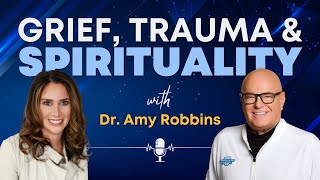
A podcast episode (host Dr. Don Wood; guest Dr. Amy Robbins) exploring how spiritual experiences—such as visits or messages from deceased loved ones—relate to mental health care. Dr. Robbins, a clinical psychologist, describes personal early-life visits (first at age 18 after her aunt died at ~47), how these experiences recurred with family and patients, and how she integrates openness to such experiences with psychodynamic clinical work. The conversation also covers grief (including suicide bereavement), the thin line clinicians sometimes face between spirituality and psychosis, timing-sensitive therapeutic approaches, societal stigma, and practical contact info (dramyrobbins.com; podcast 'Life, Death and the Space Between' available on major platforms and YouTube).
Chapters
And so many people have these experiences, but they don't want to talk about them. They don't want to seem crazy or like there's something wrong with them or, you know, in mental health, I think oftentimes the line between psychosis and spirituality is very, very blurry or thin.
Same thing with grief. So you do a lot with grief as well. So, you know, people come in and they've had those kinds because that is actually a trauma as well that we have to deal with.
Grieving and believing sort of walk hand in hand because there's still a human experience that we're all having where, from my perspective, I think about how you're growing your soul over lifetime.
Welcome to my podcast, you Must Be out of youf Mind. So welcome to another podcast of youf Must Be out of youf Mind. I'm your host, Dr. Don Wood. And as you know, we always try to bring on guests that have a lot to share with us about things that we already do. And I couldn't pick anybody better to share what we do than my next guest, and that's Dr. Amy Robbins. And Amy is a clinical psychologist. She has her own podcast she's had for a number of years. I think about four years. It's called Life, Death and the Space Between. I think that's right. Is that right, Amy? So welcome.
Thank you. Thank you. So happy to be here, Don. Thank you.
Well, I'm glad. And again, what you do is sort of tied in, so I'd love to share a little bit. Can you tell me sort of what your experience is, what you do? I know you're a clinical psychologist, but what I liked is that you had as a connection to the sort of intuition side and spiritual side. Can you share with what you do with that side?
Sure. So I have a traditional clinical psychology practice in Chicago, meaning that I work through the lens of the psychodynamic, kind of relational model of therapy in my practice in other areas of my life. And I do integrate this a bit into my practice. But really, this isn't why people come to me. I've had many experiences where I've had visits and messages from loved ones who have passed. So it all started when I was 18 years old. I lost my aunt to. She had juvenile onset diabetes. She had gone in for. She was waiting for a kidney and pancreas transplant. She was coming up on the list. And as you come up on the list, obviously they need to make sure your body is strong enough to withstand a transplant. When they went in to check on her physical health. They had noticed that her heart was not strong enough to withstand the transplant. So they were going in to do heart surgery. And when they went in, her heart and arteries were so calcified that they couldn't repair it. They couldn't get her heart restarted. And she died on the table. She was, I feel like her age changes every time. In my mind it was always 48, but my mom corrected me and said I think it was 47. So she was 47 at the time, which is really, really intense for me to think about now as I'm approaching that age, what, it's so young. And I, like I said I was 18, I was in college, I came home, I'm Jewish, I came home for shiva, went back and tried to get on with my life, but was really grief stricken and didn't recognize. No, I didn't. I didn't have at that time the mental health background. Mental health wasn't at the forefront like it is today. And I think I just didn't think about it. But it was affecting me and impacting me in so many ways. I had more anxiety, particularly around death and dying. And it's only really in hindsight that I'm now able to see how this all manifested in my life. But fast forward to when I was in graduate school and it was coming up to my cousin's wedding, her son. And she came to me in what some people would say was a dream. I believe it to be a visit. It was very clear. It is as clear to me today as it was when it happened 20 years ago now, 21 years ago, where she came and she showed me in this visit that she, she gave me the message to tell my mom not to be upset. My mom was standing at her kitchen sink crying. This is what I saw. And she said, I'll be at the wedding. She doesn't need to be upset. I'm not going to be there. And then she showed me another image of her, of my uncle, her brother. And in that image, he was pushing a stroller and he was outside walking. And she said, let him know I hear him when he speaks to me. I know when he talks to me. So I woke up and called my mom as soon as, as soon as it become became appropriate time to call because I was eager to do that. And I shared this story with my mom. And my mom started crying. And she said, I was standing at the kitchen sink last night and I was talking to her and I said, linda, I can't believe you're not going to be at the wedding. And I said, well, mom, you don't have to worry. She's going to be there. And then I called my uncle and shared the same thing. And he said, I always talk to her when I'm out walking or running. That's my time where I try to connect with her. And so I, you know, I had had this experience. It was really, really powerful, really profound. And when I went into grad school that day, I spoke to a professor of mine, and she said, I think you're opening up to something. She was also very scientifically grounded. She practiced. She taught psychoanalytic psychotherapy. She taught transference and countertransference and psychotherapy. I mean, this was not a woman who was teaching how to connect with your dead loved ones. And she said to me, I think you're opening up to something, and I think you should pursue it. And at the time, I was in the midst of grad school, and it just wasn't really an option for me to pursue. So I put it on the back burner. And then when my grandfather passed away, my papa, it happened again with messages, and then it happened with my patients where their loved ones started to come through. And at that point, I felt like I really needed to understand what was happening and figure out, you know, what do I do with this information? People aren't coming to me to talk to their loved ones. They're coming to me in the midst of grief or, you know, because they had a bad breakup or whatever it was. But I was getting information that was not what they were sharing with me. And so I really worked for years to figure out, okay, what do I do with this? If anything.
That's amazing. That's fascinating. Again, like you said, you know, even the professor that you went and told talked to, right? People would say, well, that's sort of out there, woohoo kind of thing. Right? But she was a scientist too, right? And a lot of people think you can't have science and, you know, the spirituality side of it, you know, because a lot of times what I do in my program is I share a lot of the science behind how our mind works and how trauma affects our mind. And then, you know, and people will say, well, you know, this sounds very scientific. Is there any kind of, you know, spirituality to it? And I said, well, who created science?
Exactly. Right. The chasm between science and spirituality got so wide, and I do think it's coming back together. And that's something, you know, certainly in my podcast, a lot of what I bring to the table is the science behind the spirituality and the power of spirituality in mental health and our beliefs. Our beliefs and our willingness to be open to what we don't know, because there is a lot we don't know. I don't know how we can say, oh, my experience is, you know, bs. This was my reality, and it was as clear as you and I are talking today. It is as clear to me now as it was then.
I had that one time, only one time I've ever experienced that, just like you said, it was as real. It was my father saying something to me. And I was going in for some dental work, some dental surgery, but, you know, it wasn't. I wasn't being knocked out or anything, but they were just going to be doing something to extract some stuff. And I remember I was a little worried, thinking, you know, I hope this is going to work out. I hope this is going to be okay. And I heard him as clear as a bell tell me, I'm going to be fine. Right? Go, don't worry about it. And. And it was just so clear and it was in his voice, right? So I was really sure it wasn't me just thinking it. It sounded very clear to me. And. And I absolutely was. I didn't even feel anything. And so. And sort of a funny story from that. He. What the. My dentist had said, if you can get the surgeon to do what I need him to do, he said if he can just, you know, get you all prepped up and pack you all up, just drive over to my office and then I can do the work on you, right? He says, that'll save us having to do two visits. So I said, yeah, okay. And I was thinking, I guess I'll be okay. And then my. My father came to me. They hadn't even put anything in me yet, so it wasn't like I was drugged up, right? Right. I was. And I had to drive so they can't drug me up, right? And so they just. He did the work. I drove over. And this is before we had the E passes, you know, for the. For the tolls, right? And so. So at this point, now I am numbed up for the dentist to do his work. And I drive by and I hand the money to the toll operator, and he looks at me as like a double take, right? And take some money and I drive off. And I thought, I wonder if I look puffy or something, Like I look strange. And I looked in the mirror, I had blood all running down my face. He Must have thought, who is this guy with blood all over his face? And I couldn't feel it. Right. Because I was all numbed up.
Well, I guess had you looked in the mirror probably, and not perhaps had that message, you would have freaked out.
Yeah. Yeah. So. But it was funny. It was something that my dad would have laughed at. That was one of the things that he had a great sense of humor the way I do. And I was just thinking my dad would have been just absolutely breaking up with that.
Well. And so many people have these experiences. Experiences, but they don't want to talk about them. They don't want to seem crazy or like there's something wrong with them or, you know, we've. We've in. In mental health, I think oftentimes the line between, you know, psychosis and spirituality is very, very blurry or thin. Very fine line.
Yeah.
And, you know, I think when. When we have these experiences that tend to be really hopeful and helpful to us and not distressing, they can really be powerful experiences that help us feel more connected to ourselves, to others, to the world, to the larger universe in a really positive way.
Yeah. And I think had I not had that one experience, like I said, it was only one time ever that I had it, and it was as real as what you were talking about. And I wasn't dreaming. I was wide awake. Right. And I heard it very clear. So that's why I sort of get what you're talking about, you know, So I can't say I have any kind of an ability to do anything or. Or I've had it again. But I do know what you're talking about.
Well, I believe we all do. We just shut it down when we're young. We're much more able to be connected to that world, to, you know, the other side to our soul in that way. When we, as we get older.
We question it, we wonder, is this real? Is this. Is this really happening? And then we shut down that intuition and that ability to connect because we live in this world and it feels like, well, I can't be. That can't be possible.
Right.
Reality tells me that's not possible.
Yeah, for sure. Why not? It's the same. Same thing with grief. So I know you do a lot with grief as well. So one of the things that I always share and I don't do a lot of grief work, but I do. You know, people come in and they've had those kinds, because that is actually a trauma as well that we have to deal with.
Absolutely.
But one of the things I always talk about in terms of grief is I say, I use my own experience. When I think about my parents, I never cry. I, I don't feel sad about it because I don't feel like there's. I lost them, lost them. I still feel connected to them in some way that, you know, even the things I say, the things I do right. And I always, because I always say it this way as my parents never wanted me sad, why would they want me sad when I think about them now? Right. That wouldn't be anything that they would have ever wanted. So I think we honor the people who by not feeling sad and not feeling pain. But basically I always focus on all the great things that I did with my parents, all the great things that they provided for me. You know, I remember my dad and driving to hockey games. I'm originally from Canada, so, so I'm used to Chicago weather, so.
But we used to drive in the, you know, early morning, 4:30, 5:00 in the morning to go to the arenas for practices. And it was a great time that we shared together. So those are the kinds of things that I tend to think about when I think about my parents. Not, you know, the pain.
Yeah. And I think there's such a range of emotion with grief. You know, sadness is one of them. Sometimes regret, sometimes relief. And there has to be like a space to allow for that pain, but also not get stuck in it, to move through it.
Yeah. And that's basically how I generally say to people, as I say, think about, if they were here right now, what would they say to you about crying? What would they say to you about being sad? Right. That wouldn't make them feel good. Right. So could we not honor them by thinking of all the great times, thinking of all the positive things, thinking of how they would like to see you now and that generally. One of the things I also talk about is that I believe that, you know, and I say it this way, we all have bodies, right? But the bodies that we were born with were not the bodies that the people will die with. Every cell in their bodies being changed multiple times, Some cells more than others. So we were never a body, we're just energy. And the body carries the energy.
Right.
And as Albert Einstein said, energy never dies, energy lives on forever. So if we're just energy, the body may have died because the body is human. The body's going to eventually break down, but the energy doesn't. So the energy still exists. Now, I don't know much more than that, but that's sort of the way I tend to think of it, is that at one point, maybe that energy will connect up again somehow.
Well, and the transformational process. Process, right. I mean.
There'S, we're always transforming. And so, you know, why wouldn't we also transform in death?
Yes.
I, I, I absolutely believe that. And that's why I never feel sad. Obviously, you know, in the beginning, you've got to go through a process. So there's no question in the very beginning, you have to go through that process. It will feel sad and you will feel a lot of emotions, but once you sort of get through that process, I think you can see it completely different.
Well, and I think that they are not mutually exclusive. Like I think I often say, grieving and believing sort of walk hand in hand, and you can't believe and think that just that belief system circumvents the grief because there's still a human experience that we're all having. Where, you know, from, from my perspective, I think about how you're growing your soul over lifetime. And so the grief experience is perhaps a way to grow your soul over the course of lifetimes. And how you're handling that grief and how you're dealing with it and how you're working through it and how you're feeling it and experiencing it as a human is something that we have to do. We can't escape, we can't get out of. We can't spiritually bypass that grief because it is part of the human experience. We have to feel whatever it is that we're going to feel. Even if we believe that our loved ones moved on and they're just not with us in a physical body, that's still a big loss for almost everybody I've encountered that I interviewed about grief is, I want my person here. I want them here in a physical body. I want to be able to sit with them and have a conversation. I want to hug them. I want to, you know, have a glass of wine with my friend who died. All of those things are human experience.
Right? Right. Yep. Well, one of the things that I, and I use this story a lot is Tommy Lasorda. I don't know if you know who Tommy Lasorda is. Right. But his manager. Yeah, he used to manage the Los Angeles Dodgers. He was with the Dodgers organization, I think, pretty much his whole career. And his son passed away when he was 33. And so Tommy was managing the team at the time, you know, obviously was off for a little bit of time to Go to the funeral, attend all of those things. Comes back to the team and goes about his everyday business, making the lineups, throwing batting practice. And everybody's walking around on eggshells because nobody knows what to say. Right. Because they're, they trying not to, you know, upset him. And, and he's just going on regular. And then finally somebody got the nerve to say, you know, Tommy, like we've all been talking, we're, we're amazed. You just seem to be just coming back and going back into your regular operation. Like, what's going on? How are you doing that? And what he said was, and I may paraphrase a little bit, but what he said was, well, this is the way my wife and I chose to view it. We looked at it as if God had to come to me 33 years ago and said, I have a little boy for you, but you can only have him for 33 years. Would I have still taken them? And I absolutely would have. Right. I just didn't know. I only had 33 years at the time. But now I'm okay that I had the 33 years and I'm glad I had them. I thought, what a remarkable way to look at it.
Yeah, yeah. I mean, death is the ultimate equalizer. Right? We all die. Yeah, we're getting around that. We all die in our physical body. And it is what, what makes life worth living.
Yeah. Yep. Absolutely. One of the things, and I'll be interested in your perspective on this as well, because I've had an, in the last month, two suicides and young suicides. So a 15 year old and a 25 year old. And the 25 year old, they.
Was a big, big surprise because nothing. Same with the 15 year old too. Nobody sort of suspected it at all. And that's always the hardest to deal with because when you're dealing with, know parents are just so devastated and they start questioning everything and you know, even the, the father was telling me with the 15 year old, you know, it was the father's birthday the day before, you know, and he starts thinking, he goes, did I not thank him enough, you know, for the gifts he gave me? Did not show enough appreciate. I mean, going into all these, you know, areas, trying to figure it out. And so that's really tough. How do you deal with that? Like what's your approach on that?
So I, in, in my own mind is different than how I deal with it when I'm working with someone who's experienced that.
Right.
And from. As a parent, that is my biggest fear I think any parent would say their biggest fear is something happening to their child, pretty particularly if they die by suicide. Because it does feel like I should have done more. I should have known, I should have seen. I should have, should have, should have.
From a psychological perspective, I'm always really as empathic as you can be. And I have so much compassion for what that child was going through, what that parent is now going through, all the questions they're asking, and they have to go through that process. It's critical to being able to move forward in life, is to question and to.
Feel all the feelings. Regret, remorse, anger, sadness, pain.
You know, all of those things from a spiritual perspective. I have spoken with many people who talk about this notion of soul contracts and that we come here with a contract, with a contract with our loved ones that says, we have agreed to this path, we've agreed to these exits, we've agreed to these struggles, these lessons in order to learn and grow our soul. Now, if I'm a parent who just lost a child, and you said that to me, my response would not be, oh, thanks, that's really helpful.
Right.
Yeah, it would be, you know, fu. Yeah, why would I. Why would I ever, Ever contract for this type of pain?
Right.
But if we can take a step back, usually, you know, years later, perhaps then we can have a different view and a different lens point and a different lens through which we might be able to see the experience. Experience as, how did this help me to continue to grow spiritually?
Right.
Again, psychologically not helpful. I would never, ever say that to a parent who just lost a child in any way.
Yeah.
Particularly by suicide. But. But, you know, I just don't think that's. That's psychologically helpful. Years later, if someone came to me and said, you know, how do you understand this from a spiritual perspective? At that point, I might talk about. Let's talk about what this child showed you. Let's talk about how you learned from your child. Let's talk about the lessons that you've learned after they've died and how that has shifted and changed you, maybe softened you, opened you up, helped you grieve, helped you view the world differently. That's where the power comes in. You have to know the timing of that.
Timing. Yeah, and that's what I was gonna say. Timing. In both of these cases, this was weeks. One was like two weeks. And it was very, very difficult.
With the father because he was. And he'd had an argument with the son right before. So all of that, all that guilt about why did I say those things? You know, why did I do those things? And it's so difficult because it's hard to keep everything in perspective at that moment. And so, you know, basically what I say is there's probably not much I'm going to say right now to really make you feel better. Right. But at the same time, you know, what I want you to understand is this trauma. We can help stop the loop of constantly questioning. Right. What could have been different. And so I took the father through our program and the one thing that he said is, I'm still terribly sad about and I miss my son. But you did help me stop the loop. He says, I'm not reliving the day over and over anymore.
Right. And when people are in so much psychological pain. Right. That's one way our mind tries to deal with it is like, could I have done something different? Could I? You know, but the reality is, what do you. What can you do now? What's done is done.
Yeah, yeah. And you couldn't possibly. And a lot of times when it comes out of the blue, like, they start looking back and saying, were there any signs both of these situations, the. There was really no indication that this was going to happen, which makes it even worse. So if you're dealing with this on an ongoing, you know, a very depressed child or, you know, dealing with something, these were high functioning families, high functioning children and, you know, had everything. So success. It wasn't that they didn't have money or they didn't have. They were without anything. They really had a lot of what would be considered fairly good material wealth. I mean, not millionaire status, but certainly not poor. Yeah. Comfortable. And so there was no real explanation for them. And what I basically say is there was a pain that generally suicide is coming from some sort of a pain that we may not understand, but could have been coming from some trauma earlier in their life that maybe you were unaware of. Right. And they didn't know how to deal with and they didn't know how to communicate. And I said, go ahead.
No, no, no. And I was also going to say, I think when we are working with adolescents in particular, you know, emerging adults young before 25, and what we now know about the brain is that it is contin. Develop to develop until the mid-20s. And I don't. Adolescents don't typically have the ability to think sort of longitudinally about, okay, this, this how I'm feeling now is not going to be how I feel forever. That's hard for a lot of people. But it's particularly hard for adolescents to see that when they're in the midst of angst and anguish and pain. And as a field, historically, mental health professionals are not particularly good at predicting suicidal and homicidal behavior. We're just not. I mean, the research shows that. And so there's often this, oh, well, were there signs? And what did we miss? And I think so much of that comes one from the person who's experiencing it to say, oh, my God, should I have done something more? But also, you'll see everybody around that family likely questioning and wanting to know if there were signs, because we want to defend against the fear of that happening to us. Right. We're always looking for that understanding, like, oh, okay, well, there were signs, but they missed it or they were depressed. My kid's not depressed. I don't have to deal with, you know. And so we're looking for, how can I avoid ever having to feel that pain? Because the pain, the reality of being human is that being human is really hard and that there are experiences of pain that you just can't circumvent.
Yep, yep. Yeah. And that's one of the things that's very hard to get across, especially in that moment. Right. To a parent dealing with that kind of a loss, because they. They really take it. I had a. Another father, and he knew his daughter was struggling with some stuff, right. But they had a pretty good relationship. And the. The father and the mother was separated, and most of her. Her problems are coming from the mother who had an addiction issue. And so he was aware that that was causing some problems for his daughter. But when he was with her, you know, he was doing his best to make things as good as they could be. And he was telling me that, you know, they had actually gone out, they'd spent the day, they had a great day. They came home, right? They were baking cookies, and he said. And the cookies were in the oven. And she said, I'm real tired. I'm going to go to bed. And so he goes, okay. And so she went up to bed, and he said the cookies were ready pretty quickly. So I thought, oh, I'm going to run up there and just see whether she wants a cookie before she falls asleep. So he took the cookies and some milk up there, and she had hung herself. And he was like, how. Like, we were laughing and joking in the kitchen like, 20 minutes earlier. And so he just couldn't piece it together. And.
Yeah, the reality is, if someone is going to die by suicide, they're going to figure out a way to do it.
Yeah, yeah.
You know, I mean, that doesn't mean we don't try to help them. That's not at all what I'm saying. I think we absolutely do and we have lots of opportunities and interventions and mental health professionals in place. Place that are there to help people, to help them see that that isn't a solution, that there is hope. You know, if people don't have hope, then they don't really have a reason to live. And so we have to give people hope and help them to see that there is a way out of their pain and that they don't have to feel that way forever. And now more than ever, I feel like there's so one. Because there's so much focus on mental health post pandemic. Should have been there pre pandemic. But yeah, we all, we all have different ways our consciousness gets raised and this was one of them. And, you know, there's. There's so much promise in the mental health field right now in terms of treatments and things that are coming out that are really, really hopefully going to help people who are struggling for lifetime, who have been struggling for lifetime with. With these feelings and experiences.
Yeah. So tell me what you're seeing. Tell me what you're hopeful and optimistic about, what you're seeing changing. Tell me what you see.
I feel like we are at a crossroads in humanity.
Which way are we going to go and which way is each of us individually going to go? What are we going to move towards? Are we going to see each other? Are we going to see in each other the reflections of ourselves? Are we going to help support one another as a global community, or are we going to not? And what will that lead to? I mean, a lot of the spiritual kind of teachings that I listen to are also saying something similar. Like we are at a place where we can choose to love, to be kind, to be.
To put our hand out to the person that's different from us and.
Help, or are we going to turn our backs? And I think that that's what we've seen so much over the course of the past couple years is who are we as a person? Who are, who is each of you as a person and who are we as a community of humans? And what are we going to do about that? That. And it doesn't have to be big things.
Right? That's the, that's the big thing is it's the little things that you can do to sort of acknowledge somebody. You know, I mean, you Just look at the homeless situation and, you know, what people are dealing with. And all it sometimes takes is just to acknowledge them. Right. To let them know you're there and, you know, you don't have to go out of your way and give them $100. But, you know, you. You bring them something to eat or you do something to sort of acknowledge them and don't judge them. There's so much of that going on. I think you're right. That we're becoming much more aware of it, and we're not afraid as much as we used to. To talk about it, because I always talk about myself when I was growing up. I had no idea because I had this idyllic childhood. I had no trauma in my life. I didn't know my friends were being traumatized. I didn't know that they were dealing with physical, emotional, sexual abuse, because nobody talked about it.
Mm.
And so it was like a big shock to me to find out. Right. That this stuff was going on. I was like, what do you mean? Like, it's got to be an anomaly, right. That somebody got abused. And it's not.
Right.
But I didn't see it.
Right. And I think, you know, we are talking about everything so much more, but then what are we doing with it? And. And again, these. These things can start very small. I think people get really overwhelmed when they think about.
The state of the world and everything that has to be done. And I think if you can pull it back and look at just your world, your community, the people that are in your life, there's so much that can be done. There's so much need for help, for outreach, for service, for whatever it is. And that's where it starts. And I really hope that. I hope that we choose, as we become more conscious, to care more about one another. And I'm not perfect by any means.
Oh, you're not?
I want to put that out there.
Oh, I only bring perfect guests on. Sorry, I just slipped through.
Exactly. Your screening process is terrible.
Got to improve it.
That. That there's a.
This is sort of the ideal. Right. Living this way, living in harmony and with nature and with each other.
How are we each individually living that ideal in some way in our lives?
Yeah. And I think what you said, though, was really perfect. And I joked about a little bit about being perfect. We're never going to get it completely right. We're never going to be a hundred percent perfect. But I think we need to stop the constant because somebody did something wrong, that everybody that has any connection And I don't want to get political, but it's easy to describe it this way. All Democrats aren't bad. All Republicans aren't bad. Right. All teachers aren't bad. And that's the problem. So all police aren't bad. When something happens, we just all of a sudden put this category on everybody that's any kind of person in that area, and that's not right. You know, there's always going to be people who aren't going to do things.
Right, Right. And what that does is it distances us from.
It distances us from the humanity of the individual.
Yeah.
And it allows us to defend against those. I hate to say bad, because they're not bad. They're just human parts of ourselves. And we all have those pieces of ourselves. And I think when we see that in someone else, we are horrified by it because it brings up the sense of, could I also do that? And I'll use this as an example. When I was in high school, I went to Poland and Israel. As it was six weeks. It was a week in Poland visiting three concentration camps, and then five weeks in Israel. I remember standing at the concentration camp, Majdanek, which could be fully functional now. They've left it that intact. And I stood there. It's in the middle of, I think, Lublin, the city in Poland. If I'm wrong, I apologize for that, but. And I remember looking around thinking, I'm a Jewish woman. I was at the time a young adult. What would I have done?
I would love to think that I would have been what they call in school now, an upstander. I would love to think that I would have spoken up, that I would have taken someone in and hidden them.
Or stood up to the whomever. But I think when. When push comes to shove, we go into survival mode. And does that mean we're going to protect ourselves or someone else? And that's not a judgment of bad or good. It's the reality of who we are as human. And so we all like to think, well, we would never do something like that. But then we are seeing the other person as separate from us, rather than thinking, I could potentially do that to someone else, and what does that mean about me? And how do I look at those parts of myself? Some people would call them the shadow parts. Right. This bad underbelly of who we are. But that is all part of our whole being. It is all part of who we are, that part of ourselves that thinks, oh, my God, I could do that. Oh, my gosh, I can be that angry. And when we don't allow that part to come to the surface, to acknowledge it, it's much more likely to get acted out than when we acknowledge those uncomfortable shadow parts of ourselves and say, yeah, I do have that part. That probably would protect myself and my family rather than putting, you know, my life at risk. Maybe I wouldn't. I don't know. I don't. I'm not in that situation, thank God. What would I do? And I think if we can ask ourselves that question, those questions and be honest with ourselves about the answer, then we can be more human.
Yeah. And I think it depends on your resources, too, because I. I look at that, and it's the same thing that I always tell people. Right. When you look back on things that maybe you did, that wasn't your best behavior. Right. You probably were in survival mode. And, you know, I take bullying as an example. You know, how do people stand by and watch somebody get bullied? The advantage for me is I was a hockey player, so I knew I could fight and protect myself. So there were a number of instances where I would step in and help somebody being bullied. But I had the resource to protect myself if I didn't. Right. I could see how some people would go, well, if I step in, that bully is going to probably beat me up. At least I could defend myself against the bully and in some cases, intimidate them, because hockey players could fight. So I look back in that kind of a situation. But if you look back in terms of, okay, put me into a concentration camp against armed guards, I couldn't have taken that same stand. I could in a situation where I could overpower. Right. Or at least defend myself against somebody. But you couldn't possibly against armed guards. How could you do it?
Yeah. I think about what's happening right now. Again, not to make this political, but with these women in Iran who are so powerfully standing up.
Yeah.
And it's so inspirational to think about people who are really willing to put their lives at risk for what they believe in.
Yep. And. And you can even equate that to even the MeToo movement, where women are now willing to stand up and take the chance on their career. Right. At least now we're believing them. I think I. I always say I probably did anyway, because I know that most women have had abuse. Right. That's a pretty common thing.
It's just a matter of the degree to which it just happened. Right.
Yep. So, to me, it was very believable. And I saw a lot of the behavior that that men have. So it never became a big surprise to me. I think what did surprise me is the amount of it, you know, when I was just like, boy, it was pretty much everywhere, you know? And again, I think even I was thinking it was more isolated. It didn't surprise me that men would do something like that or use a position of power over a woman. That wasn't surprising. But the level. The degree of it, my gosh, it's. It's shocking.
Well, and I think what I. What I want to circle back to is this notion of. Because I think what underlies all of this is the fear of death and dying. Right. And so when you're in survival mode, you're trying to avoid death.
Yes.
And. And I think when we can get to a place where we can have less fear of death. Some people have no fear of death. Right. They're. They're. You know that guy that rode a tightrope from one building to another in Chicago? That guy's not afraid to die. Right. Like, he has accepted that that's gonna happen, and whenever it does, it does. And. And while I. I talk about death all the time, I'm definitely comfortable with talking about it. I'm. I'm actually not even afraid to die. I am. I am. I'm afraid of missing out on my life because I love my life, and my life is very full, and I have three beautiful children and a wonderful husband, and I want to be a part of that. And I'm afraid of the pain of losing someone that I love, because I know that pain, and it's excruciating.
But when we can get comfortable with that and surrender to it a bit more, when we can lean into that fear and start being curious about what happens when we die and that we don't die in the physical body, but that our consciousness does go on, I think we can live totally differently. Maybe we're not going to be riding a tightrope.
Well, I know I couldn't do that on the best of circumstances, but we.
Can really live a very different life when we face that fear.
Fear. Yep. And the big thing is, is like we talked about, is survival will always override reason and logic. So the reasonable, logical part of our mind will not have any kind of a answer to a survival threat. It just. It just won't. It can think about it, but it's not going to come in. And the survival brain will always take over.
Right, right. That default mode.
Yeah.
Because.
Yeah.
How. How do we as a people evolve if we die?
Yeah. And it's, and it's programmed to do that to keep us alive. Right, right. It's all part of the, the programming that we have.
Absolutely, absolutely.
Well, this has been awesome. I know we're at about the time that I said we would wrap up. Is there anything that you would like to finish up with or talk about or.
I don't think so. I just want to leave people with the notion of, you know, this can, this can feel a little bit like you said, wooey and far out there. Some of the stuff we talked about earlier in our conversation and I would love people just to be open minded about it. You don't have to believe it, you don't have to buy in. This isn't a religion. It's just to be open and curious. And then when you can see what happens with that curiosity, when you can open up, I think magic starts to happen in your life and it's beautiful and it's fun and it gives you a different understanding of the universe and how the universe works. So people can be open to that, not shut down immediately.
Yeah, I think that's how it happened for you. Right. So when you got that first experience and then somebody said be open to it. Right. You allowed it to become something that you weren't afraid of and you were open to it and it came to you a bigger way. So that's great advice. If anybody wants to get a hold of you. How do we, how do we get a hold of you? If they want to talk to you.
Or work with you, you can find me on. I have a website, dramyrobbins.com from there, my podcasts are there. The podcast is life, death in the space between. It is anywhere you get your podcast. My Instagram handle is Dr. Amy Robbins. There are no dots or anything in that. It's straight. I just had my first impersonating account happen, so I'm trying to be really, really mindful of that. I will never solicit anybody for anything on Instagram, Facebook, same Amy Robbins. Not really on LinkedIn, definitely not on Twitter.
Okay.
And YouTube. You can watch all my podcast episodes on YouTube as well.
Well, that sounds great. So anybody who's interested in, you know, and learning more about what Dr. Amy does, I encourage you to especially listen to the podcast. So if you're like listening to podcasts, you'll probably learn a lot more about what we were talking about. And, and Amy, I appreciate your time today and, and expertise on everything and I look forward to. I'm sure we'll talk again, and maybe I'll be on your podcast.
I hope so. That would be great. Thank you so much, Don.
Awesome. Well, thank you, everybody, for listening to another podcast of youf Must Be out of youf Mind. And there it is.
It was really scary, actually. The first time that happened was when I was about 14. I was in a pool, and I remember swimming, and all of a sudden I felt like I was drowning, like I couldn't breathe anymore. And all of a sudden, just blood just started gushing out of my lungs. It was the first time it ever happened.
Think of trauma in terms of a weight that you carry around. So if somebody's carrying around 150 pounds in a backpack on their back, which is all this trauma.
More from Dr.





When you’re in the middle of a panic attack and someone tells you to “just breathe”.

Once a panic attack starts, you can’t stop it. Here’s why and what you can do about it. #panic


The first sign of healing wasn’t what happened. #anxiety #emotionalpain #fightorflight

The threat ended. The situation changed. Your life moved forward. #weneedtotalk #anxiety

