From Overwhelmed to Empowered: A New Approach to Handling Day-to-Day Stress
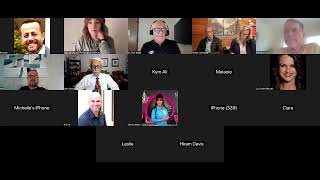
Dr. Don Wood and Maya teach the C-H-I-L-L framework for managing stress: Compare & Contrast, Help, Inspire, Laugh, Learn. They walk through real examples like dental anxiety and money worries, explain how dopamine and serotonin work in your brain, and lead a progressive muscle relaxation exercise you can use right now.
Chapters
We got anything in the chat?
Nothing yet.
Nothing yet.
Okay, we have Sierra saying fear of the dentist. Keeping her at eight.
All right, perfect. That's a good one. So fear of the dentist. So here's the best thing to look at. Is this the first time you've ever gone to the dentist?
Have you ever been to the dentist before? No. All right, so based on what you've experienced at the dentist, how does this rate in terms of how stressed out you are? You've been to the dentist before.
So now you're going to go to the dentist again.
So the idea is to compare and contrast it. How bad was it when you went to the dentist before?
What was the situation? How did it turn out?
Because now what you're going to do is be able to look at that and go, I survived that. That wasn't so bad. Sometimes the fear of it is bigger than the actual thing that happens. So.
Dentist fears of dentists are very common. I remember going. And I don't know if I've ever shared this story before, but it was pretty. It was pretty amazing. I had to go in for some dental surgery. Hockey player, right? So I went into the dental surgery, and the. My dentist said to me, I'm going to send you to the surgeon. He says, but you have a pretty high pain tolerance. Why don't you get him to numb you up after he finishes his surgery, drive over to my office and I'll finish up the work I have to do. That's going to save you some time, right? And having me to numb you up again. So I did, and I had him do his work. But I remember before, I was just sitting in the chair. He hasn't done anything to me. I'm just waiting. It was actually six in the morning I started. So I'm sitting in the chair waiting for him to come in, and I remember feeling that bit of fear because it's unknown. I don't know what to expect. I haven't done this surgery before. I know what it's like to go to the dentist, but this is different. And so I was sort of worried about it. And I heard in my head, it's the only time I've ever heard this. I heard my father's voice say to me, everything's going to be fine. As clear as a bell. And I remember just having this conversation in my mind with him, and he says, you're going to be fine. There's nothing to worry about. I felt zero pain. I really did. I felt nothing. And it was amazing. In Fact, I was so surprised and they just really numbed me. They didn't knock me out. But I remember the dentist putting all the stuff down and he says, all right, we're done. I thought he was still prepping. I honestly did. I thought there was still stuff he was going to be doing. That fear beforehand was really debilitating until I felt that sense of calm. So sometimes you've got to reach in and find out. And the purpose of this compare and contrast is to say, what have I experienced before that I was this afraid of and how did it turn out? And compare them because what you're going to do is get your mind to go, oh, that's not so bad. I've got through that before. I've gone through something like this before. So unless you've had a major bad experience with a dentist, is that what you had experienced or was it more just sort of like I was talking about? It's more worried about it. Was it Ciara that was saying that? Mm.
Can you give us a. An idea of what it was that was before? Was it something that went wrong before or is it just more the concern?
Ciara says, I think it overlaps with sexual trauma, having people's hands. My. My mouth.
Okay. So that, that may be something you need to clear because obviously it's not a fear of a dentist. Right.
So nothing specifically. Dentist, bed. Perfect. There you go. So you see where it's coming from. It's not coming from the dentist, but you're connecting it to the dentist. So the dentist is there to help you. And the other situation was much more affected. Affected you. Right. This really isn't going to affect you, but your mind connected them because of the hands and the mouth. Right. So the dentist is not going to hurt you, he's helping you. So that's what I'm talking about. That compare and contrast. Because if you write it down as to what are you actually worried about right now and just doing what you did right now, does that help sort of alleviate where it's coming from, where the fear is coming from?
Yes, it separated. Wonderful. Great.
Perfect contact.
Yep.
Love it. Is this resonating with everyone? If, if it's clicking, give us a thumbs up in the chat. Show it if you're on camera so we know it's working. We're getting them up.
Yeah, there you go. So, and then again, it's also good to rate it from 1 to 10. So a 1 is not very stressful. A 10 is very stressful. Just sort of similar to what you did before. So if that was an 8 before, where is it now?
I'm picking on Sierra a lot here.
It's a four.
There you go. All right. So we can handle fours. So now look at other situations in your life that you would have compared that to. What other fours have you had? You don't mind being picked on? Okay, good. What other fours have you had in your life that you also got through? And it seemed more. Seemed bigger before you did it than it did after you did it. So just go back in time and take a look at those things. Anything that's stressing you out, use this technique to compare it to something else. And the idea is to realize I've solved it before. It actually was okay. I survived it, right? There was nothing. It's more the fear. Remember what I've said all along, the number one fear for the human mind is uncertainty. It's the uncertainty. So when I'm sitting there waiting, I've never met this surgeon. I don't know what he's going to do. I have no. I know what my dentist does, but I don't know what the surgeon is going to do. So that in my mind, I. I increased it dramatically. And it really was nothing. In fact, I felt really nothing. But the thing that makes that story. I don't know if I've shared this before, but after I left his office, he had me all packed up so I could go to my dentist and then have my dentist do the work. So I had all the gauze in my mouth and. And so I'm driving, but I had to go through a toll booth. And I came up to the toll booth and I hand him the. The dollar. It was. I think it was a dollar fifty cents or whatever. And he hands back my change. And as he looks back at me, he like sits. Jumps back a second, and I. I'm like, why is he doing that? And so I drive away and I look in the mirror and I have blood all dripping down my face.
You probably gave him trauma. I think we owe him like a $3,000 before he's fired.
I'm going to have to go back. So.
It'S the same thing that we do if somebody has a fear of flying. If they have a fear of flying, what we sort of focus on is not getting on the plane, it's getting off the plane. So the idea is you don't think about the flight. You think about landing. And so then after you've landed, you sort of visualize yourself picking up the luggage, getting in the Uber, going to the hotel, it's all focused about after the thing that you're afraid of. So the same thing with the dentist. Think about afterwards. What are you going to do after? Where are you going to be going? Maybe you're going to go, you know, a couple hours later, get something that you're going to enjoy doing so that your mind's not focused on the thing that you're worried about. That's great. I'm glad that works. Focus on after, not the during. And that really helps.
And thank you all for sending what's causing the eights and sevens my way. As we're going through the chill method, I'll be sharing this with Doc and then we'll be using them as example of, like, how we can apply each of the strategies to it.
Yeah. So I'll give you an example of something. And this is on a business side. I remember.
This was a time where everybody's been in business for themselves or have not worked for somebody. We all have suffered this kind of stuff. But financially I was cash strapped and I had this opportunity that I needed to be able to take advantage of. And so I remember thinking, like, how am I going to get and pay for this flight and pay for all the things that I need to do to get there, to get this opportunity? And I was like, what am I going to do? So it was a real cash flow, tight period of time. And I still remember this. And this is one of the things that I use every time I start thinking about money seems to work its way through. And I remember I was at my front door, My son comes and hands me the mail. I open up the mail and I've got a $20,000 credit card from Citibank that showed up in the mail right before. And that was what I used to get it and get the job done. But how many times have just solutions shown up when you needed it the most? And I have found that has happened a lot in my life. So you want to use those. Those are the compare and contrast situations. When you're in a current situation to go back to and say, how did that get resolved? And what you're going to find out is most of these things have all resolved themselves with a little bit of time and not. But the stress that you built up to was. Can be overwhelming. So when you're in that kind of a situation, start writing down similar situations and how they resolve themselves. Does that make sense? Does that help?
Perfect. If you're finding this helpful, leave us a thumb up. Or we'll take hearts. That works too. We'll take hearts. Awesome.
Very good. All right, so that's the C part of it. Compare and contrast. Okay, awesome. So the H part is help. So what do I mean by that? Ask other people for help. Sometimes we get really proud. We don't want to share with people something that's going on in our lives or something we're struggling with.
But it's so powerful to reach out and ask people for help. Find people who can be mentors to you. This could be an ongoing thing. Even if you don't have anything that you're dealing with now, find a group that you can get involved with that have good men, or just find a mentor, somebody that you can meet with. This could be somebody who's got more experience than you, who have gone through tough times. There's all kinds of different ways to find people to help you. I'm a member of Genius Network. That's actually where I am right now. So I'm at the Genius Network event in Phoenix. And what's great about it is it's all entrepreneurs and, you know, generally successful people that if you look at this group and you look at the amount of success in the room, you're just blown away. I mean, just tremendous amount of success. But what's great about the group is they come here with their issues. They come and they sit around and say, I'm having a problem with this, or this is something that I'm dealing with. And so for two days, you just sit there. And Joe, who's the founder of the Genius Network, he has a whole bunch of different exercises. And the exercises are putting down what you're dealing with, what you need help with. And then the whole group, generally you're broken into smaller groups. So even if you're online, because you can come live, which I'm here live, but they also do this online. They have breakout rooms. And in the breakout room, you discuss a particular problem that you're dealing with. And you've got fabulously successful people in their line of work that they're doing that'll go, oh, I dealt with exactly that problem, and here's what I did. And they take you through it. And the thing that. What I've learned probably more than anything from this group is the ability to feel vulnerable. That's a real. That was always a tough thing for me. I never wanted to. My dad was a very proud man, very strong man, and sort of brought us up with that kind of strength. So for me, it Was very hard to sort of say, hey, I need some help.
Although I was definitely related. Yeah.
Can you. Yeah.
100. That's like, I'm a firstborn daughter always, you know, overachiever, straight A's, everything great. And I think I've used to wearing that badge of honor of she can do it all. So dropping that and starting to learn, I'm still in the process and saying, can you help me? That was massive. It's a hard. It's growth, but it's hard.
It's really hard to do. When I first joined here, I was not a very good sharer. I was just like, I'm going to sit back. I'll let everybody else. And what I started realizing, I mean, literally, people who are multimillionaires, there's even billionaires in this group, start sharing about the. And you're thinking, they're having that problem, right? We all have them. Everybody has them. And so what it does is it really gives you a sense of, wow. Like, I never thought that person had dealt with that or this person had dealt with that. But what is good about it is it allows you to realize that we don't all get it right? We all sometimes need somebody. And I talk about my dad. My dad was a very proud man. He also fought in World War II. The problem is a lot of those veterans came back and they were never, ever able to talk about it. They never got any help. And you saw a lot of the health issues that came with that, all of the mental health issues that came with that. It really pays to have. And sometimes it can be your spouse, but sometimes the difficulty in it being your spouse is. Especially before I ever did this program, my wife Bridget, if I had a problem that rattled her because she had her own trauma, and so she's looking to me for the strength. And all of a sudden, if I show a weakness, that made her very, very afraid. So it wasn't a great place, right, for me to be able to share with her, even though I did. Right. It becomes difficult. So sometimes having somebody, a confidant or whatever that you can get some help for, especially somebody who, through similar situations, you know, business, if you're a business person, find a mentor that can be somebody that you can share with. And don't be afraid to ask for help.
It's really. There's a second side of the metal, right? Like, ask for help, but also offer help.
That's the other great thing. So, again, ingenious network. That's what you do. So people are Vulnerable. They say, here's my problem. This is what I'm dealing with. And then you get to help them and then say, oh, I know what that's all about. I've dealt with that as well. And so offering help makes you feel good about what you're doing. Go out and help other people, even going out as far as volunteering in places. So you may be going through something really difficult and you're thinking, why would I want to go and help somebody else? You'll be amazed at how it makes you feel and starts to make you feel better about what you're dealing with. Because sometimes you put it in perspective. You know, here's my problem. I'm trying to buy, you know, another house. I'm trying to buy another investment property. And then you're going and volunteering for some guy that's homeless, right. And is not. Doesn't know where his next meal is coming from. And you have none of that as a problem for you. So it helps to put things in perspective as well.
So if you're struggling with something, go out and help somebody else. You'll be amazed at how sometimes that will solve your problem.
So.
Anybody have any thoughts, any questions in there so far?
Wonderful. We had one person share that. What's causing them stress currently is hiring people. As somebody who's done it once or twice, you know, you before tip, you had the inspired. You had several more lives with, you know, your, your other companies. Do you want to share some advice specifically on that?
Yeah, the, the one big thing is, and I talk about this in the book Emotional Concussions is one of these is to stay in your lane.
If you're struggling, hiring people, find somebody who's better at it. So the reason we have Maya here is because she's better at some things than I am and I'd rather hand them over to her.
Believe me. That reduces a lot of stress. So surround yourself with smart people and good people who can take some of that stress off you. And so.
For things like, for example, I'm working with an athlete, professional athlete, who has a coach, but he's having a problem with the coach. And he's had the coach for a number of years. And so this athlete is making a lot more money now. So now the coach thinks he's entitled to a big raise and has created a lot of stress for the athlete. And so I was actually just talking to him the other night, and he says, I don't know what I'm going to do. And I says, here's what you're going to do nothing. That's not your problem. That's what you have an agent for. Your agent is an attorney. At the same time, don't negotiate with your coach. Stay out of those negotiations. It's not what you're good at. Don't bother with it. Let your agent handle that, and he'll either resolve it or not resolve it for you. But don't get engaged in it because it becomes personal.
So find people around you that know how to do something and handle something, and don't be afraid to hand it over. That's another big lesson that I learned was delegation. I was not good at delegating. I was terrible at delegating. I used to just think, well, you know, they're going to take longer. I'm going to do it better. And I overworked myself all the time. And so now I stay in my lane, stay focused on what I need to stay focused on. So identify whether or not you're the right person to handle it or pass it off to somebody else. And don't be afraid to do that.
Great.
So we've got a little bit of.
Business advice in our mental health, too.
Oh, it's. It's really big. That's one of the things that I. Those are the things that I have. I have learned as well. And don't be. Another thing is don't be afraid of what people think of you when you delegate. It's a people. I used to think it was a weakness until I realized it was a strength.
It goes well, you know, pairs well with not wanting to show, you know, being vulnerable, not wanting to share. Like, it. It all connects together.
Yeah, it all. It all connects together. And that's why I said that was something I inadvertently learned from my father. It wasn't a bad thing. It was just the way he was. So we sort of grew up with that is you have to be strong and get through. But what I have learned is I think I've grown more by learning how to ask for help and learning how to delegate and asking for help and delegating is the same kind of thing. You may, you know, it may actually be painful to hire somebody, right, financially for a little while, but they may push you through. So you may go through a little bit of a dip in terms of finances to bring somebody in like that, but then you'll take off if you've got the right person.
Great. Any other questions in there that.
No more questions. Few more challenges that we can resolve with Inspire, laugh and learn.
All right, perfect. So now we're at the I inspire. So this is one of the things that's really, really important. Do things that you love to do, and here's why that's important, is because you're rewarding your brain. And so a lot of people, you know, talk about dopamine. Do you really know what dopamine is and what it does? Dopamine is the reward in your brain. It actually is training you to keep doing what you're doing. The reason you get a dopamine release is because your brain says, this is good, this feels good, keep doing it. And so that can be positive and also can be on the negative side. So a lot of times that people are in addiction, they say, oh, they keep getting a dopamine hit. But that's a mistake in thinking that people who are in addiction are all about dopamine hits. It's actually really not about a dopamine. I'm getting a little off track here. But the dopamine is actually the reward circuitry in the brain. So if you're struggling with some stress, go out and do something that you love to do, because you're going to start to feel better, because you're going to get. Your brain will reward you for doing things that is good for you. That can be exercise. That could be going out with your partner. That could be doing all kinds of different things, helping other people. So even when I talked about volunteering, when you go out and volunteer and help somebody else, you're rewarding your brain. And your brain will keep telling you to do those kinds of things. It reduces stress a lot. So doing things that you love releases dopamine. That's what it is. So.
Serotonin and dopamine, all of those kinds of things, are the way that your brain works to modify your mood and behavior. So if you want to get and feel chill, which is what we're talking about, that's what serotonin does, is it basically chills you out. So it's a stress reduction. So how can you naturally produce serotonin? One way is to exercise. So have you ever heard of the runner's high, where people, you know, run and they get a high? It's because the brain is releasing serotonin. And so there's a precursor to the release of serotonin. And it's called the chill molecules called anandamide. And anandamide hits the receptors in the brain that tells the brain to release serotonin to chill you out. And why that comes in is if you've been in a stressful situation, you need to calm down. So after you've gone through, that's why they call it a runner's high. They've stressed their body and they've stressed themselves to a point that then when they stop, then the system says, time to chill and it produces anandamide, which will then be the precursor to the release of serotonin. It's the relaxation. And so in a survival, if I use this as a survival method is if you're being chased by the lion and you escape, you are in a very highly stressed mode while you're escaping. As soon as you escape now, the system needs to calm down. You need to then put on the brakes and calm down. How does the system do that? It releases an endamide, which releases serotonin, which puts you in a chill mood. The brain is brilliant and how it works and how it, it's trained to protect you, reward you, chill you out. All you have to do is know how it works and use it to your advantage. So exercise is a great way to chill because as soon as you finish, you'll get the serotonin. If you do something that you love doing, you're going to get the dopamine hit. So this is the way to inspire yourself. No matter how stressed you are, you're going to get that release by getting the serotonin and the dopamine. Now here's something that's very interesting. This is something you probably haven't heard before. There's a part of your brain called the anterior mid cingulate cortex. And that's the part of the brain that what they're learning.
5 bucks Starbucks gift card, if you can repeat this word.
So anterior mid cingulate cortex, it's a part of the brain behind the frontal lobe that basically what they have found with this in highly successful people, for example, athletes, we use athletes as the example that part of the brain is bigger. And what they've realized is that part of the brain works in athletes who do things that are uncomfortable, things they don't like to do. So you think about a guy like Michael Phelps, he has to get up at 5am, eat 12,000 calories, get into a cold pool and swim for hours. I don't care how much he loves swimming, that's not easy to do. So when you start pushing yourself to do things that make you uncomfortable or you don't like to do, that's the part of the brain that is learning, right, that I don't like this But I did it. And so then you start training your brain to do things that you don't like to do because you're training that part of the brain to become uncomfortable. And it's okay because you need to do it for the long term goal. Does that make sense?
Everyone following along, great, so what, what.
Do we normally do? Oh my gosh. I don't like doing that. That's good. I don't want to get into a cold plunge. Right. That's gonna, that's gonna really hurt. That's gonna be too cold. Right. But if you. And so if you start doing something that's uncomfortable and then you start liking it, that part of the brain is not going to respond anymore. It's only when we do things that make us uncomfortable does that part of the brain develop. And that's why you see some of the best athletes in the world, the people who like a firefighter running into a building that's on fire, right. You can't tell me he loves doing that. That there's no way he loves doing that. But those people who do that kind of stuff will develop that part of the brain. And then if another difficult task comes along, what's going to happen? They've trained their brain to do the things that they have to do, even though they don't want to do it. So part of this inspire is to train that part of the brain to look at some things that you don't like to do. Again, not dangerous things. I'm talking about things that you just don't like to do that would benefit you start doing them. And even though at the end of it you're going to go, ah, that was uncomfortable. I can't say I enjoyed that, but I needed to do it. That part of your brain will start to learn that you can do it. And the more you repeat it, you're going to start to be able to get into things that are difficult to do that you really need to do. So challenge yourself and that part of the brain will start. And they've shown it now in these studies. It's really fascinating how that part of the brain actually and the amygdala gets smaller, but the, the mid cigulate cortex actually grows and gets stronger because then it's not afraid to take challenges.
So good science. But it also shows you that once you teach yourself to do it, you know, then Sierra going to the dentist, you have to do it. You don't like doing it, but the.
More you start training your resistance, right, like there's Less negotiating with yourself. Do I? I want to. I should do it, but I don't want to do it. But I should do it. Like, I'm a 5am Clubber now. It was a very hard transition, but it's the only time I get to work out because I have two very little kids. So I go at 5, I wake up at 5:30 so I can be at the gym at 6. And now it's automatic. But boy, first three months it was. It was everything but.
So do you enjoy now going to the gym?
I don't enjoy it, but I don't fight it as much.
Okay.
It's something I do. It's just not. I don't have to convince myself every morning that this is something we gotta do. I'm not loving it, but it's happening.
So the next challenge that comes up is gonna be easier to do something you don't like to do, that you need to do. That could be going to the doctor, getting a physical, a colonoscopy, a breast exam. Any of those kinds of things that we put off and avoid. That's coming from our old trauma on trying to avoid pain and avoid things that make us uncomfortable. So start challenging yourself. Inspire yourself to do things that take you out of your comfort zone, that aren't. I'm not talking about dangerous stuff or reckless stuff. I'm talking about things that would benefit you that you've been trying to put off, start doing them. And then you're going to train that part of the brain to become okay, even though you don't like doing it.
Makes sense.
Great. Now, before we go into the laughing, which I love, we're gonna do a thing I love more, and that's when we all together go through a exercise or a technique or something. So for today, we're gonna, in the spirit of inspiring and lowering stress and like relaxing. We're going to do what, Doc?
We're going to do a progressive relaxation technique so everybody can do this all together. We're going to have everybody just relax and close their eyes and I'm going to just take you through. So I'm going to guide you through the different areas. What you're going to be doing is you're going to be squeezing or tightening one part of your body and then you're going to let it go and I'm going to count everything off and we repeat it a few times and then you're going to release it. The idea behind this is to train your system to be able to get that stress Going and then what it feels like to let go. And so it's again, a brain training exercise. It's really good to do. So when I We're going to start at the feet. So when I talk about bring your toes back, I'm talking about bringing your toes back towards your knees like so. Stretch out. So you're stretching out your calf muscles. And then when I say point in the opposite direction, you're stretching in the opposite direction. All right? So if everybody's ready.
Just allow your eyes to close.
And once again, there's nothing required on your part. Just simply listen to the sound of my voice as I guide you through this exercise.
And we're going to start with your toes. I want you to squeeze your toes tight, squeeze them for 1, 2, 3, 4, 5 and release.
Again. Squeeze your toes for 1, 2, 3, four, five.
And release.
And one more time in for 1, 2, 3,4, 5 and release. And feel just the tension leave. And now bring your toes up towards your knees with your feet flat on the ground and stretch it out for 1, 2, 3, 4, 5 and release.
Again. Bring them up for 1, 2, 3,4, 5 and release.
And again bring them up for 1, 2,3, 4, 5 and release. And now you're going to go the opposite way. Lift your feet up so you're pointing your Feetet away for 1, 2, 3, 4, 5 and release.
Again. Point them away for 1, 2,3, 4, 5 and release. And one more time for 1, 2, 3,4, 5 and release.
And now feel your thighs. Tighten both your thighs for 1, 2, 3, 4, 5 and release.
Tighten them again for 1, 2, 3, four, five and release.
Tighten them again For 1, 2, 3, 4'5 and release.
Now with your stomach. Pull your stomach in tight for 1, 2, 3, 4, 5 and release.
Stomach in again for 1, 2, 3, four, five and release.
And one more time in for 1, 2, 3, Four, five and release.
And now feel your shoulders tighten. Move your shoulders in towards your chest for 1, 2, 3, 4, 5 and release. In again for 1, 2, 3, four, five and release. And one more time in for 1, 2, 3, Four, five and release.
Now squeeze a fist as tight as you can for 1, 2, 3, 4, 5 and release.
Squeeze your hands together for 1, 2, 3, four, five and release. And one more time for 1, 2, 3, Four, five and release. Now bring your arms up to sort of curl your biceps for 1, 2, 3, 4, 5 and release. Up again for 1, 2, 3, four, five and release. And one more time up for 1, 2, 3, Four, five and release. Now clench your jaw for 1, 2, 3,4,5 and release.
Another time. For 1, 2, 3, 4, 5 and release. And one more time, clench your jaw. For 1, 2, 3, 4, 5 and release.
And last one now for your eyes. Close your eyes tight. For 1, 2, 3, 4, 5 and release.
Again. For 1, 2, 3,. 4, 5 and release. And last one for 1, 2, 3, 4th, 5 and release.
Excellent. Good job.
How did that feel?
Right. So the purpose of that is you can just do that. If you're having these thoughts and you're feeling stressed, go through that same exercise. You can do it all on your own. And what you find is the idea behind that is to get the feeling of how good it feels to let go, training your brain to let go. Because whatever you're dealing with, whatever stress you're dealing with is the more you can focus on just letting it go to the point that you can schedule this. So if something that you're worried about is really getting on you and is bothering you, schedule it. I'm going to give my attention to this between 9am and 10am that's it. And you focus on it and what it's doing, try to resolve it, try to come up with things that you need to do, and that's it. So you release it at 10am I'm going to deal with it. Chances are you're going to maybe solve it in that period of time or you're going to realize it's not such a big deal, but don't let it carry throughout the day. And if the thought comes in that, what about this again? Oh, I've got that scheduled for 9am tomorrow morning. Put it off. You're training your brain to say, I'll deal with this at that time. And so you give it the attention for that period and you could make it whatever period of time you want. But the idea is to schedule it so that you don't take it with you all day long and then give it the attention at that time.
So the progressive relaxation is one of the things that you can do all on your own at any time you want to. So just use it as a good tool.
Wonderful. Thank you for this. We had a question from Hiram. She says, is doing what you're uncomfortable with similar to embracing the struggle of life, intentionally taking on hard things?
Absolutely right. Life is not easy, but it rewards the people that take the challenges on head on even though they're uncomfortable. There's a lot of people and you guys have all done it throughout your life. You just haven't realized it. That's why I want you to always use that compare and contrast. What have I accomplished in my life? How many things have I overcome? Because we tend to forget them? So that compare and contrast is the idea to say, the current situation I'm in, what did I do before in some other similar situation? You realize, man, I nailed that. But at the time, it didn't feel like you were nailing it. At the time, it felt like this thing is taking me down, but it didn't take you down. And if you can remember another time, that's how your mind will then start to figure out how to resolve it. And if you've also then not been afraid to challenge yourself, take on the tough challenges, don't be afraid because you're going to train your brain that I can handle whatever comes at me, and that reduces stress a lot.
And I think that's always been what I've done is I think back to all the challenges. So even though I don't get stressed out, it's not that I haven't had challenges. I have.
I've had challenges. But I look back and I go, man, I accomplished a lot through those tough times. It's the story I told about tennis. When my tennis pro told me to lose a lot.
I understood that I had to lose in order to learn how to win.
More from Dr.





When you’re in the middle of a panic attack and someone tells you to “just breathe”.

Once a panic attack starts, you can’t stop it. Here’s why and what you can do about it. #panic


The first sign of healing wasn’t what happened. #anxiety #emotionalpain #fightorflight

The threat ended. The situation changed. Your life moved forward. #weneedtotalk #anxiety

