Live Inspired with Dr. Don Wood - Episode 7
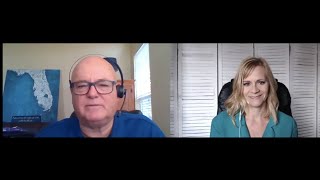
A recorded interview (YouTube) featuring Dr. Don Wood and host Karen Seltz discussing techniques to train the mind and body to relax. Dr. Wood explains the role of the vagus nerve (dorsal vs. ventral pathways) in stress, trauma, inflammation, and gut–brain signaling, and promotes practices (meditation, yoga, exercise, safety audios, and the TIP program) to activate the parasympathetic/ventral pathway and reduce hypervigilance. The piece includes personal anecdotes and client testimonials illustrating program effectiveness.
Chapters
Hello and welcome to another episode of live inspired with Dr. Dawn Wood. I'm Karen Seltz. Today we're going to discuss how can we train our mind and our body to relax? Now, who doesn't need that? Welcome, Dr. Wood.
Hey, Karen.
Awesome. So tell us, is there anything we can do? We hear a lot about meditation and stress reduction and the effects that stress has on our bodies and our minds. What can we do about this? How can we train ourselves to actually relax?
Well, what's interesting is a lot of people do meditation, yoga. I know you do a lot of that stuff, right?
Yes.
So a lot of people probably wonder, so why is that working? Right. Why do I feel better after I meditate? Why do I feel better after I exercise or do yoga? Well, it really comes down. I'm going to give you a little bit of science behind it as to why that's actually happening. What you're doing when you do yoga, meditation, exercise is you're stimulating a nerve called the vagus nerve. And it's not vagus, like the city Las Vegas. Right? It's vagus V A G U S Vagus nerve. The vagus nerve is actually the longest cranial nerve in the body. It runs from the base of the brain around the cerebellum and runs all the way down into the stomach. Now, the reason they call it vagus is because of. It's sort of termed after the word vagabond. You know how a vagabond wanders. It pretty much wanders through most of the organs in the body and ends up in the. In the stomach. Now, most of the information the vagus nerve is sending to the brain, 80% of that information comes from the stomach area to the brain, and only 20% is the brain to the digestive system and stomach area. So that's really interesting. So this vagus nerve is extremely important. And understanding how what you can do to regulate that is very, very important. So that's what I want to sort of share with you guys.
Wow, that's really interesting because we hear a lot about gut health and we hear. Well, in Chinese medicine, the stomach meridian has to do with contentment. So I'm wondering how that's all connected. So tell us more.
Yep, absolutely. So that's why they always talk about the gut is the second brain. Right. Which is true. And that's really because of this nerve and how powerful this nerve is, is in regulating our nervous system. So what happens is we actually have two pathways of the vagus nerve. The first pathway is called the dorsal pathway. And the second pathway is called the ventral pathway. So to make this sort of, in terms of what you probably heard before, the dorsal is your sympathetic nervous system response, your fight, flight or freeze response. Your ventral is your parasympathetic or relaxation pathway. So when we are taking in information, our mind is basically taking in through all our senses. Sight, smell, hearing, all that stuff. It takes in this information and processes it. Now, if any of this information is seen as threatening or disturbing, what it's going to do is it's going to go through the dorsal pathway, which is then going to take it into a response to the sympathetic nervous system, which is, are we in danger? Is there something that we need to be doing? Do we need to be fighting? Do we need to be running? Do we need to freeze? And so the more we stimulate that dorsal pathway, the more we become nervous all the time. So if you don't learn, right, to calm that down and use the ventral pathway, you live a life of hyper vigilance. And so you're in a constant state of fight or flight. Now, what we do know, especially because of our program tip, we know that if you have a lot of trauma, that that dorsal pathway is constantly being agitated. So which is going to bring inflammation, then the inflammation is going to affect the neurotransmitters and it's going to affect the immune system. So if the inflammation is especially going. That's why so many, and I use women a lot, because you see it so many times in women who have had trauma, they end up with autoimmune issues like Crohn's, colitis, ibs, you know, celiac disease that's coming because that dorsal pathway is constantly being engaged, creating inflammation. And in what area? In that whole area down in our stomach. Because 80% of that information is coming from there to the brain, telling it that we're in danger, right? And inflammation is the response to danger. The reason being is the body is trying to protect itself against any foreign invaders or threats. So it's a temporary pause in the system to stop anything from penetrating the cells. So the cells become hardened and enlarged to protect it from any kind of bacteria, foreign invaders. But it's meant as a temporary situation until the danger passes. But if you're constantly in this state, right, of stimulating that dorsal pathway, it stays inflamed. That's why I talked about with my daughter, right? My daughter ended up with Crohn's, right? Because the trauma that she had had earlier in her life kept stimulating that pathway. And Every time she thought about it, what is her mind gonna do? Send the signal that we're in danger, right? Then the dorsal pathway continues to send information about the danger. And so then we get into this perpetual loop. And so the key is to be able to stimulate the ventral pathway, which is stimulating the parasympathetic system, which is telling your. Your mind is then telling the body to calm down, everything is okay, it's safe. So meditation, yoga, exercise is activating, right, that ventral system, saying, we're safe, we're okay, right? We're calm. The more you do that, the better it is for your system. So if you're using meditation, you're using yoga, you're doing exercise. The reason it feels good is because you're activating that ventral pathway, which is activating your parasympathetic nervous system, which is telling everything that it's okay and safe. And that's why, you know, through our program tip, we use the audios because the audios are another tremendous tool to use, right. To also continue to create that pathway through the ventral system.
Right. What Dr. Wood is referring to is after the initial TIP program, which is about four hours, we do 28 days of audios that are daily.
Would you like to say more about those?
Sure. What we're doing is actually training the brain to continue using the ventral pathway because our mind naturally defaults to survival, which means if it's caught. So if you've constantly lived in this hyper vigilant state, that becomes normal. So then you start to see the world that way. Everything's dangerous, there's no safety. Where do I need to be? Oh my gosh, everything's gonna come crashing down on me. So even if you have a thought, right, that comes to your mind because you're in a situation like Karen, you talked about in an earlier episode, you felt fear, right? So when you were feeling that fear, what you were doing is activating, right, your dorsal pathway, which then verified that we're in danger. And that's why you couldn't get out of it. Because if your mind was used to going down that way, right, it becomes the natural way, the natural path. So we have to train our brain, right, to use the ventral pathway, see things differently. And it's funny because I always talked about that. You know, you meet the people who are always optimistic, always see the world as really good. Everything is really good. That's because they train their brain to be able to do that maybe from experiences or also maybe just from practicing it. And so we can train it to do that. And that's what you're doing when you're doing the exercise, yoga, meditation, and then if you add in, you know, our audios. And obviously the biggest key is to get that trauma reframed and cleared. Right. And updated so it stops that activation.
Wow. Absolutely. Yeah. I used to live in that state of hyper vigilance that you were talking about. And you know, it comes from growing up in an environment where I wasn't safe. I didn't know I had parents that were physically abusive and brothers too. So I had it coming from all angles. So I was like constantly, you know, and as a 20 something year old, I would go to a bar with my friends and I would scan the entire place before I would even be able to relax a bit and see if I thought anybody there posed a threat to me physically. I would have a plan like, okay, here's what I do if I get attacked. And now that just seems unfathomable. It's like crazy.
Yeah. So that was your experience. So your mind had developed the belief that the world is not safe. So if you see that. Right, But I always talk about that a zebra cannot feel fear of a lion unless a lion shows up. Right. We have that same system. So if you went somewhere and a lion shows up or a threat shows up, your systems fully capable of dealing with that. Why should you be going in with that thought? Right. Because as soon as you go in with that thought, you already activated the system. So the idea is to be able to train your mind not to do that, to stay on that ventral pathway. But if a threat shows up, it'll immediately go down the dorsal pathway. It's trained. It's automatically going to do that. You don't have to choose it. But you could choose to practice the ventral pathway by yoga, meditation, safety audios, Right. See the world differently. Right. Respond differently. And then once you train your mind to do that, then you're going to be living with that parasympathetic nervous system being engaged most of the time. I was fortunate enough to live that kind of a life. So that's why I understood this so well when we developed the program is why did I always, I would always see, you know, everything as bright and sunny. And even when I got into a situation that was a problem, Right. I fully believed that I would figure it out and I would be able to get out of this. Where most people look and say, oh, here's another problem, that's the end, I'm going to die. Right? This is Going to end my career. It's going to end something where I looked at it as more of a temporary situation, something that I needed to. An obstacle was put in my way. Let's get over it, right? Let's either get around it, get over it or knock it down. One of the other.
Yeah, you did play hockey.
I did play hockey. So there was always that option, right? We could just knock it down and run over top of it.
Yes, indeed. So what would you recommend to people that live in that state of hyper vigilance or are constantly annoyed by things or angry or upset?
I think the biggest thing is to understand that there's a reason why it's happening that's not who they are. Right. It just becomes the way they respond. So, you know, I'll meet people. You know, I had a lady, I was sitting at an event and the person who was speaking was telling stories and they had a lot of emotion to them. She just constantly kept crying, right? And I said to her, I says, wow, you're very emotional person. And she goes, yeah, I've been emotional all my life. I said, well, how would you like to fix that? She goes, what do you mean fix it? She said, I've always been emotional. And I said, right. But I says there's a time and a place for emotions. Emotions are calls for actions. Right. If there's a need to respond to something, you should be responding. But if there's no need to be responding, you shouldn't be emotional over everything. Some things are just information, some things are just some information coming to you that you can deal with. But if you've got this constant state of hyper vigilance, you're going to see things that way. So the message really I want to get out there is that you can change that. You don't have to live like that. So don't live and manage and cope with it. Right. We can show you how to eliminate it.
Absolutely. Yeah. It's been life changing for me, the TIP program. So check it out on our website, which is inspiredperformanceinstitute.com and see what you think. We have all kinds of testimonials on there for you to look at and just see if you think it fits for you.
We've got a great.
Yeah, we got another great testimonial coming up of a lady, she had a car accident 10 months earlier, a very severe car accident that she probably should have died in, but she survived and she couldn't drive her car so she was so afraid to get into her car, that it became debilitating. Even getting into a car with somebody else driving was very difficult for her. So what was fascinating is she really had just sort of heard a little bit about our program, and somebody told her it would be good for her to go through. And so we didn't really know she was doing this, but she took a video of herself coming to the session and with somebody else driving her. And so she recorded what she was. She said, I have no idea what this program is going to do for me. She says, but I wanted to record this to sort of show what I'm experiencing now. And you could see her in the car with somebody else driving and the fear right in her face, like, oh, my gosh, there's a whole bunch of traffic up here. And then after she finished the session, she drove around the block. And then she shows again later how she's now back driving, backing out of her driveway. Right. All because her mind. Right. Had been focused on that. All the danger.
Yeah.
This one's just going to be edited. This is a. A fairly new one, but it's an amazing testimony because you get to see what happened to her right after the accident, or not after the accident, but right before she went through the program, she'd been dealing with the after effects of it. And then you see her right after.
Wow, I can't wait to see that. Yeah, you can see the difference in people's faces. I mean, it's just there's a lightness after the program that was not there before.
Yeah. I mean, look at Michelle's. I mean, if you take a look at Michelle's, you can see the difference that from the minute she went through the program before she started, and then immediately afterwards, the difference.
Yeah. Amazing. Well, thank you so much, Dr. Wood, and thank you for watching. We appreciate it. Join us next time for another episode of Live Inspired.
Thanks, Karen.
More from Dr.





When you’re in the middle of a panic attack and someone tells you to “just breathe”.

Once a panic attack starts, you can’t stop it. Here’s why and what you can do about it. #panic


The first sign of healing wasn’t what happened. #anxiety #emotionalpain #fightorflight

The threat ended. The situation changed. Your life moved forward. #weneedtotalk #anxiety

