Live Inspired with Dr. Don Wood - Episode 5
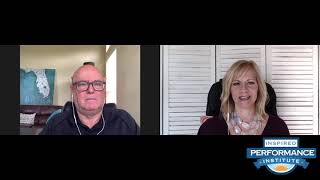
A recorded conversation (YouTube episode) between host Karen Seltz and Dr. Don Wood about the distinction between behaviors and habits, how unconscious coding (implicit/procedural memory) drives automatic responses, and how conscious practice can overwrite those codes. Dr. Wood explains that behaviors are sometimes conscious responses while habits are unconscious, gives examples (nail-biting, emotional triggers), links many habits to unresolved emotional trauma, and describes a two-step approach: heal the original emotional concussion (implicit memory) and then rebuild procedural responses. He notes typical timelines for change (about 14–28 days for many behavior changes; up to ~56 days for addiction) and points listeners to the Inspired Performance Institute program and website for resources.
Chapters
Hello and welcome to live inspired with Dr. Dawn Wood. I'm Karen Seltz. Thank you for joining us today. We are going to talk about habits and behaviors. What's the difference and what can we do about them? Welcome, Dr. Wood.
Hey, Karen, how are you doing?
I'm great. How are you?
I'm doing excellent.
Fantastic. So tell me, like, we often use habits and behaviors interchangeably. Is that the correct thing to do?
Well, sometimes they are interchangeable, but the idea is to really understand the differences between the two. And so when I talk to people, as you know, in our program, we have an audio series called Walking Out Behaviors. We don't call it walking out habits, and so there's a reason why we call it behaviors as opposed to identifying it as a habit. When we have a behavior, we're basically responding to something in our environment. It's something that we're either aware of, or if we're not aware of it, if it's an unconscious response, that's a habit. So the difference between behaviors and habits are conscious or unconscious, and then behaviors even have an unconscious element to it. So I wanted to sort of really give that kind of description and distinction between the two. So if you're doing something, then you're unaware that you're even doing it. So you have no idea that you do it at all. That's a habit. So your mind has basically coded a particular way of doing something or behaving or responding to something, and you don't even have to think about it anymore. And so that would be defined as a habit. If we have a behavior, we can have a behavior a couple different ways. One, we can be aware of our behavior, or two, that we could be aware of it and not understand why we do it. So if you have a behavior that you understand why you do it, that's one thing. You can also have a behavior and have no idea why you keep doing it. But you're aware of the behavior. You see the difference.
Yeah. Can you give us an example of, you know, one that you do and you don't know why?
Yeah. So say, for example, you see a child, like, sitting by themselves and you just feel sad and you don't know why. Every time you see a child sitting by themselves, it makes you sad. So that's probably coming from some experience in your life that your mind is relating to. Or you may have a response like that where you see a child on their own and you say, that reminds me of me when I was a child. That would be something that you're aware of why you're feeling sad. But if you don't know why you're feeling sad, but you're aware of being sad, that's a behavior. But you may not know why you have the behavior. And I wouldn't call that into a habit, because a habit's unconscious. You don't even know you're doing it. Does that make sense?
Yes, it does. So then a habit, say, let's take for example, biting your nails, right? That is. Would you classify that as a habit?
Yes, because you're not. So people will be biting their nails. You say, why are you biting your nails? Oh, was I biting my nails? I didn't even know I was biting. That would be a habit because you're not even aware of the behavior or be aware of the. Of what you're doing. And then that's coming for a reason as well. So behaviors and habits are coming because of something that you've experienced, and you're either aware of it or not aware of it. And that's the difference between behaviors and habits. So go ahead.
Oh, I was going to say, so let's say that we do something like biting our nails, and we want to change it, but we just keep doing it unconsciously. What could we do then to change that habit?
So we want to make it a behavior so that we're aware of the behavior. So what we're going to do is we're going to do something to give us the ability to recognize we're doing it. Sometimes people will put something on their nails that they can taste, which will then make them go, oh, I'm biting my nails. So what you want to do is, when it's a behavior, we can modify or change that behavior because we can put a conscious effort towards it. And so that's why with our audios, we have the questions. Because what we're trying to do is to determine, are you even aware of it? So if you're not. So the idea is, for example, we'll say, what kind of qualities do you admire in people? So somebody say, you know, I may admire, you know, honesty. And so then it's like, okay, if you admire that quality, who do you know who has that quality? And then you're trying to identify people that you know. So you see what we're trying to do, we're trying to make it more conscious to you. Then it'll be, do you have that quality? And all of a sudden you start to look at things a little differently. You start examining, well, gee, I think I'm honest, but at the same time, maybe I'm doing things that aren't honest. So if that's a quality that you admire in people and it's something that you want, you've got to start making some changes to the way you're responding, and that comes from noticing a behavior. So by asking the question. So when you do the audios and you have the questions, we're taking it from either unknown or unconscious into awareness. And when you're aware of it, then you can start to make some changes to it. Otherwise, you'll just continue doing it. You'll never know why or never know you're even doing it. Like biting nails.
Right? That makes sense.
And then somebody points it out to you, and you go, oh, yeah, my nails. I have no nails. Right? Yeah, I guess I do that a lot. Right. But until somebody pointed it out, it never became conscious to you. You just did it automatically. And what I find, I don't know if your experience, but in my experience, a lot of people who bite their nails and had childhood trauma in particular, sexual abuse is very common to bite nails. So there's something about that that gets created very early in childhood, generally, I think, comforting to have your fingers sort of like sucking a thumb, having your fingers in your mouth or something. Comforting about it. So they end up doing something about it. So they just bite their nails.
Wow. No, I didn't know that. That's very interesting.
Yeah, very common.
How then does a habit become an addiction?
So if it becomes unconscious, it may be a combination of a behavior with a habit. So the behavior could be, I drink when I go out because I feel better, and I know I like to drink. Right. Because I feel better. Right. So that's a behavior. But the addiction comes from not being able to stop it and not knowing why you're doing it. That's the habit. So the habit can drive the behavior. So you don't know why you want to have a drink. You just know you want to have a drink. So a lot of people in addiction will say, I know I go by the bar and I can't stop, and I go in the bar and I still drink. They're aware of it. That's the behavior. They're responding to their environment. They didn't see the bar or they didn't think about the bar. They may not go in, but they'll be driven to go into the bar and not know why. That's the habit. So the idea is to then get the mind start thinking about this behavior. And how we can start making changes to it. And the only way to change a habit or a behavior is to create a new response. That's a conscious effort. So you've got to use the conscious part of the mind to start fixing the unconscious behavior. Does that make sense?
Yes. So if I have this correctly, we're going to use the conscious mind. Do we actually choose something in advance? Like when I notice myself doing this or wanting to do this, I'm going to do this instead?
Yes. So you've got to consciously come up with another. So what we're doing is the mind is like a computer. It's building codes. So if you type in your computer a specific code constantly. Right. Which is then you're coding. You know, software developers develop codes, and the code is designed to create a response. So when they're writing code to have the computer send a message to the printer, that's a code. So anytime. So instead of now having to write all the code, Right. You just hit control P. It's a shortcut to the code. Right. But when the computer recognizes the control key and the P key together, it goes to that code.
So the behavior would be control P. Right. The code would be printed. So if we want to now create a different code, we've got to go in and actually start writing new code, which is creating a new way to do something. And that takes some time to write code. You can't override a code that's being processed for many, many years. If you walked a particular path through a forest, and all of a sudden now we're going to change that path, it's going to be harder to get down a new path because you're going to have to take some time to make that comfortable to walk on. You're going to have to wear down the grass, cut down some of the bush, and then eventually that becomes a faster code to get where you're going.
Yeah. Wow, that's interesting. Yeah, so interesting. So once we become aware of a behavior, we can write new code consciously and start practicing. We practice that every day. Or how do we do this?
Yeah, we practice it to override it. So what happens is, if you've got a code that's being done a thousand times and you're now wanting to write a new code, Right. You've got to do something new and start building that new code. So if you've done something for a long, long time, and now it doesn't take a thousand times to override the thousand times you did it, basically you just have to create a new code and a response, but you have to be consciously aware of fixing it so the mind knows what code it's changing. Right. So if you don't want to do a particular thing, then you've got to change it. So what I always say, and when you listen to the audios, you'll hear this. I talk about, the mind doesn't like change because change could be dangerous. The reason it understands that that habit or that behavior is because you repeated it. So what the mind sees, repetition is, is research.
If I do something a certain way over and over and over again, my mind doesn't determine whether it's good or bad, right or wrong. It basically says you must want this to become an automatic process because you've built the code for us. Right. Or you've told us this is the code you want written so that you don't have to think about it. So it becomes an automatic code, just like your heart rate, digestion, everything else. So if you want to change that, you've got to show your mind it's safe to make that change. Because you could imagine if it changed codes instantly, that could be very dangerous. Maybe there's no research to prove that this code. Right. Is more efficient than the old code. So you've got to create enough repetitions to make the mind feel like, okay, I can make this change is more efficient. Yeah, right.
That makes a lot of sense. And for some reason, I'm thinking of motivational type events where people go and they get really excited and they're like, I'm going to change, I'm going to do things differently. And then they go home and they're surrounded by the same people by the same environmental stimulus and they go back to exactly the way they were before.
Yep. So the problem is, is that when you go to one of these motivational seminars, you're getting research information on how to respond differently. So the conscious part of your mind, the logical, reasonable part of your mind, which is only about 5% of your brain, that makes perfect sense. And so if the logical, reasonable part of your brain could make the decision to change it instantly, it would. However, your survival brain, your subconscious mind there to protect you. So, and I use this story a lot, if you walk two miles every day to get food, but along that two mile trip, there's snipers and landmines, but you get there and back every day and you've managed to survive 30, 40 years. And then somebody comes along and says, karen, There's a store 100 yards down the road just go west, right? It's well lit, it's very safe, there's no crime. Just go that way. Will your mind do that right away? No. Now it makes perfect sense to do it right. So you're logical. So that's your motivational seminar. Do this and do this. Right. Makes perfect sense. If you do that, you're going to improve your life. You go fired up out of that motivational seminar saying, I'm going to do exactly that, that makes perfect sense. I'm going to start doing that. But then the survival brain says, not so fast. We don't know that's true. We have to find out for ourselves. You've got to prove to me that that is so. If we start slowly, gradually moving in that direction and then we have enough research to back up what that logical part of the brain is telling us to do, it will then make the change. Because our brains are designed to adapt to our environment, but not instantly.
It's a survival tool. Which makes perfect sense. If somebody says, oh, go north, go north, right? There's no animals, it's very safe. No lions, right? Well, you know, so Charlie went north. We never saw Charlie again.
Right. So the mind's gonna say, well, that doesn't look like it's such a good idea. Right, but, but the logical part of Charlie's mind said, okay, you told me, I trust you, I'm going right? And he ends up not making it. So we've now got to show that there's a better way to do it and prove it. And that's why I say repetition. Think of it as research. So if you can start continuing building the research, your mind will then accept that research as proof that it is better.
How long does it take in your experience to overwrite this code of consistency, like consistently doing something new? How long does it take to rewrite the code?
In most cases I'm seeing anywhere from 14 to 28 days. Is generally, addiction is a little stronger because it's more survival based. And so that could take a little longer. That's why we generally go up to about 56 days. Because we have addiction audios and then behavior audios. And so we sort of. So addiction audios are more habit related and the behavior audios are more behavior. Once we start working on those habits by creating conscious behaviors to start fixing it, then we then start modifying those conscious behaviors. Right. So it's a two pronged process.
Wow, that's still pretty quick if you think of, you know, things that we've done for A lifetime. We can change some of them in 14 to 28 days, or even addiction in 56. It's amazing.
And I believe the reason why is because, as you know, in our program. Right. The reason we have a habit or a behavior is because of the way our mind has been developed over many years of either disturbing traumatic emotional concussions. Right. So if those are never healed or never fixed, we're just changing the habit and behavior. That's why a lot of times people fall back into addiction because they never fix the problem that created the habit, habit, or behavior. So now they're just operating on code. So if they haven't fixed what started it, then they're just trying to modify the code where our program goes one step back and says, what created that habit? What created that behavior? Then once we fix that, it's easier to fix the habits and behaviors.
Yeah. Yeah, that's what I found, too. That's. Yeah. I struggled with addiction myself, and I was free from that addiction for three years, and then I relapsed because of an emotional trigger that I didn't see coming. And. Yeah.
And so that's what. So what happens is you built a new code by consciously creating a new behavior to override the old code. But what happened is, is it. If something, the emotional, the implicit memory that stored the information that created it fires up again, it then looks for the old code that it used to respond to, and then the new code that you just built can get overridden very quickly because the old code has a lot more depth to it, a lot more intensity to it.
Yeah. So what's the key then, to not falling back into old behaviors that are.
Unwanted is to first fix the trauma or disturbing event that created it. And that's what the new book that I'm talking about, you know, things that successful people don't do. The emotional concussions, if you don't fix those traumas or those emotional concussions, that's the fuel burning on the sideline all the time. And that can get fired up at any time if something. Right. Starts it up again. Like you said, you had an emotional trigger that started it back up again. If that was cleared and the mind didn't go back to that high definition, intense information that's created it. Right. It could never possibly have found that code again that easily because you've got a new code in its place.
Right.
Yeah. Makes. Makes perfect sense. And yeah, I feel really, really different since going through the program. I. I don't have the same, like, responses to triggers at all. Like they're, they're like eh.
Yeah, because.
Those are, those are caused by. There's two memory systems. We got the implicit memory, which is how we stored all the information, the pictures, the sounds, the details of those events. That's what we fix first. And then we work on procedural memory, which is behaviors and habits. And so a lot of times what they do in AA and na, they're just working on procedural. Well, let's create a new way to behave. Let's consciously figure out a new way on how to stop drinking, stop taking the drug. And that's good because we are building a new code to try to get us out of that behavior habit. But if we never fix the original issue that started it all, that's still capable of coming back, right. And then igniting it again. So if you fix the first part, how much easier is it to fix the second part?
So much.
Yes, so much. So if you're just trying to change a behavior and habit without fixing what originally started it, right, you're working 10 times harder. That's why we're able to get it much quicker. Because what started is no longer going to create that response anymore. Then the mind's just operating on a code. And it's easier to fix the code if we don't have the original problem interfering with modifying that code.
That's amazing. So if anybody is struggling with unwanted, undesirable behaviors, habits, addictions, how can they find out more information about our program?
So go to our website, which is the inspiredperformanceinstitute.com check that out. There's a lot of information. You can even email into infoiredperformanceinstitute.com and we'll have somebody either call you back or email you, then just show you how our program works. And you can go and see a lot of testimonials on our site from people who, from successful athletes, CEOs, executives, to people struggling with addiction, to veterans struggling with ptsd. All of those things are possible to fix, right? The mind and body is designed to heal. So all we have to do is give you the tools to allow it to heal. And those habits and behaviors, if you're feeling really bad because you have a bad habit or bad behavior, as you know, on our program we talk about, right, there's nothing wrong with you, there's a reason why you have it, right? And it's because of this glitch and this error message is flooding in. Too much data over stimulating our nervous system. And you can't not do it. If you got that much data flooding in, right. It's going to override the system and it's going to go into fight or flight or freeze mode. It has to. It's not a choice. So when I always hear people say, oh, they just, they make bad choices. Well, they're making choices based on the way their mind's filtering right through all their experiences in their life. So if you take all those experiences and you jump them and you pile them all into that same situation in the present, it's going to over overload the nervous system. It's too much information. So the mind starts to panic and that's when the person gets angry or runs or yells or does something that's really out of their character is because of the way their mind is responding to the current environment, thinking something's still happening.
Yeah, I love it. That's awesome. Well, thank you so much for joining us and for, you know, enlightening us on this new subject. This is always amazing and always fun. So we will see you next time. Thank you, Dr. Wood.
Thanks, Karen. Take care.
More from Dr.





When you’re in the middle of a panic attack and someone tells you to “just breathe”.

Once a panic attack starts, you can’t stop it. Here’s why and what you can do about it. #panic


The first sign of healing wasn’t what happened. #anxiety #emotionalpain #fightorflight

The threat ended. The situation changed. Your life moved forward. #weneedtotalk #anxiety

