Live Inspired with Dr. Don Wood - Episode 6
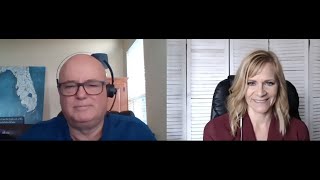
Karen Seltz talks with Dr. Don Wood about emotional intelligence in leadership and hiring. Unlike IQ, emotional intelligence can be trained. Their program helps people manage dysregulation from trauma to improve emotional regulation and performance.
Chapters
Hello and welcome to another episode of live inspired with Dr. Dawn Wood. I'm Karen Seltz. Today we're going to talk about emotional intelligence. You've been hearing this term being tossed around for years. Now. We'd like to discuss and hear Dr. Wood's take on what is it exactly? How long has this been a term that's been being used and why is it important to you? Welcome, Dr. Wood.
Hey, Karen, how you doing?
I'm awesome. How are you?
I'm doing awesome as well.
Great. So tell us, you know, why is this important, this term emotional intelligence, you know, what do we need to know about it?
Well, the reason I think it's important is because a lot of corporations now are starting to look at it. Before, they would always sort of look at intelligence in terms of iq. So I don't know about you. When, when I was a kid growing up, they put so much importance on what is your iq. And by sort of focusing so much on that, it sort of put a value on the smart kids are going to be the more successful kids. And what they're learning is that's not necessarily true. So, you know, the smart kids sometimes have an advantage in terms of depending on the field they go in, but that doesn't necessarily, you know, so they go into the sciences or, you know, health, medical, doctors, things like that. Obviously, you've got to have a pretty good IQ to do that kind of stuff, but that doesn't mean you're going to be successful just because you're smart. And so they started. The first time it was ever used, coined emotional intelligence was in 1964 by gentleman called Michael Boldik, and he was the first one to use that term. And then it became popular really again in 1995 when Daniel Goldman. Right. Wrote a book on it, started really talking about it, and that's what most people think was the real start of it.
Wow. Yeah. I've been hearing it because I've been in the psychology field. So as long as I've been in school, it's been a term, but it hasn't been widely used.
I think it should be.
It should be, indeed. Why are employers starting to look at it? What's the importance of it?
Well, they're starting to look at who are the kinds of people that could be good leaders. So if you necessarily put the smartest guy into running a department, sure, he may know a lot about it, but he may not be your best leader. He may not be able to motivate the other people. In fact, your high IQ person could actually maybe intimidate the other people. Right. Because he knows everything. Chances are, is he going to be able to lead people or is he going to end up doing everything himself? You know, I've seen those kinds of people, they got really high IQs. They don't think anybody is, you know, capable of doing the things that they can do. So they end up taking more the responsibility or more of the job load where somebody who is a good leader may not be the highest IQ guy, but they've got an emotional intelligence. In fact, I just heard something the other day which I love. Dr. Ben Hardy, I worked with him a little bit. He actually went to our program and he writes in Psychology Today. So I don't know if you had a chance to look at that article that he just wrote about our program, but it was pretty cool.
Yes, but.
But the other thing that I love that he shared with me, which I think is great and hope I'm not giving away, I think he's got a book really coming out now that he's writing with Dan Sullivan. And basically the book is, and I'm paraphrasing, I'm not sure exactly what the title will be, but it's talking about it's not what, it's who. And what he says is really successful People don't look at a new business or new opportunity necessarily as just what it is. They look at it from who do I need to help me? Who am I going to recruit that can help make this a success? So that's emotional intelligence. They still could be really smart in their field, but what if they want to get into something else? Right now they've got to find somebody who has the ability to maybe lead that company or develop that company. So really successful people are really looking at who they should be recruiting to their business as opposed to what do they need to do first. I thought that was brilliant.
Yeah, definitely. So that brings up like what exactly is emotional intelligence? What does it encompass?
It's really coming down to who is capable of controlling their emotions in situations, being able to recognize if they're getting out of. Out of balance and be able to rein it back in. Right. And then also understanding other people getting out of balance and then how to deal with them. So, you know, the person who just flies off the handle every time something goes wrong, what ends up happening is nobody talks to them. Right. So if every time you go to your boss, your boss flips out because you're bringing a problem, you're going to stop bringing him or her problems. Right. The person who's got. So that would not be uncommon with somebody who had a high IQ getting very frustrated with somebody coming and telling about a problem. Right. Why can't you figure it out? Right. Why do I have to figure everything out? But the person with a high emotional intelligence would be able to see this as an opportunity to maybe train this person a little better or get that person to be able to stay more regulated and become a safe place for them to be able to come and bring a problem. And those are the people who end up becoming really the top leaders in a lot of situations. So the person who's the smartest guy in the company may not be the leader. He may be the person who runs a lot of the stuff, you know, but at the same time, they're going to bring in, you know, people who know how to run the business side of it.
That makes perfect sense to me. I'm very curious. Is there a way to test this emotional intelligence quotient?
There is, but that's one of the criticisms of it is there's no real defined way to like, iq. The reason they rely so much on IQ is it's a very.
Easy to define, you know, percentage or of people who have that high iq. So there's a way to measure that. So the people who are who criticize the emotional intelligence are really coming from the world that say it's an in that and, you know, not an exact science where I believe it is. I really think that you just know it. Have you ever met those people that you just know are just born leaders or true leaders? Right. You can sense it. Right. And then that. How do you measure that? It's probably difficult to measure it, but you know, you know it when you see it, right?
Yeah. Yeah. So for employers, then, is there a way they can train people to be more emotionally intelligent?
Yes, they say it's learnable so that you can actually learn it. But that's the reason I wanted to talk about this today is because you can see why now our program, right, could have such a huge impact on being able to train people to be more emotionally intelligent. Because, you know, like we talk about in our program, is that if you become dysregulated, you may be becoming dysregulated because of trauma. Right. And that has nothing to do with your emotional intelligence. That has to do with the way your mind responds to trauma.
Can we back up one second? And can you explain what you mean by dysregulated, please?
Right, so if for Example, every time you run into a particular situation, somebody may be disrespectful to you. And so every time you sense that somebody's being disrespectful, all of a sudden this surge of emotion comes in, but you're not sure why. Right. The person maybe just said something that was really sort of not that disrespectful, yet you feel yourself immediately getting angry just by the way they said. It could be a tone in their voice that's coming because the subconscious mind is doing its Google search of all that information. Every time you have been disrespected is flooding in. So somebody says to you, like, no, I don't like that. Right. And the person then flies off the handle. Why are they flying off the handle? Because of what the person said? Not necessarily. They could generally deal with that. They may be offended, but they wouldn't explode with anger. The reason they're exploding with anger, which they're not aware of why it's happening, is because their mind is looking at all the different times they've been disrespected. That flood of data coming in which dysregulates the nervous system so it stops staying present. Right. And now is dealing with a whole bunch of past old information that will dysregulate the nervous system. It's too much information. It's an overstimulation. So it goes into dysregulation.
Excellent. And then our program helps them to calm that and to release the trauma. Can you explain a little bit about how that helps? Like how our program really helps people?
Yeah. So the issue is coming in with the way the mind has stored all this information. So just using the disrespect as an example, if you've had a lot of situations in your life, maybe you had a parent that was just very disrespectful, didn't pay attention to your feelings, didn't, you know, give you respect for anything you've done? I just had a client that came in, and that was, you know, something that she'd been dealing with. And it wasn't that her parents were being disrespectful. They just didn't show appreciation. So every time she would accomplish something, it would be like, okay, you know, not like, great job. We're so proud of you. You know, the father never said, I love you. You know, I'm proud of you. So she was constantly looking for that recognition. She didn't realize that's what it was. Right. And so she just never seemed to be Able to get to her goal. Every time she would get to a goal, there would be something else. Right. Well, I really haven't accomplished that much, you know, Yeah, I got a Master's, but I didn't get my PhD. Got to get my PhD. Right. And so there was always another push because that goal line was not something that she just couldn't find. And so that is what happens to so many people. So what we do is get that reset. So get the mind to stop filtering through that traumatic data and information. And when it does that. Right. It stops that dysregulation. They can then deal with what's happening in the present.
Yeah, absolutely. I know for me, one of the big things that happened was I stopped being afraid of so many things. For example, I was an entrepreneur, and there were a lot of things I needed to do to be successful. And there were some of them that I was just paralyzed with fear in doing. And then after the program, I'm like. I just started thinking and I realized, I'm like, why was I afraid of that? That's so silly. Like, it made no sense to my intellectual mind. And it wasn't there anymore. I'm like, okay, I can do that easily. So it just was not an issue anymore.
Yeah, because. And you weren't aware of why it was doing it, but your subconscious mind was actually still using all those events and experiences as a resource, trying to protect you. Wasn't trying to hurt you. It was saying, well, we need. It's got all this information stored in high definition, high resolution, and it continued to filter through them. So as long as it's filtering through them, it's going to become a resource. So the key is to get your mind to reframe that information, to get it back into a format that is just information. But there's nothing happening. There's nothing you need to do about it. So that fear was coming from your mind, not trying. And I always talk about this. I hear so often people say, oh, I sabotage myself all the time. I don't believe that's true. I believe the mind is trying to avoid pain, trying to avoid failure. So it'll take you on another path. It's not sabotaging you. It's actually trying to protect you. So it's a much different way of looking at it, because people will beat themselves up, you know, oh, it's terrible what I do. I always do this all the time. I just sabotage myself. That's way too harsh. The mind would never do that.
Yeah. And that's What I used to think, too, I was very hard on myself for not doing the things I knew I needed to do to be successful. So I love that you put it that way, which really takes the shame and guilt out of it as well.
Absolutely. And you couldn't until you went through the program. You couldn't have done it differently than the way you were doing it. Right. So if when you were a child in math class, you happen to hear that one plus one equals three, and that never got corrected. Right. And now you're an adult and somebody comes up with a calculation of something. But one plus one was a part of that calculation. Now everybody else in the room came up with the number 86. And you're like, no, it's 87. You say, well, no, go back over that formula. Every time you go over that formula, they keep coming up with 87. You can't figure out why they're wrong, and they don't understand why they're wrong. Would I be able to convince you that you're wrong? No, because that formula got set very early in your life. So the only way to fix that is to go in and get that recalculated so the mind understands that one plus one equals two, then you'll get the same answer.
Yeah. Makes perfect sense. Well, this is.
So it'd be impossible to do that before. Right. Because if you knew that and that would became factual to you, that one plus one equals three, you would just be wondering why everybody else doesn't seem to understand you.
Right? Yeah, absolutely.
Yep.
Well, this is an amazing subject, and I highly.
Recommend and invite everybody to check out our testimonials on inspiredperformanceinstitute.com and see if you recognize yourself in any of these people, because you can perform at a whole other level. I am living proof of that. Is there anything else you'd like to add for today?
No. So, again, probably just going back to. If you have sort of throughout your life, maybe you know, measured everything against your iq. Now start thinking about it in terms of emotional intelligence. So I want my doctor, my neurosurgeon to have a really high iq.
Right. But I don't necessarily need to have the CEO Right. Of a company be the highest IQ person. I want that person to be the highest emotional, intelligent person so that they know how to deal with staff, deal with problems. That's going to be the person that will get that business going much faster. Yeah. So don't beat yourself up if you think that, you know, oh, I've never been the smartest. I didn't get great grades in school. That has nothing to do with success. That's just one measurement of success.
Absolutely. Well, thank you for joining us. Next time we will be talking about the vagus nerve, so be sure to tune in next time. See you.
Thanks, Karen.
More from Dr.





When you’re in the middle of a panic attack and someone tells you to “just breathe”.

Once a panic attack starts, you can’t stop it. Here’s why and what you can do about it. #panic


The first sign of healing wasn’t what happened. #anxiety #emotionalpain #fightorflight

The threat ended. The situation changed. Your life moved forward. #weneedtotalk #anxiety

