Live Inspired with Dr. Don Wood - Episode 3
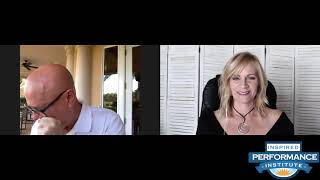
Karen Seltz and Dr. Don Wood discuss lessons from the Genius Network event. Keith Cunningham warns against running enthusiastically in the wrong direction. Joe Polish says to separate self-worth from net worth. Andrew Weil critiques how medicine often manages disease rather than preventing it, and prescribed medication can cause significant harm.
Chapters
Hello, welcome to live inspired with Dr. Wood. I'm Karen Seltz. I'm here with Dr. Wood himself. He is just fresh off of an event called the Genius Network and he is willing to share his wisdom with us today. So I'm going to let him take over. Welcome, Dr. Wood.
Hey, Karen. Thank you. Yeah, it was. What an exciting event. I mean, if you haven't heard of the Genius Network, you really, really should. It was started by a gentleman, Joe Polish. And he's just an amazing networker. I mean, I've never met anybody like him. He's very, very unique. He just knows everybody and you can see why people have, you know, he started, he developed this and why people are so attracted to come in. It's just a huge networking event, but with very, very successful people. People who have accomplished a lot and just met some really outstanding people. But in addition to that, just some really great things that I heard while I was there that I thought was worth sharing. You know, no real secrets, but you know, things that wisdom from people who have got a lot of experience in building their businesses and had a lot of financial success. So it was exciting.
That sounds amazing. I've been to it before and it was fantastic. And you don't meet higher level people than that. Really. So what are some of the standout bits of wisdom you'd like to share with us?
Well, the one that I actually thought is sort of a little funny, but is actually very good was Keith Cunningham. He said there are few things worse than running in the wrong direction. Enthusiastically. And I thought, how, I mean, it's really true. Like, you know, when somebody's doing something wrong, they're making a mistake, but they're just running in the wrong direction. But they're enthusiastic about it. And that's what he said. There's few things worse than that, which I really love. So that was sort of a funny little anecdote. But this is a guy that's obviously had a tremendous amount of success and he had some other really good things. I'll just share a couple of them. He. He lost a lot of money and he talked about that and he says, you know, it's no great thing to lose a lot, but he did learn a lot at the same time. So so many people are afraid that if I lose at something or something goes wrong, I'm a failure. That's really part of the process, right? There's no real failure. It's just part of the process. I remember hearing a quote from the guy who started the holiday Inn franchise. And what they said to him, they said, what was the secret to your success? And his response was my failures. Because every time I made a mistake, I learned something. Right. And he was able to avoid those mistakes later. And that's really what he was talking about as well. But one of the things that I like too, that he said, and this was a quote from him, there are no secrets, just things that I haven't learned yet.
Isn't that profound? Right. We're always thinking there's some sort of a secret that we don't know about. Right. He says there's really no secrets, just things we haven't learned. Right.
Go ahead.
I'd love to go back to the failure piece. So what do you think? In a lot of the population, people are so afraid of failing? It's a really common fear. What do you think it brings up in them?
I think it goes back, it goes back to childhood, right. When you think about, you know, coming home and having a C on a report card. Right. What was the response? Right. From your parents? Disappointment. Right. All the different things that could come along or feel a fail, you know, fear of failure earlier in life. And that was something that I think develops very early. So if you have parents that are basically, maybe even with the best of intentions, they're telling you, I'm expecting you to get this. The child doesn't want to let down their parents. There's that fear that if I let them down, I'm not safe. So I believe a lot of it comes down to that. It's one of the things that I talk about in my book is the tennis pro who was sort of a mentor of mine. One of the things that he said to me when I was about 13 is he said, if you really want to be a great tennis player, you have to lose a lot. And at the time when he first said it, it made no sense to me, you know, like, how is losing a lot going to make me a better tennis player? And what he was saying was I needed to challenge myself, I needed to play outside my comfort zone. If I was playing in my own age group, right. I was going to be able to win a lot more than I was going to lose. But he said if I went up to this is when I was like 13, 14, he says if you go up and start playing in the 16 year old, 18 year old categories, you're going to get beat and you can understand that. You're going to get beat because the game is faster, they're stronger and they're faster. But he says because you're a good athlete, you will actually be able to match that speed very quickly. Where you would never get that experience playing in your age group. So if I'm playing, you know, if we use this as a, you know, analogy, if I'm playing at, you know, 50 miles an hour and all of a sudden they start playing at 80 miles an hour, right? As long, as long as I was only playing at 50 miles an hour, that's where my reflexes would be. But if I go up to 80 miles an hour, I'm all of a sudden going to pick up more speed, right? And then that's going to translate into my own age group as being better. So I remember we played, we used to play in a softball slow pitch league. And this is when I lived up in Canada. And we had a tournament that we were going to that had a mandatory. You had to have three girls on the team.
And you have to have three girls playing all the time. So the idea was, is that you just couldn't stack your team with all guys. You had to have some girls. So the key to winning was not the guys. We had really good guys. We had to find really good girls that could play. And so we recruited three girls that were college softball players. And they were great. I mean, they were very good. But I remember in one of the games that we were playing, I played shortstop and there was a guy hit a ball into the gap and the guy from first was going to round second and third and go for home. So I cut the ball off and the girl was our catcher. And so I just threw the ball as hard as I could and that ball came flat, flying in. She put her glove up like this and the ball never even touched her glove, went straight into her face, just smashed her nose. And.
You know, afterwards somebody said, well, you know, why did that happen, right? And what I really said was she was capable of catching that ball, but all of a sudden there's another 10 miles an hour on the ball. She hadn't played with that, so couldn't react quickly. Now she played in that all the time. She would eventually probably be able to catch up to that speed. But because she hadn't seen it, her mind couldn't recognize that extra velocity and didn't adjust. But it wasn't that she wasn't good enough to play with us. She was, but we just played at a little faster speed because we're stronger, we're guys, right? That had nothing to do with her ability. So, so that's what I think. Same kind of thing. We've got a little off the topic, but that losing. Right. That fear of losing again, she would have just adjusted playing at that level all the time. She was playing at a level where the ball's coming 10, 15 miles an hour slower. So she wasn't used to. Her mind, couldn't pick up that pattern.
Right.
Wow.
Poor girl.
Guess what she did. She was a single mom. And guess what she did for a living. Sold cosmetics. Oh, can you imagine? So just. Yeah, I felt really, really bad, but, you know, it was nothing I could do. I mean, I wasn't trying to, you know, throw, but you forget, you know, she's good enough, that I'm thinking she's gonna catch it.
Right.
So I didn't pull that. It was a compliment. There you go. I like that. I was complimenting her as her face got smashed.
Yeah. So it was really a shame then. It was hard to throw after that because every time I was gonna throw to another girl, then it was in my mind what happened. So it was very difficult for a little while from my mind to adjust again that she was capable. She didn't play again. Believe it or not, she never played for us again. Wonder why.
I don't get it.
I know.
Really such a quitter.
I know.
So what else did you pick up?
Let me just see. Like I said, there were so many good ones. Joe said one of the things I like. Joe said, Joe Polish. He said, if you don't pay, you don't pay attention.
Now, isn't that true? So if you get something for nothing. Right. You generally don't appreciate it. It's really what he's saying. But all of a sudden, when you pay for something, all of a sudden it has some value. So just an interesting comment, but, you know, sometimes. So if you're a business person, you're selling your product and you don't value your product enough, people don't pay for it, or you give it away because you're afraid that they're going to say no or you're not sure they're not going to value it. If you value it and you value it, they'll see the value in it as well. If they're not paying for it, they're probably not going to pay attention to it. So I thought that was another really good one.
Yeah, absolutely. And I dealt with coaches for a long time, and a lot of them are afraid to charge what they're worth. And then people don't get the results that they Are claiming.
Yeah, because they're not probably paying attention. They're not valuing it. So, yeah, same kind of thing.
It's like if you pay a lot of money to join a gym, you're more likely to go than if you're paying $10 a month.
Yep, that's true. Well, it was funny because one of the things that Joe said was he had some, as we were going through it, they had different notes and that. That you could take and you could write down and fill out stuff. And then he asked, did anybody not fill that out? There were some people that didn't fill it out. And he says, I'm always surprised. What is the exact amount somebody would have to pay in order for them to do something. Right. Because it's not cheap to be in the genius network. Right. Very expensive. He says, like you paid, why wouldn't you do it? Right. So it was just interesting.
Another one from Keith Cunningham was if your net worth and self worth get intertwined, then it's a problem.
Isn't that interesting? So if you're combining your net worth with your self worth. Right. You're going to create problems for yourself. So just an interesting observation.
Right?
Yeah. So I thought that was another really good one.
Dan Sullivan, another really big, big guy in coaching, he said, you don't have to justify what you want.
So if you want something, you don't have to justify it. You want it. Right. And so we generally always go around trying to justify why we want this. We is. You don't have to. Right. If you want it, you want it, you don't have to justify it.
Yeah, yeah, that makes complete sense. It's very codependent to justify everything. And I know, I grew up that way. Like, why do you want it? Because.
Yeah, yep.
Or even why should I do something for you? And you had to have that big elaborate reason if you wanted a favor.
Right, Yep. So I like that. That was sort of interesting. The other one he said was, I'm not optimizing for size, I'm optimizing for impact.
So again, just another.
What regards was that.
I don't remember what it was, but he was basically talking about, you know. Yeah, just one of those things where you write it down in the middle of it because it was just great saying. So it's more you're optimizing because you want to have an impact, not just get big.
Right. So if you're doing things that way, like about money, like if you are in business just to make money rather than to have an Impact, it's gonna fall flat.
Yes. Yep. That's really what he's saying. Right. So you gotta have that purpose. I mean, so many things. Now these are very successful wealthy people, you know, a lot of them. And you know, it comes down to. And you hear that old thing that everybody would say when they get really rich. They say it's not all about money. Right. But if you don't have the money, you feel like it's all about the money. But they probably learned that it's really not all about the money. What can you do with the money? What kind of an impact can you have? Right. I remember when I was first in business, I was running my father in law's business and I was in my early 20s. And one of the things that banker said to me is, he said, you know, he says, you scramble in here on a Friday to cover a $500 check. He says, I have clients come in here to scramble to cover a $5,000 check. And he says, so the way I explain it is if you have a bigger shovel, you'll have a bigger hole.
Wow.
So, yeah.
It'S lightning and it's all mindset.
It's all mindset. Yep. So if you're, if you're digging with a bigger shovel, you'll have a bigger hole. Right. And that statement there, if you optimize for size, it's more important to optimize for impact as opposed to size. So again, just some really good points to sort of ponder and think about. What impact are you having with your business? Because if you impact people, the size will come.
Right?
Right. It's same thing again in my book, what I talk about. Do you think you need to be confident to do something? And most people would say, yeah, I need to be confident to do something. It's the opposite. You need to do something to be confident. If you build your, your foundation on confidence, it'll crumble on you. It's not a solid foundation because it can, it can fall apart very quickly. But if you build it on skill, then the confidence will come. So what I say is that confidence is a byproduct of your skill. It's not something that you have to have in order to do something. And that's a really different way of looking at it. So if I've got a really good skill, why do I need to be confident? That's going to come with it. That's the byproduct of executing on my skill.
Yeah, that's really true. And that goes back to the comment you made about the net worth and the self worth being intertwined. Like if you have a certain self worth, your net worth will be fine.
Yes, exactly. Yep. So again, another really good one.
This was really good. I'm trying to remember. Cameron Harold said this. This is the guy that was involved with the beginning of 1-800-got-Junk College Pro Painters.
He basically said that PR is sales, not marketing.
Okay.
PR is connected to sales, not marketing.
Interesting.
Yeah, I'm still thinking about that. I'm letting that sink in and percolate. Yeah, Yeah, I guess you can market, market and market. And if nobody's buying your product, you're not doing a good job with public relations.
Yeah. I think what they're really saying is that when you do pr, that's more connected to sales. Marketing is sort of branding. Right. It's not necessarily sales. You're building your message, you're building your name right where PR is connect. You're trying to convince people to buy your product through prison. Marketing is just building your brand, building your name recognition.
Got it.
So.
A shovel doesn't dig. A shovel doesn't dig a hole. It's a tool.
I like that.
And again, this Cameron Herrera was talking about, you have to know your angle. You have to know what your business is. You have to have five core points to your story. And don't go into too much detail. People aren't looking for a lot of detail. You got to know your target, and you can't be afraid to pick up the phone.
And he says, and you have to have a pitch. And he says, your pitch, the way you can explain to somebody is, he said, you can ask them, do you have a couple minutes.
When you want to talk to them about something? Because people will give you a couple minutes. But if they think you're there starting to now sell them something. But if you quantify a couple minutes, then that's a lot easier way to get their attention.
One of the ones, I got a few more here, but one of the ones that.
Andrew Weil, who was there, I like what he said. He says, we don't have a health care system. We have a disease management system.
Isn't that true?
Yes. And I know you've done extensive research on this and people managing symptoms rather than the core.
Yep. Everything's all built around the symptoms, not figuring out what the problem is. I actually just had lunch today. Today with a guy who flew in from Massachusetts who's a neurosurgeon, because he was very fascinated. He came in with a group of People that they brought him down because he's doing some really interesting things with the brain as well. This is a guy who operates on the brain. And it was fascinating. When he first came down, I could tell he was sort of like, all right, this guy's a PhD. What's he going to be able to tell me about the brain? And after probably we started talking for a little while, and I started sharing what he was doing. He was like, wow, those are things I had never considered. He says, you really opened up my eyes. That is really, really amazing. So then he became a fan, right? And it was great to talk to him because we could share. And he was talking about the physical side of the brain and how it's working. And I'm talking about sort of the mental side, the software. He's talking about the hardware, the computer. I'm talking about the software. And we just hit it off. I mean, he really got it. He was like, wow, this is really great stuff you're doing. He said, I'm really excited to be starting to work with you. So very good.
Oh, that's exciting.
Do you have anything specific? Did he tell you anything specific about what, you know, how his mind expanded or what opened up for him?
Here's one of the things that he said that I loved, which was really interesting. And this sort of was something that, when you think about it, makes a lot of sense. I'd never thought about it this way. He said he did work on this one lady who had had a really big tumor that he had to go in and take out. So when he took out the plate, the skull part of it, he said it actually dropped on the floor. And he said, so we had to. He says, we always sterilize it. We clean it, we do everything he says. Then we put it back in place. She actually got an infection.
And he says, but you know what he learned from that? Because the infection came in, it cleaned up the tumor faster.
Because the immune system came in and started doing more work. It normally wouldn't have been doing that work because it had to fight the infection. Isn't that fascinating?
Yes, that's amazing.
That was learned from a mistake, and she ended up being okay. They cleared up the infection. Right. But it was like a very cool lesson that he learned that he shared. And that, again, got my brain thinking. That's really interesting to think about.
Yeah, that's fascinating.
Yeah. So good information. Dr. Andrew Weil also talked about, and this was scary. The fourth leading cause of death in the United States is medication that's being prescribed and administered properly.
Properly, Proper what?
Yep. Not overdoses. Fourth leading cause of death.
Wow.
That's scary.
And that's when they get it right.
Yeah. And I know, you know in your work, you do a lot to get people off of their medications naturally. Can you talk a little bit about that?
Yeah. Because it's not that medications are bad, but I don't believe they've been designed to keep you on them forever. But for some reason, our system has now gone to. You're going to be on this for the rest of your life as opposed to you have a symptom. We need to address the symptom while you heal. So the medications have become the tool that's being used for healing. That's not necessarily true. Right. It's the body will heal, the mind will heal, not the medication.
Yeah.
So.
Anyway, we've got a big group of people that just showed up.
Okay.
They're being very, very nice and trying to be quiet.
Okay. So let's just end here then.
Let's wrap it up. Yeah, Good point. To wrap it up.
Yes. Well, thank you very much. This has been very insightful. Hopefully people took notes even though we're doing this for free.
Yes, that's right. But we'll maybe continue this on the next one. I got some more things that we can share as well.
Sounds great. Thanks for tuning in. We will see you next time on live. Inspired.
Thanks, Karen.
More from Dr.





When you’re in the middle of a panic attack and someone tells you to “just breathe”.

Once a panic attack starts, you can’t stop it. Here’s why and what you can do about it. #panic


The first sign of healing wasn’t what happened. #anxiety #emotionalpain #fightorflight

The threat ended. The situation changed. Your life moved forward. #weneedtotalk #anxiety

