Modern Medicine & the Effects It Can Have On People with Sarah Hiner
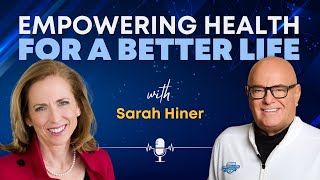
Sarah Hiner and Dr. Don Wood examine how modern medicine compartmentalizes care and overprescribes drugs while ignoring stress and trauma's physical effects. Hiner describes a 21-day program called Chemistry of Happiness that uses lifestyle and biochemical awareness instead of just treating symptoms.
Chapters
Welcome to my podcast, you Must Be out of youf Mind. My name is Dr. Don Wood. I use my knowledge of neuroscience to create what I call a memory reset. This reduces and eliminates the impact of trauma. I can't wait to share with you how the impossible is possible and why you must be out of your mind.
All right, well, welcome to another episode and podcast of you must be out of your Mind. I'm your host, Dr. Don Wood. And as you know, we always bring on guests that sort of tie in with what we do and can bring some new information and resources to help you as well. So today I'm excited to introduce not only an expert in health and wellness, but somebody who's also now become a friend. And I'm excited to introduce Sarah Heiner. Sarah, welcome to you Must Be out of youf Mind.
Good morning.
Good morning.
Hopefully I'm not out of my mind, at least not too badly.
Well, that's what we say, you must be out of your mind to be on this podcast.
So every. There are days I wake up and go, I must be out of my mind no matter what.
Exactly. Yeah. And as you know, that's the title of my first book. So sort of just a clever way of sort of whether we talk about in our whole program is we want to get you out of the way. Your mind has been working. Right. And so that's sort of what we do. So you have been a. An expert and somebody who's been in the health and wellness space for a long time. So I'm sure you've seen a lot of things change over the years.
What.
What's your advice to people who are looking for information on health and wellness?
Wow. How do you cure cancer? Right.
Yeah.
Question. Thanks for asking, Don.
Yeah, we'll do two episodes.
So I think the biggest thing that I learned over the years of. And I'm not, I didn't go to medical school, so I was, I'll call it a health editor. Bottom Line Publications had. We did a lot. About 80% of our information was health information. I was the president. I was the editorial director. For a while. I was at top editing everything. So I knew all these experts. We provided information. But I don't want anyone to think that I have a medical degree. I've just been around and read a ton of stuff on this topic, which has given me an interesting perspective. And we'll get into it later. Where I look.
Cross verticals. Most people, most experts are in the verticals. And because of where I've been, I'VE had this fascinating bird's eye view and opportunity I to put pieces together across different areas, which has been really beneficial for our readers. And then for my happiness program and then with what I'll talk to you right now about. All right, so here's what I think is the most important thing that's happened, and we've really seen this with COVID is the importance of self advocacy. Right. So in the medical world, we've been trained over the last bunch of years that the doctor's the expert and that you go in and everybody becomes little kind of nodding sheep when they go in. Doctor, I heard. And they say, here, take this and it'll fix you. And everyone goes, oh, okay. And they are either afraid or intimidated or they don't know what to ask or they don't, they don't think it's their place to speak up and ask questions. Except for the fact that the more you get into it. And again with. And I'm not on any side, I'm not going to talk about vaccines, not vaccines, Covid treatments, all that sort of stuff. Except that there's been a lot of controversy and there's a lot of debate about side effects and whether something is right for you. And the most important thing that anyone can do, and I've seen this a thousand times, is you know what's right for you. You know your body. And you need to speak up and advocate for yourself with your doctor. Anything they want to give you, you need to ask them why, what their experience is with that product, with whatever conditions you have. Because the doctors, as hard as they try, they are overworked and, and under timed with regard to their education so that you think they know everything, but they don't.
And that to me has the biggest thing because every year I forget the number. Like it's not hundreds, it's like thousands of drugs that are introduced. These doctors can't keep up with the information that they're getting. So they're doing the best that they can. They're giving you advice based on the marketing materials given to them by the pharmaceutical companies. But they don't necessarily have specific information, let alone with your construct of your health issues, other drugs that you're on, whatever it is, you really need to be your own best advocate and can't trust that the system just automatically works. Some things automatically work. Ideally, you turn on the faucet and your water comes out. But in the case of healthcare, it's gotten so increasingly complex that you cannot be a passive participant. You have to be active.
Well, yeah, that's great advice because the same thing, you know, with there's not one size fits all right. Everybody's so unique. The thing that I've learned more than anything is that there's not just one formula for one for everybody.
It's not tested. They don't test it on all those. So even if they test something on, on a group of people, it's a pure test. They didn't test it on you, who's also taking one or two or three other medications or who have some other condition.
And again, you have to ask why? That to me, I did a speech a number of years ago about asking why, like understanding why. So I was with a family member recently who suddenly had a bout of afib and they threw her on a 30 day heart monitor and they gave Eliquis and they gave Metropolol and they, you know, a blood thinner and they gave metropolol as a blood pressure limiter. And it keeps your heart rate limited so that you don't. The big fear with AFIB is that you might have a stroke because you might get a clot. And Eliquis is a more recent drug, it is powerful, et cetera. So we're talking to the doctor and I always go to the doctor with my loved ones because there's so much information, you can't absorb it yourself. You need to have someone with you. Anything beyond just the basic how you're physical and you're fine, but any other kind of serious conversation. And I asked the doctor about why Eliquis versus Warfarin, which is an age old blood thinner, it's been around forever, well tested, it's cheap. Eliquis was like $500 a month. Warfarin is super cheap. It's. Eliquis is more convenient. Warfarin, you have to go get your blood tested regularly, right? So I said, why the Eliquis versus the warfarin? Well, you know, the blood testing, it's incompatible. I said, honestly, if your blood, if your blood is stable, then you're fine. You don't. Testing is easy. Once a month, a blood test. But more importantly, I said, why are you recommending Eliquis? She said, well, they say that it's more effective at reducing the risk of stroke. I said, well, what's the reduction in the risk? You can't just say, okay, fine, you have to go, well what's the reduction? She said, well, it depends on the individual. And I forget whatever some score that they score the individual at their risk factor I said, well, what's this, that score and what's that risk profile?
Oh, they love you.
So let me calculate it. And in the end, there was going to be a 0.1% improvement possibility with Eliquis versus Warfarin. 0.1%.
Wow.
Which is nothing, right. Relative to $500 a month versus virtually free. You know, cheap, cheap, cheap. And the newer medications come with additional risks. Eliquis didn't used to have an antidote. Now it does. But that's relatively new. I like things that have been around forever. Well tested, well tolerated, well understood.
Yep. Well, you know, it's. I always talk about too, and I use sports as an analogy because it's a great way when you teach somebody to play golf or you teach somebody to hit a baseball, there's not one way, Right. To hit a baseball. It's not one way to hit a golf. A golf ball. But it's the same thing in school. You know, we're trying to teach kids all the same way. So you can see how the medical community would get that. Right? That when they go to school, they've got so much to learn that they can't allow any kind of variation. So they've got to get it all into these funnels. Right.
Well, nor can they. Again. It's an infinite number of possibilities. So they have to chunk people together. I mean, one thing that people don't realize is a lot of drugs. Weight variation. Right. So I'm 115 pounds. Shaquille O' Neal is 275. I don't know, ginormous.
Right.
But when we both go in for a colonoscopy, we're both handed the same amount of medication for cleansing out like, no. Right. Any medications. Like, you have to double check for your own needs. And some people are more drug sensitive than others.
We are not little clones of each other. We are unique biochemical masterpieces.
Yeah. And that's really what I found as well. When people come into me and they'll say, oh, well, I have anxiety. Right. And I'll say, well, no, that's just a symptom. Right. That's not what you have. There's a complex thing going on here. Anxiety is just a symptom of something that's going on. Why is your mind anxious?
Right.
So reason. It's not a dysfunction. It's a function. Everything comes down to, oh, there's all these dysfunctions, you know, depression, things like that. And I'm saying, no, I believe it's a function of the brain. The Brain is shutting down for a reason. Something is wrong and is trying to protect you. So let's figure out where it's coming from. And I was just on another podcast this morning too, and I thought it was an interesting way. The way I think the advantage I had was when I started to look for answers for my daughter because my daughter had some serious medical issues.
Yes.
I was coming in from a different perspective. I was not coming in. So she had two issues. One was her medical and the other one was her psychological. So if she goes to the medical side, they're going to be treating the medical condition, but it was actually the psychological condition that was creating the medical condition. That's what I found. So you're going to have two different kinds of treatments. So when you go to the psychology side, they're going to put you on a medication for whatever the psychological. Right. And not fixing the physical. And then the physical is going to put you on something different. The advantage I had is I came in looking at both at the same time and integrated them.
Well, the problem is that the medical world, once they started creating drugs and once that they. They suddenly broke our bodies up into individual parts, right? And they view it as if I can shut a symptom off, as you're saying, then you're fine, right? So if you have acid indigestion, if you take, you know, any of the acid suppressing medications, so you stop complaining. In the medical world, you're fine, right. And they stop looking at our bodies as amazing miracle machines that have. That are integrated systems, right. So people don't realize this acid. So you suppress your acid. And people that are on these drugs for like more than a couple weeks, you're supposed to for like a week or two, right? The God, I'm totally having a brain fart in terms of the name of the drugs. And that's probably fine. I won't throw anyone under the bus. But they suppress your acid and then they find out that when you suppress your acid, long term people get necrosis of their bones.
Right.
They get a higher incidence of diseases.
Pneumonia and other illnesses. Why? Because stomach acid actually does a job in your body. It actually digests your food and absorbs the nutrients. If you don't absorb your nutrients, then your bones fall apart, then your body doesn't function. And the medical community over the last 75 years has just.
You know, compartmentalized all of our bodies. And they give you a drug to solve a thing and then back to. So emotions and physical, same thing. We've Disassociated our emotions and our bodies, and we don't realize that it's this integrated system. So, you know, at the simplest level, if you get a fever, people think, oh, that's a bad sign, symptom of something, right? No, that's your body doing what it learned how to do, which is to turn up the heat, because germs don't like heat and can't survive in a hot environment.
Yep.
So the worst thing you can do is get your fever down.
And yet we've been trained. If you have a symptom, shut it up. And that fixes it. It really doesn't. And until we go back to the place of the integration, you know, you. You understand, you. And I've talked about it a lot. And again, my happiness program does the same thing. Understanding that that thought in your head creates a biochemical reaction in your body that shows up as a symptom, be it a panic attack, be it a migraine, be it a backache, whatever it is.
And people don't. It's really dangerous that people don't realize that. And they go to the doctor, they get a pill and say, hi, I have anxiety. Okay, I'll shut that pip.
Exactly.
Right? So you just shut that pipe off, but the rest of your house needs water. Right?
And that's what I always say is, why are you anxious? Let's get to the root of the anxiety. Your mind doesn't create anxiety for no reason. There's something that is trying. It's trying to get an action. It's trying to solve a problem that doesn't sound like it makes sense, but it does. A great example. I just came back from Phoenix last week, and this week I got it back on Saturday, I was sitting on the plane, and a couple ahead of me had their baby on the plane. And the baby, you could tell, was completely congested. Nose was running. You could hear it. And I'm like, oh, this is awful. Right? And so within an hour, six people around us were sneezing, including me. And I have a really good immune system. I very, very rarely will get sick. And I'm sneezing. So. So immediately, right? I get off the plane, my wife picks me up, and I'm sneezing in the car. And she's like, oh, you know what's going on? And I told her, and I said, but my system is fighting it. That's why I'm sneezing. It's trying to get rid of something, right? And I said, so I'm just Going to push some vitamin C in and keep it going. I want to keep pushing this thing out.
Right.
And I'm fine. But I'll guarantee you that all the people that were around that were sneezing are probably going to try to suppress that and end up in worse shape and, and then get sick.
That and they'll tell themselves a story called it's dangerous to fly. It's dangerous to sit next to somebody that has a cold.
Yep.
And so they create their own sickness. The people that they've seen, you know, an increase in all sorts of sicknesses since, since the pandemic and since everybody was in quarantine and so isolated. And I always said the people that most isolated themselves, then they turn around and they get sick. Why do they get sick? Because they didn't exercise their immune system for six months, nine months, a year, whatever it is. And then they go out, they get sick and they prove themselves. Right. They go, see, I told you it's dangerous. There's dangerous out there. You're going to get sick. No, you created it. It's this kind of self fulfilling prophecy, this cycling of circle and even the anxiety symptoms. So I had anxiety and panic attacks years ago. And it wasn't because, I mean, I was a little high strung, but that wasn't really what it is. My whole body, I hadn't taken care of my body. So I had an environment that biochemically was vulnerable to anxiety. So again, the interplay of my biochemistry with, you know, my tightly woundness, my type aness that combined a perfect environment and then gave me and some prednisone that then gave me. Always love the prednisone. Yeah, that's another discussion that gave me pan attacks. Right. So if you don't have the right environment and you've got this mind thing, you're going at whatever past trauma, whatever past emotional issues that you're carrying around and it lives in the cells of our bodies, then suddenly it comes out somewhere in wherever, you know, whatever version of vulnerable your body has.
Well, it's really. I don't know if I've shared with you. I've got a patent on, on the panic attack and anxiety and everything on our whole program with the patent. And what I wrote in the patent was that a panic attack is a combination of psychological and physical.
Right.
It's both together. And it's actually this really strange loop that happens is that you, you start to feel uneasy. So psychologically, and it may even be below your conscious awareness, in most cases it is. But the mind is not feeling safe. There's something bothering it, but you may not be conscious of it. So what happens is that starts on a very low level to activate your nervous system. But again, you're not feeling it, but your heart's starting to speed up a little bit. And so what happens now is, is that starts to change the oxygen CO2 levels. So now the body sends a signal to the brain that we need more oxygen. Now, the brain that was already worried about something, right. It just created its own problem, goes, oxygen, we need. What do we need oxygen for? There's a lion chasing us. So then it starts to speed everything up again. Right. Again, you may not be aware of it, but this loop starts.
And.
And so. Yeah. And so psychologically we keep getting messages that now the PH of the blood has changed because now we're burning oxygen in the muscles. So all of these signals coming from the body to the brain. The brain was already looking for the lion, can't find the lion. Right. So hits the panic button. And so then it feels like. So I found a study out of SMU after I wrote the patent that we added that had 2,000 hours of data on panic attacks. And two of the 2,000 hours, 13 people experienced a panic attack. All 13 said it came on instantly, but they were all monitored.
Right.
And it was starting up to an hour before.
Yeah, I was going to say unaware of it. I was going to ask you how far in advance, because it can be super low level.
Very low level.
You're not even conscious of it. Yeah. But something's bugging you. It's kind of, you know, it's like the programs that run in the background on your computer.
Yep.
You don't even realize they're on, but they're running and.
And then all of a sudden they become an alarm. And so that's what you've gone through our programs. You understand what we do. So then we alert you to it, and you use the tools that we gave you in the program to shut it off. Right. And it instantly go. Because then the mind goes, oh, we're safe. Because it gets the messaging that we're safe. And it shuts down the panic attack instant.
The interesting thing that you teach people, and my program helps teach people as well, is to become aware of your body.
Yes.
Because people aren't aware. They live very unaware. They complain about their migraines, they complain about their anxiety, but it's like these weird dissociated feelings or things.
Right.
And that they don't. They're not really conscious of what's. What's going on.
Right.
So I have another friend who is very. She's a big job, got some extra caregivers, has a spouse that is away a lot and just got a puppy and she's just like, explode. Her head's exploding.
Right.
And then little things are going wrong. Why. Why is this stuff happening? He said, because you are so tightly wound. You are. You are vibrating. You are. You're cycling constantly at worry, at fear, at what do I have to worry about with the puppy? About what's going to, you know, how am I getting my stuff? There's this constant cycling and it disassociated from what then ends up happening. How come my hair is falling out? How come, you know, my stomach hurts? Well, let's start back here at what. Where you're worried about and what you're cycling on subconsciously.
Yeah. And if you don't resolve that or come up with a way to deal with that, and then you add in all the trauma, which is what we're, you know, specializing in, is then that adds to it because that continues in the current stress loop.
Right.
You're just out of control and you don't know why, and you're going to go and you're going to get medicated.
Right. Well, the trauma is just living down there. Like if I started. But if you start out innocent and your baseline is whatever, zero, Right. Or you're, you know, you're at sea level.
Right.
And then you have this trauma. That's right. Well, Suddenly you're at 500ft, always, like you've got this, you know, you're now with thinner oxygen, you know, thinner air, because this is now running every day, every moment of your day and night, as you say.
And what's interesting is that begins to feel normal. Oh, that's. I satisfied. This one lady at the seminar, and she kept crying all the time. They had one of those speakers that was one of those guys that was sort of a roller coaster of emotions. And she'd start crying, I'd say. I said, you're really an emotional person. And she goes, yeah, she. I've always been emotional. And I said, well, how would you like to fix that? But I've always been emotional. I said, well, the reason you have an emotion is your mind's calling for an action. What is calling an action for? You probably had a lot of trauma. She goes, oh, you have no idea how much. Well, I have a pretty good idea. That's why you keep crying. Right? So, same thing. You're just saying, if you don't understand why something's happening, you just live with it and manage it and cope with it and don't ever dress.
Or you're just utterly unaware of it in the noise of life. Yeah, you're busy going normal. You're busy taking the dog out, you're busy, you know, getting ready with the kids, whatever it is, you're just doing your life and you don't take a pause to reflect on how you feel and the changes. Now you can go crazy. You drive yourself crazy, like watching every symptom in every mood. Oh, you know, where's my heart rate? How's my breathing? You can, you can go crazy with that as well. But people are so unaware in the midst of the noise of their life.
And that feels normal. So like I always talk about with my wife, my wife was high functioning and if anybody ever knew her, they would not have known that she was dealing with the trauma that she did from her childhood because she was pretty good at managing it.
Right?
But when she got away from all of that just around me, right. She didn't have to cover it up. So then I would then experience what she was experiencing. So I saw it. But that felt normal to her. She, like I always talk about, if you, if you walked with a limp for 20 years and then somebody heals the limp, and then somebody goes, wow, you know, Sarah, you're not limping anymore. And you go, oh, I'm not limping. Did I really limp before? Yeah, it felt normal.
Yeah. Well, I don't know if I told you this story. I had a neighbor who had two little boys. They were wild childs, like pretty active wild. And she had a hard time controlling. But men, we were over at their house one day and they're drinking soda, they're eating candy, they're living on sugar, caffeine. And these are little kids that she's giving Coca Cola to, right? Little kids don't need caffeine, let alone that much sugar. So I said to her one time, as she's complaining about the chaos and the mayhem in her life, I said, you know, does the food that they eat ever affect their behavior?
Right?
And she goes, no. And I'm thinking, because it wasn't my job to then be her mother, I'm not sure she's ever seen the boys. Not on exactly. Right. So. Because that's normal to them. Right. And that was normal to her.
Yep.
Yeah.
So you get stuck in that pattern and then that pattern just feels Comfortable, even though it's not and it shouldn't be. Right. And this is what. So I want to talk about what you're doing now, which I love. The chemistry of happiness. Right. Which it really is, because just what we've been talking about, it is a chemistry. There's not one size. You got to figure out what the chemistry is. So can you tell us a little bit about what you're doing now in your current project? Chemistry of happiness.
Yeah. So I don't remember where this, how this bubbled up, but I came. I think I wanted to do something on self advocacy. And I want people that. To be more in control of their lives. And somewhere in the midst of that, because that was like, okay, that was so amorphous, we realized that underneath it was people just wanted to be happy. And as I said, you have your psychologists, you know, give me your talk therapy. You have your doctors who say, oh, you have a headache, let me give you a migraine medication. You have a stomachache, let me give you this and that. People don't know why they're unhappy. They complain. Right. And it's like a badge of honor around here of not getting enough sleep. And everybody wants to talk about their anxiety. And all the ladies share their Xanax, and we're in this mode, and nobody realizes. They separate the world from their ability to feel happy. They take no responsibility for it. Right. It's my kid's fault I'm having a bad day. It's my spouse's fault I'm having a bad day. It's my jerky boss's fault that I'm having a bad day. But what they don't realize, again, is this. This dialogue that runs through their head and then the connection between their mind, their emotions and their body, and that the reason they feel unhappy might actually be because of what they thought or what they do or what they didn't do in the lifestyle choices that they make. And in our kind of reductionist world, they give you antidepressants, you're depressed. Right. Well, so let's, you know, let's fix it with a pill. They give you Xanax, they give you, you know, whatever, medication to fix that feeling. But they don't realize and they don't acknowledge and people don't acknowledge that there might be a connection between your impatience with your kids and what that does biochemically to your body.
Sure.
So most frighteningly, there's a. Just the news reports this week, and I haven't had the chance to read the original study paper on this. But where again.
Not only do psychiatrists give, give out the antidepressants SSRIs, but doctors now prescribe it like crazy. And there's just a study about, you know, I've always said, data that I'd read historically was that it was somewhere between 40 and 60% effective. Like they were. It was. Antidepressants are not effective, but they come with some really nasty side effects and they're really hard to get off of.
Right.
And again, the whole philosophy behind antidepressants, ssri, so the selective serotonin reuptake inhibitors. Inhibitors. Is that someone decided you're unhappy or you're depressed because you don't have enough serotonin in your body.
Right.
So if we, if we suppress your body from absorbing serotonin, then you'll have more serotonin available, then you'll be happy.
Right.
Again, not taking into account any other biochemistry, any other hormones, oxytocin, dopamine, endorphins, other things that make you feel good. So now there's a new study out that talks about how even less effective these medications are. Now there's 12%. In 2019, over 12%, 1 in 8Americans was on an antidepressant. 43 million people.
And again, they're gaining weight, which makes them unhappier because many of them come with weight gain side effects. You can't get off, you have kind of rebound effects. It's really bad stuff. So this new study talks about that it's only effective like if you go into the research and a lot of it hadn't been published because there's a whole other thing with drug approval.
It's only effective in serious depression. Not every day I don't feel great or, you know, a little malaise. Okay. We all have good days and bad days.
And it's only 15%, 15 percentage points more effective than placebo.
Yeah.
So it's like it. So we're treating it, we're looking at it in this reductionist, isolated way rather than understanding that it's our own biofeedback mechanisms and our own body's biochemistry. And if we can get conscious of our body and what are our thoughts and then how our body reacts, then we can be far and more control of how we feel.
Exactly. It's one of these. I just wrote an article as well on that of that study that came out and they were talking about how it's a serotonin imbalance, a chemical imbalance. But what I've said is, why is the brain going into a depressed state, I believe that it's coming down to is it's not getting an action that it's calling for. It wants something to change. It wants something to happen. And a lot of times, if it's trauma, it's trying to fix trauma that it can't really fix, but it keeps thinking if it can make it different. So how does the brain protect you? I think depression is a function. It's actually trying to stop the pain. And that study, I think you're probably referring to the same study that I was looking at, is when they did a scan of the brain, they found that two areas of the brain became very, very, like, depressed. And it was the amygdala region and the frontal lobe.
Right.
But they were very quiet, which is where the mind calls for the actions. So if it can't get the action, it shuts down. The action centers.
Right. And underneath that is, it calls for an action. But then there's the not knowing what to do or feeling utterly helpless.
Right.
So if you. If you feel out of control, I can't help it. I can't change those dust. I can't. Whatever it is. So then you're helpless. So, yes, your body shuts down to protect yourself, Right? Yeah. And then we exacerbate it with the foods that we eat. So this is interesting. So serotonin is actually produced in your gut and your stuff in your intestines, right?
Yep.
There's a high association between people who are depressed and people who have stomach and digestive issues.
Yep.
Shocker. If your digestion isn't working properly, then you can't produce the serotonin that you need to be able to feel better, you know, have that piece of the puzzle feeling better.
Yep. Yeah. I had a mom come in. She brought a do. She's been doing all this research. She says, I. I've been doing this research. I think my daughter's low on serotonin. And so I said, okay. I said, so what? So let's take a look at it. So we. We do this one test. We had to do a gut test, and it comes back and it says, yes. And I said, you're absolutely right. The serotonin is low. I said, however, that's not the problem. That's the symptom.
Right.
I said, her gut is completely out of balance. What are. What are you eating? She had a horrible diet. Terrible diet. I said, now if you went to your. To a, you know, traditional doctor, I said, even go into a, you know, somebody in functional medicine, they may have put you on 5 HTP if they did it just all naturally. Right. To try to boost that. And she goes, and the daughter goes, well, they did put me on that. And I says it didn't work, right? She goes, no, it didn't work. I said, because it wasn't the problem, it was the simple, right? Your gut imbalance, you need to change your diet, otherwise you're never going to get that serotonin balance right.
Well, a diet, exercise, lifestyle, people go to the doctor, they don't feel well and they feel gypped. If the doctor said, you know, doctor says get off your couch, start walking and let's, you know, watch it on the, the cupcakes.
Yeah.
Like if they don't get a description, they feel like they're gypped, but they don't realize. So there are a lot of studies with like exercise being as effective, if not more so than painkillers for arthritis pain.
Yep. Yeah.
Certainly with blood sugar management, a little bit of exercise, a little, you know, a little less donuts in the morning, you don't need. There was a, there's a clinic that got opened in New York many years ago, 10, 15 years ago to help type 2 diabetics with lifestyle and they were very successful in helping people control their blood sugar and get off metformin and be and avoid insulin. This is for type 2 diabetics. And it closed. Why? Because they couldn't make any money because there's no money. Get off the couch and, and you know, be healthy, get outside, get vitamin D. So, you know, within the chemistry of happiness, it's really simple. It's a 21 day program and we walk people very step by step through to help them get aware of their, their bodies. Like just the first few days actually. It's literally pay attention to what you think and how you feel. Right. And then, you know, you talk about cortisol. I talk about cortisol like that kind of the angst that runs through our body. You've got, there are four happy hormones that make you feel good. Dopamine, oxytocin, serotonin and endorphins. But then there's cortisol. And when we live in this stress world, when we live in constantly in anxiety, fear, whatever, that, that rhythm is running, that recording is running at the back of your head that has you be at 500ft every day instead of zero, you know, at sea level.
That suppresses everything. Cortisol just creates yuck. I mean it was important when you had to run away from the saber tooth tire tiger. But today we are bathing ourselves in cortisol on a daily basis over nothing, right? Over frustration at who your neighbor voted for, at frustration over the traffic nearby, at frustration because nobody can get any service on the phone from anybody, you know, whatever. And there's reason, like, it's definitely stressful, but we have, we have control over how we respond as well.
And so many people, they burn out their adrenals. They'll come in and they're basically fried. And then they can't. And then what happens is, is then they can't, you know, control the inflammation. Because cortisol also tries to balance the inflammation, turns it on in a danger response, but supposed to also turn it off. But if it can't turn it off, then we become chronically inflamed, right? Then the whole system's breaking down.
We're constantly calling for it. So that's what. When, when I developed panic attacks years ago and I was on pregnancy, it was because my body was beat to crap. My adrenals were shot, my nutrition was horrible, my hormones were absolutely dead low. My cholesterol at that time, people think you need low, low, low cholesterol, right. My cholesterol at that time was 128. It was people that made me vulnerable to anxiety. You need cholesterol. Even the LDLs, even the bad cholesterol, we actually need, again, reductionist doctors. Let me give you statins and let me lower your cholesterol.
Well, I had a gentleman go through our program, and before he went through the program, it showed up on a test that we did that he had high cholesterol, ldl. And so he goes, how do you know I have high cholesterol? You didn't. We do a frequency test, right?
Right.
I says, because cholesterol is a frequency, right? And he goes, and I says, do you have high cholesterol? He goes, yeah, but I just found out two weeks ago. And he goes, my doctor's going to put me on these statins. I take him through the four hour tip program, we do another test, and his cholesterol is back in balance, right? He goes, are you telling me that in four hours my cholesterol could change? And I said, yeah, because that LDL cholesterol is synthesized by the liver into bile salts to flush your intestines. It's a maintenance issue. But your mind was stressed. It's not going to do the maintenance. So what's going to happen to that cholesterol? It's going to build up.
Right. Well and if we treat our liver badly, if we self medicate with alcohol, if we clog it up with, you know, way too much fat and there are healthy fats. I'm not saying don't eat fat. You definitely need fat because you know, America got obese when they said fat was bad and everybody ate sugar instead. Watch, watch what happened to type 2 diabetes when that happened.
But yeah, so it's a balance. You've got to understand that, you know, get everything in balance. And the big thing that I believe in is if the nervous system can stay regulated, it can do some tremendous maintenance. And that's why what our program is really focused on, let's get trauma so that it's not affecting us and affecting our nervous system. And then let's also balance current stress, which is I know what you're doing as well with your program. So it's a 21 day program, right? That people go through 21 day.
So I'm doing it and it's through an app and a website called soak.com. so a k.com and so is a, is a site that uses sound frequencies to help your body be in better balance. And again, everything has its vibration and you know, there's different frequencies in your sleep. There's, there's deep sleep and there's, you know, you talk don about alpha and beta waves of our brains. So Soak has all this, this menu of different sound frequencies. And before I even knew Soak and it's somebody that Henry Penix is the founder of IT and he and I have been business associates for a number of years, business acquaintances. And I was using sound frequencies even before that to help me go to sleep because I had really bad sleep hygiene beforehand. I'd be on my computer doing work until 10 o', clock, 11 o' clock at night. And then I'm thinking my brain's busy. Shocker. I'd get into bed and I couldn't fall asleep. Wow. Huh?
How would that happen?
How would that happen? Oh, now you know, now you know, the rest of the world would say, okay, well let me go take melatonin. Let me go take, that's natural. Let me go take some other pill, whatever it is to force me to sleep. Now how about if I get myself, you know, better hygiene, which I'm better now, but for years, and actually I still do this, I will listen to sound frequencies that get my brain down into that, that zone and there's also produces melatonin. Pardon?
And it'll naturally Produce the melatonin to put you to sleep.
Right. If I can get my body into the zone, be it, I could meditate. That needs 20 minutes. I can't multitask when I meditate. Right. So I acknowledge I'm human too. Anyway, so Soak has these sound frequencies. So the 21 day program, each day you get a little after a message of the day, a theme of the day and then a lesson of the day. You click on that and you get a lesson day. And then I talk for about three minutes. That gives you an understanding and again I walk you through because becoming aware of what your body's doing, becoming aware of how you feel and then talk about the different hormones that affect your happiness, affect your connectedness. Talk about cortisol and how we, you know, again, we bathe ourselves in it, we luxuriate in cortisol every day and help people to learn then the skills to control the cortisol and to dial up things that you can do to increase your feeling of connectedness. To increase. Now they talk about social media and the dopamine hits, you know, every time you scroll like dopamine, dopamine, dopamine. Well that's not so healthy. Do it that way. Right.
And so there are other things that you can do. You can get some vitamin D, you get a little exercise, you can eat food that has tyrosine rich food, so proteins that helps your body produce dopamine. So we walk it through. It's very accessible. You know, I think that people stop, they get overwhelmed. You know, it's like New Year's resolutions. I'm going to suddenly lose 50 pounds. Yeah, well, you know, and I'm going to exercise every day for an hour. We'll start with a five minute walk.
Yep.
So you know, we take them step by step and simple, simple, simple. So that bit by bit you can see it, you can realize that you're in control of it. And then, you know, as by the end of 21 days then you've got a far deeper understanding and you can be in control of your choices. And if something goes wrong, if you suddenly get headache, you go, huh, what happened? What have I done to myself?
Well, that's what I love about it is because it's the education a lot of people don't understand. So they go for the easy solution. I've got a headache, I take a pill. But if they understood that there's a connection between what they're doing, which is what I like. What you're doing is educating them about it then it becomes, oh, I get it now. If I did this and this, I get up with this, right. As opposed to I get to there, right. Oh, I just do that. That's. That's where what I love about that is simple. So 21 days follow the program. I love what the. On the soak site, what they say is that create health and wellness through cellular frequency alignment. Right. We're all frequencies, we're all energy.
Right.
The body is constantly changing. So the body you were born with isn't the body that's sitting here today. Every cell's being replaced multiple times.
Right.
So we're constantly changing.
Well, and stressors come up. Things come up, you know, so whatever, you know, I get up and I'm rushing and I have to get the dog and I have to meet someone. I have to have a phone call and I have to blow dry my hair. I don't. It's all about the hair. When I do these videos.
I hate that.
Right. Yeah. You don't have to worry about that.
I see how much easier my life is. The stress I took out.
I needed 45 minutes to be able to do this. And it still doesn't look as good, as good as the hair salon. But you know, juggling like we just. Life's busy, which is fine. But then it's. Do you deal with it as with a smile or deal with it as a burden? So someone told me years ago and I love this advice. So I had a family member who was always late and inevitably late. And then, oh, I'm really sorry, I'm really sorry. Like shut up and just be on time. Right. And I said something to a spiritual guy, healer guy that I knew and I said, I can't trust them. And he goes, well, of course you can trust them. You can trust them to be late. Stop having a different expectation.
Right.
So. And I know someone else was talking about people that work, that drive them, that works for them, that drives them crazy. They're never good, they're not that great. They should be gotten rid of, but they haven't. And they let them down all the time. Time. And I said stop expecting them to be able to do the job independently.
Yep.
Right. We need to change our expectations. Stop expecting your 5 year old or your 12 year old. Stop exciting your 12 year old not to act like a sullen 12 year old. They're going to be that.
Yep. Yeah. And that's the whole thing. It was one of the things that I really had to learn too is and my wife really taught me this is that I would always be constantly disappointed in people. Right. Like they didn't do what I thought they were going to do. And she goes, do what you do. Right. You can do it. It's easy for you. Right. So don't expect other people. It's going to be that easy. Because she'd even say that to me, you know, you expect me to do this stuff. I don't know how to do what you're doing. Right. And you expect it to get done. So that was a big part of it is sort of coming to that acceptance. Right, right. That I do some things well and there's other things I don't do well. Right. I'm sure people have that same frustration.
With me when they ask how many wives out there get disappointed that their husbands don't clean the kitchen the way that they might, or they don't cook dinner.
Talk to my wife.
Oh, I was, I talked to. I was just on a walk with someone this morning and we were having that exact conversation about, oh, you know, they try to cook and then. But they don't do it the same. Okay, well, it's okay. You know, it's the classic case of no new mother should ever criticize their husband when they don't diaper the baby properly because they never change the diaper again. Right. It's fine. And they won't feed the baby the way that you feed the baby or the toddler, you know, probably not the baby, but the same way it's okay. Like, you got to allow people that they. They are not you. And it's our own expectations and our own reactions to our expectations that then give us this whole level of unhappiness. Right.
And their thing is two other things. One is, first of all, we've got this kind of victim mentality going on in society more and more. It's their fault. They're stepping on my toes. I don't feel safe. Like there's all this victims thing. Well, the funny thing about that is you give away all of your power when you're a victim. So what you want to do is be in control, but then suddenly you're literally giving all your power to them and to out there, versus keeping it within yourself, either your actions or your reactions.
I talk about in terms of energy. When people say to me, you know, I had this one lady, she's telling me about, I love my mother, but my mother drives me crazy. And she says, and she's always trying to tell me how to parent, always tell Me how I should be raising my children. Right. And she goes, I don't think she did such a great job with us. And so I said, well, here's what it comes down to. As I said, you wake up in the morning, you have a hundred percent of your energy. I said, how much of that energy are you willing to give to the people in your life that are draining it? And I said, and then that leaves you with how much energy for your children? So I want you to look at it this way. If you let your mother take too much of that energy, it's not available for your children. So you have to make that decision to either cut off that conversation, drive a wedge into that conversation and turn it in another direction, or get out. And I said, it's okay sometimes if you just need to walk away from that conversation. She couldn't do that because she respected her mom, so she would just sit in it. But look what it's doing to you.
Well, not only that, how old was she? The woman's what, 30, 40 years old?
Yep. And her 30s.
Still living her life like she's five.
Yes.
What's your mother going to do to chase you up the hall, put you in your room, take away your, you know, movie rights?
Yeah.
Right.
And so, so that's what she had to sort of. But she needed that understanding to say, you're right, if I give that energy to her, I don't have it for my children. And my children are more important. They need more of my energy to become the best human beings. I want them to be right. And so that helped her to be able to do that.
Yeah, no, we give it all away. We don't, we don't realize on the one hand there's this narcissism of it's about me, it's about me, on the other hand. But we give it a give away. Right. So there's, you know, the victim of, you don't respect me, you know, you know, you, you don't let me do what I want to do. But then you, you live in the victim of it. Right. Versus. So you want it about me, but you don't take the space that you.
Can that and then surround yourself with positive people. I, I do that. I don't allow negative people to hang around very long. Right. I'll give them a bit of time, but I'm not going to give them a lot of time because it just drains me. And, and I've, I've known for a long time that I'm a giver so they can easily pull all my power out of me. I'll get stuck in that very quickly. So I had to learn that to. That I've got to limit that time. You know, be respectful, but at the same time, limit it.
Yep, exactly. Now, there's one other thing I want to say about happiness, which I think is really important. Okay. Happiness looks different on different people. Again, in the land of social media.
Yeah.
That if you don't have a beautiful sunset dinner with your spouse and kids on the beach, you're a loser. If you do not have what you know, pick whatever pictures are being shown. Right. Or if you do not have a smile from ear to ear and you're doing cartwheels, then you must be unhappy.
Yep.
But happy a looks different on different people because some people are far more effervescent than others. And at different times, happy has different moments. When my daughter got married, I was on the dance floor for three hours straight. I was a part. It was awesome. Most days, my happy is a far more quiet contentedness. Like, it. It's. And people feel like, oh, well, I'm not ecstatic and exuberant. I must have malaise. I must, you know, be unhappy. And I'm certainly not as happy as my neighbor next door who's all excited because her kids are coming.
No. Happiness is your own experience.
And we love that. I love that. That is so profound. If you heard nothing else today. Right. That was very powerful because it's so true. I always talk about happiness is a byproduct of what you're doing. And like you said, so when your daughter's getting married, your happiness looks different because it's a byproduct of what's going on right now. But you could be happy just sitting by yourself.
Right.
Doing something that's still happiness because you're doing what you're. You want.
Right.
People are expecting happiness just to show up. Well, you have to do something if you want to be happy. You want to have to have whatever it is.
And they think happiness needs to be that they're giddy and they're all excited and they go, you know. No. Like, you know, that happy dog. You know, happiness is a dog's tail wagging. Right. That. That's the definition of what happened. What's the human version of, you know, a tail wag. But no, it's not always that way. And it doesn't mean that you don't have challenging moments in your day. Just because you have a challenging moment in your day doesn't mean you're unhappy just because something doesn't go as you wanted to. Don't write. Don't, you know, don't write off your entire being because of one little piece, right? You had a moment. But net. Net. How are you doing?
You got a roof over your head, you got, you know, family, you got your health, you got the sun shining, a beautiful, you know, fall colors, whatever. It like there's all sorts of stuff in your day that doesn't have to get thrown away because something didn't go right. Doesn't make you unhappy as I had an unhappy moment. But again, these people that want to go go black or white, right? It's all, it's all or nothing. We're in this kind of all or nothing thing and we've forgotten about gray, we've forgotten about part ways. It's okay.
It's like a grade, right? If you graded your day in terms of happiness. Well, today I got an A plus. Yesterday I had a B. Doesn't mean that a B wasn't good, Right.
And I'm not even sure that, you know, grades kind of implies a whole, a whole other level of competition and you know, success and failure. I'm not sure happiness is a success or a failure. I think happiness is an is.
Yeah, it's a few. If you're doing something in your hap, like you, like you said, if you're happy and you're doing it and people don't recognize it, that doesn't mean you're not happy, right?
I mean, do you feel fueled? Do you have interests in something? Do you. Are you satisfied when you go to bed at night and you put your head on the pillow, did you go, I felt good today, like I did what I wanted to do. Like I connected with people. I moved, you know that the end of the day, do you feel like you had a day that was worth it, right? Yeah. And if you didn't feel like you had a day that was worth it, then what are you going to do tomorrow? That that's going to be different. So that at the end of the day don't go, wow, should have spent less time doom scrolling.
Right? There's and I. It's in one of the audios. I forget his name now. I'm just drawing a blank on it. But he's the happiest person on earth. They measured his brain, said he's the happiest person in the world. He's a monk, right? And what he talked about, he says the key to happiness is to do things for other people. That was really where he got most of his joy.
Right.
Actually serving and helping other people. So he goes, if you're ever having a day where you're not feeling happy, right. Go out and do something for somebody else and that'll bring happiness to you.
Well, you know, which is interesting actually, because one of the key components where humans are social animals, Right. And one of the hormones is oxytocin, which is the hormone of connectedness.
Yeah, bonding. It's a bonding hormone.
Right, Right.
Yeah.
So, you know, go do something for somebody. It connects you to them. It has. You feel you have a goal, you achieve your goal. That's, that's dopamine. You get up, you know that, you know that it all fuels together to, you know, to release the feel good things. Yes. And to stop being so narcissistic, worrying about, well, but my toe hurts. But my, you know, my dentist canceled on me. He should be grateful for that one.
But really. Yeah. Well, again, this is, this has been fantastic. I love the happiness thing. I think it's, it's a great message out there. So if people want to know more, learn more, be involved in your program, what do they need to do?
So a couple of things. So go to soak.com, s o a a k.com and they have these 21 day programs. So it's called the chemistry of happiness. And if you use the code SH50, you get 50% off of the first month, which would be enough to do the program to. So Sh50 is the code to, to buy the program. I Also blog on bottomlineinc.com I have a medium blog page. Sarah Heiner. Instagram. Sarah Heiner, I think. Yeah, Sarah Heiner. Yeah.
Well, I encourage anybody, you know, you've got a wealth of experience and all the things that you've done in health and wellness. You're just an amazing resource. So I encourage everybody to reach out and find out more information about what Sarah is doing. And if you want to find out more information, you go to the experts. And Sarah's an expert. So I thank you so much for your time today and for your friendship and everything else that I know. We've got some exciting things that we're talking about working on together as well. So I'm looking forward to, to that. At the same time.
No, thank you. I mean, again, it's. Happiness is in the control of everybody. Even, you know, even the ones that think my life stinks. No, you can still.
You can still make the most there's you can still feel good. It's your choice and it's easy to do. So thank you, Don. I really appreciate it.
Well, thanks, Sarah. And thanks, everybody, for listening to another you must better your mind podcast. And there it is.
More from Dr.





When you’re in the middle of a panic attack and someone tells you to “just breathe”.

Once a panic attack starts, you can’t stop it. Here’s why and what you can do about it. #panic


The first sign of healing wasn’t what happened. #anxiety #emotionalpain #fightorflight

The threat ended. The situation changed. Your life moved forward. #weneedtotalk #anxiety

