My latest Podcast "You Must Be Out of Your Mind"
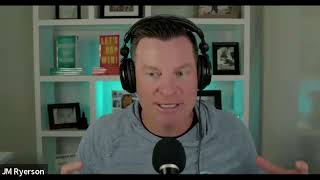
This podcast episode (You Must Be Out of Your Mind) is a conversational interview between Dr. Don Wood and coach/author JM Ryerson about neuroscience-informed coaching, trauma, and performance. Dr. Wood explains his "memory reset" approach to reduce trauma impact, describes two of his books (You Must Be Out of Your Mind; Emotional Concussions) and a forthcoming concept (the 15th Club), and uses golf examples to illustrate presence and performance. JM Ryerson shares his coaching origin story (book: Let's Go Win: The Keys to Living Your Best Life), work with leaders and athletes, and themes of self-limiting beliefs, vulnerability, and daily practices to stay present.
Questions this video answers
You Must Be Out of Your Mind
August 22, 2022
Emotional Concussions
Let's Go Win: The Keys to Living Your Best Life
Chapters
Welcome to my podcast, you Must Be out of youf Mind. My name is Dr. Don Wood. I use my knowledge of neuroscience to create what I call a memory reset. This reduces and eliminates the impact of trauma. I can't wait to share with you how the impossible is possible and why you must be out of your mind. So welcome to another podcast of youf Must Be out of youf Mind. As you know, we talk about the brain and the mind and the effects of trauma and how trauma can affect performance. And I'm really excited today to have my guest JM because you do the same things that we're sort of looking in the same field. So I'm very excited to talk to our guest and share some experiences, share some ideas with you to help you increase your performance as well. So welcome to the podcast Jam.
Awesome. Thank you, Dr. Don. I appreciate it. And yeah, we're in a similar field, but I am not cool enough. I don't have doctor in front of my name, so mine is unfortunately not probably as solid as yours. Man, I love the doctor part. That's awesome.
But jm so what's the context of. JM is obviously his first and middle name.
Yeah. So I was a slow child. My parents made it real easy. It's James Michael. But if you say that, Dr. Don, I am in deep trouble. I have done something terribly wrong. So if you say jm, I. I'm doing okay. But, yeah, I was. My parents made it real easy. And just two initials.
That's cool. That's really cool. So I know, you know, a lot of people know who you are and what you've done, but, you know, maybe you could just sort of give us a quick sort of outline of what your program is. I know you work with a lot of, you know, companies, you've built companies, you've got a lot of success in the areas. And, you know, just reading all your stuff, I'm. There's so many things that we have that we speak the same language. So I'm excited to share it. But maybe if you could just give us a quick recap of where you are and where you've come from.
Yeah, absolutely. So let's go win. Kind of happened by happenstance, if you will. I wrote my first book, and it was actually for my two boys. And it was. It's called let's Go Win the Keys to Living youg Best Life. And I wrote it for them so they wouldn't skin their knees maybe as many times as I did along the line. And what happened was the gal I was working with said, man, I didn't think you're selfish. And I said, I don't think I'm selfish either. She said, if you don't share this work with more than two people, you're selfish. Okay, lesson learned. Let's publish. And that launched me into working with a bunch of really cool people. Somebody said the first coaching client was, hey, can you help my son lose weight? And I was like, yeah, I could do that. So we helped him lose 80 pounds. The next one was PGA golfer who had missed like 12 cuts. Hey, can you help this gentleman make cuts? Yeah, sure. So we helped him immediately. He went and made four out of the next five cuts before the season ended. And so it just launched me into what I'm truly passionate about, which is inspiring people to live their best lives. However that looks, whether that's in business, which is my focus, I deal primarily with teams, entrepreneurs and leaders. But truth be told, the system is really simple in my opinion. But it is just allowing people to unlock their full potential to really achieve more than they thought was possible. And so every single day, doctor, I get to wake up and work with people on their dreams. I get to work with people to inspire them. They inspire me. And it is just so cool. As you know, man, I love the brain. I am fascinated by it. I am not a doctor, as I said, out of the gate. But I will tell you what, I have read so many neuroscience books. I am just fascinated by how the mind works and how we can help trigger to and facilitate things. Just simple little tools that we can do to really unlock our potential.
Well, yes, a great segue into what I was going to say is the same thing as I always talk with. If I work with athletes, I'll say, you know, and even CEOs, we all have another gear. What's interfering with our ability to reach that gear, and from what I have found from my research is generally traumatic events or experiences that they've had in their lifetime that continue to loop. And that's really how I came up with my whole program was because. And my first book is called you'd Must Be out of youf Mind. That's why we called the podcast you Must Be out of youf Mind.
I love it.
We've got to get you out of your mind the way your mind has been working, because it's dealing with a lot of older events that are interfering with your ability to stay present and in the moment. And that is going to affect performance. It has to. So I Work with you talk about golfers too. I'm writing my third book. I've called it the 15th Club. And the idea is the 15th Club right is your brain right and your mind. And if you don't use that club really well, it's going to affect your performance at some point. So I'd love to share some ideas on that. You know and I think we've got a lot of common objectives. You know, we're trying to help people inspire people to reach their best lives. And a lot of times they like. I'm sure you found the same thing JM that they don't know why they can't tell you what is creating the problems for them. And that's why someone like you or me come in and help them.
Yeah. The loop you're talking about, I call them self limiting beliefs. So, you know, very similar ideas. You said it's so often we've inherited these. Whether it's a trauma, it's my parents a great example. My parents are amazing human beings. My dad is no longer with us, but really were just. I can't ask for a better set of parents. However, we all bring that baggage in. And part of the baggage that I inherited was around money. And so my dad. I remember when the first time I made over seven figures in a year, I felt horrible. Dr. Don I felt like the lowest that you can feel, which is a really fascinating thing. And not that money is not my driving factor. It never has been. However, what I discovered in that is why do I think this way? Why is making money or a lot of money in some people's eyes, why is that a bad thing? And it was all these hardwares because we would go by the country club and my dad would call it for the pretty people. Somebody would drive a nice car that was for the pretty. So there was always this negative connotation around money. And I inherited that and my dad had inherited that from his grandfather, et cetera. And so once I broke that all down and realized wait a minute, money's just a thing, it's just an object, it's something that I can actually do a lot of good with. And once I did a lot of work, I figured out for myself and I'm just speaking for me, that was one of my self limiting beliefs. Because of these things I inherited because of these limiting beliefs that I inherited. And once I was able to get past that, it's like it's. I could do so much more but I didn't know where it came from until like you said you really dive in, you figure out where that came from. And that takes a. That takes some work. Not necessarily a lot of work all the time. But for me, it took, you know, several years diving in to figure out what was going on with me.
Yeah, I mean, you and I have the same background. I had amazing parents, loving human beings that just nurtured me, kept my nervous system fairly regulated. So when I grew up, you know, I didn't have any trauma. I didn't have any of those kinds of things that my friends were experiencing. And I thought all my friends had my parents. Right, they didn't because nobody talked about it, nobody shared those things. But a lot of my friends were dealing with emotional, physical, sexual abuse that I had no idea even existed. And that's really how I developed the program is when I met my wife, I realized she was living in a different world with a very violent, angry father. And we met at 18. So I started to see the effects of that and the fear that she was always living in. But she was high functioning, so she was. Didn't get into drugs or alcohol. She just lived with this fear. And that felt normal to her. And it seemed so strange to me. I didn't understand that. And so that's really what I think a lot of people are dealing with. And not all of it is big T trauma, you know, the obvious big T kind of traumas. The second book I wrote, Jam, it was called Emotional Concussions. And that sort of sounds like what you just described. You know, your father wasn't intentionally trying to say anything to create a problem for you, but that had an emotional concussion on you that shows up later in life when you start thinking about money and success and things like that. But it was unintentional. So even with the best of intentions, as parents, we can say things that, if you think about children, don't have enough life experience to understand what that meant. So when your father said that, you put a whole bunch of meanings to that because he's the authority figure and how easily things like that can develop. And you think about, you know, I know you do a lot of work with leaders, right? And that's a big area that you focus on. So can you see how a leader who's leading a company could have those kinds of. We were talking about limiting beliefs, how that can happen. What do you see as typical kinds of limiting beliefs that show up, you know, for even the best leaders?
Yeah, man, that's a great question. I love this question because it is so prevalent and the first one that comes to mind is the imposter syndrome. And it's amazing how often these really gifted, talented, wonderful human beings are and what they can bring to the table, but they, they, they can't or they won't allow themselves to because they don't believe that they are truly that person. For whatever reason, even though they have been, you know, given the title, right, that they have been, they've risen to this level, they still don't feel like they are the leader that they truly are. And what's fascinating about is their intentions are actually amazing. They're pure, they're strong. And once I can unlock a little bit of, hey, man, I just want you to show up as you. That is the whole goal. And the reason I do that is because the minute I can get them to show up as their authentic self, because we all have it in us somewhere inside of us. If you un layer, take off all the masks that we've put on over the years, trying to fit in, trying to look a certain way, once you can do that and that inner you comes out, it is so attractive. People will follow you through a brick wall. And it's a scary idea at first, especially when I talk to leaders about, hey, I just, I want you to come through. I want you to be completely vulnerable. And that's a big key word that's come up a lot recently as Brene Brown's done her research and really brought it to the forefront. But when you get people to be truly vulnerable, to be themselves, then you start to see the leadership flourish. You start to see people really want to follow their lead and truly trust in their leadership. So it happens with virtually every leader I've met because we all start putting on masks. I don't know, fourth, fifth or sixth grade. It's somewhere in that area. And we just keep layering them on. And like I say, Dr. Don, masks are for parties. They are not for the real world. And yet so many of us are wearing all these masks, trying to look and sound a certain way. And it's so much energy, brother. It's just. It takes way too much energy to do that. And so I break it down pretty simply with like, okay, I'm six five. That takes zero time, energy and alignment for me to be six five. But with enough work, I could show you that I'm actually 5 8. If I really scrunched down, I took the time, spent a lot of energy, and completely put my back out of alignment, I could probably convince you I'm 5 8. But why? I'm 6 5. It takes zero effort to be 6 5. It takes so much effort to be 5 8. And that analogy so often will get people to be like, oh, I'm 5 10. I don't care about the height. That means nothing to me. Just a physical example of just be you. And it's so much easier to just show up as you.
Yeah, I see the same thing all the time. And a lot of it is coming from. It's a biological fear of wanting to fit in and be safe, because a thousand years ago, if you didn't fit into the tribe, you died. So if the tribe excommunicated you for whatever reason, you were vulnerable. Right. And then you're out on your own. You don't have that, you know, protection of the tribe anymore. So you can see why, especially as children, they try to fit in because they want to be safe. And so that's how bullying starts. And you'll say, like, how do these children who are nice, coming from great homes, or nice kids, and they get involved in this bullying, it really comes down. What I explain is they're trying to draw attention away from themselves. If we can pick on Joey, and everybody's focused on Joey, they're not seeing my faults, they're not seeing my fears and the things that I don't do well. Let's just focus it all on that. Again, it's not intentional on their part. It looks intentional, but it's really coming from that ability and want to be safe. Because the number one fear for the human mind is uncertainty. We like certainty. And so if our world isn't certain for children, it doesn't feel certain. The only thing that creates certainty are their parents. And so if you don't have. You know, I've been on a podcast one time, and they asked me, what's the best advice you can give to parents? And I said, make your home safe. I grew up in that home. Sounds like you grew up in that home. That did more for our success than anything. Right? Education and everything else. We grew up with a sense of safety. I felt safe in my home.
Yeah, you're. I mean, you're talking about the basic needs that we all have. And I so agree with you. And it is interesting. The subject of bullying is so fascinating because like you said, it's actually them just projecting onto that other person the hurt, the anger. And I always say, hurt people, hurt people, people. Now, that's really hard for a seventh grader or sixth grader to accept that this bully is Beating me up or pummeling me or taking stuff from me or shaming me. And it's just their insecurities. That's. That's a lot for a seventh grader. Exactly. But it's true. Right? And. And today, I love what you said earlier about staying present. And it's one of my favorite subjects, because these creative minds that we have, they're incredibly creative, but they're also incredibly destructive. And so as you work with, and as you said, keeping people present, it's so key for all of us. Like, I have a couple things going on right now, personally, that they try. Man, it pulls me away. And in the moment, my thoughts will run wild, and I'll create some thing that doesn't even exist. And I have to say to myself, stop. And then I'll either write about it, meditate, whatever I need to do, whatever tool I use, but to stop that incessant chatter so that I can actually be fully present with my kids, with you on this podcast, with my spouse. And so often people are physically there, but they're mentally so checked out. So I loved what you said about keeping people present and that some of the most amount of work I spend on with people is keeping people present in the moment. Because my saying is always the same. Past is pain, future is anxiety. Present is everything. That's Lao Tzu. That's not me. But I just simplified a little bit to say, look, present is everything. And that doesn't mean all your memories are bad. That doesn't mean that all your stuff in the future is anxiety. That just means if you can stay in the moment now, what an amazing life we can create.
Yeah, especially. Especially too, when I work with athletes, you know, golf. Let's take golf as an example. There's probably no better sport, right, To. To use that as an illustration of being present because they tend to go off on their thoughts and they start thinking about things.
They.
And I said, what you have to understand is the comparison between the human mind and animal mind. Animal minds are 100% present all the time. They're only dealing with what's happening now. They don't. So I always say, the zebra cannot feel fear of a lion unless there's a lion present. Zebras aren't thinking about lions. They're not imagining lions. They don't remember the lion from yesterday. Right. So they're living in the moment. And so it's a perfectly designed system. We have the exact same system added on, but we added in this frontal lobe. That's our ability to use reason and logic and create an imagination so that part of our brain keeps interfering with the old survival part of our brain and then constantly activating our nervous system. But there's nothing going on. So what I work on with the golfers is to show them how to shut that down. I love what you said with the incessant chatter, because my wife used to use that the way she said it is. After going through our program, the chatter stopped. That was really. And not schizophrenic chatter, because, you know, that's something different. But it was that she never understood how I could just sit and be at peace and not really be thinking about anything and just chilled out. That made no sense to her. And so I didn't understand what she was dealing with because I didn't live her life. So I didn't understand that incessant chatter. But that's what a lot of people are dealing with, and they don't know how to shut it off. So you have to train the mind to do that. You have to. You have to go intentionally, right? And get the conscious mind. And what I say is, I tell our people, allow thoughts to come in that have benefit, appeal and possibility. Train your mind to do that. If a thought comes in that doesn't have benefit, appeal and possibility, we reject the thought. Just like any other muscle, you're training your mind to only bring thoughts that have benefit, appeal, and possibility. Because human brains are instinctively negatively biased. Because that's the way we survived. But we don't have to do that. We're not living in the same world they lived in a thousand years ago. So we can change that thought pattern, but you have to have intention to do it.
Yeah, it's really interesting because my wife doesn't have the incessant chatter the way I do now. She came from more of a culture of. Not necessarily. They were loving, don't get me wrong. They were amazing human beings. But it's. It's the Asian culture, so it was a little harder. It was not so much of a safe and put my arms around you culture as I did. And so it's interesting how you and I actually, we wear it differently. And so she never understood what I was talking about. And all these times of me meditating, writing, she's like, why are you doing that? I don't understand why. Why does your brain go? I'm like, I don't know. But I know that, like you said, I think there's what, 50 or 60,000 thoughts that come through our brain a Day. But those negative ones are the ones that'll really grab a hold often, especially if you're dealing with something traumatic in the moment. Right. Like, I have a business partner currently that I think if, when all is said and done, we'll have siphoned out about 3 to 5 million dollars. For me, that that's. That's happening. And so my brain likes to go create all these things going on naturally. But what I try to do is just calm the mind and say, look, I don't know, it sucks, but I have a choice of how I'm going to respond. And I can choose to be a victim, and I can choose to go down this really negative path, and everyone would understand, man, yeah, you're getting screwed. You could be a total jerk now, but what is that going to do for me? It's not going to do anything. What's happened has happened. I've found out now I'm dealing with it, and I get to move on.
But.
But being able to quiet down that mind and just focus on what I can do in this moment is so important because I can rewind the past and I can just turn myself almost crazy about what I could have done, what I didn't do. I can think about, oh, no, what's going to happen now that my net worth got hit now, blah, blah, blah. It's already happened, so I can't change that. I can only change what I do today. But it's funny, my wife and I will talk about it, and she's like, I don't understand. Your brain just goes and goes and goes. I'm like, yeah, nonstop. Unless I'm in that moment of quiet, unless I use some of these tools that I use. And she is blessed with not having that as much, which is fantastic. But some of us have to work a little harder at it. Yeah.
And it's really coming from practicing. We can do it. You're just proving that you can absolutely do it. And if you find your mind wandering off, going into that negative bias, then you have to bring it back. And you can do it by doing whatever works for you. So when I work with the golfers, we have a whole system that I've trained them on to use to shut down that and be able to stay in that moment and hit that shot, you know, And I'll say to them, you know, you go to the next tee box after just missing a putt on the last green, and I show up on the tee box with a whole report on everything you did wrong on that Hole. Right. But I want to charge it $1,000 for the report. Would you buy it? No. What value does it have now? It's just information. Right. You don't need to buy that. You don't need to pay any attention to it. So your time or your attention is just like money. How much attention do you want to pay on it? And if you're doing that all the time, right. It's going to affect your game now.
And I didn't mean to interrupt. I just. It's so interesting when you, you talked about the animal and then the human mind. And we look at again we're talking about golfer, golfers. The arguably the greatest golfer to, to. To play. You know, his name is Tiger. His ability to stay in that moment, to stay completely focused until his world was shattered a bit. Right. For, for years. I mean just no one stood in that moment better. Was able to drown out all the noise. And no one had more noise than him. And his focus was remarkable because he had trained his mind. So it's just I love the. What you're doing with golfers and I love that animal human mind. And you can literally point to look at what the greatest for almost 20 some odd years did, you know, being able to shut everything else down but that shot. But that in the moment. And nobody grabbed it better than him.
It was. He's the best at it. And I talk about in the book that I'm writing, the 15th club, I talk about, could you argue that there's been three better ambassadors that have changed the game of golf more than Tiger, Jack and Arnie. And if you look at Tiger, right. His name, Tiger Jack was the Golden Bear. Right. And Arnold was the King. They all have symbols in their name that created a mindset in their mind. Tiger was the Tiger. Not only for Tiger's mind. Right. But for his opponents minds. So they would hear the roars of the crowd. Right. When Tiger was making a charge on the back nine.
Right.
I'll guarantee you Tiger won tournaments because people lost tournaments. They just folded. I mean you just heard them talking about them. I remember hearing Matt Kutcher talk about the first time he ever played with Tiger. He says the hardest thing he had to do was to keep the ball on the tee when he was putting it on because his hands were shaking so much. Here's one of the greatest golfers in the world and he's so intimidated by this guy. And a lot of it, you know, would he have been as intimidated by Eldrick Woods? I don't know. But Tiger definitely had a psychological advantage for Tiger and I think against his opponents.
Yeah, that Persona is fascinating. I never broke it down that way with those three. But I would agree with you. They absolutely changed the game, all three of those. And it is interesting when I work with salespeople and often, you know, in their role, because again, Tim, let's say Tim is. Has this maybe meek, maybe not as strong personality, but maybe, I don't know, we call him the King or Baba or whatever he wants, whatever that that thing is, he can create that confidence in a different way than Tim. That is a tool that I have used with salespeople. As much as I want them to be their authentic self. Sometimes in the moment, to get sales going, you have to get that other Persona in line first so you can start to believe that confidence. And it is interesting. And I know you do this work with them so often. It starts with just reconditioning our minds every single day. You know, I do a mantra. My kids have done the same mantra every single day, day of their life. They won't go to bed unless they say it all to condition their brain to be these things. And it's so often people didn't have those tools or they still don't today to know, you know what? Sometimes we have to tell ourselves exactly who we are, what we are, who our authentic self is, because we are under layers and layers of things people have heaped upon us or told us that we are. Yeah.
And for sure. So what I do in our program is first, though, I work on. We have two memory systems. Humans have an explicit memory system and then the same memory system that animals have, which is that repetitive associative memory. Animals learn through repetition and association. They don't store details about events. So if you have a dog, the dog gets to know you through repetition and association, that they're loved and they're safe and they're going to get fed, but they haven't stored the information about that. That's why I say you can feed your dog the same thing every day. Because he doesn't remember eating that yesterday. That's a new meal to him. He's in the present, he's going to eat. We store all the details about that event and experience. And that's what's interfering with our ability to stay present. We have this unique memory system that keeps using that as a resource to recall. And so what I say is our mind's constantly doing Google searches about the current environment and then saying, what do we know about These experiences pulling in data from 5, 10, 20 years ago and then creating. Activating a nervous system to create responses, thinking something's still happening. So that explicit memory system is creating glitches and error messages for us. And so we have to get that updated. We basically have to do a reboot of the system, and then we're going to work on the new patterns and codes. What I say basically is habits and behaviors are just codes. Our brains are coding constantly. And so if we have a code built, the mind operates off of the code. So if you want to. If every time you hit the M key on your computer, your computer shuts off, you don't say, there's something wrong with my computer. You say, there's something wrong with the code. So all you have to do is rewrite new code, and then the M key doesn't shut off the computer.
I'm so sorry. I just had to plug in. You're talking about a computer, and mine just gave me a sign. Just. I'm so sorry. No problem.
The beauty of. Like I said, I had a late flight, but, yeah, I was about to lose this whole thing, and I'm like, oh, I need my computer. Sorry if I completely derailed your point, but I completely agree. We do. And, you know, you put it so eloquently. That's. That's why you got the doctor in front of your name, man. You can put a term to it. And I'm like, yeah, that makes sense, man. I. I don't say it as nicely as you do, but I'll tell you what, it's so true.
Yeah. There's just so many little things that we were just talking about confidence. This is something I think you'll be interested to hear. When I work with the professional golfer, I'll say, do you think you need to be confident to play good golf? And they'll all answer the same thing, yes, Right? And I say, what if I told you that you don't need confidence to play good golf? And they say, well, I don't need confidence. And I say, no, you have a skill. Confidence is a byproduct of your skill. I says, it happens. What? It occurs when. After you've executed your skill. I said, there's nothing you can't do on a golf course. I said, you can hit a ball in between two trees six inches apart, right? I said, the average golfer can't do that. So when you're on a golf course, I say, say you're 150 yards out from the green. You're going to hit probably a nine iron. So after you hit your nine iron, you didn't feel the wind coming down the fairway. You couldn't feel it yet you couldn't see it. So it knocks your ball down into the bunker in front of the green. So what just happened to your confidence? Now you start thinking, what did I do wrong? And then to your survival, part of your brain that becomes a lion. Now there's a lion on the golf course with you. And so all of a sudden, you start thinking about confidence. You don't need it. I said, you put the ball in the hole from the bunkers. They're not even penalties for you guys. I said, there's nothing you can't hit. I said, confidence is not your friend because it only shows up when you play well and it leaves you when you need it. And I said, so trust your skill. And so I worked with one of the golfers, and he was leading the tournament after three days. And on the fourth day, first shot of the day, he hits it out of bounds, which is the worst thing to do, right? On your first. On the final day, first shot, and he's smiling, and his caddy says, tell me why you're smiling. And he says, I just heard Dr. Wood in my head say, your ball and your confidence just went out of bounds.
He didn't need it. He stripes the next shot right down the middle of the fairway. His skill didn't leave him.
Yeah, no, it's so, it's. It's so much fun to, to work with those guys, because any of us that play golf, we sit there and tinker and try and do all these things. But to your point, I had a golfer one time where I would get him so specific on exactly where he was going to hit the ball. And if we went through the process, it. Every single shot, he could put it within, I don't know, three yards of the spot. But if we didn't, and if he lost that focus for a moment, right. If he lost that pinpoint, this is exactly what I'm doing. The skill was always there, but again, the mind, as Yogi berra said, It's 20% skill, it's 80% mental. And, and so with the golfer, I was like, look, man, we have to be very, very clear on our intention. What are you doing with this shot? I'm going to hit it to this. This exact spot. And he could do it again and again and again.
But it was.
It almost became boring for him because he was doing exactly what he was doing. He was performing at a high level, but for some reason, man, he was conditioned that hitting it out of bounds, hitting these crazy shots, not staying focused. It's interesting how we like to be challenged as human beings. So when I could keep him focused, it was like. Like you said, like Dr. Don. So there goes my confidence of this. That's. That's a great tool for him to just laugh and say, I had a brain fart. I just. Literally just. There was a glitch. And it. But they have the ability, unlike, you know, most of us, if I was playing golf, I don't have that ability to hit to the third tree, you know, 225 yards, you know, over the bunker. I don't have that ability. I'm trying to hit the club face, and I'm hitting in a general area. But they do. And it's just. They're fascinating people to work with such incredible athletes.
And, you know, the average person watches it and go, oh, how could he miss a putt like that? Or how did he make that mistake? You just have no idea. Those golf courses are set up so much tougher than what we're playing. I don't know if you remember, this was years ago when Tiger woods won the Canadian Open. He hit that shot out of a bunker over the water, and it's a great.
It's one of the greatest shots I've ever seen.
Yeah. Did you see the commercial they did after that?
I loved it called the Commercial, but I don't remember how. I think it was a seven iron.
But it was, I don't know, 220 yards or something.
Well, that's why I'm questioning the club, because I'm like, how can you hit the ball that far, that precise?
More from Dr.





When you’re in the middle of a panic attack and someone tells you to “just breathe”.

Once a panic attack starts, you can’t stop it. Here’s why and what you can do about it. #panic


The first sign of healing wasn’t what happened. #anxiety #emotionalpain #fightorflight

The threat ended. The situation changed. Your life moved forward. #weneedtotalk #anxiety

