The Mindset Shift That Made an All-Star in Just One Year! w/ Devon Bandison
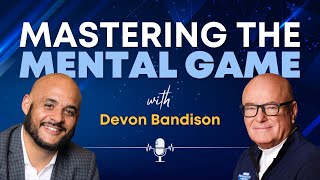
Devon Bandison coaches athletes and leaders through mindset work and trauma release. He built his practice around identity: who you need to become, not just what you need to achieve. Clients report gains in relationships, athletic performance, and career moves within a year.
Chapters
My first question when I work with people is always not what we need to do. Who do you need to be? Who do you need to be to be a guy who averages 22 points a game? Because who you're being at 15 isn't going to do it.
Welcome to another episode of youf Must Be out of youf Mind. And as you know, I always bring on amazing guests. And today's guest, Devin Bandesen, is somebody that I've been so looking forward to have come in because we speak the same language. And so this is going to be an exciting episode. So welcome, Devin, to you Must be Out of your Mind.
What a great title. Thanks, Dr. Don. It's. It's really a pleasure to be on here with one of the legends in the game. Uh, so I'm looking forward to this.
This is really good. Now, you do some amazing work. So you work a lot with sort of coaching, but you also do training with athletes, CEO, stuff like that. So rather than me try to, you know, explain it. You're the best one to sort of explain. Just tell us more about what you.
Do in the sports arena. I'm lovingly called the gtmc. They call me the Go To Mind Coach. A lot of the work I started with it was in the NB in Major League Baseball, but. And like you said, I also have a range of clients, both individual clients in the sports arena, but also entrepreneurs and business owners, where we really work on transforming their thinking, which leads to their emotions, what leads to their behaviors, which leads to their results. So, you know, this is the best work in the world, in my opinion. As you know, Dr. Don, we have the opportunity to see people transform, not only their performance on the field or in the corporate setting, but in their whole life, right? Like who they're being out there in the world. So that's a little of the work I do. I can get into the story of how I got here, but that's the short, short end, the go to my coach and really talking about the whole being of the person who they're being out there in the world, who they're being as a performer, and how can we maximize their highest potential in all areas?
And that's what I love. Because a lot of people, you know, they see these celebrities, they see these athletes, and they say, well, they've got everything. You know, they're millionaires, they've got everything, but they're still struggling with the same things that everybody else is. And what I always talk about is we, we have another gear, we all have another gear, even the highest performing individuals. So that's what you do. That's what I do. And we're both members of Genius Network. That's sort of where we met and we had a great opportunity, sort of work together with a. With a person. And that was pretty exciting.
Yeah, yeah, it was very. We kind of tag teamed off each other. And I think what you said there is really valuable for. For the listeners. Right. Because, you know, when I bring. Whether you're a high performer in sports or you're someone who is an entrepreneur, what you start to realize, you know, I have an event called the Game Changer where all these people come together, that they start to realize that we're more alike than different. Right. And. And the secret, the dirty little secret of high performers is that their 80% looks like most people's 100%. Right. So. So what happens is they know everybody. They're reading the headlines of their family, the friends, the papers are telling them how great they're doing, but they still have this thing inside of them where they know I'm not playing my best game. So what we do, what I do is really go in and tap into that last 20%, so they can really play their best game on the court, but also in life.
Well, what's exciting too, and some of the stuff that I'm doing, we've talked a little bit before, but we're doing a lot of looking at how the DNA is actually affected by, you know, traumatic events or disturbing events. And, you know, and a lot of these guys are still dealing with that. What I show and I talk about is it actually affects the mitochondria.
Yeah.
So the cellular energy. And when we release trauma, what we're seeing is people perform and start making personal best. And that's just by getting trauma released, because that trauma is affecting the way the energy is being run in the body and it's being absorbed by this trauma loop that's running. So what are you seeing in that as well?
I love that you guys are up to that, because some of my earlier, like when I started with this work, we were really looking at neuroscience initially. Right. Like the, the neuroplasticity that we have these patterns in our brain that continue to run. And if we work on our thoughts, right. If we work on rewind, acquiring those patterns of the brain, it could release something in the emotional state. And I think that, like you said, there's trauma that happens to everyone. It doesn't matter. You know, sometimes people hear people's story like, you may hear my story growing up, and they say, oh, man, that was traumatic. But my story is no more traumatic than someone who, you know, parents who just, you know, could have argued a lot, right? And so that gets stuck in the patterns of our system. And what happens is it affects the biochemistry, right? So when you look at performance, when you focus on releasing that, a whole new world of freedom opens up. And if you look at anybody in any, any industry, when they're in the zone or in flow, it's usually because there's this freedom, there's this release, and they're not holding on. And a lot of us, you know, I call it the winning formula. We have a traumatic event that occurs very early in our age, early in our life, like, right? And it's the first time as a child we realize, oh, something's wrong. Like, up until that moment, nothing was wrong. Like, for instance, like when I was six, I remember in the car, I don't know if you remember, Subaru, six to sixes, my mom, right? I'm in the back of a Subaru 626 hacked car, and I'm looking at my mom and my, my dad and my grandma on the steps and we're driving away because we're leaving. And it was the first time I could remember it at 6 years old that like, oh, something's wrong, right? And all of us have this. And then what happens to that? Traumatic from my experience is there's a fight or flight feeling there. There's a. Something that we say to ourselves, like, I'm not good enough or I'm not lovable enough. And what happens, Dr. Don, is we create a winning formula. Meaning I never want to feel like this again. So I create a personality, right, To. To stop that. So my personality becomes. I'm going to be so lovable, I'm going to be a chameleon. And this is the thing, like, most valedictorians had a thought, right? Or a trauma that led to, I'm not good enough. So what happens is they created a personality, overcompensated. And they said, I'm going to be the best and be a valedictorian. So here's the dangerous part with the trauma that we start creating this winning formula and it works for us, right? Where it's like, everybody loved Devin until. Until it didn't work. Until it was like I was like the guy, the other guy from Queens, New York, Raymond. Everybody loved Raymond. Everybody loved Devin. But Devin. And it was only until I could release that, right, that There was a freedom in which I could operate. I always say I'm not only the Hair Club president, I'm a client. Like the work I do with my clients. Right. I've done myself. And I think that's what we're pointing to here.
And that's one of these. I talk about a lot. A lot of the issues come in with people from childhood. And the reason it comes in is even in the. In the. With the best of intentions with parents, they could say things or do things that a child with zero life experience has to try to figure out.
Yep.
And so now they're going to attach some sort of a meaning. Like, mom and dad are always busy. They never sit down with me. They're never there at dinner. They just slap dinner down. And so what does that mean? Well, they don't really love me. Right. Or they would have spent more time with me. So now is that true? No. Right. But the parents are both professionals, are really busy. They don't have the time, so they're trying to compensate in other ways. And I talk about my life. I grew up with this idyllic childhood. Amazing parents, no trauma. My parents, and this isn't an exaggeration, never raised their voice, never yelled. Right. Never argued, never hit us. We would get disciplined, but it was always with love. So it was like, here's what you did, here's the consequences. My dad always said, you can disagree with me. Right, as long as you're respectful. So if I had a problem, I said, well, I don't like that this is what's happening. As long as I was respectful, he would listen. Doesn't mean he'd agree with me, but he would listen. So I'm growing up in this kind of a world. I meet my wife when we're both 18. She's got the opposite world with a very violent father, a very angry father, and so two different kinds of worlds. She's an amazing human being. I love her. She's loving and caring, but she's living in fear. And I couldn't understand it. It wasn't making sense to me. So you take that child, and again, here's what the best of intentions. I tell this story. She told me this story and was sobbing. She says, when I was six years old, I was invited to a tea party by the mothers in the neighborhood who put on a tea party for all the little girls. So she was all excited, got dressed up. Her grandmother dressed her up. She gets to the tea party, and one of the mothers looks at her and Says, oh my goodness, Bridget, you're going to be such a heartbreaker when you grow up. And the other mothers are like, oh, yeah, you're going to be such a heartbreaker. She says, I got sick to my stomach and went home. What she heard was, you're going to hurt people, you're going to break people's hearts. It's the last thing she wanted. She wanted to be loved, she wanted to care about people. And she's interpreting that. They're telling her they see something bad in her now. They're complimenting her. But a six year old doesn't know that saint. So we have to be so careful to the way we communicate with children because they're interpreting with no life experience.
Yeah, 100%. You know, as a parent, you know, I wrote a book, fatherhood is Leadership, years ago, and.
It'S been my greatest journey as a parent. Like, I really, my children have been my greatest teachers in all the ways. And you know, I agree, Dr. Dunn. I've really simplified, you know, parenting down to two things. You know, I work with a lot of parents and it's like your job really is to love and teach. You want to teach them not to, you know, bump their head on the same rocks you did, but you have to allow them to create their own experience. All my children were in sports. And you know, Dr. Don, when you're in sports and pro sports, I'm more of the quieter parents. It's, it's usually the parents who never played sports are the loudest parents, right? They're living through their child and projecting and that's a lot of pressure for young people. You know, Carol Dwick, the psychologist, one of the things she talked about in parenting was the worst thing you could tell a child is, I saw you got this A. You're so smart, right? Because the interpretation is, if I don't get an A, I'm not smart. So one of the things that, you know, what I work with parents is like, you want in your teaching of your children and loving. You want to love them and acknowledge the process. You don't want to acknowledge their results. So when my child comes in and he has an A, I'm saying, hey man, I saw you got this A. You know why you got this A? I saw you working hard, I saw you studying, you woke up early. I acknowledge you really good work. And then you, you start developing healthy relationships to the process. And that works in all areas. Even when things go wrong, can they fall in love with the process? I got a team My youngest now is a teenager. And there's a lot of stuff that comes up as teens. Right. But as parents, we want to love and we want to teach. And I think that's why this work is so important as well, that there's different tools that aren't taught in schools that we can actually bring to our children.
Oh, for sure. Because this really needs to be taught in schools. This is what people say to me all the time. This needs to be a program that you take to schools because so many children are not living with you as a dad or me as a dad. And we're not perfect. We don't get everything right. I just wrote my fourth book called Don't Mess with my DNA. And that's the idea is don't mess with your kids DNA.
Right.
Because that's what happens is the DNA, the way it's read and transcribed, is a product of their environment. I always say to people, say, what's the best advice you can give to a parent? And I said, make your home safe. Not perfect, just safe. It needs to be the place. And I'm sure you've got that relationship with your kids that they can come and say, I messed up, something went wrong, right? And they say, okay, how can I help? So they need to feel safe and if they feel safe. And that's what I grew up in. I grew up in this world of complete safety. I was never afraid of my parents. And I think that's what kept my nervous system regulated my entire life.
Yeah, it's a, it's a big deal. You know, it's funny you say that. I have a 27 year old, a 22 year old. They were over last night. We have monthly family dinners where they choose what we're eating and what games we're playing. And the 14 year old was there and we were just saying, you know, the 14 year old, how expressive he is because of the safety, right? And all of them share, even the older kids now, there's nothing they don't feel like they can share with me because there is a safety. And I remember a few years back, my son, he did something in school and he held it from me. This is a few years ago. And, and I said, what happened, man? And he said, you know, dad, I messed up. I said, well, it's all right. Like you've always told me when you messed up. Why this time? He said, well, you know, I was just watching, like he was watching friends. He was at a friend's house. And I guess there was some Arguments with the parents. And. And he came, he said, you know, I just for a second, I. I wondered, would you be so mad you stopped loving me? And I looked at him, I said. I said, my man, let me tell you something. There is nothing, absolutely nothing you could ever do in your life that will have me not love you. And I think that those. Because he had a thought and he made a story of it. And it was important in that moment for me to bring the understanding that, hey, it's not a bad thing to have the thought, but just know it's not true. And as a matter of fact, there's nothing you can do. And I think that you just see their nervous system over time. My son is just so well adapted right now, and it's beautiful to see me as they grow up. Because you're right that that environment is so important.
It's everything. And the biggest thing that I worried about as a kid was disappointing my parents.
Yeah, right.
And that's something that they were pretty good at helping me with. But, you know, that's just a kid, like. So I know I'm not going to get yelled at, but I also don't want to let them down. Just like you talked about. Oh, I don't get an A right now. I'm disappointing them, right? And that's what would create a problem. But I have some just amazing stories. One of the stories I all the time is when I was again six years old and my dad was downstairs and he was writing out his bills, and I saw him and I sat down and he says, okay, let me show you what I'm doing. Thinks this is a good teaching moment. He shows me how he takes the electric bill and writes a check. And he has me help him put the envelope and the check and everything and then seal it up and put a stamp on it. And then he says to me, now run this down to the mailbox for me. And so at the corner, so I run down, I come back, right? I'm all excited because I'm now working with dad, but he's not at the desk. But I see a whole bunch of other envelopes and a whole bunch of other bills. So I just start randomly stuffing envelopes and bills, sealing them. I used all the stamps and I run them down to the mailbox. And so now I come back and my dad's there and he says, where are the bills and envelopes? And I said, well, I mailed them all for you. And that's exactly what he did, Devin. He laughed and he Says, I don't think I explained this very well.
I love it.
And so then he started explaining to me how it works, right? And so it became a lesson, but without me feeling like I, I messed up, he took responsibility by saying, I didn't explain this very well. Not that you are stupid, right? Because a six year old, how do I know?
You know, I always say, communication isn't what's said, Communication is what's understood. And as a leader, as a parent, like a lot of people think because you say something, that's communication. No, communication is actually what's understood. You know, we take a family trip every year, and this year we went to South Africa. And part of the trips, I want to have them have a great experience, experience another part of the world, but also learn something, right? So we went to, first we went to Nelson Mandela, Robben island, where Nelson Mandela was there. And we had a guide who was actually in jail with Nelson Mandela. And he started telling stories. And one of the best stories I've heard was Mandela used to go to the guards and he used to say, when we go out to the recreation, can I use this plot of land to just plant vegetables and flowers and things? And every time he asked, the guards would just beat him, call them names, beat them. And he'd go back the next day, he'd ask the same thing, beat him. This went on for about eight years. And finally things were shifting politically. And finally the guard, guard said, you know what? He asked again? He said, go ahead, use the land. And for the next 90 days, Mandela with, with the other inmates treated this land like the most important land they've ever worked on. Tilled the soil, you know, put seeds, and all of a sudden it took about 90 days to come to fruition. So there was all this fruit, vegetable and flowers. And he had a basket, and he picked it all out, puts it in the basket, and guess who he gave it to?
The guards, the guards.
These guards are sharing this story, crying, saying, this man taught me what unconditional love was and forgiveness. I would not know what that is in my life without this man. You don't have to change the world like Nelson Mandela, but you can change your family. You know, we went to a place, and my kids are amazing. Went to a place called Alanga Township. And I met this guy named Savi Way who was from there. He was touring, bringing us there. And he was probably top five, top three most inspiring people I ever met. Just, just a great personality. We go there and we wanted to go to the Township. And we're going with the kids. Now, My. My older kids, they were here when they saw me grow my business and become, you know, well known or whatever it is. My youngest ones just had. My youngest one has had a really good life. He never really appreciates the struggle, and he couldn't. So. So sometimes, you know, my wife and I, we have five kids together. Our two youngest ones, we sometimes have this feeling like you guys are a little, like. What's the word? Entitled. Like, so. So. So we have this thought. We go. We go there, but we know we're teaching them every day. So we go to Langer Township, and the first guy we meet, he has a wood box and he has a coffee pot. And I said, what do you got here? And he said. He looked at me, he's like, what are you talking about? Can't you tell? And I was like, oh, sorry. And he was like, just joking. Actually, let me tell you what's here. He says, this is the first coffee shop in the Langa Township. And I said, really? What can you make? He said, I can make anything. So I said, really? I said, give me three espressos and two iced coffees. He runs down the block, gets iced coffee, right? Makes it. And it was a great moment for the kids to see. Like, this guy just had a box. And the pride he took, he was so joyful. So, like, the people in the township, they. They didn't have much. They came, they had joy. They had joy in them. And there was a saying, Seville said. He said, people call it a poor neighborhood, but we're not poor people. And I said, tell me more. And he said, poor people for us means character. You can have all the stuff in the world, but if you have poor character, you're really poor. When we left, the coffee guy in Seville said, listen, we thought you and your kids were from here. I said, what do you mean? He said, because when you walked through, you didn't walk through like you were Taurus. It was like you really connected. We felt your heart. And so I had to, like, eat some cry. I went back with my wife. I looked at the younger kids. I was like, maybe y' all aren't so entitled. Like, you know, like, we don't. But my point is, like, my job is to give my kids experiences. It doesn't have to be traveling, but for us, we. We, wherever we go, we want to teach lessons so that they can embody what they want to embody in love and forgiveness. There's basic tenets of humanity that I think is important for kids to experience, because being in Queens or being in America, sometimes, you know, you go someplace, just walking down the block could be traumatic, depending on what happens. So I like to expand their horizons, and it was a good story of reminding me that, you know, sometimes they're usually absorbing more than you give them credit for, for sure.
They're. They're pulling it all in similar. And that's what I love about sports. Sports has been such a great teacher for me, and then even for my. My oldest son. We used to live in Canada, and baseball was his sport. So I was. I coached his team, and we actually got to play for Canada. So we represented Canada against Cuba. So I took his team with some other players that we had picked up. And what an experience to go down there for our kids because they had never seen anything like that in terms of poverty. So we're playing against their different academies. As you probably know, down there, the kids go to school for baseball or they go to school for soccer. So you're playing against the best in their country. And so we go down there, and the first game we're gonna play, the catcher doesn't have shin guards, right? And we were thinking, he's just warming the picture up, and he was getting ready for the game. I mean, we left all our equipment down there, you know, for them, but our kids haven't seen that. How's a kid play without shin guards? Can you imagine? And we were at dinner one night, and one of our guys had a Michael Jordan T shirt. And the guy who was working at the hotel asked if he could buy it. And so our guy, now he's 14, right? He takes off his T shirt and says, here, I'll give it to you. And the guy is handing him $3. And Mike goes, no, no, no, no. I don't want any money. He goes, no, no, no. He's insisting on the $3. That's a lot of money for a guy working at a hotel. $3?
Yep.
And he's going, no, he won't take it. So Mike comes back and he says, I'm trying to give him the T shirt, and he won't take it unless I take his $3, and I don't want to take his three DOL.
He wants to earn it. He will take more pride that he spent, you know, two weeks working to pay for that T shirt. You get it. You get 10 of them for Christmas. But for him, that is so valuable. Our kids learned so many lessons just playing against those kinds of kids. And, and just understanding how different their life is.
Yeah. 100% such.
Yeah.
You know, it's, it's just a great opportunity. And.
You know, adults are just grown up kids. Right. So it's never too late too, as grown ups to realize, you know, the value, I think, in humanity. I think, you know, part of my message when I go to people, you know, I have these events or wherever I'm at, and I always tell people I love you and, and people say, well, and I, and I say, I know what you're thinking. You're thinking like, how, how could you go around loving people? You know, like, you don't even know me. How you can love, how can you love me? And I, and I always tell people, well, if you guys could walk around hating people you don't know, I sure can go around loving people. You don't.
I love that. That's a great way to say it. Nobody has a problem with you hating people.
That's right. That's right. And, and that's why I'm so excited about the work we do. Dr. Don. I think it really gives people an opportunity to, you know, because when you're coming from fear, when there's a lot of trauma, when you come in from, you know, low grade emotions, your ability to like not be reactive in the world is, is lessons. Right. You're more reactive when you come from that place. And I think that what I get really most inspired about with the work, you know, that I do is like I, I just see people create new possibilities in their life that they didn't even think was possible because of what, what was like the mass that was holding them back. So we give our kids a great opportunity in childhood to help develop really well adjusted humans. And then the work doesn't stop. Right. I always say, like this thing called transformation leadership. Your D is, is, is a mountain with no top. Right. There's no graduating. It's like you just. That's what I love about our work. It's like I get paid to, to see these miracles and these transformations in people's world, but I also get paid to learn about myself. And I don't work for money. Right? Nobody could pay me what I'm worth. I'm worth. I understand that. And it's just a joy like to hear people say, hey, because of you, you showed me something and I've transformed my whole relationship. I transformed, you know, how I perform on the field. And that's worth, what is that worth? That's worth more than any golden trinket I could ever get.
I, I love that because it's so true. I had a gentleman who came in and he had, he had some trauma, but he also was going through a really nasty divorce.
Yeah.
And he says, I'm really stressed out about this divorce now. That's more of a current kind of thing that's going on. But his older trauma we cleared up and I take him to. My program's about a four hour program. We start to reset trauma. And so anyway, then he's got to go through. He says, I got to go into mediation on this thing. And he says, it's going to be really contentious. He says, I'm really stressing out about it. And so anyway, afterwards he calls me up and he said, I got to ask you something. He says, I was in mediation and I was sitting there across from my wife and I couldn't come up with a single thing that I hated about her.
Yeah.
But before I went through your program, I could have written down a list. And he said, I don't hate her. I don't know why I'm even in this mediation. He goes, I actually love her. They got back together.
Beautiful.
Now, because he, and he said, you have to do him a favor. For me, though, I've got to get my wife on a call with you, a zoom call, because she's thinking, what's going on? This doesn't make any sense. And he says, you got to let her know it's real.
Right.
And what we do. And I did, and I sat down. She goes, if this is real, she goes, this transformation is incredible. I wouldn't have thought I had to have a lawyer to talk to him. She says, and we sat there and we were talking and the love just came like through. They're talking and they're back together.
Yeah.
But that's the kind of stuff that we do that you can't put a price on. Can't. But that's life changing. Right. And this is a really highly successful executive. I love doing that kind of stuff and seeing the changes and with kids, you know. Just had a nine year old young man in yesterday with his mom and it was just amazing. He loved it. He was so excited about it. And so I know you've worked with some incredible people, share some stories about some of the transformational work that you've done too.
Oh, 100%. Your story about the couple. I remember I had a guy, highly successful guy, Ted, he had like a swag. He walked into the room, he started working me and he Was a little like overconfident. And I remember him standing and saying, you know, Devin, I'm in this struggle. I said, really? What's the struggle? He's like, you know, I have this partner, she wants to get married. I don't know, I don't know like where I'm at. I said, well, on a scale of 1 to 10, how all in are you on this? Like, how have you been showing up? And he says, well, on a scale 1 to 10, about a 7 out of 10. I said, all right, well I got a homework assignment for you. And he's all confident, what's the homework? I said, I want you to go home to your partner. I want you to ask her at a scale of 1 to 10, what is she? And so, so he comes back now, next day, he's kind of like all that confidence is like a little like this.
He's walking in sheepish.
Yeah, sheepish. And I'm like, ted, what's going on? He says, well, I did the homework you asked me. And he's like so confused. And he said, and I asked her at a scale of 1 to 10, and she said a 6. And I was like, so you guys were on a one way street called breakup and didn't even realize. So we started working together. He transformed his relationship to himself. Because I always talk about a seer distinction, like once you get past the limiting thoughts, beliefs and you know, if you want more love in your relationship, who do you need to be more loving? If you want more acknowledgment in your relationship, who do you need to be more acknowledging? If you want more respect in your relationship, who do you need to be more respecting? So we started doing the work and a few months later his partner calls me Marie and she's crying, she has a joy and she's like, I don't know what you've done, but this is the man I've always like, knew he was and loved. And they ended up, they're getting married this year. They ended up creating a whole partnership that is inspiring to their family. And it really started with some of the work. So there's so many other stories like that. You know, I had a guy who's averaging 15, like 15 points a game in sports. He wanted to average 22 because he wanted to make the all star game. And it's funny because I don't go there. A lot of people say, well, this is what we need to do. And then if we do this, then we'll have what we want. Then, and then, then and only, will you be an all Star? You have B. Or sometimes they'll say, have a do be like they lived in the 70s. If I just have the right environment, then I'll do the right thing. Then I'll be an All Star. My first question when I work with people is always not what we need to do. Who do you need to be? Who do you need to be to be a guy who averages 22 points a game? Because who you're being at 15 isn't going to do it, right? And a lot of times doing isn't it, like, how many times have you been. There's no new drills in sports, right? Even in leadership. There's nothing new under the sun in leadership. Like, it's, it's all been there. So it's not like we have to do something, get more drills, right? Like, who do you need to be? So we worked on the mindset. Within a year, guy got his average up, made the All Star team. But what he realized was, and you know, all star teams mean. Means a lot more money. But. But who he realized he needed to be be was I need to be a guy who's more committed to my craft. He gave up his Friday nights. He was spent. He actually started spending more time with his family, right? Started focusing on his nutrition and his mindset, and he transformed who he's going to be. And so, you know, when I work with people, I always work with people on two lines. I call it. I call it the goal line, which is the outward game, right? The game of life. Like, what do you want to create? That's fine. Go line is fine. But concurrently, we're always working on what I call the soul line. So it's the goal line, the outer game, the outer project, but also the soul line, the inner project. It's all the inner work we're doing. Because if we set goals, that's fine. But what's interesting is who you become in the process of that goal. The goal doesn't even seem as important by the time you get there. You know, think about it. You set a financial goal, 10, 5 million, $1 million. You know who you become in the process. By the time you get there, you're like, oh, that's just a number. Maybe. Maybe just create something else. So that's some of the most important work I do. You know, I have a. One of my favorite clients is she's going to be the first female billionaire in storage. She got in self storage in investing, and they laughed at her and now she has her own investment firm. And she said, you know, she does a lot of philanthropy. And I don't work. Like, I don't have a problem helping people create a lot of transformation, make money. But you can't come in to me to just do that. Like, you have to be up to something else in the world. That's just my criteria. I like that, you know, like, I can help you with the outer goals, but if you don't intrinsically want to make a difference in not only just your life, someone else's life, I'm not the coach for you. So. So that's why I think the athletes, they really respect me because, you know, I'm looking at the whole human being, right? If I help you perform great on the field or on the court, but you're not a good human being when you come home in the community and family. That doesn't work for me. So, you know, so what I love about this woman is she never wanted to do it for the money, but she's going to be the first female billionaire. But my first question to her was, because she wanted to use the money to create a lot of opportunities for young people, which I love. My work with her is similar. We go inner game. Thoughts turn to emotions, turn to behaviors, turn to results. And who do you need to be to be someone who takes your company from 700 to a billion? And that's some of the most rewarding work that I love to do. You start seeing the inner transformation and to your point of the mediation. In divorce, this work is sometimes so subtle and silent that you don't realize until you're in the moment that that whole stuff that used to come up, the trauma is gone. You're all of a sudden not reacting. You're all of a sudden not, you know, having a screaming match with your partner. And that is some of the most, you know, rewarding part of the work. When you get those calls and I get the calls and like, Dev, I don't know what happened. And I always tell people, you don't rise to the occasion. You fall to the level of your practice. So if we are working on your thoughts, your emotions, your mindset, like when. When the big game comes, you don raised to the. You don't raise to the moment. You actually fall to your practice. You have a good practice, you're gonna show up in the big game, you're gonna show up at mediation, you're gonna show. So that's some of the, you know, most enjoyable parts of my work. I could tell you a story. I had a guy who came to the Game Changer. We have a three day event. So we have a, a three day transformational weekend called the Game Changer Experience. And how I got it was when I was working in corporate, I, I was an organizational development junkie. And this guy invited me to California. On the email, it said, ojai, California. And at the time I was working and I was running teams and I was doing leadership. I had psychologists, social workers, all reporting to me in these programs. And he invited me to this personal development weekend. And I go and I look at the email. OJ AI California. I call the lady, I said, hey, this is Devin. This is my first time in O.J. california. And the woman starts laughing at me and she says, Devin, O.J. is that guy we don't talk about out here. This is Ojai. So, so I go to OJ and we go to this three day event. And the last day we're on this thing called Meditation Mountain. And he asked me two questions. He said, what would you do if you weren't so concerned about money as years ago? And what would you do if you weren't so concerned what people thought of you? And I looked at him, I said, well, fatherhood is what I love. I do it every day. That would be one. And I looked at him in the most humble New York kind of way, and I said, you know, this thing called coaching you're doing, I think you're good, but I think I could be one of the best in the world. And he looked at me, he laughed, he said, I love that. Go build a business around that.
Wow.
So I took the flight home. Dr. Don and in the moment, you know, nothing in my outward world changed yet, but inwardly I knew my whole world had changed. Something opened up. And I made a promise on that flight that when I get a chance, because, you know, I only work with a select few, one on one. But I made a promise on that flight that when I get a chance to create an experience like he, he gave me, that's accessible for people, that I was going to do it. And that's where the seed for the Game Changer started. So a couple years later, I created this two and a half day experience. I make it accessible. A lot of clients who, they send their people there because they say it saves them six to nine months of coaching in a weekend. Right. Like you do hours. And it's the most transformational weekend on the planet. Not by my standards, but we have a 97% success rate. We've sold out 39. And we really look at both the inner game, goal line, soul line, first, first days about, where have you been playing not to lose? Like, where are you holding back? Where's the fear with the limiting beliefs? Day two is, what would playing the win look like? Like, what would. What would you create? How do we create our words, create our world? And then day three is, who do you need to be like, to play for the love of the game? Like, so people leave and flow in the zone that they didn't think they had access to. So we do this all over the world. And I had a guy who came, he lost a leg in a motorcycle crash. And he said, I want to be one of the speaker in the amputee community. So we created him in that weekend. And then he created another opportunity where he wanted to run an ironman with one leg. And so he went out, we created. He came from the Weeknd. He's one of the most sought after amputee speakers in that community. And he completed an Ironman. And we give people a domino at the game changer. And when he came through the, you know, the finish line, he had the domino there. And so these weekends are. I'll tell you one more story. A guy was working as a graduate assistant coach because I work with entrepreneurs and I work with, you know, sports people. He was a graduate assistant doctor down at Hofstra University. His name was Andrew. And as, you know, graduate assistants, they. They don't really get paid. His good friend was a guy named Speedy Claxton. Played in the NBA, got the head coaching job. So Andrew thought he was gonna. He's gonna get bumped into a paid gig. He wanted to be an NBA coach. So he goes to Speedy's office. Speedy says, man, I love you, but we don't have a spot on your roster. So Andrew is devastated. He gives up on his dream and he goes back and he's listened to everybody. You got to give up on the NBA thing. And he said, you got to get a job, a real job. So he gives up on and he goes into sales. And, you know, Don, anyone who's in sales, you. You gotta. Sales is a way of life. You can't fake it in sales, right? So he goes to sales. He hates it. And he. And he talks to a guy. I didn't know Andrew at the time. He talks to a client of mine who he grew up with, named Tony. Tony says, well, if I can get you now on a conversation with Devin, do not be Late. Devin doesn't take late meetings. And this guy creates miracles. So Tony's like, all right. He's like, you ever heard of Devin? He's like, no, I never heard of Devin. He said, okay. So he gets me on a call and I coach him through an hour. And in the hour we have some breakthroughs. And I say to him, andrew, what are you doing Friday? And he says, I have a mandatory meeting. And I said, oh, you got a mandatory meeting at that job you hate? He said, yeah. I said, okay. I said, well, if you could register and get to the game changer, I promise you we will create a miracle. So Andrew doesn't commit. And I don't look, I don't talk in hyperbole. This is how my world is. My words create my world. Miracles we create daily in my world. So he doesn't commit. Friday guy comes in, he registered. He comes to me, hey, hey, Devin, I want to introduce myself. How are you? Who are you? He says, I'm Andrew. I said, andrew, I thought you had a mandatory meeting. Andrew looks at me and says, I quit my job. I said, really? So I get excited. I said, you quit your job? I said, tell me more. He says, well, Devin, on the call you told me if I come here, you promise me we'll create a miracle. So I weighed miracle versus job I hate. So I quit my job. So now I'm like, okay, game on. So over the weekend, we create opportunity for him. There's a volunteer opportunity for the Long Island Nets, which is the G League team for the Brooklyn Nets. And I say, listen, we create who he's. By day three, he knows who he's being in the world. I said, you're leaving here an assistant coach in the NBA. Like this is who you show up. So he goes to the volunteer, second day, the coach says, all volunteers go home. He goes to the coach and says, coach, I'm a game changer. It won't make sense to you right now. And he looks at him in the eye and says, if you send me home, it will be the biggest mistake you make.
Wow.
He says, this is what he. And he, this is a guy who had no confidence coming in the weekend. And he says, I will come here. I'll sleep here. I'll wash the players clothes. Whatever it takes, I'm going to be here. So the coach looks at him and says, you know what, Andrew, come back tomorrow. So he comes back tomorrow and now they're watching him and they're like, this guy's pretty good. So Wednesday they say, I want you to come back and do game film with the team on Thursday. So he calls me. I said, remember who you are. You're already an assistant coach. Who do you need to be to show up like that now? So we work on that. So he shows up Thursday, Friday. The coach calls him in, says, on Monday we had a full time, paid with benefits, assistant coach job for someone else. But because of who you were being, this weekend, we're going to offer it to you. He worked for the Long Island Nets and then moved up to the Brooklyn Nets, and that was the story. So that's what happens in the game changer weekend.
I love that. Those are great. And again, it's giving them the ability to do what they can do on their own. They just don't know it. They can't see it.
That's right.
You know, it was sort of similar to when I met my wife. She had been so injured with trauma that she couldn't see the beauty and the strength that she had. I could see it because I saw it so clearly. And, you know, and she said to me, she goes, well, you know, I'm not very good in school. Like, I'm a bc. And I was like, I think you're super smart. She goes, no, I don't. You know, I've struggled in school. Well, I said, well, of course you struggle in school knowing the environment you're in. There's no safety for you. You're in flight constantly. I don't have a problem concentrating and focusing. That wasn't about my intelligence. That was about my environment. The reason my program is so effective is because I create the ideal conditions for the mind and body to heal. It will do it all on its own. All I have to do is create the ideal conditions, which is what you're doing in that weekend for them to do it right. They've always had the ability. They just didn't believe in it 100%.
Don, that's why you and I resonate so much. Because I'm not a big believer in the guru syndrome. So I always tell people, if someone says, come, follow me, come follow me, run the other way. To me, the greatest teachings, and I know you do this too, points people back to the real answer, which is inside of them.
Yep. For example, I worked with a guy, he's a marathon runner from Kenya, and he lost both his legs to a suicide attempt. So they had to build him prosthetics to walk again and built him blades to run again. And so the guy who makes the prosthetics is a friend of mine. He calls me up and he goes, his name's Marco Cessetto. He goes, we're training Marco. He's working really hard, but he's plateaued. He's not improving anymore. Regardless of the training we're putting him through, we think it's in his mind. And so when Marco came in, I explained to him my theory that this trauma that's running in the background is compromising some of the energy, the mitochondria in your cell, which creates inflammation, which compromises the immune system. I give him everything. I take him through the whole nine days later, he runs in a marathon, takes 15 seconds, perhaps.
More from Dr.





When you’re in the middle of a panic attack and someone tells you to “just breathe”.

Once a panic attack starts, you can’t stop it. Here’s why and what you can do about it. #panic


The first sign of healing wasn’t what happened. #anxiety #emotionalpain #fightorflight

The threat ended. The situation changed. Your life moved forward. #weneedtotalk #anxiety

