The REAL Reason You Aren't Reaching Your Goals In 2024 (And How To Fix It) | Omar Madrano
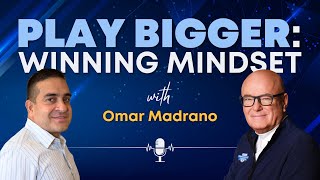
Omar Madrano tells Dr. Don Wood that most people sabotage their goals because of early fears like rejection and unworthiness. He says outsource what you're bad at, compete against people better than you, and ask for what you want because no is temporary. His self-published workbook briefly hit Amazon's top sellers.
Chapters
You will develop faster by playing better people than you will by playing people at your skill level. Most people don't want to do that. You know, you want to go to a tournament and win. I know I'm going into this tournament. I don't have a chance of winning at this time until I develop the skill to compete at that level.
Come on. The way to scale, the way to grow. Focus on your strengths, outsource your weakness. I was horrible at paperwork. Still am. I was horrible at, at doing payroll. And it could be mediocre at it. Oh, why don't I scale? Why don't I pay people that can do a good job? While I can focus on marketing, while I can focus on my bottom line, what I can focus is customer service. What I can focus is on being a leader to my team.
Welcome to my podcast. You must be out of your mind. And today I've got on Serial Entreprene, a gentleman who's going to be able to share a lot about business side, which I'm excited about. I just mentioned to him before we started that we could probably do about five podcasts for sure, just on this subject. So let me welcome Omar Medrano. Welcome, Omar.
The pleasure is all mine, doctor. Definitely. And I feel like we're like minded spirits. Just we're taping this on fourth of July. Why? Because it's like any other day. This is the present. There's two types of people. There's those that are celebrating. Oh, wow, we can't wait till this, the next three, four day weekend. Hey guys, that's memoir. We just did memorial. This is 4th of July and it felt on a Monday where they're winning, they can't wait till Labor Day. You know what, there's people like you and I, you always have to do the work. You always have to work. And not just entrepreneurs. Everybody has competitors out there. You have to ask yourself your competitors. Watching Joey Chestnuts eat hot dogs, he's, you know, he's watching Stranger Things. He's doing the barbecue. He's killing it. He's listening to Born in the usa. He's listening to Kid Rock, Born Free. But you know what? Not us. We're working to be a better version of ourselves. I woke up this morning saying all I want to do is be a better version of who I was yesterday.
That's awesome. No, I love that. And like you said, you know, today's a holiday. But to us, you know, if you're an entrepreneur, you've been in business long enough. All the days Just blur. It doesn't really matter. So, you know, Christmas is one day that we probably should say, yeah, let's take a day off.
That's the only. You're going to laugh, people. I. My first time ever being a coach or getting paid, the client wanted to work on Thanksgiving Day and which he. He's an entrepreneur. I'm an entrepreneur. And that's it. I'm not a pilgrim. For a pilgrim. I didn't come here, you know, on the Mayflower. It's an amazing day. We should be thankful every day. Not one Thursday. Not so we could go to Walmart and trample the greeter the next day. Not to watch the Lions lose football to me. I celebrate that day every day. So I'm thankful. So, yes, an entrepreneur. You and I, we work Monday through Sunday. I've had to work on my birthday. I've had to work on July 4th. I've had to work every day except for two days, probably Easter. My Lord and Savior's resurrection and his birthday. Every other day. It's just any other day.
I agree. I've done that all my life. So, you know, I know you are referred to as a serial entrepreneur. Tell us a little bit about what you have done, like the kinds of things that I know because you coach a lot of people, you know, on how to be successful and you can walk the walk and talk the talk. So tell me what you experienced in your entrepreneurial life.
What I experienced as an entrepreneurial life. I wouldn't want anybody to. You don't need to be in a franchise. I wanted to be in a franchise because I didn't believe in myself at the time. I felt like I needed hand holding. And when you joined a franchise, when you do great, it's not about you, it's about the franchise. Thank them, bend over backwards, kiss her butts. And when you're doing bad, because everybody, it's. It's sometimes based on horrible location, based on the economy. When the numbers aren't hitting, they're not there to help you, they're there to go. So what is it now? Why aren't you doing the work? Because clearly they want to get the kudos, but they don't want to help you. But yeah, I was a serial entrepreneur. I based it all on emotion. And in business, never do anything based on your emotions. Being an entrepreneur or being a sales guy go hand in hand. You wake up every day at zero. You can't go to the bank with yesterday. You can't go to the bank saying you had an amazing quarter. You can't go pay your bills saying, I tried. When it comes to sales, when it comes to being in business, the only thing that matters is results. You can't go to your creditors. You can't go pay off your loans and go, hey, you know what? I'm a great guy. I actually tried trying. Trying never works. Imagine being in a relationship and saying, well, yeah, we're doing a horrible job, but my intentions were good. I've got great thoughts. I had great intentions. So being an entrepreneur, being in sales, it's, what are you doing today? What are you doing right now in order to succeed?
Yeah, yeah. And a lot of people don't understand that. They get in, they, oh, I want to be my own boss. I want to get out and do my own thing. Right. And then it's like, what? I mean, there's all this work. There's so many other things that you have to handle, especially when you're just starting out. Oh, yeah, you're the CEO, the cfo.
You'Re all the above. You're the board. But the thing is, people go into business and you hear it all the time, oh, I want more free time. I want more vacations. I want to go to Monaco. I want to go to the Monte Carlo. Wake up.
Being an entrepreneur means you're going to have to give up that time. Give up a few years of hustling, doing a few years of grinding, and there's going to be days that you're in the Valley. There's going to be days that you're like, oh, my gosh, what did I get myself into? What happens, though, is a lot of times people pull the plug because they're like, all I wanted was three day week weekends. I wanted more time for myself. Wrong. When you're an entrepreneur, that's that register hits zero every morning and you have to wake up and you have competition out there that wants to make you eat cat food. It's nothing personal. It's just business. And they want to knock you out.
Yep. And one of the hardest things is when you start to succeed as well. I love one of the things that I read that you said, if you think you're the smartest person in the room, you're in the wrong room. I love that because you have to learn how to fire yourself from a particular job so you can hire somebody who's smarter than you at doing that job. When you first start off, you're doing them all. But as you start to grow, you better find people who are Smarter and better at certain things than you. That's where the ego sometimes gets involved. And they want to micromanage or not. Just get out of the way. Let people come in and do some things that they're good at.
The ego. The ego will. The ego kills. Especially an entrepreneur. Entrepreneur always has this narcissistic approach. Whoa. Nobody can do a better job than me. Come on. The way to scale, the way to grow. Focus on your strengths, outsource your weakness. I was horrible at paperwork. Still am. I was horrible at doing payroll. Now, yes, I could take a course and I could be mediocre at it, but, aha, why don't I scale? Why don't I pay people that can do a good job? While I can focus on marketing, while I can focus on my bottom line, what I can focus is customer service. What I can focus is on being a leader to my team. And that's what I did for so many years. And that's why entrepreneurs scale and outsource.
Yeah. And that's one of the hardest things to learn how to do. And it's one of the things that I talk about. I wrote a book called Emotional Concussions. And what I talk about. Here are 10 things successful people don't do. Instead of saying, here's what they do, I say, here's what they don't do. And I give 10 different examples. For example, if they procrastinate or if they blame everybody when something goes wrong. And what I say is, the really successful entrepreneurs don't blame other people. They take responsibility. So if you hired a CFO and they didn't do a very good job and you had a problem, you can blame the cfo or you can say, I hired the guy I didn't do a very good job of hiring.
Exactly. Here I'll go a step further with that. My general manager got into it with a health department person at one of my locations, got shut down, and he was apologizing to me, saying it was his fault. Sorry for mouthing off to the health department. And it's like, no, it wasn't his fault. Not his fault at all. All blame needs to come on me because I hired him. I hired, ultimately everybody. What happens, though, is people that aren't successful, they want to point fingers. It's that person. It's this person's fault. Ultimately, everything falls on me. You will find success. Accountability 101. Everything that happens is all on me.
Yeah. And that's what I talked about in the book as well, is that, why do we do Those kinds of things. Why do people blame other people? Get out of their lane, procrastinate. It's because they've had events and experiences in their lifetime, traumatic or what I call emotional concussions. And it could even come from a parent. I'll give you a great example. I had a lady who. Who came in. Her mother was a principal at a school. And so whenever she did her homework, her mother would bring her. Ask her to bring her homework in, and she would redline all her mistakes. And so as an adult, she becomes a procrastinator. And the reason being is because as a child, she didn't like that constant criticism, even though her mother wasn't trying to do that. So with the best of intentions, her mother was making her procrastinate because she would always try to put that off. She never wanted to have to go and sit down and do that. And then as she becomes an adult, that slips in. And so I know in your book, what if it did work? You talk about fear. So where are these fears coming from? So maybe, you know, share a little bit about why you wrote the book and about fear.
I wrote the book and the podcast because all our fear was placed in this. By our mom, by our dad, by brother, sister, friends, neighbors, by a society. We were born to thrive. That's why as a little kid, a toddler, you try to get up, you try to run. Imagine somebody's like, hey, you've fallen. Walking. This isn't for you. Just stay there. We'll get a wheelchair. Sorry. Try something else. No. We were born to be great. We were born to thrive. But people put fear into us, to protect us. Don't talk to strangers. You might become like Adam Walsh. Don't do this. Don't touch that. Don't do this. Oh, rejection's bad. Failure is bad. Bad, bad, bad, bad. And before, you know, hits us where with so much. I had fear of rejection. I had fear of being worthy. I had so many different fears.
Yep.
And, yeah, and I mean, I. I left Miami, a place that people go on vacation, because growing up, I couldn't talk to people. I felt unworthy. I felt like people, because so many different reasons. Single parent. My mom and dad divorced before I was born. So early 70s, nobody else was divorced. I felt different. Miami wasn't as culturally diverse as it is now, so I felt different in that aspect. So many different reasons. And I couldn't talk. I. Fear of rejection. Oh, my gosh. If I asked out a girl and she said no, the whole county would find out it would be in the Miami Herald. I felt like such a loser. I felt like I had to move. I felt like I had to go to lsu, to Baton Rouge, because that was paradise. The truth to the matter is your problems follow you until you hit them on head on.
Yep. One of the things that I talk about as well is the best piece of advice I ever really got was when I was about 13 and the tennis pro I was, hockey was my main sport, but tennis was my second sport and I played tennis. And so the tennis pro was sort of my mentor. He was phenomenal. And he said to me one day, he says, you really want to be a great tennis player, don't you? And I said, yes. And so he looks around to make sure no one's listening and he goes, okay, I'm going to tell you the secret, you know, and at 13 you actually think there's a secret. And so I said, okay. And he says, lose a lot. And I said, what do you mean lose a lot? And he said, you're playing in competitions where you could win. You're playing at 13, 14 year old divisions. I want you to play in the 15, 16 year old, 17 and 18 year old divisions. He says, you haven't seen that kind of speed and power, but if you see it, you will adapt to it and you will actually pick up. You're a good athlete, you will develop faster by playing better people than you will by playing people at your skill level. I mean, you could apply that to everything, to business, to life, right? And he said, you have to be willing to lose in order to gain that knowledge. Most people don't want to do that. You know, you want to go to a tournament and win. I know I'm going into this tournament, I don't have a chance of winning at this time until I develop the skill to compete at that level. Just great piece of advice.
Oh, no. My oldest, her first year in travel soccer, they put the team, the team was good, but it was all raw girls. What happened was they threw them, they were all silver girls. What they did was they threw them in playing top ranked teams throughout the state, ecnl bracket, gold teams. And what happened was, yes, at first they kept on getting pounded and then they started competing, then they started tying them and then lo and behold, they started winning. They started believing in themselves. And then when they put them in back into that silver bracket, oh, it could play both. They're dominating silver and then they could play gold. Now she left that club, some of her, her teammates joined them and they did another thing, but it was the same concept. They would be playing the ings, they would be playing all these superior teams. And if you believe in yourself, and that's why I don't believe in practice, what happens is people want to in business, role play or like they're in the stock market and hey, you can paper trade. None of that does anything for you. It's when you have skin in the game. It's like doing sales calls. We can do role playing left and right. That's not going to get me better. What's going to get me better is picking up the phone and having somebody scream at me, give me f bombs, tell me to go f myself or go the ultimate 1970s, 80s, 90s, go out there and door knock.
I'm not role playing.
That's actually out there when somebody's screaming at you. And when it comes to trading, paper trading, it's like playing blackjack. It's not real money. Yeah, I'll double down on a 20, I'll split face cards. No, the way you get better is have skin in the game. Use real money. You'll learn quick how to become either a great trader or you'll be a.
Horrible trader for sure. And people are afraid of losing, so they're afraid of that loss, you know, so that would prevent them from doing it. And that could come from all kinds of different life experiences that could come from earlier in your life where you saw maybe your parents lose their house or lose in business. And then that creates the fear in you because it interfered with your safety. Because the number one fear for the human mind is uncertainty. So that's our biggest fear. And so that will, if you don't learn to overcome that. Right. You'll get stuck in that pattern.
You know, uncertainty kills way or take that back. Uncertainty is actually a gift. Uncertainty is a gift because certainty kills more dreams, kills more people than corona, than monkeypox, than anything else out there that people say they're fearful of and focus. What happens is they keep being safe. Their 9 to 5 job, 10, 20, 30, 40 years certainty, well, I feel safe. I'll have an extra week of vacation next week. Certainty creates people from going after their dreams, after their goals, trying to find the real life purpose. And what happens is one day regret hits because they are too old, they are unhealthy to follow their dreams, to pursue what they were always meant to be. And that pain of regret is the worst pain out there. Can't fix that.
Yeah, pain is a great motivator that what people will do to avoid pain. There's all kinds of examples of it. So tell me about some because I know you work with a lot of people and you help coach them. Give me an example of somebody that you took, you know, from struggling that way and then helped them become more successful. What did they have to overcome?
You have the way to find success in business. It's the same thing in personal development. You have to quit living in the past. I say his story or her story. Let go of that emotional trauma. Let it go. Forgive yourself, forgive whatever or whomever it is that hurts you. Because if you keep on living that you will feel unworthy. You can try to find success, but you're going to hit self sabotage. You're going to be, I'm not worth this. This isn't for me. So ultimately you have to have clarity. What is it that you honestly and truly want? And you have to be specific. But more important, let go of the past. Use that story to influence, to inspire, to motivate you. But until you let go of it, there's no hope for a brighter future.
So, Omar, that's sort of what we do as well as I work with people. The whole program is developed around performance, what's interfering with your ability to perform at your highest level. And what I have found through all my research is generally coming because they've had pain trauma experiences earlier in their life and their mind tries to protect them from that. So the fear of pain is so great. I'll give you a great example is I read a story, this is about a German sniper during World War II. And he talked about when they fought against the Russians. The Russians had a ton of people, but they didn't have very many weapons, he says. So their strategy would be if they had say 100 weapons, 100 Russian soldiers would charge at the German lines and they would shoot them. And then the other ones who didn't have weapons would run out, pick up the weapon and continue charging. And that was the way they fought, to try to overwhelm the German lines. So the German sniper said, you know, they had to just keep shooting them. And then another wave would come, he says. And then he figured out how to stop them. He says, I started shooting them in the stomach. I didn't kill them. He says. Then what happened was, is when that next wave was ready to come, they would hear all their comrades on the ground screaming and pain. That was the bigger deterrent, even more than death being in pain. And so I thought it's fascinating when you think about the human psyche on how something like that they would rather run and die than run and get shot and be in pain.
Well, there's two things that motivate people or get people off their butts.
Either running away from pain or, or pleasure. Most of the time though, it's not the pleasure, it's running from. From pain, running from fear. Change ultimately happens when the pain is staying sane, living this life, doing what you've been doing for one year, five years, 10 years, that the pain of the unknown is not greater than the current situation. That's when you're finally, hey, I'm going to quit doing what I'm doing. Let me try something different.
Yep. And that's why we get into these habits and behaviors. Because they provide certainty, we know what's going to happen. So we get stuck in these patterns, what I call codes, because it creates that certainty and safety, but it may not be providing you what you need. And that's why you see people get into these bad habits and behaviors. They're thinking that they're safe, but in actual fact, they're limiting their opportunities to reach their highest level. You know, and one of these you talked about was 90% of entrepreneurs will ultimately fail and the other 10% struggle. Give me a little more insight as to what your, what your thought process is on that.
On why people fail.
Yeah.
One of the reasons why entrepreneurs fail is instead of seeking advice from successful people, what they do is they listen to people that have never owned a business, never been successful. They listen to family, they listen to friends for advice. That's crazy. That's like me asking my priest on how to be a better.
Father. Asking them at the time when I was married, hey, how do I become a better husband? Wrong. Always seek advice from people. Misery loves company. Those people that are trying to help you, they don't really want to see you succeed because deep down inside they've failed. And what the pain that they're feeling will be even greater if you succeed because you actually went out for your dreams. You actually went out and proved other people wrong. Misery just loves company. That's one of the reasons.
And even with the best of intentions, I've seen it where I met a gentleman who wanted to really be an entrepreneur, but he was so risk adverse. And when we looked at it, it really came back down to his parents saying, to be successful, you go to college, you get a degree, you get a great job, you get a 401k, you buy a house and you retire. So everything that he was trying to do in his business life was all focused around don't take the risk. So he was always trying to go to other entrepreneurs and saying, if you will buy into this program and take my equipment, I'll share in the revenue, but you buy the equip it into your facility. He couldn't get the nerve to actually buy the equipment to actually go out and do it. And so once we got him out of that kind of a mindset, he was able to then start to be willing to take some risks. Because as you know and I know, right, entrepreneurship is not for the weak of heart. You're constantly risking everything all the time and doesn't mean you're not calculating good risk. But at the same time, you have to take risks if you want to be successful. After he went through our program, he did a million dollars that next year because he did zero up until he came in and he just couldn't get out of his own way.
My mother never sees me or never saw me as successful. She always preached academia. Get a bachelor's, get a master's, work for a publicly traded corporation. 20, 30, 40 years. Now granted, I saw my mom come home angry, upset, depressed, fearful of losing her job every day. But yet my mom's like, hey, this, these are the keys to happiness. These are the keys to success. It's like, I don't think so. And to that day I granted, I got a bachelor's degree in journalism. Doesn't really amount to anything. Got a master's degree in communications. I actually had a master's degree in broadcast journalism. A bachelor's and it a second bachelor's in history. What does that equal to equate? I can ask you if you want a venti.
But my mom always. And it wasn't just our parents. Academia is a business. So when you're in high school, the problem with this new generation is they don't believe in trades. They don't believe in anything outside of going to get to get an amazing degree. Like an amazing degree in African American studies or gender studies, these beautiful degrees in English literature that can really pay off in the long run. Art appreciation, the list goes on and on. Your high school guidance counselor. If you don't go to college, you're going to be living on under a bridge.
I heard that.
What load of crap.
Yes.
Hey people. There's people that go to learn how to fix ACs, learn how to repair stuff that make a hell a lot more money right off the bat and they don't have all that debt in the English lit, in the gender studies and all those other useless degrees go to school. In fact, all that knowledge that I earned or I got, I would say I learned more in Walden books. Learned more at Borders. I'm dating myself too.
Sure.
At Barnes and Noble.
On audible.
Learning is something you can do without going to college, without going to academia.
Yeah. And so many people, you know. Well, the good news is is we're going to probably wipe out a whole bunch of their debt so they don't feel so bad about getting that degree.
But I feel bad because my mom had two full time jobs.
I know.
So she could pay out of state tuition because.
Yeah, we're not getting our tuition back.
Yeah. I mean what people don't understand is life isn't fair. But nobody forced them to get that day. How about if I wanted to go buy a new Lamborghini because I'm almost 50. Definitely way a little past my midlife crisis because I'm not going to be George Burns and let me just accumulate that and go, hey, life isn't fair. Hopefully, you know, the fairy godmother or somebody will, will touch me and, and say, hey, life wasn't fair. We need to, we need to wipe out your debt. I don't feel bad for any of those people because they knew going hand or if they didn't know and they just signed blindly. We all have choices in life. We all have free will. They could have gone to a community college, then have to go to a private university to learn basket weaving.
Yep. But so many of them are feel that pressure of going out and having to do something. Which is really a shame.
It really is a shame because clearly it, academia is a business because it's unforgivable debt. That, that, that, that shows you it's a business. You, you, you can file bankruptcy, but that, that right there. But, but yeah, I mean, I don't know. Life isn't fair. I wasn't born with the silver spoon in my mouth. My mom had to sacrifice. So what the federal government and what Gen Zs and millennials are saying is that because we all love to play circumstances, their circumstances are different. This is a whole different time. No, it's not. That's just an excuse when people say, oh, things are different now because we had a pandemic that kills people at a point zero zero, who knows what percent.
Could you imagine if we had Marty McFly's DeLorean and we went back during the Black Plague when millions upon millions of people were dying, but you still had to work because you still had to provide for your family. Could you imagine telling them, hey, things are worse.
I had to try to flatten the curve. And they would probably been like, oh my gosh, is this thing like wiping out 80% of the population? No, it's at 0.00%. They would laugh at us. Think about that. Everybody wants to play victim. Everybody wants to. The reason why fiction outsells is because we don't love our reality. We try to tune out. That's why somebody watches, binge watches Netflix. That's why they read, they watch these movies because they want to tune out. The sad part is we can create our own reality. You want that rocky lifestyle. You want to be the overachiever, the overcomer. You're the master of your life. You're the creator of your destiny. Then be it.
Yeah. No, it's so true. And that fear of not wanting to fail. Right. Is a big factor in it. So one of the things that I did like as well when I read some of your stuff was when you say, just ask for it. I remember there was a story, I was listening to a speaker one time, I'm a member of the Genius network, and he was speaking at the annual event and he talked about how his business is. He works with highly high net worth people. He puts together special experiences for them. And one of his clients called him up and said, I'm going to be in Italy with my family. Can you put a special event together for us? So he put together a horse and carriage ride to this very famous museum that they actually closed the museum down. He was, him and his family were going to go in, they had a dinner and everything prepared at the statue of David, you know, with a famous opera singer singing, a famous chef producing the dinner just for them. All alone in the museum, right? Yeah. Have you heard this story?
No, no. But when you said the statue of David, you're going to laugh. I don't want. I want you to continue the story. But yes, academia, I've seen it. I've been in Vegas over 100 times. I've seen the actual replica. It's Caesar's Palace. But to be in that museum in Florence, I took my family, I took my two daughters and I took.
My ex business partner, clearly my ex wife. And I cried because that is reality. Seeing something so beautiful in person. But yes, it's Florence. You just triggered something in me. I had that aha moment because it's very beautiful. Forensic is very beautiful. A lot of good things.
Yeah. Well, so, so anyway, so what happened in the idea behind the story is he put together this phenomenal event just for this family, close the museum down, had the dinner, amazing chef, amazing music, and he's watching all this go on. And the guy who's the curator at the museum, right, is sort of watching it and he's feeling pretty good about himself, right? And he says to the curator, he says, this is pretty impressive, don't you think? And he goes, yeah, he goes, you don't seem overly impressed. He goes like, I've got world famous chef, world famous opera singer, you know, we had the museum closed down, all of these things. He says, have you ever seen anybody put something together like this before? And the guy says, no, I haven't. And so now he's really feeling pretty good about himself. And why do you think that is? And you know what the curator said? Because nobody ever asked us.
Exactly.
He didn't do anything so special.
Always a no. It's always a no until you ask.
And that's what he said, because that changed his life. He realized he wasn't doing anything special. Just nobody had ever asked them to do this, that probably anybody else could have done it had they just asked, I mean, willing to pay. So that's why I saw that when you just said, you know, ask for it if you want it, right? That is a key to success in life. So share with me your thought on that.
So many people are fearful, this huge fear of the word no. It's a two letter word. No, not even just one syllable. It doesn't mean Dr. Don Wood sucks, doesn't mean Omar Medrano is horrible. No just is a temporary thing. If you're asking out that woman and she says no, her loss, move on. It doesn't mean I'm not worthy. She might be dating somebody, she might have other plans that day. But so many people don't want to just ask for it because they think no means you're unworthy, you're a horrible person. They see you as a lesser man or a lesser woman. No, no just means it's just no right this second. If you really want to ask her out again, ask her out again later. Worst case scenario, it'll happen. Best case scenario, next.
Well, it's great advice, but it's. Sometimes some people just don't listen to it or don't follow it.
It's great advice, but I was that guy. I was fearful of hearing the word no. It paralyzed, it paralyzed me in so many aspects. I couldn't ask out A girl growing up in high school, she had to ask me out. It wasn't until I had to shift being in a fraternity where they actually forced me to ask out women that I learned it was just no, who cares? No. If you can't ask for simple things, you can't go to a restaurant. Now don't go to a restaurant and be a Karen and go, I want a pizza at a steakhouse. No, but if you want something really bad, just ask for it. You need advice? Ask somebody successful, they don't live in scarcity. More than likely they'll say yes and boom. Mind blowing. I know.
Yeah, that's what the pro told me as well. He says don't be afraid to lose a lot. He says, and when you play somebody who's better than you, ask them if they'd sit down with you for five minutes or maybe hit with you for another five minutes and show you how they hit that backhand or forehand. He says, if you're humble about it and you're not arrogant, they'll pour knowledge into you. And it was so true. So I'd meet all these people who are just phenomenal players and they would share their wisdom, they would share everything that they were doing because I wasn't being, you know, a jerk and I just treated them fairly and nice and that really opened up a lot of, a lot of doors. So I know we probably pretty close to our end of our time so I know we're going to probably do a lot more of these podcasts because I think we could go on like we talked about, we could do a ton of these. So I know your book is that. How do they get your book if they want to find your book?
It was self published. It was woo, Amazon top bestseller for a couple weeks on Amazon. It's self published, only 100 pages because I don't believe in fluff.
Right.
Pick it up, read it. Does the book work? No. 10x doesn't work. Awaken the giant within doesn't work. 3ft from gold doesn't work. Zero books work. What actually works is you have to implement. My book is a workbook too. After every chapter you have to do stuff.
But I saw that. I really like that. Will you ask the questions? It's one of the things that we do in our program. They listen to audios every day for 30 days. But there's five questions with every audio.
And you have to do work because if not, what happens is people will pick up a self help book. They'll pick up the Jim Rohn and they'll pick up the Zig Ziglar.
More from Dr.





When you’re in the middle of a panic attack and someone tells you to “just breathe”.

Once a panic attack starts, you can’t stop it. Here’s why and what you can do about it. #panic


The first sign of healing wasn’t what happened. #anxiety #emotionalpain #fightorflight

The threat ended. The situation changed. Your life moved forward. #weneedtotalk #anxiety

