The Science Behind Fast Emotional Healing w/ Nathania Stambouli
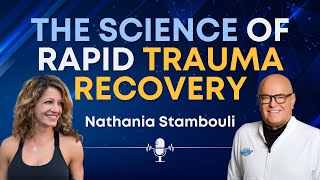
Conversation between Dr. Don Wood and Nathania Stambouli about fast emotional healing (Dr. Wood's TIP/coding approach) and how it complements Nathania's yoga-based work (Yogi Flight School). Nathania describes personal healing (loss of her mother, money/shame around family finances), immediate shifts after brief sessions, reduction in chronic anxiety, and improved responses (e.g., in traffic, family interactions). Dr. Wood explains program elements: targeting unconscious mind, creating replacement 'codes' (symbol, phrase, anchor), and follow-up 30-day audios to solidify new patterns; several clinical anecdotes show rapid symptom relief (PTSD, panic attacks, phobias). Nathania explains her program niche (teaching handstands/inversions online), student transformations, and contact points.
Questions this video answers
July 30, 2025
yogiflightschool.com
@YogiFlightSchool
A $2 million revenue goal
Chapters
And what you do, you can immediately feel the shift. Sure, you solidify the shift over time, but there's an immediate recognition of, oh, wow, this did something for me. And I think the speed of a result that's big enough to cause a mental shift is a huge piece of why what we do works. Because when someone can have a quick win, they're more likely to get hooked and to say, okay, let me do more. Rather than when you're like, well, you'll. You'll see the first result of this in seven weeks. And people are like, I don't know, want to wait seven weeks?
So welcome, everybody, to another episode of you Must Be out of your Mind. And as you know, I'm Dr. Don Wood, and I always bring on interesting guests that have some amazing stories to tell and insights and experiences that can help us all learn. And today is another great person that I'm excited to introduce you to. You, Natanya Stamboli. You can just tell by the smile already on her face, that's who she is. That doesn't change. That's her. So welcome, Natanya, to you Must Be out of youf Mind.
Thank you so much for having me, Dr. Wood. I'm super excited to be here.
Well, we met at a. An event, James Wedmore's event, and you had an opportunity to hear a little bit about what we do and actually go through the program. So do you want to just share with us what. What you learned and what your experiences are through doing the TIP program?
Yeah. So I had the. I was very lucky I got to. To work with you in two different capacities. The day that we met, I got to do a small mini session in front of. And that was really the first time that I had the experiential experience of what you do, and not just the intellectual one. And I've always been fascinated by how the mind is responsible for so much of what happens in the body. And it's been very clear to me for many years that so many of our physical ailments are actually due to repressed emotions and repressed trauma and things that we've just had to put away in order to survive. There's a quote that says, like, if you stuff it down, it's gonna come out sideways, right? It always comes out in some way. And I've had nothing but experiences in my life of the thing coming out sideways. And has it showed up in addiction issues, it showed up in relationship issues. It showed up in so many different ways. And so I've been On this journey of learning to listen to what the cues my body is giving me and then trying to search for what is the underlying reason why my body's giving me this cue to begin with. And so hearing you speak about the mind body connection and all the research that you've done, I was like, oh, this is a new angle for me to approach this. And I found it so incredibly fascinating how simple. I don't want to say easy because it's taken you decades to develop your system, but the simplicity of it and how you walk us through an exercise that utilizes different parts of the brain and also sort of puts a pin on the thought and gives you something else to focus on that just wipes the slate clean. And I, you know, I've done so much talk therapy, when you sit in a chair and you talk in circles around your problems and you leave and nothing really changes. And here you've devised a way to get around the brain and get to the unconscious part of the brain instead of letting the conscious part just spin in circles. And it's just been remarkable to see how the work has helped others through the stories that you've shown and the case studies that you've shown and then seeing really how it's shown up for me in the two little sessions that we've done. So I'm happy to speak more about sort of what you helped me with and what you helped me uncover. I don't know how much detail you want me to go into, as much.
As you're comfortable with, because people love hearing the stores because they relate to them and what they may be able to say is, oh my gosh, that's what I, that's what I dealt with. So whatever you're, whatever you'd be willing to share would be awesome.
Yeah, absolutely. So I consider myself a high functioning person. Whatever issues I've had in my life, I've sort of, you know, either stuffed them down or halfway dealt with them and just forged ahead. I, I'm a workaholic, basically. And it became evident to me just in the last 10 years or so that my workaholicism is a coping strategy and is actually not a healthy way of being. And it has served me well up until this point. But one of the things that, that I struggled with was the loss of my mother. When I was 12 years old, she just died very suddenly. She was here one moment, gone the next. And between the moment she was here and the time she was gone, we actually got into a fight and I never got to Clean that up before she passed. And so that had been looming over me my entire life. And you know how intellectually you know something? It's like, I know she didn't die angry at me. I know that all of that is water under the bridge, and the psyche holds onto what the psyche holds onto, and you can't convince it otherwise. And you had me do a really, again, simple exercise that had me see the moment in question and look at it from different angles. And what's interesting is, up until that point, whenever I thought about my mom and whenever I thought about that particular instance, it was instant waterworks. It's like there are a few things that can bring me to immediate tears in my life, even if I haven't thought about them in years. The moment I conjure them up in my mind, my tears just go. It's a visceral reaction that I can't stop. And up until that work with you in that room, that was one of those moments. If I replayed that, her walking out and saying, you ungrateful child, and slamming the door, and then my dad waking me up in the morning to tell me, your mother died last night. Like, every time I replayed that, it was instant waterworks. And now, no, I can.
Amazing, right?
I can be with the story and, like, sure, it's still sad, but it doesn't activate the same. Activate part of me that used to get activated.
You're a good student. All the stuff you're talking about, you really paid attention.
Yeah. And I love this stuff. And for me, like, I'm legitimately trying to heal certain things, so naturally I'm going to pay attention if I think you have a solution for me, and a solution that's not going to take me a year, you know, because there's. There's things that can take a really long time, and I'm an impatient person, probably another coping mechanism, and I want it now. So. So just observing, you know, and then. Then I get to ask myself, okay, what are the actual things that are on my emotional plate that are actually running the show in my life? And as we sort of worked through that one, I was like, you know what? Like, while that was emotionally activating for me, was that actually holding me back from anything in my life? And I haven't answered that question yet. I'm still sitting with it. But when I came in and did a full day with you, we went after something else. We went after my money issues because I'm an entrepreneur. And what tends to happen to entrepreneurs when they Sort of find something that works and they start generating an income. Is now all of a sudden, we come face to face with our relationship with money. My relationship with money used to be such that it's better for me to not earn any, because I know that once I earn it, I'm going to lose it all. Because I watched my father lose everything he ever built. And I saw what that did to our family and what that did to him and to me. And so in my mind, it was like, you just better not make any money because it's safer that way. But when an entrepreneur like, has that running the show, it's better to not make any money. That's going right up against the goal of creating revenue in your business. So that was one way I was rubbing up against it. I somehow managed to break through a few years ago. The it's dangerous to make money. I made the money. But then I was living with an underlying panic that it was all going to come crashing down constantly. And I saw that my setting goals and my setting milestones to reach in my business were not driven from a place of vision for what I want for my life. They were driven from a place of fear of, I have to reach this number, because if I don't, it's all going to come crashing down. But if I hit this number, then it means it's not going to come crashing down. It's delusional. But I found myself chasing and chasing and chasing. And last year, I set a goal of $2 million in my business that I didn't hit. And then I was faced with the question of why didn't I hit it? And it was again, that fear running the show, because if I hit it, then the fall from grace is much higher. And now I have more people to disappoint because I have a team. And now, to some degree, my family depends on the revenue that I'm generating. So I got to see all of that play out. And you took me back to, you know, the instances in my childhood where I made up a story. In instances in my childhood where I was experiencing shame around not just losing the money that my dad had made, but also having money. There was a lot of shame around growing up in an environment where people were very middle class and I was getting picked up from school in a Rolls Royce. And the shame of that being better than my classmates, that was never something that I wanted to be. But the classmates would be like, oh, you're trying to be better than us. Look at you walking into a Rolls Royce. So like I like stacked on, stacked on, stacked on stories and like shame around money. And, and the work that we did together was really powerful. I discovered a lot of my resentment was towards my father, who really just did the best he could, who was and is living with his own set of trauma around money and what was passed down to him from generations prior. And I was holding this anger towards him that was misdirected because he was just doing the best he could. And I get to be the end of that story. Right. I can't hold that on him. It gets to be me who rewrites that. So I let go of a lot of resentment and I let go of a lot of anger towards my father because it's, it's pointless to hold that. I'm finding a lot more ease with it in the sense that did one session of working on this completely eradicate my money story? Not yet. And I see a huge shift. Like I was, it got to a point where my dad is now requiring financial support and I was doing it with a chip on my shoulder. I was doing it. You know, I set up that wire transfer every month going, this is not fair. Like you should have, you should have figured it out in such a way that it wouldn't be up to me to support you. And I'm like, okay, well that, that's not healthy for him to be receiving the money with that energy behind it. And it doesn't feel good for me. And the last two wire transfers since we worked together, I've sent them with love and with knowing that he paid for everything my entire life and how grateful am I that I'm in a position that I'm able to help him? And how awesome is it for him at age 81 that he should not have to worry about where he's going to get his living expenses that they can just show up in his bank account and, and the gratitude that surrounds that for me now. And that in and of itself is a huge, massive shift.
That's a huge shift. Yeah. Because I knew that was a big thing with you.
Yeah. And not to say that like, you know, when he sends me a message about something money related, my initial is still like. And then I'm like, wait, wait, wait, wait, wait, hold on. That's my old stuff.
That's.
That's the code.
That's the code. So that's the audios work on, right?
Yes. As I was saying before we got started, part of your program involves a follow up of month long audios to really Seal in the work. And as I was sharing with you, that month long commitment is where I, I'm, I'm the most challenged with myself and sticking to commitments. But I know there's still work for me to do there and we will, will solidify it when I do finish the, the whole program. But, but already just even without the month long audios, like the fact that I'm able to see it, catch it, and shift in the moment rather than playing out my anger and then thinking about it three hours later, I'm able to catch it in the moment. Really powerful.
Yeah. Well, that, that's, it's awesome. And that's why. So a lot of times what happens is people do start to feel better right after the program and it's like, oh, I think I'm good. You know, I've done this. Right. And the audios are really reinforcing the session and building new codes. Because as you know, after going through the program, we have the trauma and then we have the way we respond to the trauma, which I call codes. And those are habits and behaviors, and they came in over a period of time. And your mind uses habits and behaviors to create certainty because the number one fear for the human mind is uncertainty. So how does your, your mind and your brain protect you? It says, well, if you keep repeating something, it must be good. And so we will automatically take it over from the conscious mind and make it subconscious so you no longer have to think about it. We got it. And here's the issue. Your subconscious mind doesn't see things as good, bad, right or wrong. It's literal. So it takes everything literally. So that's why it's so profound to be able to start working on the literal translations that your mind created for you, to protect you, not sabotage you. And so when people say, oh, I sabotage myself, and I always say, it's impossible. The brain's not capable of sabotage. It's a survival brain. So it's going to move you in another direction. And those codes that your mind built up were trying to protect you because you built the story. The dad shouldn't be dependent on me. Dad's dad messed up. He shouldn't have messed up. And so your mind was then using that code to protect you.
Yeah. One other thing that's standing out for me is you give us something with which to replace the activation or trigger, for lack of a better word. It's. I'm, I, I find myself in traffic, right? I'm a road rager. Not because I'm angry at the world. But I go from 0 to 60 in a nanosecond. And then. And then I think about it, right? So I'm like, what the hell? Oh, wait, wait, hold on, Rel. But I can't think before I freak out. I freak out first and think after, and I'm finding myself getting cut off in traffic or whatever, and, And. And finding that pause. But my brain is automatically going to my visual, my phrase, and my anchor. So you give us a mental picture. You give us, and you give us. We choose it, but it's prompted by you. A phrase like you're a mantra and then a physical representation to sort of bring you back into the body. And that I'm sure, gets really solidified over the 30 days. But even though I think I made it through seven days, in those seven days already, it was just becoming automatic that when something occurs, my brain was going to those three anchor points rather than going to the reaction right away. And I'm a yoga teacher, so this idea of creating space between something happening and your reaction to it, I'm not new to that, right? That's what breath work is all about. That's what. That's what the practice of yoga really is. It's quieting the mind long enough to give you a chance to think and respond rather than react. But your. Your toolbox for that is completely different, right? So yoga teaches that breath or meditation can be that space, but you give us something physical to do that I think is even more applicable in the moment. Because wherever you are, you can do your little hand gesture, you can come back to your mantra, you can visualize your little picture, and it's. It's an amazing pattern interrupt. And that. That I will take with me for the rest of my life. Little. It's become like my. My little best friend, right? I know I have this little trio of tools that's always there, and my partner's always like, what are you doing with your hands? I'm like, I'm doing my. I'm a mantra. Just don't. Don't ignore my hands. I'm doing my thing.
It's funny because I work with professional athletes. I like baseball players, golfers. And although I can't see them visually or I can't know what they're creating, I know their stuff, but I can always see the physical when they do their anchor, right? And so I'm watching and everybody. Nobody knows what they're doing, but I see it and I go, there it is. They're doing it. Yep.
It's really cool to watch. So satisfying when you're out in the world and you see your disciples doing your thing.
So cool. That's so cool. But again, that's why the audios are designed to be repeating what your symbol, statement and anchor. And so what it's doing is training the brain, right, to go to that code. And that code is a safety code because remember where we developed that is from a time when you were outdoors and you felt safe, you felt powerful. Right. And we're recreating that through those tools. And then your mind just adapts because our minds are designed to do this and it can do it. We just have to train it. So once we get the trauma out, then we just keep training the brain and it just sticks. And like I said, people have used it for years. They listen to the audios for years because after you've gone through the program, you can have lifetime access to that. And so there's a whole bunch of other audios. I don't have had a chance to check them all out. But there's walking audios, there's nature walks, there's all kinds of really cool stuff in there.
Yeah. And I love that because it's not, it's not a one and done. Like, maybe, maybe the initial, the biggest piece can be a one and done. But every single day we're a different person. Every single day we show up, we've picked up something from the day before. We're constantly, constantly filtering everything that happens through our filters. And those filters change over time. So I love that A, there's lifetime access, and B, that you just continue going back and re. Solidifying and seeing things through a different lens and peeling back yet another layer, I think. I don't know. For me, this is lifelong work. Whichever, whichever way we're, we're going in to, to address trauma and to, to affect lasting change. I find it to be a lifelong practice because there's always going to be. There's always stuff into the shadows you think you've dealt with. And you're like, oh, look, you're a different color now, but you're still here. Let's go.
Right.
Let's go for you in this color. Yeah.
Yeah, well, and that's what's interesting about what we're doing with the coding is you actually have built codes over a period of time. What we're doing now is helping you to recreate more beneficial codes. And so then, because your mind will do whatever you ask it to do. And so I always say, think of repetition as research for the brain. It needs the research to make a change. So when you are in traffic and you would get mad, you had built up a pattern that I need to fight now, right? Somebody's doing something to me, I need to fight back. That's coming from the experiences you had. And so. But now what we want to do is that doesn't make sense to be fighting in your car about somebody who cut you off. But your mind doesn't know that. It just sees it as a personal attack on you. And that's the way your mind had filtered. So we have to reset it. And then your mind will say, well, how do you want to respond to this? I want to be calm, right? I want to take it in perspective. And your mind will do it as long as it's literally being trained to do it different. And it will just follow it because it's never trying to hurt you, it's always trying to protect you. And inadvertently, what you didn't realize is your mind was trying to protect you because you sort of taught it that I need to fight, and anytime somebody does something to me, don't take it. Attack. And there and then it translates into a car, translates into all kinds of different areas that really don't need attacks because anger is pretty useless in our society. It works really well in the animal world, and it worked really well thousands of years ago to protect us. But we really don't need to have that running in our system anymore. I mean, it's not very efficient. And so we still have all those primitive instincts, the way we train our brain. So, like, I. I love the fact that you're already seeing the changes and you're seeing the things and, you know, so I want to talk about you now and talk about what you're doing. So you've got the Yogi Flight School is what you call it, right?
Yes, Yogi Flight School. It's an online program. It's yoga specifically. But within the yoga niche, I go even Nichier. I teach people how to stand on their hands, on their heads and upside down. The world of yoga is very vast for anyone listening who might not be familiar. And there's tons of different styles and types of yoga, but one of the more physically demanding styles tends to has poses that are inverted, that appear so. Handstands, headstands and things like that. And not everybody has to do those things, but a lot of people want to and have a belief in their mind that they can't because they were never athletic as a child. They were never a gymnast. They think their body's too heavy or is somehow lacking. And my goal on this planet is to inspire people to step into their greatness and to believe in themselves. And what better playground to believe in yourself than taking something you think you can't do and then physically doing it? And the ramifications that that has for your sense of self worth and your sense of self confidence and the risks that you allow yourself to take outside of the yoga room. It's all connected, right? How we do one thing is how we do everything. So I speak to people of all walks of life. I think our, our, our most seasoned Ninja is, is 82 years old. And learning how to stand upside down, there is truly no limit as long as the body is relatively healthy. And, and it's my greatest joy to just take something that seems impossible and teach it in a way that's approachable, possible, and links someone to what are the benefits of this out in the world for your life? Who cares if you can actually stand on your hands? But what do you have to overcome and who do you get to become in order to believe that you can? And that is what changes your life. And it's, it's really fun.
I love it. I love it. And, and this is one of the things, and when people are listening to this, it's no surprise that you're successful doing what you're doing. You're. And as soon as I met you the very first time I saw that energy, regardless of the techniques you're teaching, you're bringing people in with your energy and that's what makes them believe they can make the change. And so you've got an amazing energy and I love that. And as the first time I met you, I, I sense that how quickly you were right showing people, and then when you get them doing standing on their heads instead, it's not a surprise they would follow you. They go, I trust this person. She's really interested. Very cool. So how did you get into this? Like, what was the, the start of it all?
Well, I was, we can go back back my previous life. I was a marketing director for a wholesale company. Worked in a warehouse in an office with no windows. It was miserable. But I moved to the United States as a non US citizen, so I was somewhat limited in my places of work because I had to be sponsored by an employer. So I was pretty much stuck where I was until I got a green card, which took 12 years. So I was stuck for a really long time. And then in 2015. I did a yoga teacher training just for my own personal. I wanted to learn more about yoga. And it completely within two weeks, I was like, this, this is my calling. This is why I'm on this planet. I want to teach this to people. So I quit my job. I was like, sorry, guys, I'm going to figure this out. And immediately started teaching yoga in 2015. Ended up owning a yoga studio very soon after that. And in 2020, everything shut down with COVID And I was like, oh, I'm in Los Angeles with really expensive rent. I have this building that I can't use that I'm still supposed to be paying for. People are canceling their yoga studio memberships in droves because no one can come to the studio. So I was like, I gotta figure something else out because I got bills to pay and this rent to cover. And so I was sort of at a choice point about what I was gonna do. And I kind of went back to the drawing board and said, what is it about yoga that got me into the practice and what is it that had me want to teach? And for me, what got me into the practice was, if I'm honest, looking at people next to me doing incredible things with their bodies and going, I want to do that. I got into yoga for what I now call the wrong reasons, wanting to do the party tricks. And I discovered the beauty and life changing nature of the practice through there. So now I'm like, who cares if people are inspired to try yoga because of the party tricks? I don't care about their way in. As long as people find the practice and are moved by it, we all win, so it doesn't matter which way you get in. So I was like, okay, I'm really passionate about arm balances and handstands. Is there something here for me to teach? And so I tested it out. I said, let me just do a little thing on Zoom for the members of my yoga studio. Can I even teach handstands on the Internet? Don't you physically need to be there holding people's feet so they don't die?
Yeah. So I needed to, like, prove that this could be done online. And it turns out that one of my biggest gifts is taking a complicated thing and breaking it down into the smallest steps and making it so anyone can understand how to do it. And so I was like, well, let me lean into that little gift of mine. And after we did eight weeks and almost everybody who showed up got the results, meaning at the end of eight weeks, they could do all kinds of arm balances, and I never touched them, and we were never in the same room together. And as soon as that ended, I was like, oh, I'm onto something. And then I met James, where we met at his mastermind. And I signed up for his business program that taught me how to create an online business. I didn't know what I was doing, and I. I put this out to the whole world. It's September of 2020, and my first 37 people paid me money to learn how to stand on their hands. Strangers from the Internet. And the rest is history. I was like, is this actually real? And the best part is it's not a delusion I experienced in my own journey of learning how to stand on my hands. And the stories I had to let go of that. I'm not athletic and my arms short and my core is too weak, and I'm not committed enough, and I want things to come easy, and I don't want to do the work. Like, I had to put all of that away in order to generate that result and what that meant for other places in my life and other results I wanted to generate. It was like a stark, like, shining beacon in my life. And I was like, is this going to translate to other people, or is this just me who has this relationship with handstand? And I'm so thrilled to say that people go through our program and they say things like, I've had anxiety for 10 years, and I haven't driven a car for 10 years, and after doing your program, I'm driving again. I was afraid to do this and that, and I'm now doing this. I was afraid to become a yoga teacher. But because of what I learned in your program, I'm now teaching yoga. And I'm like, this. This is what it's about, is taking on all of the places where you say, I can't, and turning it into an I can. So the biggest joy for me is seeing the ramifications for people out in their lives, because really, I don't care if anybody ever does a handstand. That's not the point. The point is who you become. And now I'm repeating myself, but that was kind of how I got into it and why I've stayed with it.
I love it, though. It's. It's a brilliant story. And what I love about that is people will hear your story and say, the key for you and what you did, which was unique, is you didn't just try to do the yoga right. You figured out a niche to Bring people in, which was a life changing niche. Anybody can learn yoga, right? But they never thought they could do what you're teaching them. That's what breaks the belief system. So that's why people were getting the results and realizing, I didn't think I could do that. Could they do yoga? Yeah. Could they stand on their hand? Oh, no, I couldn't do that. When you break that, which is what I do in my program is there's nothing wrong with you. You can heal this that fast. People are like, nobody ever told me that. And nobody ever told these people that they can do what you taught them how to do. And then what you do is you tear walls down for people. And that's, that was the brilliant part of what you created, is you saw that and then that was how you brought them in. And then you've got people who are changing their lives, not just learning yoga. Congratulations. That's, that is so cool.
Thank you. Thank you. And it's, it's so, so true what you're saying. I mean, there's so many parallels and in how we work with people are in very different areas of life. And yet what you said was very important is the quick win people. We are all creatures of, you know, we seek immediate validation. We don't like to wait for whatever the result is. And what you do, you can immediately feel the shift. Sure, you solidify the shift over time, but there's an immediate recognition of, oh, wow, this did something for me. And I'm able to produce results for people that quickly as well. One lesson, I can get them into some kind of balancing pose. So they're like, wait I that in like a half hour. What? And I think the speed of a result that's big enough to cause a mental shift is a huge piece of why what we do works. Because when someone can have a quick win, they're more likely to get hooked and to say, okay, let me do more, rather than when you're like, well, you'll, you'll see the first result of this in seven weeks. And people are like, I don't want to wait seven weeks.
It's so true. Our whole society is built on a quick win, right? But like I said, like that was the brilliance of what you did is seeing that and then bringing people in and that translates into the success you're experiencing. So I'd love to hear, because people love hearing stories. Do you have any stories of people who use, like you said, the lay with anxiety? Any other stories like that? Because people love, they'll go, oh, that's me. So if I can hear and learn that maybe this would help me.
Man, I have so many stories. I mean, there's one woman who signed up for our Arm Balance program and in fairness, never did it. She had all the stories. Like she was really committed to her stories of I can't. But she paid the money and joined. We have a very active Facebook group where we provide coaching for people. So people practice what's in the course. They post a video and they go, okay, I can feel I'm almost there, but something's missing. Can you coach me? So we're constantly providing coaching to people so people can see how we're supporting other students. So she was in there in the group posting once a week about how impossible everything is and how she still can't do it. And then we would go and check her progress. And she had done 0% of the program, but still coming in and complaining that she couldn't do it. So I just see, I could see her whole journey playing out. I'm like, this is how you play your life, honey. You sign up, you raise your hand, and then you don't do the work. And then you say, it's not working for me. And like, what, what is the price you're paying for that? Right? But I didn't, you know, you can't, you can only walk people as far as they're willing to walk. So we just left her there in her cocoon and then she signed up for then my next level of training, which is a 200 hour yoga teacher training where I trained how to become yoga teachers. So she came and she did our yoga teacher training. So again, signing up for yet another thing. Except in our yoga teacher training, you don't have an option to not do it. If I'm going to give you a certificate that you are trained by me to teach yoga, you got to do the whole thing. And every single week they had a homework assignment, three minute video, teaching a yoga pose that we had taught them how to teach that previous week. So they had to show us each week that they're learning and give us an opportunity to give feedback on their teaching. And there were so many excuses. My computer died, my dog ate my homework, my electricity. There was a storm. Every week there was some other story about why it couldn't be done. And we just kept leaning in and kept leaning in and kept leaning in. She eventually did graduate by the skin of her teeth. This is a woman who says she's been struggling with depression. Her Entire life is reclusive, doesn't leave her house very often, doesn't have a lot of friends. We just hosted a live event in Greece with 100 of our students. She flew in from across the world to be in a room with 100 people that she'd never met in person. I got her up to kick up to the wall in a handstand. She. Which she had never done in however many years in the program. And she posted a big post after the event saying, like, that was her first time traveling alone. It was her first time opening up to strangers. It was her first time being in a room with that many people she didn't know. And to me, it was just a testament to. Someone may never do the work, they may never actually get the result they came for, and yet they're still absorbing and they're still taking in what they need in that moment. And their journey might look completely different. But when I said, I don't care if anybody ever does an arm balance, I don't. She came out of her shell and we have, like, she turned some kind of corner in her life. And what is she going to be able to do now that she traveled across the world by herself and went to a room with a hundred people that she never would have done before. Like, that now has created a new possibility for her. So, yeah, sometimes these stories, like, it's like, it's a small story, but like, for me, that's a shining example of what.
That's amazing story. That's an incredible story. I mean, that's life changing. Yeah, that's really, really cool. And. And that's what people need to understand is that they are capable, but they need somebody to. Some bring them out. Right. And you sort of made it a safe place.
Yeah. One. One more little tiny story that makes me very happy. I have a woman who was a lymphoma survivor, and she wore compression and still wears compression stockings on her legs day in, day out in order to compress the lymphoma and prevent swelling from setting in. She was ashamed of her compression stockings. She always wore dresses that went down to the floor, never wore shorts, never wore below the knee pants or anything that showed any portion of her legs because she didn't want the world to know that she had this condition. Within a few months in our program, she was out and about with her compression stockings and little shorts, doing arm balances in public because she's like, I learned how to do this. And I have pictures of her on the side of a fence on the side of the road, full on compression stockings. And she even made a case study video for us saying, like, I cared so much about what people thought of me that I held myself back from living because I survived cancer and I was ashamed of people seeing my stockings. And she, like, saw how kind of ridiculous that was, was of her own choosing, and completely flipped that around. And now she's just out doing ninja tricks in public in her compression stockings. That's life changing.
It is. And that, that's what I love about, again, what you're doing. But you found the way to get in, right? Which is that door that they can get through and start changing their belief system. Because, you know, so many people get stuck in this belief system, and it's coming from experiences in their life. And then people will say, oh, I sabotaged myself. No, she's not. Her mind's protecting her because in her mind, if people see that, they're going to judge her. There's all this shame about it. And yet once she realized that, people will actually relate to her story, like, oh, my gosh, that's amazing that you could do that. Right? Maybe that inspired somebody else to do that. And I had one lady, she was a coach, did women's retreats, worked with all of them. And so when I talked to her, she says, I feel like an imposter. And I said, so where's that coming from? She says, I've had all kinds of trauma, she says, but I never share it. So she says, I know I'm a good coach. I really help these women. And we do these retreats, and people feel really good after the retreats. So she says, I know I'm good, she says, but I'm afraid that if I start sharing my trauma, I'm going to be breaking down and they're going to look at me and go, how can you coach me? You're a mess. That's the way her mind was thinking. And so she says, so I deliberately never talk about my story. It's all about them. So anyway, she goes through our program. I see her three months later, and she tells me about her latest retreat. And she says, I'm standing up there and she says, and I'm realizing with no effort at all, I'm sharing my trauma with no shame, no fear. And she says, in all of these women told me afterwards how powerful it was to hear her story. She says, I was a good coach. I became a great coach. Yes, because that's what people want to hear. They want to hear those stories. Like those two stories that you just told, somebody's gonna say, oh, my gosh, that's me. Yeah, I hide, right? I hide because I'm. I'm ashamed of what happened to me. Why are you ashamed? Right? That's a belief that you put into your mind. So those are phenomenal. I love that. So I love the stories. And like I said, you've got tons of them. I've got tons of them. Of things that we've seen changing people's lives. So when you do this and you work with these people, what are you seeing people come in with? Like, what are the kinds of things that they're drawn to what you're doing? Like, how are you seeing them show up?
I think what draws people in is a. Is a desire to feel powerful and free, in a sense, because there's something about being able to handle your body in that way that there's like, if I can do that, I can do anything. Right? So I think there's this aspirational idea of confidence and freedom that people are looking for, and when they first show up, there's. They show up with all their limiting beliefs, right? So it's like, here's my backpack of all the reasons why I gave you money. But I'm still gonna try to prove that this is not possible. And then very quickly, it's fun to watch people go, oh, oh, but you just. Oh, but nobody ever told me that before. Oh, wait. But never. Nobody's ever explained it this way. This makes perfect sense when you tell it to me like this. Well, of course I'm gonna be able to do this. So it's. It's fun to watch people show up with their. Their walls and their limiting beliefs and then slowly take them off one at a time and start to realize just how capable they are. So it's really just watching the walls come down one. One at a time. And some people will fight tooth and nail for their walls, and we'll push back, and they don't like us very much because.
Challenge them.
Well, yeah, because we have a. We have a no refund policy unless the program doesn't work. So you need to prove that it doesn't work. You need to show me a video of yourself implementing what you Learned in Module 1. And if you still can't do the arm balance after you implement, then I'll give you your money back. I do that because if they implement module one, they'll have the arm balance. Like, if they have arms, they will balance on them. Like, there's no two ways about it. And people will fight tooth and nail to not show me a video because they're just more committed to the story than they are to the result. And sometimes I kind of bump up against myself. I'm like, well, I'm a yoga teacher, and if I practice what I preach, I should just give people their money back and send them on their way lovingly. And I don't do that because I want to hold people to their greatness. And if as soon as somebody hits a wall, they go, I can't. Give me my money back. I am playing in to their belief. And I'm saying, you're right. You can't. Here's your money back. The truth is, if they believe they can't, they're right. And I will stand for them until I'm blue in the face for them to see that they can. And sometimes people just walk away angry, and other times they're like, you know what? If. If you're taking a stand for me, I should take a stand for myself. And they'll come back a month later and be like, you were right. So we. We do see a lot of that. The wiggliness of people when they choose to do something that is going to be for their greatest good but requires some effort. We see the wiggliness in human nature, and then it's really fun to just see them land back in. Oh, no. Like this. I've got this. So we have, like, the kind of the gamut of the human experience there.
It's interesting because we had the lady, she'd come in, she had panic attacks. She had a lot of different things that she was dealing with, and she had some trauma and some recent trauma. And we're so committed to help people. If they keep on trying, we'll keep on working with. All right. So she kept on saying, I'm feeling really good. And then she come back and go, I don't feel good now. And it's like, okay. So all her scans were showing up that she was feeling better, but the belief that I can't get better. Right. And so she's on all these different medications. We're saying we need to wing you down off of that. If you can get off of that. I don't know if I can get off of that. And so those are all the things that we're building in. And even though her. Her daughter was coming in saying she's really different, like, she's definitely different, she's still experiencing some things, but there's a huge Improvement. But she just doesn't want to get off her medication. She's afraid to get off of them and all of that. So Kirk, who you met, who's our. Our clinical director, right? He said to me, he says, what do I do? He said, what advice are you going to give me to sort of help her? And I said, tell her we're letting her go. I said, we can't help her anymore, Right. She's not following what we're asking her to do. We can't help her anymore. She wasn't asking for a refund or anything, right? And so he goes, are you sure? And I said. I said, it'll work. I said, that's just the psychology of it. And so anyway. And she was like, I mean, I can't come in anymore. And he's going, no, I think we've. We've sort of run the course here. We've sort of exhausted everything, right? She's off of her meds. She's doing. And now she's coming in actually today, right. And feeling really good. It's. I don't know if you remember the story. There's a parable about that, is this young boy is trying the family farmers, and he's trying to get this cow to get into the barn. And he's pushing and pushing. He's pulling. The cows just digging in won't go into the barn, right? And so he's exhausted. And the grandfather comes up and says, what's the problem? He says, this cow refuses to go into the barn. And he says, oh, this is a really simple problem to fix. And he says, what are you going to do? He goes behind the cow and tries to pull the cow out, and the cow runs into the barn. The opposite. Right. And that's the parable. Sometimes you have to pull in the other direction to get him to go in the direction that you want them to go into.
Human psychology is fascinating. We all know this. We all know reverse psychology is a thing, and yet our mind still tries to function that way.
Yeah, but sometimes that's, you know, it's a rare kind of situation. But you have to sort of look at each one, and like, we have that 5 or 10% of people that you have to sort of adapt a little bit because our program works for, like, 90% of the people. But there's always some people who will have some difficulty. You know, they'll say, I can't visualize. I'm like, you know, that's sort of tough. And so we have to do something Else. So I, I have one technique that I used. A guy who had really struggled, he had a car accident with his nine year old son. He actually was a sheriff's deputy and he rolled his car, couldn't go to work, was on disability, was really struggling. And so he said, you know, I tried all different kinds. I've been at a therapist, nothing has worked. And so the technique that I used with him is I said, let's go outside. And he said, what are we going to do? And I said, we're going to go outside, I'm going to take you through a technique. I want you to close your eyes. And there was a whole bunch of cars and, you know, all the different things in the parking lot, all the obstacles. And I said, I want you to tell me about the accident. As I walk you around with your eyes closed, I'm going to guide you. So he has no idea what he's going to run into because he can't open up his eyes. But he's got to tell me the story as I'm walking and guiding him and moving him. And so the idea was his accident was a movement where he felt like he wasn't safe, didn't have control. And so I guided him. And then that feeling of safety came through. Right. That he did everything that he could have done for his son. The car got into a role and there's nothing you could do about that. Right. That's just going to happen. And so what was really interesting is it was, he was so bad, it was a chiropractor who actually had asked him to come in. And she says, he can't even come to you. She says, when he comes to see me, he can't sign any papers. His hands shake so badly, he can't even sign things. And so afterwards, within literally a few weeks, he was back at work. Yeah, he just had to process that memory. He was stuck. And so he says, I just can't see it, I can't visualize it. So I created the feeling of movement and being out of control. But in actual fact, he had somebody helping him and that was what he needed.
That's amazing. How do you, what's your process for coming up with stuff like that? So here you had this gentleman in front of you that couldn't do what you were asking him to do. Is that something at this point in your career that you can pivot on the spot or is this something that you go home and you're in the shower and you go, ooh, I know how to Help him. How are you with coming up with like contingency plans like that?
I'm fascinating sometimes. It's right on the spot. And so the one that I actually that where I came up with that idea is I don't know if you saw the story about Rebecca Gregory, the Boston Marathon. Yes, yes. So her son was actually at her feet. So the bomb hit her from behind, but her five year old son was sitting with her on the curb. So she took the brunt of the blast. Luckily he didn't get hit by the shrapnel. She took it. But the big problem was, is that she was unconscious and he got separated from her, she got separated from him. So there was all of that. Rebecca went through the program, she said this was life changing. Our testimonial on how it got rid of her post traumatic stress and nightmares. She says, do you think we should try this for my son? Because now he's 10, right? So it was like almost 11. And she says, he seems to be fine. She goes, I don't think there's any issues, but I think he maybe we should check and see. And so I said, okay, let's sit down with him and we'll, we'll see. So we actually have this recorded and he's sitting with his mom and I started asking him about it. He totally falls apart. He'd been protecting her because what he said earlier is he goes, my mom's afraid to leave the house. So he was seen before how she was struggling and he was trying to protect his mom by looking like he was fine, but he was holding.
Oh my gosh.
So instantly what came to my mind is they got separated and his mom wasn't there. So I took him out into the, the parking lot and I said, your mom is going to walk with you and with your eyes closed, she's going to steer you through all of tables and chairs and cars and everything. And you're going to tell me what happened in the story. But the idea was, is my mom's got me. And so it was recreating the scene where he couldn't find his mom. Now his mom is actually there. And it was, I mean, you see his reaction afterwards. And then Rebecca and her husband were talking afterwards, saying on the way home, he's singing, laughing. It was just cleared like that for him, him. So that's where I came up with that technique. It was sort of on the spot. I said, he's got all kinds of movement around him as a five year old and he hasn't Been able to sort it. So we sort of sorted it. But his mom, right, took him through it.
Wow. I'm so glad she had the wherewithal to say let's just check him. Because gone unchecked, that could have come out sideways 10 years ago.
It would have come out. It would have come out somewhere. Another gentleman who crashed his private plane in a lake with his nine year old daughter. She was knocked unconscious. Luckily he stayed conscious, otherwise they would have drowned. But he was very badly physically injured. She wasn't as badly physically injured, but anyway, he didn't even want to go through the program. He had to be convinced to go through the program. And then afterwards he goes, that was the single greatest life changing experience I've ever had. And we said, what about your daughter? He goes, she seems to be fine, but you know, maybe we'll just wait and see what happens. And then he calls me up a few months later, he says, we need to send her in. And I said, what are you seeing? She says, well we're. He says, we're planning our Christmas vacation. And she's coming up with excuses as to why she doesn't want to go anywhere. We should have a family vacation at home. She didn't want to get on a plane. And so, yeah, so we brought her in and got that reset for her and then she was able to fly.
That's amazing. Do you ever encounter people who have phobias of things they've never experienced? I have an older brother who won't get on a plane, but he's never experienced a plane crash. He just goes into massive panic attacks before flying and he's done all kinds of treatments that haven't worked. And so I'm like, oh, that. Is that a thing that you deal with in your practice? Yeah, yeah.
So that's probably not coming from a plane because he hasn't had that experience. It comes from being locked in and not having control. So it's not actually the plane that's a fear. It's the fear of now they're locking me into this metal tube that's flying at 35, 000ft and I can't get out.
Right?
Yeah.
So that's more of it than the plane crash? It's more, yeah. Being trapped. So he may have had an experience where he got trapped some.
Yeah, maybe I had, I had that.
Similar kind of thing. And it came back to when he was little, he was the youngest brother and his oldest brother would pin him down on the ground and put like pillows over them. And hold him down. And he couldn't see I was having trouble breathing. Right, right. And then he had a fear of flying, but it wasn't flying that did it. It was. We had to then go back and reset that trauma. And yeah, obviously his brother's not going to kill him. Right.
Doesn't know that.
Child doesn't know that. Right. And so that's where the fear came in is being trapped and held down. Yeah. So a lot of times, a lot of these things come up from other experiences. Just like you said you would think, oh, well, what's a fear of flying? You never been in a crash. It's not about a crashing of a plane. It's about something else.
Yeah. Fascinating.
Because our mind's looking for similar and same situations all the time because that's how it protects us. Does that look like, sound like, smell like something I've experienced before, and then it's going to go into a protection mode. And getting on a plane sounds like or feels like something he'd experienced that was unresolved.
Fascinating. Speaking of which, on a sort of different note, but also sort of related, one thing I didn't expect out of our work together, but that sort of have seems to have happened, is a significant reduction in anxiety. I'm a person who has walked around with anxiety for the vast majority of my life. And I only really knew it was gone after it was gone. Like, I knew it was there after it was gone because I'd been living with it so long that it didn't. It was just like, yeah, this is how I feel all the time. I have this knot in my stomach and I'm waiting for something horrible to happen. Like, this is not how everybody lives.
That's exactly what we're talking about. That's why sometimes you have to have people almost point out what they're noticing different, because you didn't know that it was gone until you realized it was gone. The NBC, the Today show did a story on us. And the reporter, that's what she said was she went through the program and she goes, and her friend was asking her, like, how was it? She goes, it was great. I liked it. She says, I don't know what I'm experiencing. She says, it feels different, but I'm not sure what it is. So she said, let me just sit on this for a little while and see if it comes to me, what is this different feeling? And then she called up her friend, she goes, I just figured it out. She says, I was in my boss's Office, going over the show and she goes. And all of a sudden I went, oh my God, I'm not anxious. And I'm always anxious when I'm with him. But she didn't know it was gone until she got into a situation that was. She went, that's what I'm feeling.
Yeah.
Just like you explained. That's a perfect explanation.
Yeah, that's really cool. Like, I always systematically have anxiety right before leaving to come home from a trip. Cannot tell you why, but I'm always acutely aware of it when it's time to leave whatever location and come back to real life. Even if I was over there working or whatever, I've just been on a three week long trip with multiple coming backs in between. None of that, none of that. That's been like, that's been like the truth of my travel life forever and I love it. For the first time I'm like, why am I not anxious about going home? Also, why was I ever anxious about going home? I don't know. I just know that I'm not anymore. So that's amazing.
That's all of that stuff that was floating around that you never didn't even realize was still there.
Yeah. Or even connected. Right. It's like some stuff we have that's connected and we don't know how or when it got connected, but we can disconnect it.
That's it. Another story with a guy who had 45 years of panic attacks. We got rid of the panic attacks. He was totally excited about that. And then he calls me a few months later and he says, I got to share something with you. He said, the other day my son couldn't find his headphones. And he was upstairs and he was yelling and mad because he couldn't find his headphones. And so he says, I walked upstairs, he says, and I went into his room. And he said we eventually found his headphones. And he says, and I come back downstairs and when I walk in the kitchen, my wife gets up and hugs me and he goes, oh, well, that's nice. Why are you hugging me? She says, because of how you handled that. And he goes, what do you mean? She says, when I heard him yelling and I heard your footsteps going up the stairs, sat here with my head in my hands going, this is going to be nasty. And she said, I hear him yelling and I hear you calmly going, what about over here? Have you checked over here? That's not how he would have done it before. They would have gotten into a full blown drag out fight.
Wow.
And he says, I didn't even realize it until she told me, you did that different.
And that right there, that changes the entire family dynamics. Like, it's not even about him anymore. It's about how his kids are going to associate with conflict or lack thereof. It reminds me of a story my younger brother did. We did about five years ago, something called transformational leadership training, which is just yet another avenue to see how you are and why you are and to shift it. And his kids was getting in trouble at school all the time. He was getting pulled to the principal's office at least three times a week, being written up and sent home because of bad behavior. And at home, like, there was nothing that we couldn't put our finger on exactly why my nephew was acting out in this way. Well, turns out my brother, who also lost his mom at the same time that I did, he was 10. Like, massive unresolved anger issues. And that anger was permeating everything in his life and was very palpable in his home environment. Even though he never raised his hands to his children, he did raise his voice. And when he went through the training, nothing changed as far as, like, nothing was taught to his son. But within a matter of weeks, his son started to get the most improved, the best behavior awards at school and no longer pulled into the principal's office. And the only thing that changed was how my brother was existing in the household. That's it.
That's it.
And it shifted. It shifted the dynamics of my nephew at school and will probably continue to impact his school life for. For he. From here on out. So it's. And that was a different type of healing modality, but, like, it just speaks to the importance of what you're doing here in healing entire family systems. It's not even just the person, it's everyone that they touch, which is just magical.
And that's going to affect the epigenetics all the way down the line of his son and, and the children that, that he has. Yeah, it's amazing. Just get the nervous system regulated. And that's really what you're doing too, with yoga. So regardless of just the regular yoga stuff, you're teaching, right. What are the benefits of yoga? Like, what are they getting out of being in yoga?
I mean, nervous system regulation is a big one, right? Even blood pressure regulation, learning how to pause and learning how to breathe. We don't know how to breathe. We breathe shallowly up here in our, in our chest, and we've lost our animal or baby breathing abilities. Into the body that really just like, tone everything down. We have our vagus nerve, which is our most powerful nerve to trigger our parasympathetic nervous system and bring us into this rest and digest mode. We learn how to consciously activate that nerve. Turn it on. In order to calm down, yoga gives you, I mean, the ability to be with discomfort. The entire practice of yoga is uncomfortable physically. And we. We voluntarily put ourselves into these uncomfortable positions. And we ask those to stay there and hold it to mimic life being uncomfortable and not constantly running away from the discomfort, but being with what is to allow it to morph into something else on the other side. So there's so many of these little nuggets that are woven into the philosophy and to the technology of this practice that's really all about just managing life as a human. But better sleep, better nervous system regulation, better focus and concentration are all benefits beyond what your. What it will do for your muscles and things like that.
I love it. It was really funny because I remember when I was young, when I was in. It was in high school, I think early on in high school, somebody was trying to teach us yoga. And I remember thinking, this doesn't make sense to me because what they did, the drill that they had us do, is we had to light a candle and then sit and stare at the candle. And I was like, what's this gonna do? I wish I had met you. I couldn't have possibly. Because you wouldn't have been born. But if I'd have met someone, that would have really been pretty cool to learn, really, what the benefits of yoga are.
Yeah. Yeah. I mean, I think at its core, right, the entire practice of yoga eventually gets you to a place where you can sit in stillness and meditate and be without your thoughts. Your thoughts are always going to be there, but it's teaching you to become the witness of your thoughts and not believe that your thoughts are you. It's like you have a brain, there are thoughts inside, but you are your soul. You are not your mind. You have the ability to observe your thoughts, thoughts. And if you have the ability to observe your thoughts, then you have the ability to choose them, the ones you're going to use and the ones you're going to say no thank you to. So it's trying to teach you that. And eventually we get to sit and stare at a candle. But if that's what we bring people off the street and say, okay, now take a breath and stare at this candle, it's not going to work. We have to get the human ready to sit in that kind of stillness. So all the breathing, all the stretching, all the physical activity serves to sort of quiet the body and quiet the mind so that we can sit and stare at a candle. But that is arguably the most advanced form of yoga they had you do at school.
It was really funny because I didn't really get it, but I was pretty calm anyway, so I was thinking, like, I could actually do that. And I'd sit and stare at the candle and I go, well, now what? I can do that, right? What am I supposed to do with this? But I guess it was somebody trying to get the idea across to us, but they didn't do a very good job of communicating it. But I still remember I did the exercise. I remember.
There you go.
Okay.
It left something in your mind. Just maybe not.
It left something in my mind. Yep, Yep. Very cool. Well, Latonya, this has been amazing. I love how you've shared all of these things, shared your experiences and what you're doing. Congratulations on everything you're doing. You deserve all that success. And so if somebody wants to. And we'll put it, I think, in the notes as well. But if somebody wants to reach out and go through your program and do things, how do they reach you? What's the best way?
Way? Yeah, you can check us out. Our website is yogiflightschool.com I'm also on Instagram at Yogi Flight School. I share tips and little yoga tricks every day, so you can follow there. And yeah, I have a free training. People can try it out and just get exposed to the methodology. And I just love connecting with people. So whether you want to stand on your hands or not, feel free to reach out. I love that and thank you so much for having me on. And truly, what you're doing is, again, gift to the world. And whatever I can do to help spread the word and make more people aware, I'll be happy to do because it's truly magical.
Well, we are actually looking at doing, I think. I don't know if I talked to you about doing our first facilitator training. So we're looking at doing that maybe in July. I don't know if that's something you're interested in. So we'll train you how to deliver the online program and guide them through the online program.
Wow.
If you're interested, we'll reach out and let you know.
Yes, please do reach out. I'm always interested in taking my facilitation and my own learning to the next level.
And that's something you could do with some of your people as well. And the fact that you've gone through it, you. You understand how it works. Yeah.
Fabulous.
Awesome. Well, thank you again. Encourage everybody to follow and, and get involved in what you're doing because it can really be life changing, as you can see. And so thank you for being on. You must be out of your mind. And thank you, everybody, for listening. And there it is.
More from Dr.





When you’re in the middle of a panic attack and someone tells you to “just breathe”.

Once a panic attack starts, you can’t stop it. Here’s why and what you can do about it. #panic


The first sign of healing wasn’t what happened. #anxiety #emotionalpain #fightorflight

The threat ended. The situation changed. Your life moved forward. #weneedtotalk #anxiety

