Training My Weakness To Get Faster - Road To The Olympics 2024 | Kenny Bednarek
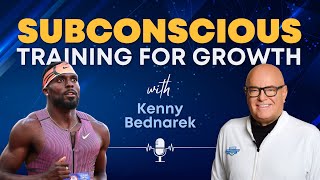
This is a podcast-style YouTube interview between Dr. Don Wood and sprinter Kenny Bednarek focused on Kenny's preparation for the World Championships and the Olympics. Kenny describes a heavy daily training routine (long sessions, often no days off), recent workouts (e.g., 250m and 150m repeats), and technical weaknesses—most notably his 100m block starts—while noting the 200m as his specialty. The conversation also covers his USA trials results (made finals in the 100m, placed fourth in the 200m), his Tokyo Olympic silver medal, relay handoff technique and hopes for relay gold, and ongoing mental-performance work with Dr. Don (TIP program) and Dr. Sorci to quiet subconscious hesitation from past injury.
Chapters
Because once I have full control, that will help me in the hundred. I mean, part of my reason why I'm struggling in the 100 is my reaction time as well, because I'm also thinking about too much writing the blocks and then the gun goes off and then I'm always flat person on the blocks. Yeah. And. But yeah, every time I'm matured, I'm always leading.
And that's, that's really the key, right, is to get in with the right people or the right coaches.
That's. It's very important. If you don't have the right people, if you don't have the right, you know, just the right staff, if your mic's not right, all, all those little things are important because I already know, like, we talked before. Like I got hurt in 2019. Like we were talking before. And subconsciously when I pulled my hamstring, like, that's, that's stuck in my head. It's just weird. It's like glitch, like a. It's like in my head, like I'm going, I'm waiting, and I'm like, okay, I'm fine right here. Yep. But then I just need to get rid of that, you know, subconscious fume in my head and then I can just keep going and push it.
Welcome to another podcast of youf must be out of your mind. I'm your host, Don Wood, and I'm going to be taking you through and talking to you about the mind and how the mind works. As you know, we bring on special guests to sort of share their experiences and what they are doing with our program, but as well as what they're doing in their lives and careers. I have a special guest I know you're going to love to talk to. This guy. This is amazing. An incredible athlete. He's a silver medalist for the 200 meter for the US track and field team. He's got all kinds of stuff going on this summer. We're going to share what he's doing and share a little bit about him going through our TIP program and how that can help him coming up into the World Championships. So I'd like to welcome Kenny Benarek.
Hey, Don, how are you doing?
Very good. How are you?
I'm good. You know, just working every day and trying to get ready for World Championships this summer.
You are doing a lot of training, right?
Yes, every day from 9 to 1231. It kind of varies. Depends on what the coach wants. But yeah, it's very, very tough training every single day. So far, we have no days off? Yes, Sunday and Saturday. You know, we're still training those days. I just got lucky this past week just to have a day off on Saturday. But yeah, every single day we're grinding it out and, you know, this heat is not making it any easier. For sure.
So Kenny came in here today after working out. So what happened today? What was going on for today?
I just had. I would say it would have been easier if it wasn't so hot, but I had 250 meters to run, also with a 150 and then 250 meters starts. Just working on my form and technique and going all out, max velocity with my body. And it was a tough day. I didn't go as fast as we usually do, but I think today was more of a volume work for lactic acid in the body. So I had a good day though.
So your specialty really is a 200 meter, right?
Yes, the 200, but the 100 I'm dabbling in because I'm good at it, but I can also get better. I need to work on my block starts. Those have been kind of holding me back a little bit in 100, but in the two. Yeah, that's my specialty.
Yeah. So you just finished the trials, right, for the team.
Wow. World Championship trials. So USA champs for us. I was like last week. And yeah, I went in for the 100 meters and the 2, and I ended up getting 8th or 9th in the 100. Wasn't my best performance, but considering what happened early in the year, I was, you know, happy to have that make it to the finals and run the998 at the end. But the 200 meters, I did pretty well in there. I got fourth. Still kind of the same thing. That is not my best performance. But like I said, just from what happened to the beginning of the year till now, the progression wise has been good and I came out healthy and I made the team excellent.
Well, that was why we met. Right. So the idea was, is you go to see Dr. Sorci, who works with you physically.
Make sure to keep my body right. Chiropractic, very good at what he does. Yeah.
And so we're good friends. We know Dr. Sorci. So he contacted me and said, you know, get together with Kenny. I think it could really be a benefit to him. So we're now starting to work together.
And yeah, I'm loving it so far.
Are you?
Yep. Yeah, it's making me think about a lot of the things that I've been thinking about subconsciously in the past. And I think it's going to be very beneficial for me from now into worlds and, you know, so far in daily life.
Yeah. Because it works on all of that. So it's a performance, as everybody knows, if they listen to the podcast. The idea is the name of the podcast. You must be out of your mind. Right? So your mind has been working a certain way for a long time. We basically want to reset and update the way the mind works. And so what we were doing with. With Kenny was taking him through the entire program. The world championships are coming up in another couple weeks or so.
Almost three weeks and a half. Yeah, it's coming up quick. Yeah.
So the idea is we're going to check back in and hopefully we have a couple gold medals or something.
Yeah, that's the plan. Hopefully I get to be on the relay, and if we do everything right with handoffs, we should get a gold medal, easy. But that's been our biggest problem with the handoffs, as you already know. But for the two. Yeah, you know, I'm gonna go for that gold medal. I was close last year for the Olympics, so I think this year I'm gonna get it. Yeah.
So in the Olympics in Tokyo, you won the silver.
Yes. Right.
Which is amazing.
Yeah, it was a pretty cool experience. First time being in Tokyo, didn't really know what to expect. And, you know, we had Covid going on. So one thing about traveling right now is that, you know, the restrictions everywhere. So it was cool to be out there. Very exciting moment. One thing I was down about is I didn't really get to actually go inside the city and actually experience, you know, the different culture. But I know I get time to actually do that, you know, next time I get over there. But, yeah.
Being in the village, you know, prepping just for the big race, going through the rounds, it was a crazy experience.
Awesome. Now, you mentioned something about a handoff. So people who don't understand what you mean by handoff in the relay, Right. So you've got four men, right, running. So tell us what happens in a handoff.
So you got four men, you know, four by 100 meters. Each person runs 100 meters from, you know, the 400 meter to the lat to the finish line, and you got the baton, and you got to make sure to get through the exchange zone and hand it off to the guy with a nice clean handoff. All of that is crucial. Doesn't really matter how fast of a person you got in the race, because if you end up missing the handoffs you can take seconds off. So all that is very crucial. So we got to make sure to have a training camp just so we have all those working well and you got to have chemistry with all the, all the other athletes. And you know, if you don't have chemistry and all that, then nothing's going to, you know, happen.
So. So from what I understand happens is as you're running towards your teammate, that they have to start accelerating as you're handing it off, right?
Yes. It depends. Yeah, you got to figure out when you need to take off because, you know, not everybody is, you know, the exact same speed. So when they hit a certain mark, that's what, your cue to go. But then you have to make sure that you get the batons within the exchange zone. So it's. I forgot there's like a triangle right in the beginning that you pass and then there's another one which is the end of the exchange zone. You got to make sure to time everything correctly and, you know, smoothly and then you hand off the stick and then you keep going and goes to the next person. Right.
So a dropped baton is a lost race, right?
Yeah, drop baton is a lost race. You're done. You can't really do it. You can, you can pick it up by at the end, you know, the time you go and pick it up, you gotta, you know, re accelerate and you're already done. There's no catching everybody that's already at max velocity.
Exactly. Yeah.
So.
So there's four people in the race. When you run in a relay, where are you typically running in that? What leg are you running?
For me, I used to be last going into high school and college. But now that I'm on the pro level, I haven't really been able to run with these guys because there's a lot of politics going on. When you get up to this level, every athlete is fast and all the coaches want to make sure to get their athletes in. So, you know, a bunch of politics. But for me, I think the best spot would be first or third. Just because when I run my 200 meters, my turn is one of the best in the world right now. I don't know why, like the 100 meter start is different for me. Like I struggle with my start there. But once we are on the turn for the 200, you know, I just some, everything just clicks for some reason and I just run the heck out of that turn and you know, I'm always leading the race most of the time. So for me it would be first or third, because I think that would be the best spot for me to, you know, do what I'm good at. And, you know. You know, it's. I don't know, like, best. Best position to help the team.
Yeah. Yeah. Because when I watch some of your races, that's what I saw is on that turn, you look like you had another gear.
Yeah, it's. I don't know. It's. I think it's all a whole mental thing, too, and that's another reason why I'm working with you. So I make sure that I have full control of everything I do, because once I have full control, that will help me in the 100. Part of my reason why I'm struggling in 100 is my reaction time as well, because I'm also thinking about too much riding the blocks, and then the gun goes off, and then I'm always the last person on the blocks. Y. And. But, yeah, every time I'm in the turret, I'm always leading, so.
So perfect. So that's. That's our goal.
Yeah.
Yeah. I mean, I didn't run at your kind of level, but in high school, I. I was a white for a white guy. For a white guy, I was pretty. I was a 10, 400 meter in high school, which is okay. And four.
That's. That's pretty good.
In high school.
That'S pretty good. Five times.
Oh, yeah.
But. So my. My actual best was I jumped out of the blocks. I was really good out of the blocks. I didn't have to kick at the end, so I sort of had to hold on.
That's something that's common for a lot of shorter sprinters, because for me, since I'm so tall, it's harder for me to get a certain angle that smaller athletes have to be explosive out of the blocks.
Yeah.
I mean, like Usain Bolt, I want to say he had the best start in the world, but he just had a good enough start where he's with everybody, and that's all he needed. And that's the thing that I need to work on. If I can just get out with him, then the rest I could do. It'd be easy part, but right now, the hard part is just the beginning. So a lot of short sprinters have it easy just because their body's already so low to the ground. And once they get out of the box, the angles that they have is. It's a lot more beneficial for them than me because it's hard for me to get those same angles with the longer legs. I got.
Yeah, that makes sense. Yeah, it was sort of the same way in hockey because I had that sort of lower center of gravity. I could pick that speed up really quickly. Yeah, and that was really hard, especially for the bigger guys. If all of a sudden I just put on a burst. Yeah, they couldn't turn fast enough.
Yeah, exactly. And that's. That's one thing I feel like a lot of shorter sprinters have a struggle with maintaining it. Like, right. They can get out as fast as they can lead the race, but a lot of them have trouble with maintaining. So if they can maintain it, then, you know, they consistently run those fast times also every single time they step on the track. And, you know, speaking of, like, smaller people, you know, they all got advantages. You know, we all got advantages for being small or big, you know, football players, you know, when you have to have that leverage to pick up the linemen or whatever. You know, it was for me, when I was playing football and I had to play outside linebacker for a special to play. It was just hard because, like, I would always have somebody that was smaller than me, and then, like, he would pick me up. But then I can't really do anything because I can't. I can't, you know, get underneath him and pick him up from his, you know, pads and up. So, you know, everybody has their, you know, leverage being smaller, big. It just depends, you know, everybody can work on all that, but it's just hard. So, like, for me, blocks right now, it's just the one thing that I need to get down, because like I said before, once I get that down, then the rest of the race is going to be easy for me.
And I think that the key to that is keeping your mind quiet.
Yes, exactly. Because right now it's just. I little think a little bit too much. I get in my own head. Yep.
And that's going to interfere with you be able to really.
Get out of the blocks quick because your mind is using energy.
Exactly right.
And that's the energy you need for that explosiveness coming out.
Like my coach says, less is more. So.
Yeah, it's funny in hockey, too, when you're talking about lifting up. Right. The best fighters in hockey were the smaller guys because we could punch up.
And you could actually do a lot more damage punching up than you can. The bigger guys punching down didn't have the same leverage.
I've never actually watched hockey, but what is the whole thing with them getting in fights? I was at a. What's the rule with that?
It's it's really interesting because it's always been in hockey. They've never taken it out of hockey. But I think it's actually sounds crazy, but it's actually a good release because it allows sort of that frustration to get out. If somebody sort of got to that point where you don't want people using sticks because they're carrying weapons. Right.
Yeah.
And so it was considered cheap if you used a stick to sort of get at somebody. But if, you know, frustration levels built, they would just duke it out, go sit in the penalty box for five minutes.
That's crazy.
Yeah, but it's all, it's always been a part of hockey and no matter what, they've never taken it out. And interesting. And it provides some excitement in the game. People. People love it.
Yeah, that's. That's what's very interesting.
Yeah. And they don't do it in football because I think we've got, I think they got so many pads on it.
There's so many pads. I mean, once you, once you see somebody, you know, hitting somebody, then they're, they're off the field and they're suspended a couple games. Yeah. So that's, that's pretty interesting. I actually, I, I saw it, you know, I see it all the time, but I never actually understood it. So that's why, you know, you got.
To go to a hockey game and watch it.
Yeah, I got at least watch one. Yeah, I have, I've been to football, I haven't been to hockey, I've been to one basketball. And I feel like I need to watch baseball to appreciate that a little bit more. But, you know, it'll happen one day. Yep, cool. Blood flowing, all that stuff. So we did that and it was pretty interesting. But like, my respect for boxing went way up after I did that because I didn't realize how hard it was until I actually did it.
Right.
And this is crazy. Like every sport you know is, is hard in its own way.
Well, when I, when I was in school too, I mean, when you. I'm sure you had the same thing. When you're in school, they want you on every team.
Right.
Because if you're good athletes, you're trying to put you on every team.
They try to get me to one coach tried to get me to do wrestling. I couldn't do it.
Oh, I did wrestling. You think boxing stuff. I know six minute round in wrestling is the most exhausted I've ever been in my life.
I know the training is, is crazy. Crazy. I remember when I would go before I leave the gym, I would like, see the room where they're. They're cranking up the heat. Yeah. And then, you know, doing whatever they're doing, I would open them.
And then, like I said, the guy tried to get me. And. And the main reason I said no is because right after wrestling was track season, you got to cut down weight or gain weight. And I was like, I can't tamper with my body like that. Because I already knew track and field was going to be the thing that was going to be my main focus. It was either track or football, and I had.
More from Dr.





When you’re in the middle of a panic attack and someone tells you to “just breathe”.

Once a panic attack starts, you can’t stop it. Here’s why and what you can do about it. #panic


The first sign of healing wasn’t what happened. #anxiety #emotionalpain #fightorflight

The threat ended. The situation changed. Your life moved forward. #weneedtotalk #anxiety

