Transforming STRESSFUL Life Events into MOTIVATION | Jim Kwik & Dr. Don Wood
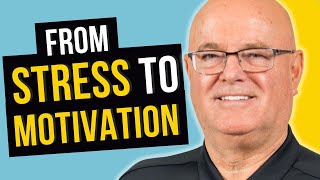
Live Quick Brain podcast episode where Jim Kwik interviews Dr. Don Wood about transforming stress into motivation by identifying when present stress is magnified by unresolved past events ("emotional concussions"). Dr. Wood explains that many stress reactions come from looping explicit memories that call for action, offers simple in-the-moment checks and a grounding "indifference" phrasing technique, and describes his 4-hour TIP program (Inspired Performance Institute) for updating traumatic memory responses. Resources mentioned include Dr. Wood's books, the TIP program website (gettiptipp.com), and options for online/Zoom or in-person sessions.
Questions this video answers
April 11, 2022
gettiptipp.com
310-299-9362
TIP (Inspired Performance Program), also referred to as TIPP
Orlando
Chapters
How do you go from stressed to motivated? That is the topic of today's Quick Brain podcast. The show for busy people want to learn faster, achieve more, and really live their limitless life. Now we are recording this live at an event that myself and my guest are attending and speaking at. We're excited to have this conversation with Dr. Don Wood. He has written two books on this subject. He knows so much about the power of the human mind and overcoming trauma for taking action and getting closer to our purpose. He is the founder of the Inspired Performance Institute also as well. Welcome to the show.
Thanks, Jim. I'm glad we finally got a chance to do this. We had to fly all the way up to Phoenix to do it. But this is great. I appreciate it.
This is wonderful because we had met in an event that we were both speaking at. It was a high performance event and we were geeking out about the power of the human mind. And I got to spend some time with you in your office and go through your process and we're at an event here and so there's a little bit of background noise. But you bear with me. If you're watching this on YouTube, you see us on video here at this event. But I wanted to capture this amazing mind while we're in the same city together to be able to share with you some ideas and insights and actionable things that you could do to take the existing stress in your life and transform that into motivation. Dr. Don, you go by many different names. Let's talk about the work you do with stress and trauma. What is your viewpoint on it? And I'm sure people who are listening and the past couple years has been pretty stressful and traumatic, but how is it that you take this work and share with the world?
Well, thanks. One of the things that I always talk about is that when we have events and experiences earlier in our life, they continue to affect the way our minds are working in the present. And if you read all the self help books, they'll all tell you to be present, be in the moment. The issue we have with that is if there's events that you've had earlier, they continue to loop and which is then going to take the mind out of being present. So if you're dealing with stress, there's a reason why your mind is stressing. So anytime you have an emotion, a feeling, a sensation or a thought, your mind is calling for an action. So the idea is to identify what is your mind calling you to do. Now, if you had some traumatic events, disturbing events, sometimes I Call them emotional concussions. They may not be big T trauma, but they're bumps that you had along the way. If those continue to interfere, they're going to increase your stress level in a current situation. So the current situation may create stress, which makes sense. But if you've got a lot of other data coming in that is old stuff, it's going to magnify it. So the key is to get to the root of the problem because we're all going to deal with stress on a day to day basis. How well do you deal with it? Depends on how you can clear old stresses.
So people are. When people feel stressed, sometimes they're responding to what's going in their current environment or current situation and other times it's being stacked with their personal history and with unresolved issues. And so what's the first step that you recommend? I love what you talk about in terms of fear and stress is there are signals, there are signposts, emotions are signposts that you need to take some kind of action. Action. So for those who are listening and they are experiencing some stress or anxiety, now I know you have a full process for this and people could. We'll link to your books and I love that term, emotional concussions will link to your books and also to your website because you do sessions like I went through in your office. What do you recommend people do starting from right now, listening to it.
A really easy way to determine is if you have old data that continues to loop that's affecting your stress levels today. Like I said, we're going to have some stress. If you're running a business, raising a family, whatever it is, that will create some current stress. But here's a great way to check to see whether old stuff is. So take a thought and think about an event that happened to you earlier in your life that you would maybe call disturbing or traumatic. If you think about something that happened five years ago and your heart starts to pound or you get angry, it's looping, which is going to magnify the current stress level that you're under. So then it's very difficult to deal with. So if you have an emotion of fear, the purpose of fear is to run. So if you think about something that happened five years ago and you're feeling fear, I call that it's a glitch, it's an error message, there's no action required. And so if your mind though continues to loop through that, it's going to aggravate the mind constantly and keep it in A constant state of fight or flight. And we're not supposed to do that. The fight or flight response is an emergency management system. It's not meant to be on all the time. So in the animal world, it works perfectly. Animals are fully present all the time.
They're not thinking about what happened to them a couple years ago.
No, they don't store any of that memory. They're only responding to what's happening. Now, their memory system is associative repetitive memory. So they learn through association and repetition and they build a code. They're operating all off of codes and they've built into their DNA A. I always say a zebra can't feel fear of a lion unless a lion's present. Zebras aren't sitting around thinking about lions. They don't remember the lion from yesterday. But if a lion shows up, the zebra's autonomic nervous system will engage to protect the zebra and it'll go into a state of fight or flight. We have that exact same system. It's how we learn how to play golf, play a guitar. But we have a glitch that happens because we store explicit memory details and events about experiences. So because 95% of your mind is working just like the animal mind, fully present, but you've stored a whole bunch of explicit detail about an event from five years ago and your mind recalls it. So say you're in a current stressful situation. Your mind then also looks at, how did we handle this before? And then pulls in a whole bunch of data from five years ago or 10 years ago, which magnifies it because it's looking at all that data also calling for a response.
So let's say people, when they're stressed, they take a breath and they acknowledge and they have awareness that this isn't happening right now in the moment that they are like, water responds. Like if you throw a pebble into water responds exactly how it's supposed to respond. It doesn't under respond. It doesn't overreact. It just. It's proportional to what's going on, you know, in the environment. So once people have the awareness, what's. What's the next step then?
Well, two things. One, try to find out if there's an old event that is actually doing that magnification that I'm talking about. So check in. Think about when you were a child, you know, and your parents said that, or you had a real traumatic event. If you feel that emotion right then it means it's active and it's going to cause More responses on future events. So. So you want to get that cleared up. And that's the program that we do. But here's another good way, just sort of a simple little hack, right, to try to stay present is if you notice that. So say you get the sensation in your chest, you're starting to feel tightness, you want to then get the subconscious mind, which is survival based, back into the present. So you can do something like this. You can say right now, I am aware of the sensation in my chest right now. So what. And what you're doing is almost like talking to a child. You have to be very firm. You want to really, really stress the. Right now I. And my. Because what that does is it shows indifference. I don't care, right? You're trying to get me into an action, but I don't need to take an action. So what? Knock it off. You can use whatever you want to use. Knock it off. Stop it, right? So what? But the key is, think about if you take a child to the mall, right? And the child says, I want to get ice cream. And you say, no, we got to go home for dinner. So they fall down on the ground and they cry and scream and kick. Well, if you engage with them, they're going to continue until they get their ice cream. Your mind's going to continue to try to call you into an action. But if you take the attitude, well, I'll sit down here and when you're finished screaming and crying, we're going home to have dinner, you just show indifference. I don't care, right? Then your mind gets a message, is not going to get the action and that'll provide that quick temporary relief.
Now it's interesting because probably there's a good amount of that trauma or those high linked stressed memories from childhood. So we actually might be even talking to the younger version of ourself. Now, do you provide a name for that? So is there like a label so people could separate or you know, a name for that voice or that person or that part of you people are. You feel like people are segmented in a way?
Well, what I believe is actually happening is we've stored memory, right? It's all coming from memory. So if you don't get that memory updated, right, What I say is we're going to update, reboot, refresh and adjust it. It's a computer, it's built a whole bunch of data that it keeps looking at in real time and responding to it as if something's happening, but there's nothing happening. So Then you're in a current situation that's also getting your attention, and it's looking at the old data. So one of the ways I always explain this, because my wife had a very traumatic childhood, and this is a great way to explain it. Before I understood what was going on, if I said to her, no, I don't like that, she could start to tear up and cry. And I'd go, what's wrong? And she'd go, why are you getting upset with me? And I said, I'm not getting upset with you. She'd go, yes, you are. The way you said that sounded like you're getting upset with me. And I was like, I didn't say it like that, but she heard it like that. People who have been traumatized, particularly as children, are highly sensitive to sound, so they hear it differently. She wasn't wrong, and I wasn't wrong. I didn't say it like that. But if I had a little tiny tension in my voice that I didn't even recognize, she could hear that like I was yelling. And so what would happen was, at first I thought it was what I said. So I tried to change the way I said it. I tried to choose my words better, and I could still activate her. What I now understood, what it was, is that when I would say, no, I don't like that, and she heard that little bit of tension, her mind would do a Google search about, what do we know about men who start to get angry? And a flood of data about her father would come in. There's where the tears were coming from. She was not unsafe with me. But her mind didn't feel safe because it looked at the old data.
So is it not what you said, but more how you said it?
Yeah, sort of how I said it. I wouldn't have recognized it if you had recorded me both ways. Without that tension, and with that tension, I couldn't hear it. Yet she could hear it because she was so sensitive to it. And you look at couples or parents teaching their children how easily they can activate their nervous system and go, but I didn't say anything. I mean, have you ever met somebody and you go, what do they get so upset about? Right. It's because they're dealing with a whole bunch of their own personal, what I call atmospheric conditions that they're floating through. And so then their mind goes to that old data and is responding. And you didn't say anything differently than you would have said to somebody else, but they heard it differently.
I think many of our viewers here and listeners could identify with this kind of, kind of communication and where certain things happen, these little bumps in the road that we don't, can't explain logically, but you're bringing awareness to it. Well, what's, what's the next step after. I'm out of curiosity, how did that resolve itself?
Well, eventually what we had. So it didn't matter what I did. I couldn't fix it. And I kept trying to fix it. I kept trying to be more patient, choose my words better, and didn't work. It wasn't until we got to the trauma and resolved the trauma. Because as a child, she had a lot of danger with her father. Her father was a very violent man, very angry man. So she was constantly looking for the danger everywhere. So all of that data. So you think about when we're in a traumatic situation, all our senses are heightened. Sight, smell, hearing, wanted to be safe. So she's recording as a child that data in high definition. She's in a very high beta brainwave state recording that information. She would instantly go into beta when she started to hear something that her mind perceived as a threat. And then she would go into an activation state even though she wasn't unsafe because her mind was trying to protect her about stuff that's not happening. What can you do about it? Nothing. So that constant activation of your system, she burnt out her thyroid. She had a cortisol issue because she was constantly producing cortisol even though she didn't know it. So she has Hashimoto's. And so a lot of people are dealing with those kinds of things, don't even know it. You know, they can be high performing. My wife was a high performer. I mean, if you had met her, you know, she was a great wife, a great mom, or, you know, nobody knew it. And she hid it very, very well. But she couldn't hide it from me because I lived with it every day and I could see where the dysfunction was coming for her. And yet by every stretch of the imagination, people would never have known it.
So, Dr. Dahn, you have authored a number of books on this subject. Where can people find out more? If our listeners and our viewers right now want to find out more and go deeper with you, what's the best way for them to do it? What are some of the options?
The best way is we have a Get Tip. TIPP is the name of our program, the Inspire Performance Program. You can go to gettiptipp.com and, and a lot of the information is there. So they can either do our online version of our four hour program. They could do a zoom session or they can fly to Orlando like you did and meet with me one on one. We take them through the whole four hours. And I believe the four hours are critical because it takes about two hours for the mind to get into a restorative mindset and then it's open to making changes. But if you go into traditional therapy, and I'm not critical of traditional therapy, it's very good for current stress. But when you go in for trauma, when you sit down with your therapist and you start talking about the trauma, you're going to be in a very activated beta brainwave state. Talking about a beta brainwave memory, how do you fix it in the same state you experienced it. But by the time as you remember going through the program, we never even talked about trauma for two hours. It was all about science, research, how the mind works. By the time we get there, then we start talking about one, two or three events. The mind will update them really quickly.
It's amazing how resilient the human mind is for our ability to be able to bounce back. Not only bounce back, but also to be able to bounce forward. So, Dr. Don, I want to thank you for joining me and taking some time out at this busy conference talking about performance. I encourage everybody to visit, be able to go to his facility in Orlando. If not, he made it very convenient where people could join online also as well. We'll put links to that and everything, including his books@jimquik.com notes as we always do, make sure you subscribe to us on YouTube where we put the full extended version of this show and leave your reviews on itunes and Spotify. Dr. Dunn, final words to our audience.
Yeah, I always start every session out with these words. There's nothing wrong with you and there's nothing wrong with your mind. The reason you're experiencing what you're experiencing is your mind is trying to protect you. I don't believe the mind ever sabotages itself. It's always based on survival. And so every time you have one of those reasons why your mind's calling into an action, just need to know what the action is so you can decide whether it's something you can do or you don't need to do.
Amazing. Dr. Dunn, thank you again for being on our show. Thank you for the work you're doing with me and so many others. Thank you everyone for always listening. Please share this episode. We got value out of it. While talk to you very soon be limitless. Hi Quick brain. It's your brain coach. I want to thank you so much for watching this video. Three things to do. Number one, make sure you share this because when you teach something you get to learn it twice. Update your learning so you can update other people's learning as well. Number two, make sure you subscribe to this channel so you don't miss a thing because if you miss a video, you miss a lot. And finally make sure you hit that bell so you're notified and you find out we put out the latest and the greatest. One extra thing. If you want really close attention then text me. Here is my phone number 310-299-9362. Did you remember that number? 310-299-9362. Shoot me a text and well stay in touch. Ask me your burning question and I wish your days before Lots of life, lots of love, lots of laughter and always lots of learning. I'll see you in our next video.
More from Dr.





When you’re in the middle of a panic attack and someone tells you to “just breathe”.

Once a panic attack starts, you can’t stop it. Here’s why and what you can do about it. #panic


The first sign of healing wasn’t what happened. #anxiety #emotionalpain #fightorflight

The threat ended. The situation changed. Your life moved forward. #weneedtotalk #anxiety

