Unlock TRAUMA to CURE ANXIETY with Dr Don Wood
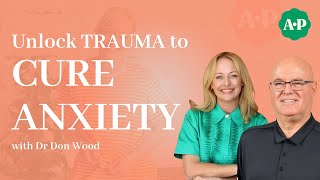
A recorded interview (Shelley Craft with Dr. Don Wood) about trauma as a root cause of anxiety, depression and many autoimmune/health conditions, and an intervention offered by the Inspired Performance Institute. Key claims: trauma causes chronic nervous-system activation → sustained inflammation and altered gene expression; clearing trauma can restore immune function and reduce inflammation. Dr. Wood frames depression/anxiety as functional responses (depression = shutdown; anxiety = an activation signal) and describes a four-hour program (also an online option) that reprocesses traumatic memories into non-activating memories. Personal evidence: his daughter’s Crohn’s and lung disorder resolved after trauma work; testimonials include rapid resolution of PTSD and panic attacks. He reports study outcomes (in his study: inflammation down ~50%, immune markers up ~100%), estimates ~80% of related conditions have psychological/trauma roots, and notes youngest participant age of 8. The interview also discusses genetics vs nurture, intergenerational trauma, and ongoing tools (breathing/meditation, 30 days of audios) for regulation.
Questions this video answers
45.6 million
Approximately 80% (Dr. Don Wood's estimate)
Four hours
Age 8
Inflammation down ~50%; immune system markers up ~100%
Chapters
45.6 million mental health related medications were dispensed in Australia in 2023. That is a staggering number. It is seriously scary and it makes you stop and wonder what the hell is really going on. For most, medication is the only answer. It's the only solution offered in our 15 minute appointments with our GPS where these medications are typically dispensed. For many it may help, but for most, the real goal is to live a life free from these conditions. The question today is, is that even possible? I'm joined by the fabulous Dr. Don Wood, all the way from the US to share his story with us. Dr. Don, it is fabulous to have you here in Australia with us today.
I am so happy to be here. I love this concept of the project that you're working on and what you're doing. I think it's amazing. So I can't wait to contribute.
Well, let's go for it. Stick around everyone for today's conversation. For those listening, Dr. Donwood, how would you I guess wrap up what we're going to talk about today and the fact that we might be able to change some lives by the end of today's conversation?
Absolutely. Well, one of the things I want to talk about is you're right in terms of the medications. Right. The solution has been medication in almost every case. But that's really because of the training that they're given. The pharmaceutical industry basically took over the medical business and so their solution is what's the saying is if you're a hammer, everything's a nail. So they continually just use the product that they have become accustomed to. And the problem is, and I think what you said was perfect, Jolie, was that you said in the 15 minutes you have with them in 15 minutes is very difficult for them to really do a good assessment. So they're relying on what you say and, and what you describe but most people don't know how to describe. So if they come in and they say I have anxiety, so they treat the anxiety and what I talk about is anxiety is the symptom, it's not the problem. So. But if they focus on the anxiety, they'll put you on anxiety medication. Does that make sense?
It does. And look, we're quite tough on our GPS here in Australia because we do only have that 15 minutes and it's not their fault at all. You know, they are doing their absolute. What we try to do here at the ageing project is I guess, help people take charge of their own health and deep dive a little bit more into perhaps other modalities that could help them with their issues, whether that be menopause or anxiety. Today we're talking quite heavily about trauma. Can you share with us your story and how this became such a personal journey for you?
Yeah. The genesis of the whole program for the Inspired Performance Institute is trauma. My daughter was diagnosed with Crohn's at 13, an autoimmune disorder. And they said, there's no cure for Crohn's. We don't know what causes Crohn's. And so she has to live and manage this for the rest of her life. So she ended up having 24 inches of her intestines removed because the cells were just dying. So four different operations. They had her on steroids, they had her on antianxiety, antidepressants and pain medication for all of that, and nothing was working. She kept getting sick, and then she ended up with a second autoimmune disorder called idiopathic pulmonary hemosiderosis, which is autoimmune. And they said, there's no cure for that, and we don't know what causes it. She's just going to have to manage that for the rest of her life. So that's when my wife said to me, she goes, I was adopted, so we didn't know my genetic history. That's why I love you talking about genetics. So she says, this must be your fault. This must be coming from your side of the family, which we didn't know any about our health. She says, you need to figure this out or we're going to lose our daughter, because that was a potential death sentence. So I went back to school, got my PhD and got my doctorate and studied. Why is this happening? And I kept meeting all these different people who were having similar autoimmune issues, and there was a direct connection to trauma. So my daughter, we didn't know that she had trauma. So when I started talking to her, I said, is there something we don't know? And she disclosed to us between six and eight, she dealt with sexual abuse and she never shared it. So now this is starting to make sense. I'm connecting the dots. And so what I've discovered. So I started going back and doing all the research. And this is where, like I said, the doctors out there, you're right, we blame them, but they're not given the tools. So her problem was really dealing with her. The gastro people, right, who are going to deal with her Crohn's, they're never given psychological training. Her problem wasn't Crohn's. That was a symptom. So what I discovered in my research is that when we have unresolved trauma, that creates inflammation. Inflammation is the response to trauma. So when we have. So the genes that regulate inflammation upregulate, the genes that regulate the immune system down regulate. It's an allocation of resources. We need more power for survival than we do for maintenance. And it's supposed to be a temporary response to an event. The problem is trauma keeps running, and it is running in the background that keeps. And I never use the word trigger. I never liked the word trigger. I said it sounds negative and violent. I don't believe our minds are negative and violent. I say it activates your nervous system. It's a glitch. So it keeps glitching, turning on the nervous system to get you into a response. But there's no response possible because it's seeing the traumatic event in real time. So it believes something's still happening and is trying to get you to do something about it, but there's nothing you can do. You can't stop the event from happening. My daughter is not six anymore, right? But her mind doesn't know that she's not 6. So it keeps turning on her nervous system, which keeps the inflammation high, keeps the immune system low. Perfect recipe for disease. And also neurotransmitters, neuroplasticity, all down regulate.
It makes so much sense when you spell it out so clearly like that. And I'm sure there's light bulbs going off all around the world with the work that you're doing. I've heard you say that depression, anxiety is a function, not a dysfunction. And when you explain it the way you have, it really is our bodies trying to protect ourselves. But it has an adverse effect.
Yes. So they treat that symptom. So when I talk about depression is anger. And so when somebody comes in, they say, I have depression. I say, tell me what you're angry about. What has happened? And they said, well, I'm not angry. I'm depressed. So here's the way, and this is the best way to explain it. Anytime you have an emotion, a feeling, or a sensation, your mind is calling for an action. The purpose of fear is to escape a threat. The purpose of anger is to attack a threat. So if you think about something that happened to you 10 years ago and you feel angry or you feel scared, it's a glitch. Your mind is looking at old data in real time. So it turns on the nervous system to get you into an action, but there's no action possible because it doesn't exist. But your mind's looking at the traumatic memory in real time. So if your mind, so say, for example, you're angry that somebody hurt you or did something to you, and for years your mind keeps trying to get you angry to fix it. Well, you can't fix it. So how does your mind protect you? It stops calling for the action by stopping the emotions. Depression is the absence of emotions. So that's how your mind was trying to protect you from the pain of the trauma. It shuts down when you resolve what the mind's been calling for. This action call the depression lifts. Doesn't that make perfect sense?
So simple, Dr. Don. But when you obviously take those medications, they're, I guess numbing those sensations so that you can forget. Yeah, I guess deep down forget what was really happening.
They're numbing the ability to access memory. So then you're just sort of flat, but you're not participating in life, you're not enjoying life because now you're flat. So the idea is, and the same thing, this is what I talked about at the event in Phoenix, is they asked me to talk about anxiety. What is anxiety? I says, think of anxiety as an email. So this email keeps coming into your inbox and you keep deleting it. And so it comes in again and comes in again. So you're dealing with these constant emails, which are messages coming in. So the message that's coming in is your bank is telling you that there may be suspicious activity on your account and you need to check your account to see if everything is okay. But if you keep ignoring the message, the message keeps coming. And so what you're doing by taking a medication is blocking the inbox.
But all you really need to do is find out what is your mind anxious about and resolve it. And chances are it's coming from a traumatic event that your mind keeps thinking you need to be alerted to to protect you. So answer the message and find out that there's no action required. And the emails stop. So if you report back to your bank, I've looked at my account, everything looks fine. They stop sending you the emails.
Imagine this, unlocking your genetic blueprint with insights from over 200 healthy aging genes, pinpointing your unique SNPs and potential red flags, understanding what your body needs to thrive and. And where it may need some extra support. No more guesswork, no more random supplements, one off blood tests, or one size fits all advice for the first time in History. We have access to the power of genetic testing, something no generation before us has had. This information could change everything. Join our free DNA webinar and you'll get our stay well scorecard jam packed with the markers that we want you to track every year, starting now. Friends, know your genes own your health. Let's learn to thrive together. Visit theagingproject.com to register and I'll see you there. There's obviously so many different levels that go with that. And obviously some traumas would be extraordinarily obvious once they're unfolding or uncovered. It's not like a broken arm where you say, okay, well you have two broken bones here and this is how we're going to fix it. And it's very ob.
What the solution is to that. Is there different levels? Obviously people are going to feel trauma and anxiety differently. Your daughter's situation, obviously a horrendous experience that she lived through. That would be quite obvious once it's uncovered. Do some people find it much harder to deep dive and work it out? If it happened as a child, it might be something so small, but it's built up so much. Does it take a long time to get down to what the problem is?
A lot of cases it really doesn't. What's surprising is that once the reason I use a four hour program is I need to get the mind into optimal condition to start the healing process. So if you come in with a broken arm, right, and we immediately go up and we start, okay, give us the bone, you'll be so stressed out, right? So the idea is we got to calm you down because if we start trying to repair that arm when you're really stressed, it's going to be very difficult. So I'm doing the same kind of thing. So in the first two hours I just give you all the science and education and then the mind starts to feel so relaxed. Just what you said is this is making a lot of sense. And when I give you the education and the science behind it and I say we're going to fix it, right? Your mind goes, oh, well, that makes sense. I could see how that would work. And then we get into the third hours about the trauma and we'll work on three different events. But I don't even need you to tell me what the event is. I can get your mind to reset it even without you telling me one word. And so the mind's. And this is what I say to everybody when they come in. There's nothing wrong with you. And there's nothing wrong with your mind. Our minds and bodies are designed to heal. What's interfering with the healing is the stress that it's under. So it never gets into optimal condition to do its healing. So we want to create the optimal conditions to get the mind to heal. When the mind heals, it then starts to heal the body.
What an extraordinary life path you have been on, Dr. Don. I know this inspired performance institute wasn't your goal coming out of. As a teenager leaving high school, you lived a very different life before you dived into trauma and its impact on DNA and inflammation. The fact that your daughter's issues and problem have led you to this life, I mean, that's quite extraordinary, really. And the fact that you're now impacting so many lives.
Yeah, I would never have thought of this if it wasn't for my daughter. And trying to save her, that's what really led me down that road. So I learned so much from her. She's the hero in the story. And so she has no Crohn's, no lung disorder. They're both gone. We resolved the trauma, and so everybody is possible of healing. But think about it this way. This way. I sort of explain it. If you're being chased by a lion, your system is so focused on survival, it's not doing maintenance. It's not all of a sudden you had a sore knee before the lion started chasing you. You don't feel the pain of your knee when you're running because maintenance is not an important factor now. So you'll be able to run with no pain. As soon as you get away from the lion, then it'll start the repair process. And that's what I'm saying is happening in the genetics. So we're actually seeing a change in the gene expression based on trauma. Then that starts showing up in health conditions down the road. So exactly what you're talking about in the aging process, if your system has very little ability to do maintenance, it's going to start to break down. And so if you can repair what's causing that inflammation, which is trauma, And I believe 80% of the cases is trauma. And I just published a study, and I don't know if they sent it to you yet, but if not, I'll definitely get it to you. I just published a study showing that we can actually change it. So we're bringing inflammation down by 50%, immune system up by 100% just by clearing the trauma. It's a groundbreaking study.
It's extraordinary. It's extraordinary, and it's exciting, very exciting. When you first checked on your DNA, as you say, not knowing what your family history was, was there anything there that kind of led you to believe, oh, we are more susceptible in my family genetics. Was there anything that you sort of came across that went, this is why it has, I guess, manifested in the Crohn's?
It was really actually very interesting because I didn't start with the DNA side of it. I was really looking at the trauma side and how we're responding to trauma. So the DNA came along just from my research. I said this, like, how is it affecting the brain? How is it affecting the body? And so I started doing more and more research. And that's when I came up with the idea this is actually changing the way the DNA is being read and transcribed. So I wanted to see if we resolve the trauma, do we change the DNA? Not change the DNA, but change the gene expression? And that's what I'm proving. So the story is not just my daughter, because my daughter grew up in a very loving, nurturing home. And I talk about nurture is more important than nature. If the nurture is there, the nature doesn't activate, so the genetic expression will not change. That transgenerational trauma that passes from generation to generation doesn't get activated unless the nurture is interrupted. And then it starts to look for answers on how to deal with this trauma. And it'll deal with your own experiences, plus the transgenerational trauma, to figure out how to respond to it. So I could not have created this experiment if I wanted to. I told you I was adopted. And so when I was adopted, I never knew really anything about my genetic history. The only thing I knew was my mother told me that our family doctor was my grandfather. And so he came to my parents and had me adopted by them. Luckily, they did, but they were in their 40s. They thought they were really past adoptive age. But he convinced them, thank goodness. And I grew up in this idyllic childhood, and this is not an exaggeration. My parents never yelled, never argued, never fought, at least not in front of us, never hit us. So I had this very safe, nurturing environment. So my nervous system stayed regulated. I've been healthy my entire life. I never get sick. I never took the vaccine because I said, I've got a pretty good immune system. I've lived in Florida 30 years. I've never seen a doctor once. So I said, I'll take the chances on my immune system. And I believe because my nervous system was regulated without any trauma. I never had any trauma. My immune system was strong, so the genetics stayed strong, But I didn't know about my genetics. So after we had our first grandchild, I decided, this is well into my research already. I said, my daughter Ashley actually said, let's do the genetics so we can see your family history. I found out I have six siblings now. My family doctor I don't think was my grandfather. I think he was my father. But he convinced my parents to adopt me. So my mother had three children before I was born and three children after I was born. And so I was in the middle. Nobody ever knew I existed.
But my mother with the first three children was in a very violent domestic violence and addiction world. She just walked out and left. Those three kids, they never knew where she went. She just disappeared. And so then she got pregnant with me, and I think the doctor was my father, got my parents to adopt me, and then she had me adopted and then went on and got into another marriage similar to the first marriage, with a lot of violence and addiction. So here's what. Like I said, I couldn't have created this experiment. I've never had a drink in my life, never touched a drug ever once in my life. But I never had trauma. The three siblings born before me, two died of cancer. The third one has a heart condition. All three of them had addicted lives. They lived in addiction. The three that were born after me, two have died. And all three of them had addiction in their lives. And I've never touched it ever once in my life. And my brother and sister, who I grew up with, who are no genetic connection to me, have never been sick and have never got into it. Addiction. What was the difference? Nurture.
You yourself. Yes. Are a living proof of nature versus nurture.
Yep.
So do you think you can. And your course that you were speaking about earlier, your program, four hours with a patient. Can you tell us some of the stories or the case studies that you can share with us? Gut health is a topic that many of our guests, like Dr. Frank Lippman and Katherine Maslin have mentioned in the past, which is why we have a range of products we've researched over@umusttryit.com we encourage you to be proactive about your gut health and let us help you resolve any ongoing issues. You can also book a health coaching appointment over@youmusttryit.com. just go to health coaching to learn more.
Yeah, I mean, phenomenal. Obviously, my daughter is the big one. My daughter has no Crohn's no lung disorder anymore, but a lot of different people. And that's why I say I focus on performance. So people who've been dealing with, say, panic attacks. I had one gentleman, he's actually now our clinical director. When I first met him, he had 30 years of panic attacks. And he said, I had $100,000 worth of medical bills in the last 10 years because of his panic attacks. And I said, what you don't understand is a panic attack is a combination of psychological and physical, and it's a double loop. So it can start psychologically where you're uneasy and you don't know why. So your mind is in a very sort of sensitive state, but you're not consciously aware of it. So there's something that's sort of disturbing it. And it's looking, you know, for a lion, basically, but it can't find the lion because there is no lion. It's dealing with old trauma, but it's on a very low level. You don't know what's happening. So it physiologically starts to change the body getting prepared for fight or flight, but you're not aware of it yet. You don't feel it. And so I was. That's how I got. I got the patent on this. As I said, a panic attack is starting up to an hour before you're aware of it. So your mind is looking for the danger, can't find the danger, starts creating more physiological responses. Changes in oxygen, CO2, pH of the blood, all of those signals keep coming back to the brain that we're running low on oxygen. The PH has changed the brain and the mind that's looking for the lion can't find it and you're not even aware of it. Then it hits the panic button. And most people will tell you when they have a panic attack. It came on instantly, but it's been building for up to an hour. And so it can start as a psychological or it can start as a physical that pushes the psychological, then pushes the physical, and it starts pushing each other and it creates this double loop. So what we show them is we can shut it down so you never have to experience the panic attack. And so he's never had a panic attack since going through the program.
This is life changing for so many.
Yeah. So people will be dealing with anxiety their whole life. So one of the most dramatic, one lady, and she's. You see the testimonials on our site, she was at the Boston Marathon. I'm sure you've heard about the Boston Marathon bombing in the US in 2013. She was at the finish line as a spectator, and she was four feet behind the first bomb that went off. So she lost her left leg below the knee, and she was dealing for five and a half years with post traumatic stress and terror nightmares. So if you watch her testimonial, she talked about it. She says, I heard about what you did. And she said, I'd been suffering for five and a half years. She goes, it sounded too good to be true that you could clear post traumatic stress in four hours. She says, but I was desperate because every night I had a terror nightmare. She came in and did the program, and within four hours, gone, no more post traumatic stress. And she said, I didn't think that was possible. But you know what was really interesting, the thing that she said, which I thought was fascinating, she says, I thought I came in for the Boston Marathon bombing. She says, in actual fact, what you did for me, for my childhood trauma, was even more powerful. I didn't realize how much that was affecting me. I thought the big one was the Boston Marathon, but that was sort of the final big one. But her other stuff had been affecting her as well. So we've got so many examples of how people have been in traditional therapy for years. And what traditional therapy teaches you is to live, manage, and cope with that.
It.
What I'm saying is, let's eliminate it.
Doctor. At this time in our lives, women in perimenopause, menopause, we often experience anxiety, and we're realizing now this is just part of our hormonal journey as well. But there's probably some people there thinking, no, I've had this for longer than that. This is ongoing. But I can't pinpoint a moment. What about intergenerational or generational trauma? Or is there something that would. We can pick up on that? I go, oh, that might be what it is.
And that's what's interesting, is when they start to go through the program, people will come in and they'll say, well, I really haven't had any trauma that I can think of. But when I get the mind into that very relaxed, focused state, it's surprising. People will say, well, you know what? Like, I just thinking about this now, this happened to me. But I talk about not everything is big T trauma. So I use a term. I wrote my second book and I called them emotional concussions. So they're not that big T trauma that you would think of. It's something that happened to you. And I'll give you an example of A lady. And she said to me, I've never had any trauma. She was actually in a group. She came in, in a group. And I asked for a volunteer to come up and I demonstrate what I do. And so she came up and she goes, well, I really haven't had trauma. And I'm thinking to myself, why did you volunteer to come up then? But I said, okay. Well, I said, can you think of a time in your life and you think about it, you can feel an emotion now. And so she thought about it. She goes, oh, yeah, okay, I've got something. She says, when I was six, she says, I was in church with my family and I was talking to my siblings. And I can see her eyes starting to fill up as she's telling me the story. And she says, and my grandmother took out her hairbrush and hit me on the head and said, stop talking, you're in church. And then the waterworks came. It took her about 30 seconds to catch her breath. And when she caught her breath, she said, I lost my voice that day. I never stick up for myself. Everybody pushes me around. Now, was her grandmother trying to do that? No. So without intent, her grandma was just trying to tell her to stop talking. But a six year old doesn't have enough life experience to understand what she's hearing. So she heard, we don't want to hear from you. And then she just stopped talking. But it never connected the two. So those emotional concussions can show up in all kinds of different ways without people realizing it. And so, so many examples of people come in and tell me stories like that and never connected it up to the way they're behaving and responding now.
I guess that's what I was getting at with the broken arm. You know, what's gone wrong, you can fix that. But when you're just not feeling right, or you do have these waves of anxiety or these moments of depression that might not be clinical, they might not last for long periods of time, but this program would still be amazing, I think, for everyone, just to clear the crap, really. I mean, can everybody go through this program just to get back to an even playing field and not pass anything on to our children and our children's children?
And that's what I talk about. I give you tools to actually learn how. At the same time we clear trauma, we also then teach you how to control your nervous system and to bring it back into regulation if even something's happening currently. So it's a combination of clearing trauma but also giving you tools to train Your brain to stay regulated. And that's really a key. So you'll see yourself feeling different, experiencing life different. And now you have tools as well to use. And then we have 30 days of audios that are also retraining the brain on how to do that naturally. And then it changes your life, because then this is the best way to. People will say, well, how do I know if I still have trauma? I say, think about an event at any event in your life, that if you can think about that event and you feel an emotion, then it's active. Because there's no purpose to an emotion unless it's a call for an action. So like when Rebecca from the Boston Marathon, when she sat down, she started to talk to me, she started to shake and cry. And I said, you know why you're shaking and crying? And so she says, well, because I'm talking about it. And I said, right. But your mind thinks there's a bomb about to go off. It's looking at the memory in real time. It's creating an emotion. To get you to do what? Run. But when's it trying to get you to run? Five and a half years ago. It doesn't know five and a half years ago isn't now. And so what we want to do is that memory, when you're in a traumatic. This is a good way of explaining it. So, Shelly, if I asked you what you ate for dinner last night, can you tell me what you ate for dinner?
I can indeed. I had tortillas and salsa.
Okay, so when I asked you that, you saw pictures, right? Of what you ate, maybe where you ate it. That's how you stored the information about dinner last night? Only humans store information that way. We store explicit details about events and experiences. Now, last night wasn't threatening or disturbing. So it's stored as a fairly low resolution file. Enough detail to remember it, but not a tremendous amount of detail. But if that was a threatening event, a traumatic event, all your senses are heightened. Sight, smell, hearing. So how's it going to record that? High definition, tremendous details in it. So that's what activates the nervous system. Because if you're in a traumatic event, you'll be fully heightened, right, with trim, but you're storing it memory. And then it logs in. And that memory keeps getting activated, turns on the nervous system. And so what we're going to do, and this is the process I take you through, is I'm going to have you, when you're in this very relaxed focus state, be able to reprocess that explicit memory and high definition into the same format as to what you ate for dinner last night. Then it stops calling for the action.
It's extraordinary.
So I worked with a US army sniper and he had to shoot and kill a 12 year old. And so when he first came in, he goes, he said to me, he says, I can't talk about this again, so I hope you don't need me to talk about it. And I said, no, I don't. Are you ready? You don't need me to talk about it? I said, no. He said, well, what are we going to do? I said, we're going to fix it. He goes, well, how am I going to fix it if I don't talk about it? And I said, I don't need to know what it is. I'll take you through a process that your mind will reset the memory for you. And he goes, and I don't have to tell you anything. I said no. I take him through the whole program. When he finishes that exercise, he says, can I tell you about what happened now? And I said, if you want to. He gives me a complete description and he goes, why am I not shaking and crying? And I said, because for eight years your mind's been trying to get you not to pull the trigger.
It now knows this information. We're not going for happy about it. We're just stopping the activation of the nervous system.
This is unbelievable. Unbelievable. We do talk a lot here about, I guess meditation is one of the things that we encourage everybody to do. And I know it's not for everybody. We've spoken a lot about breathing and how in certain moments that may be a savior for you and how important that is. Do you use these sort of techniques in your program or as an ongoing, I guess, prescription for people?
Yes, absolutely, because. But the key is all of those are great tools, but it's painting over rust so you can do the breathing and that will calm the nervous system down. But then something activates a nervous system again and it pops back up. So the key is to get that memory right back into a low def file so you can talk about it without it activating your nervous system so that trauma will keep bubbling up if you don't clear it. So what we're doing is clearing it so it doesn't keep bubbling up. And so meditation is great because it calms the nervous system. Doing breathing calms the nervous system, but the trauma is still there. So without resolving the trauma right, you're going to continue to just basically work to try to calm yourself down and that's great to do. So I'm not discouraging it, but imagine doing meditation and breathing after you've cleared the trauma. Now you've got the perfect system.
That's it. I'll say you're never too old to go through this program. I'm sure we all want to rest in peace and many people have carried so much with them for their whole lives. Are you ever too young to do this? If you know of a young person that experiences these or it's showing up in other ways, like it was with your daughter, it might show up in eating disorders or something like that. Are you ever too young to go through this program?
No. The youngest we've done is eight, but I'm actually working on a program we're going to do for even younger. So an 8 year old I can work with directly. I don't think the online program would be very good. Right. It's a little bit too much science in it. 12 year old is probably fine, but between 8 and 12, they're better to work one on one with me because I can tailor it. So I have worked with younger children, but I want to create one that everybody can use, even the younger, and do it a little bit more sort of entertaining because kids love the entertaining side of it. A little more animation in it. I have some animation in it, but that would be mostly animation because kids are brilliant. And so if we train them the right way, I think it absolutely, especially if they've had trauma, to reset that trauma at an early age is life changing for them.
Would it be too blanket to say that anyone who's suffering from an autoimmune condition or trauma or anxiety or depression would have had trauma somewhere in their past?
I believe 80% is an accurate number that 80% of the people dealing with any of those kinds of conditions are coming from the psychological side, not the physical side. And so my daughter was an example of that. So they were treating the physical side. They kept treating her Crohn's, they kept treating the hemosiderosis. That was the symptom of the problem. But that's what they're trained in. So you take a gastroenterologist, right, who's dealing with that. He's never been trained in the psychology. So everything is based on I need to deal with the Crohn's. But the Crohn's was not the problem. The Crohn's was a symptom of the problem.
Dr. Don, the work that you're doing is groundbreaking. And the Inspired Performance Institute is, I believe, revolutionary. Are we going to be seeing more of this? Is this, are you starting the spread across the globe or have people sort of been working in this area for a while?
I believe that what we're doing is groundbreaking. I think this study is going to be a world changing study. Oklahoma State University, their research lab were blown away when they saw it and they said they want to help us do more research to get it out there. So I think this is possibly the future. We just need to get it out more. A lot of people, like even Rebecca had said this sounds too good to be true. That's our biggest issue that we deal with because people have been trained that you have to spend years in therapy to work through these issues. And I'm saying, no, you don't. We can do this much quicker. So I'm believing that this is the future. There's other people doing different things, but I think what we have seen is nobody seems to be getting the kinds of results that we're getting as fast as we're getting. At least I haven't. I'm not saying somebody isn't out there that I don't know about, but anybody who's coming to us have said that they've never seen anything that works. And that's even what the NBC Today show said. They talked to different people who said, I've gone through multiple different things and nothing did what this program did. So that's sort of the result we're getting.
It's amazing because there are so many wonderful people out there, as you say, therapists, practitioners, that really do want to help. And it's quite, I guess, extraordinary to think that they may have the option in the future to say, well, you can take these tablets for the rest of your life, or you can sit down for four hours and listen to this webinar. And I think that is extraordinary for them to have the option. And then of course, moving forward, you know, if, if for some reason they need to see somebody else, they've gone through the program and they're already on their way to a much safer, calmer life, a much more peaceful existence in their own lives. I think it's quite incredible and I'm really excited that we've been able to bring this to our audience. If there was one piece of advice you could give to someone struggling with anxiety or chronic illness that's listening today, what would that be?
The message I give to everybody, there's nothing wrong with you. And there's nothing wrong with your mind. You just need a reboot. You've got to reset the system. It's running glitches. So if your computer, every time you hit the M key on your computer, your computer shut off. You wouldn't say I've got a bad computer. You'd say every time I hit the M key for some reason the code is shutting off the computer. We just need to recode the M key so it's an M key, not a turn off key. It's the same thing. We just need to reboot your system and it's possible to do.
I love you. Dr. Dunwood. This has been such a fabulous conversation and I'm so glad, as I said, that we were able to bring you to our audience. Where can our listeners find out about your work and your trauma healing programs?
So if you go to our website, you can see it on there, it's the Inspired Performance Institute.
You can find out about it. If you want to do the online program, you can purchase the online program right on website. And what I love and I thank you so much for bringing us in because this opens up more people and we're like literally across the world now to Australia. This is how this message needs to get out. And more and more people need to know that it's possible to not have to deal with this for the rest of their life. And that can genetically actually change their future of their family if you can get this resolved early. And I believe that because I never had any trauma, I inherited the genetics from my mother and her trauma, but it never activated because I never had any trauma. So if we can start healing the trauma and we can stop the continuing trauma to go on. I believe, for example, sexual abuse is the pandemic in the world. I see that all the time. It happened to my daughter, happened to my wife. And so that's truly a pandemic in this world. So we need to start addressing that in a big way.
Well, please pass on our enormous gratitude to your daughter for her early sufferings that have led to this incredible program that is changing lives. Dr. Don, thank you so much for your time.
Thank you. I appreciate the opportunity. Thanks, Shelley.
We hope today's conversation with the amazing Dr. Don Wood has opened a door to new possibilities, new ways of thinking, and most importantly, to hope. For too long, those struggling with anxiety haven't had answers. But Dr. Wood's story changes that. His mission is to change the way we treat mental illness by resolving trauma at its core. Hood, could subconscious stored trauma be creating a glitch? Could anxiety be a symptom of unresolved trauma looping in the subconscious? Don wants you to remember this, that there is nothing wrong with you. There is nothing wrong with your mind. Of course this field is still evolving, but the potential is really exciting, especially on your gene expression. If you're curious how your DNA, including your potential disposition for anxiety and depression, we invite you to explore this further inside the FitGenes program here at the Ageing Project. We're all different. Our genes are different, our brains are different, our experiences are different. And that means personalized insights are the best first step. Join our free DNA webinar to begin your DNA discovery. Register now at the Aging Project. Before I go, a disclaimer this podcast is for information purposes only. Always seek professional medical advice until we chat again. Stay well, my friends. I'm Shelley Craft and this is the Ageing Project podcast.
More from Dr.





When you’re in the middle of a panic attack and someone tells you to “just breathe”.

Once a panic attack starts, you can’t stop it. Here’s why and what you can do about it. #panic


The first sign of healing wasn’t what happened. #anxiety #emotionalpain #fightorflight

The threat ended. The situation changed. Your life moved forward. #weneedtotalk #anxiety

