"You Must Be Out of Your Mind" Podcast Ep 8 with Kenny Bednarek 2 time Silver Metal Winner!!
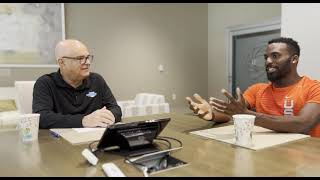
This is a podcast episode (You Must Be Out of Your Mind, host Dr. Don Wood) interviewing sprinter Kenny Bednarek. They discuss Kenny’s training routine and recent competitions (US trials, making the World Championships), his Tokyo Olympics silver-medal experience, relay technique, injuries (2019 hamstring, a broken toe earlier in the year), and how Dr. Wood’s memory-reset/TIP program aims to remove subconscious ‘glitches’ that limit performance. The episode also covers Kenny’s pathway (junior college → pro), sponsorship/coach decisions, and advice for aspiring athletes.
Questions this video answers
Silver (200 meters).
Approximately 9:00 to 12:31 (daily).
Pulled hamstring in 2019 (affects his turn/run mentality).
A broken toe earlier in the year (prior to the trials).
Fourth place in the 200 meters.
Chapters
Welcome to my podcast, you Must Be out of youf Mind. My name is Dr. Don Wood. I use my knowledge of neuroscience to create what I call a memory reset. This reduces and eliminates the impact of trauma. I can't wait to share with you how the impossible is possible and why you must be out of your mind. Welcome to another podcast of you must be out of your mind. I'm your host, Don Wood, and I'm going to be taking you through and talking to you about the mind and how the mind works. As you know, we bring on special guests to sort of share their experiences and what they are doing with our program, but as well as what they're doing in their lives and careers. I have a special guest I know you're going to love to talk to. This guy. This is amazing. An incredible athlete. He's a silver medalist for the 200 meter for the US track and field team. He's got all kinds of stuff going on this summer. We're going to share what he's doing and share a little bit about him going through our TIP program and how that can help him coming up into the World championships. So I'd like to welcome Kenny Bednarak.
Hey, Don, how you doing?
Very good. How are you?
I'm good, you know, just working every day and trying to get ready for World Championships this summer.
You are doing a lot of training, right?
Yes, every day from 9 to 1231. It kind of varies, depends on what the coach wants. But yeah, it's really very, very tough training every single day. So far we have no days off. We have Sunday and Saturday. You know, we're still training those days. I just got lucky this past week just to have a day off on Saturday. But yeah, every single day we're grinding it out and you know, this heat is not making it any easier. For sure.
So Kenny came in here today after working out. So what happened today? What was going on for you today?
Today I just had. I would say it would have been easier if it wasn't so hot, but I had 250 meters to run also with a 150 and then two 50 meters starts. Just working on my form and technique and going all out, max velocity with my body and it was a tough day. I didn't go as fast as we usually do, but I think today was more of a volume work for lactic acid in the body. So I had a good day though.
So your specialty really is a 200 meter, right?
Yes, the 200, but the 100, I'm dabbling in because I'm good at it, but I can also get better. I need to work on my block starts. Those have been kind of holding me back a little bit in 100, but in the two. Yeah, that's my specialty. Yeah.
So you just finished the trials, right, for the team.
Wow. World Championship trials. So USA champs for us. I was like, last week. And, yeah, I went in for the 100 meters and the 2, and I ended up getting 8th or 9th in the 100. Wasn't my best performance, but considering what happened early in the year, I was, you know, happy to have that make it to the finals and run the998 at the end. But the 200 meters, I did pretty well in there. I got fourth. Still kind of the same thing. That was not my best performance. But like I said, just from what happened to the beginning of the year until now, the progression wise has been good, and I came out healthy and.
I made the team excellent. Well, that was why we met. Right. So the idea was, is you go to see Dr. Sorchi, who works with you physically.
Make sure to keep my body right. Chiropractic. Very good at what he does.
Yeah. And so we're good friends. We know Dr. Sorci. So he contacted me and said, you know, get together with Kenny, I think it could really be a benefit to him. So we're now starting to work together and.
Yeah. And I'm loving it so far.
Are you?
Yep. Yeah. It's making me think about a lot of the things that I've been thinking about subconsciously in the past, and I think it's going to be very beneficial for me from now into the world and, you know, so far in daily life. Yeah.
Because it works on all of that. So it's a performance, as everybody knows, if they listen to the podcast. The idea is the name of the podcast. You must be out of your mind. Right. So your mind has been working a certain way for a long time. We basically want to reset and update the way the mind works. And so what we were doing with Kenny was taking him through the entire program. The World Championships are coming up in another couple weeks or so.
Almost three weeks. Yeah, it's coming up quick. Yeah.
So the idea is we're gonna check back in and hopefully we have a couple gold medals or something.
Yeah, that's the plan. Hopefully I get to be on the relay, and if we do everything right with handoffs, we should get a gold medal easy. But that's been our biggest problem with the handoffs. As you already know. But for the two. Yeah, you know, I'm gonna go for that gold medal. I was coach last year for the Olympics, so I think this year I'm going to get it. Yeah.
So in the Olympics in Tokyo, you won the silver.
Yes. Right.
Which is amazing.
Yeah, it was a pretty cool experience. First time being in Tokyo, didn't really know what to expect, and, you know, we had Covid going on. So one thing about traveling right now is that, you know, the restrictions everywhere. So it was cool to be out there. Very exciting moment. One thing I was down about is I didn't really get to actually go inside the city and actually experience, you know, the different culture. But I know I get time to actually do that, you know, next time I get over there. But, yeah.
Being in the village, you know, prepping just for the big race, going through the rounds, it was a crazy experience.
Awesome. Now, you mentioned something about a handoff. So people who don't understand what you mean by handoff in the relay.
Right.
So you've got four men, right, running. So tell us what happens in a handoff.
So you got four men, you know, four by 100 meters. Each person runs 100 meters from, you know, the 400 meter to the last to the finish line. And you got the baton, and you got to make sure to get through the exchange zone and hand it off to the guy with a nice, clean handoff. All of that is crucial. Doesn't really matter how fast of a person you got in the race, because if you end up missing a handoff, so you can take seconds off. So all that is very crucial. So we got to make sure to have training camp just so we have all those working well, and you got to have chemistry with all the other athletes. And, you know, if you don't have chemistry and all that, then nothing's gonna, you know, happen.
So. So from what I understand, happens is as you're running towards your teammate, they have to start accelerating as you're handing it off, right?
Yes. It depends. You know, you got to figure out when you need to take off because, you know, not everybody is, you know, the exact same speed. So when they hit a certain mark, that's when you're cue to go. But then you have to make sure that you get the batons within the exchange zone. So it's. I forgot. There's like a triangle right in the beginning that you pass, and then there's another one, which is the end of the exchange zone. You got to make sure to time everything correctly. And you know, smoothie and then you hand off the stick and then you keep going and goes to the next. Next person. Right.
So a dropped baton is a lost race, right?
Yeah, drop baton is a lost race. You're done. You can't really do it. You can, you can pick it up by at the end, you know the time you get to pick it up, you gotta, you know, re accelerate and you're already done. There's no catching everybody that's already at max velocity.
Exactly.
Yeah.
So there's four people in the race. When you run in the relay, where are you typically running in that. What leg are you running?
For me, I used to be last going into high school and college, but now that I'm on the pro level, I haven't really been able to run with these guys because there's a lot of politics going on when you get up to this level. Every athlete is fast and all the coaches want to make sure to get their athletes in. So a bunch of politics. But for me, I think the best spot would be first or third. Just because when I run my 200 meters, my turn is one of the best in the world right now. I don't know why, like, the 100 meter start is different for me. Like, I struggle with my start there. But one, once we are on the turn for the 200, you know, I just some. Everything just clicks for some reason. And I just run the heck out of that turn. And you know, I'm always leading the race most of the time. So for me it would be first or third because I think that would be the best spot for me to, you know, do what I'm good at and you know, you know, it's. I don't know, like best. Best position to help the team. Yeah.
Yeah. Because when I watched some of your races, that's what I saw is on that turn, you look like you had another gear.
Yeah, it's. I don't know, it's. I think it's all a whole mental thing too. And that's another reason why I'm working with you. So I make sure that I have full control of everything I do. Because once I have full control, that will help me in the hundred. Part of my reason why I'm struggling 100 is my reaction time as well, because I'm also thinking about too much right in the blocks and then the gun goes off and then I'm always the last person on the blocks. Yeah. And. But yeah, every time I'm in the turn, I'm always leading so.
So perfect. So that's. That's our goal. So my. My actual best was I jumped out of the blocks. I was really good out of the blocks. I didn't have to kick at the end, so I sort of had to hold on.
That's something that's common for a lot of shorter sprinters because. Because for me, since I'm so tall, it's harder for me to get a certain angle that smaller athletes have to be explicit out of the blocks.
Yeah.
I mean, like Usain Bolt, I want to say he had the best start in the world, but he just had a good enough start where he's with everybody. That's all he needed. And that's the thing that I need to work on. If I can just get out with him, then the rest I could do. It'd be easy part, but right now, the hard part is just the beginning. So a lot of short sprinters have it easy just because their body's already so low to the ground. And once they get out of the box, the angles that they have is. It's a lot more beneficial for them than me because it's hard for me to get those same angles with the longer legs I got.
Yeah, that makes sense. Yeah, it was sort of the same way in hockey because I had that sort of lower center of gravity. I could pick that speed up really quickly. Yeah, and that was really hard, especially for the bigger guys. If all of a sudden I just put on a burst. Yeah, they couldn't turn fast enough.
Yeah, exactly. And that's. That's one thing I feel like a lot of shorter sprinters have a struggle with maintaining it. Like, right, they can get out as fast as they can lead the race, but a lot of them have trouble with maintaining. So if they can maintain it, then, you know, they consistently run those fast times every single time they step on the track. And, you know, speaking of, like, smaller people, you know, they all got advantages. You know, we all got advantages for being small or big, you know, football players, you know, when you have to have that leverage to pick up the linemen or whatever. You know, it was for me when I was playing football and I had to play outside linebacker for a special to play. It was just hard because, like, I would always have somebody that was smaller than me, and then, like, he would pick me up, but then I can't really do anything because I can't. I can't, you know, get underneath him and pick him up from his, you know, pass him up. So, you know, everybody has their you know, leverage being small or big, it just depends, you know, everybody. Everybody can work on all that. But this was hard. So, like, for me, blocks right now, it's just the one thing that I need to get down, because like I said before, once I get that down, then the rest of the race is going to be easy for me.
And I think that the key to that is keeping your mind quiet.
Yes, exactly. Yeah. Because right now it's just. I will think a little bit too much. I get in my own head.
Yeah. And that's going to interfere with you be able to really.
Get out of the blocks quick because your mind is using energy.
Exactly right.
And that's the energy you need for that explosiveness coming out.
Like my coaches, less is more. So.
Yeah. It's funny in hockey, too, when you're talking about lifting up. Right. The best fighters in hockey were the smaller guys, because we could punch up.
And you could actually do a lot more damage punching up than you can. The bigger guys punching down didn't have the same.
I've never actually watched hockey, but what is the whole thing with them getting fights? How's that. What's the rule with that?
It's. It's really interesting because it's always been in hockey. They've never taken it out of hockey. But I think it's actually sounds crazy, but it's actually a good release because it allows sort of that frustration to get out if somebody has sort of got to that point where you don't want people using sticks because they're carrying weapons.
Right. Yeah.
And so it was considered cheap if you used a stick to sort of get at somebody. But if you, you know, frustration levels built, they would just duke it out, go sit in the penalty box for five minutes.
That's crazy.
Yeah, but it's all. It's always been a part of hockey, and no matter what, they've never taken it out. And. And it provides some excitement in the game. People. People love it.
Yeah, that's. That's actually interesting. Yeah.
And they don't do it in football because I think we've got. I think they got so many pads on it.
So many pads. I mean, once you. Once you see somebody, you know, hitting somebody, then they're off the field and they're suspended a couple games. Yeah. So that's. That's pretty interesting. I actually, I. I saw it, you know, I see it all the time, but I never actually understood it. So that's why, you know, you got.
To go to a hockey game and.
Watch it Yeah, I got to at least watch one.
Yeah, I have.
I've been to football. I haven't been to hockey. I've been to one basketball. And I feel like I need to watch baseball to appreciate that a little bit more. But you know, it'll happen one day.
Yeah, well, when I, when I was in school too, I mean, when you, I'm sure you had the same thing. When you're in school, they want you on every team, Right? Because if you're good athletes, they're trying to put you on every team.
They try to give me the one coach tried to get me to do wrestling. I couldn't do it.
Oh, I did wrestling. You think boxing stuff? I know six minute round in wrestling is the most exhausted I've ever been in my life.
I know the training is crazy. Crazy. I remember when I go before I leave the gym, I would like see the room where they're, they're cranking up the heat. Yeah. And they're, you know, doing whatever they're doing. I would open.
And then like I said, the guy tried to get me. And the main reason I said no is because right after, you know, wrestling was track season, you know, you gotta cut down weight or gain weight. And I was like, I can't, I can't tamper with my body like that. Because I already knew track and field was going to be the thing that was going to be my main focus. It was either track or football. And I had to make, I had to make the sacrifice to, you know, pick one. And I decided to go with track because I was excelling in that more than football. Like, I was, I think I was pretty good at football. You know, I could have, I had a few schools that wanted me, but I already knew track was the safer route. And when I actually met Dr. Paul actually have one of the vertebrates here missing. So he was saying like, if I got probably good. Yeah. He literally saying, if I got hit, you know, just the right way, I could have been paralyzed. And I was like, huh. I didn't even know that, you know, wow. So it's crazy.
So interesting. So when did you, when did you make the, the switch to just say, I'm gonna just go track.
How old were you? Well, I was doing football all the way up until senior year and my junior year. I was, I was kind of contemplating whether to quit or not.
And it was more just the reason. I was like, you got one of the fastest kid in the country. And our system wasn't really, I was a wide Receiver. So our system wasn't really throwing me the ball. More play action and you know, letting. Running, running, running. So I was kind of felt like I was wasting my time. But I ended up standing, ended up winning state my senior year. So it's kind of like a fairy tale, like a, you know, dream come true to me. So it was just after that just you know, contemplating and my junior year I already kind of knew, you know, just the fact I was kind of like, okay, I'm kind of wasting my time here. Let me just focus on track. Like I already knew from then that it was going to be track.
Yeah. And then did you all, were you 100, 200 always or did you.
I was kind of everything 1, 2, 4. You know, when you're in high school and college you kind of coaches kind of puts you through everything because you got all that energy. You know, once you get older you have to be more selective because obviously, obviously you're going to be more of a specialist. But Yeah, I was 1, 2, 4, but mainly a 4, 2 guy. And that's what I mainly did, the 4 and the 2. Like my whole high school career and college career and like I dabbled in the hundred a little bit. I didn't really make the transition and becoming a onew guy until I met a coach here, so.
Right. Yeah. And like I said, when again I was in track in high school, another year level, but the same thing they used to do. So the 100 was good for me, the 200 wasn't as good for me. But they'd make me run the 200, they maybe run the 100 meter hurdles, they maybe do the long jump. And I was not a good long jumper. You'd probably be a good long jumper.
I actually used to do long jump. I would say for high school I was good, but my technique was trash.
Was it?
Yeah, it was very, it was very bad. I remember just running out kind of just like, you know, you gotta point your foot and jump. I would kind of just run through it and kind of do like a skip or something. So I did that. I also did high jump as well. But yeah, they never let me do hurdles because for me growing up, I mean even now I'm. I'm kind of a clumsy dude. Right. Which is kind of weird because you know, I'm an athlete at the highest level and you know that this kind of sport and like, you know, I'll trip or something over nothing.
Yeah.
So I can say in a way I'm uncoordinated.
But yeah, just, you know, they wouldn't let me do the hurdles just for that reason, like, oh, you probably, you know, do something dumb and then, you know, trail and then, you know, chaos.
Yeah. Because you could really injure yourself.
I've seen some of the injuries in there. It's bad.
Yeah. Yeah. I never, I never liked it. But like I said, when they, they take their best athletes and they run them and everything to try to win. But which points? Yeah, but it wasn't smart because by the time I got to the finals in the hundreds, I was exhausted.
Yeah, right. You know, I didn't even really think about it like that too because, you know, they make you do this, this, this, this, and then like now me looking back at them like, dang, they're like running like a dog. Yeah. But then again, you're a kid, so you got all that energy. I mean, you're going to be taxed obviously, after all that, but it's like you got so much energy. And then the coaches are always like, we need to get these points. You're our best athlete. You know, this, this, this. And I feel like, you know, I mean, at any level, coaches are always going to be like that. You know, you got your best athlete, you want to win. And most of them, some have best interest, but some also, you know, just think about when you don't think about the athlete. So.
Yeah, yeah, they want to put up numbers on their boards and make them look good.
Yeah. So I mean, the important thing is when you go to college and then, I mean, even in high school, you know, college, high school pro, you gotta make sure you have the right person and make sure it's the right fit. And that's something that I had to learn in the beginning coming out of. Well, actually I started with college because I think in.
High school I was pretty good. I had all good people around me. Just when it came to college, you know, I had all these coaches come to see me, you know, the vibes that were giving me. I didn't like this guy, I didn't like that guy because I already could tell, like their main goal is just to win. And you know, I ended up having, going to the junior college route just because of grades. I was lazy in college, I was lazy in high school. I just wanted one of the focus on my sport. So, you know, I go home, do bare minimum homework and I regret all that because, you know, I mean, I kind of regret it, but I also don't because I'm still here. You know, the route I had to take was different from others. I had to go to the junior college, even though I had all those schools that wanted to see me. You know, I was. I was thinking about commuting to Oregon just before, you know, how to go to college. But then, like I said, grades and, you know, it was a lesson learned. So I went to the junior college route and I don't know, there's a lot of stuff that went on with there, but I ended up getting through all that whole system. And, you know, then it came to the. The pro, you know, the pro. As soon as I popped off my fast times in college, you know, I had agents, you know, hitting me left and right, and I had to make sure to, you know, weed out who, you know, I didn't think was good for me. And. And I ended up finding the right person. And then, you know, now I'm here just training with a good coach, and I'm just trying to get better.
And that's. That's really the key, right, is to get in with the right people or the right coaches.
That's. It's very important. If you don't have the right people, if you don't have the right, you know, just the right staff, if your mind's not right, all. All those little things are important because I already know. Like, we talked before. Like, I got hurt in 2019, like, we were talking before, and subconsciously, when I pulled my hamstring, like, that's. That's stuck in my head. So, you know what we're, you know, me, you are trying to work on and not thinking about that, because that will help me in my 200. Because I always feel like, you saw my race before. There's. Sometimes I'm running and I'm leading the race, and I kind of just stay at that same pace. Like, I, like, I don't know, it's just weird. It's like a glitch. Like a. It's like in my head, like, I'm going, I'm winning, and I'm like, okay, I'm fine right here.
Yep.
But then I just need to get rid of that, you know, subconscious feeling in my head, and then I can just keep going to push it. And I mean, there's been several times where I just said, you know, all right, we're. We're just gonna go. If I pull my hamstring, I pull it. And that was Olympics and Diamond League champs.
You know, that's when I literally was just like, okay, let's go get this, you know, we got nothing to lose, last race of the year or whatever. And I just ran the heck out of the turn and I maintained lead and I won. But you know, for us, you know, we got to be consistent. So, you know, that's why I'm looking forward to working with you.
Yeah. This is what we talked about, which is really good for people to understand. Is that what Kenny, you had. When we were talking and going through the program, I asked, have you ever had an injury? And you mentioned, yes, I had an injury. And then I asked Kenny, I said, where did that injury occur on the race? And it occurred right at that turn, right after you'd made the turn. And that's when we saw that was when his times would start to slow down. And what we talked about is in your mind, it was trying to protect you. Right. And actually subconsciously, you wouldn't consciously do that because it wouldn't make any sense. But your subconscious is survival based and it's remembering the time you got injured.
Yeah.
And then trying to protect you.
And I thought that was crazy because when you were talking to us about that, I was like, oh, yeah, that makes sense.
Yeah.
And I like the whole analogy where you're kind of like, you know, you know, it's science and you gotta think you're, you know, it's like technology, you know, you say what's it when you seen in the brain, it's more of a glitch. Yeah, glitch.
Yeah.
And you know, it's all data.
Yep.
So it's going to keep going through the same thing and all you got to do is, you know, just cleaning out all that stuff, you know, get rid of the air or whatever. And you know, just the way you think about it. I like it because it makes it, you know, simple. Yeah, I can totally understand. It all makes sense. You know, if I just view my body as like a machine or a computer, all that makes sense, sense, you know, get rid of the error, then I'm fine. You know, because you're going to be focusing all your energy on trying to fix that error. Then you won't be able to use the whole, you know, computer itself to make it all at 100 to maximize, you know, everything, which makes total sense.
So yeah, yeah, it's just like what I said, it's just a glitch. It's an error message. The mind is constantly doing Google searches. So when you're making that turn, your mind all the way along is being saying, what do we know about these kinds of races? What do we know? And what it does is when it gets to that point, it says, oh, yeah, that's when we got injured.
Right.
So we better hold up a little bit so we can make this turn without the injury. And then that changes your speed.
Right.
But it's all subconscious.
Yes. Right. Yeah.
And if anybody had asked you why it's happening, you wouldn't have known until we talked about the science behind it.
Exactly. And that's why I just. The way you talk about it, it's all brilliant. I love it because I know it's going to help me out a lot.
Awesome.
So great.
So, Kenny, one of the things I want to share because this is really important for the audience to understand is, you know, we watch us track and field, watch the Olympics, and you see these guys, and you see the guy that comes in eighth place, and you go, oh, that guy really didn't run very well. That guy's probably the best athlete you've ever seen in your life. The level of competition and skill level when you get to where you are is so incredible. You're probably the best athlete probably anybody that had met you had known.
Right.
When you get to that level, explain how difficult it is to be the best.
I mean, it's very difficult. I mean, you got to make sure. I mean, you got to change your life. I mean, with me.
Like I said, I got hurt, and then I signed a deal with Nike, and, you know, I was still kind of doing the same bad habits I was doing because. Because, you know, in college, you know, you're just a kid, don't know any better. You're trying to learn new things and then going to pro, like how it was for me. You know, they gave me the money, and it's kind of like, okay, go figure it out. Right? Which is obviously not good. But I ended up finding the right people and understanding more about diet and, you know, the mental health and, you know, everything recovery and all that. And there's just a lot of things I had to give up to change my diet. Make sure to eat everything that was, you know, you're feeling your body like it's a car. So you put bad fuel in. You're not gonna, you know, the output is not going to be there. So, you know, I had to change my diet. How to change my mindset. You know, I can't be staying up until 1 to 2 in the morning. Like, you know, other kids are used to.
You know, playing games or just, you know, chilling. You know, there's a lot of sacrifices can't really go out and, you know, hang out with my friends all the time. Late, can't party. Got to be very disciplined. And I mean, it's hard, but, you know, the benefits is there. And I love it, though, because, you know, makes everything easier for me. And, you know, I'm all about my job, and I want to make sure that I'm consistent, and my goal is to be the best to ever do when I get done. Awesome. But, yeah, it's. It's very difficult to be at that level. I mean, like I was just saying, I went to trials. I mean, even last year's trials was. It was crazy. But I mean, I ran 998, you know, a sub ten hundred meter. And, you know, there's only a few people that can do that in the world. Yeah, that got me eighth place. So, you know, just to be at that level, it's just all these small things that you have to sacrifice will make a big difference in your sport.
Yeah.
And, you know, a lot of people don't understand that, but then, you know, there's a few that actually do. I mean, I know there's a lot of. There's a lot of, like, you know, NFL players that kind of just do the same stuff and they get by, but they don't realize that they're not maximizing their potential.
But, yeah, it's just. It's. It's very crazy.
Well, the other thing. The reason I'm bringing that up is because for people out there, watching you see these guys perform at this level, and you realize how incredible an athletic, you know, person you are to be able to do what they do, plus all the sacrifices. And at the same time. Same time. The other thing that's interesting is the number one movie right now in the country was Top Gun. Everything's about the United States right now. We're craving things about the United States. We want to go back to feeling like we're the best, like we have the skill, and that's what you represent for us, you know, so to watch you out there.
Right.
Representing the United States is such a great thrill for us.
Yeah, right. I'm. I'm definitely glad to be out. Be out. Out there to represent the country and, you know, show that we're the best at what we do.
And, you know, we need that right now, especially with everything that's going on after coming out of COVID all the things that are going on in the world, to have you out there representing and doing what you're doing.
Right.
We Just need all the encouragement. We want to encourage you as much as we can help you as much. I'm honored to be working with you and figuring out how we can help you get to that next level. So one of the things that I wanted to ask you as well, because I think this is something that I talk about all the time, is we have moments in our life, and these are like little tiny moments, right, where everything changed, right? There's those certain times when I went to my son's wedding, I talked about that. Is that the day, the minute I saw him born was a moment that changed my life. We have those moments. I can imagine the moment for you had to be standing on that podium, right, representing your country, right, Getting a silver medal. Tell me what that moment was like.
I mean, as soon as I crossed the finish line, that may have been the moment. I mean, that's when it started. I mean, there are several moments, but, you know, I crossed the finish line. I was kind of like, what just happened? So being able to stay on the podium and, you know, see myself get the medal, when I saw the jumbo screen that they got, it was an amazing experience, you know, because I had a goal to make the Olympics and, you know, get a medal. I mean, obviously I wanted the gold, but I, you know, getting the silver as. As I think it was. 22. Yeah, 22, you know, amazing experience and goal accomplished and, you know, just looking for the next one. But yeah, it was. I was honored and grateful to be out there to represent the country and, you know, get a medal for us. But, yeah, I didn't realize how much of an impact I had, you know, in the US and especially at home, because I just went home recently, about a month ago, and, you know, you know, they're just crazy about me, and I was just like, wow, like, I really left an impact. And it was also for the junior college kids as well, because for me, I. I guess I'm kind of a symbol right now for them because it's not really common for a kid to go to. Into junior college and come, you know, go pro right out of junior college, because it's just the equipment, the staffing and the coaching is not. Is not going to be as good as the ncaa, right? So it's a little bit harder to get to that level. And, you know, I made, you know, made do with everything I had and, you know, just kept grinding to make sure that I got my goal and I. And I came out. So I had, you know, kids left and right, you Know, kind of inspired a little bit of what I did. And there's always a sense where there's. I know there's a thing where people are kind of ashamed when they go to the junior college route. Like me, when I found out I had to go, I was ashamed because it's kind of like, well, okay, people are gonna think I'm stupid. You know, I was a talented athlete. I'm just gonna be another statistic, disappear. And, you know, I didn't want that to happen. So, you know, with any situation, I feel like anybody can, you know, get out of that situation. And, you know, I just, you know, being able to get out of junior college and inspire, you know, all the kids that are still going to junior college, I think it's. It's good.
That's why, you know, I know you guys get opportunities and sponsors, but I always love to see, you know, if you're a sponsor out there and you want to sponsor a good guy, like, they'll represent your brand. This is the guy. He's got the whole message. He's got the great story, right? Overcoming, you know, just like you said, coming from a junior college, going to the pros, right? Those are the kinds of stories that people need to hear. They need to inspire. You know, a lot of people out there and. And sponsors, you know, are always looking for the right image. I definitely think you present that right image.
Thank you. Thank you.
Yeah. So we look forward to what's going to happen at the World Championships. See where you're going.
I'm excited. I mean, earlier this year, I ended up breaking my toe. And, you know, I didn't really know what was going to happen with the season, and I just made sure to do everything right just to get back into form. And I was a little bit worried coming into the trials, but I listened to my coach and I listened to, you know, my body, and I ended up making the team. And, you know, for me, it was kind of hard because after what I did last year, you know, you kind of. Of want to build a build off of that. And then when I broke my tone, it was kind of like a reset, like, okay, I got to start over. But like I said, I made the team. All the hard work I did early on, making sure my toe is correct and everything, and just being able to make the team and just to train a few more weeks, I think is going to be, you know, the thing that's going to spark everything for Worlds, and I'll be able to, you know.
Get that medal and over the next few weeks, you're continuing working through our program that we just went through. So we did it about a week ago, maybe that. And you listen to the audio. So our goal is to be able to get, you know, Kenny out of his mind the way it was, working on that turn. So you can perform at your highest level and see that kick come right around the corner.
Yeah, exactly. And like I was saying before the injury, it was kind of like when I was at. When I was obviously younger and I was just running. But now since I got hurt, it's kind of like, you know, subconsciously overthinking, oh, what if I do this, what if I do that? What if this happens? You know, I need to get back to that stage. That state where I'm just like not thinking about anything, you know, just, you know, just flowing and going.
Yeah, that flow state.
Yeah.
Alpha brainwave. So when you're in that dominant alpha brainwave state, the subconscious knows how to run.
Exactly.
All we had to do is get that glitch that had set up because your mind wasn't trying to hurt you, wasn't trying to get you to slow up, to not win the race. It was trying to protect against an injury. Pain is a very big motivator to. To try to stop the mind. So Tim Burke came to see us. He's a world long drive competitor, competes in those long drive championships. And he came in to see us. We took him through the same program, Right. He goes a couple days later to compete in the first tournament of the year. And I saw on the Golf Channel that he had made the finals. So I texted him and I said, how you feeling? And he wrote back, alpha, baby, alpha. He was an alpha brainwave state. He won that tournament, won two of the first three tournaments of the year, and made the finals of every tournament.
Yeah.
So we're excited for you to see the same things. And we'll continue working with you. Right. All the way through the world and on. Right. So we got another Olympics coming up at some point, Right. Would like to see you.
Definitely. We'll definitely be there. I'll make sure I'll be there. You know, the only thing that's going to stop me from getting there is me, you know?
So, Kenny, if. If you could speak to people who are aspiring to do what you do, right, Speak to some people that you could make a difference in, what would you say to them?
I'll tell them that to keep working, anything, anything is possible. Reset your mind to it. I mean, obviously for Everybody, there's going to be ups and downs, but, you know, you just got to stay the course and, you know, if you want to fulfill your dreams, you just gotta. You just gotta keep working for it. I really believe that you work hard enough, you'll be able to reach your goal. Yeah.
So talent is part of it, but discipline and hard work is actually like.
Talent is the easy part, the hard part, and the messy part is, you know, the worth it and all the other stuff. So, I mean, anybody can have talent, but if you don't do anything with that talent, you don't do all the extra stuff that's needed. And that talent's only going to take you so far. And it feels it all eventually.
Yeah. And what I love about it is you're open to working on the mind because everybody would think, you know, 200 meters, track and field is all about power and speed and training the body.
There's. There's so many athletes, like, I don't really know much about track and field because I've never really, like, you know, I watched the Olympics and, you know, seeing Usain Bolt, Johan, all those people. But I was never the type. I wasn't like a super track fan, where I'd be like, oh, let's see this. All the, you know, the stats and all the other stuff. So when I went pro, like, I'm finding out, you know, besides Usain and, you know, all the other big names, I knew, I'm finding out who this person was, who that person was, because I'm like, I don't know who these people are, but all these people, like, used to be so good or there's, you know, you know, some of them are still running. Like this girl named Shelly Ann Fraser Price. She's Jamaican and she's, she's like 30 something right now, and she's like, you know, at the top of her game right now. So I just found out who that person was, you know, last year because, you know, she went to Olympics and she was running crazy and she ended up getting a medal. There's just so many athletes, like, if they don't get their mind right. Yeah. You know, when they're in college, they're on top of the world, but once they go pro and they got all the other stuff they got to deal with, then they always end up like, you know, disappearing.
Yeah.
Because there's so many athletes that I've been finding out, you know, this year, last year, and maybe in the future, like, oh, yeah, that guy used to be so cold. Or he used to run so fast and stuff like that. I'm like, what happened? They're like, we don't know. Yeah. And I think, you know, it's all in the mind. You know, I see so many people, even some of my.
Some of my teammates, you know, they're running fast at practice, but it's just the mental that they need to get right, because when they run, you know, practice, you can do whatever you want at practice, but once you get to the event itself, you got to make sure everything's aligned, and you got to make sure their mind is right. If it's not right, it doesn't matter how fast you're in practice. You're not gonna. You're not gonna do it when it matters.
Yeah. Yeah. When it gets into competition, it changes the way the mind works. So the key is to be able to get that under control and have the control over the way your mind works, and it changes everything. So one of the things that. If you remember in our program, we talked about atmospheric conditions, the things that have happened in your life that affects the way your mind has been working. So people have had a lot of.
Past trouble in their lives or trauma or whatever that will have an effect on their mind. But the whole point of that story was to talk about sometimes there's things that are outside of your. Your control. So even if you look at. In terms of your atmospheric conditions, where you really didn't feel like you wanted to spend as much time working on school.
Right.
If you could talk to your younger self now, Right. You could sit down with. With young Kenny. What would you tell him?
Oh, I tell him to study and do it. Do everything he needs to do. I mean, like I said, I'm grateful to be in the position where. Because I still got to even going out of juco. But it would have made everything a little bit easier for me, because the fact is, if I ended up going to the ncaa, you know, I would have. My transition from college to pro would have been a little bit easier. And, you know, when it comes to contracts and, you know, coaching and all that stuff, it can make a big difference whether you come out of junior college or college, because it's kind of like in the business, kind of like who. You know. And when I went to the junior college, there was a coach of mine that I. That I wanted. I wanted to stay with him. But the shoe company, Nike was like, we don't know who the dude is, and we're not going to pay you if, you know, if you, you know, don't go over here with this coach. You know, it's kind of who. You know, and, you know, it makes sense because, you know, they. They want to invest money in this athlete, and they don't want to take the risk. And you're like, hey, okay, we're gonna give this money. You can save it. Because, Coach. But we don't know who your coach is. So, you know, they're going to take a risk and be like, okay, what if he fizzles out? Or something like that. Which is understandable, but, you know, was the ideal situation that I wanted, but, you know, it was out of my control. But I. I feel like if I went to the NCAAs, it would have been a smoother transition because everybody knows each other from, you know, the whole. The whole system and, you know, the shoe companies. And it wouldn't have been as tough of a transition because. Because I feel like, you know, the contract would have been different. The contract situation. Situation would have been a little bit different. And, you know, just, you know, finding a coach, I think I wouldn't have been as, you know, I would have been less scared about the whole situation because for me, it was kind of like, okay, I got this coach I like, but y' all trying to send me over here to some dude I don't know, into a place that I don't know, you know, I'm going to Florida, from Iowa to Florida. I don't know what's over there. I don't know over there. I've never been, you know, there. Right. So, you know, the whole situation for me was kind of, like, scary because, you know, I had to pick up my stuff and leave.
May have also, if you think about it, could have been a benefit, too, because coming the little harder route maybe gives you a better appreciation. It's going to be a better story.
Yeah, for sure. I mean, the way I've got here is not the typical way everybody else has gotten here, because I feel like all the other athletes that I've heard or seen, seen that are running good right now, all of them have come from the NCAA system. I mean, everybody has, you know, their story to tell. They got their, you know, little bumps in the road, but I feel like, you know, mine was very, you know, weird. Yeah. Because not many people have done what I've done.
Yeah.
And, you know, just the fact that I was able to get out of there and, you know, accomplish my goals, and I'm still trying to accomplish more of my goals, and it's been good and I always find some things to motivate myself. So I mean, it was just kind of helping me to work just as hard, ten times harder just to, you know, get to the same spot.
So some of the past, though, take take a look at your Green Bay Packer fan, right? Big Aaron Rodgers fan. He's your goat, right. How long did he sit on the bench?
Right. And not get four to five years, right? Yeah. Yeah.
And not may not get his opportunity if they didn't take a chance. Look at the criticism that the club took for moving Brett Favreau to put Aaron Rodgers in. They took some, you know, the best.
Thing they did though.
But at the time.
Yeah, I know I may not have.
It was gutsy call.
What's going on. Yeah.
But somebody had to do the same thing with you, is give you that break, give you that chance. Right?
Exactly.
Right. So a lot of times the message is as if, if you're not making it and all the things that you're trying, don't quit.
Just keep going. And I mean, something will come around and there's always going to be opportunities that will appear. Awesome.
That's a perfect way to end. Thank you again for watching another episode of you must be out of your mind. Kenny. Thank you so much. And we're going to keep following you and working with you and great things ahead.
More from Dr.





When you’re in the middle of a panic attack and someone tells you to “just breathe”.

Once a panic attack starts, you can’t stop it. Here’s why and what you can do about it. #panic


The first sign of healing wasn’t what happened. #anxiety #emotionalpain #fightorflight

The threat ended. The situation changed. Your life moved forward. #weneedtotalk #anxiety

