Emotional Regulation: Why You Overreact (And How to Stop)
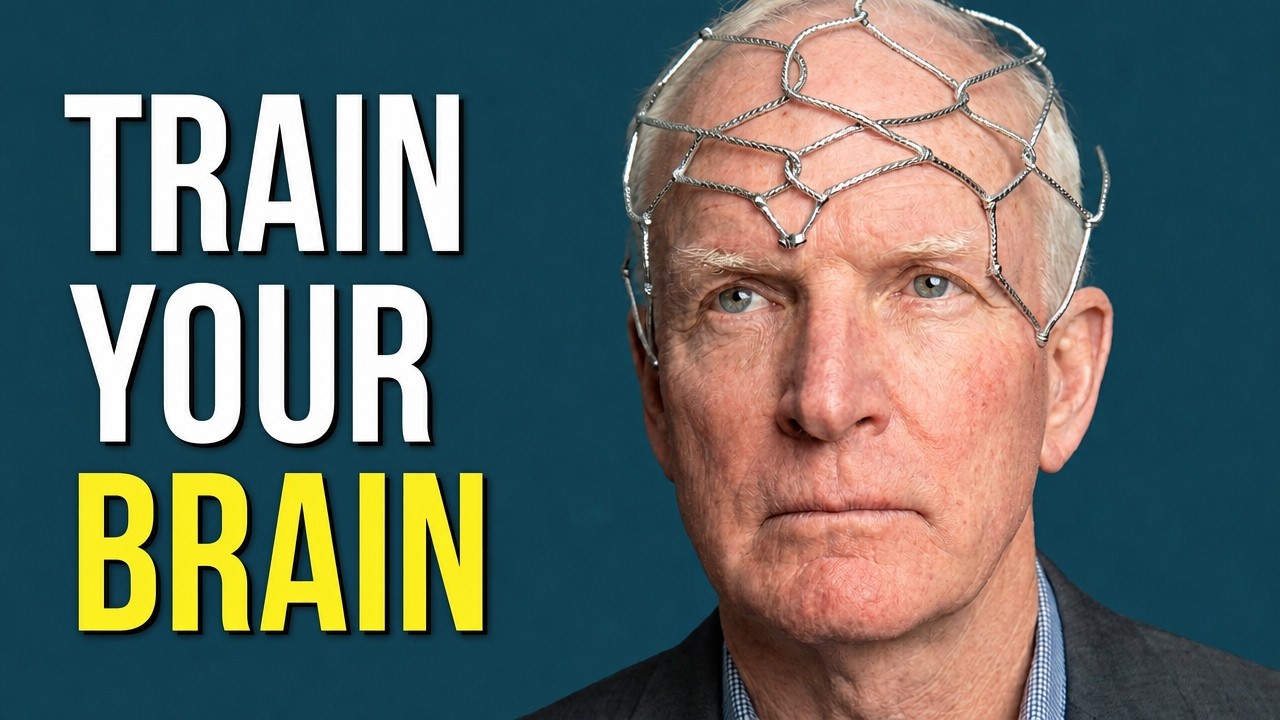
Doug Noll explains why you overreact: your amygdala hijacks your prefrontal cortex, shutting down rational thought. Suppression and venting don't work. Instead, he teaches four techniques that directly re-engage your brain's control center, from vagus-nerve breathing to precise emotion labeling, backed by neuroscience research and his work in maximum-security prisons.
Chapters
Do you ever feel like your emotions take over before you even have a chance to think? Well, emotional self-regulation is something we all struggle with, but here's the key: the problem is not that you feel things deeply, it's that nobody's taught you what's actually happening in your brain when it happens. Hi everyone, I'm Doug Noll. I spent 22 years of my life as a trial lawyer before becoming a peacemaker and mediator, and what I discovered in that transition completely changed how I understand emotional regulation. And it's something no therapist or self-help book will tell you. What happens is when you're overwhelmed, you either try to push through it or suppress it, and none of that works because it completely bypasses what is actually driving the reaction in the first place. So what I'm going to do is walk you through the neuroscience behind why your brain loses control and evidence-based techniques to bring yourself back to calm in 90 seconds or less, no matter how intense the situation gets. But first, let's take a look at what is actually happening inside your brain when you get triggered. So first of all, recognize that emotional overwhelm is a signal, not a flaw. Feeling overwhelmed is not a character problem. It's your brain telling you it has hit its processing limit. The amygdala has determined a threat, real or perceived, and it's fired off. And everything that follows is a biological cascade, not a personal failure. Most people respond to this signal by trying harder to control yourselves. But that's the wrong move, and neuroscience explains exactly why. Nobody has ever taught you what the signal actually means or what to do with it. So here's the thing: the amygdala and other associated limbic system organs in your brain are your threat detection system. It's fast, it's automatic, and it doesn't care whether the threat is physical or social. When it fires strongly enough, it floods your prefrontal cortex, the part of your brain responsible for what we call rational thinking and decision-making and logic and perspective-taking, language precision, and even impulse control. And once flooded, you lose access to all of it. No judgment, no logic, no reasoning, no rationality, no perspective-taking, and no impulse control. And it happens automatically. It's the way our brains are built. Not partially, completely. The decision to react has been made long before you're even consciously aware of it. And this is what Daniel Goleman called the amygdala hijack over 40 years ago. It explains every moment you have ever said something that you immediately regretted. So emotional regulation is your brain's ability to interrupt this cascade. It's not a personality trait. It's a trainable neurological skill. So real quick, I have a quick guide that will help you understand what emotional regulation is and is not and why most of what you've been taught probably does not work. And it also includes the first steps to start building this skill today. It's called the Emotion "Emotion Regulation Starter Guide." The link's in the description. It's absolutely free. Now here's what gets really interesting, because most people assume emotional regulation means suppressing the emotion or calming yourself down. It does not. And the reason that approach fails every single time comes down to one thing most people have never heard of. So what are the kind of things you've been taught about managing emotions that don't work? Well, you might be told to do some deep breathing exercise or count to 10 or remove yourself from the situation. All of these are partial strategies that target the symptom, not the mechanism. They do not work under real pressure because they bypass the amygdala entirely. You cannot reason your way out of a hijack while the hijack is happening. And like I tell people, you cannot reason yourself, you cannot logic yourself out of emotion, you cannot persuade yourself out of emotional reactivity. You just can't do it. Your prefrontal cortex is offline. And yet, for thousands of years, we've been told to try to do this. And why does it keep failing? Because those old philosophers and theologians didn't understand neuroscience. Because it didn't exist. Suppression is the most common technique and the most damaging technique for trying to regulate your emotions. However, when you suppress an emotion, the amygdala does not calm down. It stays activated. The emotion goes underground and surfaces louder, more intense, more reactive, and more damaging. The research is clear: suppression increases physiological stress, impairs memory, and damages relationships over time. Regulation is not suppression. Regulation is giving the prefrontal cortex the specific input it needs to come back online and begin to self-regulate itself. And here's something else that's just totally false. You might have heard you're gonna vent anger. Well, this idea of venting anger came from Freud and his whole idea of catharsis. Not one shred of evidence supports the idea that venting anger, or just allowing people to get angry and spill it all out, actually helps them. What the science shows is that venting makes anger worse. So we've got all these myths based on all this crap going back thousands of years. And none of it works. So here's the thing: your brain is not fixed. Neural pathways strengthen with repeated use and weaken without it. Every time you successfully interrupt a hijack or label your emotional state and choose a deliberate response, you are laying down a stronger neural pathway. The first time is hard. The 10th time is noticeably easier, and by the 50th time, it begins to feel like the default. This is not a metaphor. It's a literal description of synaptic strengthening. The men I worked with in maximum security prisons for 10 years were surrounded by chronic threat and violence every single day. They changed measurably over months of deliberate practice, not because they were motivated, but because their brains physically changed. And emotional regulation is a skill that compounds. The more you practice it, the faster and more automatic it becomes. By the way, if you want to practice these skills alongside other people working on the same thing, I've got a free community called the De-Escalate Academy. We go through this together. There are tons of resources, video lessons, and hundreds of people who are looking for practice partners to work on these skills. Real practice, real feedback, real scenarios. The link's in the description. Come join us. So now the question is, what does this practice actually look like? Because neuroplasticity only works if you're training the right pathway. And here are 4 specific techniques backed by neuroscience research that do exactly that. Here's what they are and how to use them. Number 1: Putting on the physiological brake. The vagus nerve is the primary channel through which your parasympathetic nervous system communicates with your heart and organs. An exhale that is longer than the inhale directly activates this pathway and signals the parasympathetic system to override sympathetic stress response. Now the trick here is to do a specific kind of breathing exercise. Breathe in, breathe in again, long exhale. 2 breaths in, 1 exhale out. Breathe in, breathe in, long exhale out. Try that a couple of times. Notice how you calm down a and relax. You only need 2 or 3 cycles to produce a measurable physiological shift in less than 30 seconds. It doesn't eliminate the emotion, but what it does do is it lowers the neurochemical flood enough for the prefrontal cortex to begin to come back online. Second technique, and I think this is one of the most powerful. In 2007, Lieberman and his colleagues at UCLA released an fMRI study that showed that naming an emotion precisely directly reduced amygdala activity and activated the right ventrolateral prefrontal cortex associated with emotional self-control. Now, the precision requirement This is critical. "I'm upset" is too broad. You have to be specific. For example, "I'm embarrassed and I feel like my credibility is at stake." The more specific you are with what you're naming, the better off you are and the faster your amygdala will quiet down. Vague labeling does not work. The brain needs a precise target to activate the prefrontal response. This works on yourself the same way it works on other people. When you label your own emotional state accurately, you are literally beginning to regulate your own brain. When you name the emotions of another person with precision, you are regulating their brain as well. Third technique: emotional granularity. Research by Lisa Feldman Barrett, a neuroscientist out of Northeastern University, shows that people with larger, more precise emotional vocabularies consistently demonstrate better emotional regulation and faster recovery from stressful events. So here's the practice: once per day, at any moment, when you notice any emotional activation at all, stop and find the most precise language for what you're feeling. Not stressed, not I feel good or I feel bad. What specific variety of stress? Anticipatory anxiety about an outcome? Impatience? A vague dread about something unresolved? Build your emotional vocabulary the way you would build any vocabulary—actively and deliberately. The more precisely you can name what you feel, the faster your brain can regulate it. And here's another technique, #4: The Pre-Conversation Regulation Check. Regulation capacity that works under pressure is built-in calm. You got to practice this. Most people try to develop these skills in high-stakes moments, but that's like trying to learn how to swim in the middle of a flood. Before any conversation that's going to have a potential to activate you, take 60 seconds, identify your current emotional state, name any anticipated triggers, and apply the physiological break before the conversation starts. Think about the emotions that might get triggered in you. Think about the emotions the other person might experience and rehearse them in your head. How will you name them precisely using a "you" statement or "you feel"? You're not trying to eliminate the emotion. You're lowering your baseline activation so that the amygdala threshold is higher going in. This single habit, done consistently, produces a measurable reduction in reactive behavior, literally within weeks. Now, all 4 of these techniques work, but there's one more layer that most people completely miss, and it is the reason some people build this skill quickly and others stay stuck for years. It comes down to what happens after the emotion peaks, and that is the story that keeps the emotion alive. As I've said before, the half-life of any emotion is about 90 That's about how long the neurochemicals that provoke the emotion or promote the affective experience we call emotion lasts in the brain. After that, if you're still activated, it's because your thoughts are retriggering the amygdala. So the internal narrative goes like, "I can't believe they did that. This always happens. Why do they say that about me?" Every repetition of that story fires the amygdala again. So emotional regulation is just not about managing it 90 seconds. It's about catching the narrative that follows and interrupting it before it runs. The moment you notice a story starting, stop. Label it outside yourself. "I am telling myself a story about this." That single act of naming activates the prefrontal cortex and breaks the loop. You don't need to resolve the story. You just need to stop feeding it. So emotional regulation is not about becoming less emotional or caring less. It is about building the gap between what happens to you and what you do about it. The gap is a neurological structure. It can be built. It grows stronger every time you use it. Every person who has practiced these techniques consistently has stopped having the same fights, the same spirals, the same regrets. Not because the triggers disappeared, but because the brain changed. So start with this one technique. Practice it daily. Your brain will do the rest. Here's the honest truth. Everything in this video is real, and it works, and I've practiced and taught it for over 25 years. But watching a video about emotional regulation and being able to do it under pressure are two completely different things. The skill only becomes yours when you practice it in real situations until it becomes automatic and natural. It's got to become habitual. And that is exactly what I do with the people that I work with my one-on-one coaching. We take your specific situations, which can be anything from the conversation you're avoiding, the people who consistently trigger you, the moments where you lose control and wish you hadn't, and we build your response to each of them until you have no doubt about what to do. In fact, not only do you have no doubt, it is absolutely habitual and automatic. It's your first response. And when we're done, you do not have to think about it anymore. It just happens. Well, if this is something you'd like to have, start with my free masterclass, How to Stop Any Fight in 90 Seconds. It's in the description and it is the foundation for everything I teach. And if you want to go further and think about working with me directly, book a 30-minute call. We'll spend a half an hour looking at exactly where you're getting stuck, figure out together whether my program is the right fit. And even if it isn't, I can still provide you resources that will make a difference. So book the call. The link is in the description, and I'll see you in the next video.
More from Doug


When the Amygdala Fires, Talking Is the Worst Thing You Can Do (Here's What Works)

Every Difficult Conversation Is Actually Two Conversations (Most People Miss the Second One)






Why Traditional De-Escalation Makes Emotional Flooding WORSE (Prison-Tested Neuroscience)