How I Learned to Command Respect (After 22 Years of Getting It Wrong)
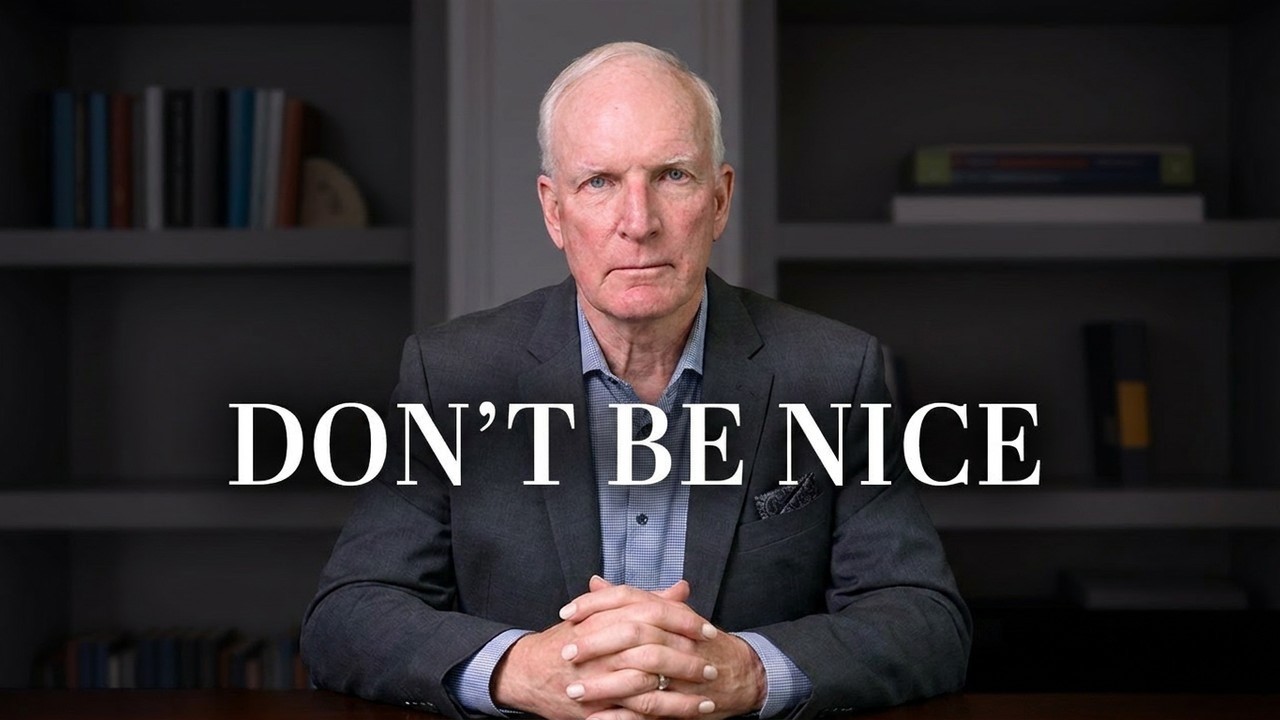
Doug Noll spent 22 years as a trial attorney commanding courtrooms through dominance, then watched those same tactics destroy his relationships. He learned a neuroscience-backed skill called affect labeling: naming someone's emotions instead of using "I" or "you" statements. When you say "You're frustrated, you feel invisible," nervous systems calm and respect emerges without aggression.
Chapters
In my more than 2 decades as a trial attorney winning high-stakes cases, I learned how to control a courtroom and shift the emotional temperatures of a room in seconds. But the same skills that made me really good in the courtroom destroyed my personal and family relationships. So finally I woke up, walked away from the courtroom, studied neuroscience, earned a master's degree, and started teaching and training and helping people find peace. I trained thousands of inmates serving life sentences, how to stop prison violence. I've trained corporate leaders how to fix dysfunctional teams. I've trained power couples how to listen each other into existence. And I do this with a skill that most experts don't even know about. In fact, they get it completely wrong because they use "I" statements instead of "you" statements. So if you're someone who shows up and treats people well but still gets dismissed or disrespected, or you find that you are invisible, you're probably wondering if being a good person means you'll always get walked over. It doesn't. And in this video, I'm going to show you the correct method on how to command respect without raising your voice, without getting mad, without challenging people, without being cold, and most importantly, without losing who you are. Stay to the end to learn the exact method. So let's get started. So my story is somewhat interesting. Without going into all the gory details, I was born with many disabilities. I had to fight through them. I wasn't given a lot of emotional support, but I was gifted with a good mind, and that allowed me to get accepted at an Ivy League college. So I attended college, English Lit major. In those days, if you didn't go to med school, you went to law school. So I came back to California and went to law school. I worked for an appellate judge for a year and then was accepted as an associate in a mid-sized commercial litigation firm. Two months after I joined the firm, I tried my first civil jury trial. Two months after that, I was assisting a partner trying a case that involved defending a $36 million securities fraud case in federal court in San Diego, California. That's how my career started, and for the next 22 years, that's what I did. I tried cases. Jury trials, bench trials, arbitrations, federal court, state court, bankruptcy court, you name it, I did it. Complex, high-stakes cases usually involving a lot of money and so complex that most people didn't want to mess with it. So I was really good at commanding respect in the courtroom. But if I used those same techniques outside the courtroom, I turned people off really, really fast. And ultimately I realized that being a trial lawyer was not my calling. That happened while I was cross-examining somebody in a trial in the late 1990s. I had the thought, "What am I doing in here?" And after that trial, I had a whitewater river trip planned with friends on the Main Salmon in Idaho, and I spent 10 days in my raft all by myself powering through these big rapids thinking about how many people I'd really served as a trial lawyer. And I, and I could only count 5 people that I had really served. And I decided right then and there, not going to do this anymore. Had no idea what I was going to do. Well, of course, the universe provides. I was driving out of the mountains to my office when I got back from that trip, and I heard a public service announcement on our public radio station for a new master's degree in peacemaking and conflict studies. So I enrolled, and for 3 years I was a full-time master's degree student, a part-time law professor, and a full-time trial lawyer. And ultimately made the decision that I had to leave the firm and become a peacemaker. So with one week's leaving $10 million in the firm, I walked out and opened my own peacemaking and mediation practice. I didn't have a really good way of calming people down. I mean, like everybody else, I'd taken active listening training, nonviolent communication training, all kinds of different kinds of communications training from psychologists and therapists and communication experts. None of them taught me how to calm down an angry person until I had the insight in 2005. I was working with two ex-spouses who had been divorced for almost 20 years. They were fighting over $18,000 and had spent over $50,000 $1,000 in attorney's fees each trying to destroy each other. They didn't despise each other, they hated each other. And there I was thinking, what the heck do I do with this? And that's when the insight struck me: listen to the emotions. So for 3.5 hours, I coached them on listening to and naming the emotions of the other person. And at the end, the ex-husband looked across the table at his ex-wife with tears streaming down his cheeks and said, "That's the first time you've listened to me in 25 years." They settled the case and walked out holding hands. I was shocked. They didn't ever agree with each other, not even a little bit. But when she said, "You're feeling disrespected, she wasn't agreeing with him. When he said, "You feel misunderstood," he wasn't agreeing with her. They were simply naming and validating what each other was feeling, and that's when they changed. 2 years later, a brain scanning study came out that showed what was happening, and this technique was called affect labeling. So I started refining it, practicing it, and teaching it. And what I learned was that when someone feels truly seen, their nervous system settles, their voice is lower, they relax, they become reachable, and they read you as safe. And that's where respect begins. Not in volume, not in command authority, not in being koalaloo for arrogant. In recognition. Simply recognizing where people are at by listening to what they are feeling and naming those emotions. I call it listening someone into existence. Now, the difference between what I was doing as a trial lawyer and what I do today comes down to one shift. Stay with me and I'll show you exactly what it is. But real quick, if you're realizing that you've been doing some version of what I did, I put together a guide that talks about the 5 behaviors you might not realize you're doing that makes people disrespect you. And the shift for each. It's completely free. The link's in the description. Just download it and it should enlighten you. So here's the secret: people don't respect you more when you push back harder. They actually respect you more when they feel seen and when you clearly see yourself. Every time I tried to force respect, I lost it. Every time I stopped forcing and started seeing people for who they really are, it showed up. We've been taught that respect comes from strength, from command authority, from being the person who doesn't back down, from having the sharpest, hardest response. This, of course, was the dominant belief of many of my incarcerated students coming out of violent gangs. And when they learned that there was a different way of being, that by listening to people, naming their emotions, they gained the respect that they so desperately wanted, they completely changed who they were as human beings. So respect doesn't come from dominance, it comes from presence. And when you're seeing people and you're naming what they're feeling, you're not being soft with them or weak. You're not agreeing with them, you're not fixing, You're just naming what's there. You're frustrated, you feel disrespected, you're really pissed off, you're angry. Just naming the emotions. That's it. When you do that, people stop defending, they stop posturing, they stop becoming reactive because for the first time they feel like somebody really gets them and they are deeply grateful for it. And the other part, as you learn how to name what other people are feeling, you learn to feel your own feelings. You become emotionally self-aware and that lowers your reactivity because you know that if you're reacting from your own unprocessed emotions, you're not present with another person. You're just defending yourself. And that's how fights and arguments continue on and on and on and on. I've taught this skill to gangbangers in maximum security prisons. I've taught it to executives so they could manage chaotic teams. I've taught it to boards so they could stop the chaos and disagreements. I've taught it to teachers and doctors and school administrators and nurses and law enforcement. Every conceivable profession has learned and benefited from learning how to name emotions. And the ones who master it, they command a room without saying a word. Now here's where most people get stuck. They think that seeing someone means agreeing with them. It doesn't. And let I'll explain what I mean. But before I get there, let me show you what this actually looks like in practice. I want to give you something. I put together a free masterclass called "How to Stop Fights and Arguments in 90 Seconds." It walks you through the full framework on how to read what somebody's actually feeling, what to say, when to say it, how to say it, and do so under pressure without losing yourself. It's free. The link's in the description. So what does respect really look like? Well, here's what I do now. When someone challenges me, they dismiss me, they get in my face, I don't push back. I don't get reactive. I don't defend. I kind of laugh to my— inside myself, really. But outside, I just stop and I see them, who they really are, what they're really feeling. And then I say something really simple like, "You're frustrated. You feel like you're not being heard. You feel invisible. You feel disrespected." Simple, direct, no defensiveness. And almost immediately the tension drops. They stop attacking because I've done the one thing that most people never do. I've acknowledged what they're actually feeling. And here's what's interesting. When you do this, people don't see you as weak or soft, able to be manipulated or a pushover. In fact, they see just the opposite. They see strength, because it takes real strength to stand into somebody's strong emotions and not fight back and not get reactive. But you can only do this if you know what you're feeling, if you can feel your own reactivity, your own triggers, and you're able to name your own feelings. That calms you, which then allows you to name the feelings of another person and calm them down. The moment you get triggered and you start feeling angry or upset or dismissed or invisible, you lose it and you lose them. This works everywhere. In meetings when someone is trying to undermine you, at home when your partner is upset, with your kids when they're testing boundaries or having tantrums. And there's a very specific way to do this that I teach in my one-on-one coaching work. But the core idea is simple: stop trying to control how people see you. Start seeing them. Name their emotions. Respect follows from that. So here's where we are. You've been trying to earn respect by being stronger, sharper, or more controlled, and it's not working because that's not where respect comes from. It comes from presence, from seeing people, from naming their emotions, from having the one skill most people spend their whole life never learning: If you want to build that skill and not just understand it but actually use it, that's the work I do one-on-one with executives and leaders. We'll go through your situation, your patterns, find out what's working, what's not working, and what to do about it. And for that, just book a free strategy call with me. The link's in the description. And if you're not there yet, start with the free resources in the description. They are great places to begin. Either way, stop forcing people to respect you. Start seeing them. Listen them into existence. Okay, see you in the next video.
More from Doug


When the Amygdala Fires, Talking Is the Worst Thing You Can Do (Here's What Works)

Every Difficult Conversation Is Actually Two Conversations (Most People Miss the Second One)






Why Traditional De-Escalation Makes Emotional Flooding WORSE (Prison-Tested Neuroscience)