How to be a Great Dad in 90 Seconds
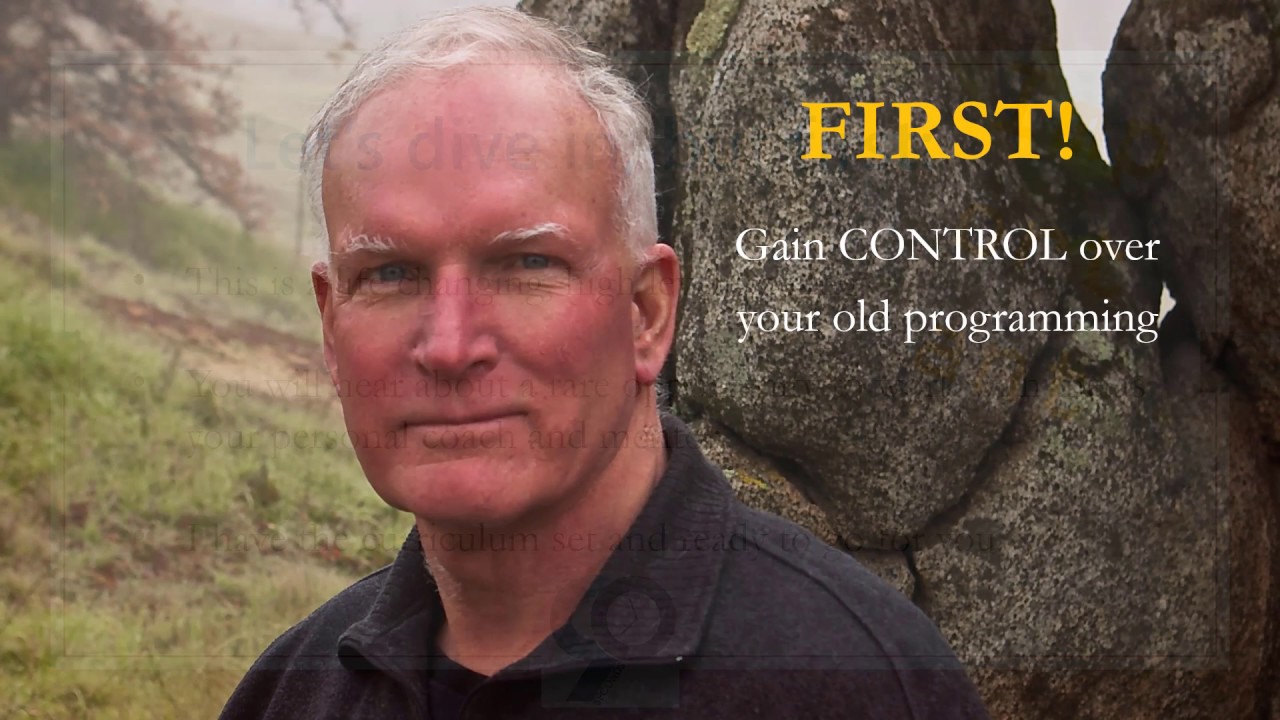
Doug Noll, a lawyer and peacemaker, shares four pillars for connecting with your kids using neuroscience-informed skills. He draws from his prison mediation work to show how emotional invalidation and old family patterns damage relationships, and how to break the cycle.
Chapters
Hi, I'm Doug Noll, and I want to talk about how to be a great dad in 90 seconds. I've spent the last 20 years of my life, since I left the practice of law, helping people resolve deep and intractable conflicts, and I've spent a lot of time studying neuroscience to understand how the human brain deals with peace and conflict. And out of all of that work, I have finally found some ideas in science that really work. And I want to talk about some of those ideas in this video. First, a little bit about me. I'm a lawyer turned peacemaker. One of the things that I've done that's most interesting is the Prison of Peace Project, which I'll talk about in a moment. But I've also had lots of honors because of my work. But the thing that I'm really interested in is helping you find true happiness with your children, and I'll explain why in just a moment. Basically, my career took a typical track. I was a trial lawyer for two decades, and I won big and lost big as a business trial lawyer in both federal my own state courts, but then through a series of circumstances that I won't bore you with, I ended up going back to school and getting my master's degree in peacemaking and conflict studies at Fresno Pacific University in Central California. Essentially, I was trained by the Mennonites in peacemaking, and I took that work out into a professional career. I became a peacemaker and a mediator, and since that time, which was the late 1990s, I've mediated thousands of high-conflict disputes of just about every imaginable type you can think about. And I find the work of mediation to be satisfying and challenging and far more useful, I think, in terms of my work than the work I did as a trial lawyer. As I mentioned before, I've become a student of human conflict, mostly to help me become a better mediator, but also because I'm really interested in why people fight and what they fight about and how they go about fighting, because that gives me insights into what I can do as a third person to to help them get out of the fight if that's what they want to do. My basic story is that in addition to being a professional mediator and lawyer turned peacemaker, is that I like doing a lot of really interesting things. So here you can see some of the stuff that I've done over the years— playing Irish fiddle on a river, practicing my Tai Chi sword. That whitewater shot is on Blossom Bar on the Rogue River, and that's me running the raft. And there I am in Big Sur taking a nap on a nice, beautiful, sunny day. I want to talk a little bit about the Prisoners of Peace Project. In this project, we essentially are teaching murderers to be peacemakers, and this project started in 2010 at the request of a female inmate who was serving a life sentence in what was at that time the largest, most violent women's prison in the world, and she asked us to come in and train the lifers to be mediators so that they could reduce the violence. And we started doing that, and to our amazement, we saw some really big changes occurring with these inmates. These are people that I had never thought of before. I wasn't a criminal trial lawyer. I had never had any dealings with the prison system. I'd never even known anybody who was a prison inmate. And so we weren't quite sure what was going to happen when we went in to start training, but my colleague Laurel Kaufer and I put together a curriculum and gave it a shot, and to our huge surprise, we watched these people become really powerful peacemakers and mediators. And as a result, we were able to acid test a lot of the skills and techniques that I'd been using as a mediator to see if those skills could be transferred to other people and to see if those other people could use those skills effectively in reducing violence in their prison populations. And that's exactly what happened. More than one inmate, in fact I would say dozens if not hundreds of inmates, have come to me over the years and said, "If I'd only known about and learned these skills 25 years ago, I would not be in prison today." So when I said earlier that I'm really interested in working with children, the reason that I want to work with dads is because I think they have the biggest effect on their children. I also think dads are very, very sensitive when they want to be, and so it just struck me that What if I could prevent one kid from going to prison? What if I could teach dads how to be with their kids in a way so that I would never have to teach another inmate because there just would be so few inmates there to teach that my project would no longer be necessary? And I thought that would be a really cool thing to do. So that's why I've developed all of this. Here's what I hear when I go around the country teaching and talking to dads and trying to figure out what's going on with people. I hear especially younger guys who are dads saying, "I don't want to be my I don't like my dad, but I don't know how to be different. And they see themselves falling into the patterns that they swore themselves that they would avoid. I also hear a lot of guys saying that they're shut down around strong emotions, and a lot of guys who feel completely powerless when their children are emotional around them, and they pretty much throw their hands up and turn it over to mom to take over. These are all pretty normal and pretty common responses, and all they are is just indication that there's another thing to learn about emotions and how to be with kids who are emotional. Here's another one: When I feel out of control, I run or I attack and it hurts my child. People get reactive and they lash out because they don't know any other way of being. So some of the common mistakes that lead to these kinds of problems that dads have been talking to me about are trying to solve an emotional problem with logic and reasoning, invalidating emotions, trying to fix things, and allowing old programming to take over unconsciously. The good news is that these are all totally fixable and trainable. So the idea is that you can become a great dad in 90 seconds. Well, let's be clear about that. What I don't mean is I'm going to train you in 90 seconds how to be a great dad. What I mean is that when you interact with your child, especially when he or she is emotional, it usually takes about a minute and a half of your time to get the kid calmed down and to develop a very deep emotional connection with your child. And you're going to do this repeatedly, hundreds and hundreds and hundreds of times throughout the period of childhood and preadolescence and adolescence. And over that period of time as you do this, you will become a great dad. The basic skills that I'm going to teach you allow you to connect with your child in ways that you could never imagine. You'll have control over your relationships and programming, and you'll know exactly how to listen to your child exactly the right way every single time. And there will be no more emotional invalidation or unconscious abuse. Here's a comment I received from somebody who's taken one of my classes. I'll just be silent for a second, you can read it yourself, but I think that it, it summarizes just about as well as anybody has summarized the experience that people have when they learn these new skills. The key is that when you learn how to listen to your children appropriately, they feel heard and understood and become much more open to feedback. All that shutting down that your kids do around you goes completely away because now they feel safe and they feel like there's somebody who really truly is listening to them. And that's what it means to be a great dad. So there are 4 pillars to being a great dad, 4 things we really have to master. First, we have to gain control over the old programming. We have to develop some eye-opening skills, very counterintuitive stuff that you couldn't figure out on your own, and I've only figured out by luck and by some hard, hard, hard, hard studying. You've got to practice this with your kids. It doesn't happen if you don't practice it. And then you got to observe and repeat, and you're going to learn to get better over time, and it really doesn't take much time. To do this, but it does take practice, observation, and then you iterate it all over again. So who is this work for? It's not for everybody. There are some dads who think they're already great dads, and I applaud you for that, and you may not need this stuff. But if you are a person who doesn't want to be like your father and wants a different set of skills and a way of being with your kids, this would be for you. If you want to develop deeper connections with the people that you love and emotions are kind of scary for you, but you still want that deep connection, this is for you. I'm going to show you how to be that way. If you want to be calm and confident in your relationship with others, so you can have screaming kids or even an upset wife or upset parents or upset anybody, I can show you how to be calm and confident in the face of that storm where you always feel in control and you never feel like people are pushing you around and your anxiety completely goes away. I can show you how to do that. So first of all, this is a life-changing high-level training. It is not lightweight. It takes some work, not a lot of work, but it does take some work and some commitment on your part. You'll hear about a rare opportunity to work with me as your personal coach and mentor, and I have developed this curriculum over 15 years. It is set and ready to go, and all you have to do is decide whether or not it's going to be right for you. So first of all, let's talk about gaining control over your old programming. Basically, you need to learn how you were programmed and why. And you were basically programmed by your social environment. That would be the environment of your immediate family when you were a child. And all this programming occurs unconsciously. And the behaviors that you have today are a direct result of the behaviors and programming you learned as a 3-year-old. There's a recent study that came out that showed that neuroscience can look at the brain of a 3-year-old and with 80% accuracy predict whether that kid is going to go to prison or not. That's how powerful this stuff is. The good news is the brain is very plastic, and so it can reprogram itself, and I'm gonna show you how to do that. That will allow you to make choices about your behaviors, not your unconscious programming, and you can choose how you want to be, basically jumping back into the command chair. So just think about some of these. Are you in control in any of these situations, or is something else in control? The key is that nobody else is going to do this work. It has to come down to you. I can't do it for you. Your wife can't do it for you. Friends can't do it for you. You have to do the work yourself. I can show you the path. I'll be the Sherpa guy leading you up the mountain, but you've got to make the decision to do this stuff yourself. So the second thing that we're going to talk about in all of the work that I do is emotional invalidation. Basically, it's an unconscious response to your child's emotions. You've learned it from your parents who didn't know any better, and you engage in it to soothe your own anxieties. It's the kind of stuff like, "Don't be a sissy," "Don't be a brat," "Stop crying," "Grow up," "Be a man." All these things that you say to the 2-year-old boy, your little 2-year-old boy or 3-year-old boy, are emotionally invalidating them. They're basically basically telling them emotions are bad, I shouldn't feel any emotions. And pretty soon they learn that emotions are to be avoided, and of course that creates great difficulties by the time they get to 15 or 16 and they're trying to create their first relationship with a girl, and they've been emotionally avoidant all their life, and all of a sudden they've got to get into their first romantic relationship, and it usually doesn't end very happily. You can stop all of that by learning how to not emotionally invalidate your child. The third part of this is learning to master new ways of being with your children. And here's the key: we are 98% emotional and 2% rational. I always get pushback in my graduate classes when I take this on, especially in the law school where I work, because the young law students think that we're totally rational beings and emotion is a bad thing. The truth is that even if you were to— on a simple measure of brain mass, our emotional centers are huge compared to the rational centers of our brain. And the other thing that's really amazing that neuroscience teaches is that without emotions, we can't be rational. And there's a whole bunch of science behind this. I won't take the time to explain it now, but we really are 98% emotional and 2% rational. We are emotional beings with occasional moments of rationality. If we could begin to recognize this and accept that we are emotional and emotions are not bad— emotions are what it means to be human, especially for men— it'll freeze us to start learning how to master emotions and listen for emotions in ways that are quite powerful and transformative. So what if you could just be the best dad that you could possibly be? What if you could have this deep loving connection with your kids and so they would be more than happy to see you? They would have this deep bond with you that was really meaningful to you and developmentally powerful for them. How would that make you feel? Think about that for a second. So at this point you have to decide: are you going to do this on your own? Or are you going to save a tremendous amount of time and struggle by letting me help you get this right? Actually, it won't take long, as it turns out. We can do this a couple of ways. One is you can hire me privately for a Dad Makeover, and I'm happy to work as your coach and mentor and trainer, which I've done for many people. And I'm happy to do that, although I will tell you, I am expensive, but I am available if you'd like to do that, and we can talk about that. The second thing is that you could leverage my expertise in the Become a Great Dad in 90 Seconds online course. You can decide what's best for you. You can hire me as a coach or you can go to the online course. So, let me tell you a little bit about the course. It's 8 video lessons. Each video lesson is less than 20 minutes long. It comes with a workbook full of exercises and there are worksheets, guides, and checklists in the worksheet that you'll work through. So, what to do now? Basically, to sign up to Become a Great Dad in 90 Seconds, you can go click on the PayPal button, just pay for it, and then you'll get an email with login credentials and and then you log in, change your password, download the workbook, and go to the first lesson and watch the first video. Very simple. I've helped thousands of people just like you, so having my personal guidance and experience, you save years of struggle and heartache. And you have to ask yourself, what's the value of, of being strong, confident, and calm no matter what the circumstances are? No matter how angry people are in your face? What's it worth to you? So, is this for you? You want to be calm and connected without the drama? You want fresh new ideas and skills on how to be a better father, especially a better listener? You want to feel close, connected, and respected and loved by your children and your spouse? If so, you should look at this. At some point, you're gonna have to decide that struggling to figure this all out on your own isn't gonna work for you and you need some help. You have to decide, however, when is the right time to tap into your courage and move forward. The question is, when's the right time to do this? You can avoid the problem for as long as you want, but it's never gonna get any better. Or you can confront it Take a deep breath, dive in the deep end, and learn how to be a great dad. So here are my commitments to you. One, you'll know exactly what to do when faced with strong emotions. There won't be any question about it, and you won't have to think about it. It's just going to become an automatic, habitual response. You will, through simple practice, reprogram your old patterns, and that will change you in ways that you will be amazed at. You will find listening to your spouse easy and enjoyable. It won't be an effort. You won't feel like you're being bored to tears. You'll actually be so focused on them that everything else around you will disappear. Appear, and they will notice that and love you for it. You will transform your life and the lives of those around you. This is my commitment to you. Sign up now, learn from an expert, and become a great dad.
More from Doug


When the Amygdala Fires, Talking Is the Worst Thing You Can Do (Here's What Works)

Every Difficult Conversation Is Actually Two Conversations (Most People Miss the Second One)






Why Traditional De-Escalation Makes Emotional Flooding WORSE (Prison-Tested Neuroscience)