Synthesis of the work of Gordon Neufeld and Doug Noll
In this talk Doug Noll presents a synthesis of Gordon Neufeld’s ideas about human development, focusing on three interrelated pillars—maturation, vulnerability, and attachment—that together unlock a person’s potential. He explains Neufeld’s three maturation pathways (adaptive, emergent, integrative) and introduces the concept of emotional "stuckness," which he equates with alexithymia: a child’s inability to feel, label, and process affect. Noll critiques the dominant behaviorist, reward‑punishment (utility) model of parenting, arguing that it invalidates children’s emotions and halts maturation. He advocates affect‑labeling as the primary parental skill: first naming the child’s feeling, then providing space and guidance, before moving to problem‑solving or consequences. Practical examples illustrate how to normalize messy emotions, use physical outlets, and maintain a judgment‑free stance. Noll extends these ideas to mediation, noting that adults often revert to child‑like stuckness in conflict, and that affect‑labeling can help “unstick” them. Throughout, he emphasizes that emotions are innate affect, while emotional understanding and regulation are learned, requiring intentional parental practice.
Chapters
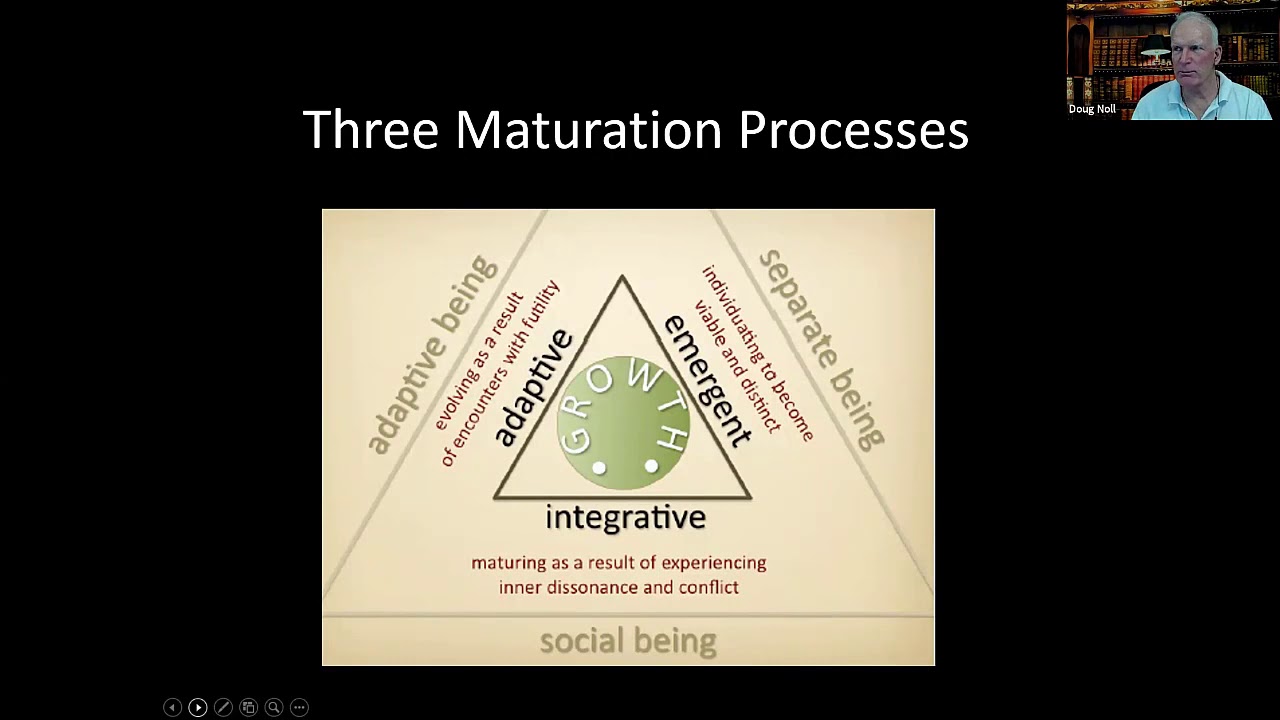
As I said, because I am very interested in the broader implications of the work that we're doing around affect labeling and emotions, and I've come to realize how powerful this work is, not just in de-escalating angry people, but in basically changing people's lives, whether it's happening in the prisons or in all the other work that all of us do in this stuff. So I got, I was out on the web looking around to see what kind of resources were out there and I stumbled on the Neufeld Institute. And Gordon Neufeld is, he's a Canadian out of Montreal. He has been a university professor. Interestingly, he is, he's a lot like me in the sense that he doesn't do any independent research himself, but what he does is synthesize the ideas of other people and comes up with new ideas and new ways of thinking and new ways of doing stuff. And he's really engaged in trying to work with children because he was very, he's very funny about that. He says adults are too slow, children are very fast. We can, we can work with the children and it's really fun to work with them because once you get going with them, they, they can move very quickly and we can get them unstuck very quickly. So the adults are just, they just takes forever to get them unstuck. And this term unstuck is sort of a term of art that he's developed that we'll talk about here in a few minutes. So if this were— if what I talk about tonight is of interest to you, check out the Neufeld Institute, and, and he's got— they've got a lot of material on the website, and it's all about emotions, which is why it's so good. So Neufeld talks about how we're on a path to unlock our human potential. And this path of unlocking our human potential is, it's natural, it's spontaneous, and it can't be learned. It just has to happen. And this unlocking of human potential, whether you call it self-actualization or self-awareness, you call it all sorts of different words that people have used over the years to describe what happens when you become mature, or when you become, you realize your potential as a human being, comes from three basic things happening. One is dealing with the process of maturation, which we're going to talk about tonight, dealing with vulnerability, and dealing with attachment. And he defines maturation as freedom from impediments, and we'll talk about this in a moment, but the impediments are essentially forms of emotional invalidation. That, that children are faced with because of their parents. Vulnerability is freedom from defendedness, and his basic thesis is that we live in a very wounding world. It's a very dangerous, emotionally unsafe world we, we live in, and unless we're taught from a very young age how to manage our really negative emotions and manage them appropriately, we we will suppress them, and we'll go into this in more detail in a few minutes. And that lends itself to all kinds of problems. And then we have attachment, which is freedom from the pursuit of proximity. Attachment is the way that we bond with each other, but we have to be able to— Khalil Gibran said, you know, sycamore and the oak, right? They stand together but they stand apart. And that's a beautiful metaphor for a mature being who's got— who's free from the pursuit of proximity, freedom, free from an adult perspective from, say, codependency. So that's the basic concept. So he says that maturation is a spontaneous process that unfolds naturally unless impediments get in the way, and it's these impediments that I think are so interesting. So we're going to just sort of look at that. Maturations not inevitable. We can grow older, but we don't always grow up. And in fact, adult immaturity is probably the biggest problem we face on the planet right now. For adults who have never grown out of— they've never gotten unstuck emotionally from childhood, and they carry that stuckness into their adult lives, and they get into positions of power or wealth or or whatever, and all of the problems they had as children manifest in their adult lives. Um, so age is not a determinant of maturity at all. So there are three maturation processes that he talked about: the adaptive, the emergent, and the integrative process. The adaptive process is— evolves as the ability to deal with futility. In other words, when you encounter something that you cannot change, can that event or circumstance transform you? And he's not talking about adapting to it by repressing or suppressing or other kinds of mechanisms that don't help. He's talking about the ability to accept futility and the frustration and the fear and the anxiety that occurs around futility and just accept it for what it is and allow it to push you into growth. He talks about emergent, the emergent path or the emergent process, as this is the process where we, we move from becoming from a child where we're dependent upon our caregivers, our parents, to eventually emerging as a, as a butterfly out of a chrysalis to be a completely individuated human being. Where attachment is necessary because we're social beings and we attach socially, but it is not, uh, but we are not overly bound to attachment. And, and so it's individuality to become viable and distinct from other human beings. And then he talks about the integrative process, which is maturing as a result of experiencing inner dissonance and conflict. So look at how maturation has to happen. It has to happen as a result of conflict. The conflict of dealing with something that you cannot change, the conflict of being, of seeking attachment or love, but then recognizing that you have to individuate, you have to be your own self, and the inner dissonance and conflict that teaches you how to manage really disparate negative emotions inside yourself at the same time. And that's the process of maturation. And what he says is, so here's, he goes into talking about adaptive, he says, obviously the adaptive process evolves as a result of encounters with futility, the emergent individuality to become viable and distinct, and as I said before, the integrated maturing. Let's go back to that. Maturing as a result of experiencing inner dissonance and conflict. So then he gets on to this idea of stuckness, and stuckness is the arrest of maturation, and every child at some point in time becomes stuck, and some children become more stuck more often. Sometimes it's a minor stuckness, sometimes it's a major stuckness, but he says all, all behaviors that we see in children are— that we don't like— are as a result of being emotionally stuck. And he said something that I thought was really interesting. He said, so basically in the 1980s, learning theory and cognitive behavioral therapy and behaviorism took over, dominated education And these are all rational, rationalist perspectives, and he said they're all wrong. Because what they say is they look at a behavior and then they look at a consequence, and it's all utilitarian. In other words, what they— or it's expected utility theory is the right way to say it. So what that means is there is an assumption by all of these so-called experts that if you have a behavior that you want to change, you have to create incentives and disincentives to change that behavior. You know, expected utility theory, carrots, you know, carrots and sticks. And Neufeld says this is the absolute worst thing you can do to a child. The worst thing you can do to a child is this sort of thing. You have to let them experience their emotions, and this is the great challenge. He says what happens is that well, we'll see this in a moment, that when we get to a place where we're no longer able to feel our emotions, our brain is unable to move us and the impulse to maturity is stopped. So when we see stuckness in children, it's because they are no longer able to feel the emotions. And I'm going to say, he doesn't define emotions very well, I'm going to say affect, especially if we're talking with young children. Young children do not have the ability to feel their affect and then ultimately to translate it with words into emotions. And when that happens, they become stuck, and if they're not helped out of that, then it just leads to them engaging in behaviors that people don't like— bullying and being impulsive and being restless and being intemperate, all this, all these childhood behaviors that people don't like. And it doesn't have anything to do with behavior, it has everything to do with the fact that they're emotionally stuck. And if they don't get unstuck, then they're going to carry all of this stuff into adult behavior. And the reason this resonated with me is as a mediator and peacemaker, when I'm walking into these conflicts, I see this stuckness all the time. And Tracy and I were talking about this. I mean, you, we just see these people, good people, professional people, but when they're engaged in conflict, they're emotionally stuck and they can't feel their emotions and they can't act mature. They are acting like they did when they were 6 or 7 years old because that's where they were stuck in their emotional maturity.
I think I had, um, said that, shared— I'm sorry, is that okay to interrupt?
Oh, absolutely.
Okay, okay. That, that I, um, was working with this client and we're separating these toys and, and, um, uh, games for their children And it was like the wife, the woman, she's in her 30s, she was like 6 years old again. And she's going through these little toys and the books and even her voice kind of changed. She kind of became like a little kid as she's going through this stuff and discovering which one she wanted to keep and everything. And it made me sad. And I thought, oh, but she was stuck at that age of development.
That's right.
And then my question is, when you said they're stuck, does that mean that they're a Alexithemic.
Yes, absolutely. Good connection. They're alexithemic. Okay. And they don't have the ability to feel what their emotions— they don't have the ability to take affect, whatever affective experience they're having, and categorize it into an emotion. So they're by definition alexithemic. That's being stuck. Excellent. So the 3 keys are, first of all, emotions need to be expressed. Kids need to be able to say, "I feel frustrated." Emotions need to be felt, and here's the thing that I think is really interesting. He, Higfeld, says that it takes time to learn how to feel emotions, and this is really mind-boggling. It's exactly what I've been talking about, and that is this whole process of emotional categorization. Children have to learn how to process affect, which they're born with, into emotions appropriate to their culture. And that's a learning process that takes time. And, and parents don't give children the time to go through this process. Um, and self-control requires inner development. Inner development requires being able to feel emotions. And the ability to feel emotions means that emotions have to be expressed. And here is one of the problems, the very first, the primal problem is that emotions are messy and noisy and chaotic and unacceptable and alienating and they're wounding. They, we all know this, and so how do we, how can we be present for a child that is just in an emotional chaos? And what happens is that as I've talked about before, the reason that we emotionally invalidate is because these— the child's emotions produce an anxiety that compels the parents to prematurely impose order on this uncivilized behavior, this process of emotional invalidation, which is the worst thing you can do to a child. Because when you start emotionally invalidating, uh, you are telling the child that there are many difficult or negative emotions that are outside acceptable parental parameters. It's not okay to be angry. It's not okay to be frustrated. It's not okay to be sad. It's not okay to be enraged. Totally not okay. And one of the comments he made was, is that if you see a, a kid who seems really well put together and is perfectly polite and, and is under control at all times, he said that kid's really screwed up and, and that kid's the time bomb that's going to happen down the road. So we don't want our kids to be all put together, prim and proper. That's the worst thing we can do for them. Interesting, huh? This totally flies in the face of how we think we should be raising kids. So as children, we learn to suppress these outside emotions, outside the norms, outside what's acceptable, because those emotions create an attachment alarm, the fear of separation. We get punished, we get timeouts, we told to go to our room, we don't get dinner, whatever the punishment might be. And the punishment is because we're having a negative emotional experience. That the parents can't deal with effectively. And so this is how we start building the walls. This is where the shutdown begins, and it starts at the very early stage, 18 months, 2 years old. Um, so for emotions to be expressed, there must be freedom from judgment. And so that means no emotional invalidation at all. And here's the other thing that's really interesting. When children are told to behave, stop being angry, don't be sad, or it's okay, you know, don't be a sissy, whatever, whatever the invalidating statement might be, they don't hear the behavioral admonition. What they experience is the judgment that they are bad human beings for having these negative emotions. Think about that, it's really profound. So the parents are trying to use this rationalist utilitarian, or you expect a utility value on their kids and it's just not working, it's having exactly the opposite effect. And so of course that means that parents must learn to be present with their child's emotions and that's really hard, and they must learn to create space for their child to express the difficult emotions, all the negative and ugly stuff. And of course parents have to learn the only solution to fix this is affect labeling to help the child express his or her emotions and also to teach the child the words that are associated with the affective experience. So this is the one of the primary roles of a parent is to teach a child how to mature by understanding, but helping the child understand his or her emotional experience. Newfeld makes this very important point that I, I talk about in my lectures, and that is that feeling and expressing emotions is a learned behavior. It is not innate. Affect is innate, emotions are learned, and, and we don't take any time in our culture to teach our kids how to be emotional. We don't spend any time at all. All of, all of formal education is around task Task system processes. None of it is around the social system processes. So there's just a huge part of our brains that are left undeveloped by our educational system and by parents because they don't know any better. So parents must accept, invite, assist, and remove the impediments to emotional expression. They have to allow their children to express whatever they're feeling and then help that child articulate those feelings so the child can make sense of them. And the child has to know that all emotions are invited, not just the nice emotions. All of them are.
I have a question here.
Yeah.
So, so if, if a child is expressing what we would probably call as a parent like unacceptable emotions, they're hitting their sister, brother, they're angry, all that is— I mean, there's a time where you, you affect label them first and then you give them instruction.
That's right.
How you're going to do, but the point is that you must affect label them first before you can—
That's right, that's right. Otherwise, the, the, the trying to change the behavior by, by punishing or instructing or whatever is a problem-solving mode, which unless it is preceded by affect labeling becomes invalidating, judgmental, and creates shutdown.
But at the same time, you don't just affect label and not give instruction if they're doing something that's really destructive.
Correct. Correct. I mean, this is not— we're not talking about not providing consequences to children or to kids if they misbehave. What we're talking about is how we go about approaching, how we approach that, and we approach it by affect labeling first. Getting the child to understand his, express his or her emotions, understanding what the emotions are, and then you can— and just like anything, like in a mediation, you get the child calmed down and now you can start to problem solve. We actually have a discussion. Zara, hand up.
Yes, so, and I'm sorry it's a bit dark, I don't know if you can see me, I've got a little light. So an example of that, Tracy, would be, you know, you've got toddlers and a new baby and the toddler's really frustrated and you say, you're really frustrated, you have hits in you and you've got kicks in you and let's "Let's find a way to get this out and let's throw these beanbags and let's, you know, hit this." So what you're doing is you're normalizing the feeling of frustration and you're helping them move it through their body in an acceptable way.
That's right. Yeah, good, good.
That's age-appropriate.
Yes.
And the point is that 5-year-olds should never be— well, okay, first of all, I want to make this point that we cannot divide the world into acceptable and unacceptable emotion for children. All emotions are acceptable. And parents who are pressured by time and circumstance, you know, they got a toddler melting down in the supermarket, doesn't matter. It doesn't matter. You don't yell at your child for having an emotional experience. You just don't. So this was interesting. Until 5 years old, only one emotion at a time is fed into the prefrontal cortex. So the child could be experiencing all kinds of different affects, but only one emotion is going to process itself. And it isn't until the child's about 9 years old that he or she can begin to process multiple conflicting emotions at the same time. So how do we— how can we even hold children accountable for their for their behaviors when their brain's just not even processing emotions very well up until 9 or 10 years old, and even then it's not very good, but it's— but that's the point when we start to see a little bit more maturity, and because children are now able to process, if they've been well trained and have had good experiences, they can process negative and positive emotions at the same time. This is another rubric that I found really interesting, and that is the child is not responsible for his emotions too early. The parent is responsible for the child's emotions. It's the parent who has to coach the child about emotional experience. It's the parent who has to react to the emotions in a, in a non-judgmental way, even if the behavior is outrageous. It's not about the behavior, It's about the underlying emotions that haven't been expressed that lead to an acting out because the emotions have not been expressed. Very different than the rationalist perspective on child rearing. And of course, the big challenge to this is that it triggers all of the unfinished business the parents have around their emotions because they are undoubtedly stuck themselves. And so when their children— I mean, people always say, "I'm never gonna raise my kids the way I was raised," right? And what do they do? They revert back to, in their parenting, to how their parents parented them because they themselves are stuck and they can't— and so they get triggered, parents get reactive, they get angry, they get judgmental, they get mean, they get nasty, they cuss at their kids, they They tell their kids to behave or else, threats, all of this stuff. And it's all a reflection of their own emotional immaturity. And this is what one of the reasons why this problem of emotional immaturity perpetuates itself generation to generation and why, why there are so few people who have really been able to unfold their human potential in really, in the really the ways that we should be able to experience. So of course affect labeling is the key, and Neufeld does know about affect labeling, he doesn't use these words, he kind of talks around the bush but never really gets quite to it. But these lectures were in 2013. Well, I started affect labeling in 2005, Lieberman's study came out in 2007. I don't think that he would really know much about affect labeling unless he was really studying the literature, which I don't think he was. But, but he does talk about the importance of labeling emotions, but he never uses the word affect labeling and doesn't talk about the skills. But the point is that we're teaching— parents must teach the words that match the child's inner experience, just like Zahra was talking about a moment ago. And words are symbolic expressions that stop the acting out for all the reasons that we know. Why does affect labeling work? We're basically lending our prefrontal cortex to our child who can then process the emotional affective experience into emotion and that calms the brain down just automatically. So here's an example of— this is one of the pictures he has. So he says a child could experience frustration And he doesn't like the word anger, I disagree with him on that, but he says okay, so frustration can come from all kinds of places and if the frustration is not allowed and the frustration arises out of having a sense of futility, the child can't change something that the child wants to change and so it's feeling powerless, disempowered, victimized, The feeling that the child is feeling is futility, and so now it naturally goes to frustration, and that leads, if it's not expressed, if that frustration is not expressed appropriately and it's not affect labeled appropriately, then we can see all kinds of behaviors such as fighting, hitting, tantrums, insults, sarcasm, hostility, foul words, self-attack, hiding, concealing, shame, justifying, self-blame. Kids get older, they're going to start to cut, you know, self-mutilation. All of this comes from the inability to express this intense frustration that the child is experiencing at encountering a futile situation where change cannot happen. And the secret, the secret to good child development is, is to ignore all of those behaviors for the most part and work on expressing the frustration, linking it to the, to the futility, whatever the futility is, and then to the degree that there has to be a teaching moment on appropriate behavior, then that moment, that moment comes after you've, after you've done the affect labeling work to help the child work through and express the emotion. And that's the secret, and that's radically different than the way the way most people, the way most people see stuff. So that's as far as
More from Doug


When the Amygdala Fires, Talking Is the Worst Thing You Can Do (Here's What Works)

Every Difficult Conversation Is Actually Two Conversations (Most People Miss the Second One)






Why Traditional De-Escalation Makes Emotional Flooding WORSE (Prison-Tested Neuroscience)