Boost Your Testosterone Naturally | Myths Debunked & Real Advice from the Expert
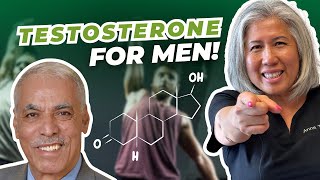
A recorded interview (June 29, 2024) where Dr. Anne Truong interviews Professor Trish (Boston University) about testosterone biology, diagnosis, clinical management and misconceptions. Key points: testosterone is a multi-system hormone (metabolic, vascular, mental and sexual), age-related decline begins ~age 40 (~1% per year) partly from ~40% loss of Leydig cells and reduced hypothalamic–pituitary signalling; free (unbound) testosterone is the biologically active fraction and is harder/expensive to measure (equilibrium dialysis or LC-MS); the commonly-cited 300 ng/dL cutoff is arbitrary (originated in an FDA advisory meeting in the 1980s); recent large randomized data (the TRAVERSE trial, ~5,000 men, up to ~4 years) reported no increase in prostate cancer or cardiovascular events with testosterone treatment; testosterone also has clinically important roles in women but is under-recognized and under‑approved. Practical advice emphasizes lifestyle (weight loss, exercise, sleep, stress reduction) and individualized titration of therapy to symptoms rather than a single lab cutoff.
Questions this video answers
Decline begins around age 40 and progresses at roughly 1% per year (as stated in the interview).
About 40% of Leydig cells are lost with age (guest's statement).
Described in the interview as about 5,000 men with follow-up up to ~4 years; the study found no increased prostate cancer or cardiovascular events with testosterone therapy (as reported).
The 300 ng/dL cutoff was described as originating informally during an FDA advisory meeting in the early 1980s (an advisor offered the number) rather than from a clinical trial.
Equilibrium dialysis and liquid chromatography–mass spectrometry (LC‑MS/MS) were named as accurate methods for measuring free testosterone; calculated free T using total T, SHBG and albumin was described as an acceptable approximation.
Chapters
Well, hello there modern man. I'm excited today because this is a long awaited talk. I have a special special guest, Professor Trish from Boston University. He's essentially the leading authority on research on andrology testosterone and everything you want to know about it. I've learned everything from him regarding testosterone and hormones and attended a stellar talk on in January and that's how we connected. So welcome, Professor Trace.
Well, I, first of all, let me take a moment and thank you for inviting me to participate in this conversation and I hope I will be able to provide a reasonable answer to your question. And I hope your audience can be patient with us and just give us a chance to try to clarify some of the real issues that they may be confronting. For that I am very happy to be here.
Well, thank you for being here and that's why we're here. I want to give you information from the top expert, not from Internet, no nonsense stuff. This is from the expert, from the deer mouth themselves. And I'm sure you're going to get lots of value from that. So Professor Trish, let's start. What is testosterone? Why should a man care about testosterone?
Let me take a moment and just say something about testosterone physiology in a human health. Interestingly, testosterone is a chemical messenger and this chemical messenger is needed like a fuel for many of our body cells. Our muscle cells need it to function. Testosterone blocks cells from going to become fat cells. Testosterone is needed for our syndrome nervous system to make it function. Testosterone is important for our reproductive function. Testosterone is also important for our sexual function. Testosterone is important for our hair growth. Testosterone. Testosterone is important for keeping our skin healthy. Testosterone is keeping our liver healthy. It's amazing how important this chemical messenger, which I call fuel in terms of maintaining our overall health. And here's a very simple thing that I want to kind of give your audience. In 1907, farmers in this country found out that if you take testosterone away from the male chicken, they gain roughly more than two pounds of weight. So to sell more chicken they actually do what they call carbon and they castrate their rooster in a young age. Within six weeks the chicken become two pounds greater so they can sell it for more money and also is more juicier. I also want to tell your audience, if you have a vet male animal like a pet cat or a pet dog which is male, and if it's neutered, you notice that in few years it gains more weight and become diabetic. So testosterone is an important hormone that regulates our metabolism. It regulates how our sugar in Our body is metabolized, it regulates how fat in our body is utilized, it regulates how we maintain protein. So testosterone is a metabolic hormone, is a sexual hormone, it's a vascular hormone, and in my view it's also a mental hormone. Because recently there was quite few studies that says as you grow a little older and your testosterone goes down, your chances of getting dementia and Alzheimer's disease is very high. So testosterone is really a fuel for the body. And once that fuel in the tank becomes listen, listen this, we're gonna become a bit more friend and a bit more fatty. We all get buff bellies and we're not going to be able to walk as fast and we're not going to be asleep as well, and we're going to be fatigued here and there, going to be forgetful. So that's my message about the Cesaron. Now the interesting thing in my view is that whether it's nature or big bowers or whatever, I don't want to get into any of that. The body has a manufacturing plant called the testis, and it's there to produce this hormone day in and day out. I don't believe if it's not important physiologically to keep our health, why do we need this organ pumping testosterone? Of course, when we're young, in our 20s and 30s, you know, we are athletes and we do all kind of whatever. As we grow the order in our late 50, me, 61, 70, you know, the testes are still there, but the cells that make the testosterone become fewer and their ability to manufacture this efficiently is less. And that's why as we get older, we actually get much more flailer and get frail and we get both bellies, we call it metabolic syndrome, and we get loss of our muscle and so forth. So testosterone is an important metabolic and vascular hormone that human body and our overall health depends on it.
So it's not just for sex, because oftentimes testosterone, a male sex drive and getting erection, all that. So it is for your mind, it is for your mood, it help with your bones, it help for your heart, it help build muscle, it even will control your fat as well too. And like you said earlier, is that if you have less testosterone, you're gonna gain a little bit of weight, as you had mentioned about the rooster. So having said that, I thought about something. Why does the testicle which make testosterone, other than aging, what happened to the testicle that as you age you make less?
There was really, really some nice studies in the animal model and they found out there are two Things one, there's a cell called Leydig cell. They give it a name because the guy who discovered this cell is the place where testosterone is manufactured. As we grow older, we lose about 40% of these cells. So basically, this manufacturing plant loses 40% of its capacity. That's number one. The other thing, the way testosterone is made, it needs a signal from our brain. So our brain sends a signal to the test that says you need to make testosterone. With age, that signal becomes a little fuzzy. The lighted cells don't really respond to that signal as good. So there are two things. One, we lose 40% of the cells. Second, the signal that activates the cells, the cells don't respond to it as good as they would. And that's why with age, we actually lose. We lose roughly tests around about 1 to 2% per year.
What age does that start? What age.
By the way? It starts with age 40 and goes on 1% per year. And this is documented in many, many human studies. I mean, it's well documented. But here's what I want to say something. Our body is a beautiful machine. And our body is a beautiful machine because you wants to make sure nothing goes out of place. So we have a protein called sex hormone binding globulin. And this protein keeps the testosterone in circulation. And when the cell is needed, it can come off and it gives it to the cell. Unfortunately, as we grow older, the liver makes a little bit more of this protein, which called sex hormone binding globulin. And it sponges the testosterone. So even if we're making just about some of it is captured with this protein and it's not available to be active physiologically to make the cell function as we see it. So as the liver makes more of this protein and as we grow older, let's assume you have $100,000 in your saving account. But the bank puts that you can only take 1%. The other 90%, you can. So you do have $100,000, but you cannot go out and take 90,000 and buy a new small scar. So this sex hormone binding globally sponges the testosterone. So it's not available to the cells to function. It's not available to the muscle cell, to the liver cell, to the brain cell, to the, you know, penile cell, to what have you. And unfortunately, that's where there is the terminology. And I'm sure people Google which it's fine. There is something called total testosterone levels, means the testosterone in the blood, but only the free fraction, the one that is not bound to sex hormone Binding globulin and it's not bound to other proteins is the one that really acts physiologically. That's the real money. It's what you have in your pocket. It's what you have in your pocket to buy cappuccino with is your money. The other is saving account. The bank put whatever clothes in it and you can't withdraw it. That's exactly what happens, right?
And that leads me to this question and I wonder myself. So is the free testosterone that is active and the total testosterone also include the one that is bound to the protein called sex hormone binding globulin or shbg? So why is it all the study always quote total testosterone, total testosterone, then they don't mention free testosterone as well. Because most studies you read, they always mention total testosterone.
Very simple fact. The simple fact is that it's easy to measure total testosterone. It's not easy to measure free testosterone. To measure free testosterone you have to use one or two methods. One called equilibrium dialysis, which requires a lot of labor, a lot of time. It's probably the gold standard, but it's too expensive. You as a physician in a hospital, when you order blood tests and you order free testosterone, the hospital would rather pay $15 for tests rather than $200 for test. And it, it's quicker. You can get it set within 24 hours. The other one would take maybe two to three days or a week or so. One problem is the analysis of pre versus dottel testosterone. And it's so easy to measure total testosterone. It's really complex to measure free testosterone. The other analytical tool is called GANS liquid chromatography, mass spectrometry, which is big terms, basically you have to do serious refined analytical procedure that takes complex methods and lots of experience. And it's very expensive. The tools are very expensive too. So the equilibrium dialysis and the mass spectrometry are the two tools you can measure free testosterone. Total testosterone is easily measured by radio assay. Now someone in Belgium many years ago says you don't really have to go to equilibrium dialysis. You don't have to do mass spectrometry. What you can do there is a formula. Since we know the affinity for the sex hormone binding globulin and we know the affinity for serum albumin and we know all these kinetics, we can just develop an equation and a calculator. And so there is a calculator which you can find in the web. If you have total testosterone and sex hormone binding globulin, you can Find what they call testosterone 3 index, which is approximation of. It's not exactly as free testosterone, but it's an approximation and many studies says it's reasonable. It's basically like currency exchange between the American dollar and the Canadian dollar. You lose few cents, but you're not going to lose much. But I agree with you. Many of the published studies talk of testosterone. But the honest way of thinking, look at the biology. The cells do not see the sex hormone binding globulin, testosterone bound. They don't see that they can only access the pre testosterone. So your muscle cell, your liver cell, your brain cell, your whatever kidney cell, whatever other cell that needs testosterone, they cannot see the bound one. They can only see the fraction which is free. And if there is less free, although you may have totaled a lot, but it's all bound to sacrament like long live. If you have fewer three, then you're going to be androgen deficient, you're going to be testosterone deficient. And there is a very nice study by a young woman of Belgium, she's very smart. I just met her last week at our meeting and she published a very nice study. And I'm going to go through it. Not the whole thing, just simply. She took men which has total testosterone in the normal range and free testosterone in the normal range. Then she took a bunch of men where their total testosterone is the normal range but their free testosterone is low. She took a third group of men or their normal testosterone is below the normal range but their free testosterone is in the normal range. And then they evaluated their sexual function. This, this a whole bunch of categories. And guess what? If your testosterone, both total and free in the normal, you are fine. You check everything nicely. But if you have normal total testosterone but low free testosterone, you have all the symptoms of hypogonadism, depression, lousy mood, low energy, fatigue, lethargy, sexual dysfunction, and on and on. Interestingly, those who have low total testosterone but normal pre testosterone, they're okay. So it's the free testosterone that matters, it's not the total testosterone. The only reason, as a biochemist I believe in that because the cells can only sense what touches them. Not something in a box somewhere where they cannot reach it. Basically.
Right. So essentially if you need some quick evaluation total of testosterone, you can just get the total testosterone and, and SHBG and albumin I believe. And then you plug it into the formula and you can really get free testosterone level, which you said maybe plus or minus 10%, right?
Yeah, yeah, it's validated, it's Reliable enough?
Yes, it's reliable enough. So that's good. That's really good to know because you're absolutely right. Because when I order testosterone it takes like about three to four days to get the free testosterone back and it does bring a little bit of higher cost to the blood work. So I love that explanation, what you said and what you said. So it's the pre testosterone that matters. So listeners just know that if you are getting your testosterone level check, make sure you get the total and the free if the doctor can order it. If not, you can calculate it. But as long as your doctor order shbg, sex hormone binding globulin and albumin and you can certainly google testosterone calculator and I'll put that link in the show note today as well. So having said that, I learned something so interesting. Your talk was that each man has a different receptor and that is how he respond differently to different levels of testosterone. So can you kind of explain that to us and how that can kind of present clinically?
Let me make it clear, I want to correct something. I mean, why make sure. So testosterone gets into the target cell, whatever cell that needs it. Once it gets to the target cell, testosterone have a choice. Either get hugged by the androgen receptor, captured and hugged by the Android receptor, or it can get converted into a really much stronger androgen called dihydrotestosterone. Dihydrotestosterone gets a better hug and a much closer hug with the receptor. What I said that we all have androgen receptor. Every man has androgen receptor in many of his tissues and cells. The question is the androgen receptor in one person is not the same in the other person. Because there's something at the beginning of the receptor gene that for some it's more sensitive, for others it's medium sensitive, for others it's less sensitive. Myself and my cousin, we both have the ambigen receptor and we both respond to testosterone. But I may respond better than my cousin because I have a short tail at my receptor, he has a longer tail at his receptor and therefore the response is different. He may require higher testosterone level than me because my receptor is, is more responsive. And that's what I really meant with that. So we all have the androgen receptor. So the androgen receptor is the same except for some of us, our the androgen receptor is very sensitive and produces much more biological effect. For others the receptor is there, but it requires a much more bush, it requires much more oomph to reach the same level. And this is because the gene for the androgen receptor from one person to another has a tear in its DNA that is transcribed into RNA and then into protein. And this makes the receptor either very sensitive, moderately sensitive or less sensitive.
That's an excellent explanation there. So having said that, what that means is that every man switch spot for their testosterone is different. And that's what we see clinically is that some of my patients do well on total testosterone at 500 level and some need 700, some need to be even in the 800 range to feel better. But you have to understand that individuality of the androgen receptor. And then. But what I see sometime is that patient come in and clinically they just totally give them a bunch of testosterone to drive their level so high that it's super physiologic or really above the range they should be and they actually start to feel worse. So testosterone is the sweet spot. If you give too little, you don't feel well, you give too much, you don't feel well either.
I have to agree with you 100% on this. I think we have to really appreciate the following. Biology is a very fascinating phenomena. Think of it, everyone has his own engine with his own fuel tank, with how many cylinder. Some of us has four cylinders, some of us had six cylinders, some of us eight cylinder. I don't know if there's anything called one cylinder and therefore each of us have. But I agree with you on the sense that. So for some men the total Testosterone levels of 350 to 400 is fine, they run smooth like a clock. But for others, 350 to 400, they are lethargic, they fatigue, they have no desire, no libido. You put them at 650 and they bust. But for others they need even a little bit more. So unfortunately, and I want to make sure I don't criticize anyone in particular, our clinical community have gotten something wrong is that there is a cutoff point. And, and this cutoff point should fit Everybody is that 350 nanogram per deciliter is the cutoff point. I think this is really wrong. And the reason it is wrong because they don't take into account anything about differences in the androgen receptor sensitivity. And I want to add this, the other comorbidities that people might have, you know, people might have metabolic syndrome, people might have a bit of vascular disease, we have a bit of pre diabetical diet. You take these two things together and no two people are the same when you will come to that. So there is Something simply said, why can't physician titrate? Why can't they titrate? They can give their patients something to give them up for 50 and six weeks later have them come back and see if they're doing 1 in 6 and 450, that's fine, but if not, tighten it up a little and titrate it up to the point where they say it's working and then keep it at that or titrate it down. If you start them on 850 and they say, hey, what's things are crazy say let's bring it down. Unfortunately, the clinical literature is ambiguous about this issue because this number of 350 nanogram per deciliter that the FDA uses to prove or lecture of formulation, what have you, it's really not a scientific number. It has no basis in science. It has never been substantiated. There's not a single study that document anything about 350 is unnecessary or anything below 350s. This is a human experiment. I think physician and patients should have a conversation and should titrate. Start at the point and titrate up or titrate down until you find your happy hour and save that.
What it really means is that if you're feeling low energy, you're gaining weight, you have low desire and affecting your erection and your level is 400, it may just be that you're androgen deficient or low testosterone and you're symptomatic. But if the doctor ordered your total testosterone and he said you're normal, did not necessarily mean you're normal. And that really bothers me because I have been an advocate for, for hormone replacement therapy for symptoms. And so having said that, you know, if you're not feeling well and you have the symptom, get treated even though you are within range. But unfortunately, you know, insurance company do not consider you low testosterone or hypogonadal unless you are below 300. But that's a different issue. Where did 300, 900 come from? Where did it that comes from arbitrarily?
It's truly a fascinating story. I have to be careful because I don't want to get. So somewhere in early 1980, a pharmaceutical company went to the FDA to get approval and they brought their advisors with them and the FDA asked the question, so where we consider hypogonada, where we consider a gonada and the company advisor looked at each other and one of the individual who was advising this company put this number out 300. It's absolutely driven from the Air no scientific basis. Not on a publication, not on a clinical trial. This is a true story, by the way. I don't have the prerogative to put names or whatever, but that's how it came from. It's basically me saying poverty line should be anyone who earns a hundred dollars a day. But if you live in New York earning a hundred dollars a day, it doesn't get you on the subway. Yeah, that's the problem with that number, unfortunately. Insurance company love it because they can have make your life difficult for physician authorization because they say, well, if he has 305, he's above the 300. We're not going to approve his treatment or we're not going to approve this and that. This is really not scientifically evident. This is not clinically evident. It should never be that way. You know, I'm just going to go back to the 1940, 50 where they did not have a testosterone assay. They did not have a 300 number they treated based on symptoms. And their patients come back and says thank you. And doctor says, we've seen beautiful results because there is no magic number to worry about. It's about treatment of symptoms. Unfortunately, nowadays we got stuck with this number as a currency that, you know, if you are in Oshkosh bagosh In Wisconsin, $100 a day is great. But if you are in New York City, $100 a day doesn't get you coffee and sandwich.
That is amazing. So it would just pull out the air. In 1980, had a meeting. It was just some arbitrary number. It's not based upon randomized controlled trial, level one research or anything. But why does it stick all these years? Why is it on your laboratory test? Why is it like the gold standard now?
Unfortunately, I'm not going to criticize anybody. No one wants to pick a fight with a federal organization like the FDA and have them change that because they move as slow as a turtle and they're not going to do it at this point. But the honest to goodness is that there's absolutely no scientific study that determined 300 is the magic value or the magic number. It's purely built from the air in a given moment spontaneously. And ever since, it became the thing that everybody looks for.
What about the 900, the high ceiling? Does that have a scientific.
I want to quote a colleague of mine from Germany who did a very beautiful study and he shows that it's a ladder. And he says when testosterone drop beyond this step, you have erectile dysfunction. When it drops below this step, you have Loss of libido. When it drops below this step, you get tea fatigue and lethargy. When you go below this step, you start getting a pot belly. What he showed and his clinician, and this is data from his clinic showing that different level of testosterone affects various physiological processes differently. And therefore, we may need a range between, you know, 600 and 850 to have everything working okay. Otherwise, think about it. Your power went out. And you do have a battery in your garage. If you hook it to your stove to cook, you're not going to be able to have your TV on. But if you hook it to your TV on your computer, you're not going to be able to have your water bump goes on. So I think the idea that 350 is a magic number that should be adequate to power this beautiful machine, it's a no, no. I am absolutely against this whole concept that this magic number, which has no evidence attached to it, should be the basis of medical treatment. I think it should be, did your symptom resolve? If you titrate up or you titrate down, that should be the way clinician pursuits.
Right. I love that. So let's talk a little bit about controversy, you and I. There's no controversy. But still, you hear this a lot. And you start somebody on testosterone. The primary care doctor would say, oh, no, testosterone caused prostate cancer. You're not a candidate for that. So let's just come out and just say that that is not true. But still, it's still prevalent today. And so let's start dispelling that myth that testosterone do not cause prostate cancer.
And why I'm glad you brought this issue because it's important. You know, Charles Huggins won the Nobel Prize in 1960 because he showed that in one of his patients in 1941. It's a patient who was castrated, means his testes were removed and he was given androgen. And he already know that he was castrated because he has metastatic prostate cancer. And if you give him back testosterone, his prostate cancer continued to grow. Let's look at this very briefly in a good perspective. A. Huggins, when he castrated this patient, he castrated him to alleviate his vein from prostate cancer. But when he gave him testosterone back, the cancer grew again. That does not say to anyone that testosterone itself caused the cancer or what it says that the prostate cancer cell and the normal prostate cancer cell, they both use testosterone as a fuel to grow. This is not a magic thing. Unfortunately, for almost three or four decades since every clinician was Trained that testosterone is like a gasoline for a fire for males. So testosterone is going to cause prostate cancer. Huggins never said testosterone causes prostate cancer. Huggins says testosterone was given to a man who has metastatic prostate cancer and he was deprived from testosterone. His cancer will grow. It took three decades of a lot of people. I think one I should mention because I think he was single handedly defining this is Dr. Abraham Morgan Tada. But let me take you to a very important recent finding. There's something called the Traverse trial. The Traverse trial is mandated by the fda. The FDA asked all the testosterone manufacturers in the United States that they have to do a trial to show that testosterone is safe for cardiovascular disease. Well, those who did the trial says why just do safety for cardiovascular disease. Show safety for cardiovascular disease, for prostate cancer and whatever other benefits. Here is the good news and here's the great news. So this study which was published this year and it's a large study, it's 5,000 men, so it's not and it's up to four years, they showed that testosterone did not increase the incidence of prostate cancer at all. Testosterone did not increase the incidence of prostate cancer at all. It did not change benign prostatic hypertrophy either. It did not make the prostate grow either. It did not change much of increasing prostate specific antigen. It did not change anything about urinary flow. That means testosterone in this study, which is the largest study today and it's mandated by the FDA shows that there is no prostate risk, there is no urinary retention risk, there is no urinary low risk. So this is to me, the lid is on the coffin and it's nailed. Except for some people. Yes, the lid is on the covenant stair, but there is no corpus in that some people will still believe that testosterone is dangerous for prostate cancer. You cannot go and train these people. If you were trained in the early 1970s and early 1980, you would have lecture from your professor, from your chief resident, from your program director, from your chairman, that testosterone causes prostate cancer. How you undo that learning? How do you undo all that learning which was not real? It's not easy. So these people unfortunately believe the authority and they stuck. And we're not going to change their minds. I'm just hoping that the new generation of physician will be able to read a study like this published in 2024 called the Traverse trial and they will see out in 5,000 men there were only a few cases and this is a randomized control trial that the prostate cancer in both groups, the control which Never seen testosterone and the treated group have the same incidence, nothing different. This tells me that testosterone have nothing to do with prostate cancer. No one has ever demonstrated if you give testosterone, you actually initiate cancer. Now, how can the experiment still valid? There are already metastasized prostate cancer. You give testosterone its energy source, it's going to use that energy source to grow. That's not a surprise.
That's right.
In fact, I just want to add something very interesting. There's a guy in Johns Hopkins who does something very, very, very interesting called bipolar treatment of metastatic prostate cancer. What he does, he takes these patients and put them in androgen deprivation therapy, means they have no testosterone for a number of weeks. But then he comes and he gives them a high dose possible of testosterone. And guess what? Based on the outcome of that study, with beautiful imaging, he actually the cancer regresses by this bipolar treatment. So if testosterone actually is a fuel for fire, why this guy, when they give them this mega dose of testosterone, their prostate cancer doesn't become larger than a basketball. It doesn't. So people have to really appreciate that science is a very interesting thing. And as we're having this discussion, science lives and dies by discussion. The moment we stop having discussion, there's no science. So we have to continue to have this discussion. But the evidence is accumulating gradually and with a great deal of evidence that testosterone is not a carcinogen, it does not cause cancer.
Absolutely. And I'm actually going to put the resource for that Traverse trial in the show Note. So what that means is men, if you're on testosterone, it is changing your quality of life, helping you live your life better. And if a doctor tells you you need to get off of it because it caused prostate cancer, what you do is you just cite this study, the Traverse trial, and have them read that, maybe that will change their mind. Obviously, you can't change the doctor's opinion, but you can certainly give them a research paper that will cite that. Hey, it doesn't say that. Let the research show itself. Because it makes me sad to see patients doing really well. And then their doctor say, oh, no, it caused prostate cancer, you shouldn't be on it, cause heart attacks even, and you're at risk of getting a heart attack, you need to get off of it and. And then they get off and they feel horrible. So now, you know, you can use this research study to show that to your doctor and advocate for yourself. What Dr. Faster Trish said is that you can't change everybody if they've been trained in the 1980s or so, that was the prevalent teaching at that time. But that's when I was trained. That's when Dr. Abe Morgan Tyler was trained. But we changed, you know, we changed our clinical treatment based upon research and based upon how our patients are responding.
When I was 20, 25, 30, 35, 40, 45, 50, I have the highest testosterone in my body physiologically. Right. I didn't get a prostate cancer. So white prostate cancer takes place in the late 60, early 70 when the testosterone is really low. So for anyone who can think just carefully, if testosterone causes prostate cancer, every kid in College in 20 should be having prostate cancer and every man in his 80 should have no prostate cancer because the levels one is way up, high one is low. So it's not the testosterone. It's absolutely. Testosterone does not cause prostate cancer. It's really a screwed up vision. Unfortunately, people misinterpreted Huggins observation as testosterone causes prostate cancer. In reality it doesn't. In fact, most of the prostate cancer takes place when the testosterone levels begin to go down, not when they begin to go up. So if this is the case, why it can't be, you know, and I.
Want to say that, and we discussed this with Dr. Moganthaler was that Huggins studies was based upon two. It was like three patients that he looked at and then one dropped out and then two based upon two patient.
That's correct.
And that's where all this came from.
That's correct.
Just fascinating to me that this study is such a hallmark based upon two patients. And then what you said the level 300 testosterone was based upon somebody blurbing it out at a meeting the fda, but yet we use that now as the gold standard. Now compare that to traverse trial where they look at 5,000 men, multi center and randomized control trial too, right? Yeah. So that's the highest level of research you can get. And that's like the Cadillac of the cadillac of research study. So let's nail that coffin down. Say testosterone is safe for men if you have symptom and if you feel better on testosterone, you should not stop your testosterone therapy. If you have prostate cancer, then that's a discussion you need to have with your doctor whether you need to continue testosterone or not. And you know, actually follow Dr. Abraham Morgenthaler. He has treated patients even with prostate cancer with testosterone. But close monitoring, close monitoring at that time. So I'm not going to touch upon that, but I want to touch upon that it is safe. And I love how you correlate that. Hey, you know, if high level testosterone cause prostate cancer, then all 20 year olds should have prostate cancer. Right.
I want to add one thing.
Sure.
This extraverse study also told us one thing, and I'll make it very brief. The whole garbage which was took place for the last 10 years that testosterone causes heart attack, stroke and cardiovascular mortality is also put to rest because. Because this very same traverse trial, which was mandated by the FDA for this specific reason, is telling us the following. There was no difference in men getting testosterone and men not getting testosterone when it comes to stroke, heart attack and death from cardiovascular disease. So hopefully once again the nail is in the coffin with the corpus end and that this issue should never resurface again. The evidence is so conclusive that testosterone does not cause cardiovascular disease, does not increase cardiovascular disease, if any. Testosterone has a great deal of benefit when it comes to improving vascular health. I just don't want to miss the opportunity to have your audience realize that this whole thing, by the way, this was the reason that the FDA mandated this study is there were very few studies in 2010, 2013 and 2014. Crying testosterone causes men to drop dead. The New York Times reported. Net Washington Post reported. Cnn, NBC, abc, every other news media. But guess what? Now we have the tribestar. Since this is not real, I did not see much news about this. It's very hush quiet. Where is NBC, abc, BBC, New York Times, Washington, Boss, Wall street, whatever. Why can't they come out and say testosterone is safe for men, it does not cause or increase the risk of vascular disease? Please go ahead and do it. Communicate to your community that you made a Boo Boo in 2014, 2015 and you want to correct that. Boo boo. It's okay, we all admit our faults. I don't know. None of them was doing that. I don't see anywhere where this is publicized. Why? Because the evidence says we should not fear any longer this. But why? Cannot be communicated to the lay people. Why this is not communicated to the average person walking the street? Only when you know, he said if it bleeds, it bleeds. You know, if there's an accident or a fire, traffic jams. Yeah, but if running smoothly, nobody cares. You know, I. They're the same, which is not mine. Nobody notices when the elevator is running. Everybody knows when the elevator stops. The same thing here. When there is bad news, every news media wants to take it. Because emotionally connect. But when there is good news, why not bring the good news to us, right?
Absolutely. I mean I can insert that. You know, there was a research paper that came out in 30 minutes of exercise as effective as taking a Viagra for erectile dysfunction. But that was. Barry, that was net error on CNN or anything like that. And then there was a study that showed that Biotra can help with Alzheimer's and that was everywhere.
Everywhere. Yeah, yeah.
Everybody was quoting it to me.
You asked me a very important question. I'm very passionate about that question. I don't know how much time we have, but I'll do my best to summarize it. First of all, testosterone is not a male sex hormone. Testosterone is a human hormone. Testosterone. Women make actually much more testosterone than they make estrogen. Every gynecologist, every endocrinologist, every primary care physician thinks estrogen are important for women, but not androgen. Why don't they realize that you cannot make estrogen unless you have androgen? You have to make testosterone first before you make estradiol. But they completely dismiss that testosterone is important for women and only estrogen is important hormone. This story has to be unraveled. This has to be told that testosterone is a human hormone and it has a physiological role in women's health as much as in men's health. This is an important topic and this is an important issue. But unfortunately, and I'm not going to be the person who throw water on everybody's party, we were bombarded with studies like the Women Health Initiative which, which made it difficult to talk about hormones and women. Then we were bombarded by the endocrine society saying do not diagnose, don't treat women with testosterone deficiency. Then came the FDA which will never approve testosterone for women. And our educational system, our clinical educational system does not support training young men and women in medicine to understand the role of testosterone. Women, you take this four roadblocks and I'm not surprised why this topic is hush hush. But for me this is not hush hush. There's scientific and clinical evidence beginning with 1940 until now that testosterone is an important hormone in women not only just for reproduction, but for maintaining physical health, mental health, reproductive health, sexual health, etc. Extra. And these studies are out there. Why people don't see them, I don't really know. I mean, you know, there is a society called International Society of Study of Women Sexual Health called Iswish. And they do their darn best to try to communicate this message and they meet once a year. They have really brilliant people. Susan Davis, Jim Simons, Noel Kim, Aaron Goldstein, and I can name many, many very bright people. But somehow this message is not resonating with primary care with gynecologists, with the endocrinologist or what have you. In fact, you know, God forbid, if I'm a woman and my mid 30 or late 30 and I go to see my gynecologist and tell them like this, this is. Oh, it's all in your head. Why it's not in my head. What's wrong to do a little bit of a hormone balance and check my hormone levels and if I am deficient in testosterone, why couldn't I get a supplementation? Wow. There's no FDA approval for testosterone for women. The women have the mission that says don't give hormones to women. You know, the endocrine society told us don't even test, don't diagnose, don't treat, don't even bother. When are we going to change that? I don't really know. But we need to fight, we need to have a voice, we need to have a platform. I tell silly, I've done really interesting work in my lab in the animal model, not in person because I'm not a clinician where testosterone is very important for maintaining the vagina, the labia minora, the vestibule, the clitoris. It's important for sexual arousal. The study that I was funded is to look importance of testosterone in female sexual arousal function and that's. But I'm saying we see beautiful results, we see a dramatic results. Unfortunately, if you go anywhere and give a talk about this, you get dismissed because this is important. The FDA with approved testosterone. You know how many clinical. There are so many clinical trials on testosterone therapy in women By Susan Davis by Jane Schifrin by Ike Nemeo Many, many and lists and they all demonstrate improvement from well being to sexual function extra etc. So why do we have all this knowledge but we bury it in the mattress? Why it's not in the clinical realm, I don't really know. I lack the knowledge of how to do advocacy, how to. Maybe we need people, patients to come to that office and look, I can bring you 20 clinical trials that say this is good for me. Why are you telling me it's on my head? Maybe when we get to the point, that's when the conversion might take place. I think before that our training system. By the way, let me make a board example. Let me assume that I'm a registered nurse. I've never been trained to talk to another person on sexual function. It's embarrassing for me to talk about it. I'm not so sure how to start the conversation. I thought I said you Know what? Don't worry about it. Maybe it's just we are not trained to have this conversation. And I think really this is a big, big issue in clinical medicine. We don't have it.
Right, right. It's not a vital sign that we ask. It's not like temperature, heart rate, blood pressure, you know, oh, how is your sexual functioning? It should be probably the fifth or the sixth vital sign. So having said that, I want to stress a couple points that you said to our listener that women actually in your body had higher testosterone level than even estrogen and progesterone and that it affects in the woman body as much as that man. And all the. From the brain, the heart, the circulation, the body fat, the muscle mass protecting the bones and everything else as well too. But the. Another sad part, and I want to bring this up, is that yes, you have testosterone, various type of testosterone formulation for men. We don't have a testosterone for women at this point. Yeah, zero, zero. And if women need to have testosterone, we have to use it from a man's product and titrate the concentration down according to her. So, you know, you either have to use a testosterone gel that for men or testosterone injection or even a gel, but then you have to titrate it down. That's really sad because if you can have the product for men and women have testosterone level as well, but yet women have zero testosterone product. But that's another area that we're not going to touch upon.
This. This needs a separate discussion by itself.
Yeah, right. I wanted to raise that issue. Not a lot of women, I mean, a lot of women still live with the stigma of the, you know, Women Health initiative. That was in what, 2013 that says 2002.
It's a 2000.
2000. 2002. Yeah, 2002. 22 years ago that said that indicated that estrogen maybe play a role in breast cancer. But that cyst has been, you know, again, refuted and said that it was poorly done and it was oral estrogen and not topical estrogen. It was synthetic. So it had been counter. But yet the thinking is still pervade. I have more women telling me than men that, hey, I put them on hormone replacement therapy with testosterone and estrogen and their doctors, oh, you need to get off of it. It's gonna cause you breast cancer. It doesn't do anything at all. Just get off of it. And they believe. They come back crying to me that. My doctor tells me that. You tell me that. I don't know who to believe, to be honest.
With you, I think this is a key point I'm glad you highlighted is that I think we need, and I don't want to use the word revolution, but maybe revolution in our clinical training of young people that unfortunately many believe the alternative, such as the Women Health Study. But then let me share with you A statement from Dr. Henry Berger, who's Australian. He said the the Woman Health Initiative is nothing but a war on women's health. Now he's a clinician, he's an endocrinologist. He saw that it set Women's health back almost 50 years. Why do we do that? I don't know. By the way, the authors of the Woman Health study came in 2013 and says, yeah, there's a lot of problem with the way the study is reported and we regret this, but it's too late. The damage is done. Unfortunately, the damage is done, but we don't have a new steps to kind of begin to train and retrain young people in medicine that. Forget about that. It's the new evidence, it's what we have today. But unfortunately they still get draining from their prior higher authority. And therefore the chain is still linked.
Absolutely. And if you're a woman listening to this, or a man, if you have a partner listening to that you want to find out more about, there are several. Urologist Dr. Rachel Rubin, Dr. Keller Casperson, and if I miss anybody else. And there was one more that, you know, really is an advocate for women, hormone replacement therapies, but especially for estrogen. So let's move on to say I want to touch upon like how is testosterone even preventative? Now let's move from bad to good to now prevention. Now let's. That way we can move on forward in saying that there's a reason why testosterone there in your body in the first place.
I want to be very careful. This is a very difficult issue to work. In simple words, prevention mean you're doing prophylactic. I don't want to talk anything that's prophylactic. Whether you are 27 or 77, if your hormone barrel showing that you have low testosterone for whatever reason could be inflammation, it could be genetic, it could be whatever. I think you should have your hormone panel replaced to the physiological level, not to be super high output, but to the physiological level. I'm very careful. I would not want to do anything called the preventative because this is. You don't take hormone for lifestyle. I will never encourage that. I honestly believe that irrespective of your age, if you do experience serious symptoms Physically, psychologically or sexually. Go see your doctor, make sure that they do the entire hormone battle. Testosterone free testosterone, sex hormone binding, globulin, dht, prolactin, extra estra. And if the battle comes, then you are everything. All said that it could be something else. But if in that manner you are wobbling on the borderline, there is nothing wrong with having something to take to maintain your health. Because the order preventative is like someone is taking supplement of vitamin D or vitamin E or whatever. I don't want to use the word preventative because preventative. I think we should switch to a different topic, lifestyle. That's preventative because if you lose 15% of your body weight, you can increase your Testosterone by about 20, 30%.
I love that. And thank you for clarifying that. Yes, it's not taking testosterone to prevent when you're young, you don't need it. But it's really something to think about if you are like you said, on the borderline and if you feel that you need something a little extra and I totally agree with you, lifestyle is the number one for prevention and for increasing testosterone naturally.
Let me say this, this is an example. It's not my example, it's a colleague of mine, God bless him, he passed away. But he was a terrific endocrinologist and I learned a lot from him. He was a mentor and a brother to me. He did a study which is a fascinating study and he studied people and their stress. So let's assume, let's assume I am a salesperson and I have to drive from New York to New Jersey to Maryland to Washington D.C. to Boston, wherever. I have two kids and a wife. I spend eight hours on the road, I come home tired, I have to have a glass of wine to put my mind whatever. I'm stressed. Like no tomorrow. I'm only 27 years old, my testosterone is so low. Why? Because I'm stressed. And if I'm stressed, my sympathetic system is telling my hypogonadal pituitary axis shut the damn thing off. And he has a thousand men in this study. And it turns out stress levels can bring your testosterone down. Can be 30 years old or 27 or 25 or 41. Unfortunately a physician think if you're not 75, why do we even want to bother your testosterone levels? So our lifestyle, whether it's work habits, sleep habits, diet habits, are really important to what we do and what we don't. And unfortunately, what I want to say is that if you have a stressful lifestyle or a sedentary lifestyle, because sedentary lifestyle, especially if you take hamburger and french fries and running from one place to the next because you don't have time to eat a reasonable. And your sugar is going up and your salt is going up, very soon you're gonna have, unfortunately, metabolic syndrome or obesity or diabetes and add to it if you drink a little bit more alcohol, if you're trying to suppress your stress by your cigarette or two, your inflammation levels goes up the roof, your hyperglycemia is going to bust and you become pre diabetic or even diabetic, your insulin resistance is going to gradually move up the ladder and your lipid profile is going to get screwed up and it's going to happen. You're going to be overweight or obese or metabolic syndrome, you're going to be pre diabetes. Maybe you can become a frank diabetic and you are in trouble. And guess what happens with all of that? Your vascular heart is going to be kaput because your blood vessels can handle that. And if your blood vessels can handle that, think of the little teeny blood vessels in the penis, which we call helicine, arterioli and whatever, they're going to be clogged and they're not going to allow blood flow to get in. And when you're hoping for a good sexual activity and a good eruption, it's not going to happen. Because your lifestyle created this issue and now you are at a high risk of erectile dysfunction. So lifestyle is important not just by lowering testosterone, but by maintaining an overall physical, physiological, vascular and mental health. You need all these, otherwise you don't have anything.
What are natural ways that a man can increase his testosterone? You know, you mentioned. Let me ask you that. So diet, exercise, stress reduction and sleep, and Mediterranean diet, you know, for increasing it naturally. Exercise. What type of exercise, particularly what duration, how often?
I'm going to be very honest. I'm not going to lie to anyone. I am not an expert on exercise. I think you need 30 to 45 minutes of physical activity a day, whether it's a good walk at a good pace. I'm not trying to say you have to go to gym and do two hours weightlifting. That's not the kind of exercise. I think any exercise that can help lower your sugar, increase your metabolism and help the lipids to whatever. I think 45 minutes a day of good, good, reasonable physical exercise is very important. You know, the reason I'm saying this is that there are studies and I'm happy, you know, to, to send you some of this study. In fact, I have a very good chapter that talks about this. I'll send it to you. The only thing I don't have the prerogative to distribute to anyone because it's published by Springer. So this publishing company have the rights for that. But I'm happy to share it with you.
Oh, I would love it.
Because the way you find out that some of your viewers may want to find it. What I'm trying to say is if you have an active lifestyle and you have a good, good diet, and when I say a good diet, I'm not going to just say a Mediterranean, but a good diet is a balanced diet, not rich in one thing but not another. You have to have a balanced diet. And if you reduce your consumption and you don't smoke, you're going to end up repairing and fixing the damage that you're going to reduce your inflammation, you're going to improve your sugar metabolism, you're going to improve your insulin secretion and sensitivity, you're going to balance your lipids, cholesterol, ldl, hdl, and all those things that people scare you. And just losing 15% of your body weight, because hopefully you're going to be losing fat, you're going to reduce your risk of metabolic syndrome and diabetes, but your testosterone levels are going to go up by 15 to 20% and you're going to go back to the normal range doing that, you know, you improved your vascular health. And once you improve your vascular, you're actually improving your sexual health and in particular your erectile function. This is not something brought from the air. There's absolutely real studies published on obesity and erectile function, diabetes and erectile function, Mediterranean diet and erectile function. So this, there are a lot, a lot of studies on this issue. So a good lifestyle and exercise with reduced alcohol consumption and no smoking does a wonder, unfortunately. Here's the problem. People want a miracle and they want it now. It's not an electron switch. You turn it on, you see the light, you turn it off, the light goes off. This takes time. This takes patience. You have to be resilient, you have to be patient. But you will see the rewards at the end. But if you don't do that, unfortunately, we are in a culture where we want to pop a pill and feel good. Unfortunately, that works sometimes doesn't work. At times, I think we have to discipline ourselves and say, you know what, what If I take 45 minutes of my busy time and do some exercise? What if I make sure I have a healthy breakfast, a Good lunch, a reasonable dinner, and cut down on all the things which are unnecessary and get some good sleep. Reduce my stress. You're gonna find yourself in a better situation, no question about it, especially with sexual coercion.
Thank you for wrapping up our session with that. The point I'm trying to say is, guys, you know, if you start to have some symptoms of low testosterone, and the main thing is you're fatigue, you're tired and you're feeling less libido, less desire, and your restrooms is not as good and you're not sleeping well, even moodiness, those are the symptoms that you can notice. You don't notice the symptoms of like, you know, weak bones or anything like that, but you're trying to notice that, hey, you go to check the gym, but yet you're not getting the muscle. You still got that belly fat, which is sign that you're low testosterone. It can even start as early as in your 20s. You have a lot of stress if you're vaping, you're not sleeping, you're playing video games, you're not exercising and you're just eating processed food. Yeah, you can have it as early as in your 20s, but there are things that you can do naturally. It doesn't cost you anything by eating more healthy, even just walking, going out walking mother nature about 30 minutes a day and sleep seven hours and stress reduction. But if you exercise and if you go outside mother nature, that's actually a stress reduction in itself. And if you sleep, that's also a stress reduction in itself. I also want to point out that your testicle make testosterone when you're asleep as well. If you're asleep, you're actually allowing your testicle to make testosterone. So having said that, I thought we cover completely testosterone and dispel the myth and touch upon women as well too. And I want to end up by thanking you for being here with us today and delivering value. Do you have any last minute word for our viewers?
The last word I have for our viewers is that the one thing you have in life is your health. Not the money, not the real estate, not whatever, first and foremost, your health. If you don't have your health, you have nothing. But if you have your health, you have everything. And therefore you should take it as the real investment that you need to take in your physical health, mental health, sexual health, whatever. And to do that, there's not a simple thing that fixes everything. You really have to ask yourself if you need to see your primary care or your urologist or your cardiologist or whoever or your gynecologist you should see because you don't want to not take care of yourself when it comes how best you do that. You should have an honest, frank and open conversation with your physician. And if your physician sounds like, you know what, let's not worry about it, it's all in your head. I think it's time to look for a second opinion. That's my view. I taught in medical school. I love our clinical system, our clinicians work very hard. I'm not saying anything negative about that. All I wanting to say is that only you should have the final word on your health. You should not leave it to someone else to make a decision for you. You have to make that decision and you should make it with your doctor. Hopefully he or she is open minded and competent and willing to discuss and give and take the other thing. I know it's not easy, it's not easy to educate yourself trying to read the clinical literature top and bottom. But a podcast like this should help you open your eyes and your mind. You know what, I can get that I can look for some resources and help educate myself to better manage my well being and my life. That's my message to your audience.
Well, thank you, I appreciate that as well too. So having said that, Professor Traish, I'm honored that you are here on our podcast we talk about a lot of good issues and I will put the resources in show note and if our viewers want to find out more about you, how to connect with you, what would be the best way for them to find out more about you and connect with you, I'm going to be very sincere.
I am not going to lie to anyone. I don't do any social media of anything. I am not on any social media platform. So you will never find me on social media. Would I respond if it's a reasonable question, would I respond by email? Yes, I will. That's the only thing I can tell you. I'm happy to respond but if you send me a 10 page email, I'm sure I'm not going to be able to respond to a 10 page email. But if there is one or two questions that you really want an answer to, those I'm sincerely happy to do that. I don't have any problem at all. I don't have any problem.
I want to mention that Dr. Trish is current president still of the Andrology Society and they just had a big meeting last week which I'm sorry I couldn't attend, I had a family wedding and so he is a very credible source on all the research based on erectile dysfunction and testosterone. So I will put the traverse trial in the show notes. So thank you for being with us and Modern Man. I will see you in the next episode. Are you struggling and frustrated in finding a solution for ed? Well, I have just the thing for you. It's called the Modern Man Club led by yours truly Dr. Ann. Together we're redefining male sexuality and embracing a holistic approach to overcoming ED without medication or surgery. I will provide a protective environment for a community and proven strategy to overcoming ed. It is a safe place. Expert coaching by me and my team. We provide holistic approach to overcoming ED and an empowering community of men with ED supporting one another and lots and lots of educational resources. Visit mensexualityclub.com at the link here on my right and connect with us and reclaim control over your sexual health. I'll see you there. Thanks for listening to the Sexual Health for Men podcast. If you love this episode then please take a screenshot on your phone and post it on Facebook, Instagram or wherever you post. And be sure to tag me and let me know why you like this episode and what you like to hear in the future. That will help me know what's great for you. And I would love to give you the most incredible free gift design to help you improve performance quickly. Go to my website@sexualhealthformenpodcast.com to get the book the Five Common Costly Mistakes Men Make When Facing Eating. I would appreciate if you subscribe, leave a review on Apple Podcasts or wherever you listen and just know that you can have sexual vitality for life. I appreciate you. Until next time.
More from Anne





ED Pump Routine: 10 Minutes On, 10 Minutes Off #EDPump #ErectileDysfunction #shorts





