Desire, Arousal, and Erection with Dr. Kelly Casperson
A hosted interview between Dr. Anne Truong and female urologist/sex educator Dr. Kelly Casperson about sexual health. Key themes: differences between male and female sexual responses (arousal concordance vs non-concordance, refractory periods, clitoral erectile tissue), the role of mindfulness/brain–body connection in arousal, types of desire (spontaneous vs responsive) and societal/relationship drivers of low desire, the biopsychosocial model, menopause basics (menopause defined as one day after 12 months without a period; average age ~51) and treatable vulvovaginal changes, and lifestyle contributors to erectile dysfunction (smoking, alcohol, vascular health). Guest resources (podcast "You Are Not Broken", book, membership) are promoted.
Chapters
Want to know how to get better erection and arousal from a female urologist? Well, today in this episode, I will be speaking with Dr. Kelly Kasperson, influencer and a female urologist and she's going to share all her tips about erection and arousal. This podcast is for you. The modern man. I'm Dr. Anne Truong, your host. I'm an intimate health medical doctor and best selling author of the book I'm a Erectile dysfunction Fix. I'll do a deep dive into sexual health and performance and how it affects men of all ages and backgrounds. So let's get started and be sure to visit my website@sexualhealthformenpodcast.com for more information and resources from the show. See you on the inside. Well, hello everyone. Well, today I am excited to have our guest, Dr. Kelly Casperson here today. She is a board certified urologist, wife, mom and sex educator and a top international podcaster whose mission is empowering women to live their best love life. She, she combines education, humor and candor in her podcast, you are Not Broken, where she dismantles the myth women have learned and normalizes healthy, enjoyable sex worth desiring. Well, welcome, Dr. Casperson.
Thanks for having me.
I've been looking forward to this episode for a while. I actually was listening to your podcast and sometimes I listen to it on my way to work as well. And I'd be getting there to work and I'm like, oh, she's not done with this episode. I'm going to take a listen for another 5, 10 minutes. Just sit in the car while my patient's waiting in the office. While I'm listening to your, to your podcast. I happened. I didn't want to leave the car. Well, she had just released her really bestseller you are Not Broken that's released on Amazon and I bought a copy of it as well. So we'll talk about that. But let's dive into the some, you know, good content today. So what got you started on your journey of doing what you do?
Yeah, I mean, this is really, pun intended, a passion project for me. I was a general urologist doing mostly female urology, but bread and butter urology. And you know, after about seven years in your career, you get kind of good at it, a little bored by it. And it was just this perfect setup of like wondering what the next thing was and having a patient come into my office who I was very close with. I'd been taking care of her for about five years and she was crying because she had no desire to be intimate And I didn't know how to help her. And it was really like she changed my life. And I'm forever grateful for that. And I thought I started thinking about everything I'd been taught or hadn't been taught about female sexual health. As you know, urologists are kind of the bosses of the penis, were the bosses of erections. But nobody was paying attention to what 90% of those men have sex with, which is the female. Right. We just thought gynecology was taking care of all these women. Turns out they're not. They're already very busy doing all the other things, and they didn't get taught either. So I just started getting educated and reading and learning and realizing we actually know a decent amount, but the average person doesn't. Hollywood tells us lies. You know, it's the. What our parents taught us, what our first boyfriend taught us, what religion taught us, all these inadequate and wrong things. And so this voice started popping into my head, and the voice was like, you've got to talk. And I just thought, this voice is very annoying. But so I started a podcast, and the voice is finally happy. But. So that was two and a half years ago called you're not broken. I talk a lot about female sexual desire and arousal and how it works and how our bodies are similar and how our bodies are different and how to communicate about sex and actually got into hormones and menopause because so many women also don't know about that because we don't educate them about menopause, which is a completely normal life event, just like being born and dying if you want to live longer than 51. So really, like in. In learning about sex and education. I had to learn about menopause to, like, truly be well rounded because there's myths about that.
You're training. You didn't learn about menopause, right. Then you have to take. You know, you have to learn that on your own. So have you always been interested in female treating the female more than the male urology training?
No. I mean, so of all the urologists In America, only 9% of them are female. So what tends to happen is the women want to come see you, right? Rightfully so. You want a female doctor. And so you kind of do get. And I don't mean this in a bad way, but pigeonhole, but you do just 10 see more women because of it. And now in hindsight, like, I love taking care of women. I. I prefer it. Right. But I didn't seek that out in the beginning. If. If that was true in the Beginning I probably would have done gynecology.
So yeah, on that, that was my next question to how is urologist perspective to female health, you know, public health and sexuality different than the gynecologists?
Oh, I think both people, both groups are woefully under educated.
Right.
I was at, I was at an ishwish conference, International Society for Women's Sexual Health and I ran into a gynecologist who I went to med school with and it was so great to see her. And I'm like, but why are you here? Because shouldn't you already know all of this? And she's like, no, we didn't get taught any of this. Right. So both groups don't know anything about female sexual health. Men and urologists tends to be male dominated. Again, 90% of urologists are male and I would say they're also very uneducated in female. Like nobody's the master of the female sexual health, but urologists are really the go to ones for male sexual health. And so I think it's very natural for a urologist to be like, I'm already comfortable with the penis and the scrotum and the testicles and you know, the vagina and the labia are just, and the clitoris are just female homologs. They're the exact same structure. So why would I have a bias, right? I actually don't have a bias. I think they both are important and they both awesome.
So let's talk about comparison of the female sexual response. And how is that different than the male sexual response?
Yeah, a couple of. We're more similar than not, but there are differences that are important to know and one of them is arousal. Right. So when a man gets an erection, his brain is usually also aroused at the same time. That's called arousal concordance. An example of that not being so is say you're 18 and you get an erection in homeroom at school. Like you didn't really want an erection. You're not super turned on. So that would be non concordance.
Right?
You have an erect penis but you're not interested in having sex. In females there tends to be a lot more non concordance. So I'm interested in having sex but I just don't have adequate lubrication. Right. Or my vulva is very moist and wet but like I am totally disconnected and don't really care that I'm having sex right now I'm having sex but I'm not really into it. That's arousal non concordance. So super interesting stuff. Another difference is women have a much shorter refractory period. So after orgasm, the ability to be aroused and have another orgasm tends to. And again, we overgeneralize in sexual health, as you know. And this is. Does not always apply to everybody, but men tend to have a longer refractory period, especially increasing as they age. Right. So a man who's 50 might take longer before he's able to have erection and orgasm again than a man who's 18. A woman tends to be able to just keep doing it if she wants to. Once you start pressuring people to do that, you lose the whole point of sex. I'm not pressuring anybody to. We tend to have a shorter refractory period. So that would be another thing. Ways that we are similar, because again, we're more similar than not, is men have erectile tissue that's in their penis. They have an erect penis. Women have erectile tissue. It's called their clitoris. And the bodies that surround the vagina underneath the vulva, we have erectile tissue surrounding the vagina. If that's not properly aroused, it's kind of similar to an un. Erect penis trying to have sex. It's a lot more difficult to.
Oh, I love that what you just said. So many women, a flaccid penis trying to have sex. So if the clitoris is not aroused. Right. That mean you're not quite ready, but for women, it takes a little while.
Yeah. And so many women will say that. Yeah. They'll say like, well, yeah, we're just doing it and I'm not into it. I'm not aroused. It's like you put a tampon in your vagina, you're not aroused. It's not a sexual experience for you. Right. It's just something happening to your pelvis. Same with a pap smear. It's not a sexual experience for you. It's, you know, it's just something happening to your pelvis. So if you're not aroused, both in the pelvis and in the brain, something's just happening to your pelvis. But it's not a sexual experience. Except for it is. Right. And so to. For women, when we try to figure out sex worth having, it's prioritizing her interest, her arousal, both brain and pelvis, to get her to enjoy sex worth having sex.
How does a woman connect the brain to the pelvis? That. That. That's the difficult part. It's that connection. Same thing with the men. How did they. They work on that process.
Yeah, well, I mean, look what we do what we've done in Western medicine, we've completely detached the brain from the body. Right. And so we do that in our day to day life too is we're very detached to the physical sensations that are happening in our body. But it can be taught. Right. And so paying attention to sensations, what feels good, what doesn't feel good, what do I need more of? And dropping, what they mean by dropping into the body is becoming aware of the present moment, of the sensations that are happening in the body. Our brains love to think about the past and they love to think about the future. Orgasms don't happen in the past and the future, they happen in the present moment. And there's great work by Lori Br Mindfulness for better Sex of the data that she's done scientifically studying what happens when we teach women how to be mindful. What happens when we teach them to notice their thoughts and let them go instead of clinging onto them and thinking about tomorrow's dinner while she's supposed to wanting to be having sex? Right. So training your brain of like, hold on, I'm not into this right now. Let me relax, let me shift. Let's focus on the present moment. Let's do something that might be a little more arousing to me. Right. So definitely can be taught. But again, the sex education, right? What, what did we learn? We learned ideally how not to get pregnant and how not to get diseases. That doesn't teach us at all about how to have sex that's fulfilling and satisfying that we want to have for the rest.
And that's very unfortunate. The other thing about it, very, very unfortunate, isn't it?
Oh, it's just tragic.
It is, you know, like, you know, and I'm sure you can commiserate with it, like with me, you know, even like trying to even teach, you know, arousal and you know, just, you know, something that medical Facebook said, I'll shut you down right away. You know, you can't even say that certain words even on Google and you know, and Google, that's right, Google, Facebook and the Internet thinks that we don't have sex. They, they don't want to talk about it. My account was shut down Facebook because of it.
Well, I think, you know, when we ban medically accurate terms for our body parts, we make our body parts invisible. We make them not important. And I do understand, if I was to sympathize with these big companies, sex is a weapon. Sex can be used as a weapon. They need to be very protective about trafficking, about soliciting Right. And that's what they're trying to do, but they're throwing up the baby with the bathwater and missing this huge new adult sex ed movement of normalizing that vulva is a body part. We can save vulva. Vulva's not dirty. Vulva is important for of female erection and arousal and enjoyment of sex. And if we can advertise erectile dysfunction drugs in the subways of New York City, why can't we at least have a quality?
Well said. Now for the listener, the vulva is just a fancy name for the vagina area.
I love the name vulva technique a little bit. Vagina is the inside part. If you're looking at it. It's not a vagina.
No, no. It's the whole entire.
The vagina is a canal.
Yes.
The vagina structures are the vulva.
Right.
Within the vulva is the clitoris, the urethra, the whole area. Yeah. I think the other thing going, going back to, you know, mindfulness in the body is we run our lives in a very high cortisol. Go, go, go checklist, get it done environment. Right. And then we say, well, I'm not in the mood for sex. And it's like sex and accepting and relaxing is a very parasympathetic event. Right. You need to be relaxed. We need to not be on high alert. We did not have it just be a checklist to do thing. And it's learning how to do that transition, whether it's drinking tea alone outside and watching the sunset or a bath or yoga beforehand. But getting the body out of that high cortisol fight or flight, because that's not where good sex lives.
Absolutely. So get into the parasympathetic, which is the relaxation state. Let's talk about now that we're on that subject. What about desire? What's desire? Discrepancy between spontaneous and reactive responsive desire.
Yeah. Well, two different things. So desire discrepancy is when you have two people in a relationship and they desire sex at a different level, which is very important to talk about. And then what you're talking about is the different types of desire, which is spontaneous desire versus responsive desire.
Tell us the difference between spontaneous and the reactive desire.
Yeah, yeah. So spontaneous desire is your, your stereotypical male default. Hollywood. It's how we sell things, right? It's how our culture says sex should happen. And it doesn't really represent the lived experiences of a lot of women. Some women have spontaneous sexual desire. But think even what do we call women that want sex Sex.
Too much bad name, right?
We, we call them bad names. So we don't allow women to spontaneously desire sex because they're a bad name. But then we feel broken when we don't spontaneously desire sex within a marriage. Right? So it's a huge double edged sword that we're asking women to, to play a part of and I think it's mean. But the other thing for women, and this is Rosemary Besson's work out of University of British Columbia, is that women's desire number one. I have sex for many reasons that don't include spontaneous desire. I want to be close, I want to be loved. It feels good, it helps me sleep, it helps me bond with my partner. None of those are desire, right? So desire for women can come during sex. It happens during arousal or it happens after sex. How many people do you talk to? And they're like, that was so great, I forget how good it is. Can we remember to do that again? Because I forget. And it was really good, Right? That desire for sex happens after a good sexual experience. It doesn't happen before. But so many people don't have a sex life of their dreams because they stop because they're like, well, I can't have sex because I don't spontaneous desire for it. And I think that's a myth. I call it out in the book of like, is desire even necessary to have a great sex life? No. And we've done great research on this on looking at like the experts, the people who have great sex. Right? Is not once do they say, I have a great sex life because I have spontaneous desire for it. And a good way to think about this is related to exercise and food, Right. Do I spontaneously desire to work out five times a week? Nope.
Nope.
But do I do it because it's a healthy part of my life and I like it afterwards and I like it during, but I might really not want to get out of bed and do it. If you look at the professional athletes, the fitness people, all the top phys, none of them are like, I'm here because of my spontaneous desire to have this part of my life. They don't say that. Right? So it's a sex exceptionalism where we're like, yeah, but sex is different. Like, no, sex is not something that you need to survive. Your body does not. And that's the, you know, the question of like, is libido a thing of like, you won't die if you don't have sex. Right. But you won't be fit if you don't work out and you won't be healthy if you don't eat well. Even though I never spontaneously desire vegetables, it's very rare for me to spontaneously.
Desire you eat it anyway.
But do I eat vegetables? I eat them anyways, right? And so I would say, and I enjoy them during and I'm happy afterwards, right? So I just want people to be, I always want to be very, you know, clear. And I'm saying never have sex when you don't truly don't want to and it's not for you, that's coercion, right? But if you want sex to be a part of your life, you do have to prioritize it. And sitting around waiting for a wave of spontaneous desire to hit in long term relationships is not going to work. We know that the newness of a relationship, studies say wear off at around six months. Six to 12 months is the definition of a long term relationship. And what we've done in our society is we've prioritized long term monogamous relationships, right? But we haven't taught people. Did you know your spontaneous desire dopamine, drug addicted in love brain goes away around six to 12 months because you're used to this person. It's not novel. We don't desire not novel things. And if you just research dopamine, right. Dopamine is released in the seeking out of something new or something novel. And if you're eating the exact same type of pizza every single night, some people love that. But some people are so bored by it, they're never going to desire it.
Men, are you frustrated in dealing with erectile dysfunction? Your relationship is suffering and your medication is not working anymore. Well, what if I told you that ED is treatable and reversible? You are not alone and it is not your fault. Over the past 20 years, I have treated over 7,000 men suffering from ED. So that way they can regain their confidence and be able to function again and have satisfying sex. And now it's time for you to join them to have the same result. I am now having a modern man club, A discreet community free from judgment for men with ED looking to restore their vitality and their sex life. When you sign up, you will get time with me, one hour twice a month where you can ask me anything about sexual dysfunction or how to stop ed, anything you want to ask. And then I give you access to a library full of content on male sexuality, on things that work, things doesn't work. And I do all the vetting, all the work, so you don't have to spend time on Google or do research and get frustrated and wasting time, money and anguish. I will do all the research for you and then on top of that we will have guest expert joining us to share their wisdom. And don't forget you have access to a community of men supporting one another and learning for one another. This is all for $57 a month and you sign for a whole year. You get two months free. So don't wait. It is time to get result. If you keep doing the same things now, you're going to get the same result. All you have to do is try something different. Give yourself an opportunity to have a better sex life and stop ed in its tracks. So I want you to look at the link below and or go to my show notes or go to mensexualityclub.com sales page. Again mensexualityclub.com Sales Page. S A L E S P A G E. I'll put the link below. Come join me in the modern man club. Wow, I love, love the, the analogy there. So if something is good, that it's a good experience, you want to do it more, right? If sex is a good experience and you want, you, you're looking forward to it more, right? But if, if sex is not, then you're not, you're not looking forward towards as much. Right? That's just the way our brain is.
So many women are like, yeah, it's, this is simply understanding how our brain works. And so many women just feel broken because they don't have that education. Right. Like so many women are like, whatever, I can take it or leave it. It's like, well, check that. Make sure the sex that you know you're having is worth desiring before you beat yourself up for this low desire thing. So I believe that most of low desire is really something else. Either you're stressed, you're overworked, the relationships on the rocks, you're having bad sex to begin with. You have pain with sex. I saw a lady, she's like, I have pain with sex and I have low desire. I'm like, no, you just have pain with sex. You never desire painful things. Right. You don't desire putting your hand on a hot stove, you're going to avoid it. That's neuroscience. Yeah, but I find that most people's stress with sexual is just a basic lack of education about the stuff. And once you educate them, they, they certainly start feeling a little better.
So you're saying that low desire is not so much of a physical condition, but really more a conditional condition that may as a result of, like, stress or, you know, something going on in the relationship or distraction in life. It's rather than something that is organic or physical.
Correct. Now you're going to get. There is a small niche called hypoactive sexual desire disorder. We think it might be low neurotransmitters in the brain. It's kind of like if you think like depression, there are certainly people that can get better without antidepressants. Sometimes antidepressants help, sometimes lifestyle and antidepressants help. Right. So there are two medications are FDA approved for low hypoactive sexual desire disorder. They're not calling it low libido or low desire in premenopausal women that really work on the neurotransmitters of the brain. So that, again, it's a little more niche stuff. But I'd say for the, you know, average low desire people, there's this amazing paper that came out last year called the heteronormative basically concept of low desire in women who are partnered with men. This is an important paper for both women and men. Basically saying it's your relationship, it's your unequal workload, it's your society telling you that it's your job to be desired and be desirable. And our body image, it's always responding to your partner's interest in sex instead of ever responding to your own interest in sex. So, so many different pieces. It's an amazing paper. I talk about it in my book because I really think it helps so many. It really explains the lived experience.
What is that paper again? We'll put that in the show note.
Yeah, it's called the heteronormative. I have it on me.
Heteronormative.
Heteronormative description for low desire in women partnered with men. It's in my Instagram link as well. It's called. I call it the heteronormative paper.
Okay. All right. Yeah, I'll get the link for that and we'll put that in the show note. So audience.
Yeah, it's free online. It's a. It's a free PB PDF. You don't even have to be, you know, a member of anything. Heteronormativity theory of low sexual desire in women partnered with men. It is. And I. So I actually read this paper on one of my podcast episodes. If you don't want to find it, you can just listen to that podcast episode and I actually interview one of the authors on the Immediately podcast app. Like, this paper changes people.
What episode is that?
I've got 170 of them.
You're like, me, I can't remember what episode it is too. Yeah, I have no idea. Like, I interview other podcasts on. They know, oh, look, that episode 30, episode 72. I'm like, oh, my goodness. Yeah, no, I would know that.
You either have a. You either have a brain that's really good with numbers, or you haven't done that many podcast episodes.
So is. So we. We touch upon desire and libido, then. So is this is when you're saying design libido, are we. Is it something somewhat the same or spectrum?
Yeah, they kind of talk about it the same thing. You know, the person who really brought forth libido as a term is Freud. And Freud kind of said that there was, like, this natural, innate human drive, right? And they kind of akin it to a hunger drive or a thirst drive. And now what researchers have told us is like, no, that's not what sex is, because you're not going to die if you don't. You know, you're going to die if you don't eat, drink, and sleep.
Right?
But you're not gonna die. It's not an innate need for all people. Now, some people will tell you, like, I think I might die if I don't have sex. But, like, really, they're probably not gonna die. But it's not that kind of innate human, like, survival for most people. And if we. If we only had sex when we reproduced, you know, we'd have sex 1.7 times in our adult life. Like, we really do have sex for multiple other reasons. But to make sex as this, like, innate e, it should just be easy and, you know, natural. And, like, we kind of put all this on sex of, like, no, it's like exercise, and it's a little technical, and it involves communication, and it involves, like, navigating health issues. Like, sex is actually a lot more complicated. But telling people, like, oh, it's just natural. It's kind of like childbirth, right? Like, yes, a lot of it is natural and lovely and easy for some people. But, like, some people need a lot of help or, like, they get in trouble. So just to kind of, like, step back and be like, libido is not this thing that if you don't have a spontaneous sex drive, there's something wrong with you. And what I see, you know, where I see that a lot is when couples, they don't prioritize sex in their life. So they'll save it as something that happens right before bedtime. And what we've done there is we've prioritized it to our very most tired part of our day. We're exhausted. We've prioritized everything else first. And now it's competing with something. Sleep. That you will die if you don't get enough sleep. Right? And so I'm like, never put sex up against sleep, because sleep literally will win because you'll die if you don't get.
Oh, yeah. I'm like, that. I need to get my sleep.
Yeah. Yeah. But so many people are like, I'm so exhausted. And it's like, why you gotta. You gotta move that. You know, you gotta move that. And I was just on another podcast. They're like, what do you do when people are too busy to have sex? And I'm like, I told the mirror up and be like, do you want to be living a life where you're too busy to have sex? Because that's what you're doing. And it's prioritizing again. It's kind of like living, you know, are you prioritizing a life that doesn't have fitness and healthy food? It's like, you're choosing that. It's. It's a choice nobody's gonna make. You have good sex. Like, that's literally up to you to. To prioritize and do. And nobody's gonna be like, can I take that off your plate? So you have more time to have sex. Like, maybe your spouse or your partner should. That's very loving thing to do. But just in looking at sex, because people, they. They're. They have this, like, victim mentality of, like, I just don't have enough time. Which truthfully might be true if you've got a newborn and young children, but if you don't have that going on, like, is being a workaholic more important than your sex life? Right. It's doing the dishes in the sink every single night more important than your sex life? You're choosing that. Somebody was like, but what about the dishes that need to get done? And I'm like, you're choosing dishes over your sex life. Just good to no judgment, priority.
Prioritize your sex life and make it as if you.
If you want part of your life.
As if working out or eating correct. You know, eating healthy. Right?
Getting eight hours. Getting eight hours of sleep. The average American consumes four hours of TV or social media a day. Four hours a day doesn't count. I don't have time yeah, well, me either. That's why you and I are so productive, right? Because we're not doing that. But it's like when people say I don't have time for sex, but they're consuming passively. Any of that. It's like, no, you do. You're just choosing not to prioritize it. Which no judgment, just good to know.
Now that I really like that, I'm gonna have to you put that in our show notes. Quote, you're not. You have to prioritize sex. So having on that subject, discuss about the biopsychosocial aspect of sex.
Yeah, I think it's a mouthful. I like, I hated that word for a long time. But it's really, it really does explain sex. And I never want to look what I was told. I was told that women were too complicated, so we'll never know how their post sex works for them. And when you say complicated like that, it's very dismissive, right? Like you do wave your hand and you say like you're too complicated. Let's move on. The erections are way more easier to figure out. Right, but what biopsychosocial in a good way of being. Like, sex is not just one thing, right? It's your stress level, it's your relationship, it's your body image, it's your physical, physical fitness, it's your overall health that affects your ability to enjoy sex. It's so many different things. So bio is hormones and overall health, right? If you're exhausted, working night shifts, breastfeeding a baby, biologically your sex life might not be where it is if you don't have those things. So biologic, thyroid hormone, right? Like all the things that affect biologically the our success in sex. And then we have psycho and we have social. So psycho is your own body image what you believe sex should or shouldn't be? Do you think it's dirty? Can you not even say vulva? Can you not even touch your vulva? Right? Like society's put all this on you as a judgment about sex. And then so psycho and then your relationship, right? Well, we fight all the time and I have low desire for sex. It's like what? That might just be your body saying, like, don't have sex with this person, right? So it's your relationship. And then social is society saying like, women need to act a certain way, we need to look a certain way, we need to be desirable, we need to never say no, you know, otherwise we're frigid. But if we say yes too much, then we're loose, right? So it's the society that we grow up in and how it portrays sex in what's acceptable and what's not acceptable. Well, I'm 60 now. Society says old people shouldn't have sex. Right. It's not true. So biopsychosocial is like the wonderful complexity of what's going on. But when you say, like, you know, you come to a doctor and you say, I have low desire, the last thing I want is for them just to prescribe that medication, because you're missing all the other pieces. And that's why that heteronormativity article is so darn good, is because low desire is. Usually means something else. And finding that. And that's what, you know, that's what my membership's about, and that's what the book's about, is like finding that. All right, well, what do you think about sex? How do you feel about sex? How do you feel about your body? How do you care for your body? How do you experience pleasure in other parts of your day? Right. Most women are like, I prioritize. Everybody else before me. Okay, good to know. Right. But if you don't enjoy anything, sex is just something, another thing you don't enjoy. Right? Like enjoying life and enjoying being alive and enjoying your coffee. Like, then that's where you get the woo, woo. People of, like, sex is everywhere. Sex is just sensual and to be enjoyed and the pleasure. And it's like, that's what they mean is it's you enjoying your body, you enjoying living, you enjoying the present moment. So, yes, sex is complicated, but not in a dismissive way. In a, like, it's so fascinating. I'll have content for my podcast for that.
Oh, yeah, we definitely have a lot of content on that. So let's talk about what issues that women go through as they get older. So you get. You get all this biopsychosocial stuff, and then you women hit perimenopause and menopause and, you know, and then the man is, you know, probably having, you know, ED as well, too, during this time. So that's what makes the relationship more complicated, you know? Yeah, it's already complicated as it is. And then you have these sexual dysfunction issue. So. So why. Why should we care about this? As during menopause and perimenopause and as. And then a man having ED as well. So what are the issues that are occurring?
Well, what I find commonly is women are innately curious about their bodies. Women innately want to care for their bodies. But we don't have the education, we don't have the resources. All we really have on social media is people trying to sell us stuff. But women don't know what menopause is. And so then I don't blame the man for not knowing because like he doesn't even have that experience. Right. But menopause by definition is one day in your life. I'll pause on that. Menopause is one day in your life. It is the day after 365 days of having no period. And I would say natural no period. Not like I had a hysterectomy or I have an IUD or I'm pregnant. Right. So that's one day. Every day after that, wake up the next day. That's post menopause. Right. You don't know how many women I see, they're, you know, in their late 60s or 70s and they say, I never went through menopause. Of course you did. You had that one day. Everybody did. What they think menopause means is no hot flashes. Right. So like even the definition of menopause, people aren't aware of what that. It's just a term that describes one day. What they need to know is your body is changing because of that low estrogen status, whether you had a hot flash or not. Right. People are like, I don't feel anything. And it's like, of course you can't feel heart disease, you can't feel osteoporosis, you can't feel insulin resistance. Like all the things that happen as a consequence of no estrogen you can't feel until it's, you know, tends to be too bad is like the subtle changes of the vulva, the clitoris and the vagina that happen because we lose estrogen. But all of this is quite treatable and the more we are on top of it and wanting to care about our body and understanding the healthier we get.
Awesome. That, um, I like the way how you said the menopause is just one day. Didn't think about it that way. That, you know, menopause is really when you don't have a period for a 12 month period, but that's one day. And then the next day is post menopausal.
Yeah. And you don't know what that day is until it's been right. Because you have a period the next day and then. Right. So menopause is actually in hindsight and it doesn't describe a lot of normal experiences because, you know, 30% of women get a hysterectomy so you're not going to get a period. A lot of women get endometrial ablations for heavy periods or they get IUDs, so they're not normally cycling. So even the definition doesn't explain everybody's lived experience. But average age of menopause is 51. In America, if you are 62, you've more than likely in.
So just talk about a couple of things, is how do a man take care of his erection?
Don't smoke cigarettes. They need to put. They need to put penis erection warnings on cigarettes. If they did, we'd probably cut smoke like lung cancer. It's horrible, but, like, people aren't really paying attention. Put something about your penis on there and they will pay attention to it.
I love that you and I should work together with the tobacco committee or something that smoking will. Will cause ed.
No, we need to be more vulgar. We need to be like, this will make your dick soft. Then they. The goal is to get them to stop smoking. You need to be a little dramatic.
Yes.
So what smoking does. Smoking's, you know, microvascular disease, cardiac disease. Basically, it's hardening the arteries. The penis is a pump. As you know, pumps require good blood flow. And so if you have poor blood flow because you've been smoking, because you have, you know, high cholesterol, because you have vascular disease, cardiac disease. The penis is just a smaller pump than the heart. Anything that affects heart health is penis health. And what they say is erectile dysfunction can be a harbinger or a canary in the coal mine. But for future heart attack, not always. Certainly you can have erection trouble for psychogenic reasons too, right? But as a blood flow, cardiac risk factor, they say your erectile dysfunction can be a sign. I actually had somebody write to me and they said because of my podcast on erectile dysfunction, she was able to, like, catch the warning signs. Ended up bringing the husband in. He's cardiac, completely occluded. They did an emergency procedure and saved his life. And she's like, because I listened to.
Your podcast, because the warning sign for him was ed, right? But he didn't think that he doesn't tie it to get that to his heart as well. But the point I've been trying to tell my patient and listeners is that if you find that you have ed, don't go for that little blue pill and try to, you know, help with your erection. But really look at what, what the root cause of, of ed. And it could be as simple as stopping smoking and Diet and exercise and decreasing your stress.
Alcohol is huge. Alcohol is big. And nobody. Nobody talks about it. There's this amazing paper out of China looking at moderate drinkers with erectile dysfunction and they had them stop completely, which is just impressive. But erections came back very well in most men. Alcohol is horrible for erections.
What's the dose. What's the dose of alcohol that they find that would affect an election? Like, well, you know, you know this.
There's no safe. There's no safe dose of alcohol.
Yeah.
You know that.
Yeah.
Our society says that alcohol is normal and it's good for you, and that's all wrong. There's no safe dose of alcohol. It is a poison. So if you choose to drink, use alcohol. That's just good to know. Right. Alcohol increases your risk of breast cancer as well in women. Women are so afraid of breast cancer. And I argue if you're so afraid of breast cancer, you should not be drinking any alcohol. It is a strongly correlated with increased risk of breast cancer.
That's got. That's good to know there.
So that's what the wine companies don't want you to know.
That y. And the liquor as well, too. But I need to tell some of my girlfriend that when we have our.
Wine night, that's going beyond kind of wine biopsychosocial. Right. Society's told us it's fine.
Absolutely. A lot of things that society tell us, sometimes it is not accurate. So. Well, it's been a good, good session with you. I've actually learned quite a few things. So how does our listener find out more about you?
Yeah, well, the podcast is you are not broken. Get that on any, any podcast platform. The book is called you're not broken. Stop shooting all over your sex life. You can find that on Amazon.
You can also show us your book. I bought it, but I bought it in the Kindle version.
It's so pretty. You are not broken. It is actually had a. I had a man that. I had two men yesterday, bring me the book for me to sign. And one of them was like, when are you going to write the male version? And he said, hold on, I already answered that. This is the book that men need to read. It's geared towards women in a. In a heterosexual relationship. But I think anybody single or in a, you know, same sex relationship would also benefit as well as men understanding their partners. Because men don't even have our body parts. Right. Like, we put all this pressure on them to please us, but we don't teach them how. And Then we make them guess and then we fake our orgasms, which give us, you know, negative biofeedback loops. Right. So like the poor guys, how are they supposed to learn? So everybody needs a teacher.
Absolutely, absolutely. And I like the way how you say that because we've never been taught the right way. We've been taught by media and by magazine and it's always been taboos. Has always been something you never talk about in the household.
That's right.
And then you learn all of it on your own. And some of it may not be the best route. So tell us about your membership. You have an interesting membership as well.
Yeah, I just started the membership because people wanted a little bit more, you know, and I think understanding the brain's role. The biggest sex organ is the brain, right. In all genders. Understanding the brain's role in your sex life, in thinking you don't have enough time or thinking you'd have a low libido. And that's the problem. And really the, the membership was designed to get an insider view so they can all watch me do my interviews and my live podcasts, but also to have group coaching. Like today for instance, I'm having a group coaching session with just my members. That's never published on the public podcast or anything like that. Where they really get. It's like having a friend or a sister who has all this information. I'm not acting as anybody's doctor. It's not medical advice, but it's really a safe space to explore female sexuality and understand our own kind of hang ups and issues that, that come with living.
But if a female understands her what she need to do, it will also help her partner as well too. Yeah.
So it's what we call sexual agency. Right. Like your role in the game. And so many women have been taught and practiced to be very passive, to be very receptive. And then they get to a point in their life where they're like, is this all there is? Right? Is this, is this life now? And a very dissatisfied area. And it's like if you, if you see. Because you'll find them, they're out there. A sexually confident woman, she's unstoppable. And there's great data on that. Like the more you learn, like agency and what your body's capable of and boundaries and how to communicate and how to advocate for what you want. Like those are all sex skills that spill over into your job and your relationships with other people and like going after, you know, big things in life of like, enjoy it. Have an adventure, be willing to fail, experiment, communicate. It's like all of these skills that we use to have great sex lives spill over into everything else. And that's. That's part of what the membership.
I'll put the link to the membership in the show notes and a link to her book. And in fact, I may get several and kind of pass that out to my patient as well, too. And so having said that, thank you for being here with us today and I look forward to connecting with you more and more. I'm. I'm gonna check out the. The membership too, in fact, and keep listening to her podcast because it's always entertaining. She always make me laugh. She put content together and, well, so.
Many people think sex is so heavy, right? Like, oh, it's such a heavy. And it's like, well, no, you can kind of have fun. Why not?
All right, take care. See you at the next episode. Thanks for listening to the Sexual Health for Men podcast. If you love this episode, then please take a screenshot on your phone and post it on Facebook, Instagram, or wherever you post. And be sure to tag me and let me know why you like this episode and what you like to hear in the future that will help me know what's great for you. And I would love to give you the most incredible free gift designed to help you improve improve performance quickly. Go to my website@sexualhealthformenpodcast.com to get the book the Five Common Costly Mistakes Men Make When Facing Ed. I would appreciate if you subscribe, leave a review on Apple Podcasts or wherever you listen. And just know that you can have sexual vitality for life. I appreciate you. Until next time.
More from Anne
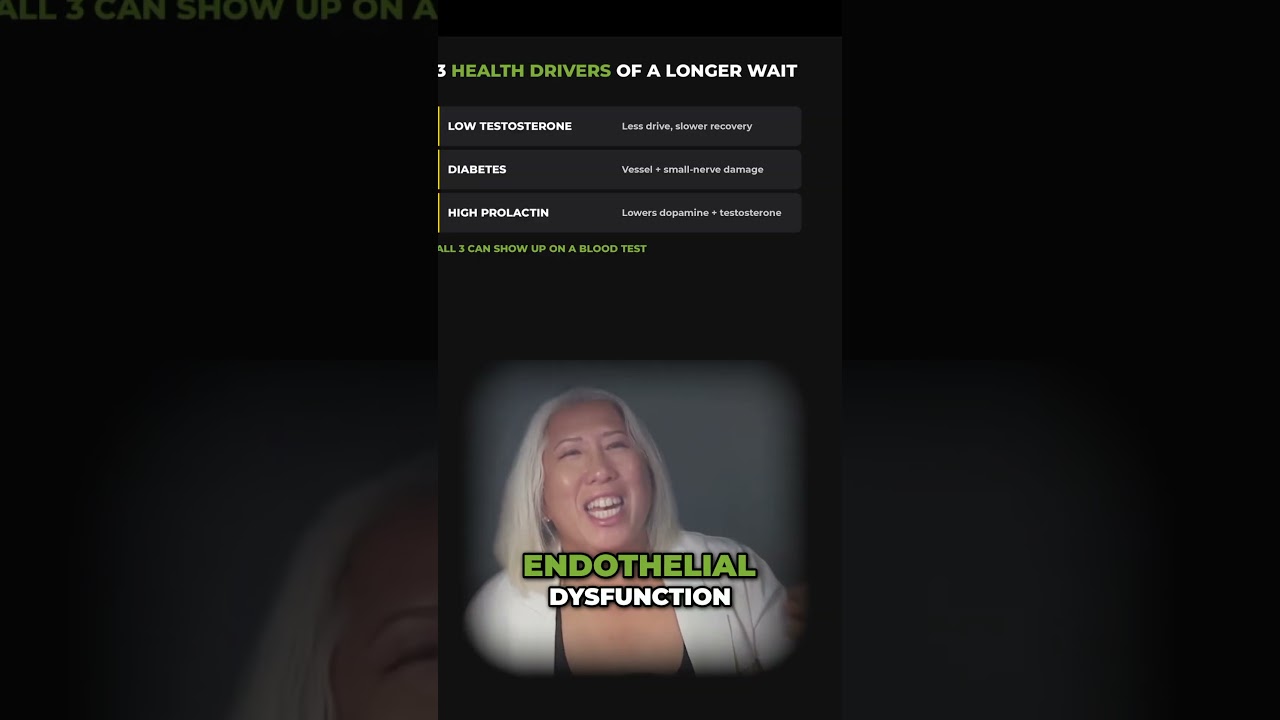
3 Health Conditions Behind a Long Refractory Period #LowTestosterone #MensHealth #shorts

Does the Refractory Period Get Longer With Age? #RefractoryPeriod #MensHealth #shorts

5 Common Medications That Can Slow Round 2 #MedicationSideEffects #MensHealth #shorts
Why Round 2 Takes So Long: The Brain Chemistry #RefractoryPeriod #Dopamine #shorts
Long Refractory Period? It Could Be Early ED #ErectileDysfunction #RefractoryPeriod #shorts

Is Your Medication Slowing Round 2? SSRIs Explained #RefractoryPeriod #MensHealth #shorts



