Dr Anne Truong, EO US East, EO Together, Focus on Community Impacts, 04-01-2020
Recording of an EO webinar (Apr 1, 2020) in which Dr. Anne Truong, a board‑certified physician, presents evidence-based information on COVID‑19: case counts and fatality estimates (US and global as of the talk), virology and terminology (SARS‑CoV‑2 / COVID‑19), transmission (droplet spread, asymptomatic shedding, R0 ≈ 2.2–3), incubation (2–14 days), clinical presentation and severity breakdown (≈80% mild, 15–25% severe, ≈5% ICU), diagnostics (nasopharyngeal/oropharyngeal swab, ~75–80% sensitivity), mask guidance, household cleaning and isolation recommendations, myths vs facts, basic prevention (handwashing, social distancing, masks), flattening-the-curve rationale and health system capacity concerns (projected bed/ICU/ventilator shortfalls). The talk includes a brief Q&A addressing mask reuse, food/package handling, outdoor exercise, surface disinfectants, and timing of social‑distancing measures.
Chapters
Okay.
Good morning everyone. My name's Robert Clinkenbeard. Thanks for taking the time to join us on the call today. As I've said before, I'm super inspired by everybody coming together within EO during this time of crisis. Now it's more important than ever just to have that community spirit and help each other out and using that expertise and knowledge within the EO community. As I mentioned, my name Robert Clinkenbeard. I've been with EO now for 10 years and served in numerous leadership positions across two different regions. Currently, I have volunteered to set up and lead a new chapter model called EO link. EO's link is to provide a chapter structure in a non geographic format. This chapter is not located in any particular city, but rather serves to connect entrepreneurs across a region where we don't have any current markets. It's also a way to expand our influence, scope and knowledge base to connect with more peers outside the local community. If you'd like to learn more about this new tractor model, there's a link posted in the chat. Entrepreneurs can only go so far by themselves and in the spirit of EO together I wanted to pull together this series of webinars focusing on relevant topics to help you, your family and your business during these challenging times. As I said, this is our last in our four part series. We are using the Zoom webinar feature today for what that means for attendees is they can't see each other on video or unmute themselves. So we are using Slido to help with posting some questions. So if you go into slido.com and enter the code backcash eotogether on slido.com then we'll list those questions once Ann has finished her presentation. So the call has been recorded and it's going to be posted on the EO Learning Management platform. So we've had the help today of our regional staff support team so really appreciate all the help that they've provided us during these calls. So on the call Today we have one speaker. Her name is Dr. Anne Traum. She is an EO Richmond member and we're talking about COVID 19 myths, facts and what's flattening the curve means. Dr. Ann Truong is a board certified medical doctor and the owner of Truong Rehabilitation center for the Regenerative Stem Cell Therapy for Longevity Healthy Living. She was named Top Doctor by Northern Virginia magazine for three consecutive years and is a 2018 Entrepreneur of the Year for the Regional Chamber of Commerce. She's a Best selling authority, internationally well known speaker for over 25 years of experience. She's also earned the reputation as a profound, engaging and influential keynote speaker who uses her global platform to teach allied health professionals and Dr. She's also medical correspondent for One American News Network. Dr. Truong is the president elect for E.O. richmond in Virginia. At this point. I'm going to pass it across to you Anne. Really appreciate you joining us today and we'll let you go ahead and if you could share your presentation that would be great. Thanks Ann.
All right, thank you Robert. Okay. Well I am grateful and honored to be today to talk about the COVID 19 situation and I am much appreciative of everyone here attention. I know that we've been inundated with lots of emails and everything about COVID and I know this has affected our business profoundly, particularly in my chapter as well. And I want to be able to sort through all the noises all the email inundated you get. So that way you get credible information that it can be useful for you so you can really understand what is going on, what's the crisis about and what you can do. So I want to start out what Robert had said before is that we're all in this together. And I wanted to use this quote from an orthopedic doctor in the Mayo Clinic who was actually featured on iHeart show on Sunday when he was singing the song Imagine. So imagine all the people in life. There are so many things that divide us. Religion, race, politics, social status and so much more. But today, a global pandemic brings us all together as one. Over the next few months, our health care system will be tested. Many lives will be lost. Healthcare providers will be under an incredible amount of stress to save thousands of people. But when times are as dark as they are today, nothing shines brighter than the human spirit. There is nothing beautiful about collective struggle. And the beauty in what we are facing today is that the only way to overcome this pandemic is for us to all come together as one. Nurses, doctors, student, research scientists, politician, uber e drivers, cashier, factory workers, etc. Getting through this will be hard. But one thing is certain, the only way we will get through this is together as one. You might say that I'm a dreamer. But I'm not the only one. I hope someday that you will join us and the world will live as one. I gather all my sources from the Virginia Department of Health, the CDC, WHO evidence based medical literature, and also from listening to Dr. Anthony Fauci. He's the director of National Institute Allergy and Infectious Disease. Why? Because he served sixth president. He's a doctor and he's not a politician. And he's been through SARS and ebola. In the US right now there are almost 190,000 confirmed cases. And this is of this morning at 6am as of I'm speaking right now, the number is probably increasing as we, as I'm talking right now as of last Saturday, we have surpassed Italy and China and we have the number one now in confirmed cases in New York. As of this morning, there's 76,000 confirmed cases and death is 1714. So there are roughly a little over 4,000 deaths. So if you calculate the number of deaths over a number of confirmed cases in the US there's about 2% fatality rate versus compared to the flu is 0.1% globally is 858,000 confirmed cases and 42, a little more than 42,000 deaths. So that calculated out to about 4.9% fatality also. So keep in mind that the number of deaths on the pyramid is on top, that the number we get from China is really inclusive of the people that have symptoms that are tested. The number that we have now in the US and internationally are cases with symptoms that are tested and the severe cases. But we're not counting the mild cases. These are the hardest to count because to calculate the fatality rate, you have the number of deaths on the numerator and the number of positive cases on the denominator. And so we're counting a small proportion of people that are tested, but we're not counting a large population that have mild symptoms that are not tested or they don't even know that they have COVID 19 because they don't have symptoms. So we need to be aware that the numbers may change because the fatality numbers may be less. But I'll point out some reason why we need to be concerned as well. But I wanted to make sure we point that out. And also the numbers that you see today is really reflective probably of a week ago, because test confirmation and results are about a week delay. So what's the definition? What's SARS COV mean for Severe acute respiratory syndrome Coronavirus? And then the current virus right now is named SARS CoV2 stand for severe acute respiratory syndrome, coronavirus 2. The clinical syndrome is called COVID19. So I see this used interchangeably. So the Clinical Syndromes COVID 19 which stands for Coronal Disease from SARS COV 2. SARS means a complete lung Failure where you're unable to breathe on your own. So what's the transmission of COVID 19? It is a new disease, so we're still learning how it spreads. So we're learning on the fly from the world as well as in the US at this point. But something to note was that a third of people that are tested positive in China have no symptoms whatsoever. And we saw from the Diamond Princess Cruise, half of the people that tested positive have no symptom. And in Iceland, half of the people tested positive have no symptoms as well. What's concerning is that you can shed the virus 48 hours before any symptoms can develop, if at all. So the transmission is person to person, spread by mainly droplets, the droplets from an infected person to another person. That is how is being transmitted. So that means that if you're within six feet of somebody, you are within range of the droplets coming to your face. So it's spread through the respiratory droplet from an infected person. When the person sneezes or cough and there are these droplets can land in the mouth and nose of nearby individual. Then you inhale it to the nose, lungs or to your eyes. And the virus can be on inanimate objects such as plastic and steel for days. And the people are most contagious when infected is when they're the most sickest. Some spread might be possible when you don't show symptoms and you hear me keep saying that. So what's the spread of SARS COV2? You look at this number called R0, it's called the basic reproduction number, determine the contagiousness of the virus. So SARS CoV2 is about 2.2 to 3 point. So what that means is that if an infected person can spread to about two to three individuals versus the flu, the flu is a one to one where an infected person can only spread to another person. Ebola is 1 to 1.9, so COVID 19 is above Ebola. It's below measles because measles is airborne. So this is the number we should be concerned about. That one individual can spread to two or three individuals and that their droplets is spread by droplets and droplets can stay in inanimate objects. So let's look at some of the symptoms of COVID 19. You can fall ill approximately around five to seven days after exposure. But the incubation period could be from 4 to 14 days. The symptoms are shortness of breath, fever, dry cough, sometimes a headache, sometimes aches and joints, pains in the joints, very mild sneezing. Fatigue appears in About a week. Diarrhea is rare, but from what I'm hearing from my ER colleagues is that they're seeing GS symptom of diarrhea, abdominal pain, nausea, vomiting, more than even a cough or a fever, which sounds very much like other GI symptoms. And this is new. We're starting to see that Covid can cause loss of sense of smell and taste, but it is temporary. Compare that to allergies. This is allergy season in Virginia now and allergies is runny nose, sneezing, red and swollen eyes, itchy eyes, itchy nose, a tickle in the throat, rarely a fever and a cold. A cold, you have a runny nose and sneezing and sore throat, aches and pain, a very mild dry cough, but rarely a fever. Flu. Flu has a lot of commonalities. With COVID 19, a fever is common, you have a dry cough, it's very quick onset. Headaches, sore throat, fatigue, sometimes a runny nose, sometimes diarrhea, but usually a flu is heralded by more of a fever and a cough and very quick onset. It's rarely shortness of breath. So how do you diagnose COVID 19? It's primarily from nasopharyngeal and or oropharyngeal swab, where the swab goes into the back of your nose here or the back of your throat and it's swabbed and it's put in a storage container there. The sensitivity of this, of this test is 75 to 80% the duration of shedding of the virus. We can see that it's between even 12, beyond 14 days, 12 days to 20 days, sometimes longer, so that the person's infected can actually shed the virus to up to like 20 days. However, shedding the virus may not equal to an infection. So that's interesting in that it may be a period when a person is infected where they have a lot of viral load that when they shed and you know it will cause infection. And then maybe at the end when they don't have that much viral load, it may not be as infectious. So they're coming out with tests now in the very near future to look at the blood, at your blood to see if you develop immunity. So what's the clinical presentation I want to mention is that these are the people that are actually get admitted to the hospital and these are data from Italy and China and I'll show you data from the US we do have some data from the US from over more than 4,000 patients. So when you're admitted to the Hospital, most of the patient have fever followed by a cough and shortness of breath and body ache. And those that have fever, cough and shortness of breast are usually present in 15%. And I mentioned that we're now seeing in the US more of nausea, vomiting and diarrhea and also headache. But this is a very important picture here, and I want you all to follow me. And looking at this, it's actually good news. The good news is of all the patients that are admitted to the hospital, 70 to 80% of them are not as severe. So the disease categorization is that if you're admitted to the hospital 80% of the time, you probably do well. About 15 to 25% are severe symptoms and 5% are in ICU. However, we'll break that down into a subset of patients that may not do as well. So this is good news. So 80%, you're gonna do well if you're in the hospital, if you are infected. Dr. Fauci is worried about the coronavirus, and this was on March 29, because he's worried because it's a respiratory disease, when respiratory disease are very easily spread and that SARS CoV2 can be insidious, meaning that you can be infected and you don't have any symptoms, and the person that's infected may not know that they are infected and they're spreading it to the community. It has a high mortality rate I mentioned earlier, that is about 1% in the US at this point, and the flu is 0.1%. So this is concerning here, and it's devastating for a subset of population like the elderly and elderly with heart and lung disease and diabetes, and particularly for the population immunocompromised, as well as cancer survivors, millions will be affected. And he's projecting right now about 100,000 to 200,000 death. So no state, no metro area will be spared. According to Dr. Deborah Birx, head of the White House Coronavirus Task Force at Meet The Press on March 29, how worried should you be about getting sick? Pretty worried. So some questions, why can't you just go to doctor or emergency room to get tested? You won't get tested unless you meet the criteria. And according to state, it differs from state to state and also also differ from the region. And the criteria is, have you been exposed to somebody that been diagnosed with COVID 19? Do you have symptoms of shortness of breath, fever or body aches? And have the health department called you and told you you've been exposed to somebody? But it also varies that's why I didn't put it down here. That's another thing too is that there's not enough test kits for everyone. So it's reserved for the ones that have severe cases. Why is that? It's because you want to test the one that have severe symptoms. Because you can put them in isolation room, you can reserve the actual hospital bed for them. You have treatment protocols that you need follow. You need a specialist medical team that can handle patient respiratory disease. You need a team that can prepare to do respiratory support like intubation, put you on the ventilator and the care and the nurses that know how to handle this particular cases and then prognosis and also rationing and conserving the use of personal protective criteria or PPE by the medical team. And you hear a lot about that. This is a serious issue right now with ppe. PPE need now by the healthcare facility. I myself am seeing the decreased supply of this and I have to conserve and ration it. So if you show up unnecessarily in the ER and want to be tested, you're going to be turned down. And also you may be taking care away from people who really needs it. In the ER right now it takes longer to evaluate patients due to administrative reporting, decontamination of the area when someone is sick and they have to be seen in a specialized area. My colleagues and the nurses saying that if there used to be five minutes in triaging or determining what patient need to go where, now it's taking about 15 to 20 minutes per patient. Used to be that they per shift they'll probably see about 200 patients. They're now seeing about 500 patients. So imagine the burden right now in the hospital. So before going to error stop and ask yourself, would I go to the ER for these symptoms, cough or fever under normal circumstances. Instead call your doctor or call the urgent care or even call the emergency room and ask them what you should do, they likely will have the most up to date information for potential patient in the area. And they'll tell you what to do. That's the best way. All right, this is fun. So I'm gonna put this on right here. Talk about masks. Talk about masks right now. So I hope you all see me. I'm all the medical personnel are wearing this in the office and at the healthcare facility. Let's take it out so you can all hear me. So should I wear a mask? I'm going to talk about this because I'm really advocating this. So surgical masks don't fill out particles like N95 masks. So this is a surgical mask I'm wearing. Masks do not replace hand washing and social distancing. It can give you a false sense of security. Masks can get contamination because your hands can be dirty. You're readjusting it. The coronavirus can be on the mask. But the study of American Journal of infectious disease in 2015 shows that we touch our face on an average of 15 times an hour. And also stockpiling masks can do more harm than good. So it takes away from the healthcare workers and really caregivers. Infected individuals should be wearing these masks. But I'm going to contradict that gloves are not a substitute for hand washing either. However, due to asymptomatic or infected individual that do not have symptoms and unknowingly transmitting it, masks can offer some protection in crowded spaces and now also in all areas. So masks or no masks, asymptomatic transmission. I talked about that. So in Asia, everyone wear a mask. It's a crowd psychology and protection. If everyone wears a mask individual protect each other, reducing overall community transmission. If the sick have a mask on the stigma wearing one is removed. So I think Charles was telling me that, you know, his wife wore a mask in the grocery store and everyone was trying to stay away from her. But we need to remove that stigma because we can protect the overall community and each other. China and Hong Kong credit universal mask wearing as part of their solution of decreasing and flattening the decreasing infection. Flattening the curve. Masks can also signal that it's not business as usual, that in solidarity we can bring the infection under control. If everyone in the community wears a mask, it could decrease transmission. Surgical masks protect a bit more, but better than nothing at all. But we don't have enough masks right now. I can't even order it from my usual medical supplier. I order on Amazon. Homemade masks may work better than no mask at all. So the mask isn't to protect you from getting sick sometime, but it's better than nothing. But it's more about protecting you from others who may be infected. So there's a study that looked at flu that says that the mask can reduce spread of the flu by 50%. So over here is a homemade mask. And this is a surgical mask that I'm putting on right here. And then this is the N95 mask, where the N95 mask is very hard to breathe, to breathe through. It's hard for me to breathe through this surgical mask all day long. So this is a very interesting Picture from a study that when you're wearing your mask, you're protecting yourself from individual that may be infected. And so just a cloth mask, the particles that's producing the environment. So they found that only about 33 particles get through the mask. That's 77, 67 that are blocked out. So if you wear a surgical mask, about 25% particles that got through the mask. If you wear an N95, only one particle. Studies have shown that it's the large particles that the one that can spread up to three to six feet from when a person cough, the smaller particles only stays within about 2ft. So the large particles are the one that actually will infect you. And so if you're wearing a mask, you can actually block that off. So when you are wearing a mask, you're protecting others. Because if you cough or if you're sick, this is for a person that's sick, is that you have 100 particles. If you're wearing a mask, the particles leak into the environment. If you're wearing a cloth, it's about 90. If you're wearing a surgical mask, about 50. And N95 is. So in essentiality protecting this works a lot better. But this is also protecting other people as well. CDC weighs advising everyone to wear a mask and that was yesterday. Dr. Robert Redfield, Director of CDC said critically reviewing to see if there is potential additional value for individuals that are infected. An individual that may be asymptomatically infected. Because now we have individual that may not have symptoms that can contribute to transmission. And we have learned that they do contribute to transmission. White House Task Coronavirus Task Force is leaning towards recommending it as well. The reason why the CDC and everybody else is saying that math doesn't work is because they don't want you to hoard these masks and take away important information. I mean important supplies that healthcare facility will need. So that's why there's more calls now for cloth masks and bandanas. Some is better than nothing. So let's go over some myths about COVID 19 from the WHO and CDC. The virus will die off once temperature rises. It's the new virus. We don't know how it acts. And from what it seems right now, with the weather being warm here, we don't see a slowdown in that at all. But we're still finding out about how its propagation. Drinking water every 15 minutes keep the virus away. Well, not so much. Hydration is good and well rested is good. But drinking and gargling will not flush the virus through your body SARS cov2 can mutate to a deadlier strain. All viruses mutate, but from what we learn about the SARS and coronavirus, some of the mutation make it less virulent. And the reason I want to mention that the coronavirus is named like that because the virus have these spikes surrounding the cell membrane. And they're named corona because it looks like a crown. So hot water can wash your hands. Hot water can wash your hands. Will get germs better than cold water. Not necessarily. Soap and water, any temperature will work because it's the mechanical scrubbing with the soap that is killing the virus. Because the soap is alkaline and the virus has a lipophilic cell membrane and. And the soap will essentially burst the virus open. And soap can kill within one minute. Package from China made from China can have the coronavirus. The coronavirus died on cardboard within hours. So if they're being shipped from China, it's been more than hours. All right. So drinking cold water can kill coronavirus. Not true. Your body temperature is always maintained between 97.7, 98.6, regardless of external temperature. Coronavirus can be transmitted through mosquito bite. Not true. It's really transmitted through cough and through the droplets. Spraying alcohol chlorine all over your body will kill the coronavirus. It actually. It doesn't. It can actually dry up your mucous membrane, make you more prone to getting an infection. Not with just coronavirus or anything. Rinsing your nose with saline will draw the virus has not been shown to fight infection and may help you recover more quickly if you have a nose congestion. Eating garlic will help prevent infection. There's no evidence to show this hand dryers are effective killing the virus. There's no evidence of that as well. Other myths. Thermal scanner can detect someone with infection only someone that has a fever with the coronavirus. But it can also be flu as well. It can not detect someone that is infected, does not have symptoms or does not have a fever. I mentioned earlier, it takes two to 14 days for the incubation period. Pneumonia vaccine can protect against the coronavirus. I actually saw this when COVID 19 came out and it's actually not true at all. Vaccine protect against pneumonia such as pneumococcal virus or pneumococcal bacteria or Haemophilus influenza B coronavirus only affect older people, not necessarily older people. Older individuals with pre existing conditions are more vulnerable and can have severe symptoms. But the young can get it as well. In the US age group of 20 to 50 years old comprises about 40% of cases and in Virginia under 50 comprise 60% of cases in Virginia. They may have milder symptoms and they may recover more but within the past week we have seen individual 25, 30 year old that have passed away. So I don't know if you heard but ibuprofen sometimes can be a little iffy there. French study shows that they do not recommend using ibuprofen when treating a fever because it may make you more prone to getting infection. But who indicate there's no conclusive correlation at this time. Angiotensin converting enzyme inhibitor medication. These are typical medication that are treated for high blood pressure. The coronavirus actually enters the lung through a receptor called angiotensin converting receptor and it's called the ACE receptor. And so by taking these medication there's an indication and make you more prone to getting COVID 19. Evidence is being reviewed at this time. We just don't know when we still have to monitor this. So I just want to bring it out and just be so that way you all be aware it's evolving daily. We'll know more within the next few weeks. Back climb. COVID 19 can be transmitted in hot and humid weather. Cold weather cannot kill the virus. Hot bath does not prevent infection. UV lamp does not kill the virus. Antibiotics are not effective. Fact no vaccine as of now, possibly in the fall but they're looking at around 12 to 18 months. No specific medicines are effective at this point. Point we're looking at some medications such as chloroquine and some disavir or some consideration. I'll talk more about that. And transmission is through droplets from somebody that coughed and then through handshakes and hands touching objects with someone that are infected. So are people who get sick or immune from the virus? We don't know. It's actually it's highly probable but a lot isn't known yet. There are some reinfection cases in China that I just looked at the data today. But you have to consider whether they will truly have COVID 19 in the first place because the test kit have about 80% sensitivity. So were they tested correctly? So what is it a real reinfection or were they tested incorrectly? And now they're having COVID 19 again. The virus is new and we're learning on the fly. Every day we learn something new. The best way to know who has immunity to COVID 19 to test for antibody and labs around the world is working on this but none are readily available. So general, just very quick general recommendation for cleaning and Disinfection of the household. Clean frequent touch areas like the table, the doorknob, the light switches, the handle, desk, toilet seat, faucet, sink with household just plain old household cleaners. Or you can use alcohol. You can use 0.5% hydrogen peroxide or 0.1% bleach. It kills the virus within one minute. Be sure when you're cleaning that you have good ventilation. In my office we clean this after every patient that in the room. So general recommendation for clean and disinfection of household with people that have with someone that has suspected a confirmed case of COVID 19. Again, clean the high touch surfaces area as much as possible. The ill person should stay in a specific room and away from other people. The home household members should stay in another room and separate it as much as possible. Separate bedrooms and bathroom. Prohibit visitors hand hygiene frequently. Avoid touching eyes, nose and mouth. And an infected person and caregiver should wear masks. The caregiver should wear mask gloves and throw it out after every use but must remove glove first. Wash your hands and then remove the mask and then wash your hands again. This is what we do every time when we see a patient. Avoid sharing household items. Wash thoroughly laundry with detergent and dry thoroughly using the warmest temperature. But you can probably do cold place all disposable item in separate line container. So if you live with someone who has COVID 19 who recommend you monitor your symptoms and your health for 14 days and after the last exposure of someone with symptoms because the incubation period is 14 days. Social distancing what does it mean? Social distancing is the practice of reducing close contact and that way right now is about 6ft is the distance. Some of the things that are safe to do is take a walk and go for a hike, do yard work, clean your house and lots of things that you can do to keep yourself busy. And I'll go over some of those activities that will actually boost your immunity as well. But you want to avoid these activity, we all know that. And use caution when going to the store. So what do you do if you feel sick? Stay home and call your doctor first, don't try to go to the er. Don't try to go to public places. Step two when you go, when you call your doctor, answer these questions because they will ask you have you been exposed to somebody? Have you had close contact? Do you have a fever, cough or a public health officer asked you for if you've been exposed to someone with COVID 19 follow the doctor's instruction. Monitor Your symptoms. They're going to tell you stay home. They're going to tell you to monitor your fever and how you're feeling with breathing and call them and ask them what you should do. Use telemedicine, virtual visit and they'll tell you where you need to go to the ER or not or to tell you to get tested. Where do you need to go to get tested? Use hand hygiene and respiratory etiquette. If you do leave your home to go to the healthcare facility, wear a mask so protect you, protect others. Wash your hands thoroughly and use cough hygiene. Cough into your elbow and not your hand. Use a tissue and clean often. Touch surfaces. Step 3 Stay calm and why? Because the doctors can take care of you and the hospital can take care of you, but they need to take care of very very sick people. So I want to run some numbers. Remember I said 80% of people that are hospitalized have non severe symptoms. So only the interesting numbers. In Virginia there has been over 11,000 that's been tested, but only if there's 11,000. Only 8% tested positive for COVID 19. So that's good news. So if 8% test positive then 80% of those individuals that are test positive have mild symptoms. And so you that means that you could have symptoms of urine, upper respiratory infection, the flu or allergies or bacteria. So that's actually why you should stay calm. And only an individual that I will go over which individual that I'll skip over this. So it's quickly. This can be about an hour long lecture but I wanted to post this up and go over ways to boost immunity. No smoking, fruits and vegetable. Exercise regularly. Seven hours of sleep. Vitamin C, vitamin B, zinc, selenium, vitamin D. Drink a lot of water, minimize alcohol. Eat blueberry, dark chocolate, turmeric, oily fish, broccoli, sweet potatoes, spinach, ginger. Probiotic mature is about 10 billion CFU a colony forming unit. Eat fermented foods like kimchi, sauerkraut, kombucha. Intermittent fasting has been known to increase immunity. Meditation, IV therapy, infusion with vitamin C or Meyer's Brazil nuts. Have lots of selenium which are antioxidant spirulina. Eat three grams, I mean take three grams a day. And this is interesting research study that you can boost up your IgA, which are proteins in your body that can fight infection by actually watching acts of kindness either in an art form, video or reading. And then you write about them when you have performed acts of kindness and compassion and then when you engage in acts of kindness or compassion, you actually boost up your immunity. So I thought that was very interesting. And here's a book that's called Paradise Built in Hell that looked at behaviors of people during disasters. And it shows that people showed remarkably strikingly altruistic behavior during crisis. And they rise to the occasion. But they do it with joy. Why they have it with joy because it's a yearning for the community. It gives you a sense of purposefulness and also meaningful work. And this can really lead to a society that could become more collaborative and local. So let's look at some flu numbers. So in the CDC in 2019, 2020, because I hear this a lot, people say, well, you know, what's the deal? You know, more people die from flu. So I'll go over that. So 39 million have been infected in the U.S. 400,000 hospitalization. And the groups that are hospitalized are 65 and children and adult between 50 and 64. Again, it's worse if you have coexisting symptom condition of asthma, lungs and cardiac disease. 24,000 deaths, 155 deaths in children. However, flu. We have a vaccine to mitigate the symptom and antiviral work with the flu is 99% effective. These are the three antiviral. And we have test kits that test for the flu within minutes. So we can identify who are the infected, who is not infected. There's a possibility that coronavirus can have co infection with the flu. So what's the big deal if the infection death rate is less than the flu? Well, it's a new virus. We have no immunity to this. We know about the flu for years. We know how it act. We have no vaccine, no clear treatment as of this point. It means that it's capable of infecting 7.8 billions of our brothers and sisters. It is a wild card. There's a lot of unknown. Do we know we develop immunity? We still don't know. And if we do develop immunity, how long does it last? Is it months or years? And we know that it affects the elderly more severely and is more fatal and that it's overwhelming the healthcare system. Now we see that in New York City, the clinical presentation is a spectrum, a wide spectrum of no symptoms to severe symptoms. And then you have individual that can spread it without knowing that they have the virus is two to three more times more infectious than the flu. Flu is seasonal. We don't know about the coronavirus, whether seasonal or not the infection. The fatality rate for flu is 0.1% and for coronavirus, about 1%. Now, however, we have, we don't test everybody that are positive or have symptoms. So do people from each country react the same because we have different diet, different obesity rate, environment, genetics? Are we going to react the same like Italy and in China? CDC expect a widespread transmission. So bear with me on this number because this is very, very important. So this is our number in the US and this is called the center for Disease Control Prevention, Mobility, Mortality, weekly numbers as of March 18th. So this is our data from our country. And they look at over 4,000 patients, over 4,000 cases of hospitalization. And what they observe is that 31% of adults over 65 years comprises those patients are hospitalized, which are these ones right here. All right. But if you are over 65 years old, even though there are only 31% of the cases, 45% of them require hospitalization for longer period of time and that 53% of the patient that are over 65 require ICU admission and they comprise of 80% of death. So if you're over 65, you have higher chance of being in ICU and higher chances of death. And we see that right here in these numbers here at this point. So important number here. If an individual is on the ventilator and the ventilator is a machine that help you breathe because you can't breathe on your own and the lung is totally compromised and you have a 14% survival rate. Yeah. And that is not a good number at all. So we want to get people not on the ventilator at all because when they're on the ventilator, the numbers are not good at this point. Yeah.
And I'm going to unfortunately interrupt you there. I want to leave some time for questions. So we're going to switch across.
Can I just show one last slide? Can I do flattening the curve real quick.
How many. I want to make sure we have any questions maybe you could talk about in a second.
Anna.
I want to make sure that we've got so many people on the call, so I want to make sure we respect their questions. So first question is, can we decontaminate an N95 mask by heating at 170 degrees Fahrenheit in an oven for 30 minutes?
Yeah. Okay, well, that's kind of overdoing it. You probably, you're probably denaturing the material in the N95. The easiest way right now is to wipe it with, wipe it with bleacher and chlorine on the inside, the outside. That's all you need to do. You don't have to heat it up, you don't have to put it in the oven. So you know that that's. I think that's overdoing it.
Okay, clarify. UVC lamps are effective at proper intensity and dose.
UVC lamp have not been shown to be effective at this point.
Yeah, I know. We did have another question regarding. There was, you know, for a period of time there was, people were saying not to wear a mask. Any thoughts behind why they were saying that? Just not enough information.
Yeah, well, no, no, the CDC said not to wear masks is because the main thing, they don't want you to decrease the supply that the healthcare facility will need for treating patients. But the data is out there that masks do protect against infection. And I think that they're gonna reverse that opinion in the next few days. They're already considering looking at it starting on Monday. So I think that once they do look at it, there's gonna be a short supply of masks. And so it's a double edged sword. It does protect, but then do you have enough? So, you know, right now, you know, the options are, you know, using bandanas and cloth masks at this point. But I totally advocate wearing masks at this point. Everyone wearing masks.
Cool. Again, if you want to post a question, go into the slido. The information is in the chat. Here's another question popped up. Hopefully we'll have a time at the end just to show you that last slide you wanted to show. Okay, but if we have order food delivery should be put in the oven before consuming.
Oh, that's a very, very good question. Yes. If you order food delivery, first thing you do is throw away the bag that comes in the delivery. And when you take out the container, wipe with Clorox or bleach the outside of the container and pour the food into a dish and then zap in the microwave for two minutes. Okay, so. And then throw that away. So, and then if the counter area where you put the food is on, wipe that counter area afterward as well.
That's great, great info. How about similar question, how about packaged deliveries? How long should they be left on the porch?
Oh, that's a very good question. You know, at this point, we don't know how long they live on carpet. We know it's hours, it could be a day. So the best thing is to bring it in, throw it away and clean the counter where you leave the food on. And like I said, clean the box that it comes in, pour out the food and put it in the oven for Two minutes. So you know, I don't know what to say. It could be hours, it could be a day. But you can certainly, what you have, you can do is on the counter spray, you have a counter spray that is called dirty and a counter spray that is clean and you put all the delivery, the delivery food on the dirty area. And then once you put it in, once you pour it out, that's the clean area. And then you put in the microwave for two minutes. That should be fine.
Is it safe to run outdoors in urban parks?
Yes, as long as you are about 6ft apart from another person. But yes, but be aware now in some state there is an order, our government order, stay at home. So if you're in parks of more than 10 people, you may be sighted. But yes, it is safe to run around in the park.
Okay, we're going to do a couple more minutes again, any questions go to slido.com with eotogether and if we don't get many more questions then we're going to switch back to your slide. Trying to read that question. Is it harsh to get 60, 70% alcohol to co clean surfaces? Have a vinegar.
No, vinegar doesn't work. It's not hard. I see it at a supermarket for 70, all you need is about 60% to 70% alcohol. It's not hard. But you can also use bleach as well. 0.1% bleach and that's readily available. Not a lot of people know that you can use bleach to clean the surfaces.
Okay. Any specific YouTube or any other channels you recommend going to? So much information out there.
Oh right. You're absolutely right. I don't at this point. No, I don't. I said, you know, don't look at YouTube, don't look at anything. And you really go, go to your, your state department of health website and look at the CDC website. Those websites can be overwhelming. There's a lot of information on there. But I would use those two websites first and then if they have a YouTube channel I would follow that. But there's a lot of so called expert, a lot of people out there just talking about stuff that has no validity or evidence based, evidence based data at this point. So just be really careful what you're reading.
Okay. Social distancing till June. What do you think?
Do you think? Yes. Yeah. Well, I have a slide that says that we're not peaking yet. Right now it's the silence before the storm. The storm is looking around mid April and that's when we peak so if you look at the picture of the flattening the curve, we're going to peak around mid April and then we're going to see cases going down. So. So that can last through May through June and it depends on the locality as well. So New York can be quicker than other locations at this point. And so the social distancing will vary upon location. I think we're going to see that, we're going to see other location that they'll have social distancing while other areas are being more lax. But it will probably look like it's going to look about another two, three months at this point.
Okay, so why don't you transition across to that flattening the curve slide. And while you're doing that, I'm going to shoot a couple of questions across to you while you're doing that. Anne, Masks and elevators.
The mask all the time.
Okay.
All the time when you're with other people, except maybe with your family members.
Okay. And there's obviously some pictures coming through from Italy, people wearing plastics and overalls. And how do you feel about that?
You know, at this point, something covering a boat and nothing at all at this point. So something covering your eyes, your nose, your mouth. Burden. Nothing at all. So the key to decreasing infection is washing your hands, social distancing mask or covering of your face.
And a last question before you jump into this. The substance of not doing the total band yet. Would it make more sense to, to the whole nation for the same 14 days?
Can you repeat the question again?
So some states are not going to the complete shutdown. Obviously it's on a state by state basis. Would it not be better for the entire nation to go through that 14 day shutdown at the same time?
Yeah, I think so.
Okay.
Yeah.
So if you could cover this in a minute.
I have two important slides that I want to show because we, and I want to explain this because we see this all the time. We hear flattening the curve. What does that really mean? Does it really work? It does work. We learned this from the 2018 pandemic of the Spanish flu. So this curve shows the number of people infected and the time from the first infection. So if we do nothing, this is what's going to happen. This is just, just the nature of, just the nature of epidemiology and infection is that you can have a rise of cases of people that are infected and then you have a peak and then these it goes down because you're going to have individual that die, an individual that recover that's why these case you see the numbers go down. So if we do nothing with the current outbreak, we're going to see this. So what's going to happen is that when this is going to be above the healthcare capacity will overwhelm the healthcare capacity at this point. So what's going to happen? We're going to not going to be able to care for everyone that's sick. We're going to ration care, we're going to decide who lived, who died, who received a ventilator, who goes to icu. And we're going to have a lot of death in this country. We're predicting if you don't do anything, you're gonna have about 2 billion people that will die. So we've learned from outbreaks in the past that in order to call the flatten the curve, the number of infected in this area and this area is the same. It's not less, it's the same. We want to do this because you're buying time so that way the people that need to be treated can be treated by the healthcare capacity, so that way everyone can get treated and not be rationed in care. You're buying time for vaccine to be developed, for treatment to be developed, and you're buying time to less people. There'll be less death. And how do you do that? How do you flatten the curve? By social distancing, community event cancellation, by, by quarantining certain community border closures at this point and respiratory hygiene masks, hand washing. So this is all we got at this time. We don't have a vaccine, we don't have a proven treatment. We have things on the horizon, but this is all we got. This is what we can do in our community and it's our moral obligation to do this. Protect the community and protect the subset of population that are severely affected by this that has a higher death rate. This is another important slide. I want to show what I was saying before, that this is going to be the peak around mid April here in the us but we want to know that by the time the peak right here, there's going to be a need of about 200,000 hospital beds. Right now we have a shortage of about 50,000 hospital beds and ICU beds. There's going to be, by the time this peak, people are going to need about 35,000 ICU beds. That's going to create a 14,000 shortage of beds right now and we're going to need about 18,000 ventilators. And right now we don't have enough ventilators for the people that are that will require it. So this is an important situation that we need to know that we can contribute to our community by practicing social distancing and respiratory hygiene. And it does work. We've seen it from the 1918 pandemic. I talked about this and so I want to show some good news that us is more prepared than ever to handle a pandemic at this point and there are reason not to panic. All right, we know about this virus compared to the HIV virus. And I want to stress some good news is that we do have tests that are coming out. We just need to make more tests at this point. We're learning from China and in Asia to how to decrease cases by mask social distance distancing and that 80% of the cases are mild and there's a 17 time cure rate compared to fatal. So you got good odds there. And it hasn't affected that many children. We can kill this virus by just alcohol, hydrogen peroxide and bleach. And the science is on it globally. There's about over 300 clinical trials going on right now looking at vaccine and treatment. Antivirals is on the horizon at this point and this is a good slide that came from ucsf. So anyway, that's all I really have to say was that those two slides that I want to show is that we can fight this. We can lower the rate of death. We just need to do it together and it's our moral duty to do so.
Awesome. Thank you, Anne. I certainly learned more today. I don't think there's any more questions come through, but I know we're going to. We have recorded the session today. The webinar is going to be posted on the EO Network Learning Management site. We are also launching a new microsite. So much information that we wanted to try and make it easier for people to get to. But we are recording this. I think your contact information is on the slide so people can contact you directly.
Absolutely. Does anybody have any questions? I'm more than glad to answer.
Yeah. Thank you and thanks everybody for joining the call again. This webinar series was hosted by eolink. Contact information on the chat you can either contact myself or Courtney Hogan. But thank you everybody for your time today and stay safe. Right there. Thank you.
Thank you.
More from Anne
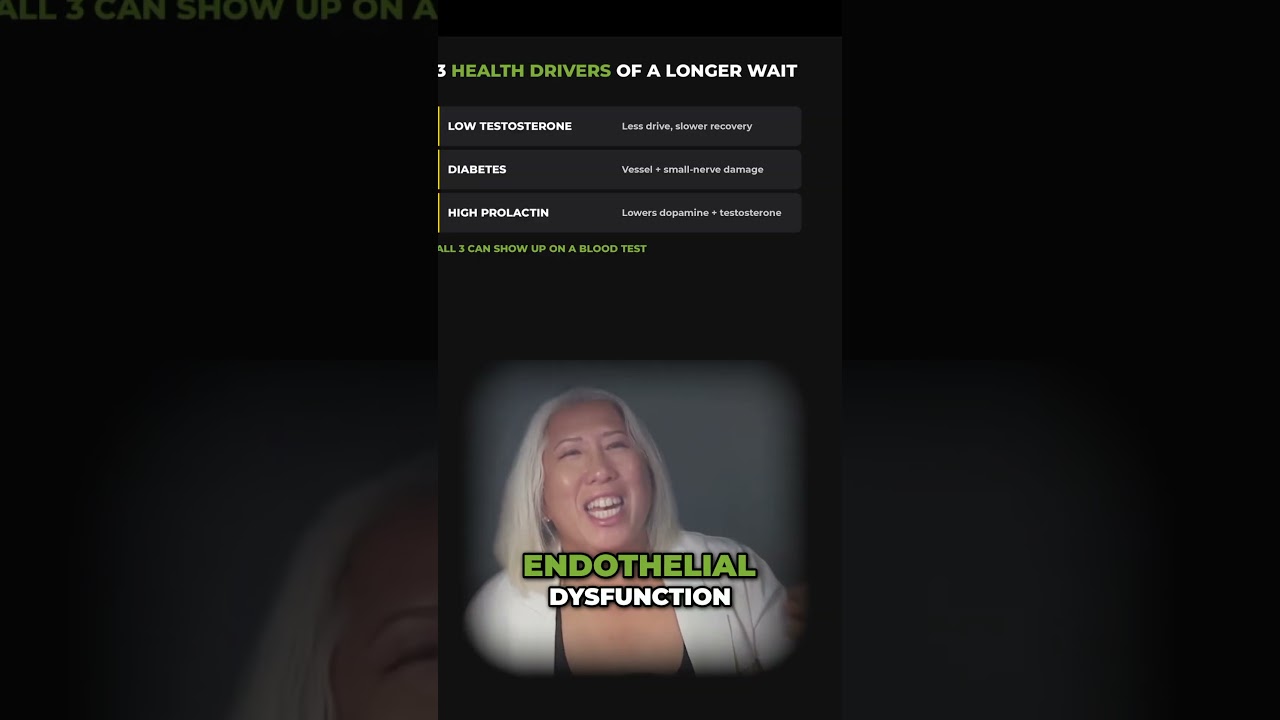
3 Health Conditions Behind a Long Refractory Period #LowTestosterone #MensHealth #shorts

Does the Refractory Period Get Longer With Age? #RefractoryPeriod #MensHealth #shorts

5 Common Medications That Can Slow Round 2 #MedicationSideEffects #MensHealth #shorts

Why Round 2 Takes So Long: The Brain Chemistry #RefractoryPeriod #Dopamine #shorts
Long Refractory Period? It Could Be Early ED #ErectileDysfunction #RefractoryPeriod #shorts

Is Your Medication Slowing Round 2? SSRIs Explained #RefractoryPeriod #MensHealth #shorts



