Dr.Anne Truong Episode 2 Webinar Coronavirus, Myths,Fact,Good & Not So Good,What Can You Do,03-29-20
Recorded webinar (Mar 29, 2020 slides/remarks) by Dr. Anne Truong providing a COVID‑19 update with local (Virginia, Rappahannock/Fredericksburg region) and national/global statistics, explanations of the virus (SARS‑CoV‑2 → COVID‑19), transmission modes (droplet, possible pre‑symptomatic shedding up to ~48 hours), testing and diagnostic limits, and a clinical severity breakdown (majority mild; ~15–20% severe; ~5% ICU). The talk covers PPE and mask guidance (mask use, limitations, and supply concerns), household cleaning and isolation procedures, myths under investigation (ibuprofen, ACE inhibitors), the rationale for social distancing/flattening the curve, health‑system capacity concerns (projected bed/ventilator shortages), practical steps if you feel sick, and brief remarks on immune‑supportive behaviors (moderate exercise, nutrition). The presenter cites CDC, Virginia Department of Health, WHO, and a CDC MMWR (Mar 18, 2020) as sources.
Chapters
Well, hello. Welcome to the webinar on Covid Update Mid and not so good. It's four o' clock and it's on a beautiful day. So I apologize to have this on a beautiful day right now. And I'm sure some of you are probably enjoying the nice weather. But you can always watch this recording later. And so I'm just gonna start. I'm grateful that you all can be with me today. I'm gonna share you some new updates from last week. And to take away some myth and to correct some facts. With COVID 19. Every day is a new day. And. And we find out more about it on a daily basis. So we're going to go ahead and start. So this is Elijah. He is my longtime patient of at least 18 years. I've been in Fredericksburg for 20 years. He's been my patient for at least 15 I can think of. He's in his 70s. He had multiple chronic problems and he's probably had nine lives. He came to see me on March 23rd and he heard that I was running low on toilet paper. And he went out and bought me some that day and brought it back to the office even though he didn't have an appointment. He brought it back and he said, this is for you. And I tried to give him back the money. I was in tears. I was speechless. I didn't know what to say. I was so grateful and humble that I have patient that cares about me like this. And he refused to take my reimbursement. And he has trouble with his expenses. Paying his expenses and keeping up. And this is right now. What's going on is not a good time for him. So it just makes my heart fill with so much love and gratefulness that this is happening in this surreal time. So I thank Elijah for his humanity. So we are all in this together. I want to create this. I want to quote this quote by Dr. Alvis Francois, who is an orthopedic doctor at Mayo Clinic. And he posted a beautiful video of him singing the song Imagine. And it said, imagine all the people in life. There are so many things that divide us. Religion, race, politics, social status, and so much more. But today, a global pandemic brings us all together as one. Over the next few months, our health care system will be tested. Many lives will be lost. Health care provider will be under an incredible amount of stress to save thousands of people. When times are as dark as they are today, nothing shines brighter than the human spirit. There is something beautiful about collective struggle and the beauty in what we are facing today is that the only way to overcome this pandemic is for us to all come together as one. Nurses, doctors, student research scientists, politician, uber e drivers, cashier, factory workers, etc. Getting through this will be hard. But one thing has turned. The only way we will get get through this is together as one. You might say that I'm a dreamer, but I'm not the only one. I hope someday that you will join us and the world will live as one. So I what I do is that I gather all the trusted sources from the Virginia Department, Virginia Department of Health, the CDC and the who, and the many medical literature that I get. And I know that we are now bombarded with emails and everything about COVID And it's hard to sort through all the layers. And you don't know what's true, you don't know what is sensationalism. And that's why I'm doing this webinar is to help sort through that and give you some critical information that is useful for you. So this is a slide that I made last week on March 21st. And these are the numbers. I am just astonished as I'm updating my slide today what the numbers are. So this is last week and this is today. As of Today, that was March 29th. We have now 10,000 number of people tested in Virginia. Positive case is 890. Most of it is in Arlington, Fairfax, James City, Loudoun county and Prince William. That means that there are of those tested, 8% are positive. So that's good news. I mean 92% that are tested is negative for COVID 19 12% are hospitalized. And this is calculated from the positive cases. 22 deaths and 22 deaths out of 890. So that's 2.4% fatality rate in the Rappahannock region. I break it down to region And Fredericksburg is one case, King George is two, Spotsylvania is five. That's where I live. And Stafford is 13. So this is on today in a number of cases in Virginia. And 67% is under 60. So that that really contradicts what we were thinking, that if you are younger, less than 60, that you know you will may not cast it. If you do have it, you may have it mild cases that may be the case. Also interestingly, more men than women, 52% versus 49%. And we see that worldwide, so that's interesting to see. So men, you know, this is something you got to be aware of. And race is 63% though it's not reported. So this number may not be accurate at this point. So as of today, the US is the number one in reported cases. We surpassed Italy and China and US now have a total of 123,823. As you know, all these numbers are probably inaccurate at this time and that we have about 2,000, a little more than 2,000 in death in the U.S. as of last week on March 21, it was 26,000 confirmed cases and death was 340. And we were six at that time. Today I just said that we are now number one in New York. There are 53,000 confirmed cases and death currently in the U.S. right now is 2,133 globally. This is last week on March 21st at a confirmed case of 300,000 and death around almost 13,000. And today, one week later, 683,000, almost 684. And death is at 32,000. So you have to look at this and think that these are the numbers that we hear about death. But looking at this picture, most cases are never counted. The cases that we see in China are the ones that are tested and they're severe. And the cases that are detected internationally are the cases with symptoms that patients are seeking help. But we are not counting the mild cases. So the reality is that the number of deaths, the percentage will be a lot lower than what we're seeing right now because the number of mild cases are not being tested or that the person may not know they have symptoms and may not request to be tested or at this time. The spectrum of COVID 19 ranges from mild to mild to asymptomatic to severe. So this is corona virus. And the reason why I have this picture out because these little spikes that you see on them, and that's why they're named corona, because of these spikes that looks like, like a crown. And what's the definition of sars? SARS called corona B. It mean severe acute respiratory syndrome. Coronavirus. SARS Coronavirus 2 is Coronavirus causing the prominent outbreak right now, which is what we're seeing. So this is a new mutation. So when you see the word COVID 19 mean coronavirus disease from SARS COV2. So transmission. So COVID 19 is a new disease. We're still learning how it spreads, the severity that it causes and to what extent in China, I'll go over some of these numbers more globally as well as the US but what I'm trying to say here is a lot of the cases are actually, you do not have symptoms at this point, about a third, up to a half. And what's interesting is that the infected individual can shed the virus up to 48 hours before they have any symptoms. And this is when they're most infectious, right here. So the transmission is person to person. We know that through droplets from the nose or from the mouth when they sneeze or cough. That is the primary mode of spread at this point. And it's between people that are in close contact, one another within six feet. And again, like I said, it's through cough and sneeze. The droplets can land in the mouth or nose of people who are nearby and possibly inhale in the lungs. The people are thought to be contagious are the ones that are most symptomatic. Some spread might be possible before you have symptoms. I talked about that. Possible that a person can get Covid by touching a surface or object that has the virus on it and they bring it to their mouth and nose. That's why it's critical that you need to wash your hands and don't bring your hand to your face. We know that COVID 19 spreads easily and is sustainable in the community and through many of the first cases of coronavirus cases in US tied to overseas. But now we're starting to see in the community more. We're starting to see it everywhere. The growth is unknown, the growth of the cases, unknown origin at this time. And that's why we're being urged to do social distancing, stay away from shopping centers and travel hub. So what the spread of SARS R0 is called the basic reproduction number, which stands for contagiousness of the virus. And what that means is that Coronavirus has an R0 of 2.4, 3.8, meaning that one person with COVID 19 can pass it to the three person. So if you compare that to smallpox and measles, they're lower, but it's a little higher than Ebola. Seasonal influenza is 1.3, so double flu and MERS is 0.8. So diagnosis of COVID what's required? The doctor will get a nasopharyngeal swab as well as an oropharyngeal swab. And then they put it into this culture and it got sent out to the lab. The sensitivity of these swabs, about 75% to 80%. And the shedding of the virus could be up to 12 to 20 days in an infected person. However, shedding may not equate to infection. So that's something interesting there. In the future we'll be able to measure the blood in your blood to see if you have immunity to coronavirus. What's the clinical presentation? This is a very, very important slide that I want you to look at and I'll walk through it with you because it has a lot of good information on here. So those that have the COVID 19, 70 to 80% of them is not severe symptoms at all, and 15 to 20% have severe symptoms and then 5% are hospitalized in ICU. Of those common symptoms, 75% have fever and 45 to 80% have cough. And about 20, 20 to 40% have shortness of breath and 10 to 50% have body aches. And usually if you have the fever, cough, shortness of breath and fever, but it's only about 15%. So you can have any one of these as well. Less common symptoms. This is what we see here locally is that you have headache, sore throat and then a runny nose. And then you can also have nausea and vomiting and diarrhea. And this is a very important slide. And this was just released by March 18, 2020, and it's released for the Center, CDC and it's called a Mobility Mortality Weekly Report. And this is a Center upon COVID 19. And the key point for this is that 31% of cases are 65 years old or more. But this kind of goes with what we've been looking at, is that out of 400, I mean 4,226, 31% or 65 cases. And the older you are, the more chances that you're going to be hospitalized, the more chance that you're going to be in icu and the more mortality, the older you are. They cut off around age of 65. So as you can see here, if you're under 65, death rate is the highest at 2.6, but it starts to climb from 2.6 to 27% if you're over 65. And the same thing if you're an ICU. Chances of getting a chances of percentage of people in ICU is higher when you're older versus when you're younger, you don't see a high percentage of that. Again, if you're younger, you don't get hospitalized as much. But I do want to point out that from ages from 0 to 50, there is a percentage of hospitalization and there is a percentage of icu. So don't be under the balance that you're young, you're not going to get hospitalized. If you have symptoms you may not have the higher Chances compared to somebody that's over 65. But you do have that chance at this point. So for adult over 65, 45% of them are hospitalized, 53% of them ICU admission and 80% chance of death. So what's the clinical features of acute respiratory syndrome in COVID 19? They develop with pneumonia that may not require ICU but may worsen in the second week of the hospital hospital care and that if they develop ours, they're an ICU and ours develop in about 17 to 29% of hospitalized patients and the mortality rate is about 4 to 15% in ARS patient and the higher mortality rate correlate with age over 70. So how worried should you be worried about getting COVID 19? Everyone should be concerned about contracting this new virus, if not for yourself, but to protect others who are at risk of becoming severely ill. And those are the ones that's over 60 with high blood pressure, diabetes, heart disease and lung disease, immunocompromised and with cancer. So that's why we are very concerned about the situation here. So the Virginia Department of Health guidance on testing for Covid as of yesterday is that is an evolving, rapidly evolving situation at this point. The kits that test for COVID 19 is limited and is mainly reserved for patients who meet these four criteria. And if you do meet this criteria, the specimen is sent to the DCOS lab and it may come back in hours. However, if the specimen is sent to a private lab like Quest or LabCorp, then it may not come back for days. So if you have these four criteria, you eligible to be tested if you're a healthcare worker, a first responder with fever or signs or symptoms of low respiratory illness, potential cluster of unknown respiratory illness where influenza is ruled out, person hospitalized with fever are signs of low respiratory illness. A person who resides or work in a congregate setting like an acute living facility, group home, prison, nursing home, homeless shelter and has fever or signs or symptoms of respiratory illness and test negative for influenza. So why can't you just go to doctor or emergency room to get tested? Well, there's not enough tests available, so you won't get tested unless you meet the criteria that I just mentioned. And so the test kits are reserved for patients that has severe cases. Why? Because if you know which cases are Covid, you can isolate them, you know what treatment to give them, you know what the prognosis is and also appropriate use of personal protective equipment by the medical team. So you show up and necessarily you're taking away the care from people who really needs it. And we'll talk about what you're going to do if you feel you're sick. So before going to the er, stop and ask yourself, would I go to ER for these symptoms, cough or fever under normal circumstances? Instead, call ahead and ask the doctor first what you should do and I'll go over those steps with you. So this is interesting that I want to point out that I've been looking at for the past week is masks or no masks. So surgical masks don't filter out all the viral particles like the N95 mask. So the mask doesn't replace hand washing and social distancing. It sometimes can give you a false sense of security. Masks can get contamination due to readjusting with your hand. The coronavirus can be on your mask as well. So study in an American journal of Infectious disease revealed that in 2015 that we touch our face an average of 15 times an hour. So stockpiling up the mask can do more harm than good. Because it's harder for the healthcare workers to access this and for caregivers of infected individual as well. Gloves are not a substitute for hand washing. However, this is an important part. I want to point out that there are people that are infected, they do not have symptoms, they're called asymptomatic and they can be infectious. So wearing a mask can offer some protection. In crowded places like social, distancing of six feet is not possible. And in places as an essential business, like doctor's office, the grocery store, or essential businesses that are still open at this time. So again, mask or no mask, asymptomatic transmission, should everybody wear a mask? So I mentioned that people that may have the COVID 19 do not show symptoms. We don't know who they are. They don't know who they are either. So it may be beneficial for everyone to wear a mask. In Asia, everyone wear a mask. It's a crowd psychology and for protection. So if everyone wears a mask, the individual protects each other, reducing overall community transmission. If you're sick, you have a mask on, but that really removes the stigma wearing one. So in China, Hong Kong, they credit universal mask wearing as part of the solution. Masks can also signal that it's not business as usual, that we are, we are together in our solidarity to bring the infection under control and that if everyone in the community wears a mask, it could decrease transmission. Surgical masks protect a bit more than nothing at all. We don't have enough masks right now. I just ordered mine on Amazon. I can't order it from my usual Medical facility that I normally order from. And homemade masks are better than none. The personal protective equipment or PPE washing hands is more likely to be more time more effective than not washing your hands. And it's 55% effective against the virus transmission. Mask is 65% effective, gloves 55% effective. So if you combine hand washing, mask, gloves, protective gown is 91% effective against transmission. So PPE, PPE for care patient with COVID So if you are with somebody that is coughing and that can transmit the COVID with droplet, then you wear a mask and goggles or face shield. And if you're touching them you should wear a gown and gloves in addition to masks and face shield. And if you're with somebody that is coughing up and that you have to do a biopsy on or procedure, then you should wear an N95 mask and if possible put them in a negative pressure isolation room. These are what personal protective equipment. You see all this here? So what are the myths? Let's review some of this very quickly. I'm not going to go through one by one, but I want to point out I just talked about masks. I said last week we said masks protect against the virus only for those infected and it can go through the mask. That's true. But I think that we should think about wearing the mask more of us wearing masks. Those that are not infected should be wearing masks because we don't know the ones that are infected because they may not have symptoms. Again, some of these are still the same. I want to point this out. Is that coronavirus only affect older people. Yes, older individual with pre existing condition more vulnerable and they have more severe symptoms. But young people can get it as well. I show you those data right now in the US the age group of 20 to 50 years old about 40% of cases and they have milder symptoms. But now we do hear of some cases of 25 and 31 year old who were healthy and that has passed away. I want to mention this and this is kind of like yes or no. Ibuprofen worsen symptoms if you are infected. So the French study shows that they recommend in patients with COVID 19 do not give ibuprofen for fever. But then who says there's no conclusive correlation? So we still have to see how this pans out. So it's positive and negative at this point. I'll update that next week. Another thing that's new is angio converting enzyme. We know that the spikes on the coronavirus fused with the angiotensin converting enzyme in the lung tissue. And so it enters the lung tissue in the cell through this receptor here. So these are typical medication that are used for blood pressure control. They're called angiotensin converting enzyme inhibitors or angiotensin receptor blockers. And there's data showing that it may increase the susceptibility to COVID 19 however with further discussion at this time. So it can both harm and benefit. But right now we have no real clinical data to support the hypothesis, so we need to wait. So, so right now I just want to bring that up and say beware, it's evolving daily and we'll know more for the next few weeks. So other fact is that these are still true. I reviewed that last week and we'll talk more about other upcoming possible treatment so let's go over some general recommendation for cleaning and disinfection of the household. So this is when your household that doesn't have anyone infected. This is for prophylaxis cleaning frequently once a day. Table, doorknob, light switches, handle, desk, toilet, faucet, sink with any household cleaners or you can wipe it with alcohol, 0.5% hydrogen peroxide and 0.1% bleach. The virus died in one minute. Make sure you have good ventilation when you're disinfecting. You don't want to inhale all that in. So general recommendation for cleaning and disinfection of household people that are living with someone suspected or confirmed with COVID 19 at this point. So you want to clean, disinfect high touch surfaces in the household like tables, hard back chair, doorknob, light switches, remote handle, desk, toilets and sink in the bedroom and bathroom dedicated for the ill person, consider reducing cleaning to ask needed to avoid unnecessary contact with the ill person. The ill person should stay in the specific room and away from other people. Household members should stay in another room and separate it as much as possible. Should use separate bedrooms and bathroom. Prohibit visitors who do not have essential need to be in your home. You don't need to have somebody come in and clean your house. You don't need to have somebody come into the house for non emergent repairs in the house at this time perform hand hygiene frequently. Avoid touching your eyes, nose and mouth with unwashed hands. Infected person and caregiver wear face masks and caregivers should wear face masks and gloves and throw out after use but you want to dispose of the glove first wash your hands and then dispose of your mask and wash your hands again. Avoid sharing household items or laundry with detergent that's okay. Dry it thoroughly using the warmest temperature in the dryer. Place all disposable item in a separate lined container. So are people that get sick or immune from the virus? Possible, but we're not sure as of this time. The virus is new and we are learning more about it daily. The best way to know who has immunity is to test for the antibody. And we're working on it at this time, but as of this time, none already available. So COVID 19 presentation is. I went through it earlier. They usually fall ill around five to seven days after exposure, but this could last infection period can last between 2 days to 14 days. And majority of symptoms are fever and dry cough, body aches, you're starting to have fatigue and diarrhea. But this is something new that we've been seeing. The loss of sense of smell and taste versus allergy. You have more runny nose, sneezing, swollen red eye. This is allergy season. Now, remember the other slides that I show? That majority, like 90% of patients, that test for Covid is negative. That test for Covid is negative for Covid. So they may have allergy, they may have flu, they may have a cold, they may have bronchitis. So with a cold, you also have a runny nose, sneezing, sore throat, body aches. You may have a dry cough, but rarely a fever, A flu, they share a lot of symptoms with COVID which is a fever, it's common dry cough, quick onset, sometimes a runny nose, social distancing. I want to go through this again. We did that last week. But the main thing is, you know, take a walk and hike. This is the time to take care of yourself and go out, enjoy the outside. As long as you keep six feet apart from anyone else, you should be fine. Clean out the closet. I did that today. There's a lot of things you can do. So what do you do if you feel sick? We went through that last time. But I've also updated some of this because this is an evolving picture from the State Department as well as from the cdc. All right, so step one, stay home and call your doctor. Do not go to ER unless you have severe shortness of breath, chest pain or lethargy. Reduce your risk of spreading the illness. Do not go to work public places. Avoid and avoid public transportation. If your symptoms are severe, you need medical care. Call first to the doctor's office. They will tell you what you need to do. And you also want to let them know how you're feeling. So that way they can Prepare to have PPE in a separate room for you. Step 2 Answer question to determine your risk. And those questions your doctor will ask will be have you had close contact with somebody diagnosed with COVID 19? And do you have a fever, cough or difficulty breathing? Or a public health officer have talked to you about potentially exposure to someone with COVID 19? Follow your doctor's instruction. You will be told if you need evaluation and what to do next based upon your symptom. Continue to monitor. They will continue to monitor your health through telemedicine virtual visit. Now stay home and wait for further instruction. And they will tell you if you need to go to the ER or need further evaluation or go to get tested. Don't bring children or other family members if you do need to leave the house. Step 4 Practice hand hygiene and respiratory etiquette. If you have to leave your house, wear a mask and wash your hands thoroughly, especially after sneezing and coughing and before preparing food. If you cough or sneeze, do so in the bend of your elbow or use a tissue. And when you're at home, clean often all the surface of the door, the doorknobs, the handle, the bathroom hardware, tabletops, tablets, keyboard. Step 5 Stay calm. The hospitals and doctors are working hard to provide care while avoiding the spread of the illness in the community. I wanted to point it out the only we said about 5 to 10% of those cases of those tested are positive for Covid. So it could be other things as well. And out of the 80% that had out of the 80% that does test positive for Covid is non severe. It's very, very, very mild. So it can be other URI symptoms as well. So only about 15 to 20% are severe. So you're gonna most likely you're gonna be in this part here. So if you're tested, just know that only about 10% are tested positive at this point. So this is what this is the ventilator and just providing support for respiratory, somebody that has ards and essentially it help you breathe. So that way it takes the work of breathing out of you. So how long should you stay at home until you kind of get out in the community again. So to determine if you are still contagious, there are three things that need to happen. Let's say if you do not have a test, which is most likely a lot of people, and you have no fever for at least 72 hours without use of medication and symptoms have improved and at least 14 days after symptoms resolve, then home isolation may end so this is from the national center for Immunization and Respiratory Disease. And if you do have a test and you have tested positive and you're staying at home, it's when you have no fever and symptoms have improved and two negative tests in a row 24 hours apart, then isolation may end. If you do not have access to negative tests, then it's 14 days since after symptoms resolve, then home isolation will end. So if you live with someone who has symptoms, you'll need to stay home for 14 days from the day that their symptoms started. The WHO recommend monitoring your health for 14 days after the exposure. And that's also the guideline for your CDC as well. So what can you do to boost up your immunity? I want to focus a little bit on exercise. Exercise can actually raise your immunity. A single exercise can amplify and improve your ability to fight off germs. And the type amount of exercise influence our immune response. Moderate exercise, go slow, do not stress your body out. A large increase in intensity duration may actually lower your immune response. Aerobic is more appropriate like power walk hills and jogging or running for about 30 minutes. Intensity difficulty level should be around counting up to 10 while exercising. It should be difficult. What happened is that after you exercise, immune cells rise and then it travels to the lung, to your gut, to your mouth and the bloodstream and therefore you build up immune vigilance and it continues. So they did a study and they found that fit and exercise mice injected with germs immediately after strenuous a run fought off the infection better than sedentary mouse and the immune cells home in on the pathogen. Exercise will probably lessen risk of an infection. Wash your hands before and after exercise and skip or shorten the exercise if you feel unwell. I went through this ways to boost immunity and what I did was I added Brazil nuts and it has lots of selenium. You can order this on Amazon. And spirulina take three grams a day. They're algae. So the flu in the US is last year was 38 million cases, 23,000 death. However, with the flu, we know how it act, we know it's seasonal. We have a vaccine to mitigate the illness and we do have some antiviral. So people are saying, well, so what's the big deal if the infection death rate is less than the flu? So why, why all the pandemic? Why all the social distancing? Why all the the closure of schools and everything and being in the house and being locked down? Well, I'll tell you, I'LL go over some of the reason why. Well, coronavirus is a new virus. None of us have immunity to it. There's a lot we don't know about it versus the flu. We've known about it for years. So that means that it's capable of infecting the whole world. Right now we have 7.8 billion people and we're still finding out about it. It's a wild card. It's a lot of unknown. We do know to affect the elderly more severely. So we know that we need, we don't want to overwhelm the health care system at this time. We'll talk a little bit more about flattening the curve. The clinical presentation ranges from no symptoms to severe symptom to fatal. And so that's where the dangerous part is that we don't know if someone is infected that is transmitting the virus. The infection is more infectious than the flu. We know the flu is seasonal. We don't know about the coronavirus. I'll talk more about the infection rate. The flu infection infection rate is 1.3. Coronavirus is about 2 to 3. Like I mentioned earlier, the fatal fatality of flu is 0.1%. We know that it's worse in the elderly. We talked about that. And so what I want to bring up is I wonder how the US is responding to this comparative world. We have differences in the diet, we have different differences in obesity rate, environment and genetic. So we can be doing better or a little bit worse or about the same. The CDC has predicted that the transmission will be widespread and that they know that the fatality rate most likely more than the flu. So this is a very important slide I talked to earlier that I want to show again that the age distribution in presentation COVID 19 and that you over 65 more chances you're going to be hospitalized, more chance you're going to be in ICU and more chances of high fatality rate. And currently at this time, out of 2,400 positive cases of patients that are hospitalized, we're seeing about 1.8 3.4% fatality rate. So case fatality rate, what does that mean compared to other countries? In China it's about 2.3 to 3.8. In Italy, 7.2. Well, the reason why it's so high is probably there's not enough people being tested at this time. They're caring for the ones that are severely ill and preventing death. And it's probably not tested enough. So therefore the denominator is probably not as much as it should be 0.5% in Korea. Older age is the main risk factor of death in what we're seeing globally at this time. But what other risk factors of men more than women globally? All right, sorry, guys. Cardiopulmonary disease, diabetes, high blood pressure and cancer. So the death rate from the coronavirus, that is 2%, it's globally at this time compared to SARS, it's 9.6 compared to MERS and compared to swine flu. So what's the lesson that we're learning from the 1918 influenza pandemic is that the ones that start social distancing early and keep it throughout the outbreak period are. The one that does better is what this study shows, is comparison of St. Louis and also Pittsburgh. So in St. Louis, when the outbreak started, they started doing school closure from October 6th all the way to January. And then they started banning public gathering early in October 6th all the way through January. And so what this shows is that they, their death is 358 out of 100,000 comparing to Pittsburgh, who started school closing later about the end of October, but stopped it around end of November. Here they don't have a gradual decline. They stopped banning a public gathering at. I mean, they started banning public gathering October 6th, but then they stopped on November 3rd. So what the consequence is that they have 807 deaths, over 100,000 people. So trying to say that if you start social distancing early and you keep it throughout the outbreak period, we will control the number. That and that's what we're advocating right now about flattening the curve is that we learned from this pandemic that social distancing work. So you see this a lot. And so this is where the healthcare capacity is, and this is without any intervention. This is the number of people infected and this is the time from the first infection. If we do nothing, we're going to have this many people infection because eventually people kind of get infected, there's some death, and then there. And then there's going to be. Everybody's going to. Anyone that survives can be immune. And then you start seeing decline of cases right here without any type of intervention. So what this does is that it overwhelms the healthcare capacity. So you're going to have to have a lot of people that, that need care that can be prevented, but we don't have the capacity to take care of them, such as ventilators, icu. So what do we do? We want to flatten the curve. You flatten the curve, you still have the same number of infected here versus here, but you're decreasing the number and not overwhelming the hospitals and healthcare capacity is that you're buying time and you're buying time for vaccine and you're buying time for other treatment. And how do we do that? How do we flatten the curve? By social distancing, Isolation for positive cases, quarantine for contaminated cases and infection control at the hospital and facility and public respiration about respiratory hygiene and hand washing. So this works. It works really well. We saw that from 1918 flu pandemic. And then we also, they also, we also recommend border closure. We're doing all this now and this is what we're trying to do. What we don't want to do is to be like here, like in Pittsburgh. My next slide will also show you what does it mean? And this is what's worrisome. Here's. This is today's date, this projection that we're probably going to peak at around mid April right here. We're going to peak around mid April. So if we're peaking at that time, we're going to the hospital bed. We're going to need 232,000 hospital bed. And that means that according to what our capacity is right now in US, there's going to be a shortage of 49,000 bed ICU bed. We're going to need 30, almost 35,000 bed. But we don't have enough ICU beds right now. We're gonna be short of almost 15,000 beds. So and this is, we're gonna need 18,000, almost 19,000 ventilators. And we don't have enough of that right now. So this is why we need to flatten the curve so that way we don't have a flood of patient in the hospital all at once taking up the bed. Then we won't have enough bed to take care of everybody. Then we have to ration care, which we don't want to do at this time. So what can you do to help? Ensuring the public is aware of the seriousness of COVID 19 and understand personal hygiene and coughing etiquette, self monitoring and social distancing and avoid strict social distancing at this point and also Prevent and Control COVID 19 in the hospital and long term care by slowing the demand for specialized healthcare such as ICU bed. Don't go to the er, protect the one that are vulnerable, protect the healthcare workers, donate blood at American Red Cross, send food and care packages to the people that are in the hospitals and the first responders and if you have extra ppe, send them to the healthcare professional. But most of all, do not panic, be aware, be knowledgeable, be prepared. It is a serious issue. It's a pandemic. Pandemic is defined as sustained and continuous transmission but not lethality of the virus. You want to plan for the worst scenario. So this is good news right here. 4 days ago the US is more prepared for pandemic than any other country. This is the study that was done at John Hopkins. Other things that are optimistic and treatments on the horizon at this time is that we know that we're looking at experiment to include anti leukin 6 and the receptor blockway here and they're looking at allogenic mesenchymal stromal cells and also they're looking at high dose vitamin C at this point in the, in the hospital. So Covid treatment when we know that within the first week right now that in the early disease likely the best time to intervene with some antiviral and it can help with rapid reduction in the viral load and maybe perhaps prevent ards which is a failure of the lungs and or reduced death. So they're looking at this right now, the later phase which is the second week of the illness. This is when you have a robust inflammatory response that is trigger and that is what overwhelmed the lung tissue. And we know that if we do, if we can mitigate the lung and heart injury this will be helpful in the later stage. And we know that we need to be looking at some anti inflammatory and cytokine modulation at this point right here. So there's definitely treatment on the horizon and we're trying to figure that out. So there are many, many many more. There are 392 Clinical Trial Registry right now for Covid. They're looking at antiviral viral right here, particularly these medication here and other mechanisms here that I've listed here. So compared to several years ago it would take years to get there. But now it's taking months to start clinical trial. So also beware of scam capitalizing on the fears and anxiety. FDA sent a warning letter to seven company warning them to stop advertising fraudulent cures and treatment such as companies as Vital Silver, Quintessence, Aromatherapy, Zephyr guru Nanda Vivify, Holistic Clinic, Herbal Amy and the Jim Baker show because mainly they're focusing on teas, essential oil, tinctures and colloidal silver. I want to bring up this book, it says a paradise built in hell. It's extraordinary communities that arise in disaster. It shows that people behaviors rise in times of disaster, that they start showing. Showing amazingly altruistic behavior, and that people rise to their occasion and they do it with joy because they're yearning to help the community to feel a sense of purpose and a meaningful work. And this can lead to a society that could become more collaborative and local. I want to show this again. This is a class that Yale has about a topic to be how to be happier in your daily life. So we're all in this together. The pandemic can seem overwhelming, but in truth, every person can help slow down the spread of this disease. You need to do your part to make a difference, and all of us need to do our part so that way we can get back to our lives. So when you are grateful, fears disappears and abundance appears. So I'm grateful and be grateful that we're here now that we are. We know what's going on and we're doing everything we can to mitigate this. Together we are stronger and together we can achieve more. So I'd like to make this an open session for anyone that may have question at this point. So what I'll do is I'll unmute all and anyone has a question, you can turn on your mic and you can ask a question. Does anyone have a question? All right, so. Or you can. I'm going to record this so you can listen to it later. And I don't see any question here. Okay, well, great. Well, thank you for joining me today. I'm grateful that were able to have to share the time on this beautiful day and that I hope to see you soon next week. And we'll have the seminar again next week around the same time. Thank you very much and God bless.
More from Anne
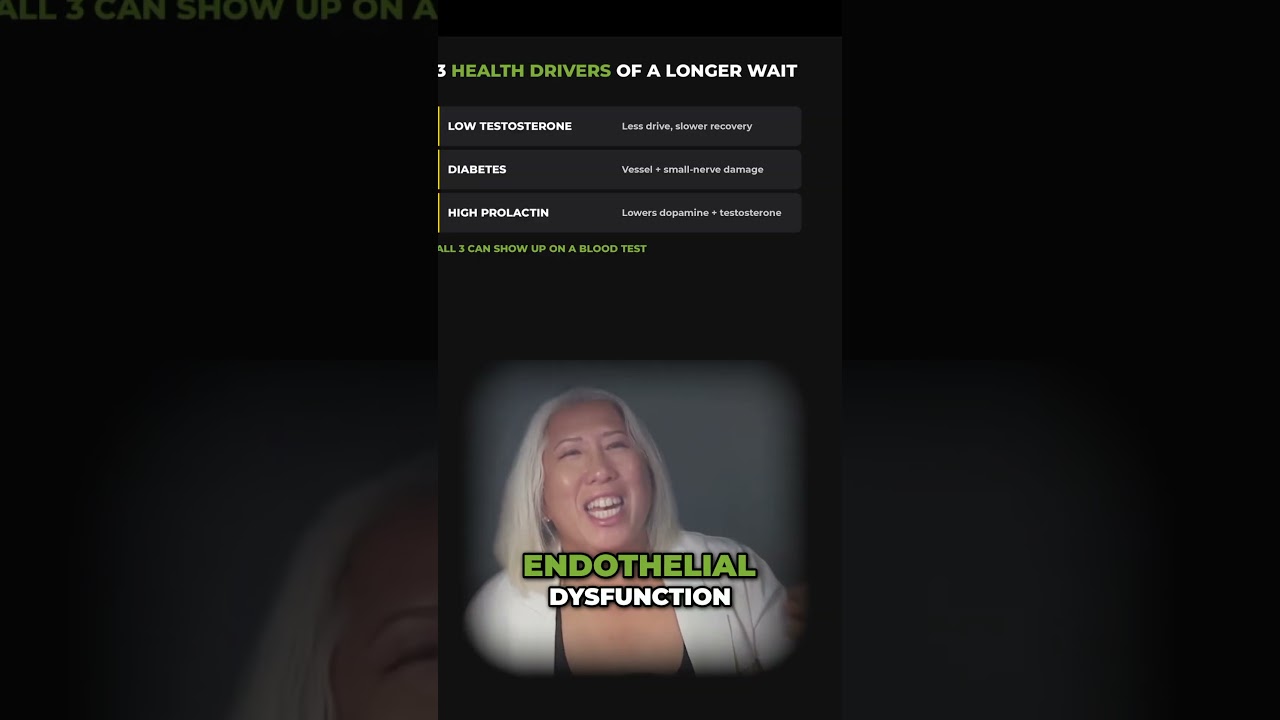
3 Health Conditions Behind a Long Refractory Period #LowTestosterone #MensHealth #shorts

Does the Refractory Period Get Longer With Age? #RefractoryPeriod #MensHealth #shorts

5 Common Medications That Can Slow Round 2 #MedicationSideEffects #MensHealth #shorts

Why Round 2 Takes So Long: The Brain Chemistry #RefractoryPeriod #Dopamine #shorts
Long Refractory Period? It Could Be Early ED #ErectileDysfunction #RefractoryPeriod #shorts

Is Your Medication Slowing Round 2? SSRIs Explained #RefractoryPeriod #MensHealth #shorts



