Dr. Anne Truong, Episode 7, Webinar, Be Resilient & Healthy During COVID 19, Depression, 04-30-2020
A May 2020 webinar (Episode 7) led by Dr. Anne Truong with guest Deleed Dicker focused on COVID-19 clinical updates for Virginia (testing numbers, percent positive ~17%, hospitalization/ICU/ventilator rates), new CDC-listed symptoms (including loss of smell/taste and 'COVID toes'), and treatment notes (remdesivir: shortened recovery but unclear mortality benefit; ongoing trials; hydroxychloroquine evidence limited). The session then covered mental-health impacts of social distancing, types and symptoms of depression, practical self-care strategies (routine, exercise, mindfulness, gratitude, 'pandemic projects') and concrete help-seeking guidance (seek care if symptoms impair daily life or persist about two weeks). Local resources (Mental Health Association, Psychology Today listings, suicide prevention lifeline) and an immune-boost guide (trunkrehab.com immunesguide) were referenced.
Questions this video answers
April 30, 2020 (webinar episode date referenced in title).
About 17% (15,846 positive of ~91,000 tested in the cited period).
If symptoms interfere with daily life or persist about two weeks.
Chapters
All right, all right, we are on. Welcome everyone. Thursday, 7pm and we're here for our episode seven, Be Resilient and Healthy During COVID 19. Today we're going to talk about depression symptoms and management. And we have Deleed Dicker here with me again. So thank you for being with us today and thank you for joining me on this wet Thursday evening. Perfect day to be indoors and learn something new. I have a lot of nuggets for you today. I just came back from one America network interview. So I was reviewing some of the data that I discussed about this morning on national tv. I will start out a quote and so I chose this quote where Mother Teresa spread love everywhere you go. Let no one ever come to you without leaving happier. I try to do this every day as much as I can imagine. If you do this for about maybe five minutes a day, you can write somebody's life or even if it's just one person. Again, trusted source, I put on here the Virginia Department of Health, cdc, nih, Harvard, Stanford Academic center and ucsf. I also look at Infectious Disease Society, the IDSA and clinical trials and medical literature. So I actually spend a lot of time looking at all these data every week and trying to go through, you know, the noise. There's a lot of noise out there, some good, some not so good, and some not even true at all. And we try to sift through that and try to go to sources that are more neutral, that more fact based. And so I'm going to just summarize a little bit about COVID 19 and then delish will come. So anyway, new things about COVID 19, the CDC has added new symptoms to it. This is a new virus and we've only known about it probably about maybe three months and we're learning on the fly. So initially we thought that COVID 19 present as fever, cough, shortness of breath and body ache. And then we find out, hey, it's also causing symptoms of loss of smell and taste. And then now you're going to start seeing some bluish toeing toes. So if your toes turn blue, that may be a sign of infection there. And CDCs also add a sore throat as well as chills and fever and also abdominal pain that's coexisting with nausea and vomiting. So in my practice we ask all these symptoms when you come in. We also check for a temperature as well. So this is new. Loss of smell and taste and bluish, your toes turning blue and a sore throat. So that actually sounds like a cold a lot of times that you may not even think about. Again, 80% of people have very mild symptom, 20% have more severe symptoms. All right, so looking at COVID 19, VA and the Rappahannock region, and we are considered the Rappahannock region. And comparing today to last week, so as of today in Virginia, about. Almost, almost 91,000 people have been tested, which is more people tested than last week. This is the number from last week on April 23, and that's the plus of 26,000. So we're having more and more test kits available. We're testing more. And that doesn't necessarily mean that more people are infected. It's just that now we have the ability to test more than we did last week and the week before. And of those tested this week is 15,846 come out positive. That's about 17% positive. And it's about the same as last week. So that's good news. So that means that you have 83% chance of not having COVID 19, even though your doctor think that you have the symptoms or the criteria to meet. Person under interest, and the person under interest is somebody that is older, may have symptoms, maybe immunocompromised, or may have underlying condition of heart disease or lung disease or immunocompromised. So the chances are good, but you have a 17% chance that you're going to be tested positive. The highest area in the state is in Fairfax, Prince William, Arlington and then Henrico in our region, which is the Rappahannock region. I break it down. Fredericksburg. And the second number is this week. So Fredericksburg last week was 20. Now they're up to 33. Again, that's really more to testing. Spotsylvania this week is 143. Stafford is 240 and King George 32 and Caroline 27. Fredericksburg is the only area that has no death. They currently have seven patients in the hospital at this time this week, currently 23 hospitalized and three death. Now, this number does not mean new number. It could be inclusive of these patients that are currently in the hospital, that or and that is added on to this or new patient as well. So sometimes patients in the hospital, they could be in the hospital from two weeks to six weeks, depending on the severity of their disease. Stafford, currently this week there are 44 people in the hospital and two death. And King George, 12 people in the hospital, four death and Caroline, five people in the hospital. But last week they had zero death. But this week, one death. For total in our Region and Rappahannock is a total of 10 at this point. So compared to the state, the state this week have 2,322 cases that are in the hospital. That comes out to about almost 15% of patient that are people that are confirmed Covid which are these and then they are hospitalized, which is about 14%. Interestingly in our region, Rappahannock region, 81% of people that are infected are over under 60 years old. Not over under 60 years old. Virginia however, 69% are under 60 years old. So in our region there's a preponderance high number of people that are tested positive that is under 60. So almost like 80%, which I thought was a very interesting number. So the number of deaths statewide is about 3%, which is the same as last week, 3%. So this number comprises from the number of deaths divided by the positive cases and in our region is lower than statewide. In the Rappahannock region this week it's about 2%, about almost the same as last week. And interesting numbers here. This is from the Virginia Hospital association. And what is telling here is I want to have you take a look at this number. Out of those people that are tested positive, 24% are in the ICU. So these are people that are hospitalized. Actually these are individuals that are currently hospitalized in the Virginia region that would confirm or tests that are pending. And then these are the number of people that are hospitalized in the ICU, which is 24% of that number. And that 13% is on the ventilator. And interestingly, we have a lot of beds and a lot of ventilator available in our region. Something that new within the past few weeks is that doctors are starting to realize that patients on the ventilator don't do too well. So if individuals are on ventilator, there's a high percentage that they don't get off the ventilator and incur fatality. So the key now is try to keep the individual out of the ventilator as much as possible and only use as a last resort. And COVID 19 does not present like any other acute respiratory disease or other Rs. It presents more of a kind of high altitude sickness. So these numbers are you need to be keep aware of because we want this number to be less, this number to be less as well. Okay, so this is a number of daily cumulative cases in Virginia. This is all Virginia. And just these are right now we're up to 15,000. It seems like in Virginia we're on a Rise up. We may not hit a peak at this point. Currently we have one outbreak in our local region reprehension and that's the Aldi in Spotsylvania. But there are 216 outbreak in Virginia. And I mentioned earlier, 81% of people in the Rappahannock region, which is our region, is under 60 years old. The young are being more hospitalized and sometimes they present us having a stroke. So these numbers tell you this here in that in the Rappahannock region, which is our region under 60, that's about 81%. And you can see the lightest blue area is the number that are hospitalized. So we've always thought, well, the older you are, the more severe case you're gonna get. Well, that can be true. But you're starting to see that it starts to rise up more in people in their 40s, their 50s now, almost not that much lower than individuals in the 60. But interestingly, the cases in the individual in the 70s is actually less. These are the number of hospitalization actually less than the one in the 40s. So where are we on this curve? We're probably still right here on the curve. We don't know whether we're here or we're here. Yeah, but we have to monitor the number of cases you're going to see from this number. This rise right here will reach the peak and then we'll go down from there. So some good news is that the earliest date, which with relaxing social distancing may be possible with containment strategies such as more testing, contact tracing, isolation and limiting gathering size to probably perhaps like 25% or so for Virginia, which is this dark blue yellow region right here is around June 1st to June 7th. So that's when things may be, you know, sheltering, shelter at home. Order may be relaxed at that time. However, this is a changing diagram. It may change next week. This is what I had received for this week. So we're looking at around June 1, June 7. The governor's order is through June 8, I believe for sheltering in place. So I want to stress that use this crisis to start to get healthy and try to modify your conditions. And because we know that people that has COVID 19 that do worse have diabetes, BMI over 30, have high blood pressure, have insulin resistance and heart disease. And let's talk about some new guidelines, some new treatment that are coming down the road today. Remdesivir. You're going to hear a lot about this medication. Remdesivir is a medication that used to be used for Ebola. And how it works is that it is a pro drug, but when it goes into the cell, the cell it limits the virus from replicating itself by stopping an enzyme called RNA transcriptase. So there was two studies, one study that looked at the effect of remdesivir on patients that are hospitalized with with severe symptoms and then compare it to doing nothing. And what they found was that when this severe accelerate recovery for patient with COVID 19 and they get to be discharged quicker than the patient that did not have any type of intervention. However, remdesivir does not change fatality compared to placebo, which is no treatment at all. And so remdesivir is only given as an IV and cannot be given as oral. Interestingly, there's another clinical trial that was done in February and March in Wuhan, China that looked at patient with COVID 19 severe symptoms and compared that to placebo and is blinded. And what they didn't finish the trial because they were having. They observed side effects such as liver function tests and nausea and vomiting occurring with Remdesivir. But what they did, they measured about 200 or so patients and found that remdesivir was not better than placebo. So this is the first trial with that are randomized, meaning that it uses a placebo. So it's a good, good news in a sense that there is some good good news for treatment. But we still need to do more to find out the validity of this and more consistent result. There is a large trial coming out in May with 5,000 patients all over the world to see how they do on remdesivir and then also trial it, trial out Remdesivir on patient on the ventilator as well. So I'm looking forward to hearing those data. So hydroxychloroquine and chloroquine, which is the medication for malaria that you hear a lot about given with azithromycin, the antibiotic. It's still a plus or minus. There's no big trial that says that it is safe and it is, you know, good. They have good outcome. COVID 19 patient good outcome with these medication. At this point, there's no randomized control placebo trials yet. So more to come on this. And convalescent plasma, I really like that. I think there's a potential for that for perhaps for prevention infusion for patient that are for people that are at risk to having severe symptom. Convalescent plasma is taking the plasma or blood, you get rid of the red blood cell. You keep the plasma which has the antibodies to COVID 19 and these are individuals that already have been infected with COVID 19. And then you transfuse the plasma into a patient that had not had the infection. And then corticosteroids or steroids or cortisone that you hear about right now. It still nothing clinical trial about that at this time. So one thing I want to say is NSAID and anti inflammatory. These are the ibuprofen, the Aleve, the Naprosyn and the. Let's see Celebrex. Well these medications you will use commonly to lower fever. However a recent study especially from France that showed that you should not use it for a patient that is susceptible that has COVID 19. Because these medications upregulate the receptors that coronavirus attaches to your body which is called the angiotensin converting enzyme receptor. So don't use ibuprofen or anti inflammatory in individual suspective of COVID 19. And steroids should not be used as well because it can suppress your immune response to the infection. So coronavirus testing in our area, all these tests you need a doctor referral for the test if you meet the criteria Better med I mentioned that barrier. Washington Healthcare have it in three facilities. Primary and urgent care are also doing that as well as well as Patient First Urgent Care. In their South Point and Garrisonville offices. LabCorp and Quest can actually do serology or blood tests for the antibody to SARS CoV2 which is the virus causing COVID19. Again all of this needs to have a doctor's order. Again don't forget to wear your mask. Masks you can wear a cloth mask or a surgical mask that we have. It protects you, it protects others, protects the community. Ways to boost immunity I have will be I have a flyer that will talk about the different supplements that you can take that will boost your immunity. And another thing is buy local support your local businesses. Right now they're having a tough time with the stay at home order and other orders that the governor had to close businesses that are non essential. So go to Fredericksburg.com and click to view Buy a gift card to support our local businesses, even including your doctor's offices as well. So these are. I love this picture. I can't remember where I got this picture but these are our heroes, our marvel heroes here wearing scrubs. Not all heroes wear a cape. Some wear scrubs. And these are the staff at ATA's Fossilvania Regional Medical Center. And these are the staff at Mary Washington okay, so sequela of stay at home order and social distancing. So I want to bring this point out that we've been at home now for almost six weeks for the stay at home order and social distancing and we hear the news all the time is creating a lot of anxiety. And we're social creatures as human. We like to interact and we like to go outside of the home. And now home is the walls that we stay in within the past month. And I myself met a friend on Sunday and we walked together on downtown, had a great time. That was the first time I probably did that to go downtown walking with her in a while. And I find that it was such a good feeling that I have missed. So what else we're seeing now when they at home and social distancing and these are the things that we're going to be facing with in individuals that are staying at home. We're increasing. We're going to see increasing sleep disorders, increase in anxiety, increase in depression, increasing obesity, increased use of alcohol, tobacco and other drugs, ptsd, anger, domestic abuse, possibly even suicide. And D Sequelae last longer than the pandemic. It can leave long lasting scars. And these are the issues that we need to be aware of right now. And those at risk for d Sequelae are older individual with chronic diseases, children, teens, doctors, nurses, first responders. Mental health conditions where people with mental health conditions with substance abuse. One study has shown that in hospital workers who was quarantined they can have PTSD that can last for about three years after coming out of isolation. The key stressors that can lead to psychological distress is boredom. Check. That's part of part of stay at home order and social distancing frustration. Check. That we see that inadequate supply. Check. As in toilet paper and now possibly meat supply. We went to the grocery store the other day we were only allowed two.
Meat.
At the grocery store which amazing. And now toilet paper are being enrolled. You can't buy as a pack anymore. You have to buy it per roll and limited information. Sometimes, you know the information you listen to may be biased as well. And financial loss and that's from individual that had lost their job or had not working or is not able to have two income at this point and then having the kids at home on top of that. And it costs money to feed a family that stays at home, you know all the time. I can tell there's four of us and we go grocery shopping almost every other week. And so now I'm going to pass this to to delete and she'll talk about recognizing and managing depression during the pandemic.
Okay, great. Thank you. Thank you for having me. And yes, just leading through all those stressors, you may be wondering, do I have depression managing depression, or am I just managing the problems of the pandemic? So I thought I would start with just kind of a list of different types of depression. So you can just go to the next slide, please.
And.
Okay, there we go. So I thought I would just give you a really brief cheat sheet on depression because depression is not, as you probably know, one size fits all. It's. There are different types of depression. Major depressive disorder is probably what you're thinking of if someone has a clinical depression. And that can happen one time or it can happen several times in many times in a person's life. But that's the main one. There's bipolar disorder, which you may know it as manic depression. It was called that for many years. Now it's called bipolar disorder. It is a mood disorder that's made up of manic episodes and then a depression. And the depression with bipolar disorder is actually quite significant. It's usually more severe than other types of depression and it can lead to suicide. So if you want, we want to find out if someone has bipolar disorder so that we can treat it with medication. There's dysthymia, which is a sort of a low level depression. I don't see too many people in my practice with this, but some people do have a really kind of chronic, ongoing level of depression. Depression. Some people don't think about this, but, but depression can be due to medical condition and then there could be brain trauma or other medical conditions that do have to deal with depression. There's also atypical depression. And finally we're getting around to some of the depression that we might all have had lately, which is a little bit of seasonal affective disorder. This is sometimes called psychological. And it's the depression that you get when you're depressed during the winter. Like when the season of winter comes along and you're feeling blue and you typically kind of come out of that around April. But if you have seasonal affective disorder, you will probably have had a real struggle this week because it has been overcast and raining every day. A lot of people coming in complaining about how actually not coming in, virtually coming into my office. But really it has been a very hard week, especially for people who already had a little bit of seasonal affective disorder going on. And then finally, and what I'm mostly going to Talk about in the next few minutes is really situational depression. And so the question kind of comes to mind, you know, is this a situational depression that we, some of us may be feeling related to the pandemic? So yes. If you could go to the next slide, please. Yes. So the symptoms of depression are really, this is kind of across the board, these symptoms. Appetite changes. Usually depression will impact your appetite one way or another. Some of us comfort, eat, and some of us lose our appetite, but usually it affects us one way or the other. Sleeping patterns also change. Our sleeping is usually impacted. Either we sleep too much or we get insomnia. Usually people kind of can check the list and know which way they're going to go, when they get stressed or when they start to feel sad. Situational depression or any type of depression. There's a loss of interest in activities. There can be withdrawal from social situations. There can be feelings of worthlessness. Sometimes people get angry, they get frustrated, they lose their temper more. There can be problems concentrating. People can have a loss of energy and there can be feelings of hopelessness or helplessness in the worst case scenario. What I found interesting is that when I went to create this list and started listing these things off, I realized that this pandemic has really hit us in almost every one of these situations. It is kind of running parallel to these symptoms. We have had dietary changes. You know, you mentioned the grocery store. We're limiting meat. There's restaurants that we might have gone to, places that we would frequent. So our diet has changed. So that may be kind of hard to understand whether that's from the situation, the pandemic, or if we really lost our appetite. Also with sleep patterns. A lot of us working from home, even if we are still working, we don't have the commute. So we might be able to stay up later and start sleeping later. Especially if you've had a job loss, you might find that you're getting your nights and your days mixed up. So kind of just going back down this list, it's the same list of the symptoms of depression, but it's a list of what we're all facing. So it's not your imagination. If it's hard to sort out, is this really depression or is it just the impact of the pandemic? Obviously, activities. We've had so many of our activities cut out of our life. We have social distancing. So withdrawing from social situations is really what we're expected to do. Standing six feet apart and not gathering in large groups or more than a Few. So feelings of worthlessness are coming with us as well, and frustration when we're at. When will our life go back to normal? Problems concentrating, you know, if we're working from home, you know, I've had the dog walk in and the dog bark, or I know if you have children, I have a few clients with children, and we'll hear them in the background. And you could just feel that frustration. That's. That's really kind of across the board and the loss of concentration and a lack of energy and then, I guess, feelings of helplessness. I can't imagine anyone who wouldn't have some feelings of helplessness across the world because they're really. We're getting a lot of great feedback and we're doing the best that we can, but there is some helplessness and hopelessness that's going along with this. So. Yeah. So next slide, please. Thank you. So I guess the question then comes, you know, how do we manage our mental health during the pandemic? And once we've sorted through this, if you. I'll later give you a list of places to call if you feel like you have a more severe form of depression, if you feel it's a. Even a severe form of situational depression. But one thing you can do is to try to do some things here, managing your mental health at home. That really helps to counter some of those problems that we just listed about the pandemic. One of them is to create a daily routine and to stick to it. So that would mean that even if you have lost your job and you have plenty of time to stay up late and sleep late every day, you would try to restrict that to maybe the weekend, if that was your typical way of living, that you would stay up late on the weekend, but not during the week, but however you do it, creating a good, healthy daily routine and really having the self discipline to stick to it. Also, exercise is super good for us. It's great. If we could have a virtual group. I have one of my daughters who is alone and she somehow virtually gets into the session that my other daughter from another several states away do every day. So every day, every morning they get together and they exercise. And that's a really good thing. The more you can do that in a group, the better. I love this one. Create a pandemic project for yourself. You probably know a lot of people who've talked about baking or. I know my project. At the beginning of all this, there was a lot of discussion about masks, and I decided to open up a mask Making shop in my bedroom. And so for about a week I had, you know, maybe I made a mask a day. I really do hate to sew, even though I can. I closed up shop and then I turned.
Did you make.
I made, you know, people would request them. I made probably a total of 10 and I bet it took me 10 days to do that. So yeah, I was a little intimidated by a mask making group online and they. Boy, they can. They were churning them out. They would do 10 an hour. So I closed up shop and now I've opened up a garden in my front yard. But really, I think trying to figure out what is your pandemic project, even if it's something that you weren't ever planning to do, but you just decided this is how I'm going to occupy my time. Keeping a gratitude journal is always a good suggestion. People who are feeling depressed, this is the last thing that they want to hear is to sit down and write about everything that you're grateful for. So I usually suggest that if you don't like to write or you really don't want to do this, just do like three bullet points. It's good to have three things you're grateful for each day and you can put them down as just three bullet points. And what happens is when you're feeling blue or you're feeling down and you're used to noticing all the things that go wrong, what happens with the Grant gratitude journal is that over a period of time, you shift into really noticing what's going right in your life. And it's really fun to see that, to see that shift. But it does happen. You just have to stick with it about two weeks or so before the gratitude is. I'm grateful that I didn't catch a stomach bug that my daughter has. And it can get better as time goes on. So that you're actually grateful for seeing a sunset or some nice things. So the next one, I mean, boy, this could be a whole. In fact, I think you have had some talk about mindfulness. But practicing mindfulness is a really good thing to do right now because we really do need to be kind of living in the moment. So looking that up and learning more about mindfulness is a really healthy practice. And it can. Can really pull you out of sort of your own head with your worries and your.
Well, what is that? What is mindfulness?
Well, mindfulness is really. There's a little bit of a different definition for different people, but it's living in the moment, really being mindful of what's happening now. Like the two of us are talking. We're going to be taking some questions later and really being mindful of what's going on in this moment rather than letting our thoughts jump ahead to what's for dinner or, you know, did something go wrong earlier in the day that won't. That keeps coming to my mind because it's not happening now. So it's being mindful of what's going on right in front of us each and every moment that we're living. So staying connected to using virtual tools and we are all. I mean, boy, I have learned so much about using virtual tools and I think it's really helped us.
You learn about zoom?
Yes, I learned about zoom. I know I've learned more today than I learned two weeks ago when we zoomed together. So, yeah, I learned. I'm learning a lot and I'm up to it. I'm up to the task. I'm really trying. And the final one is just to take one day at a time. So we really are in a crisis. And that is the way that you manage a crisis is you take maybe one hour at a time, one week at a time, one day at a time. So we think about things in really small chunks. We're not jumping ahead. A lot of us maybe had vacation plans that are either on hold or cancelled, but really not going too far down the road to worry about something that we don't know. Just taking today for today, that's a really good way to sort of stay grounded and. And to really just appreciate these months that we do have in front of us, these weeks that we do have right here. Yeah. So how about the next slide? Thank you. Yes. So finally, and this is my last slide, if depression is a concern, what's going to happen is when you try to do those suggestions that I made in the last slide, when you try to do those, if you're unable to do those, if you just. It's going to be difficult for you to do those in a depression, for you to get up and stick to a schedule. So I think that that is going to be a really good indicator that you have something going on that needs to attention. So be sure to ask for help. And I've tried to list a couple of ways that you can do that. I listed this one first. Talk with your doctor about your symptoms. They will probably send you toward a mental health provider, but sometimes it's a little easier to reach out to your doctor that you know and be sure to tell them how you're feeling. And no one's going to be surprised or shocked these days if you do need to be with a therapist or a psychiatrist or something like that. So also we have the Mental Health association, which is fabulous. I call them every time I get a question about what's going on in town. Sometimes I just call them to kind of get a sense of how, you know, how much demand are we having? Are we able to keep up with our demand? Is there a demand for something that we aren't meeting right now? So they're a good place to call. They have a list of groups, they have a list of all sorts of outside sources. They have a list of counselors that work in town and what their specialties are and insurance companies and yeah, so they have a website there and they have their responsive to their phone very much these days. Also there are mental health professionals. Our particular region has a few big practices, but a lot of the therapists in town work on their own. And a good way to find them is to go to the Psychology Today website. A lot of them list there as well as with the Mental Health Association. So you can just look them up by the city zip code. And most everybody, I don't know anybody who's not working with through telehealth. So really doesn't even need to be somebody that's necessarily close in proximity to you at this time. But to me I think it's reassuring to have somebody who's in town. But that's easy to find through Psychology Today. And the last but certainly not least resource is the suicide prevention lifeline. There are other numbers. This is one that I got. I think the thing that I usually say about depression is that it's not typically dangerous unless there's suicidal ideation or suicide is really the only thing that makes depression a dangerous thing. But it's certainly an important thing that we want to definitely avoid. I have people sometimes where they're worried about their spouse or maybe they're worried about their kids, teenagers, especially young, young adults. If you're worried about someone or if you need help yourself, then you can call the lifeline and talk about what to do and they will kind of coach you through that process. I always, I take a really better safe than sorry approach. So if someone is just saying, you know, maybe downplaying the thoughts, saying maybe I just don't want to be here or thoughts like that, I take those very seriously. I don't find that people do talk about that kind of thing very much for attention that they are usually really hurting. So we want to be super careful about, about our mental well being and keep people from feeling that desperate. Yeah. So.
All right, this is your last slide. Yes.
That is wonderful.
Thank you. I actually wrote some of this down, but I have some questions for you. So I have immune boost guide and that I have made up with 12 intervention for boosting your immunity. It can be found@trunkrehab.com immunesguide I'll copy this and then we'll send it to put it in the chat box on Facebook Live chat box. And so after this, we're ready for any question that anyone will have at this point. And I'm trying to check, see if there's any questions on Facebook and. All right, so if you have any questions, those are the hands and type that in the chat box and you can, we can answer that. And at this point. And let's see, let me look in the chat box here. When I first did this, I didn't know about the chat box either. There you go. All right, here. So I'm learning every week that I'm doing this, but thank you for being here today. You are just chock full of knowledge about mental health. And I know that I had mentioned, and I know that will be something that we would have to address once the pandemic is, I don't know, to say over, but at least once the restrictions are lifted. So question I have is, how does an individual know when their symptoms are worsening and how long do you have symptoms until you should be concerned about.
Yeah, okay, that's a great question. The rule of thumb is you want to be concerned if it starts to interfere with your daily life. Now, our daily life has already been interfered with. So again, that does make that really a complicated thing to sort of manage. But if it's interfering with your ability to, you know, participate in ways like I know that most of us have been invited to zoom calls or to zoom parties or different types of media, or if your friend calls you simply on the telephone and you just avoid and don't want to call back, that's interfering with your life. So that's kind of the, the bar that we go by with major depressive disorder. I think we say about two weeks of symptoms. So if you're still within a week, if you have a bad day, if this week has been super hard for you, you might just chalk it up to it's been cloudy and raining. But if on Saturday, I think it's supposed to be nice and beautiful and warm, if that comes along and you just still want to stay in bed and not get out. You're starting to get into territory that could use. You could use some help. I think one thing to remember, too, is that really there's no harm in going ahead and reaching out for help. It's super easy right now to get a therapist. Even if you meet with them just a time or two. Sometimes I'll have people come in and they'll just say, you know, I just. I don't know if I need to be here. I just wanted to share. Share a little bit about what's going on. So don't be shy to do that. If you're questioning it, you know, it's simply. There's not even any travel time these days, so, you know, it's simply calling and reaching out and then taking. Taking usually an hour to just talk about what's going on for you and see if you feel better.
So it's. You're saying if symptoms are present for about two. Two weeks, then you. You could seek help? Yeah. Is that what I'm hearing? Yeah.
Yes.
Oh, great. Well, you know, I. I would tell you I'm probably qualified for some of that. You know, the things that I used to do, I'm not doing. You know, I have my time, and I supposed to be cleaning the garage and sorting out the, you know, the kids stuff. It's still sitting there. The garage needs to be organized and clean. It's still sitting there. I have no excuse not to do that. So how are the mental health professionals? Are they busy or. They're not busy. And how soon can you get an appointment?
Well, I've been hearing. Last I heard, I'm on a group of therapists that meet once a month now, virtually just to kind of compare notes. And I was hearing that people had still a spot or two left. There's certainly enough work out there for us. I mean, we've typically been really slammed in the Fredericksburg area, and it has sometimes been hard to get an appointment, but now we don't have that travel time. And I think therapists also are just wanting to make more time for people who are struggling. And so I think that it's pretty easy to get in quickly, like within a week, maybe two weeks at the most. Yeah. And it's good to get a good match. So if you. If you meet with someone and they don't feel like a good fit for you, that's okay. None of us get our feelings hurt, really. We're way beyond that. And we know that not every client is a good fit. For every therapist, sometimes there's all sorts of things that make a person maybe not the best fit. So just go try to find somebody else if you have one encounter that just doesn't work for you.
Okay. So are most therapists in town take insurance or. Yeah. Or not.
Not a lot of therapists in our town do take insurance. There are. They'll have a list of that. The ones who. What insurance they belong. They participate with in those resources that I gave you. But I would say for the most part, people are. I'm not in network with insurance, you can get out of network benefits. But I would say, by and large, it is pretty easy to find somebody that's in network within your insurance. You can just look on your insurance card and there'll be a number for behavioral health and just ask them for a list and they'll direct you to a list of people in your area who are available. Yeah.
Well, wonderful, wonderful. And so I'm looking to see if anybody have questions in the chat. I'm getting feedback.
Thank you.
From one of our attendees. Thank you for taking the time to provide valuable information that we can apply to our lives during the time of uncertainty. And I would like more information about the ways to boost the immune system. So if you want more information about boosting the immune system, go to trunkrehab.com immune boostguide that's on the slide right now right there. And we're getting a lot of feedback in the chat that they're enjoying the information delete. That's wonderful. And I actually learned something new about psychology today. I actually wrote that down as something that I'm gonna look at. I wasn't even aware of that. And so what I find interesting that you talked about mindfulness, that that's really powerful because I was doing some of that. I didn't know I was doing mindfulness by just focusing on the moment. Because at times, I mean, I feel frustrated, I feel confused, you know, with everything going on. And I just focus on what am I doing. I find that for me is to be the person to gather information and help the community to sort all through this, you know, all this noise that we have. And be a delivery of information during about COVID 19 and gathering professionals that can help the community get through this. So for me, focusing on the moment of what I need to do distract me from the noise that, you know, is affecting me mentally. And I didn't know I was doing that until you brought it up. And what. So that was really Good. So I don't think that sometimes you're aware what you're doing, except that you just know that you need to do something. Right.
Yeah. Yeah, you're right. You're right and you're right. I call it noise. It is. It's like, it's like noise. And sometimes it's noise from memories of the past. Think, wait, you know, we should have done this. I wish I had stopped. I wish I forgot something at the grocery store or, you know, or we're worried about the future, you know, what's going to happen in September, when is this going to be over? You know, but what we lose, and it's a real loss. I mean, I emphasize this a lot with my patients. It's a real loss. The moment that is right in front of us now, you know, the game isn't to just like, let's get rid of this moment so we can get into this future moment, or let's spend this moment just stressing about what happened before. But this genuine moment is genuinely what we have. What we have. It's all we have. So. And a lot of the worry is worrying about how many more and more moments are we going to have in the future. And, you know, in a sense, it's not a good trade off because we're trading off the moment that we have right in front of us. You know, the person that's talking with us, you know, if we're helping our kid with their homework, you know, that's a moment that is an important, significant moment that shouldn't be missed because we're, you know, preoccupied with, like, what you say it's the noise.
Yeah, yeah. And I tell you, I mean, I'm. I belong to this entrepreneur group and we meet about once a month and some of the requests is, you know, toilet paper, masks, hand sanitizer. And I'm now finding myself being the person that is trying to. I'll gather that for my group because I can find vendors that carry masks and hand sanitizer, but the toilet paper is quite, quite challenging. You know, even find a pack. So I have to become the middleman for that. And so if anybody knows where I can get 20 pack of toilet paper, let me know on the chat box. And I also actually need more masks, too. So anyone that knows making a lot of masks, you know, I like to send a care package to the 20 entrepreneurs that I belong to, but never in my life would I think that I would be a broker for toilet paper.
I had the funniest experience. I was in the grocery store early on in this when toilet paper was really. Well, I guess it's still out of stock. But the gentleman behind me, he said, hey, I have a secret. He's like, toilet paper is at the Dollar General next door. He said, it's not in the big packs. It's only one roll at a time, but you have to ask at the front. So he had given me all the instructions on how to go get a roll of toilet paper is really, it was really sweet, good neighborly thing for help.
I was at Benny's Pizza last weekend and they were telling one roll toilet paper. Since when did you go to pizza place and buy toilet paper at the same time? You're gonna have to laugh. Yeah, I mean, for me, you're gonna have to laugh and enjoy the moment now instead of saying, oh, you know, it's just terrible. I can't believe it. I laugh because I, I'm gonna write this in a journal and say, you know, when, when, you know, when is it that, you know, we're gonna have times like this again. You know, we look back, when we look back, we're gonna say, I remember that time where, you know, I was at a pizza place and, you know, toilet paper were being sold and you can only buy one roll at a time. And, you know, my husband had to go to the grocery store the other day just to buy some meat before, you know, they limit that even.
Yeah.
You know, so. Yeah, so I do have anything else to add because I think I kind of asked a lot of the questions already.
Yeah, I mean, just that I think that it's going to make us grateful for a lot of things we've never even thought about. I can tell you that I have not thought about toilet paper very much in my life. But, you know, yeah, there's going to be things where we just, we just say, wow, this is, this is something that, you know, it's not always just provided, so. Yeah, I agree.
Yeah. Well, like I said, you know, these are just unique times. And that's how. Yes, we're all in it together. We'll get through it together. And things are already looking better already. I'm starting to see new clinical trials coming out, some treatment coming out, and already they're already testing vaccine already on people. And so I think, you know, probably a year from now, a year and a half from now, we'll be like, what, what's COVID 19? What was that? I don't remember. I'm like, oh, yes. Oh, now I can do rolls and rolls of toilet paper now and I go to the bathroom, I can throw it around my hand and not worry about how many squares I use at the time.
Throw it in the trees, you know, a person's house. Now that would just be.
I would tell you something funny. We have to post a little flyer in my office. In the bathroom. We have three different bathrooms that please come stuff toilet paper. We're learning low.
Right? Yeah. Yeah. Well, we had a lot of Kleenex. You know, when you're a therapist, you have closets full of tissue, you know, because you have some tears to wipe but you know, it could be used otherwise.
I know, that's what I was thinking. You never know, you know, you never know when you meet that. Well, thank you very much for being with us tonight.
Thank you for having me.
Thank you, thank you all the attendees for their feedback. And someone said here. It is so important to keep a sense of humor during times such as this. I look at the highs and lows for toilet paper. Finally, I was not able to find except at Costco. By the time I go to Costco, it's all sold out because I work in the daytime and I go at nighttime. So most of the time there, there isn't much left. So. But thank you much appreciative. I'd like to have you back again. I like to look at the sequela. I like to look at the things that we need to worry about now so that way we can be resilient and not have any long lasting scars from after when this is over. So thank you, Delys. Much, much grateful. I'm so grateful that you're here delivering great information and I will see you all next week at 7pm Those of you that couldn't join us will get a recording and thank you very much and see you next week. Thanks Elise. Take care. Thank you. Bye bye, bye bye.
More from Anne
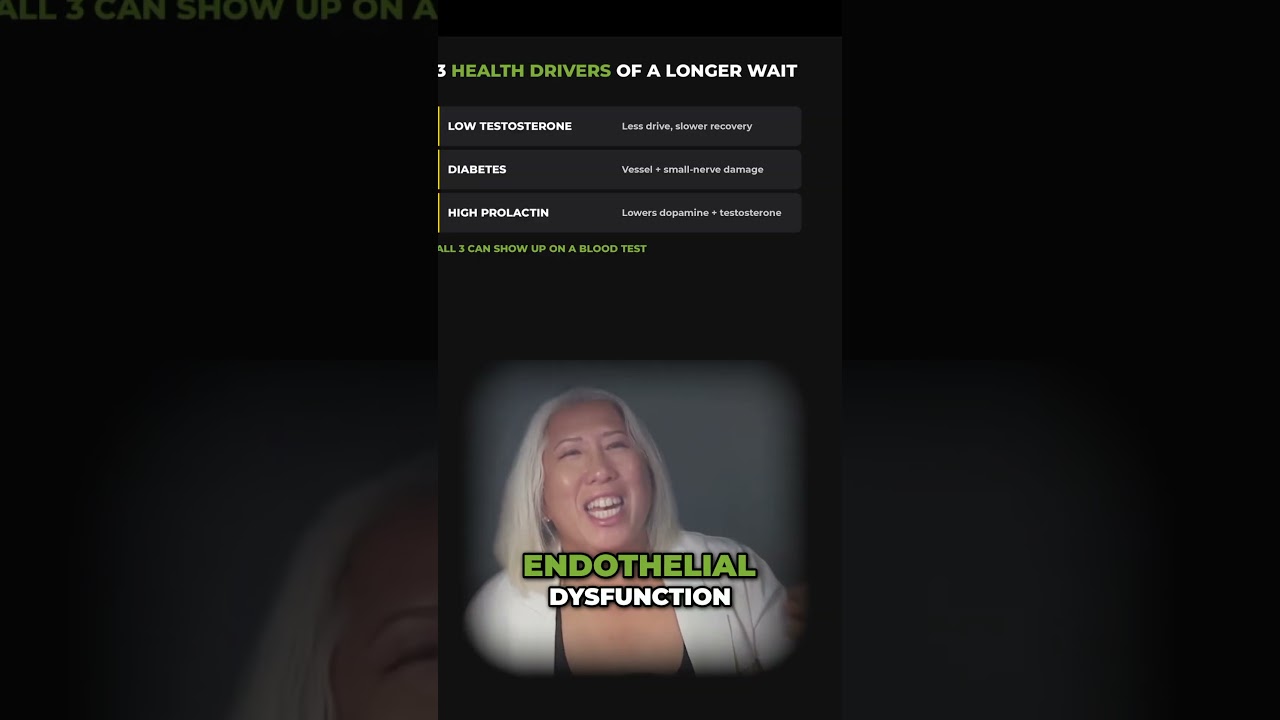
3 Health Conditions Behind a Long Refractory Period #LowTestosterone #MensHealth #shorts

Does the Refractory Period Get Longer With Age? #RefractoryPeriod #MensHealth #shorts

5 Common Medications That Can Slow Round 2 #MedicationSideEffects #MensHealth #shorts

Why Round 2 Takes So Long: The Brain Chemistry #RefractoryPeriod #Dopamine #shorts
Long Refractory Period? It Could Be Early ED #ErectileDysfunction #RefractoryPeriod #shorts

Is Your Medication Slowing Round 2? SSRIs Explained #RefractoryPeriod #MensHealth #shorts



