Dr.Anne Truong, Episode 8, COVID-19, Sleep Disorders & Respiratory Problems, Dr. Kallay, 05-07-2020
A recorded webinar-style conversation (Dr. Anne Truong with pulmonologist Dr. Nick Kalei) summarizing local Virginia COVID-19 statistics, public-health observations, clinical management updates and practical advice. The speakers review testing capacity, trends in cases/hospitalizations in Virginia and the Rappahannock region, emerging treatments (remdesivir, convalescent plasma, anticoagulation), ER/ICU operational challenges, CPAP/sleep-medicine considerations, and mental-health sequelae of the lockdown.
Questions this video answers
138,558 tests (up from ~45,000 the prior week)
Nearly 22,000 positive cases; about 16% positive of those tested
Hospitalizations: ~2,300 last week → ~3,000 this week; Deaths: 552 last week → 469 (this week's figure reported)
Rappahannock region: 690 positive cases, ~100 hospitalizations, 11 deaths
A 45-minute RT‑PCR COVID-19 test (limited use, e.g., for admissions or nursing-home discharges)
Chapters
Hey, I've been doing this for now, the eighth week now since we started this pandemic. And I can't believe we're on into it for two months now. And we're talking about today. Dr. Nicolay is going to join me. He's also my esteemed neighbor as well. And we're going to talk about the hot topic of respiratory problem with COVID 19. So I'm going to start with just a few minutes of recapping where we are now and what we're seeing. And then Dr. Kalei will join me in a few minutes. So thank you for joining me today on a beautiful day on a Thursday. And I will start out with a quote. And I like this quote is that I like to be positive. So this too shall pass is an old proverb by a Persian saying that originated actually with the poet Rumi. And then we'll know that about a year or two from now we'll look back and say, yeah, I remember that when I was at home and haven't had a haircut in at least two months. And we're doing tons and tons of webinar at home. So I gather all my sources since we started doing this from the Virginia Department of Health, the cdc, nih, Harvard, Stanford, UCSF Infectious Disease Society clinical trial and the medical literature, and also talking to my colleagues who are on the front line of treating patients. So I usually kind of compare the numbers and where we're at today compared to last week. And so the number in the beginning is last week and the second number is as of today taken from the Virginia Department of Health website. So this week we tested a total of 138,558 individuals. So that's up from 45,000 from last week, which is 90,000. And of those 130, 600,000, nearly almost 22,000 are positive. So that comes out to about 16% positive of those tested. And the area of the most density of cases is in Fairfax. And this is an order of highest to lowest. The top four is Fairfax, Prince William, Arlington and Henrico. And hospitalization last week was 2300. This week is almost 3000. About 14% of people that are hospitalized over the people. Number of positive cases and number of death in Virginia this week is 469 compared to 552 from last week. About 3.5% with this number come from death over positive cases. Women steadily about 3.5%. Now know also that the number of positive cases is also fluid because we may, we may not have enough test kit to test everyone that is symptomatic. At this point. These are only individuals that are what we call pui. A person of under interest who shows symptoms and the doctor feel that they're prompted to be tested so to present. So this picture taken from the Virginia Department of Health summarizing what I said. But I put this up because the. What we're seeing here is cases per. Cases per 100,000. As you can see, the density is more in Northern Virginia, Loudoun, Fairfax area. Stafford is like up here. We are in Spotsylvania here and we are in the disc color here I believe, which is 20 to 60 over 100,000. We're definitely not in zero. We're not definitely not in the light color. Where we are in Spotsylvania. Stafford is in this region here about 200 to over 200 plus over 100,000 cases. And these numbers show the number of positive tests. And you can see that the trend is kind of going up and then it's kind of like going down slowly with the number of positive tests. This is over a week right here. And these are the number of people that are tested as well. So we do want to see this. We want to see a higher number of people getting tested and number of individual that are positive going down. And this is an interesting. I wanted to show this because this is our area which is Rappahannock, which involves Stafford, Caroline, Fredericksburg, King George and Spotsylvania. And in our area region is 690. This is as of today 690 positive cases, 100 hospitalization and 11 deaths. I believe Fredericksburg has not had a death at this point. And I wanted to compare us which is the Rappahannock region to Virginia in cases. And it seems that the spread of individual getting this is actually as young as, you know, 10 and up. The majority of the ages of individuals that are testing positive in our regions between 30 to 50, which is approximate to what is in Virginia. So this is not affecting just the elderly. What we thought is affecting really more from age range from the high. The the biggest range is between 20 to about 60 at this point, which is also comparable to Virginia. Interestingly, in Rappahannock we have more female than male being affected. And you also see that in Virginia as well. Compared to other nation, you see actually more men positive cases, more men than men than women. And that men seem to actually seem to have a more worse case. So I want to talk about outbreak. We have three outbreak in the region and an outbreak is when two positive cases are connected to the same person in the same place or time outside of an household. So in our region, Rappahannock, we have three which is in Aldi Heritage hall and the latest is a long term care facility in Fredericksburg. However they chose not to be named. We know it's a long term care. Interestingly, public health official, they don't require that you have to disclose the facility with outbreak. And this was just written up today. I thought that was interesting because you have an outbreak, you would think that for public health and community awareness you would want to know where that is. But you don't have to disclose that. So I think there needs to be more transparency in places of outbreak so we can be aware of it in the community. So we know that individual with these type of comorbidities here, diabetes, obesity, high blood pressure and heart disease and insulin resistance have severe cases. These diseases are linked to inflammation. So you can modify your risk factors of this by decreasing your inflammation status and raise your body reserve to fight any type of infection. Interestingly, I got this recently and I wanted to include it here. So with the stay at home order for now at least six weeks to now eight weeks, what we're seeing in California and particularly in the Central Valley in California, this is before shutdown and this is after shutdown here. And you're talking about six weeks and the pollution, the nitrogen dioxide level over California Pre shut down March 2nd and then here is at the end of March you can see a big clearance of pollution in central California and same thing in New York. This is a sideline picture of air New York, this is pre shutdown. This is after shutdown with the stay at home order. When you see less nitrous oxide gas being emitted. You see the same thing here in New Delhi, India pre shutdown and after shutdown. Look at the smoke. You can barely even see the monument here. And now you can see it clearly. This picture was taken in October 2019. This picture was taken in April 2019. Another comment is in the news. We're doing a poor job of social distancing. As Virginian we receive a D on a scale of A to F. And this picture here delineate that this has come from unicast right here. So we're right here and we're light brown and we have a D picture. What that means is that we're not doing a very good job of social distancing Overall United States we have a.
D.
As a grade compared to Nevada receive an A and compared to the B in Colorado and Idaho. These states right here receive an F. And the one that our seats are actually better than we are. So how do you get the grade is 25% to 40% reduction in mobility. And so right now we're as a whole as a country is a D. But you break down the area in Virginia County, Spotsylvania actually we have an F. Charlottesville is about a C. All right, so just some Dr. Kalei will also talk about some treatment as well. And I made this slide. You know this was like a few weeks ago and it just want to include that remdesivir. There were two studies that one that says it was a positive study. The second one was not positive. The FDA however on March 1st have issued authorization use of remdesivir which is the antiviral medication to can be used for COVID 19. And I hope Dr. Kalei will talk about that when you talk about management. So I found this data here. So how likely are you to die from COVID 19 will compare these data here. So this is in Santa Clara Valley in California. So right now, right now at this moment, this may change. This may change because the more people we test, the fatality rate will also go down. So the risk of chance of dying from COVID is 1 in 500, which is 0.2% or less. But then compared to cancer is 1 in 7. Narcotic overdose is 1 in 98. A fatal car crash is 1 in 100. Shot by a gun about 1 in 300 hit by a car, but pedestrians about 1 in 500. So your chances of dying from COVID it's about probably somewhere between hit by a car. But this number may go down as we tend to test more. An interesting new study that came out this week and also on May 1st that link vitamin D deficiency to having more severe disease with COVID and also even related to death. And vitamin D we know it's not just a supplement but it is also a steroid component is also very strong hormone modulator. So I hope you know what your vitamin D levels are and make sure you supplement that. So just a little something to mention is that NSAID non thorotic anti inflammatory should be. You should be cautious in using people that has a fever were suspected COVID 19 and judicial use of steroids. Nick, I hope you can talk about that a little bit as well. Now there's a recent study that came out that using ACE inhibitor actually may not be a negative impact on COVID 19 recovery. And then now vitamin D supplementation. So testing in our area is a lot more now than it was before when I first did this. But Bettermed Urgent care was facility that only one that did it. Now Mary Washington Healthcare is doing it. Primary and Urgent Care are doing it. Patient first Urgent care doing it. Nest Care, Urgent Care and Quest can do antibody blood test as well as the molecular swab test for the SARS cov2. Again I want to mention to sequela of the home order which was given on March 30. We've been at home now for a month but we have to be aware that there are sequela to be aware of kids not having school and people not working and being in stay at home order and that you can incur sleep disorders, anxiety, depression, obesity and increased use of alcohol, tobacco and other drugs, ptsd, anger, domestic abuse, suicide and these sequelas are lasting long longer than the pandemic and can leave long lasting scars. So I'm hoping to kind of touch on some of these as we go along the next few weeks. Unfortunately, those that are at risk for these sequela that I mentioned earlier, older individual with chronic diseases, children, teens, doctors, nurses, first responders, an individual with mental health condition with substance abuse and the key stressors that can lead to these psychological distress that I mentioned earlier is boredom, frustration, inadequate supplies, licensed food, limited information and confusion. There's a lot of information out there about COVID 19 and testing and being inundated from the media and then also incurring financial loss from not working. So certainly we are encountering more stressors now than we had before and unknown of what the future will hold in the future.
So.
We are now all wearing masks in the office now and I hope that you all are wearing masks as well. I talked about ways to boost immunity when I first started and one thing I want to mention again is that doing acts of kindness or compassion will boost your IgA immune protein which will increase your immunity and continue to support local businesses in the area. They are especially restaurant and your hair salon. They are hurting because of the stay at home order and I want my hairdresser to open up again. My hair is getting ridiculous right now and I actually gave myself my own haircut with my bangs this week. So support your local businesses. This was actually written in the first week when all this happened. This at the parking lot of Mary Washington. Not our heroes wear cape, some are scrub and we have a hero here with us tonight. Dr. Kalei, these are staff from Pasylvania Regional Medical center, the ER staff and these are ER staff from Mary Washington. So now I will pass over to Dr. Nick Kalei, who is my neighbor. Esteemed colleagues. He is a pulmonologist or a lung specialist who manages patient in the ICU and also at the hospital and also does outpatient as well. He graduated medical school at University of Alabama and he did his residency and fellowship training at Wake Forest University School of Medicine. He is board certified in pulmonary critical care and sleep medicine. So he triple boarded. This guy got a CV that's probably 10 pages long and he's currently practicing at pulmonary associate budgets first in 2001. Well, Nick, I've been here since 2000, so you came like a year after me, but you look like you're at least 20 years younger than me. I can't believe this thing that long. But when I saw the 2001, I'm like, oh, my God. But this is Dr. Kalei and his lovely wife Paula and their son. Is that Nick also?
Yes, it is.
Yes. And their son. And where. This is in Italy in front of the pisa, right?
Yep, yep. Absolutely.
How long ago was this picture?
Actually, it was just. Just last year.
Well, wonderful. So the bird gave me this picture. You didn't know about that, did you? I always like to have a picture of the family. Okay, so it is all yours?
Well, let's say. Yeah, it's an issue in the.
Yeah, it is all yours. I included just a couple of the slides in the beginning for you. So if you want to kind of do some recap, you could, you know.
That'S fine. Thank you very much for the. For the intro, Dr. Truong and the. And a very nice review of where things stand with COVID But what I would do here is start by sharing a perspective of healthcare worker with those that may not be used to looking at things from that point of view. A few tidbits on how things look from the perspective of healthcare work in the emergency room and the floors and the ICU and some outpatient perspective and a few. And along the way, throw in a few tidbits of things that maybe you find to be helpful. But I do first want to start with. I do want to acknowledge that what everybody knows, everybody is all stressed out about everything. You can't go about the COVID 19 thing. You really can't go through the day without being beat over the head, you know, 10 times with the problem. Yes. Dr. Truang said it can lead to people getting anxious, depressed, and all of those related emotions. I want to make sure that I draw everybody's attention, particularly to the one side of Dr. Trang that I really like. That compared your risk of death from COVID 19 to all those other frankly, realities of daily life, would it be reasonable to kill. When it comes to a chorus, do we let that bother us? You know, as we go about our day and do general car wrecks aren't a potential danger. It's not to say we don't pay attention to it. We take certain precautions. We hopefully all put our.
And Nick, you're phasing kind of in and out.
My. Is it all the treated serious? Yep. I don't know. Can you hear me now?
Yeah, I can hear you now. Yeah.
Okay. All right. Well, I'm hoping that in the end we end up treating COVID 19 in a fast and similar to other serious potential problems, but ones that we don't let paralyze us, like with car accident, like the risk of car accidents. We'll put our seatbelts on as a reasonable prudent protection. And then we go out into the world and do our thing. And I'm hoping that we end up sort of thing kind of a few bits of things in the hospital. For starters, I'll start with the emergency room. Spoken with some of my colleagues in the emergency room and got some kind of interesting insights. One thing is that you may have actually seen some articles or news reports about actually in the emergency room. The onset of emergency room visits are down about 40 to 50%, which is. Which is absolutely mind boggling. Essentially, everybody's afraid to go to the emergency room because they think they're all going to get infected by Covid if they go. This is. I was talking with.
Hey, hey, Nick. We're having a hard time hearing you.
Let me.
You know what?
Is this a little better?
If you stop your video, that may help. So we can just hear you talk. So I stopped sharing your screen. But if you. There you go. So see if we can hear you better. There you go. Try that again. Yeah.
All right.
We kind of. We didn't hear you talk for the last year. We're good now.
Okay, well, all right. I will repeat a little bit. You're actually looking kind of jerky too. But anyway, one of the main things to start with as far as perspective in the emergency room is that emergency room visits have been down about 40 to 50% nationally since COVID 19 started. Everybody is afraid of going into. Going into the emergency room and getting sick with COVID One of the ER doc that I spoke with just recently told me that Today, for the first time in quite a while, they actually had patients in the waiting room, which was an unusual thing, a notable thing for them lately. Usually the waiting room is pretty full. This has actually raised a lot of concern among clinical professionals, worrying about all the people that should have come to the emergency room but didn't and may end up coming to the emergency room later with delayed presentations, problems that are farther along and they end up being sicker. But time will tell as far as how that ends up panning out. Another tidbit from the emergency room. It does seem that something is one thing that has really tended to clog up the works in hospitals is pretty much all the patients that do show up to the emergency room. Not initially seeming to be possible COVID patients, but then it turns out that the question gets asked and then has to be dealt with. Somebody that shows up after a fall and they broke their hip and then it turns out that they get a chest X ray for some reason while they're in the emergency room with a little shadow. And then when pressed they admit, well, maybe they've been coughing a little bit. And then instant Covid concerns. And because everybody's afraid of missing it, they end up having to kind of get put in the channel of getting it looked into and ruled out. Now this has been, this has very much had the tendency to gum up works in the hospital and that when Covid first came up as an issue. Now a couple few months ago, if you wanted to do a COVID test, one, it was very hard to get two eventually when we did get would be sometimes a week or sometimes even a little more before you knew what the COVID test test results were. But as the weeks have gone by that, that's improved. It's improved to usually now a one to two day turnaround time. And actually it's even better now than, than, than what it was in that apparently. I now understand that as of yesterday to a very limited degree, the emergency room now has the ability to do a COVID test with a 45 minute turnaround time, which has been very helpful. It's only used for patients getting admitted to the hospital because it makes a big difference in terms of where in the hospital they go and what kind of immediate treatment they may need. It's also if people are getting discharged to nursing homes because obviously we can't have people going to nursing homes with, with, with COVID So it's not used for everybody yet, but it is available and there's going to only be more of it. So those are some important developments as far as the emergency room goes, but to an extent, that's wonderful.
What, what, what kit are they using? That is the 45 minute turnaround time.
You mean what kind of test? Yeah, yeah, it's, it's actually like the other Covid. The, the main COVID test that we're kind of used to dealing with are referred to as RT pcr. Reverse transcriptase polymerase chain reaction is the technique that's the main one that we're used to. But actually this new one is the same thing. It's also RT pcr. It's just a special unit that they apparently have the limitation though, or the test kits that go along with it. So all the hospitals all over the country are scrambling to try and get as many of those test kits as they can. But it's also RT pcr, so it should be pretty accurate.
Okay, that's wonderful news that we have.
Yep, yep. The. When patients get admitted to the, to the hospital, at least in the past, there should be less of this now. In the past, there would be substantial numbers that would. Substantial numbers that we were getting kind of parked in the hospital with appropriate care, but always with the underlying question of could they have Covid? And that can't help but shape what kinds of tests or treatments are done. And so with the more rapid identification of whether somebody's really COVID positive or not, that really will make a difference in treatment. I'll give one example from a pulmonary perspective. One of Dr. Truang's earlier slides kind of touched on, for instance, trying to avoid giving steroids to patients who have Covid. Though the underlying reason for that is because actually there's some data that giving steroids to people with, with the flu may increase the likelihood of their not surviving their illness. And so there's some generalization thinking that, well, that may be true with this viral infection, COVID 19. Is there any real data that's real specific to COVID 19 with respect to steroids? Not really. But this little example highlights two really good things to kind of keep in mind. One, really, although the knowledge base is growing by leaps and bounds like gangbusters, so much of what we do in dealing with COVID 19 is based on very limited information and a generalization based on other things that we know better and trying to use good medical common sense. But a lot of what we sort of think we know and do is based on not as much evidence as we like or are accustomed to using, but it's really a matter of Everybody doing their best. So the steroids is one such example. From a pulmonologist standpoint, we get patients admitted to the hospital with COPD exacerbations as a relative routine. While as a relative routine we would put these people on steroids anti inflammatory to cool off inflammation in their lungs and hopefully then that helps their breathing to feel better. But yet we are currently. The general plan is currently not to give steroids to people with COPD if you can avoid it. Sometimes if their wheezing gets real bad or the COPD really seems to be having a lot of problems, you give the steroids anyway, even if they have them, even if you think they might have Covid, but you're kind of hesitant to. With the onset of more and more rapid COVID 19 testing, we'll know sooner whether it's okay to give steroids to these people with COPD flare ups. And some patients that might have their steroids given in a more delayed fashion even a week ago for lack of knowing right off whether they were COVID 19 positive or not will now be able to do because we'll know within 45 minutes when they, when they hit the ER whether they're COVID positive or not. So it'll really be, it'll be very, very helpful. And the icu? A few little tidbits maybe in the icu. In icu actually, as is the case elsewhere in the hospital, the primary care given to patients with COVID is supportive care, but mostly consisting of giving them oxygen and if they need it and treating other and supporting their breathing as they need it and treating other accompanying medical problems that the person may have. The difference, particularly in the ICU is we now are starting to have available some additional more active treatments that we can use to treat Covid. Most of the active treatments used to treat Covid are really intended for right now anyway are really intended for people who are very sick from it. People with. The reason for this is that some of these treatments are associated with non trivial risks and we have to be mindful that most people that get Covid, they're going to get better, you know, almost no matter what you do. So the last thing we want to do is give a treatment to try and help the COVID and actually have them get a complication. But one of the most promising treatments is going to be the remdesivity or that Dr. Truong touched on earlier. As he mentioned just here like in the last week or so they were reporting some positive trial results that actually as far as these things go, usually we look for more studies, more robust data to support a medication before really recommending it. But in this particular case, the FDA went ahead and gave emergency access approval for this drug because there aren't any other treatments that are really known to work or have been shown in any kind of good studies to work. There have been lots and lots of small little studies that have, some of which have suggested that other treatments might be sort of helpful, but then other little studies that show maybe it's not so helpful. So there's a list of other treatments to include the hydroxychloroquine that Dr. Truong mentioned. This had some conflicting data. There are some other antivirals that have a little bit of conflicting data. The other treatments that Mary Washington is just getting online, including exchange transfusions, which is another treatment that you might have read about the news where you basically take parts of the blood of people that have six have recovered from COVID 19 with some good sort of anti COVID 19 infection fighting capabilities in that person's blood and then you give it to somebody with active disease and the infection fighting components of the recovered person of the blood can then help aid the person with active disease. But that's essentially what exchange transfusions are. But that treatment, while it's just going online becoming available at Mary Washington, even that is only being done as a part of a study because we can't really say that we know convincingly that it works well. But there's some reason to think that it may help. So it's at least an option for some people. There are other things such as on the table, there are the anti interleukin six agents that mostly work to try and decrease inflammation in the lungs and that shows some promise and has been getting used some locally. I know.
So which one are you using right now if you have to manage somebody with COVID right now?
All right. Now the thing that I think most people would go to is Remdesivir, although that's even now only indicated in people with severe to life threatening disease. The tough part is going to be getting it. It's been available on a compassionate use basis from the manufacturer for weeks now, but very difficult to get. Hopefully a little easier to get now with the FDA emergency access approval. I'm quite sure the manufacturer is making it as fast as they possibly can, but that's probably going to be the go to drug at this point. Some things like the chloroquine and the hydroxychloroquine that has been probably the go to drug up until maybe a couple weeks ago. It's cheap and relatively easy to get. With some initial smell studies showing promise. It's just then some subsequent somewhat bigger and perhaps better studies are much more murky about whether or not it helps. And as I mentioned, a lot of these treatments are associated with some risk. And the hydroxychloroquine is well known to have a risk of perhaps contributing to certain heart rhythm problems, sometimes some very serious ones actually, as of I think about a week or more ago at least. Mary Washington, for instance, is no longer typically using that as a. As a treatment for COVID 19. As a result, if there is a general underlying theme to COVID 19 and that's things are changing really rapidly in terms of what things are being done and what things are not being done anymore. One of the up and coming things that that is actually in the last few weeks been really rising as a treatment element in COVID 19 is blood thinners. COVID 19 that has been observed seems to be associated with an increased risk of clotting, blood clot to the lung, strokes, things like that. And there are some initial studies that seem to suggest that actually putting people who are very sick with COVID 19 on blood thinners may improve outcomes. That's kind of the hot thing of this week and it may fade. It definitely needs to be studied more and better. But that's the thing of the moment anyway.
So why do you think that is? Why people with COVID 19 tend to.
Lot more don't know. It kind of caught everybody by surprise. Nobody was really expecting expecting it. And so right now it's a lot of, I think, speculation. Nobody really knows. And it may end up turning out to be that it's sort of a red herring kind of a problem. But I don't know. I've been seeing enough articles on the matter to make me suspect that there probably is really something to it. But there's certain like autopsy studies where they find a lot of clot in people's lungs and things who died of COVID 19, that sort of thing. But.
So are you putting all patient on. On anticoagulant or is it case by case basis?
I think it's really case by case. I mean like the other treatments, this one is associated with risk too. I mean, as is usually the case when you put somebody on blood thinners, there's the risk of bleeding, complications, and for some people, they'll have medical problems that may make a risk of being put on anticoagulants really prohibitive, but. And blood thinners are not being given to patients on a routine basis who have mild to moderate illness, at least not at this point anyway. And really, even people who are severely ill from it, it's I think, getting used more and more now, but it's hardly the case that they're all on it at this point. Kind of the rising question mark of the moment, really. As far as other potential. As we're starting to get close to the end of time, I want to leave a little bit of time for questions, if anybody has any. But I want to throw in a little bit, one or two little tidbits of information at least about COVID 19 and sleep medicine. Probably the main thing that I can think to mention about that is the potential connection between COVID 19 and CPAP machines. So CPAP machines are mask based type devices that are used in the treatment of sleep apnea, common sleep disorder. Basically, it's a little mask that people wear when they sleep at night, connected by a little tube to a box on the side of the bed that just takes regular room air and then delivers it through the tube and mask under pressure into the breathing passage to kind of help hold open the breathing passage which otherwise may be collapsing, which is what's happening in obstructive sleep apnea anyway. Lots of people have sleep apnea. Lots of, lots of people are on CPAP machines out in the community. Well, with the COVID 19 being out there, there is a lot of thought that's been given to what are some particularly risky circumstances that may increase the likelihood of transmission of COVID 19. And pretty much anything that has a tendency to generate droplets, more respiratory droplets that may carry COVID 19 in the air, like somebody coughing or sneezing or something like that, may increase the risk of disease transmission. Well, if you have a CPAP machine and somebody's using it, it's thought that that may increase the little respiratory droplets from that person that are. That end up being in the air. So what's. So if you got somebody on a CPAP machine in the hospital, might that cause droplets to spread all over the place, you know, in the room and on the hospital ward and on an outpatient basis? You know, so what about all the people on CPAP machines at home? Are they all those people at risk of giving other people in the household Covid as a result? Well, this is also. This also fall in the category of uncertainty. There really isn't much in the way of studies to really clearly guide us on these questions, frankly, I have a little hesitation in even bringing up the whole CPAP and COVID 19 connection. Out of some concern that everybody out there with sleep apnea ends up stopped using their CPAP machine out of COVID related concerns. I think about the best advice that I can think to give in a situation is, is that as long as you're feeling pretty much normal, the likelihood of spreading COVID 19 around by using a CPAP machine is probably very low. And I honestly wouldn't really suggest worrying about it. You might consider, if you're feeling sick with some kind of respiratory symptoms or something, you might consider sleeping in a different room than your bed partner, just to be on the safe side. But I do want to kind of come back around to the point that we touched on earlier. I really hope that people keep their COVID 19 concerns moderate, keep it moderated and know, you know, I don't want everybody. You can't run your life completely on COVID 19 concerns. I mean, if you think about it, you know, you know, if you, if you have a cough or a sniffle, Might you have COVID 19? Yes. Do you have COVID 19? Probably not. I mean, the number of people who have, who have been diagnosed with COVID 19 really across the community is actually all in all, really a minority. So, you know, again, I think I would really want people to be mindful of COVID 19 to take reasonable precautions, but don't neglect everything else about, you know, that's going on in life as you go about doing it anyway. So I don't know if there are other questions or anything at this point.
Yeah. So I have a question. So you have treated patient with, presenting with COVID What are you observing when somebody is hospitalized or either on the water in ICU with COVID What is your suggestion for our attendee and what the presentation is like and should they be worried?
I mean, what are the patients, what are issues going on with the patients when they come in? It can really be anything. They may come in, they may come in as straightforward as saying, well, they've had fever and shortness of breath and they've got a funny looking X ray and they've been coughing. And they said that somebody that they've been in contact with recently has been diagnosed with COVID Well, that one's relatively easy. And we do see some of those people. On the other hand, we'll get people sewing up and sewing up in the emergency room with completely unrelated complaints. The hip fracture that I touched on earlier or a fall or the stomach ache or something, and then it turns out that they have Covid. That probably gets to the. You really can't ever completely discount the possibility of COVID 19 in people because as we're increasingly thinking that there probably is more Covid running around out there than Almost certainly more COVID 19 running around out there than we can clearly see, simply because so many people, it seems like, don't have any symptoms from it. There's a good and a bad thing. It makes it harder to track. But I'm again hopeful that for most people, I'm hoping that there's a little less fear associated with the medical problem. It can be so bad that you can't even tell. You got it.
Wow. Wow. So is it presumptive that somebody has Covid when they're presenting to the hospital not feeling well because the symptom is widespread from abdominal pain to nausea, vomiting to fever, shortness of breath. Is that the presumption now if. That they're coming in during distress, whether it's GI or not, you know, they're going to get a test and then presume Covid until tests come out otherwise?
Yeah, that's often the case, yes. I mean, there are a lot of people that end up getting admitted to the hospital who might have Covid. Either that's the reason they get admitted because they're sick with something that might be Covid, or they get admitted for other medical problems and they might just, oh, by the way, also have Covid. But lots of people have been getting admitted to hospitals with that as either primary or accompanying potential problem and having to get it evaluated and ruled out very frequent. Even if the likelihood that they have it is low, there's still been a general feeling that. That no one wants to miss it. And so it ends up folks have felt obliged to look for it. That's part of what the. I'm hoping that the 45 minute COVID 19 test, starting yesterday on the emergency room is going to really help to help the log exam that gets created as a result.
Well, that's wonderful. So what you're seeing when you're managing these patients, is it really the elderly population with multiple comorbidity or other medical problem that are really doing worse and that they're in ICU or they have more severe cases.
Those are the ones that have a tendency to get admitted to the hospital. They are the ones that do tend to, from what I've seen, do tend to get sicker and end up in the icu. Although that's Certainly not exclusively the case. I think far and away the majority of folks, even in our community, I don't have detailed knowledge of all of the cases, but the ones that I'm aware of very much the majority of the admittedly relatively few people in the community that have died of COVID have been definitely on the elderly side, typically with significant comorbidities.
Right, right. Wow. Now, for those people that are on, please type your questions chat and I will ask Dr. Kalei that. So don't be shy and will ask questions. So I'll ask some questions why any of our attendee may have some questions. And I'll check Facebook as well too. What about copd? What are those patient with COPD group? What is your recommendation for them to do now while they're, you know, in the community? What should it be doing so that way they don't have a case of.
COVID Well, I think people with copd, particularly if it's on the relatively more severe side of the spectrum, I think for those people, it's probably particularly important to adhere to the recommendations. Social distancing, generally trying to stay at home and away from other people as much as possible. The main way that COVID 19, one of the main ways that COVID 19 does seem to make people very sick is by pneumonias, by causing a pneumonia. And people with substantial COPD may just not have that much extra lung that they can afford to give over to a pneumonia and still breathe. So yeah, people with copd, certainly I would encourage particular adherence to social distancing. Washing hands a lot, using masks whenever you're out and about. Although I say that even knowing that use of masks out in the community are generally less about protecting the mask wearer than protecting other people around them, around the mask wearer. But if I had bad copd, I would probably wear a mask anyway.
All right. Yeah. So copders wear a mask, protect other people as well. So there's a question here. Why is the medication Remdesivir so hard to get? And if and if patient in the hospital require it, do every one of them get it?
Well, it only got FDA approved I think last week. So up until that point, I think it's the manufacturing of the drug has been of relatively limited quantities. I think that the drug company has likely picked up the pace of manufacturing of the drug even before the FDA approval was given. But it's really at this point still just kind of a matter of having enough drug to go around. I think my guess is the company was a little hesitant to go making 10 million units of the drug before they even knew for sure if it worked. So now we think we know, but it's just going to take them a while to scale up production.
Right, well, that. That makes sense. That makes sense there. So what do you think will be happening in the next month or two? Are you expecting to see more cases and now and what is your projection?
Well, I think that the expectation is the cases will probably continue and may even the numbers will probably actually even go up. It's going to be to some extent one is going to expect that though, because of basically the more test kits that are out there, the more people are going to be identified with the disease. And so the numbers will go up just from increased testing. A little hard to control for that in terms of making a decision about does that really mean there's more disease or does that mean that there's more testing? The other factor, of course, to be mindful of is that all the various lockdowns around the country are getting loosened and almost to an extent, they kind of have to, you know, if you keep everybody at home and not going to work and doing their jobs, you know, eventually people are going to stop having food to eat. You know, I mean, it's been very difficult and very hard on a lot of people, this lockdown stuff. And I think, you know, the country's tolerance for or a complete lockdown is getting stretched. But anyway, so some of the lockdowns are getting loosened and probably that will mean some increased Covid. Some increased Covid transmission would be my suspicion right now.
That's unfortunate, but I guess we would have to see because we don't want the solution to be more. More, you know, widespread than, you know, the problem. It is. We're in a very peculiar place. So what are you doing in your office now when you. During this COVID pandemic area? I mean, what do you do in your office that different than before?
Well, a couple few things. So at least as far as the pulmonary clinic were essentially closed to in person, patient appointments were still we're doing the telemedicine thing, so seen quite a few patients with that. It has certain limitations, obviously, but I think it can nonetheless be quite helpful, particularly in certain circumstances. So it's a lot of people getting patients as well as the physician's offices kind of getting used to a patient care medium that we're not accustomed to. But I think we're making it work. Our office is planning on opening up again tentatively. We're going to wait A little while, but on June 1st. So we're putting in place all kinds of extra safety precautions, you know, as far as screening and masks and all of this kind of thing to try and make the, make the situation safe. So coming up with a lot of those processes, what we're working on now.
Oh, great, great. Now those attending, please put in chat again if you have any questions for Dr. Kallei. I think I asked most of the questions already. We had some people already signed out and getting kind of late. We'll see. But I did realize that you haven't started doing one to one in person yet. Everything is all virtual now in the office.
Then at this point, pretty much some things are completely shut down. Our sleep lab hasn't been doing any sleep studies, which is one of the things. The whole reason for the shutdown and lockdown is to help people's health and welfare. But unfortunately, in some ways it ends up being counterproductive. There's all kinds of patients out there with sleep apnea. They need sleep studies, they need their sleep problems treated. But we can't do it at this point because of the lockdown. I kind of feel bad that there are some patients that are not getting the kind of care that we usually like to give. And this is only one example of, of variations of this example. I mean, probably a near infinite number of them.
Right. So your population of patients are usually the ones that are really susceptible. They're in the susceptible vulnerable group, one with pulmonary compromise on oxygen. And of that. Now, you know, where are they? Are they all just at home or are you seeing them all virtual at this point? Or, or they're just not, they're just not doing anything?
Well, yeah, I think it's a combination of all of the above. We're seeing a lot of them. Virtually some of them are electing like I think much of the country, they're kind of bunkering down in their homes, not doing things that they want to do or know they need to do, but they're just putting it off until life goes a little more back to normal. Well, there are some patients that are not wanting to do the virtual visits and I think are just waiting until life goes more back to normal and they can do regular visits. So there's some of that going on. The other item of concern is again, gets to some of these people, they're just not getting seen and not getting the care they need and they end up getting sicker and end up in the hospital because we didn't see them in the office where we might have been able to abort a problem earlier. Instead, they didn't want to come to the office and they. And so they got sicker and ended up in emergency room. But.
Right.
So it's a mixture, I think.
Yeah. No, it's at the it when I think that we're going to have a new normal when, you know, this is all over. And I don't think medicine will probably be the same after this. So I don't see any other questions in the chat at this point. And so I do. Thank you, Dr. Kalei, for joining me today on the webinar. And I'm sure those attending have Learned about what Dr. Kalei sees and what his recommendations are. He's the one that takes care of you when you're in the ICU on the ventilator and really sees the patient up front and up close and really manages these patients on, you know, up front. How long does it take for you to all gown up and everything to go see a COVID patient?
I'm sorry, what was that? I didn't catch.
How long does it take you to get all gown up and gown up and wear your ppe?
Yeah, well, it kind of. It depends. If you're just going in to see a regular COVID patient, then it takes maybe doesn't take that long. It maybe takes about 20 seconds or something like that. But if you're going to do a procedure that is more risk of little droplets being spread around in the air, then it's a little more gowning up and it maybe takes a couple minutes, it's not usually too bad.
Wonderful. Wonderful. Well, thank you for being with us today and thank you, everyone, for attending. Have a great weekend ahead and enjoy the weather. Thanks a lot, Dr. Kalei.
Thank you very much, Dr. Trong. I really appreciate the opportunity to talk.
Okay, take care.
Take care.
More from Anne
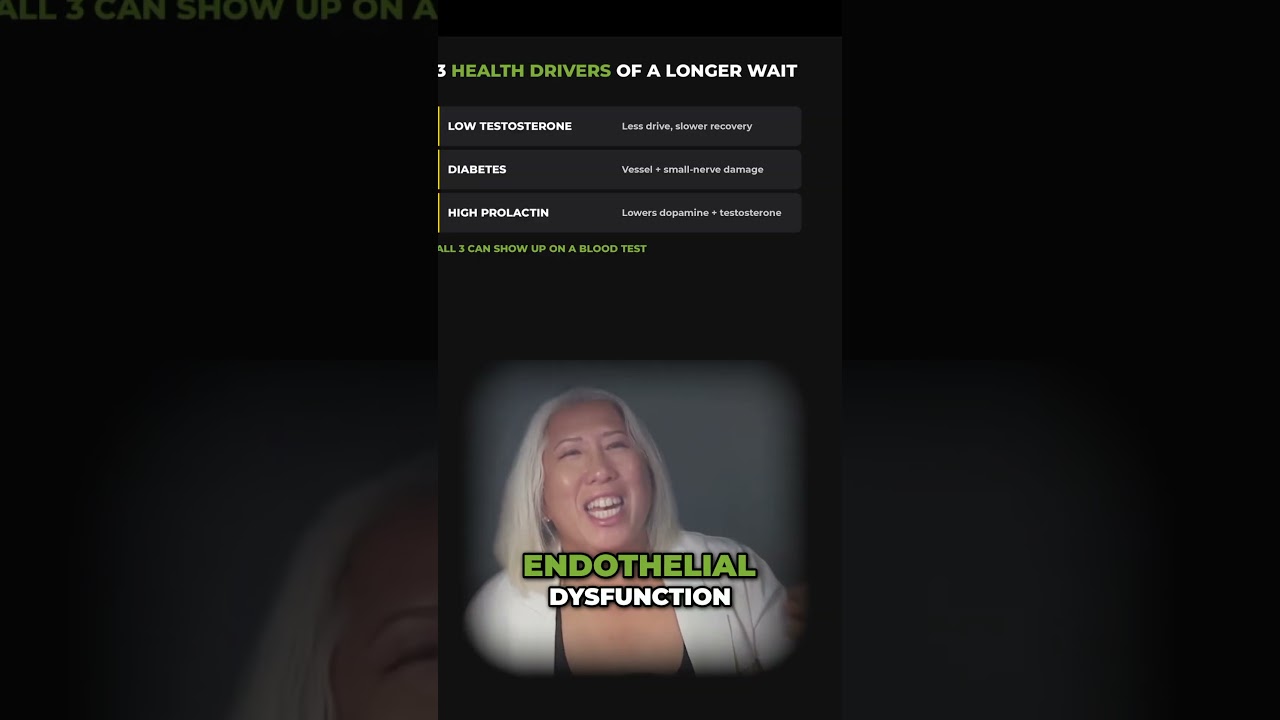
3 Health Conditions Behind a Long Refractory Period #LowTestosterone #MensHealth #shorts

Does the Refractory Period Get Longer With Age? #RefractoryPeriod #MensHealth #shorts

5 Common Medications That Can Slow Round 2 #MedicationSideEffects #MensHealth #shorts

Why Round 2 Takes So Long: The Brain Chemistry #RefractoryPeriod #Dopamine #shorts
Long Refractory Period? It Could Be Early ED #ErectileDysfunction #RefractoryPeriod #shorts

Is Your Medication Slowing Round 2? SSRIs Explained #RefractoryPeriod #MensHealth #shorts



