Dr. Anne Truong, Webinar, Episode 10, Coronavirus, Senator Bryce Reeves, 05-14-20
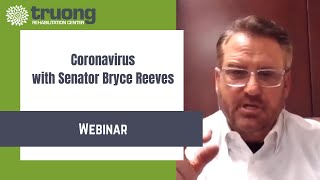
Recorded webinar (May 14, 2020) in which Senator Bryce Reeves discusses Virginia's Phase One COVID-19 reopening: who should stay home, limits on gatherings, business capacity rules (e.g., 50% retail/restaurant outdoor seating, 10-person limits for some settings), and enforcement/legal tensions between the governor and local sheriffs. He addresses economic fallout (unemployment, PPP, state budget constraints), education concerns (schools, universities, summer camps), mental-health risks (depression, "deaths of despair"), and practical adaptation strategies for small businesses and constituents. The session closes with constituent outreach information (District17@senate.virginia.gov) and local anecdotes.
Chapters
Totally different for them. But I still have one in high school. And we're trying to figure out what is his education opportunity going to look like, especially if they're athletes and those sort of things. But I want to just convey to each of you that I personally feel this is that Americans by and large are optimistic people and that when we get through with this, we're going to be bigger and better than we've ever been before. It's just we haven't been there before and there are hundreds of organizations out there today working on a cure. And not necessarily just a cure, but I want to put it in a smaller context before I jump into the phase and say this. We've had epidemics in the past, and they talked about 1918, I think was the Spanish flu. And Ann, you can correct me if I'm wrong, but we've also had. Yeah, we've had other things come along. We've had the AIDS epidemic, right. And we've had cancer, but we still don't have cures for those. And, you know, at first we were sheltered in place so we could take that curve and we could flatten it so we didn't overwhelm our hospitals and our first responders and that. And we've done that. And now we're running into a little bit of a crossroads where we have some individuals talking about, well, we're not going to open up till we have a cure. And I just want to put that in context. We don't have a cure for some of our major killers in this country today, but we still operate effectively and we still are continuing to work for that. So I think we have to put it in a broader perspective and say, look, we have the standard operating procedures. The health professionals like Dr. Truong are on it. They know what it takes, as some of these infectious disease docs do. But we also have to listen to the Economist and the business people because there are going to be some residual effects from being locked in. I read recently one of my staff just gave me a report before I sat down that they expect 75,000 deaths alone from suicide or drinking and those sort of things from the depression side of this. So as we move forward, I just want to kind of put that in context for everyone just to be optimistic, because we're going to get there. But some of your leadership is still trying to figure out how we get there by listening to all the different aspects that are out there. So phase one looks like this. And I posted this on my Facebook page and I Think Ann has a slide for it? Possibly. But phase one says, hey, we're safer at home. Especially if you fall into that critical category where you have a pre existing condition that is susceptive to Covid or some of the effects of COVID then you probably ought to be a little more cautious than somebody that maybe already went through it and maybe has the antibodies. They don't want any social gatherings, no more than 10 individuals. And I've seen this in my going around and visiting with business owners and some of the things I do in my daily, daily business in my day job as an insurance agent. And I see people doing it the right way, sitting out on lawn chairs, on front lawns and they got at least six feet amongst them and they're still doing that. They want you to continue to social distance, continue telework anywhere you can. And those employers will allow you to do that and you have that type of occupation and then face coverings in public. Private businesses can, like Costco, have demanded that their patrons wear masks. So if you want to do business at Costco, you're going to have to wear a mask. And this is where I think a lot of rub comes from is, is our individual freedoms. And I certainly understand that. And so you don't have to patron a certain store if they require something of you. But and it's not required that you have to wear a face mask. So you still have that independence that if you don't want to wear one, you don't have to. And then they're sending down some revised business limitations. So currently non essential retail, they have a 10 person limit. Restaurant and beverage services, all of our restaurateurs, they have takeout and delivery. We eased through legislation, some of the on and off premises to allow the spirits and beer and wine to be sold out of restaurants to patrons as well to kind of help their bottom line. Some right now the movie theaters and some of our amusement parks are still shut down as well as our fitness facilities. And then you're only allowed to be on the beaches now for exercise and fishing only. They ran into a little problem with that in Virginia Beach. So phase one, this is what will happen. That's what's currently happening now. Phase one, the non essential retail, they can open up to 50% capacity. Still keeping their spatial relationship there. Restaurants take out and delivery, outdoor seating at 50% capacity. They still have entertainment, amusement, closed fitness places like Gold's Gym and AM Fam here in town they're still going to be closed unless they started to do outdoor fitness. So maybe they want to do some CrossFit outside with ropes and that sort of stuff, they can do that again. The beaches stay the same. When we talk about churches, they're allowed to have drive in services and 50% of their indoor capacity. So whatever their permit is for, they can have 50% of that show up and still provide the social distancing within the building that they're in. For those of you who have been a little shy on grooming, now you can actually go get a haircut. You've got to wear a face covering, a mask for that. Campgrounds are now open. So if you're an empty nester and you travel in a motorhome and that sort of thing, Virginia's open for business again there. State parks for day use only. Childcare is open for families, working families as well. And summer camps for our children are still closed with school coming towards the end of the year. A lot of parents allow their kids to go to camp and unfortunately right now they're not allowing those to stay forward and stay open. So you're not going to see a whole lot of change in phase one as the governor rolls this out. And a lot of the things that they're talking about are just strongly encouraged. And that's really phase one. And I wish we could say we were adding more, but as Ann briefed on the numbers, the numbers are kind of the telltale sign and Virginia's group two of their numbers together, the way they were doing it, and the governor came out today and explained kind of why they did that so they could derive at those numbers. I will tell you in our office, we have been working a lot and my staff especially have been doing yeoman's work for a lot of individuals with the Virginia Employment Commission on trying to get their unemployment. In fact, I sat down with CBS 19 News this afternoon from Charlottesville on an issue and if you're running into a problem, call our office or email us. More importantly, and our email is very simple. It's District 17 email again, is district17enate.virginia.gov and so we've become kind of quasi experts in PPP and the small business loan process and all of those things as well as made connections in the VEC and out of the 20 some cases that we've helped our constituents with, we're batting about 100% right now with making sure that they got those unemployment benefits. But that's kind of where we're headed, what it looks like going forward. Ann asked me that question. I Said we're kind of going into the unknown and I would equate it like this. When we were attacked on 9 11, the way we travel changed, TSA, changed how we go through checkpoints, all those sort of things. I would anticipate we see kind of that layering effect as we continue on. And it doesn't mean that we're not going to kind of lax down and get back to where we were. But I think there's going to be a little bit more heightened state to be aware of these things and that if we have to something else pop up, as the experts said, it'll probably come back in the fall. How do we address that? So one of my biggest worries is politicians in Richmond and Washington I think are politicizing some of this too much and we need to focus on where the need is. Ann mentioned our senior care facilities. Those places have the highest propensity for deaths in the country. When you look at them, what are we doing to make sure those hotspots have all the personal protective equipment that they have? And so one of the goals that I have as your senator is to make sure that we require that as far as our long term care facilities going forward, that's critical. I think that from there we have to look at our education and figure out how do we work within that environment, keep our children safe, yet still get back to the business of educating our children and how does that look like. And the larger four year institutions and universities are going to have to take a hard look at distance learning and what that means to them as well. Because as parents paying tuition, and I know Ann's done this too, I'm not going to have to pay the same rate for room and board and in person as I do online. And if you talk to your children and I've talked to mine, it's different and it's a different learning environment. Children learn differently, but we'll get there. And I think we're bringing in the right people to talk about that. But citizen input is definitely important to us as one of your legislators to figure out what's the path that we take and how do we do it safely because really we're in it all together. But when the government starts picking winners and losers is where we run into a problem. It's a matter of give us the guidelines at least as a small business owner. For myself, and I know I speak to Ann's husband, Bow all the time about how hard it is to put away estimated quarterly taxes when you don't have the income coming in, your income is dropped and how do you meet those goals and all these things with the business side, we just need to know what the rules are. And so I think we'll come down and we can hopefully clarify some of that. But that's kind of the wrap up. I wish I had a crystal ball to tell you. I do not think this though. I do not think that it's going to take eight to 10 years like some of those talking heads on some of these television programs are talking about to get out of this hole. We are at the crest. I don't think we've been in this hole all that long and I think if we can get it turned around, if we get some remediation to the physical effects of COVID so people aren't passing away from it, but maybe there's a process to, you know, just like on hiv, they do this cocktail of drugs kind of thing to get people where the effects of the disease aren't as bad till they can get to that cure. I think that'll be very beneficial. So with that, Ann, is there anything else you want me to cover or.
Yeah, can you talk about now with the phase one opening and let's say for non essential businesses and what happened if they have more than 10 person limit, what fine do they face and if that happened.
So here's kind of the dilemma that we're seeing now is the governor has put out that he would like the health officials to monitor this, these sort of things and when they get a complaint and they've been asking law enforcement to be the enforcement arm of that, to be able to write summonses. The rub is this, is that there are some constitutional officers and sheriffs specifically that believe that the governor has somewhat overstepping his bounds when now he's trying to come out and, and lock people up for having 11 people in a shop, even though they're doing their best to keep people distance and everything else. So I think you're gonna have some constitutional challenges to that, some refusal of some of these law enforcement agencies to enforce what the governor's trying to put out. There's already been some legal challenges to what the governor's done and he's lost those battles in some of these courts already and in some of the other states you've seen that happen as well where these governors have tried to assume too much authority. And my policy has always be stand with the people and where the people are is where you need to be. And so I think there is a little bit of too much, too much government, too much force to take away your freedoms in some of these. And, you know, as long as you have a. In my guesstimation, as long as you have a kind of a standard operating procedure and you're following the guidelines as best you can put out by CDC and the Virginia Department of Health and those folks, I don't think they should make you a criminal for trying to do the right thing. I mean, there are people who have built businesses over years and years and years, and they're going to lose those businesses if they don't get back to work. And they've just got to have a little bit of time to recover to do that. And, you know, not everyone's just the sharpest pencil in the box, but they're pretty good business people, and it takes a little bit longer for them to get on the uptake. So I don't anticipate you seeing a whole lot of that happening. I think if that did happen, I think you'd see a lot of challenges to it.
Huh. And so what I'm seeing here, the line says gatherings. I assume all of us gathering of 10 people limit. Now how, who's gonna monitor that and who's gonna enforce it? And then what, what, what is the fine? I heard it's a misdemeanor, right? So if I have like a, like, like a party in my house and I have 11 people and somebody report me, right? The cops come over. What, what, what, what, what are my, my rights and what, what am I facing?
Well, I, I think I, I have to go back, look and read the Virginia code, But I don't think there's anything in the Virginia code. The 18.2 code section of the criminal code, it says violation of an executive order in a certain area of something that the governor said is a automatic misdemeanor. But, and I could be wrong, there might be some folks on here that need to educate me because I'm not an attorney. But the right to free assembly has been guaranteed by the Constitution. And so what that looks like, can it be modified? Yes. And those sort of things. And I think your law enforcement are pretty reasonable people. So, Ann, if you're throwing a big block party and you got, you know, 100 people and, you know, they're all saying six feet apart, then you're taking up the whole neighborhood. I think you're okay. If they're all in your backyard, then I think you probably got a little bit of a problem. But, you know, again, it's. What's Reasonable. What's prudent? You know, I think part of the reason that they kind of come down strong armed is they opened up some of the beaches in Virginia beach. And you would have thought it was a normal weekend on Virginia beach by people just coming out. And, you know, you can't. You can't knock people for wanting to get out. We're social creatures. Right. And. And they want to do it. We just have to remind people to do it safely.
Right. So that's. Yeah, I thought I saw somewhere as the mis meter, but I. I could be wrong on that. And the reason why I asked is my nephew was playing, throwing football outside with, like, three of his friends. They were standing and, you know, more than six feet apart. And then the neighbors. The neighbors, you know, complained and called the cops, and the cop came and this was actually that. This was what, like maybe two weeks ago, and this was. They live in Connecticut. The cops came and said, hey, you can't. You can't do that. You have to be indoors. What the heck is that? I mean, they're playing in the front yard and, you know, they're throwing football. They're not close to each other. They're not doing any contact. And then so you hear cases where, you know, other citizens are reporting other citizens and what they feel is, you know, they're not following the world.
Remind you of Nazi Germany a little bit, right?
Yeah, yeah, absolutely.
That's what's scary to, I think most of us is that I don't want to live in Nazi Germany and, you know, worry that I got to look over my shoulder. But I think there'll be some legal challenges to a lot of this. But in the meantime, I think we've got to get Virginia back to work. We've got to get people making sure that they are safe and secure in their homes. Those are the greatest risk, take the greatest care. And those that can get out to start working again, we need to get the economy rolling, because without our economy, people don't have jobs. Then it's just a spiral effect and we can do it safely. We're Americans. I'm optimistic about that. This is just another hurdle. And in the life of our country, where great leaders have the opportunity to come out and make sure that we're doing what we need to do.
Right? So that leads me to my next question. What's the plan for unemployment? I mean, we now have, what the nation, 36 million unemployed. I don't know the exact number in Virginia. So what's the government doing to help with that.
Well, they're overwhelmed right now and that's where we've had a lot of complaints is their IT system from the Virginia Employment Commission is no way capable of taking up the additional 55% amount of work that they're getting. So when they're, you know, folks are getting frustrated because they can't speak to a live person. They can't even leave a voicemail, no one's answering them back and they're looking for answers. That's why I mentioned my email earlier. If you call our office if you've already filed a claim or you're in the process of doing it. In fact, one of our constituents was getting paid their unemployment and it just stopped. And it was because there was a disconnect between the VEC and that constituent and we helped link that up. And so just be patient because they're Virginians that are working at the bec really do care about the people and making sure they get the benefits. They know there are people living here hand to mouth and 30 days from the street and we know that too. And so I think we are trying to address that. And this is one of the challenges and you and I spoke about this when I was going through session. We came out, this was, this last session was one of the longest sessions that we had and the leadership which is all Democrat now decided to spend a bunch of money. Now when we went back for veto session, we cut all those spending add ons that they wanted to do this year and postponing those. But we can't continue to spend money as we have and still think that we're going to be able to take care of people in unemployment and all those sort of things. Some of those pay raises that we had put in for Virginia employees that work for the state government, we're not going to be able to do that right now. We've got to make sure that our, our budget is balanced and that we remain solvent. You know, you hear about New York and California and they want a bailout from the federal government. Well, it's not all Covid related. Some of their mismanagement of their monies is because of their retirement system and they want us to go bail out their retirement systems where their legislature and everybody else did it wrong. Well, that shouldn't, the rest of the country shouldn't have to pay for New York and California's retirement system. That has nothing to do with COVID and actual Covid expenses. So those are talks that Congressman Whitman and Spamberger and the rest of those folks that are elected in the federal office are going to have to have to start dealing with. And I know Congress is putting a spending package together now and on the back end of that, how many trillions of dollars are we going to go into debt on this thing and how do we get out of that debt? So it's all trickle down effect for us. But as a state legislator, I can't borrow against the bank. We have to balance our budget each and every year. And so there'll be some hard cuts that we'll have to make, but we'll take care of those folks that are going through this time.
Right. That's. How long do you think it's going to last? Or you know, what you can see? I mean, are we in for the, are we in for the long run? Are we in for.
I've talked to some of my colleagues. I think we'll start school in the fall. I think we'll be ready to go after the summer. I think another month goes by and the numbers trend, as you mentioned the numbers earlier, in that same direction. In fact, I think you told me we didn't have one patient at Mary Washington Hospital that was Covid related now. And so what does that say about our area? So I think the governor needs to take his strategic plan and look reasonably. There are places in southwest and south side Virginia that don't have those cases. And when you look at that map where you first had it, you had Northern Virginia, Richmond and the beach area. Those are the highly dense density areas. Of course they're going to have the most cases. But are you going to keep the rest of the state locked down because of three centralized areas? Doesn't make much sense. And then when you look at the country as a whole, it's the same logic. Are we going to lock down the whole country for New York, California and some of the other areas that are the real hotspots that are kicking up. And so I think that's going to be the bigger, the bigger challenge. But I think the sooner we get Virginia back to work, the sooner a lot of these issues will start to go away.
Okay, so how long will phase one last?
The governor hasn't told us. Yeah, he hasn't told us. So I think he's waiting on some more of those last three trend lines that you had where the line was coming. I think once he gets some of those numbers, he'll have to make that decision. But I would tell people, listen, write the governor. I've written the governor five times. I have yet to get a response from him. But please write them and overwhelm their office with them of how you feel about how he's handling these things. And you know, I've talked to many business owners. A lot of our restaurateurs that are not going to be able to go another two months like this. They've got to be able to open their doors. They've invested money to shift their business plan model to delivery and out the door, but they still can't make a living unless they have people come in to their restaurants. And so that's key. And as far as our entertainment and those folks, I don't know how they stay afloat. I really don't. I don't know how long they can float some of those notes. We've helped everybody from car dealerships to CPA firms to dentist office to retail establishments to our restaurateurs, and they're all businesses with the same problems. You even have that same problem, man. And until you got the word out to your clients, hey, we're good. This is how we're doing it. Safe. And still there are those folks that are probably those most vulnerable because you do a lot of good with a lot of senior folks. They're still a little nervous about coming in. And I think we need to start talking about the positive, a little bit more of the positives instead of all the negative numbers and this, this and this. And I think there's been a lot of spin to make this thing just horrible. And it is a horrible disease. But it's not any worse than, I think, a lot of other things that we've been faced with.
Right. And I'm glad that you touched upon that because I think I saw on the phase one that, you know, what's the difference with the gathering now? You know, when, you know, the gathering and when you go grocery shopping versus a gathering, when you're at a restaurant, you know, I saw that churches now can have can gather at 50% capacity. But why can't you have indoor dining? You know, because now they're crying all the restaurants have to have patio dining. But what happens? The restaurant doesn't have patio?
Well, we've all been into Home Depot and Walmart and these places and Wegmans and Giant. What's so different about those establishments than any other establishment? Right. We're doing all that because we got to eat. And you know, construction is one of those necessary things. But those aren't any different from Harry's Alehouse. If Harry does it right. And sets the procedures correctly, then he should be able to have what he needs to have within his conditions. And I think therein lies that. The rub and the challenge is we started picking winners and losers and you just can't do that. You know, people have to be self reliant and understand, you know, their makeup, whether or not they're susceptible to this stuff. And if they are, then they need to take their own self precautions and not go to those places. And then those business owners I think have some responsibility to kind of follow these CDC guidelines as best they can till those experts tell us, like yourself, hey, you're good doing that now. Don't do that now because you guys are the ones that are on the numbers. And that's myself as a policymaker. We turn to the experts in the field. And so that's, that's kind of where we get the guidance from. Right now this whole thing's been run by the governor's shop and a small, small group of people that surround the governor. So that's why you're getting a hodgepodge kind of mix of different things. And so I haven't been real happy about it, to be honest. I'd like to see him take a bigger approach and bring more people in and allow the other side of the aisle the opportunity to talk about some of the ramifications of some of the decisions. Because we're going to have to deal with those come the fall.
That's right. And so what's going to happen to our new baseball stadium now? You know, we have a new. I was looking forward to our minor league baseball and enjoying.
It's coming. They're building it.
What's happening?
You just need to drive over by the Expo Center. It's. They're building that thing they're putting up. Is there going to be a Trong rehabilitation sign up on that. Buy one of those big signs in a box, huh?
Well, I'll do it if you do it.
Yeah. I'd be barely barely afford a beer and a popcorn probably. Maybe I can get a Corona.
Well, so what, when is, when are we allowed to have go to the baseball to watch baseball or you know, football? What's happening with that?
Well, I think more importantly than just those, the big sports. I think for myself and some of the other right on the field.
You're pros. Yeah.
Okay. My back.
Okay. Yeah, you're back.
I think you're going to start seeing sports teams being able to get out and practice. They just have to do it and fit the guidelines. You know, teams of, if you have a, let's say 40 person lacrosse team, teams of nine with one coach and everybody take a corner of the field and they do their drills and social distance and you know, that sort of thing. And I think they'll be able to get back to doing that now as far as games and watching bigger sports, I don't know how they're going to do that. I did watch a little something on TV earlier on the news that showed a drone spraying down all the, all the stands and everything with drones. And it takes about two hours to do a huge stadium. So they're certainly looking at how they can do that and bring people back together.
Well, that's encouraging. So how's your business going? How has this affected your business?
So my business is down probably about 25%, which is quite a bit for what we do. And I'd say my walk in business is almost nothing now. And maybe that's a good thing, maybe that's a bad thing. More people are having to use the Internet and using their phone to order food and those sort of things. So maybe they're getting up with technology. But there still are times that I need to sit with people and talk about, do financial reviews, especially now that they've, you know, come under hard times. You know, one of the things that we always try to do is help people recover from the expected unexpected and realize their dreams and to plan for that. And this is one of those unexpecteds. And how do you, how does that ripple effect kind of go? But I think if the market's any indication, the market's been pretty strong if you look at it overall as a whole. So I think that's a good indicator of where we are and why. I think that trend line to come back out of this hole economically won't be as long as some of the brain trust think it will be.
Well, wow, that's encouraging to hear. So what, what are your constituents saying to you? What, what are you hearing that at the commonality during this time?
They're tired of being locked down. They, they feel like they're prisoners in their own house and they want to get out and they want to start doing stuff again. And, and you know, how do they do it? And a lot of the questions that we get in our office have to do with bureaucracy and the process of trying to take advantage of those government programs. And you know, Congress pushed this stuff through, but they didn't give a whole lot of guidance to the people that have to execute the policy. There's a lot of up in the air. So we try to help clarify that and make sure people are getting their benefits. So I think that's the biggest thing is the disconnect. The Virginia Employment Commission thing has been a lot of work for us to understand what's going on and how that's affects all these folks. Because that's not businesses, that's individuals trying to get a benefit. And then with our business owners, just the PPP loans, who they go through for those, the small business loans, when are those money's gonna hit, you know, and then, you know, what are banks gonna do in the future? What are the Feds gonna do? Are they gonna keep interest rates low and are they gonna issue more white paper out, especially for businesses that have been devastated? You know, I mean, we didn't even align our taxes up until this session and the veto session. So estimated quarterlies, you know, if you didn't get them in on time, you can still get penalized for it. So those are the things that we've been working on.
What about housing? How's the housing market and people that did forbearance on their mortgage, how the government going to help out with that? Because you can defer your mortgage for three months. Yeah, but you still owe it by the fourth month. You still owe it.
Yeah, right.
You don't have money now. How are you going to have it in three months?
They're analyzed a rub. I don't know what they're going to do. I don't know how they're going to do this. I haven't looked at the Congressional budget, but I hear it's got a lot of pork in it, the one Pelosi is putting forward. So I don't know how they're going to deal with that one. I mean, we haven't had a whole lot of phone calls on, you know, we're getting kicked out of our house. I don't think anybody's getting kicked out right now. But the ramifications are gonna come, like you said, in a couple months, you.
Know, because even if you defer, you still have to pay it somehow. And then like you said, you'll probably hear about that more in the next couple months. And then if people don't have money to pay it now, how. And they're not working how they got money to pay it in the fourth month. That's right after their deferment because you have triple payment you got to do. And so that, that are. That, that is a concern. You know, I think for Everyone, at this point, when you. I have a question here. Somebody asked, what do you mean by winners and losers in this game?
Well, what I mean by that is look at people who cut hair. Now, you can't tell me that people cut hair aren't getting just as close to people as people at the bank. Yet they hadn't been able to work up until now, right? Our sports clubs, right, they have a lot of equipment. They're constantly wiping equipment. When I'm at the gym, can they let people go into sports facilities like the one I attend and do it and manage it and make sure that things are clean as best they can undercook? Absolutely. But were they allowed to? No. So, so those folks are taking it in the shorts, right? And they, all their club members are, you know, they're probably not paying. And all that real estate costs money. And guess what? The mortgage still has to be paid. The rent has to go to the land, to the landowner or to landlord, right? So, you know, does that business fold if it's big enough? The bigger the business, more clients they have, the more outlay they have. So how long can they sustain $100,000 a month in losses before they have to close the door and their employees aren't working? So that's what I mean by picking winners and losers. There should have been a standardized way. These are the minimum that you have to do. And they could have done a spatial thing even when they came out with the restaurants. There are restaurants of different sizes. 10 doesn't fit every restaurant. If you go to a couple restaurants downtown, they barely have enough for six people to sit in a restaurant, right? But you take another place and they can put a hundred people in there, but they can only have 10. So that's what I'm talking about, picking.
Winners and losers, right? And, you know, both you and I know that restaurant are, are big business by volume. So how you make ends meet if you're just gonna have 50%, well, actually 50% capacity in the patio right now, but even then that's only 50% capacity, right? And then, and then 50% capacity. And on top of that, six feet apart. No, I think it's 10ft apart for restaurants, you know, so you're spreading out, you're taking more space, and then you can only have this percent of capacity. So I, I think the restaurant will be limited more by the physical space of the, you know, the distancing space than it is from capacity. So that, that, that put them in the binds, kind of like cutting off their legs. And their arms.
Right.
You know, you can shut down for two months and then you're told you can only lose 50%. Yeah, well, I, I tell you, I, I was very surprised to find out that my dog, dog groomer business was open during the time it's considered, it was considered a necessary business. Dog groomer.
Women couldn't get their hair cut, right? You couldn't get your hair cut, Your nails?
I couldn't get my hair cut. Well, your hair looks pretty good. We've been cutting your hair, Ann.
No. You like that? I learned how to do it a long time ago. That's right. You learn how to do it.
You see this? Uneven bangs. I did the job on my bangs a couple of days ago. I couldn't see past my, my eyebrows. I had to chop it off. We have a question here. There's some incidences of increasing depression and suicide, and that's like the sequela of being shut down at home and isolation. Is there any plans on, you know, the government side and assisting that type of situation? Because that's going to last longer than this pandemic or the current situation at this point.
Well, the article I mentioned earlier was from CNN Health, and they talked about literally the residual effects of this and how are they. You know, we already had a problem with the opioid addiction and those sort of things. And I think they called it here and CNN deaths of despair. So I think we can get people out of the house and back to exercising in their normal way of life. I mean, you and I talked about it. I haven't, I haven't been to the gym and I added a little more weight now. And, you know, and now we're getting into spring and the weather is just great. So I don't know if you've gone into Walmart and gone to the sports aisle, but there is not one weight that you can find. Most sports equipment is gone. Most of bikes are gone. So, you know, in some sense this is a negative, but it's getting, Americans are traditionally overweight out doing something. Right. And so maybe that trend will actually help us with obesity, which is one of the top 10 killers of our country as well. So from a medical standpoint, the depression side is one thing, but I guess if we can get people outside moving, that might help us more. So people aren't on Lipitor and all the other stuff, right?
Well, yeah, and, and, but on the other coin, too, on the other coin, you people are actually at home. And from what I hear, they're, you know, they're not exercising as much out of the routine. They're feeling despair, they're feeling anxious. So we could see even a rise in obesity, which will be unfortunate because that, that is actually one of the factor that will cause you to have more of a severe symptoms, A severe, severe Covid course.
It'S all correlated, right. And I think, but, but I think at least in our house and Reeves house, I think financial worries are the. The biggest stress. And I think as a business owner and you and Bao as a business owner. Yeah, those financial stresses to which you are probably the biggest structures you face. Right. Because you've invested your life savings and your sweat and tears into your business and you built a building and you've done a great practice, and overnight the government's taking that right away from you to earn a living. And if you've leveraged yourself, you know, over leveraged yourself to kind of extend yourself to try to grow, you couldn't anticipate what happened then. You're really in a hurting position, you know, and business owners are pretty resilient. They put money away, but there's only so long that you can do that as well. And I think that's a huge stressor for a lot of families out there, whether you're a business owner or you're just an employee that was working and then now you're not working. And those bills, they don't stop. And so people, people, you know, are drinking a lot. They're doing a lot of different things. I mean, we kept the ABC stores open because that's a cash cow for the state. We earned 68 markup. So they're not gonna, you know, we're not gonna close those. We make too much money in the state with alcohol. So, you know, I don't. I don't know. I just. My heart just breaks for a lot of these families and where we are. And you know, on both sides, those who have been affected, affected and afflicted with this nasty thing and those that just out of do, you know, due course have lost their jobs and they're on the end of the rope and they're just trying to hold on. We've got to do something. We've got to lead our way out of here pretty quickly.
Right. So how have you changed your business with this? Have you pivot your business in a different way to with COVID Well, we.
We put into practice the same practices that you have put in with regard to the checklist and making sure that people get the temperature one when they come in and Packages are delivered outside now. And so, you know, and we take people that come into the office kind of one at a time. They go to the office and then if they're at same, same kind of protocol that you put into place. So that's slowed us down some. But we had already in our business with State Farm, we had already transitioned over to early on State Farm, that business model of trying to do a lot of things online. So we were ready for. Just came faster to some agents than others. But ours is just in general. People aren't driving right. So they're not needing auto insurance if they're not driving and going anywhere. They're not buying houses, a whole lot of houses, not moving right now. So they don't need homeowners insurance. So, you know, we have had a little uptake in life insurance and some of the health care coverage plans that we offer, but by and large it's kind of been stagnant. So we're off about 25%.
Oh, wow. Wow. So what's, what's the word in the insurance industry? How long will it take you to. And they think that they can rebound back from this?
It depends on who you talk to and what university, did what study. And these, you know, these guys all do these different models. I tend to believe that we can do it. You know, I know entrepreneurs, yourself, myself and others we've talked about in your group plan, your association you're part of out of Richmond. These folks are can do people and they're going to, if they can do it, if we can cut the bureaucracy for them, for them to get back to work, they'll be incubators for other businesses to grow off of. There's an opportunity for business to grow off of this. We're not going. This stuff is not going away. So all those ancillary industries that are part of ppe, personal protection, all that stuff, they're just going to grow. We're still going to need masks, we're still going to need gloves, we're still going to need antiseptics and all these things that clean and all that stuff, that's all still going to go. If you looked at the stock market, look what stocks are just zooming right now. Peloton and all your fitness equipment, all that stuff is just taking off because sales, because people got it. So I think, I think there's just a new kind of dynamic shift. But it's not going away. Will we go back to exactly like we were? We're not going back there because we, we've already gone through this and people by nature are gonna kind of learn from this. They're gonna stockpile. If you still go in the grocery store today, if you walked into Wegmans, I bet there's hardly maybe box of tissues there. That'll be it. No paper towels, no toilet paper. I don't still don't get, understand, understand that whole scenario. But you know, I mean, there was a point at Trong rehab that I think you were given. You were issuing one sheet of toilet paper.
I don't know if you noticed, but you go to our office, you go to bathroom, there's a sign that says, please conserve toilet paper. We're running low. And literally we were running low. And I was like, oh, my dear, what if we can't get enough toilet paper for our patient? But luckily, that's a real problem maintenance person. Now that's a real problem. In fact, I took some from my office to bring to the house because I was running down on toilet paper. But I'll tell you this story. One of my patients, I saw him that day and we just happened to talk about toilet pain. And I told him I was low on toilet paper. This guy is 70 years old. He'd been on disability, been my patient for like the last 18 years and barely be able to pay his bills monthly and has a lot of dependent he has to take care of. Went out and got me two packs of toilet paper that day and brought it back to me. And I was just. Was overwhelmed with emotion because I just couldn't believe, you know, somebody who really, you know, needed help and, you know, financially not in a good position and be able to do this. And I didn't even ask him. I just kind of made a comment, oh my God, you know, I'm low and I may have to use some of the business of it inside passing. And he went out and found two pack. At that time, you couldn't find anything anywhere. Found two packs and brought it back to me. And it just shows them the, you know, what, you know, our community is capable of and what, you know, the human aspect of what we're facing right now of helping each other in need. And I thought I would never need toilet paper one day, you know, like I was in. And my patient came to help me in that, you know, in that instance and how I was so overwhelmed with emotion and just the nature of the situation, it was just very unique. Yeah. So I wanted to tell you that story about that, you know, that patient who, you know, didn't even Think about himself. And certainly, I mean, you know, the cost that incurred to him is still a cost. And he refused to take reimbursement. I wanted to reimburse him or do something. He refused to take any kind.
There you go.
Reimbursement whatsoever.
I think that that story right there tells you what the human spirit's all about. And being an American and a Virginian. Right. Whatever we have, they'll give you the shirt off your back. Right? Because that's just who we are as a country, as a nation. That's our nation. We'll give you the shirt off our back.
Right?
Just don't do us wrong and we'll do our best we can to help you. And I think that's great. And you've done a phenomenal job in helping me personally with my back problems. And all the issues I've had was related to that. And thank you for being my doctor and allowing me to be with you tonight and speak to a lot of your patients and my constituents. And again, if anybody has any issues, you need to get a hold of us. District17.virginia.gov we're on Facebook. You can find us anywhere, on Twitter, all the other social media. So we're here to help, like you're here to help, and we'll get through this together.
Yes. And I put that email in the chat box for people to refer to when they watch this recording. And again, thank you for joining me tonight. I know you're a busy man and a lot of commitment and being here and answering hard questions, and I hope that, you know, people can get some value out of that. And Bryce, you know, you're the future lieutenant governor. Governor. And so I just want to be Bryce.
That higher office stuff, I don't know, it almost killed me once.
I hear you. I saw you when you were working on your reelection.
That's tough. Politics is a blood sport. I don't have a whole lot of blood left in me, I guess. I don't know. We'll be all right.
Well, thank you very much. I will.
All right, Good night.
And the family, it's congratulations on Nikki, by the way.
Oh, thank you. Thank you. We'll see you. Bye. Bye.
All right, take care.
More from Anne





ED Pump Routine: 10 Minutes On, 10 Minutes Off #EDPump #ErectileDysfunction #shorts





