Dr Anne Truong, Webinar with JR Burgess, Regenerative Medicine for Sexuality, 04-15-2020
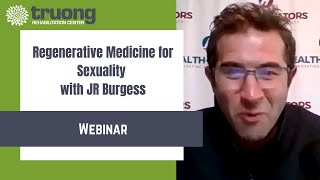
A recorded webinar (YouTube) conversation between JR Burgess and Dr. Anne Truong focused on regenerative medicine—especially PRP, fat and bone‑marrow therapies—and their applications for musculoskeletal problems, aesthetics (face, hair, breasts) and sexual health (P‑shot for men, O‑shot for women). Dr. Truong describes her evolution from conventional pain management to an integrated, non‑insurance clinic model that emphasizes lifestyle, hormone optimization and patient selection, shares clinical anecdotes about outcomes (e.g., avoided knee replacement, restored sexual function, reduced urinary incontinence), and offers physician training and clinic contact info.
Chapters
Facebook.
All right. We made it happen, huh?
Yeah.
Well, welcome everybody. Thank you so much for tuning in. I got a very special guest today. I've had the opportunity to work with Dr. Annie Truong for the last handful of years and she's been doing some incredible things, not only in our integrated clinic out in the D.C. area, but all around the world, helping physicians learn how to use their body's own ability to heal, using PRP and regenerative medicine to do a lot of amazing treatments that we're going to discuss today. So thank you for joining in. At any time, feel free to leave any questions that you might have for Dr. Truong in here. I'd love to get those answered. But first I'd like to introduce her and Dr. Truong is a board certified physical medicine and rehabilitation medical doctor and the founder and owner of Truong Rehabilitation center in Fredericksburg, Virginia. Dr. Truong does regenerative medicine for musculoskeletal aesthetics and sexuality. She is the 2018 Entrepreneur of the Year from the Regional Chamber of Conference. She was named a top doctor by Northern Virginia Magazine for three consecutive years. She's also a best selling author internationally well known speaker with over 25 years of experience. She's earned the reputation as a profound, engaging and influential keynote speaker on regenerative medicine for sexuality. She uses our global platform to teach allied health professionals and doctors all over the world. She's a medical correspondent for America's news network. Dr. Truong is also the president of Entrepreneurs Organization for Richmond, Virginia. So thank you so much for the gift of your time. I know it's a busy, busy position for a lot of doctors that I've had the pleasure to meet as they transition to virtual. You've already had sort of an integrated center that has already been on the map. So tell us a little bit about how you got into integrative healthcare and primarily regenerative medicine. Dr. Truong.
Oh wow. That has to thank you for having me on the show, J.R. i've known you for, wow, so many years now. It's like I've forgotten. I remember meeting you multiple times at conferences and finally I decided that we were going to work together. So I'm grateful to be here with you again. So that for me, how do I get into integrative medicine is that I'm pain management, pain physiatrist. So you know, I, you know, an md I focus on allopathic medication and interventional injection, cortisone and medicine. And I realized in 2002 that this isn't worth it, it's not working, it's not making my patient better. I'm actually making my patient worse. And I'm not really making long term impact on my patients. So I started learning acupuncture. And acupuncture actually opened up a whole new world for me in looking at the patient as a whole and not just as a symptom. And that healing come from the whole body and mind together. And from there I learned how to. I learned about PRP because I was finding that doing cortisone injection was really just a a pad was not for long term. I needed something that will help my patient for longer term that really treat the source of the problem. And 2005 I found out about PRP through with prolotherapy. And at the same time I was learning both and I did. I started doing PRP and prolotherapy to the joints and find great. And then in 2009 I added bat and then in 2012 bone marrow. So my evolution was really to find a way to treat patient source of the pain and to address the whole person. And so by that I started my practice in 2000 and was just doing interventional procedures. And then I added a chiropractor, I added massage therapy, I added IV therapy and then physical therapy. And we are under one roof and we all have to share the same EMR system and we all meet about the same the patient. And we have an integrated approach to the patient. We all do different things, but altogether is the focus is getting the patient better in the best way possible without minimal medication. I can't remember the last time I wrote a pain medicine prescription or even a muscle relaxers. And of course our goal is to get patients back to life. In 2014, I added aesthetics and sexuality to my practice by using PRP and other stem cell as an adjunct to treating patient pain. So our integrated approach is really addressing patient from head to toe. And they see us, most of the patients see us because they just want to feel better. And in fact they come in and say make me feel better, I'm just not myself. So from that approach I asked them what their priorities and what's a short term and long term. And depending on what their priorities are, depending on what we can do for them as an a la carte or as a package.
Okay, I have a question that I often ask is sometimes the alternative, call it acupuncture, call it prp, call it nutrition. Exercise is by a lot of medical Professionals just like yourself. You went through getting your medical degree, a doctor you were treating with narcotics, you were treating with cortisone, some of those things that we're managing, but not helping your patients sometimes. You basically, basically have probably spent the last 10, 20 years having numerous conferences after numerous conferences, continued learning, continued education, continued diving deeper than what maybe many of your colleagues have, but yet often they say that's outside the box. And there's no evidence. Where you come from the same schools, you come from the same teaching. What would you encourage consumers to, to recognize you maybe have the same background? And why do you think it is perceived that this is somehow outside the box or that you didn't get the same education that they have when you had the same education, how do you begin to kind of unfold to those that look at this as outside the box?
Well, the bottom line is do you really to talk to other people physician is why do they want to think outside the box? Is because we know that the current medical system does not work to treat. It's really disease focused rather than health care focus. We're not looking at prevention, we're just treating symptoms and we're treating it for short term and then we're pushing medication. So it takes a physician to realize that what do I want to do for my patient? Do I really want to make a long term impact for my patient? Do I want to treat the source of the problem rather than just the symptom? Do I just want to see a bunch of patients and just pat it and just have them come back next month? Was one of my frustration was that I, I would see the patient, but I don't want them to come back to see me next month with the same problem because I get frustrated as much as they are too. So I want to treat them and don't see them for years on end or they come back for another problem. And so that was what the impetus for me to find something that treat the source of the problem. So that way it can be longer term. And so it really start with that the physician believed that they wanted to do the right thing for the patient. And oftentimes when you go outside the box, it's a lonely world, but there's a lot of us there. We just need to go to the conference. We go to, we see that, but it is outside the box. But I think that in time and especially now with everything that's going on with COVID 19 now, I think that will focus on more preventative care and more of total Body, mind, body care, rather than just medication and surgery at this point. So for me, it was trying to do the right thing that I feel was right for my patient. And oftentimes, yes, I've been called crazy or hocus pocus doctors because of my approach when I first started doing this. But that's when I was doing acupuncture, when I started doing prp, you know, surgeon will call me, you know, hocus pocus and so forth. Then a few years later, they called me and asked me to join their practice. So. And now they're doing it. They're doing the same thing that they. They were calling me hocus pocus for and doing PRP now for the joint that I was doing back in 2005. So it come full circle. And, you know, I have to give you an example. The surgeon that did talk about arthroscopic knee surgery, when he first came out with that idea, he was laughed at, ridiculed, was kicked out of his society because they thought that he was just crazy. And then I think like a few years later, they made him an honorary member and he was an innovator. So, you know, I think that if you feel that you're doing the right thing for the patient and the patient improved, that's really all it counts.
I've always said, and I've heard the quote, and I heard it one time, and it just stuck with me, is no conformist has ever changed the world. So, meaning if we think healthcare can be done better is why wouldn't we do something? You know, several years ago, people said there wasn't research. Now there's so much, you know, anecdotal evidence, meaning you're seeing patients get better all the time. But there's level one studies, there's Prolo has been around for, you know, 30, 40, 50, 60 years. So people are catching on. It is exciting to see regenerative medicine now being done in surgical settings, now being able to combine. I don't think they have to be one or the other if I want surgery. Just like when I had my Achilles, I had stem cells at the same time. It really sped up the outcome. I mean, 20 or 12 years earlier, when I was much healthier, it took 18 months to fully recover. Two years ago, it took me six months to fully recover when they're combined at the same time. So there's so much innovation. And one thing that I brought you on to talk about, in addition to medical fitness, is thing that's excited me is our model was considered outside the box. With functional medicine 12 years ago. And so is regen medicine. But you also engage with us for medical fitness, meaning teaching people how to sleep, eat, move, nutrition, all the basics. And a lot of people advocate and have always done this. I knew a lot of allopathic doctors that are in conventional systems that do encourage lifestyle. So it's not that they don't. There's that common ground that we found between all groups. However, as you mentioned, they have more of a volume game. They're set to seize disease. Here it goes. So tell me a little bit about your view on in that model where it's volume, they're forced to see 20, 30, 40 patients a day. How do you find the time, how have you found the time to teach or educate patients on how they can make lifestyle changes to be a part of their care team as well?
Well, yeah, that's a good question. Well, for me, in order to really make an impact on my patient, I realized about two years ago now that I cannot be a cog in the wheel and take insurance at that time because I knew that in order for me to even pay my bills and pay my staff and pay for my house and put my kids to college, I had to make a certain amount that means that I have to see, you know, 30 patients, 40 patients in a day. And then, you know, if you divide that, that's going to be 10, 15 minutes and that's including procedures. So I didn't want to be cognitive wheel, I didn't want to be an assembly line with my patient and I wanted to make a bigger impact. So two years ago I decided that I wasn't going to take insurance anymore and we were moving toward more of a non insurance process. And that was the best decision we have because we now spend 30 minutes with our patients and an hour with a new patient to address lifestyle, diet and nutrition and exercise and just really, I mean, I would sit down and talk with them and really find out what's really moved them and what their needs are that we can help with or we cannot help with and establishing a rapport. So once you do that, then the rest of the work is easier. So in order for me to really make an impact, I have to realize that I'm not going to make an impact with just seeing a patient for 5, 10 minutes and then rush out of the room. That starts with evaluation and then we do the procedures following that, the procedure. You know, we allocate plenty of time for our patient. But I'm what the good part is, I'm seeing less patients, but you know, my revenues is at the same or even better with less stress and with less staff. So, you know, it's a win win situation for our patient and for myself. And you know, I was getting to be kind of burnt out. You know, when you're in that, that day to day grind where you have to grind through and just to get by, it was not something that I knew that I wasn't going to continue for a long time.
So you made big changes to better serve your patients, get better outcomes. And here's what I want everybody to know. No way would you have probably stayed in business at that time when people are used to paying with their insurance by switching to a cash model if the number one thing didn't hold true, meaning you got better outcomes for your patients, your patients were happier even though they're having to pay out of their pocket. And what I tell people is you usually have a 1 to a $4,000 deductible if you own your own business, even higher. And if you are continuing, let's just say you had knee arthritis, going for lubricating injections or cover ups or even surgery, you are paying that regardless. And that is one of the more aggressive forms versus half the things that you mentioned. Acupuncture, lifestyle, things people can do on their own. Prp. These are safer, more minimally invasive and conservative options that in our opinions and in a lot of research, they get better outcomes. So. So let's talk about some of the outcomes you see for musculoskeletal before we get into the sexual side of what PRP has been able to do in your practice. But tell me a little bit about some of the outcomes you potentially see with either fat or bone marrow or cases that would have been surgical that you've seen dramatic outcomes with.
Well, you know, that's the part that really make my day is that to see a patient come in limping. I will tell you this. A patient I saw about maybe three months ago, she was only 66, just retired and retired, had worked her whole entire life and she cannot walk at all, cannot take care of her grandchildren and was having a hard time walking just for her basic everyday life and going to the bathroom, changing her clothes, driving, and she was walking on crutches. And so she came in and to be evaluated, evaluated for a second opinion. She was actually one week away from having knee replacement surgery. The surgeon told her that she was bone on bone and that the only way to help was she didn't need to have A knee replacement. She only had one cortisone and that was it. She was a little bit overweight, but she was walking on crutches. Came in, I evaluated her and we discussed certain options and we decided to do the bone marrow and the bone marrow and the fattened PRP because she had moderate to severe arthritis and range of motion restrictions. So because of the severity of her arthritis and the impact upon her function, we pull out the big guns, which is, you know, the bone marrow, the fat and the prp. And three weeks later, she walked in without her crutches and danced down the hallway to, you know, when she came up, she came back for her follow up. And you know, she's not 100%, but she was at least 50% better. Her knee was not swollen as much as a watermelon. She's able to get, get out of bed in the morning, go, go do her, her activity daily living, was able to drive. And for her that was a game changer and, or to, to walk without crutches. And you know, even though she has a lot more to improve, it just changed her life. So the point I'm trying to make is that, you know, I see that more often than not, you know, and the reason why we see a lot more better outcome is because of patient selection and education in the beginning. It's not for everyone. And that's why we do a thorough consultation to determine who is the best candidate and set expectation up. But what we see is that typical scenario, what I just described to you is limping, walking in crutches, and unable to even change her clothes and drive. And now, you know, a month later, you know, walking in and dancing down the hallway and she was able to resume her activity to helping her daughter take care of her grandkids. And you know, that's what we see. We see tremendous changes like that to let us know that we're doing the right thing. And this is not just placebo, obviously, because we see that probably around 95% of the time. And the reason why we have, like I said, I mentioned before, we have good outcomes because of good patient selection and thorough onboarding process. When patient come in.
Absolutely. And I look back and for instance, as before, Dr. Baumgartner did my first stem cell. He says, let's relook at your labs, let's make sure you're in the best health because bad blood can go everywhere. And that's what we did. And that's how you take the integrative approach as well. You also Mentioned something in there is patient selection. So a lot of people just like me. Before I was told I needed knee replacement, I was bone on bone on my medial side. So essentially, you know, my outcome when I'm at that level is probably less than if I had my torn meniscus, you know, eight years earlier and I was hit the first time. So I always tell people, well, I've had this creaky shoulder for 10 years or so. Should I go now or. It's not that bad now. I say, the sooner you can get it, it's just like an oil change. It's just like you want to keep that going. And so many people wait till they are bone on bone and they're the worst case. How often do you see. And I needed the knee replacement and I was back to playing rugby 18 months later. So. Meaning I've seen dramatic outcomes with patients that weren't the greatest candidates, But I see even better outcomes when people are earlier in the stages. So how many, like with shoulders or hips or something like that? When you see earlier pathology in a healthy overall person, do you see better outcomes compared to somebody that's later in the game and just a week away from joint replacement?
Oh, definitely. I mean, I make the analogy of the same thing. Analogy of like your car. If you hear a little sound in your car, you're going to bring it to the mechanic and he's going to be able to fix it. But you don't wait until your car, you know, die on the street and smoke start going up and, you know you can't drive anymore. Right. But sometimes we do that to our body. We wait until we cannot walk anymore or wait until you can't function. Then you go see the doctor. So that's really severe. So the earlier you start, the less the damage on the tissue, as in the joint or the tendons and the ligaments and the muscle, the less the damage and therefore the more of improvement you have immediate as well as long term. It just makes sense, right? If you start with something that is mild, then you get a lot more out of it versus somebody that starts with severe symptoms. Most of the time they'll get more pain reduction, but not so much as in regeneration or rebuilding, because a lot of the building blocks are gone. So when I see patients like that, I'm very transparent with them that this is what you're gonna be expecting. If you're severe and you don't have a lot of cartilage left, it's gonna help you with reducing some swelling and Reducing pain. And we're gonna do this and that will give you this, you know, between maybe one to three years at Mass and you're gonna need another one versus somebody that is in their 40s. They just have a slight meniscus, tears and very mild arthritis. Those are the patients that's going to go a long way. Even with those patients in the years past, I've just done PRP on them with intra articular and extra articular stabilization, just plain old PRP or platelet rich plasma. And they do very well. I mean, some of them, in fact, I haven't seen for years. They come back for another area for me to do the PRP on. I just saw one today that I did his left shoulder. He's a firefighter, he's 32. I did his left shoulder seven years ago and he had a rotator a mile, small rotator cuffed head. We just did prp. He's absolutely fine, you know, work out, you know, doesn't have any problems. I'll show you. He actually came back for his knee and that's because he knows that if you start early, he's going to go a long way. And we just did his knee today with just plain old prp and he just has chondromalacia patella. And I know with him he's probably gonna have years and years on end with that. So the main thing is start early as, you know, treat your body. I would tell patients, treat your body like your car. You know, you put, you know, oil change and maintenance on it. And then when something goes wrong, you know, bring it, go see the doctor early. Because if you do go early, you're gonna get a lot more mileage out of that.
Absolutely. So let's talk about sex. So a lot of people have no idea they've been again in the allopathic world. And there are certain treatments and medications out there that can help, but again, they have their side effects, they have other complications, and they don't always work. And we've seen the powers of regenerative medicine musculoskeletally, even systemically. Let's talk a little bit about what you see for helping treat ed, helping women with orgasms, you name it. So let's break down what is possible for men and women to improve their sexual health overall and maybe their performance.
Well, I tell you, let's start with the men, you know, what you know, as in the men, Mother Nature knows, you know, wants you to not be vibrant when you get older. And that starts around 44 years old, you start your testosterone level. Testosterone is a hormone that make you male. It starts to start to gradually go down around mid-40s. And at 50 years old. 40% of men at 50 years old have ED, which means that their testosterone level is 40% less than what it was when they were in their 30s. When they're at 60 years old, their testosterone level is about 50 to 60% less than what they were in their 30s. And at 70 years old, it's about 60% less than it was when they're in the 30s. And testosterone is an integral part of being men. So when you have low testosterone, you'll see symptoms of decreased focus, less energy, loss of muscle mass, mood instability, and then erectile dysfunction. Now, erectile dysfunction, interestingly, is also related to factors of metabolic syndrome, obesity, cardiovascular disease, diabetes, high blood pressure. So if you're young and you have high blood pressure, you have obesity and you have blood pressure. That's actually a sign that you're also going to have blood pressure. I mean, not blood flow problem. That will contribute to ED as well. So ED is not just. Oh, you know, it's not just with age. It's also contributed by multiple medical condition irregardless of age. I'm seeing patients in their 30s with ED, and I want to say that ED actually ranges all the way from mild, where it's just less sensitivity, it just takes longer, all the way to the spectrum of putting premature ejaculation to inability to have an erection. So it did not just have an erection, it just takes longer or premature or. So it's a whole spectrum of that. And it's not just for older men, it's for younger men as well. So having said, having mentioned about the multiple contributors of ed, when I see the patient, you know, you have to look at all that. You have to look at what their comorbidity, what's, what's their bmi, are they exercising, are they getting enough sleep? And what's their diet? And then their age? And then you. And then I look at blood work at their hormones level and also what their inflammatory status is as well, too. We have a machine that, you know, that can measure the inflammation level, but we also look at blood work or inflammation as well. And. And you know what, the first thing we start off when we see patients with ed, we start off with recommendation on their diet first. You know.
So this is what I hear you saying to summarize, what we've already talked about is people come to you and they say, I have ed Or I have osteoarthritis, or I have diabetes. And the fact of the matter is they didn't just get it when they took that blood lab. And it shows now that they went from pre diabetic to diabetic. So meaning this started 10, 20 years ago through inflammation in the body of testosterone starting to decline naturally as we age, blood sugar imbalances, inflammation built up in the body. So meaning everything that we've talked about, which doesn't get addressed in allopathic medicine, it's basically, here's your ed, here's your Viagra, here's your blood pressure, I mean your diabetes, here's your metformin versus to get the best outcome, you're saying let's go back to the causes and start giving the lifestyle recommendations. And once you start cleaning that up now let's take that cleaned up blood and let the body start to restore and regenerate itself. So you've helped somebody, you evaluate, you look at their bloods, you find some root causes. Now you're going to use that nice clear blood, that's going to work a little bit better. Tell me, what are some of the benefits that you're seeing treating ED with prp?
Well, yeah, so first we look at lifestyle and then look at the blood work and look at the hormones. And then you know, prp, which is, you know, platelet rich plasma, we know that it can increase angiogenesis or new blood vessel formation, any tissue, and that's the end point, is that it increases blood flow to whatever organ you injected in either the muscle, the tendon, the ligament, or so with the, you know, genitals, if you, you know, put it into there, it's gonna promote more blood flow to the area. Of course we always do a nerve block first, you know, so that way it doesn't hurt and we have laughing gas. But if you put in PRP into the male genitalia, you actually will bring in more blood flow. So how I describe it is that Ed, it means that you have a pipe, you have two pipes that run through your genitals. And then as time goes by, the pipe gets smaller, there's less blood flow flowing in. So how the PRP help is that it help opens up those pipes a little more so you get more blood flow into the area. So we depends on patient symptoms and how long they've had it, what their comorbidities are. We start with the PRP and sometimes we would have to add, it's called shockwave, extracorporeal shockwave. Therapy, which is uses a sound wave and transmitted into mechanical wave that it's like a tap into the the genital area. What it does is that it stops the leakage in the blood flow in the organ and to promote again more blood flow. So it depends on patient symptoms, how severe they are. We would either use PRP alone or PRP with shockwave therapy. The same shockwave that you would hear about the gainswave shockwave. But there's two shockwaves that we use. We use focus shockwave and the radial shockwave. And it depends on patient severity. Depending on what we use for shockwave though, is it is a home run for patient with Peyronie's disease and it's a cure for that, actually. And then along with the third triad is we add testosterone hormone. Either it's an injectable form or in implantable pellet. So it's really a customized treatment plan. So not everybody gets PRP or anything like that. You know, you get the blood work, you see where you're at, see, you see what your comorbidities are, how long you've had the symptoms, how and what, what where you at on the erectile dysfunction scale and determine what we're going to use and when and that that's where the treatment should be. And what we find is that when the men come in with needing to have Viagra or Cialis to, you know, to make it work for them with the treatment, they don't need those medication anymore. They can get back to spontaneous, you know, sex life and can really enjoy their sexuality. And my end point is that most men think that, hey, I'm old. I have to accept this. I'm getting part of getting old. That's not true at all. You know, mother nature wants you to, but we're in 2020 here. You know, we can definitely, you know, you can enjoy, you know, vibrant sexuality all the way until your 80s, you know, until the day you die. And the recent studies have shown that actually if you have sex three times a week, it's actually decreased stress, better quality of life, and you live longer no matter how old you're at, you know. So some of my patients say, well, I just have to accept the fact that I had to rely on medication. I told them, no, that's not the case at all. It's kind of like when patient doesn't know that PRP can help with their knee pain. They just know that the only option for me is knee replacement. Well, no, there are other options for you. And I'm very passionate about that and getting the message out there that there are other alternative to ED rather than just the blue pill and just having to live with it or a penile implant. And in fact we work on patients with penile implant that had it and to increase sensation as well. So, you know, the bottom line is that there is an alternative.
Yeah, absolutely. And you and I have been in, you know, high level masterminds, different regenerative courses, training our models all over. Dr. Truong, if many of you are just tuning in, has been coming to our business summits for doctors the last several years and trains her techniques on regenerative medicine. Of all the different body parts, we haven't even touched in right here. But one of the common marketing phrases is paid, laid and live forever. That's what people ultimately want and ultimately that's what you're delivering. Because as you mentioned, if they have low testosterone, productivity's down, depression creeps in for men. If you're not able to do, you know, what you think you're supposed to be able to do, it can be a deep and dark and depressing place for a lot of people that aren't able to perform that way. So once you start increasing testosterone recovery, energy focus, as you mentioned, starts coming back, then we're talking about the lay part. If it's working spontaneously, you're feeling better. And then when we're looking at hormone, hormones, internal health, reducing inflammation, we're talking about extending longevity and everything you're doing, even if they're just coming for ed. So really these integrated models are focused on all three of those areas where that is completely missed in a lot of just 10 minute visits. So what are, before we get into some of the oh shot that you perform for females, what are some of the benefits besides being spontaneous? I've heard of reported outcomes of increased orgasms, increased girth length as they're going through this. What are some of the outcomes that you're seeing for your best performing patients?
So for the PRP injection or the P shot that is definitely increasing sensation and increasing girth, but not so much length, but increasing girth and also the ability to have spontaneity, you know, and it actually will treat premature ejaculation in cases like that and will treat Peyronie's, I see a lot of patients with Peyronie's and it's a cure for that actually. And Peyronie's and ED goes hand in hand too. And Peyronie's, what's The basis of Peyronie's inflammation. Peyronie's is an autoimmunity, so it's inflammation. And we know that PRP is anti inflammation and so it will increase blood flow to the organ as well. And it just creates a more healthier organ. And I actually see that. And depending on how many P shots you do, you can actually see changes in the girth that are quite visible. So when men feel more sensation, their erectile capacity is also improved, you know, and it gives a sense of confidence, you know, the confidence, improved relationship. That's what I see. I almost call myself a marriage counselor because I've improved a lot of relationship with my patient, with their wives and they do well, they bring their wife in and we do an old shot with the wives and some aesthetic work as well. So what's gratifying is that you actually see beyond just ed. You're seeing a relationship, you're seeing this quality of life that just goes beyond what the mechanics are.
Absolutely. And when we started introducing this after he helped train us and everything, we had our fitness side. And for women, what I would typically always hear as a trainer for years is no jumping exercises. Jr I don't want to wet myself. I didn't prepare for it today. So I have seen incontinence. I seen, you know, but then on the training side, health coaching, a lot of people start opening up about stressors in their life that has led to either weight gain or inactivity. And oftentimes, you know, it's reported that again, the lack of sexuality or connections in their marriage. But ultimately we see that women maybe don't have the same time overall, maybe ease of orgasming as men do. Like as a man, maybe every single time I've ever had sex, I orgasm. I didn't always hear that from different women. So tell me a little bit about, you know, the women cases that you see and some of the benefits that happen on the other side of it.
Right, right. So the woman, the analogy of the P shot for the woman is called the O shot. And it's really therefore orgasm shot, which is PRP injection into the clitoral region and into the G spot. And it's very well tolerated. Again, we do a nerve block to numb the pain and a numbing cream as well. And immediate within three weeks of doing the OSHA immediately it will stop urinary incontinence. That jumping jack limitation that you talk about is that it stops that because what it does is that it decreases inflammation to the g spot, but the G spot goes all the way up to the bladder. So it strengthens your urethra. You can hold in the urine better. And that's the immediate thing that I see in patients right away. Then that's early, that's three to four weeks. And that can last up to about a year, a year and a half. And then we also have patients do Kegel, so they respond more to Kegel. So once you put the PRP into that area, it also strengthens the. The vaginal muscle. So for women, as you get older and as women have children, the vaginal muscle become lax. You know, gravity acts on it. And then when menopause act on it, the muscle loses and muscle become atrophy, become weaker. And then, you know, having children, it stretches that area as well. So lo and behold, you know, you get urinary incontinence. And but doing the osha, that will strengthen those muscle there to make it tighter and inject into the clitoris will also increase sensation. So women will have better sexual response and have increased sensation with orgasm. And some of the women, some of my patients tells me that they have more. They actually ejaculate. You know, women ejaculate as well as men also too, but not as much. But once we do the O shot, they feel that there's more lubrication and that they're able to have vaginal ejaculation. Another thing too is that for women that are in menopause that cannot have hormone replacement therapy because of breast cancer, doing the old shot will treat vaginal dryness, which treats it, and vaginal drytis can become very, very disabling. It's painful just to, you know, go, go do number one, you know, and so it's a great treatment for that. And it also helped with, oh shot also help with women that have scar tissue from surgery down the area or for multiple childbirth that, you know, they have scars in the area and sometimes the scars become hard and it's painful. And so injecting prp, those scars will actually relieve pain in that area. That's called dyspare neuria. So relieve vaginal pain because sometimes it becomes so painful that a female cannot have sexual activity with her partner with that. And actually one of my first oshot patient was patient that have dyspare neuria and hasn't been intimate with her husband of five years since she had the baby. So just had the baby, had a lot of scarring from that and had the baby, but hasn't been intimate with her Husband because it's just so painful for her. We did the old shot and literally she came back and see me in months and she said, oh my God, you know, I have not been intimate with my husband in five years. I, you know, now I can. It's the first time, you know, we had sex in five years. And it just changed my life. So, you know, that, that's gratifying to hear, but we actually see that it is actually a cure for the dyspare neuria. I think I cover most of it. It also will help with bladder, irritable bladder as well too. So irritable bladder, because irritable bladder is really inflammation. So it will help with that as well. Now we also do shockwave therapy to the female genitalia as well. The same way is to increase blood flow and tighten the muscles in the vaginal vault.
So overall, what this has given people is either an opportunity to be more sexual, to perform better, to have better orgasms. Doesn't seem like any way or reason somebody wouldn't be able to do it is tell me maybe something that is, why is the PRP such an effective treatment versus just other injectables or what other people have tried to make these figured. When we talk about hair face, breast lift, what makes PRP so powerful in these areas?
Well, like PRP is natural. It's your own blood, so you're not gonna have any side effects of that. And PRP is platelets. So these platelets are floating around in your blood that is mixed around with your red blood cells. And these platelets imagine like a little disc. And the inside of it, it has all these growth factors. And when it's injected into an area, those discs burst and these growth factors release. So these growth factors stimulate the things. It brings special cells that go to the area to clean up the debris, to get rid of the inflammation. And then it brings in cells that help create new blood vessels called angiogenesis. And then it brings in cell to create more collagen. We call that fibroblast stage. So it's really like a homing device where you inject it, it calls these cells to go, hey, you know, this area needs some work. You know, macrophage come in here and clean the area. You know, next, next, you know, endothelial cells come in and create new blood vessels. And then fibroblasts come in and create more collagen. So those that. That's what it does is that it calls these cells to hone to the area. And anywhere you inject it. Either the hair, the face, or the breast. It does the same thing. It brings in new blood vessels. When they bring in new blood vessels, then it carries the cells that called the fibroblast. And the fibroblasts will create new collagen. So the end point is new collagen production and you have more collagen. And collagen is what makes up our skin, our muscles, our ligaments, our hair, our muscles as well. Our cartilage is made up of collagen. And once you strengthen that, you stabilize the area. So let's just say talk about the female genitals and the male genital, well, that's made up of muscles and soft tissue and blood vessels. So and PRP addresses all that. It brings in more blood flow, then it builds more collagen so the muscle become tighter, stronger, and more responsive. It's almost like replacing old muscle with new muscle. So that's what PRP does. You already have that in your body. For instance, you can stimulate that same response when you cut yourself accidentally, you have a cut, you see blood oozes to the area, and then the next few days you see a redness and a swelling, and then you see a scar being formed. It's the same process happen. It's just that unfortunately, it doesn't happen spontaneously. You have to stimulate an inflammatory response or an injury. And by a physician injecting the platelets into the area, you're creating the injury, stimulating injury to start that whole healing phase.
That's a beautiful example. So is now, you know, when you do the face. So we didn't really touch on the hair, the face, or the breast lift. So collagen number one in these areas, I don't know necessarily the hair and breast. So tell me a little bit. Same technique, same process, but the outcomes that you're seeing in those areas.
Right, so for the hair, stop at the top for the hair. For both men and women, you inject in PRP into the hair along with vitamins and, you know, even some peptides into the area. And the end point is again, stimulating the follicles or the hair follicles that have a hard time coming out through the, through the scalp. They're like seeds, but they're dormant seeds so they can't spout out the hair. So when you're stimulating the prp, the dormancy will go, oh, okay, I have something to feed on. I'm going to spout out some baby hair. So it helps stimulate the follicles to spout out baby hairs. Now, if someone is bald and is shiny, that means they have no follicles left. You can't do much about that. That far too gone. But if you have thinning hair, yay. There you go. I would love to work on that. I think I tried to work on that one time when I was at Rent Drew to do it. You were too busy.
Well, you. I was on the, the dockets, but then we got a volunteer patient was running everywhere, so I gave up my spot because they wanted it.
But. I know, but we're gonna have to revisit that next. Next time we're gonna have to revisit that as well. You know, as well as the feed shop too. But yes, your hair is perfect, Perfect, perfect. Because yeah, it's not hair dog gone. You bet. You have very immature hair there that we can spout out with those. Those follicles that cannot sprout through the scalp. And the PRP will help with that. The PRP help the dormant follicles that can. That cannot grow at the hair. The PRP just give it a boost. The hair comes out, but hair growth is very, very slow. It takes up to about nine months to start seeing baby hairs come down. But the beautiful thing about doing this is that the hair comes out your natural hair color. So one day, PRP will be the treatment for gray hair. Because if you have gray hair, the new hair that comes out is not gray. It comes out shiny. It comes out your natural hair color. Like this is not my natural hair color, but if I was going to have, it would grow out whatever your hair color you were born with. So when I see patients, they come in and they have this shiny full hair and the hair is smooth, it's healthy, it looks vibrant, it's just awesome. It looks 10 times better than a wig. You can just tell that it's just freshly regrowed hair. And of course, with hair loss, you gotta address the symptom. The source of the problem was causing early hair loss. Most of it is probably genetic, but inflammation too, metabolic syndrome, thyroid, vitamin D, vitamin B complex, and all that contribute to hair health. So the same thing when you go down to the breasts. Remember I mentioned about stimulating blood vessel growth and collagen. That's what the breast is all made out of, is really, really soft tissue collagen. And we inject into the breast. It doesn't make. Not to make the breast bigger. It's really create a better cleavage and it gets rid of those crepey skin, crepey pattern that a lot of Women don't like. And the pigmentation in there creates a beautiful cleavage line that if you wear like a bra with that, it's very beautiful. But one thing that we also see is it does help with this horizontal lines here in the neck. If you do the microneedling on the neck. And then we also do that on the face, I mean, on the hand here as well. You know, a lot of women now don't like the freckles on their hand or the crepey skin on their hand that make them look old. And believe it or not, you know, when you meet people, the first thing they look at is your face. And then look at your hand because you wear jewelry. You shake the people's hand and they're gonna look at the hand and go, oh, my goodness, that's a wrinkly skin that has a big. A lot of pigmentation there. You know, you're old, you know, so it's just first impression. You know, I forgot to mention, you can do PRP into the face like the Vampire facelift or the Vampire facial. And PRP facelift is injection of PRP underneath the skin on the face to stimulate the skin to tight, to be tightened to get rid of those wrinkles. Also get rid of the pigmentation. The Vampire facial, using micro needle, which is a pen that has like little nine little pinholes that goes in and out the skin, create multiple holes in the skin, so that way it will soak in the prp. And that gets rid of pigmentation and smooth out the texture of the skin, make the pores smaller. So the Vampire facial is really more to smooth out, to improve texture. The Vampire facelift is to lift and add more volume because we also do that with a filler and to. And then you inject in the PRP under the skin to stimulate the muscle regeneration, to tighten up the muscles. And it does a great job in giving you that nice youthful look. It's almost. I call it the lunchtime facelift. You know, it only takes about, you know, 30, 40 minutes to do. You come in, you look. You come out, you look like you're 10 years younger. And then so we talk about the facelift, the breasts and the hair, but, you know, I talk about the neck, you know, the horizontal skin here, just the beginning of the horizontal skin, that would get rid of that and the hands as well. So, you know, that's something that actually I haven't taught the hands. You know, I've been teaching more of the face, but doing the hand in the neck area is Something new that we've added recently.
That's huge. And you've been teaching doctors all around the world. This is, you know, an adjunct, meaning you can improve if you have a doctor in a spa that's doing Botox or fillers right there. The plastic surgeons using this to get better outcomes. I didn't touch on it. I see. Same thing with prp. I'd imagine you'd use the exosomes the same way, which is a different topic with some people are using on their face for similar outcomes. But the thing that I want you all to pay attention to is you can go to a lot of places and you could find a regenerative medicine expert to put PRP or stem cells into your knee or somebody do it in your face. But there's very few integrated clinics that are addressing all cause just like Dr. Truong said is, is I want to look at the hormones, I want to look at labs, I want to give lifestyle recommendations, nutrition, just you mentioned foods with collagen, bone broth to the right. Different things that are going to help supplement and also supplements themselves to for your better immune health function and everything. So can you tell me what you think the factor is if somebody is just trying to go do the shorthand versus the comprehensive outcomes when you've seen a compliant patient jump on board with the whole program?
Well, you know, it all starts with the onboarding process. So when we bring a patient on, we, you know, give them a lot, our questionnaires and questions. So that way we know what they're looking for. We know we're transparent with them about what our processes are. We want to get buy in in the initial part. You know, we want. We want to work with patients that want to help themselves, that want to be. We want to be team members rather than, you know, somebody that says, no, you help me, you do everything for me. If I don't get better is your problem. It's really a team effort. So that's what I mean by patient selection, onboarding process, that you recognize that in the patient, because the patient's gonna have to want to get better and to put in the effort to get better as well. We are educators and we look at ourselves as educator and as a team with the patient. And it's because I will only probably spend a few hours with them, but the rest of the homework is up to them. But they would have to put in the work as well. So if they want to, they want to put the work in and they're motivated to do that and we can definitely make a big impact on the patient. And we see we could go long distance. And I like to see my patient get better for years. I mean, I don't like to see my patient every month. I like to take care of them and they do well. And then, you know, I don't see them for years. And then we do a lot of virtual visits, you know, to follow up on how they're doing. And I also try to treat a lot of anti aging as well. Like you mentioned earlier, a lot of what we do is really anti aging optimization because we don't want a patient to degenerate. We. You don't want them to succumb to the effects of aging because that's selfish for myself because I'm undergoing that right now. So I don't want to age either. And I want to be vibrant and vital all the way until I'm in my 80s.
Well, you're definitely leading by example, Dr. Truong. I wish everybody could have been at some of our dinner meetings together. You're a hoot that walks the walk, talks the talk, does it all yourself, are fun, caring. You're a definitely different breed of physician. You're not the typical one. You definitely bring the joy, the fun, and living it by example. And one of the biggest things that I have heard is sometimes people are scared of the pain. So especially when dealing with their genital areas. And I just want to assure you, everybody, when we put the cream on in there, most people said they haven't felt it. And if you're even looking musculoskeletally, I've had numerous knee surgeries prior in other surgeries prior to having stem cells. And PRP surgery is going to hurt the next few days no matter what. PRP is just a few injections and nothing different. And then a faster recovery and outcome than surgery has ever been for me and in any regard. So the pain, you feel it a little bit. But the genital areas, based on the creaming and the nerve blocks, I've heard, are virtually painless. Now the head, on the other hand, I've heard of the pain creams and aging, and that's a little bit more of a sensitive area. But I've done laser therapies and that thing hurts. That thing really hurts.
Yeah. But now we have laughing gas. So we have a portable laughing gas where you breathe that in and it's a mix of oxygen and nitric oxide together. And you're aware of what's going on, but you don't care. That's the feeling. I tell patients you feel half drunk and half, you know, you just don't care. It's not like you're drunk but the moment that you take out the laughing gas and you stop inhaling it, within minutes you're back to normal. So you're not, you're not sedated, you're not, you know, dizzy, you're not nauseated at all. And patient drive themselves home. So you know, we do that now for P shot and O shot and all the procedures that we do. We want patient to remember it's a pleasant experience rather than an unpleasant, even though tolerable. But you know, we don't want to be that be the highlight.
Well that's definitely next level there. So completely comprehensive is going to address the whole person and some of the root causes. Do amazing regenerative medicine next level treatments. You've been leading the way by teaching this, researching, looking at all the components that go into it. So if you're a doctor listening Dr. Truong what are some of the training opportunities they have and if you're a consumer, you're on the east coast or, or looking to be out in that area and wanting to have one of these amazing treatments, what are the two places they could find those two differences?
Dr. Truong Right. It's all on our website. Our website is truongrehab.com and under Services you can look at all the different services we listed there under detail. And for physician that wants to incorporate this, this is something we can teach you within a day to a couple of days with follow up training. They go under the physician tab under physician training and we do that once a month. We can even do a virtual if we need to and I offer consultation afterwards or just case by case basis. These procedures are actually of your physician and your used to injecting and dealing with needle. You can learn on the weekend. As long as you know the contraindications and the pros and the cons of that you can. It's easy to learn but it's very highly reward, high reward to add to your practice. Not only it will improve your patient life and improve and treat your patient as a whole, but also you know your bottom line as well too.
Yep. One of the first things when we first brought it on under your guidance and training is we were a little bit nervous of marketing it and what we found is when we did any PRP or stem cell, we were drawing blood anyways. So based on the recommendation of saying would you like this add on versus normally on these own, these procedures can be anywhere from 1,000 to 3,000. But since we're already in there and it can be a quick procedure, we had a major influx of patients just wanting to add it on to their PRP for their musculoskeletal injuries or pain. And that really made sense. So even if you're a practitioner that maybe doesn't want this to be the front and center that draws away from your pain, or sports and orthopedic practice or whatever, that really worked really, really well for us. And a lot of people wanted that. And the fact that what we found is when, because people didn't know, we weren't marketing it when we offered this. Some were saying, I would prefer to have this first. Because when they don't have their sexuality, vanity is very, very important to people. Have you ever found that as well?
Oh, yes. First of all, I want to say that those doctors are already doing pain management, musculoskeletal, if the patient's in their 40s and their 50s, if they're already having pain. Did you know that just by age alone, their testosterone levels are declining? All you have to do is ask one question, you know, how are things in the bedroom? Open that door up, and the patient will discuss with you. You will find out that they will want to have treatment for their ED as much as their pain, like you mentioned. So this is not something additional when I, I tell doctors, when I train them, this is something you already do. You just have to ask a couple more questions to your patient that, you know, when you do a knee, you can also do the pre shot as well. The same thing for the female. And if you do a knee, you can always do a little bit of aesthetic on the face. So with your question, you know, let me give you an example. I have a patient about a year ago. No, no, this is five years ago, she came in limping, limping because her hip was unbearable. She was walking with a walker and walked limping to the door. And I came into the room, and then there was a sign in my office that talked about the vampire facelift. But she originally wanted to come to see me for a second opinion about her hip pain. And so as we were talking about, you know, stem cell treatment, PRP for her hip, she pointed at signs and said, well, tell me about the vampire facelift. You know, So I told her that using PRP to your face and, you know, help with the wrinkles, help with the color, make you look younger. She Said, well, I want that, I want that first. You know, I can only have this amount of money. I want that first before my hip. I go, no, you want your head, get your hip down first. You know, it's, you know, it's almost the same price and you know, you want to get your hip down first or you can walk better. Yeah, it's not. And your hip hurts 247 with your face. You know, you, yeah, you know, you can have that result, but it doesn't pay you. But you know what she said to me? She said, I get up in the morning and I look at my face every day. All right, I don't look at my hip. I live, but I don't look at myself. And my face is what everybody sees when they meet me, when they talk with me. So it was important for her to make her feel better and make her feel younger. So we did the face first and she was actually helped in a way, help her with her spirit. She was able to be more lively and came back about several months later to her hip. So that's a prime example, to answer your question, is that sometimes vanity also outweigh what you need, even though vanity is what you want. But sometimes what we want outweigh what we need in a lot of time.
I always say in teach, confidence is the number one predictor of success. If somebody's prepared to deliver a speech, they're going to do better. Somebody's confident they can do well on something, they're going to do better. If somebody feels embellishes more confidence, they're going to show up differently in many different areas of life. So I fully understand that. So, Dr. Truong, thank you for the amazing gift of your time. This was fun, a lot of great insight education and for you all to think differently about solutions that are out there. Not saying that the other model doesn't fit as well, it's just some people want the best results in the fastest time and want to, you know, get paid late and live forever. So, you know, Dr. Trung is a great person, a great physician that is dedicated to helping make that happen. So I am really thankful for you, your friendship, and all the different training you have done for our colleagues and doctors out there. So wish you nothing but the most success. Congratulations on your continued entrepreneur goals and awards that you're winning. It's always fun to see somebody so talented making great things happen in the world.
Well, thank you JR and I appreciate your friendship and your continued success as well. And we've come a long way since we met a few years ago, where we are right now, actually, and we're doing our mastermind together. So I'm much appreciative to be here and to be helpful to your client or to anyone. And we're in Fredericksburg, Virginia, about an hour south of D.C. and so stop by when you're. You're hopping by on a plane or somewhere. I know you're traveling a lot.
Yes. Dr. Truong's a one of a kind. Very few out there like her. So go see her and see the brilliant practice she's created. And thank you so much, Dr. Truong. I really, really appreciate it.
Thank you, Jaya. See ya.
More from Anne
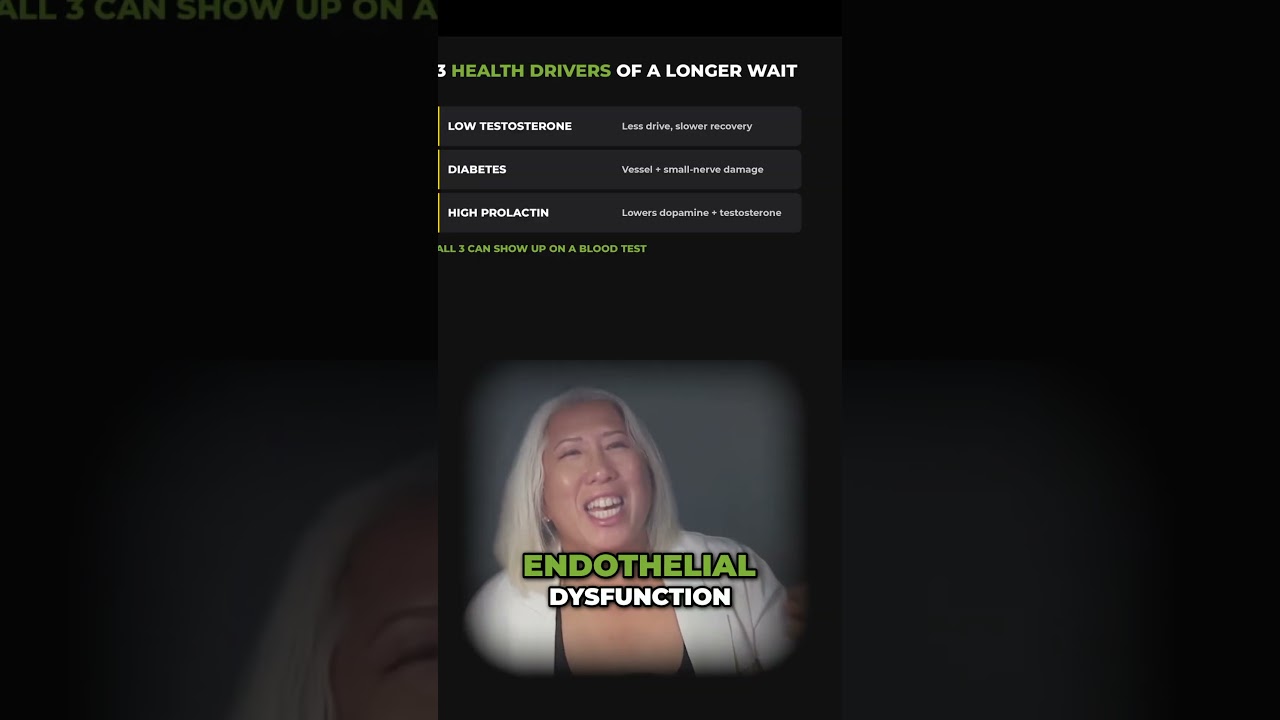
3 Health Conditions Behind a Long Refractory Period #LowTestosterone #MensHealth #shorts

Does the Refractory Period Get Longer With Age? #RefractoryPeriod #MensHealth #shorts

5 Common Medications That Can Slow Round 2 #MedicationSideEffects #MensHealth #shorts

Why Round 2 Takes So Long: The Brain Chemistry #RefractoryPeriod #Dopamine #shorts
Long Refractory Period? It Could Be Early ED #ErectileDysfunction #RefractoryPeriod #shorts

Is Your Medication Slowing Round 2? SSRIs Explained #RefractoryPeriod #MensHealth #shorts



