Prostate Surgery & ED: The Truth
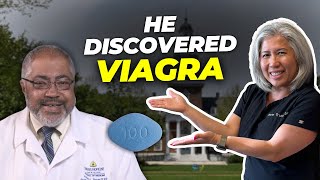
Dr. Arthur Burnett from Johns Hopkins explains how prostate surgery and radiation affect erectile function, and why penile rehabilitation after treatment matters. He covers Viagra's origins in nitric oxide research, why Black men face higher prostate cancer mortality, and how lifestyle changes can preserve sexual health.
Chapters
Hello there, modern man. I am so excited. In this episode, I have Dr. Arthur Burnett. He is a professor of urology in John Hopton for 40 years. And he actually has a unique experience with Viagra that we're going to talk about because he has so much experience and knowledge on men's sexual health that we can probably talk about days on, but going to dive into some important issues. So welcome, Dr. Burnett.
Well, thank you for having me. And it's my delight to be with you, Dr. Ann Truong. Dr. Trong. Thank you.
Yes, well, thank you. So let's dive into this. Now. Before we started, you actually has helped pioneer research that led to the development of Viagra. So from your perspective, tell us the story of how this came about and how you contributed to. To the research on Viagra and how Viagra became such a common ed medication.
Yes, well, my interest in sexual medicine almost had a foundation with some of this and to some extent serendipitous. But I think at the same time as Seneca might say the philosopher from 2000 years ago in Rome, chance favors the prepared mind. And. And I certainly had the thought back in my training at Johns Hopkins in the 80s, believe it or not, that we just were not addressing men's health concerns very well. And back when I was a junior resident, I was a little dismayed that my chief residents would say, oh, this patient's coming in with the complaint of having something wrong with his erections. And of course, back then, we weren't even that precise with terminology. We just said we just put everything together in terms of impotence and use that almost really negative term. But give him a prescription of an herbal supplement, yohimbine, and if he comes back in a month or two and it still says he's got erection problems, and we got to think about doing a surgical device called a penile prosthesis. And back then, that was the era that we were kind of on the heels of thinking about the kind of the ideas of psychotherapy and behavioral problems and interpersonal problems. And it was a psychological and this and that. But I think we started to understand that really there were really a science to erection disorders as a physical problem in many instances leading up to cardiovascular disease and other conditions, which we'll get into. But back then, I was scientifically interested in how to address the problem better. And we started really a journey back then, some scientific work, collaborating with the neuroscientists here at Johns Hopkins. And we figured out that the elusive chemical that drove the chemical process from nerves, nerve Endings that drive the blood vessel, tissue and the penis to work is this drug, is this chemical called nitric oxide. Nitric oxide, which everybody kind of throws around these days. And of course, nobody believed it back then. It was a gaseous molecule. But it was really found out that really the science of many disorders in the body do have gaseous molecules that are made kind of on demand, not the traditional neurotransmitters. And actually, I figured that out and wrote a science paper back in 1992. Who'd have thought a urologic surgeon is writing a paper in the journal called Science? And that was the foundation for how we learned about how erections are driven by this chemical process.
How did you learn that? Nitric oxide erection? I mean, how did that come about?
So, basically, what I had initially had thoughts about was there were disorders of erections that were uncontrolled, called priapism, and has occurred commonly in certain patient populations, such as those with sickle cell disease. And believe it not in the cardiovascular literature, as well as the hematology literature, we're starting to understand that there was disorders of the hemoglobin metabolism, red blood cells, and things of that sort. And we start to understand that there's a kind of a chemical process involving nitric oxide involved in blood vessel functions. And so I said, well, this may have something to do with penile erection. I knew that the neuroscience group at Hopkins was working on studying this new chemical in the brain. And I said, well, let's kind of turn. Turn our attention to maybe thinking about it as a new neurotransmitter or some sort of agent that ran the functional process in the penis. And just seeing these different connections, as science normally goes, somebody has an idea based on somebody else doing something else, and we kind of think about maybe new connections, new insights, new directions to take science. And I said, what? I think this might be something we should be studying in terms of the blood vessel function in the penis. And there may be something to it. And once we understood that, we had these chemicals that were released in the brain can be released, but based on certain chemical pathways that were being described, I started to study that in the penis. And lo and behold, that was indeed the mechanism that made the blood vessel tissue in the penis work and open up and create erections. And so it was kind of a connect matter of assembling different insights that I was taking from different disciplines here and there. And then I kind of realized that this was this basis for how erections would work.
Gotcha. So you did the research on it. So then how did you. Pfizer got a hold of okay with this medication that we're using for the lung. I believe they were using a pulmonary edema, right? Oh, no. Pulmonary hypertension. Pulmonary hypertension.
Well, that also where they started, is really studying the heart for angina, chest pain from poor circulation. And there's whole family of agents called phosphodiesterases. So super family, at least 11 or maybe more now. And they actually have different localizations in the body. Believe it or not, this is how our bodies work. But they had created this drug back then. It was called UK 92, 480. Just kind of these pharmaceutical companies just come up with, like, letters and numbers, and they were studying it in chemical trials back in the early 1990s for men having chest pain. The amazing story back then was a lot of the men were saying, hey, I don't know about my chest pain, but I wake up every morning with better erections. And in these phase one trials, they were doing with several men, and then they're in their clinical center, and that's where they backed into thinking, well, wait a second. I'm hearing about this science of erections that involves the pathway that controls this nitric oxide release called phosphodiesterase type 5. And these agents then were realized that they were selective for that enzyme, and by inhibiting that enzyme, that enzyme actually with the breaks on erection, and by blocking those breaks, it would facilitate the erection response. And so they said, moment, we don't need to be developing this drug for chest pain. It may actually be something that we might turn into a drug for erectile dysfunction management. And so it was kind of serendipity, a little bit on that side, but also kind of having eureka open moments to see that we were describing and some other groups as well. Now, we described this as a. As a physiologic mediator. I did some science to show that it works in a live animal model. I showed that it actually is released by nerve endings. That was a foundation for the science article. And so that, along with some other groups in the country also doing some scientific work in various ways, led to this basic foundation from which Viagra came. And Viagra, even though it was developed initially for heart drug, it then turned and pivoted to an erectile dysfunction drug. And that's kind of the story behind it now. Yes, it's been used for pulmonary hypertension because the enzyme PDE5, phosphodiesterase type 5, also is highly expressed in the lung, it's highly expressed in the genitalia, believe it or not. That was. That was the sweet spot about how it worked, because you could take something orally and then it can circulate in the body and it would only block an enzyme in certain parts of the body. And one part was in the genital region. And men and women, believe it or not, and therefore, anything that involved this nitric oxide chemical pathway with the right stimulation process causing blood vessels to react, the brakes on it were being inhibited by the drug. And that's. So it was studied for that. It was studied for pulmonary hypertension because of the high expression in the lung tissue as well. And so that's how we make discovery with drugs. We understand the science and then we kind of make some observations and then redirect drug therapy sometimes.
Right, so you did the research on it and Dan Pfizer got a hold of that and developed the medication Sudanfil.
Oh, yes. Yeah. It was called UK 92480 initially. And then once it was said, well, let's pivot from angina clinical trials, heart pain clinical trials, as angina is, obviously, but let's now go to erectile dysfunction clinical trials. And all through the 90s now, everything was a lot of clinical trials related to erectile dysfunction. And then it can emerge, got a name called Sildenafil and then it got a brand name that we know now as Viagra.
So, I mean, I think Viagra came out in 98, right?
That's right. It was FDA approved in 98. And then of course, there were some. Some other close cousins that came out in the few years thereafter. They're also known as phosphodiesterase type 5 inhibitors.
That's right. So let's just kind of talk a little bit about that. So that way, audience men and the majority of the people that watches our channel, men over 55 and 99.9% men. Let's talk about the different type of ED medication, the PD5 inhibitors, and for what indication? So we cover Sudenafil, which is Viagra, and then the next one is Tadalafil, which is Cialis. How do they differ when to use what?
Yeah, yeah, So a good point to make. And of course, there always is that question when I see in my clinic, you're right, patients say, which. Which is better? The different ones out there, why are they? And why would you choose one or the other? I kind of half jokingly say, well, is there a difference between Coca Cola, Pepsi Cola, RC Cola? Well, the Answer is, is there all kind of colas? But maybe one has a different effect in one person's body or a better taste or whatever, and that's why we have these different drugs out there. There is a true difference in some of the pharmacology of these drugs, even though they work in a similar sort of way to, to promote the erection response. And one thing about Tadalafil, which is Cialis, is that it's formulated slightly differently by the manufacturer, such that it's degraded in the body somewhat more slowly. And therefore it says this, this is what we call a longer half life. And therefore with all these pills taken about an hour before they reach a kind of a high level in the blood circulation, an hour later, that then finds its way to the penile tissue and so forth. But one thing about tadalafil is compared to sildenafil and vardenafil and some of the others that are currently available, is that it has a longer half life. And therefore you can try sexual activity not just an hour later, but it, but it may actually still be in your system half a day later or maybe even a day or so later before finally breaking down pharmacologically. And therefore it's been billed as a weekend drug. It may be billed as a drug that has a potential advantage whereby just taking one pill you can have multiple opportunities for sexual activity, whereas the others may get out your system somewhat more rapidly and perhaps less than a day.
So why they recommend it taken every day, why is it some men take low dose tadalafil every day?
So that's a different kind of storyline. And what's going on with that is that the FDA did approve the use of tadalafil at a lower dose for those who have urinary issues. And it's kind of uses a drug that you take almost in a, in a regular fashion to treat a condition like a blood pressure pill or something like that, to keep the effect of the drug as it should be done. And so it's been shown that yes, it does relax the blood vessel tissue of the penis, but also may have some sort of effect in the lower urinary tract to facilitate voiding, maybe having something to relax the tone of the urinary outlet or who knows what. We don't fully understand exactly what it's doing, but it has been shown to have benefit in men having urinary symptoms. So this daily dosing for that purpose is what's been done. Also a consideration is taking it on a regular basis may allow A man to develop kind of a steady state effect in the system for that man to say, I have sexual activity maybe 10, 15 times a week, and I just want to have it kind of my system and therefore it's there for that purpose. But the big question is this, is it taking it daily, is it more potent? Does it have a greater effect on creating an erection? The answer is the evidence not very clear for that? I think most scientific work would say that's just not true. Rather, it's just a convenience for those who are sexually active a lot and maybe to help those with lower urinary tract symptoms.
When do you decide to prescribe Viagra versus Ciala for ed?
Well, I think that the discussion is to understand what that patient may sense is his goals with sexual activity. If he feels that I just want something that's very potent, I want something on the market a little bit longer, maybe go with sildenafil. If on the other hand, the patient's saying, I want something that has a longer half life, that I have sexual activity with a weekend kind of escapade, and I want to have it in my system all weekend and I don't mind having a drug in my system a little longer and understanding that do that. Some patients don't want it in their system that long, any kind of drug, and they just want something out of their system. And there may be a slight difference in the, in the side effect profile too, that should be mentioned. It's thought that dialysis or tadalafil may have a slightly less headache kind of effect because about 1 in 6 guys will get headache sensations with sildenafil. There may be some other aspect of effects on facial flushing and indigestion where there's some PDE5 function elsewhere, elsewhere in the body that the drug can have some effect on. Although now cetialis, now Tadalafil has had a greater effect on causing some lower extremity kind of aches or back spasms in some patients that we don't see with sildenafil. So again, this makes the point that different people's bodies behave differently. There may be differences in just how different people's bodies metabolisms work, just like there's different responses to Coca Colas. And so some person may try one and say it's helping, but I don't like some of the side effects. You may come back, try another, maybe more at least attractive to that patient based on less side effects, maybe.
What's your approach to evaluating a man with ed?
Well, my approach is to first reassure him and give him confidence that he's not alone, that he's not somehow singled out, that he's not less of a man because of the problem. Certainly nobody's trying to be judgmental about any of this. And we understand that in many cases it's not really your personal fault. I try and tell them that it's not your personal fault, but things are changing in your body and let's try to understand the causes behind it, see if we can address things. And so I think from the outset it's a matter of being non judgmental, giving us some confidence, letting him know he's not alone, that we can find a solution. Let's try to understand what the problem is. And then very precisely now, because you mentioned ED erectile dysfunction, we are using a more euphemistic term than where we were back in, when I trained in the 70s and 80s where we use this term, impotence. Back then we just threw everything together. So this thing's not working, pointing between the legs and just say that's the problem. And here we need to understand whether it's an erection problem, is it an ejaculation problem, is it a sexual desire problem? All of these things are on the spectrum of men's sexual health. And I think we're defining the condition more if it really is a trouble with getting an erection. Now we're, we go down a certain path of what we can do to understand the causes there and what interventions make sense. And we very forthrightly and non judgmentally go forward with what our options are and try to get that man back on track.
So what's the workup that's involved?
Well, the workup I think largely is having a good evaluation with history and physical examination going back to the old time medicine, the William Osler and those Larian method here. Not just throw patient in a CT machine and somehow pops out what the answer is. Let's just try to understand the problem, let's understand the clinical history of that patient. So the workup is getting a very thorough review of his current history, his health presentation, what kind of sexual disorder we're talking about and then understand his health history, his past clinical conditions, he's having, any medications he's on, understand what are. We now have really well defined ways of thinking about what are factors that are causative for erectile dysfunction. If we do have to do an evaluation, sometimes we will do a penile ultrasound test, but usually that's for somebody who has a severe enough presentation that we're contemplating doing something surgical about the penis or something of that sort, including a penile prosthesis. Nowadays, I think we have a much more conservative approach. We have the pills, we have other options like vacuum pumps and penile injections, all of which are non surgical, all of which can be explored with knowledge that they're not gonna be irreversible options. And so sometimes it's a matter of just kind of figuring out what the patient wants to do with all the options on the table. And if they're certainly not irreversible options, irreversible would be a penile prosthesis or some sort of surgical fix. Then let's explore options that he may feel is right for him, and we go down the path that way.
So how long do you have a man on medication for before you say, okay, well, it's time to go to the next step?
Well, it depends on each person's response to the therapy. Now, some men, indeed, because of maybe the severity of their presentation, maybe a severe history of cardiovascular disease or diabetes, and they're just not responding well to these medications. I'm not going to say, here, try this for the next two or three years and come back and talk to me then. No, that patient may say, let me give a trial of it. If it's not working, let's get you back in a few months and let's kind of go over some other options that may have to be a little bit more likely to be effective. So it comes down to what's going on with that patient and how he wants to proceed.
Right now. Are you doing PRP for ed?
Immediate answer is is I'm not personally doing it. Do I feel that it's something that is a potential option? I think that it is. At the same time, I'm very forthright in talking with my patients and say some of these complementary and alternative options, I think do have some interest. They do have some potential advantage in terms of having at least some rationale in their use. At the same time, we are still struggling to know how effective they really are, that they maybe they may be effective under certain health conditions, maybe certain circumstances. We're still trying to understand and define this. And from that perspective, I'm very just truthful with patients that these may be some things we're still studying in our clinical trials, that if we're offering it to you, from my perspective, there may be those who can present it to you and present it hopefully in a way that they can just forthrightly say, These things may or may not be successful, but don't get disappointed they're not. Let's explore other options that are a little bit more traditional, coming from a traditional background at Johns Hopkins that we can explore. But these, I think these other options just have to go a little further to make sure they're within our well defined accepted guideline statements, that sort of thing.
Do you with your do that institution, is that, do you add like lifestyle modification, like diet, exercise and stress reduction in treatment regimen?
Well, absolutely, absolutely. And I think that that's something that's pretty much automatic for men's health and women's health and everybody's health. I think we unfortunately live in a society that we've modernized ourselves to the point that we're actually doing damage to ourselves. We're not getting enough exercise, it's easy just to ride in a car, then go take a walk half a block to get something done. We have processed foods that we know are, don't have the nutrients in there, don't have the benefits in there, and, but they're fast and, and maybe just pull it out the refrigerator and eat it or go to a fast food place. These things have low nutrient value. So I do coach patients about that. I think it's fundamental for your cardiovascular health, for your keeping the weight, keeping your weight down, keep your, keep away from diabetes, keep your penile function where it needs to be. So I support all of that. Not only just activity and diet, but even just good living, sleep, hygiene, getting your rest, avoiding cigarette smoking, not excessive alcohol abuse. I won't advocate no alcohol because I don't think that that's being fair to everybody. But. Yeah, but everybody can have a little bit of a occasion to have a toast of a celebration or something of that sort. But I think that the reality is all of these things that are life's pleasures. In some instances, we may need to be a little rigorous about what we're doing here.
Okay, Modern man, if you're struggling with weak erection, low energy, the food you eat could be the big part of the problem. One of the best research back way to boost circulation, support healthy testosterone and improve sexual performance is the Mediterranean diet. It's packed with food that open up your blood vessel, lower inflammation and fuel your hormone naturally. I've seen men notice real improvement in both energy and erection within weeks when they shift to this style of eating. So check out this Mediterranean diet link right here below and get that as soon as you can. Stronger testosterone and better erection. Absolutely. You know, like I said, make it simple and realistic. So that's ed. Let's move on to something that's not as sexy a subject. Prostate. Even urologist friend of mine are saying that's not sexy. Let's not talk about it. But it's a very important part of men's health because it's located right next to the penis and it affects a lot of men. I mean, the prevalence of prostate enlargement is the same as like, ed, because it affects, yeah, Men as they get older. So let's just kind of like, clear up. Does pro. Does enlarged prostate cause ED or vice versa?
Well, you, you, to answer your question, they don't cause each other. There may be associations with that. And then I can briefly just give you some background on my answer. But I guess the pro. The point you're making is indeed the prostate's located in the pelvis. Various diseases related to the prostate, including prostate enlargement, that is commonly associated with the urinary symptoms and prostate cancer, which is not usually associated with urinary symptoms, but has an association with regard to how it's treated. Not just having prostate cancer, but it. But the connection between the prostate and men's sexual function is a topic worthy of discussion. And I think there needs to be really some discussion. Not to keep it in the, in the, in the arena of a taboo subject, but bring it out in the open. Let's talk about it. So men are informed and then know how to take action in the correct way, Understanding. Well, what. What is association of prostate health and sexual health? And we need to make sure that's discussed.
Right. So what is the association between enlarged prostate and ed? Does it usually kind of go with one another? So if you have ed, let's check your prostate, or if you have enlarged prostate, let's check to see if you have ed.
Yeah. So just to be. To get right to the chase, the answer is, is the enlarged prostate is, I think, a bit of a imperfect way to think about prostate health. Many men have big prostates with no issues. A lot of men have small prostates that have a lot of issues. So prostate size in and of itself is not even really, really an issue. Prostate size is not cancerous. Cancer can happen whether your size prostate is big or small. All right, so that's a whole different issue. So let's make sure it's clear about that. So really, just talking about having a big prostate, I think that is something that we've maybe even in our medical arenas have kind of communicated to the general public is a Big deal. The reality is men's prostates do start to get somewhat more enlarged as they age, because we all age, okay, we get a little more gray hair on our head, maybe a few wrinkles on our bodies. Well, the process get a little more enlarged. And we do know that as men get older, they do happen to have a greater instance incidence of lower urinary tract symptoms with aging women too. Women too, as they start to get older.
I have it.
Have to have. Have some urinary symptoms too. So. So just saying, it's all about a big prostate. That's not true. Because we even have guys who have smallish prostates and have urinary symptoms. And the opposite is true. Some guys with big prostates, they're doing great. But the association with sexual health is one that we think that there may be changes in the body, cardiovascular changes that have to do with the blood vessel function in the, in the lower urinary tract, the way the bladder functions in men and women, the urinary outlet and the urethra and the urinary channel where urine comes out, that may have vascular changes as well in terms of the health of that tissue as much as it can affect the health of the tissue in the penile area and in women. Maybe another discussion you'll have with somebody who's expert in female sexual environment will say, yeah, women, as they get older, they'll start to have tissue changes in that part of the body that have to do with their sexual responses. So it's really more a matter of your overall metabolic and cardiovascular health and your vascular system affecting tissues and various areas of the body. And having urinary symptoms and sexual dysfunction problems just kind of are hand in hand, but they don't cause each other. It's just maybe something upstream is changing these functions in the body simultaneously.
Interesting. So you, you said something very interesting is that men that have small prostate can have urinary symptoms. And just for our listener, what we're referring to is going to the bathroom many times at night. And then you go to the bathroom, you feel like you have to go again after 30 minutes. And then when you go do, number one, you urinate. It takes like 10 minutes, you know, instead of just a few minutes. So those are kind of the common urinary symptoms. Now, what is the pathology when you have a small prostate, but yet you have the urinary symptoms?
Well, again, it comes down to, I think, a matter of, again, these urinary symptoms, which include, as you're saying, frequent urination, some urges, to go slow stream, maybe getting up at night a few times. All of these kind of urinary symptoms again may be just indicators of vascular changes and tissue changes in the lower urinary tract area and the urinary outlet area where the prostate sits at the base of the bladder. And these are just changes that don't have anything to do with prostate size necessarily. And now, yes, some men, they get tighter prostates, not just enlarged, but tighter prostates. And that means it's a little more, the bladder has to try and squeeze that urine out. And that leads a lot more bladder agitation, creating kind of the kind of a sensory awareness that your bladder is doing a lot of funky things as the months and years go by. So yes, men have more urinary symptoms along those lines, but both men and women, there are going to be just aging related changes. And those changes in the vascular functions of the urinary tract, whether the prostate is big or small, can be small. You can start to have these symptoms just because, guess what? You're having some blood vessel changes that make those tissues in that area starts to kind of misbehave. And that's what the issue is.
Men struggling to stay hard. Most of the time it comes down to poor blood flow. That's why I put together the Good Morning Wood Smoothie, a nutrient packed blend designed to restore blood flow naturally. My patients often notice improvement in just a few weeks when they take this part of their daily routine. Click the link below to get the recipe and start boosting your blood flow and firmness today. Or go to good morningwood smoothie.com. can you prevent urinary symptoms and or enlargement? Is there, is there something that you can do in your lifestyle to prevent that?
Well, that's always a thought here. What else can we do for your listeners that can say, well, what can I do aside from just getting older and then maybe having genetics in plague? Because we see many times some of the different people's bodies are different on the inside as they are on the outside. Some guys just genetically have bigger prostates or more obstructive prostates as they get older. But the answer is that again, good health in general, good balanced diet, good lifestyle adjustments. We think in the long run that probably is even beneficial for blood vessel system and tissue functions that have to do with the urination as well. So is there anything you can drastically do? Probably not. But at the same time, I tell people it's never too late to get healthy, never too late to do lifestyle adjustments. So always consider that. But if a person starts to practice this early in their adulthood, even younger maybe, and then just carry through a lifetime of just healthful habits, I think that'll probably put you in good stead to have a better preservation of your sexual function. Better preservation of your urinary function.
Right, Great. I'm glad to hear that. So let's talk about prostate cancer. Yeah, Right. So is it a man? When do you recommend a man get screened? Because let's not even go into the controversial PSA level and all that, but like, when do you recommend a man to get screened for prostate cancer? Or. And then when to get PSA level?
Sure, sure. Well, this is a, again, a very important subject. It should not be a taboo subject because it's important that we say you should get screened. And why is that so important? Because it's so prevalent and it can claim live. I think that prostate cancer, debated by some out there as the leading cancer in men in the United States, may be second to skin cancers. That may be a bit more. But among solid tumors, prostate cancer is prevalent. And we know about one in nine men. One in nine men will get prostate cancer. One in nine. So that's highly prevalent. And one in six black men, which we get into a little further discussion on as well. So really, your point about getting screened has relevance because we want guys to know that this is something maybe they should be getting screened for, given the high incidence of how it occurs. But the fact that prostate cancer is out there in society to such a degree that screening is something to consider. Now, screening has had a great deal of debate over the years. And the debate just fundamentally is, does that mean that we're just putting people through some sort of, some, some sort of a screening mill or some just, you know, trying to overdo and over diagnose prostate cancer? Because there is such a thing now that prostate cancer is, I've always said to patients, it's a broad spectrum disease. Not all prostate cancer necessarily is that lethal. And as we learn more about prostate cancer, we're starting to find some subtypes of it that may be better managed just for surveillance. But getting screened is key because it is common, it will take lives. There are more aggressive forms of it and men should consider, particularly for your African American race, or if you have, if you have a strong family history, have a discussion with your doctor and perhaps get this blood test called the PSA prostate specific antigen. It's a blood test and there's a normal range. As for many lab tests, we get that there's normal lab values. If it's outside the normal range, that may raise a flag and that may say, okay, my primary care doctor screened me, but now I should be going to a urologic surgeon like myself to really further assess why that PSA is outside the normal range. And then we carry out further diagnostic tests to make a diagnosis. But screening typically is the PSA blood test. And men should at least be aware of the risk for prostate cancer and if they're at least have high risk factors, really make sure that you have at least a discussion. Now, the one last thing I'll say before your next question is who should get screened, why and when? And the answer is there's a variety of guidelines out there. There is the thought that men between a certain age range should be getting PSA checks. There has been the thought that men between the ages of 55 and 70, according to the U.S. preventative Services Task Force, the government agency, those are the ages that men should be getting annual PSAs. Many other societies, even neurologic societies, make the point that that may be a little too tight as a window. And many, many men, particularly African American men, may need to think about age 45 or age 40 at least getting at least one PSA, then just to at least know where you stand. And then on the opposite end of the scale, should we stop at age 70? Well, the answer is, is maybe not. If a man could still acquire prostate cancer at 75 and die when he's 80 and he was supposed to live up to 90, 95, why did we stop so early and checking his PSA? So in general, maybe a rule of thumb is if you still have at least have 10 years of longevity, get your PSA once a year. The reason why we kind of don't want guys getting it too old is because we're concerned that prostate cancer in general does take five to 10 years to progress. And we don't want older men still in maybe the best years of their life, their golden years, and want to have still a lot of fun out there. We don't want them pursuing a treatment that may have some potential for side effects and may significantly impact their quality of life, whether it's surgery, radiation, and you get too old age range where it may not have made a difference in that person's lifespan. And so we have to kind of proceed in an intelligent way, screen guys appropriately, discuss their risk, consider what interventions make sense at what ages, understand there are other health factors in their life with their expected longevity, and then make some really intelligent Decisions about who should get screened, and then even going further with decisions for treatment.
So does a normal PSA, which is less than. Than 4. Does a normal PSA mean no prostate cancer?
Well, the answer is, is even if you have a PSA in the less than zero to four range, okay, that's the normal. You use that as a cutoff. We've used that customarily based on some early population studies way going back a few decades. But the answer is, is yes. Can you have prostate cancer even if your PSA is in the normal range? You. It has been shown. So just. So sometimes it's not just a matter of a PSA on any. Just one occasion being a 4.1 or higher. I mean, it's possible. Guys have had a PSA for a couple years around 1 or 1.5, and now it's 3.5, and then rechecked is 3.6. That kind of gives us a clue something's starting to change. And, and maybe that's an opportunity then to do a workup, then not wait till it now comes back a year or two after that. Now it's 4.1 or 4.5 or whatever. We may have gotten a better jump start on addressing prostate cancer. Picking up the signal that something start not staying where it was. It's not staying at baseline level. And therefore that might give us a clue that that man might need to go ahead and get checked out. Even though his PSA is still less than 4.
What is your protocol for checking out an elevated PSA? Let's say assume it's over 4. And I guess what you were talking about before was the. I guess the progression, the speed of aggression of higher PSA level. But there's always some confusion as to like, okay, well, your PSA is a 4.2. Three different levels before he should go to urology for further workup. Or it does he need to go right away to get evaluated and. And possibly do a biopsy?
Well, the quick answer is sometimes it's worth getting at least another check before you just overreact. Because sometimes we've seen the spurious numbers. A number that just. That may have spiked for reasons that are not clear. It could be a lab mishap or just man just having something else that triggered his PSA going up. Maybe a little bit of a prostate infection, maybe prostate irritation. Some other things that confound the PSA measurement make it erroneous, so it confounds it. We know that some men may have a PSA a little more elevated because they did get a true prostate infection, prostatitis. Or maybe their PSA is trending up because they just happen to have a larger prostate genetically. And that PSA is higher because there's more prostate bulk making the PSA more prostate tissue there that is responsible for that. So some other things can throw the PSA to be elevated. Oftentimes if you've had a steady psa, and now that suddenly looks different, particularly if it's only been like one value. I always tell patients, let's just repeat it first, let's repeat it. And if it looks like it's, it's elevated, well, maybe we should proceed with further workup. And what's that workup consists of? Well, you asked me what that is and typically that's a prostate biopsy. That is to take a sample from the prostate tissue sample. That does require urology, doctor clinic visit and discussion. And then planning ahead for a quick outpatient procedure called a prostate biopsy. That's where we are here in 2025. Now, who knows where we'll be in 2030 or 2040. We might have something as easy as spitting in a jar and somehow gets sent off to the lab. And we already know what signals are on a molecular level. That tells us what we can't do right now. But right now we need a tissue diagnosis because you're hearing me say that PSA could be elevated for other reasons too. So that alone can't make the diagnosis. But it is enough of a smoke screen to tell us something might be out of kilter. And with that, let's proceed ahead with the next step to try and determine whether prostate cancer is the explanation.
Right, well, thank you for going over that. So we talk about screening. So let's talk about prostate cancer. What's the incidence? You said it. One in nine and one in six black men. Why is it higher incidence in black men?
Yeah, yeah. So I, I figured I'd tweak you a little bit with that question on that. And the answer is, is that we don't fully understand. I think there may be a number of factors that have to do with, with why that incidence is higher. The other thing that's remarkable to say is the mortality rate, the death rate from prostate cancer in black men is two and a half fold higher. Two and a half fold higher. And also I think other under resourced populations and situations also are associated with health maladies. So health access is a big deal. Big deal from certain populations that I think has to be put on the table and say That's a factor there, but it's also. Now, are black men disproportionately affected by environmental factors? Do they also have some genetics that play a role in all of this? Is a tumor biology, the way the body is handling certain kind of lifestyle things that men in black communities may have more than other communities. So there's, you can see there's a whole host of things that may have to do with the adversity of prostate cancer in black men. We're still studying this in our scientific communities. We're trying to understand why that is so, but at least to just say, okay, the population based studies, epidemiology that we say has shown that there is this difference. And given the so called ethnic disparities with various factors in play, they may just be the disease state, but it may be some other aspects of healthcare and healthcare system and lifestyle, all these things. There's a lot within the equation here that accounts for the higher rate.
Oh yeah, that's very, very interesting. So when did you determine that the prostate needs to come out? Or the surgery called prostatectomy? Because we see a lot of men that get that. So when does that determination occur?
Well, we carry out the biopsy as I mentioned, and then that gives us some information by the pathology review of the tissue specimens taken. And if prostate cancer is found with pathology doctors confirming this by doing their complete evaluation, they'll come back and help us know as the frontline people here, urology doctors, where along the spectrum of risk profile the tissue is telling us, is it high risk prostate cancer, low risk prostate cancer or something in between. The pathology can inform us of this and we use this terminology of grade which refers to the aggressiveness level of the prostate cancer that can be informed by how the tissue looks under the microscope, fitting certain description profiles that then tell us whether it's high risk type, intermediate risk type or low risk type. So we have to be. So the bottom line is define it first and then define the patient. Understand again, as I talked about a little while ago, what other health conditions is that man facing? How much longevity does he have? I might approach a man who's 50 years of age, in completely great health, very different than a 78 year old gentleman who has heart disease, diabetes and now has prostate cancer and then try to figure out, even if they have same sort of prostate cancer, how aggressive I need to be to treat it. In a young, young man who's got three decades ahead of him versus somebody else who might say, okay, you're somewhat older and we don't need to be putting you through a prostate surgery. Maybe radiation will be enough. Then we may have to go kind of a little bit more of a less invasive approach. But surgery is probably the right option for that man who's got still pretty good longevity, 10, 15, 20 years, wants to be definitively treated. Also, if he has a more high risk prostate cancer where radiation may or may not be as effective, then we have to kind of then understand the disease for that man and his health profile for that man, and then kind of decide where we go with, with what options we would otherwise offer.
That makes so much sense. So a lot of men that have the prostate remove have ed. How does that happen? Why is there such a high incidence of ED after prostate surgery?
Well, it occurs with prostate surgery, but also occurs with radiation. And I'll make that point very clear for your listeners because some. There's so much, I think, myths out there and misinformation. Oh, get radiation. It's not going to affect your erections. That is not true. That is not true. The truth about radiation, and I'll get into surgery in a moment, is that after radiation, many men may have some radiation. Early side effects of being a little fatigued with radiation, having hormone shots that accompany radiation that fatigue you. But they may say, a few months later, I'm feeling pretty good and I'm still having erections. Things are good, my sexual function is kind of good, blah, blah, blah. Well, ask that same man two or three years later, probably more than half the men who have radiation. With a little time of radiation affecting the body, more than half will have erection problems. It happens with surgery, too. And I think the bottom line is this. The nerves and blood vessels that run into the base of the penis deep in the pelvis that make erections happen can be affected by whatever treatment is brought to prostate cancer. That is more than just some of the simpler treatments for opening up the urinary outlet for benign enlargement or something like that. But whether surgery or radiation to treat prostate canc cancer is deep in the pelvic area. The prostate's in a very unforgiving part of the body. It's a very precarious part of the body that is right at the base of the penis. And any intervention that affects the blood vessels and the nerves that regulate how the erection process occurs deep in the pelvis, they're going to be changed. It's just that with surgery, you see it more immediately because we do the surgery and then you're going home and you Feel like as you're recovering next week or two or three or four, where are my erections? And then may take as much as a year and some men, or maybe even longer, two years to get their erection recovery back because those nerves and blood vessels have to heal and they're kind of shocky and they need this time to heal up. Okay, but guys don't have the immediate erections, but they start to get it back, perhaps get erections back in well performed prostate surgeries. And men who are intact prior to surgery, that recovery could be as high as 70, 80% in those kinds of situations. There. Okay, as I said, radiation, you think you're fine, but then you lose it. And so it's kind of a different natural history. Erections, you don't have it initially, but they come back with surgery, you feel they're okay, but then you lose it later with radiation. So any treatment for prostate cancer does have that risk. And I think men have to be prepared to understand that risk. They have to know that we do have some strategies in both the disciplines of surgery for our surgeons and the discipline of radiation therapy for the radiation oncologists, that we're trying to minimize the side effects. We're developing improvements in each of our specialties to try and target the prostate better and have less of the side effect issues. But the side effect issues may still be there with either way of going. And men need to know the truth about that, have the really the honest expectations brought to them about there are going to be some changes. At the same time, it's not doomsday. It's not doomsday because we got options and we just need to kind of work with that man and say, okay, let's just be forthright about it and let's talk about what we can offer. Some men, even with surgery, they'll respond to the pills, but there's also the vacuum pump. There are injections. And some men, it may be that their erectile dysfunction after surgery may actually be that impaired and they may have to go forward with maybe a penile prosthesis surgery, but same thing for radiation. Some men may respond these different alternative interventions, but some may find that as time goes on, the erections really are not that responsive to anything and they want a penile prosthesis and that will happen in that scenario as well.
Okay, gotcha. I like the way how you explained that as well. So you post a surgery, do they enter some type of penile rehab program?
Well, that's a good point because that's Kind of widely advertised out there. Get your penile rehab. It brings a lot of smiles. Like what? Rehab? What's that? I mean, I don't know if I get an orthopedic surgery or back surgery or leg surgery, I gotta go to the physical therapist and do work that. Work that part of the body over and kind of get it healed up better. Well, what kind of things do you do with the penis to make him rehabbed? And the answer is. Well, we joke around a little bit about it, but the truth is we do want to bring attention to the importance of acknowledging having sexual dysfunctions after treatments for prostate cancer, that we should not deny the reality that can occur, that there are ways in which we should approach the issue in terms of the biology, the psychology, the sociology and social issues with partners. In other words, giving attention to the survivorship and how we can work to try to improve quality of life. Work with various therapies that may have true physical effects on the penis. Although we're still trying to work out what really can make the penis recover faster with surgery or prevent some deterioration over time with radiation. But rehab should have the connotation of a biopsychosocial and cultural kind of multidimensional approach. And that's what we kind of mean by. By penile rehab.
Right. I like that, definitely. But like you said, how many percentage of men that have prostate cancer surgery or prostatectomy regain back erection again without the penile implant?
Well, I think that the true statistics are probably going to be, in order, about half the men. But again, let me make sure it's clear. We're talking about men who have quality surgeries. We know that in the modern era of doing these surgeries, and I've done about 3,000 of these in my 40 years here at Johns Hopkins, that if we do these surgeries. Excuse me. Well, where we know that the soft tissue that surrounds the prostate, that carry a lot of the nerve tissue, we can gently dissect that away from the prostate, like taking the layers off the onion and then remove the onion, but not damage some of those tissues, they may get shocky for a while, but they'll recover. And we call that nerve sparing surgery, Nerve sparing radical prostatectomy. If those surgeries are done very well, with good quality surgical dissection and technique, those men are favored to get their erections back as long as he had good erections going into surgery, too. So again, and that man, as long as he's good health. So if you have all the right attributes, good Health, preoperative erections, quality surgery. At least 50% of those guys should be getting erections back and maybe even higher according to some statistics. But it's kind of a little bit over the map, around the map, but, but again, if you don't have a good nerve spraying operation, if your erections were somewhat compromised before surgery, if you're already having some health issues from some pre diabetes, cardiovascular changes, blood vessel changes, high cholesterol changes, you smoke cigarettes a little bit, all these kind of things imply that you've already are changing, that the vascular blood vessel function in the penile tissue and you're kind of the three legged stool. The second leg getting kicked out means that the stool is gonna fall over. And so we want guys who have the best opportunity to get the recovery to be the four legged stool, maintain your best health and then have good quality surgery. Those men I think we can expect, have high likelihood of getting their function back.
That is so true. So men, if you're listening to this, take care of yourself, take care, eat healthy, do 30 minutes of exercise four times a week and don't smoke and moderate your alcohol and sleep. And so if you get prostate cancer later, you may just do well because if you have four legged stool there, you, you're going to recover instead of having a three legged stool like Dr. Burnett say. So while we certainly talk about a lot, but let's talk about something that we all need to talk about, which is why is sexual health remains such a taboo subject for so many men and even doctors. It should be. If pain is considered the fifth vital sign, it should be the sixth vital sign, but yet it's still taboo. It's not talked about. Why is that? Why do you think that is?
Well, I think that it's a taboo subject because it is a sensitive topic and it has kind of associations with embarrassment, has associations with privacy, has associations with maybe subject matter that may be thought to be potentially offensive or just inappropriate. First, a certain kind of public dialogue. I'd like to think that we can kind of move away from some of that realm and still be very professional, be very, very upstanding in discussing these issues because I think they impact our lives, they impact our lives in serious ways. The sexual function of men and women is certainly something that is part of their health, general health, and it can even be, and as you're hearing, it could even be an indicator of your overall health. So we got to just kind of accept that reality, have individuals like myself who have very authoritative, if you will, and knowledgeable incredible backgrounds in the field to help guide men and couples to move forward to recapture aspects of their life that they may have kind of pushed aside. Then we need to just bring it. Bring it forward as a subject matter that we can address. The other thing is, I think we are able to address it better than we did back maybe back when I trained, when things were kind of dismissed a little bit. And as we bring things out in the open a little bit more and just talk about things being a true aspect of one's general health, hopefully we can overcome the taboo.
Have you seen it being more an open since the 80s? We're still somewhat behind here.
Well, I think we are making progress, but I think the other thing that's a bit perverse that I'll bring out for discussion and maybe we'll just, we'll kind of get into this a little bit more is just perhaps misdirection in terms of what it is with male function or even female function. I mean, there's a lot of kind of myth surrounding men should be able to get erections instantaneously of all ages, that all men should have a penis of a length that's a ruler or something. Men should be able to have sexual prowess and carry on with a sexual act for hours. And in fact, I think our media and maybe even some of our industry is contributing to some of this misdirection. Even, let's say guys who have normal function at age 25, young women on some of these ads are saying, I'm telling my man to use this pill. Because I think they're just kind of creating these kind of scenarios that then almost have a, I think, a tone in which it redirects and misdirects and undermines the confidence. And it should be proper masculine understanding and behaviors. So I think that it's a bit of a taboo subject, but also a subject matter that's not correctly addressed in our current society. I'd like to think that we can address men's health in a more forthright way, in a more correct way than where we've been.
Well, that's why we're having this conversation on YouTube. We work globally. Anyone in the world can listen to this and comment on this, because both you and I are passionate about. And we want to bring this to mainstream extreme conversations and not something that is shameful, that is in the closet. And like you said, good sexual function is really good general health. And we know the research studies shows that good sexual function correlate with longevity. You live longer, you're more happy, you more healthy and if you have good sexual function, more so that we should really be focusing on sexual function. And it's not just something that you talk about behind the scene. So having said that, I thought we had such good conversation. So where can our listener find out more about you? And you said that Dr. Burnett have written many books and he has one that's about to come out, but he has some pretty good ones that he has there as well. Can you show us some of the books that you've written?
Sure. Well, the most couple books, you can look them up on Amazon.com the the one here having to do with just celebrating black urologists in America. But one I'd like to really focus on is the Manhood Prescription. And essentially that's one. But basically this is one here called Manhood Prescription. And what it is a book I wrote about two years ago now, a little bit kind of clinical, but yet, yet it has information that the lay public can pick up and understand various disorders of the penile area and achieve some better understanding about how to manage these conditions, how to ask the right questions and how to take care of your own health better at the same time. The next book that I'm coming out with here in 2026, it really focuses on manhood in a way that really helps men understand themselves better, understands what it is to, yes, be masculine. Let's get away from the Marlboro man myth. Let's get a little bit more in terms of guys who are doing the right healthy thing, understand what it is to have the proper maleness that get away from the masculine toxic issues out there that I've kind of alluded to a little bit. Let's talk about what it is to build good relationships. And our society has so many negative role models, negative influences. Men and women are not having good relationships anymore. Everybody's into their, their iPhone on their in their hip pocket. Too much pornography is going on. I'd like to kind of help guys understand what their best maleness is all about. And that's this is what this book is going to address here, where we're working to get this out the door. And again, being a urologic surgeon involved in male health, involved in the science of erections and science of maleness, and also having major roles that I have had over the years, not just being a surgeon and a scientist, but also a healthcare advocate involved with policy and doing other sorts of things in terms of men's health. I'd like to bring kind of my Background to help guys feel that they're understanding the best ways in which they're going to be able to correct their concerns about their best health. So find this book on Amazon.com look for mine coming out.
What's the name of it? What's the new book that's coming out?
Well, we're tentatively saying Penis Confidential.
I love that.
Which tentatively suggested, yes, it's a book on maleness and, and women may want to read it too. But we're going to have discussions for young men, teenagers and young men about what's important, about what they should be looking for, about how they need to live their lives better, all the way up to the older man with prostate cancer and understanding that he's still in the game too. And we want to make sure he preserves his best maleness and best men's health as well. So, so, so we're going to have a lot of discussion with this book. I hope it'll be exciting for population to want to pick it up and just look my name up. I'm on Amazon.com or if you want to get a hold of me, just look up Johns Hopkins on websites. I'm glad to see many want to come my way and have a conversation as well.
Okay, so what website should they go to to find out more about you?
The Johns Hopkins website? Just Johns Hopkins Urology.
Okay.
You'll find it. Just make it easy. Johns Hopkins School of Medicine and then urology.
Well, we'll put that link and we'll put the link to your Amazon book as well. And I'm looking forward to hopefully have a signed book of your Penis Confidential book. And we'll get you back again to the show to talk about that book because I'm going to read it cover to cover and then let's dive into that because I really like what you said about you want to cover that aspect. So we have another interview, it may be in 2026 to discuss about the book. Okay.
Oh, this be my delight to do. So, Dr. Wrong, you have been a wonderful host and I'm just delighted to have spent some time with you.
All right, well, thank you so much, Dr. Burnett, for being the sexual helpful men podcast and YouTube channel. And men, listen to this twice because the information that you heard today may one day save your life and really will guide you have a sense of how you should really continue your, your general health and sexual health. Thank you, Dr. Burnett. And men, you are not broken. You are not alone. And we will see you in the next episode. Okay. Modern men you are not alone and you don't have to suffer anymore. Ed can feel isolating, frustrating, and even defeating. The endless guessing, the quiet shame, the weight of not feeling like yourself. It's exhausting. But here's the truth. You are not broken. You are not alone. You don't have to figure this out alone anymore. The Getwood Now Boost program is your step by step path to sexual confidence and restoration. No more suffering in silence. No more trial and error. Just real solution, real result and the confidence you deserve. It's time to take back your power on your term. Let's get this journey started together. Check out the course@getwoodnow.com I'll see you there.
More from Anne





ED Pump Routine: 10 Minutes On, 10 Minutes Off #EDPump #ErectileDysfunction #shorts





