Signs and Symptoms of Low Testosterone You Probably Don't Know
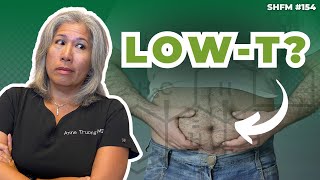
A YouTube episode by Dr. Anne Truong (March 22, 2024) explaining why testosterone matters for men and women, how levels change with age, and the common sexual and non-sexual symptoms and objective signs of low testosterone. Dr. Truong describes lab tests to check (total and free testosterone, SHBG, LH, estradiol), gives practical advice about testing and insurance coverage, warns about risks of unsupervised use, and briefly promotes her coaching program (Modern Man Club).
Questions this video answers
March 22, 2024.
After age 40 or 45.
Peaks around the mid-20s; starts to drop around age 30.
About 1–2% per year.
Total testosterone range quoted as 300 to 900 (ng/dL implied by context).
Chapters
Let's talk about testosterone today. Stay tuned. Find out everything you want to know about testosterone and why it is a must for men to know about testosterone. Every man. I'm excited today to talk about something that I'm very passionate about, which is hormone replacement therapy, particularly testosterone. I feel that every man should, should have his testosterone level measure after the age of 40 or 45. And we're gonna go over the reason why. And how do you know if your testosterone level is dipping? It's also important for women to get their testosterone level measure as well. Women, you have more testosterone in your body than even estrogen. And women need the testosterone too, because it protect their bones and it protect their skin, it protect their blood, it even protect your heart. But today, let's talk about testosterone replacement therapy for men and why it's very critical for men to know the signs and symptoms. And I'm going to show you a slide that I'm going to talk about now. Testosterone is what make a man a man. It gives you the male feature when you were a fetus in your mom's womb. The testosterone is what drive the development in the brain imprint as a male, as well as the development of the penis and the scrotum. So let's dive into this because testosterone hormone starts to surge up for a male at puberty much more than a female. And it peaks around mid-20s. And unfortunately around 30, it starts to drop about 1 to 2% a year normally, but that's just normal dropping. However, if you don't exercise, you don't eat well, you don't sleep well, you smoke, you are overweight, and you have a poor diet, all that accelerate, the percentage drop per year could even be 5%, 10%, depending on what your lifestyle is. So what are the signs and symptoms? So the symptoms is how you feel. So let's go over that, how you feel. And the sign is what can be objectively be seen by you and for the doctor. So I have a slide here that was presented by an excellent lecture by Dr. Abraham Morgenthaler, and he is professor of urology at Harvard Medical School. And I just attended conference presented by him and his team, which was excellent. Learned so much about sexual medicine and erectile dysfunction and really women and male sexual health. So I want to show this slide that he presented on here. So the symptoms again, the symptoms, how you feel and the sexual symptom for a man is that when you have decreased testosterone or you're gonna feel decreased libido. Libido is your sex drive. The desire, your arousal, that will be decreased. Remember I mentioned that around 30 it starts to drop. You're starting to notice that your erection is not as firm as it used to be either, and that you may lose your erection. So you may have the symptoms of erectile dysfunction, then also reduce nocturnal erection or your nighttime erection and your morning erection because due to the decreased testosterone level. And then you also notice that the feeling in your penis is not as sensitive as it used to be. Now that was something new for me that I've learned is that the sensation in the penis is not as sensitive as it used to be, as well as difficulty achieving orgasm as well. So that could be a sign of low testosterone as well as decrease in the intensity of of your orgasm. So keep that in mind. So if you start to notice these symptoms, then you need to get your testosterone level checked. And it could be easily checked through a blood work test. And you don't even need to have a doctor order your blood work test. You can actually go to a lab to get it done. If you do that, I don't think that it is covered by your insurance, but you need a doctor's order to be covered by your insurance. Or, or you can even order tests on Amazon you can do at home and send it in well too. However, you need a doctor to interpret it for you. Now let's go over what are the non sexual symptoms? Symptoms is what you feel. The non sexual symptoms is fatigue. Oftentimes patient will come and tell me that they feel tired, they take more naps than usual as well. And also other symptoms such as loss of vitality, kind of like loss of energy, a sense of well being that related to decreased testosterone as well. And that you'd have less energy. You're not as perk as you used to be. You lost like your mojo almost. And that you have depressed mood and irritability like the things that used to excite you, doesn't excite you as much anymore. Or you just don't take pleasure in doing it as much as you used to when you were younger. And also impaired cognition or meaning your focus and your multitasking is not as sharp as it used to be. Where before you can do 10 different tasks at the same time and can do it pretty quickly. You find that it's taking longer for you to focus, longer for you to finish your project. And another non sexual symptom is reduced motivation. You're not much motivated to go exercise or not as motivated to go do things that you used to enjoy and the sign that correlate with these symptoms, the sign is what can be seen and objectively measured, is that you will notice reduced bone density. The bone density can be done usually with bone density tests or dxa, that can be measured in radiology. A doctor has to order that. Another sign of low testosterone, decreased muscle mass and strength. Like your muscle mass, you should have good tone, but. But you feel that no matter how hard you go to the gym, how hard you work out, you just don't have that muscle mass like you used to have anymore. Let me tell you a story. I have a friend who walked about 10 miles a day and worked out about three hours. But he's noticing that he's not putting on as much muscle that he used to and that he doesn't have the energy that he used to have, even though he works out that much, is because he has low testosterone. Another sign is body fat. Increased body fat around the love handles, particularly on the belly, as well as on the arms. And sometimes you will see increased body fat in the breast, which is gynecomastia. Gynecomastia is breast on the male chest. And then you also notice small testicles. The testicles are a little smaller than it used to be because. Because it's not producing enough testosterone. And that when the doctor look at the blood work, there is maybe anemia, which is low red blood cell count. You look at either hematocrit or the hemoglobin, you have a little bit of anemia. So those are the signs that can be objectively measured and put that together with the symptoms. And if the symptoms and the sign matches and then the blood work shows that you have decreased testosterone, then you have decreased testosterone. Now, testosterone ranges from total testosterone, 300 to 900 in measurement in the blood work. And so if you're at 350, you may still have low testosterone because you have the symptoms and the sign. And what's interesting from this conference I went to is that every man testosterone receptor in his body is different. So what that means is that just imagine testosterone, the key and the receptor is the hole in the key. Every man hole that the testosterone fit into is a little bit different. So that means that some men may need more testosterone to feel good and some men may need a little bit of testosterone to feel well. So not necessarily mean that every man should feel good at a high level of testosterone because his receptor or the hole in the key is different, because sometimes the receptor fits perfectly, sometimes the receptor to fit halfway. And that's why that man may need a little bit more testosterone. So that's something to keep in mind because we have seen that some men with low testosterone, meaning testosterone below 340 doesn't have any type of symptoms at all. It doesn't have any symptoms of fatigue or diminished energy or impaired mood. In some men, they start to have some symptom even at 400 or 500. So every man is what I call have a different sweet spot and the number that he feels well in is different. So there's a wide range between 300 and 900. Now insurance requires that you have to be below 300 in order for testosterone replacement therapy will be covered by insurance. But you can feel crappy at 400. From what I say, that that's when you probably have to work outside the insurance system to get additional testosterone to make you feel better. And that can be easily done and it's very affordable. So I feel that testosterone is a critical hormone for a man and a woman as well too that you need to be aware of when you're starting to have the symptoms. And then the sign is to ask for blood work. Look at the total testosterone, the free testosterone measure your sex hormone binding globulin measure the luteinizing hormone lh. Just refer to the episode where I talk about laboratory work for hormone replacement therapy. But you should work with a doctor on interpreting the blood work and determining the dosage that you need. Testosterone is not a medication or hormone to be taken lightly. Because testosterone, what it does is it goes to your cell. Remember I said testosterone to key and it binds to that hole. But then together it go to your cell and. And it travels to your DNA. So it travels to your DNA, it gets what's called transcribed. And that's why it produces the sign that you see and the symptoms that you feel. And it needs to be balanced. Not necessarily mean high testosterone level is the best. So what I see some patient come to see me is that they gone to another clinic. Their testosterone level is like off the roof over 1500. But they feel crappy on top of that. That's because not necessarily mean high level testosterone is good for you when your body has too much or something. What it does is that it tried to get rid of it. And as it tried to get rid of it, you start to have some side effects. So I don't believe that if you're taking testosterone, you should automatically be taking HCG or Anastasol. Those medications should be added on at appropriate time, if at all. What I find is that with Working with thousands of men with hormone replacement therapy. I have maybe one patient that I have to put on anestrozol for to control estradiol. I don't put my patient on HCG at this point. But one thing to know is that once you're on testosterone replacement therapy, it does decrease your sperm count and may affect your fertility and as well as making your testicles smaller. So that's something to keep in mind in future episode. I will talk about other recommendations from regarding testosterone, but just know that testosterone should be done with doctor supervision and you shouldn't be adjusting it yourself. I know several people that are, that I know that are ordering it from China or India and then inject themselves with it and then don't measure blood work at all. You are just being risky by doing that. Because high testosterone can increase erythrocytosis, which is increasing red blood cell, which then can lead to clotting, which can lead to a blood clot or can lead to a clot in the heart. So you have to be really, really careful of that and it has to be monitored. And like I said earlier, not necessarily high is good. It's just you want to bring it up to the right level that you start to feel better when your symptoms, you feel you have more sexual desire, your mood is better, your energy is better, you're feeling less fatigue, you feel a little bit more motivated and you start to feel perhaps improved nocturnal erection. Now, I want to mention that testosterone alone treatment is not effective for ed. Now, it does contribute to the rigidity of your erection, but testosterone alone is not a treatment. It has to be combined with diet, exercise, pumping, and also sleep and stress reduction and also a thorough evaluation what other causes can be contributing to, to ED at this point. So I wanted to kind of give you some of the symptoms and the sign of testosterone. I hope this is helpful. I want you to start thinking about this. I want you to be able to have control of your health and know that, hey, you know, if I'm like 45, 40, I'm, I'm not feeling like myself. I'm starting to feel more fatigue. I'm just not on my A game. I have decreased libido, my erection is not as good as it used to be. Maybe get some blood work, look at your testosterone level first before you pop in that Viagra or that dialis and discuss with your doctor about this. And look at your diet, your exercise and how you're sleeping and your stress management. All that goes a long way. I want you to kind of stop and think before you take that ED medicine. Have you done this yet? Have you. Have you checked your testosterone level? You got your blood work to check your blood sugar, your cholesterol level, your blood level to see if you have anemia to check, make sure that your kidneys okay, your liver is okay, check your SHBG and your free testosterone and check your estradiol level as well. All that just a little bit of proactive in your health will go a long way in prevention of problem down the road. As you know, it is easier to prevent and optimize than it is to reverse a disease once it occur. So having said that, I hope you enjoyed this episode. I would appreciate it if you like and subscribe to the channel for further episode and just know that I am here to support you. I have an online coaching program where I coach you to restore sexual health again with natural solution where you get to work with me live in the coaching program that is called the Modern Man Club. You can check in the link in this episode and you can also type in noedman.com for the modern Man Club. I'll see you in the next episode. Are you struggling and and frustrated in finding a solution for ed? Well, I have just the thing for you. It's called the Modern Man Club led by yours truly Dr. Ann. Together we're redefining male sexuality and embracing a holistic approach to overcoming ed. Without medication or surgery. I will provide a protective environment for community and proven strategy to overcoming ed. It is a safe place. Expert coaching by me and my team. We provide holistic approach to overcoming ED and an empowering community of men with ED supporting one another and lots and lots of educational resources. Visit mensexualityclub.com at the link here on my right and connect with us and reclaim control over your sexual health. I'll see you there.
Thanks for listening to the Sexual Health for Men podcast. If you love this episode then please take a screenshot on your phone and post it on Facebook, Instagram or wherever you post. And be sure to tag me and let me know why you like this episode and what you like to hear in the future that will help me know what's great for you. And I would love to give you the most incredible free gift design to help you improve performance quickly. Go to my website@sexualhealthformenpodcast.com to get the book the Five Common Costly Mistakes Men Make When Facing Ed. I would appreciate it. If you subscribe, leave a review on Apple Podcasts or wherever you listen and just know that you can have sexual vitality for life. I appreciate you. Until next time.
More from Anne
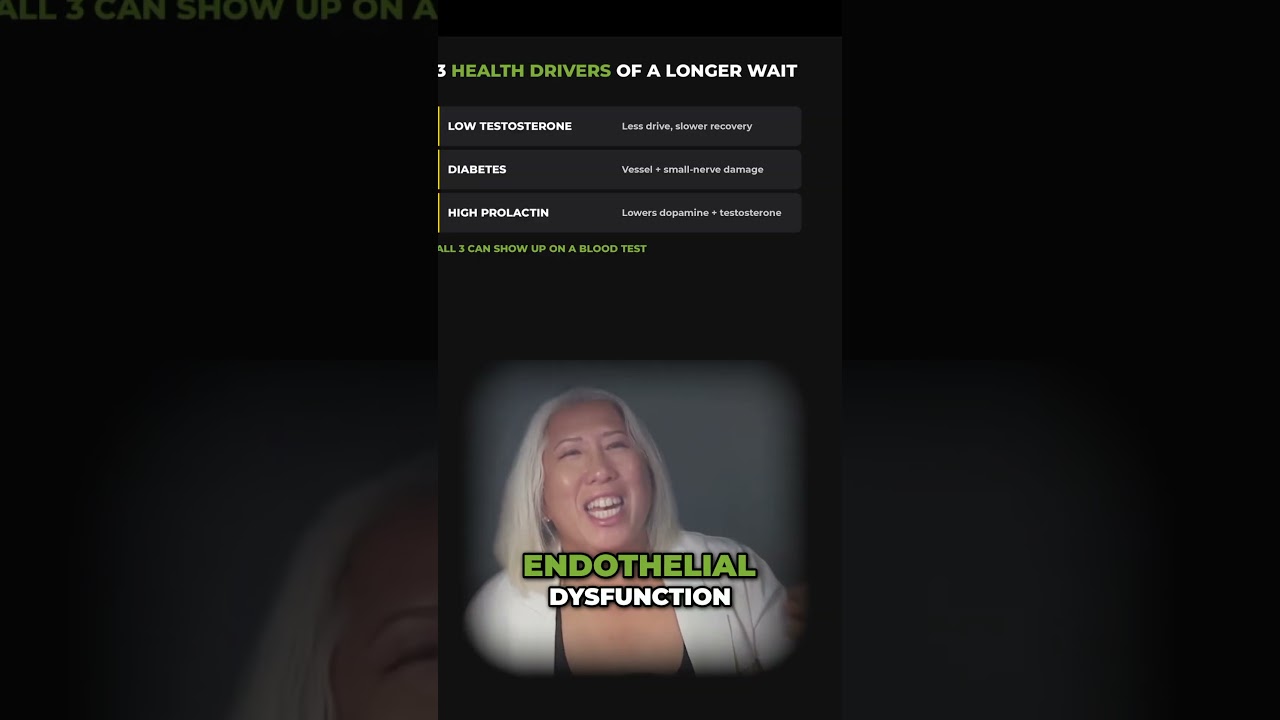
3 Health Conditions Behind a Long Refractory Period #LowTestosterone #MensHealth #shorts

Does the Refractory Period Get Longer With Age? #RefractoryPeriod #MensHealth #shorts

5 Common Medications That Can Slow Round 2 #MedicationSideEffects #MensHealth #shorts

Why Round 2 Takes So Long: The Brain Chemistry #RefractoryPeriod #Dopamine #shorts
Long Refractory Period? It Could Be Early ED #ErectileDysfunction #RefractoryPeriod #shorts

Is Your Medication Slowing Round 2? SSRIs Explained #RefractoryPeriod #MensHealth #shorts



