The Hidden Sexual Challenges Women With Menopause Face
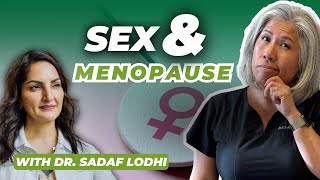
In this YouTube interview, host Dr. Anne Truong welcomes Dr. Sadaf Lodi, a board‑certified OB‑GYN, intimacy coach, ISHWISH fellow, and menopause‑society certified practitioner. The conversation explores the multifaceted sexual challenges women face during perimenopause and menopause. Dr. Lodi explains how caregiving roles, the “sandwich generation,” and the transformation of sex into a chore create emotional barriers to pleasure. She details the physical changes of genitourinary syndrome of menopause—including vaginal dryness, vestibulodynia, vaginismus, and urethral enlargement—clarifying anatomy (vulva vs. vagina) and the risks of pain, urinary infections, and sepsis. Evidence‑based treatments such as vaginal estrogen creams and the importance of specialist evaluation are discussed. The episode outlines the timeline of perimenopause, ethnic variations in its duration, and associated hormonal effects on mood, brain function, and new‑onset anxiety or depression. Relationship dynamics are examined: mismatched libido, the distinction between spontaneous and responsive desire, the role of emotional intimacy, mindfulness, and simple practices like date nights, hand‑holding, and phone‑free meals. Performance anxiety, body‑image concerns, and the benefits of mindfulness for women’s sexual satisfaction are highlighted. Dr. Lodi also shares the Islamic perspective that Islam is sex‑positive, granting equal sexual rights to both spouses and even allowing divorce if a woman’s sexual needs are unmet. Strategies to revive a sex‑less marriage—counseling, scheduled intimacy, and prioritizing emotional connection—are offered. Finally, Dr. Lodi promotes her “Muslim Sex Podcast,” intimacy coaching, retreats, and telehealth services, providing multiple avenues for listeners to seek further help.
Chapters
Hello there, modern man. In today's episode, I have a special guest. She is going to give us a whole new perspective on relationship and intimacy. That is Dr. Sadhab Lodi. She is in Westchester, New York. She is an OB GYN. And tell us a little bit about yourself, Dr. Loty.
Hi. Well, thank you so much Dr. Trang, for having me on and I really appreciate your time. Thank you. So I am a board certified OB gyn. I'm also an intimacy coach where I help women remove mental and physical barriers to experiencing pleasure in their relationships. I also am what's called an Ishwish fellow. ISHWISH stands for the International society for the study of Women's Sexual Health. I am a fellow of that organization and also I am a menopause society certified practitioner. So I basically help women during menopause and I focus on sexual health.
Wonderful. And the reason why I asked her to be here and she graciously joined me is that I wanted to give a different perspective the women challenges when dealing with sexual health and in relation to the man challenges. So you got men with erectile dysfunction with all these other sexual dysfunction. Let's hear from the women's side what challenges they're facing as well too and how we can understand both perspective from both men and women. So one of the first question I want to ask you is what the emotional hang up that keep women or in a relationship from achieving sexual pleasure.
Yeah. So I don't know if I would call it a hang up, but women do have a lot of things going on. So. So I think that specifically in long term relationships we see that women have oftentimes lose their desire to have intimacy with their partner, to have sex with their partner. And I think a lot of that has to do with taking care of multiple people. So not only, you know, they call us the sandwich generation where we're taking care of our elderly parents, but we're also taking care of our children. And then you have a wife that is a mother to. She's also working outside the home. She comes home, she's dealing with the kids, all the homework, the dishes, the dinner, all that stuff. And I think there's so many things going on in her life that really sucks. Ends up becoming a chore. And so anytime something is a chore, you no longer enjoy it. And I think that Emily Nagoski, who wrote the book Come as you are, I think said it best is that to have sex is to have sex worth wanting. Meaning that if you are doing something where you're not getting anything from. From it, then you're not going to want it. And so I think that when women get so busy in their relationships and get so busy in taking care of others, they don't have any time left for themselves. And so they don't tend to their own needs. And oftentimes women end up having what's called mercy sex, where their partner wants to have sex. So they just do it just for the sake of getting it done. Just like another thing on their to do list that they just check off and it's done, but not that they're enjoying it. And there's so many women that I talk to about this and they say that, yeah, I mean, just there's no enjoyment in it for them anymore. And that's for multiple reasons. It could be. Not only are they just their mind is preoccupied, but also because as we get older, as we start to make the transition from our reproductive years to perimenopause to menopause and then postmenopause, we know that there's so many changes that happen in our own bodies. And one of the biggest changes is that we start to have vaginal dryness. And then women start to experience pain with intercourse. And anytime there's pain, and then you're not going to want that either. So I think that there's a lot of things going on with women and which causes them to really not want the intimacy or desire it as they get older.
Right. It's like I kind of call it, you're not enjoying. It's hard to kind of to be able to look forward something that is not enjoyable. Even though I do a lot more men and I treat a lot more men than women in the clinic. Clinic, I do see women that are in menopause or in perimenopause. One of the biggest complaint is vaginal dryness, which then lead to painful intercourse. But the sad part is that women don't realize that there are things they can do about it that they don't have to live with that. So if any of the women are listening to this, and if you're a man in a relationship and no women in your life, and I know you do, your sister, your mom, your aunt and so forth, is that women do not have to settle for painful intercourse. There are treatment that can alleviate that at this point and just go see the specialist that can help you with that. Do you agree with that?
Absolutely. So there's so many different types of treatments. And the first and foremost, I think to understand is that anytime women have pain with intercourse, that's not normal. So if you're having pain with intercourse, so that's one of the things that, for people that may be watching this YouTube or podcast, I want one of the first things that I want them to understand is that pain with intercourse is not normal. So if you're having pain with intercourse, make sure you go and get evaluated. Could be something anatomical like you could be having chronic infections that could be causing tenderness or pain in the vulva region. You could have medicine mediated, what's called vestibulodynia, where there's pain in the vestibule, which is basically the entrance into the vagina. You could be having pain there. There's other hormonal reasons that you could be having pain, that you could be having pain because of menopause, because of perimenopause, because of the decreased estrogen that we have in our bodies. And the receptors aren't getting the estrogen. So it's causing dryness, it's causing pain. And so when you have intercourse, it causes pain. There's also women that experience vaginismus, that it's a painful intercourse. Basically it's pain with penetration. What happens is that the lower third of the muscles of the vagina, they tighten up in anticipation of penetration and in anticipation of pain. And so there's already that fear in their mind that they're going to have pain. And so then when they have intercourse, they basically can't even have it because the muscles tighten up so much. And so sometimes women describe it. I just recently had somebody in the office come in and describe how she feels, as if there's like a wall that partner's trying to penetrate or have an intercourse with her and it just, it's so painful, it hurts. And so there's so many reasons why women can have pain with intercourse. And that's why it's so important to get evaluated. There are some women that have had pain throughout their whole lives with inserting a tampon in, with having pelvic exams and all of those things. And if that's been the case, then definitely you need to be evalu. There's something called neuroproliferative vestibulodynia, that excess nerve endings on the vestibule that cause pain. So lots of things that can be causing pain. So that's one of the first things, right? So anytime you're having pain, you're not going to want it. In terms of treatment for perimenopause, menopausal, vaginal, dryness something we call gender urinary syndrome of menopause. You can use a cream. There are vaginal creams that are available that you would place at night for two weeks straight, once at night for two weeks, and then twice a week for basically the rest of your life. And what that does is it increases the blood flow, because as we get older, there's decreased blood flow to the vulva region.
So what's the vulva? What's the vestibule?
So basically, when we talk about the vulva, what happens is that here in most languages, unfortunately, when we refer to the female external genitalia, people refer to that as the vagina, and really, that's not the vagina. So the external genitalia on a woman is called the vulva. The vagina is really a tube, and that is part of the whole vulva region, the genitalia of women. But we don't refer to the female genitalia as a vagina. So that's the first thing. When we talk about the genitourinary syndrome of menopause, what we're referring to is the things that happen to women's vulva and vagina as they get older. In menopause, it's where the tissue no longer is plump. It starts to thin out. Some women can get some tearing because that tissue becomes really thin. That tissue actually also becomes smaller. So we know that in the reproductive years, women's like vulva and vagina, specifically, the vulva is. The labia are longer, and the labia minora and majora are two distinct things to anatomical regions. But as women get older in menopause, things start to fuse together, and the two can actually, because of the lack of estrogen, can actually come together so that you no longer see that separation. And that's called the genitourinary syndrome of menopause. And also it's called urinary, because the urethra starts to become bigger. And when that happens, there's an increased likelihood of recurrent bladder infections. And so when that happens, you know, women can end up in the hospital. They can end up with urosepsis. They can even die because of the sepsis. Right. We know that as women get older. So that's why it's so important for women to go on vaginal estrogen, because it helps to protect not only the vulva and the vagina, but also the bladder.
That's awesome, because I often See Women past 60 on chronic antibiotics because they keep getting urinary tract infection and they're on antibiotic. And I asked them why. They said, oh, it's because I have urinary tract infection. I asked them, well, you're on it for like years. So oftentimes if they're on vaginal estrogen, like you say, they may not need to be on antibiotics because as we know, being on antibiotic that you take all the time is not good because it kills all the bacteria in your body. And you need bacteria in your body to actually help with everything. Immunity, digestion. Now, you mentioned something very interesting that I didn't know about. What did you mention that the urethra gets bigger? The urethra is the tube where it connects to your bladder and it bring out the urine to the outside so that the urethra and opening. So how does that happen for women in menopause? That urethra gets bigger?
It happens because of the lack of estrogen. And we also. Our testosterone goes down. And to that the urethra. Urethra is formed from the mesoderm and it is part of the urinary tract system. So we know that the urinary tract, not only just the vulva and the vagina, also require estrogen, but so does that urethra. And it has receptors. Actually, the urethra and the bladder have receptors, estrogen receptors as well as testosterone receptors. And so we know that when those receptors no longer are getting the estrogen and testosterone, you know, that urethra will start to grow a little bit. And that's why if you take a look at a postmenopausal woman's, when you're doing an exam on them, you know, as a physician, I do exams on women. And when you take a look at the anatomy, you notice that the, the opening to that whole perineum, so the whole like external genitalia has shrunk. Right? So it becomes smaller when there's no longer estrogen. It almost goes back to like the pre puberty, like the anatomy that a girl has. And so the vulva gets smaller, but actually the urethra grows bigger. And so you see that. And that's why women are more exposed, because the urethra, the opening is bigger. And so the likelihood that. So when somebody goes to the bathroom, they have a bowel movement. And so if they're not wiping properly, we always tell women to go from front to back, but say if they go from back to front, they're going to carry that bacteria from the rectums. If they had a bowel movement and they're going to carry that bacteria up and it'll go into the urethra because that opening is bigger and cause a bladder infection. Also, when you notice that some women say that as they get older they have like an overactive bladder, like they just can't hold their urine. And that's because of the receptors on the bladder that signal to us when our bladder is full. And so if we're not getting that estrogen to help with those receptors, it's going to always make us seem like our bladder is full and we're going to have to go to the bathroom a lot more to urinate.
I love your explanation of that. So the main point that I want to stress is that, and this is something that I find fascinating, is that as women are born as pre puberty girls, the labia minora, the lips are not as prominent and then they become prominent when they start demensis or the period and then it start going away when you're in menopause, when you have less testosterone and estrogen like you say. So it's kind of revert back to the anatomy. I'll kind of revert back to pre puberty anatomy, which I find fascinating there that something that you just said. So having said that, I want us to focus on the physical part and we'll talk about the relationship part. When does all this changes occur in a woman? What are the early signs that she should be expecting?
As women go through perimenopause, we see some of the first signs, which is vaginal dryness. There can be vaginal dryness, it can be irritation in the vulva. And so that's end some pain with intercourse because they're noticing that they're not getting lubricated as much as they used to before. So that happens as early as per menopause. Now what is the age for perimenopause? What perhaps some people may be thinking. So menopause is a time where a woman no longer has a period for a whole year. That's when we know she's in menopause. So post menopause is the time after really that landmark event in her life happens right when she's no longer having menses. The time period before that where her periods may be irregular. And also she may be experiencing hot flashes, night sweats, mood swings, joint pain, brain fog. All of those things is the timeframe before the end of her last menstrual period. So now it depends on your ethnicity. So there is a study called the Swan study that was begun in 1994 and it's a multi center study that looked at women as they go through midlife and it's different centers throughout the US and what they noted was that really based on your ethnicity, that's how long you went through perimenopause. So for example, let's say that Caucasian woman will go perimenopause for about seven years, whereas let's say a Hispanic woman will go through perimenopause 8.9 years is what they say. And African American women actually go through it longer for about 10 years. Now that's interesting because the thought is that because African American women tend to experience systemic racism recurrently, that actually changes their DNA and so their telomeres, which are the ends of that DNA actually shortened. And that's what makes them predisposed to high blood pressure, diabetes, heart disease, all of those things because of that chronic stress that they experience with systemic racism, which increases their cortisol levels and actually causes them to go through perimenopause longer and specifically for 10 years. Now they say for Asian women, they go through it for the least amount of time, which is about five years. So that is something that was published in their study. And I find that to be very interesting.
When does this actually start? Around mid-40s, early-40s or 50s.
So I would say that if the mean age for somebody to go through menopause when their whole period stops is 51, that's what they say here in the U.S. it is. So if you're thinking that perimenopause is a time period right before it, it would could be if it's, if it lasts five years, for some women it could be at the age of 46. But if you're talking about an African American woman, then it could be as early as the age of 41. And some women, depending on when their mom, depending on their genetics, when their mom went through menopause, could even start as early as in their late 30s. So for perimenopause, remember, is a time of great flux. You know, our hormones are going up and down. Even said that women that did not have anxiety or depression before can develop new onset anxiety and depression. And that's because of the estrogen receptors in the brain, the hippocampus, the amygdala and the hypothalamus that carry the receptors for estrogen. And when they are no longer getting that estrogen that they need, that's what leads to brain fog and also to that new onset anxiety and depression.
That definitely makes sense. I mean, I'm in my mid-50s right now. And I definitely went through menopause around. It didn't last very long for me. So that was an interesting fact that you mentioned about ethnicity and how it affect the duration of the menopause period. So let's switch now to relationship challenges for the difficulty with sexuality in heterosexual relationship. What are the common challenges that you hear from women about this?
One of the most common things that I hear from women is the decreased libido and that women have often, oftentimes experience mismatched libido. So, for example, their husband, let's say, wants to have sex way more often than they want. And so, you know, that's probably, I would say, the number one thing that most women come to for a gynecologist office is decreased libido. Outside of that, it would probably be the inability to orgasm, the inability to feel arousal, and also pain with intercourse. So when we talk about female sexual dysfunction, those are the top four things that usually we're talking about.
And why is that you think it's more situational? I mean, obviously we just discussed about the physical changes in a woman and obviously in a perimenopausal woman, some women in their 40s. So is this when the relationship challenges are more prevalent because she's having hormonal changes and she's having decreased libido and others. And then men also have those hormonal changes themselves also. It can even manifest as early as in their late 30s. So it kind of like, here you go, you're in a relationship, a man hormones also decreasing, mainly testosterone, or woman hormones also decreasing. On top of that, they have work, they have children, they have family compounded on top of that. And then this mismatch that you mentioned, how does that translate into the relationship factors? And how can a woman and a man navigate that?
Yeah, I think that's a great question. So, you know, definitely, as we all get older, right, Things change, our hormones change. And I think also something that we don't realize is that we are all very prone to believing the things that we see on the media, right? Like the images and things like that. So, for example, in like, movies or shows or whatever, we have. See, young people are not even young people, but just couples that are just so in love and, you know, just tearing off each other's clothes and all this stuff. And what we realize, what we think is that that's normal. That's what is supposed to happen all the time. And that's not the case. There's actually a book called Sexual Intelligence by An author, his name is Marty Klein. And that's exactly what he says. He said we have to realize that our relationships and sex will look different as we get older. Right. And that's okay. There's nothing wrong with that. But I think that we all don't realize that things do change as we get older. So I think accepting that as a normal is really helpful. Also I think understanding that there's something called spontaneous desire and there's something called responsive desire and that not one is better than the other and they both are normal. Spontaneous desire is what we see in the media. Like all of a sudden you're just hanging out, all of a sudden you feel like this crazy desire to have intercourse at and be together with your partner. So you're just going crazy and all this stuff. So that's what we think about desire. That's what we're thinking. We're thinking about the spontaneous desire. The other form of desire is something called responsive desire which is seen in long term relationships. And the thing with responsive desire is that it is completely normal. And what that says is that basically in a long term relationship there'll be like a stimuli. Such as, like, like say like a sexual stimuli perhaps you're with your partner, you start hugging and kissing and things like that. And what it's saying is that the arousal and the desire can come after the stimulus does. You don't have to have that desire beforehand, but that it's responding to a sexual stimuli that's happening and so that's responsive desire and that is normal. So we have the female sexual response cycle that was created by Rosemary Bassin in 2001 and this is what she states. She states that women in long term relationships typically experience responsive desire. And again that's like in response to a sexual stimuli and they experience that arousal and desire after and then they seek out that physical intimacy which then leads to emotional intimacy. And the more connected an individual is, so the more connected the two partners are, the husband and the wife, the more likely that wife is going to want that sexual stimuli and the more she's going to be able to respond to that sexual stimuli. So it's really important that in relationships we encourage emotional intimacy and we encourage each other people to be vulnerable with each other and creating that time to spend to one another where you are really mindful and intentional about your time together. It doesn't take a lot, a lot of people think that, oh, you know, to have these really amazing intimacy and to have this amazing relationship with my partner, I Need to spend a lot of time and money and this and that, and that's really not the case. All you really need is to be intentional and be mindful when you're with that person. So for example, to increase emotional intimacy, you could go ahead, go outside, you know, it's a beautiful day outside, go outside and take a walk with your partner, hold hands, look into their eyes to share like a six second kiss. All of these things have been proven by research that shows that these small things, even though they seem small to us, really improve that intimacy and relationship between partners, Even just holding hands or creating a meal together, hugging, cuddling on the couch, all of those things increase intimacy.
Oh, I love that. I love that you mentioned that. So it doesn't take a lot of time. It may be just a hug or a short kiss in between, maybe in the kitchen or in the morning or at night. That will be the case. So as for us, my husband being busy and everything, definitely we are more responsive than spontaneous, for sure. And I think that as for women, that I've noticed in myself, as in working with some of my patients, is that they think they need to have that arousal, that libido, before the sexual act itself, when in fact it could happen after. And the arousal can happen after as well too. And what you said was really good, was that being present and not being distracted by what else is going on and enjoying the moment with each other really get out of your head. So that way you're not in your head and thinking about it and just get out of your head and enjoy each other for the present, for the moment. And for men especially, because when they get into their head, they think about performance anxiety. Does women have performance anxiety?
Yeah, of course. There are so many women that fake orgasms, so that's performance anxiety because they feel that their partner expects them to orgasm. And so if they're not orgasming, then maybe there's something wrong with them. And even if they're not enjoying what's happening, they'll just, just fake it because it's about the ego of their heterosexual partner. And you know, they may be thinking that, oh, if I don't orgasm, they're gonna think that oh, they weren't good and but I really like them, but I'm not even enjoying what's happening, all of those things. Of course women have performance anxiety, but they also experience body image issues. So then instead of actually being present in the moment, they may be spectator, they may be watching the themselves, and they may be seeing what's going on instead of actually being present. So there were studies that have been done. There's this woman. Her name is Lori Br, and she is a psychologist in British Columbia, and she's written a book called Better Sex Through Mindfulness. And she's actually on my podcast. I also have a podcast called the Muslim Sex Podcast, and she's on it today, and she's talking about mindfulness and in relationships and how basically, when you are fully present in your relationship, when you're spending that time with your partner and you are fully present, then it not only. So there's been research on this. So not only does it increase your desire, increases your arousal, increases lubrication, and it increases sexual satisfaction, specifically in women. And so that's why it's so important. Like, you talk about getting out of your own head, and instead just focus, focusing on the temperature, the touch, the pressure, the taste, all of those things, right? Focusing on your senses and just being present in the moment without judgment will really take you, like Miles, in terms of really enjoying your relationship, enjoying that intimacy that you share with your partner.
Well, that's wonderful. And let's go on to the next topic that you've mentioned, and we had talked about this before the show, and also my ignorance as well, too, is you have a podcast. And what's the name of that podcast again?
It's called the Muslim Sex Podcast.
So what is that podcast about?
Came up with a name with a friend of mine. She and I created it. And the whole intention behind that name was that it was to give people pause when they saw the name so that they would also, you know, be like, what the heck is this? So most people associate a lot of things with. With Muslims and not usually sex. And what we wanted to do is to normalize that conversation so that it's a podcast that talks about, really relationships, and it talks about. I have different physicians on, and we talk about how different things going on in a patient's life. Say, for example, a patient has a colostomy bag. How does that affect their intimacy? Say a person has Crohn's disease. How does that affect it? What if a patient has anxiety and depression? How does that affect their intimacy? So it's really about, like, relationships and intimacy and how we can make that better, and also how different things in our lives can change the way we look at intimacy.
And so what I've learned from you is that this is so interesting that Islam is the religion and Muslim are the followers of Islam. And can you talk about the sexual rights of Women as part of Islam.
Right. So Islam is a religion. Muslims are the followers of that religion. And what's important to realize is that I think something that people don't know is that Islam is a very sex positive religion. Contrary to what they may think and what they may see on the media. Islam really encourages. So in Islam, men and women are in a heterosexual relationship, monogamous, and also they supposed to basically give each other their rights in the sense that Muslim women have sexual rights as well as men. So men and women have intercourse in a marriage. We're not supposed to have intercourse outside of marriage. It's only within the context of marriage that we're having sex. And so because of that, because we only have sex within marriage, that it's really important for both a husband and wife to be sexually satisfied. And women do have sexual rights in Islam. And in fact, if a woman is sexually dissatisfied, that is grounds for divorce. She can ask for a divorce. And so that's really important to realize. And honestly, I myself did not know that Islam was so sex positive until I started doing my own reading research. And I think what happens is that oftentimes people may grow up in a community that is sex negative or that thinks that sex is wrong, dirty, shameful, taboo. There's a stigma around it, and so nobody ever talks about it. So you don't really know what the religion says. And oftentimes culture and religion become so intertwined that it's hard to parse through what is what. So you don't know what is the religion actually saying? What is the culture and saying? And how is the culture encroaching upon the religion? Even if in some societies we see that there's a lot of patriarchy or misogyny or what have you, it's important to realize that that is not Islam. And Islam does give women sexual rights.
And that is something that I found fascinating and contradiction to what we see in the media. So what are the sexual rights, men in Islam? You just discussed women. What about men?
Well, men, you know, it's the same thing. I mean, they both have rights to be sexually satisfied in their relationship. So both of them. And in the sense that when we talk about sexual satisfaction, it can mean whatever. It can mean whatever to that couple. It doesn't have to always mean orgasm, right? So Emily Nagoski says pleasure is the measure. And that's true. So as long as the two partners are enjoying each other's company, enjoying each other's intimacy, their physical intimacy, whatever that looks like, that's Fine, as long as the both of them are being satisfied. And whatever that satisfaction to them, whatever that means to them could mean orgasm. It doesn't have to mean orgasm. What if their relationship, that's not a priority? So whatever is a priority in their relationship, whatever keeps them happy is really what's important. There's a tradition of Islam, and I just want to read that to you, that where the prophet, peace be upon him, says that when a man makes love to his wife, he should strive to satisfy her, and then when he fulfills his need, he should not hurry in withdrawing until she fulfills her need. So basically saying that, you know, both spouses really should be enjoying and that this is actually a charity or a gift to each other and to be able to enjoy each other's company, to enjoy each other's, be sexually satisfied in the relationship for both of them. And it's not just that one's pleasure. Right. Oftentimes, even in the society that we live in, the men's pleasure tends to be what predominates. For example, we have something called the orgasm gap, which is the fact that men in a heterosexual relationship tend to orgasm like, I think it's like 99% of the time, whereas women only orgasm 67% of the time or something like that. I mean, those numbers may be a little bit off, but the point is, is that women in a heterosexual relationship don't always orgasm with simply penile vaginal intercourse. But men, on the other hand, usually do. And so that's what's considered the orgasm gap. And I think that's really important to understand and to know that actually in Islam, both partners are to be satisfied.
That's fascinating. That's very fascinating to me, that I thank you for teaching us that. And I hope that our listeners are learning something from this as well. How do you resuscitate a sexless marriage?
I think that's a great question, and I do have a course on that. There's so many ways, I think, that it depends on where you're starting. If you are not even talking to each other, if you're stonewalling each other, if you end up becoming like roommates and not really partners, then I think that there's a lot of work that needs to be done. And that work, maybe there's a lot of resentment, maybe there's anger in that relationship. And so I think that you would need to start out with seeing a couple's counselor and also, you know, seeing a sex therapist. That's where I would start personally for Somebody like that for other people. We also know that one of the top 10 reasons in the US that women and men get a divorce is because of a sexless marriage. So how do we go about resuscitating that? Well, I think what you have to do is you have to decide one, one, do you want to be in that relationship? If you've decided that yes, you want to be in that relationship, then you have to work toward it. And I like this saying because I think it makes a lot of sense, is that the grass is always greener where it's watered. So if you are going to decide that you want this relationship to work, then you have to really put some time and energy into it. Whether that's taking time out of your schedule, whether that's putting that person into your calendar and making sure that every single night you spend at least 15 minutes to a half hour checking in, making sure that everything's okay and that you both are on the same page, whether it's scheduling date nights. I know that date nights don't sound that exciting, especially in long term relationships, but they actually are. You think about when you first met your partner, you probably thought about what you were going to wear, where you were going to go, what time you were going to meet, how that night was, was going to end up, what you were going to do. So you planned things. So the same thing with date nights, you're planning it, you're actually setting aside time for your partner, you're making them be a priority in your relationship and you're telling them that they matter to you and that they're important. You're right. So you're thinking about where you're going to go, what the night is going to look like. And also I think this is so, so important in a relationship where we talked a little bit about it in the beginning for mismatched libido. So I think that the reason why these date nights really work for mismatched libido is because the person, whether it's husband or the wife or whoever has the higher libido, every time they go to give their partner a hug or a kiss or something like that, their partner with a lower libido thinks that, oh no, you know, what do they want from me? Are they, if I respond to their hug or their kiss, are they going to to think that I'm going to have sex and I don't want to have sex? And for the person with the lower libido, date night works because it tells them that it gives them Time one to realize that they're going to be spending this alone time with their partner. It gives them time to wrap their mind around the idea that sex may occur and that to kind of get prepared mentally for that and that they're going to be okay with, with that. And the person with the higher libido, it gives them hope that we're going to have sex on this night and she or he is not going to turn me away and that it will give them that, oh, something to look forward to. So that's how date nights work, specifically for people with mismatched libidos. It helps both individuals kind of come to a neutral point where the one with the lower libido isn't always running away and the one with the higher libido isn't always trying to, to get intimate or have sex with their partner when their other partner doesn't want it. Especially for the one with the lower libido. They know that if their partner is hugging or kissing them on a day that's outside of their date night, that they can respond to that, that they can respond to that hug, they can respond to that kiss without the idea or the anxiety of having to have sex with their partner that night. So that's how that works. And that actually makes a huge difference in relationships with mismatched libidos.
It's almost like dating again, the anticipation and the dopamine rush of going on date. In fact, my husband and I are going on a date tonight on a Friday night, and we've been married for 31 years and we still plan to go on date with each other at least once every two weeks or so. So are there any cultural differences in a sexual relationship between Muslim and non Muslim or not really? Are there any particular little things at all?
I don't think so. I think that we all have different ways that we grow up. I think that whether or not you're Muslim, it doesn't really matter. I think that there's still a lot. You still have the purity culture in a lot of religions. For example, Catholicism, Christianity, I think, not Hinduism. I think that purity culture kind of pervades different cultures and different religions. I don't think that there's something specific to Muslims. I think that a lot of cultures, people that I come across, actually my patients that have come to me for intimacy coaching have been people that are not Muslim. Had one girl that was Hindu, another one that have been Christian. So I think that a lot of times the mental blocks that we have that cause us to Stay stuck in the mindset that we have. Often happens early on, happens in our childhood. It can be people that have experienced trauma or abuse that leads to their sex negativity. It can be the way that they were raised. It could be their culture, it could be their community, it could be their society. So I don't think there's anything specific to Muslims in general. And of course, Muslims are not a monolith. So you can speak to one Muslim and they're very sex positive. And they grew up in a household that was very sex positive as opposed to saying you talk to another one and they grew up in a household that was negative. So I don't think that you can say anything about any culture or religion and use a wide brush and say that everyone acts like this. I don't think so at all.
I'm glad you mentioned that as well. And you know that this is the sexual health for men. So if a man is in a relationship and his libido is good, and he find that, oh, his wife or his partner is not at the same level, what can he do to alleviate? You mentioned some strategy, but is there anything else that he can do to get them on almost the same level?
Yeah, absolutely. And I think that's a great question because I think what happens is that people feel stuck. And I think especially when you have like a mismatched libido situation, people sometimes can become hopeless and become really resentful and angry in that relationship. And what I would encourage partners to do, whether it's the man or the woman or whoever feels the need to really want to improve their relationship, and I would hope that both partners feel the need to want to improve the relationship is to increase the emotional intimacy in the relationship. When you are able to be vulnerable, vulnerable with your partner, when you're able to share small moments, when you're able to increase the intimacy, whether it's experiential, doing things together, that's experiential intimacy, intellectual intimacy, sharing thoughts, discussing current events, what you feel, whatever's going on, spiritual intimacy. Right. Whether it's believing in the same faith or not believing in whatever you believe in, just sharing really your innermost thoughts, thoughts and feelings and your desires and wants. That is really the key to, I think, improving relationships. Because when you increase that emotional intimacy in a relationship, when you're honest and your partner can trust you, then they will automatically want to move to the next step, which would be that physical intimacy. But I think honestly, improving that emotional intimacy is what.
What's required so it's essentially sharing and communicating. Right. And talking more guys. So talk more and sharing and just like going on date night. Right. The best way to talk, you're with each other and you're relaxing, Have a
glass of wine, put away your phone.
Yeah, you're absolutely right. There was one time my husband and I were at dinner and we were both. Both on our phone like this, and we realized that, you know, we're really not talking to each other. So we put away our phone and it's no longer on the table. That is a great advice right there.
I mean, I'm sure when you go. I go to restaurants all the time. I'm sure you do as well. And you just look around. Everyone is on their phone, whether it's kids with their parents, whether it's a couple that's out, and you just. You just watch them and you're like. Like, wow, they are not even there. Like, they are physically there, but mentally they are not there. It's unfortunate, but we have the same rule in my house. Dinner time. Anytime we're together as a family, there's no phones.
Wonderful. So having said that, we had such great conversation today. I've learned quite a bit of stuff as well, too. I love asking about cultural differences as well. So how can our listener find more information about you and how they can connect with you?
Yeah. Well, thank you. First and foremost, I want to say thank you so much for allowing me to be on your podcast and this very informative podcast where you share your thoughts about male and female sexual dysfunction. So I really appreciate you and the work that you do. People can get in touch with me by following me on Instagram and TikTok. I'm @doctor Sales Sadaf OB GYN. You can go to my website@drsadaf.com you can go on my YouTube channel at Dr. Sadef Intimacy Coach. I also have a podcast called the Muslim Sex Podcast. I have a retreat coming up September 16th through the 23rd of this year for women that is going to be focused on sexual medicine, menopause, and nutrition as we age. And it's going to be in Morocco, which would be fantastic. And there's so many ways to work with me here in New York or Michigan. I can see you as a telehealth patient, and if you require intimacy coaching, which I've been doing across states and actually across the world. I had a patient that was based in Saudi Arabia, and I was doing coaching with her and another patient that was in Switzerland. So anywhere in the world we can do coaching.
Wonderful. And we'll put all those links in the show notes as well too do and there are many ways that you can work with her even all over the world. So that's wonderful. And having said that, thank you for being here with me today on your busy schedule and I have to go on your YouTube channel and subscribe and and listen to it as well. I love listening to podcasts in the car and so check out her show in the show notes and Modern man and Modern Women. I hope you find this valuable and we'll see you in the next episode.
Thank you.
Are you struggling and frustrated in finding a solution for ed? Well, I have just the thing for you. It's called the Modern Man Club led by yours truly, Dr. Ann. Together we're redefining male sexuality and embracing a holistic approach to overcoming ED without medication or surgery. I will provide a protective environment for community and proven strategy to overcoming ed. It is a safe place. Expert coaching by me and my team. We provide holistic approach to overcoming ED and an empowering community of men with ED supporting one another and lots and lots of educational resources. Visit mensexualityclub.com at the link here on my right and connect with us and reclaim control over your sexual health. I'll see you there.
Thanks for listening to the Sexual Health for Men podcast. If you love this episode then please take a screenshot on your phone and post it on Facebook, Instagram or wherever you post and be sure to check. Tag me and let me know why you like this episode and what you like to hear in the future that will help me know what's great for you. And I would love to give you the most incredible free gift design to help you improve performance quickly. Go to my website@sexualhealthformenpodcast.com to get the book the Five Common Costly Mistakes Men Make When Facing Ed. I would appreciate if you subscribe, leave a review on average Apple podcasts or wherever you listen. And just know that you can have sexual vitality for life. I appreciate you. Until next time.
More from Anne
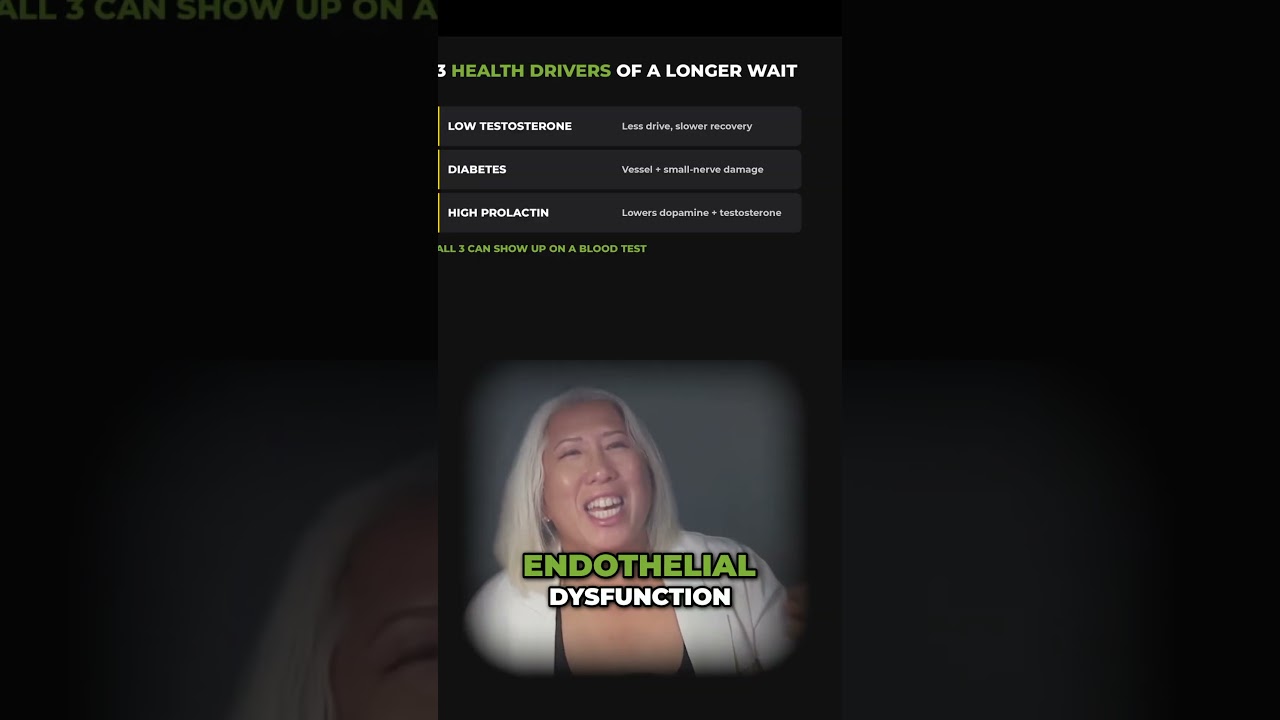
3 Health Conditions Behind a Long Refractory Period #LowTestosterone #MensHealth #shorts

Does the Refractory Period Get Longer With Age? #RefractoryPeriod #MensHealth #shorts

5 Common Medications That Can Slow Round 2 #MedicationSideEffects #MensHealth #shorts
Why Round 2 Takes So Long: The Brain Chemistry #RefractoryPeriod #Dopamine #shorts
Long Refractory Period? It Could Be Early ED #ErectileDysfunction #RefractoryPeriod #shorts

Is Your Medication Slowing Round 2? SSRIs Explained #RefractoryPeriod #MensHealth #shorts



