The Role of Testosterone From The Experts
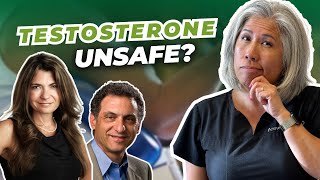
Interview (June 26, 2024 upload) with Dr. A. Morgenthaler (urologist) and Dr. Marianne Brandon (sex therapist) about testosterone, male sexual health, and masculinity. They trace the historical fear that testosterone drives prostate cancer (originating from Charles Huggins’ 1941 observations), summarize modern evidence (including the large Traverse randomized trial), and describe benefits of normalizing testosterone for mood, energy, bone and cardiovascular health. The conversation also links sexual function to mental/relationship health, lifestyle (Mediterranean diet, exercise), and offers practical behavioral and medical options for erectile dysfunction in older men.
Questions this video answers
1941 (Charles Huggins' landmark paper).
Three men (results reported for two of them; one was androgen-deprived).
About 1975 (began lab work as an undergraduate); first scientific publication in 1978; described a 40-year perspective in later work.
Around 1988 (end of medical training/residency).
About 5,000+ men randomized (Traverse—the largest trial mentioned).
Chapters
Hello there, mama. I am so excited on today's episode. This has been five months in waiting, and I have met this power couple in January of this year. And I made up my mind I was gonna get them on my podcast or else I was chasing Dr. Marianne to finally get. And we finally are here on this episode. I'm a little bit starstruck because I am here with Dr. A. Morgenthaler and Dr. Marianne Brandon, and they are married. They are power couple because one is a well renowned sex therapist and one is a well renowned urologist who essentially started the whole sexual revolution, I call it, because when I first got into sexual medicine, he was the first doctor that I identify with, his research on testosterone. So we come full circle now that I'm able to connect with him and be able to have him on this podcast. It's like interviewing my mentor, someone I've looked up to for the last 14 years. So thank you for being on this podcast.
Oh, it's great to be with you, Ann.
All right, so before I started, I asked him what is there any off topic? And you know what they say? Nothing. So we get to ask them all questions regarding sex, sexuality, sex therapy, and anything. And I actually preface it by saying, let's go into areas that people don't want to talk about. Let's talk about the uncomfortable and bring it up to mainstream, because we don't want to talk about uncomfortable stuff that we can read here and there, because this is a platform that we really want to educate and bring stuff to the mainstream that it's uncomfortable to talk about. So let's just kind of start first with Dr. Brandon said about why is there so much shame around men nowadays?
Isn't it true? It breaks my heart, frankly, when I see the way that our society sort of degrades men these days, and particularly with regards to sexuality in all kinds of ways that, you know, we hear about toxic masculinity all of the time. And people. People say that men are too focused on their penises and all this shame about watching porn. There's just a lot right now. And my fear we sort of have discussed is that men are sort of retreating, retreating from relationships, retreating from intimacy, because the expectation of rejection has to be pretty high based on what I'm hearing and seeing.
So what does that mean? What does that expectation from rejection, what does that mean?
Well, it seems to me that we're so quick to blame men or criticize them or shame them about their experience of their penis, their approach to sex, their desire for Sex that it would make sense to me if a man was just like, yeah, I'm going to keep this to myself. I'm not even going to work for a sexual relationship anymore. Work meaning put the effort to having a relationship with a partner, because the likelihood that I'm going to get shamed for losing my erection, having an orgasm too quickly, not having an orgasm quickly enough, wanting too much sex, I mean, it's there. I think the potential for being rejected and criticized for those things is really very present for men. And so I do worry that they're withdrawing. And we certainly are seeing that folks across the board are having less sex. So women are too right now. And I think it could be for any number of reasons. But one of them I'm quite aware of is this concern I have for men feeling critiqued about who they are sexually.
Where did that come from?
Really good question.
What do you think, Abe? Where does that come from? Has that evolved since the MeToo woman revolution lately?
Yeah, well, maybe politically incorrect to say it, but I think that it has been part of that even before. It's really the beginning of the feminist movement, I would say not to romanticize how things were before. Right. And guys aren't perfect and they do a lot of dumb stuff. But what I think that we've done is we've taken men as in broad strokes, and we've actually almost pre accused a lot of men for the bad behaviors of a very small percentage of them. And if we were to do the same for women, it wouldn't be pretty. There's tremendous things that came out of feminism, of course. Like, I've got two daughters, equal rights, equal opportunity, like, no question. And so I'm a urologist. I really have focused on male sexual dysfunction. So my practice has always been men. And I can totally endorse what Marianne's talking about. The guys feel pressure. It's not easy for them. The guys who are single and dating, some of them feel like it's really, you know, on the one hand you'd say, oh, there's a lot of opportunity. And that may be true. But on the other hand, what some of the guys say, it's. It's really hard out there. Believe it or not, a lot of the men are looking for emotional connection, not just sexual. Now, that differs depending on the age range. We almost attack men as if they're all 20 year olds on spring break, right? Where they're just looking to have a good time. The men that I talk to in my practice are, if they're single, are looking for connection, long term relationships, sometimes children. It's very moving. Often what they're looking for and not at all what, how you think of men, if you read any magazines or, you know, watch movies or stuff like that. I've written a couple of books about men and I have a chapter in my last book, the Truth about Men and Sex. And the chapter is entitled Men are People Too. And I think there's a way that we've kind of dehumanized them. I totally agree with Marianne. It can be tough out there for guys now, right?
And as actually that come from, because I observed the same thing too working with my patient, is that these are sensitive men want to make that emotional connection that cares about their wife, their partner immensely. And that's why they want to get fixed, so they can please their partner. Not because they want to get fit, because they want a big penis or they want a corn like ability. They would just want to be able to please their partner. But yet we have this almost like the stigma. And I hear that from my mentors that it's hard to find a partner. And if you're like late 50s or 60s and trying to date, it's very difficult.
Right.
I'll tell you, I had one guy, so a lot of my practice was devoted to male sexual health. Right. So I saw a lot of men who had erectile dysfunction, low libido, low testosterone, and, and I remember one guy and this has happened similarly with many others. But you know, I asked him why he was there for treatment. He says, well, you know, my wife and I have been together for more than 20 years and sex was always a big part of our lives. And I don't feel like I'm holding up my end of the bargain anymore because he had erectile dysfunction. So it's an interesting way of looking at that. There was something that's important to both of them and he sees it almost as his duty as his responsibility to be able to provide sexually for his partner. It's not something that you hear or read about or that you get a sense about on TikTok or Instagram.
That's why we're here and raising this issue up and sharing stories that you hear from thousands of men that you have treated over at least what, 40 years span?
Yeah.
In clinical practice, maybe I'm not that.
Old, but let's say, let's say 35 and leave a little mystery to it.
You said 40. He doesn't want to lead us to know how old he is. But I did know that he was in med school in the 70s, right?
Guilty as charged. I wrote a paper, I wrote a paper about a 40 year perspective on testosterone. And where that 40 years comes from is that I was an undergraduate at Harvard College. I was 19 when I started working in the laboratory with testosterone and lizards. And so in one way or another, I've been working with testosterone since, about, what was it, 1975. And my first publication, Scientific Publication, was 1978.
Wow. Wow.
You can do the math and figure out how old I am. I've forgotten already.
I think, you know. But what I'm trying to say, listeners, this is the guru that Dr. Morgan Teller is, the one that come out and says testosterone is safe for men. Prior to that, testosterone was considered cancer causing for the prostate and it was considered bad until his dedication and his passion on doing research, research now that's shown that testosterone is actually safe and it's now actually even preventative. So can we kind of touch upon testosterone and its evolution from being bad to now very good?
Yeah, sure. It's amazing transformation. So, you know, when I finished my residency in urology, the end of my medical training in Field was 1988. And every week during training we would meet with all the sort of the faculty, if you will. And there was always a story about how testosterone was incredibly dangerous for prostate cancer. There was always something and it was believed that if you raised testosterone in a man, that would inevitably, without any question, cause prostate cancer in that guy. And so there was almost no testosterone used in this country or around the world. Only a few exceptions. There were these young men who couldn't get through puberty normally because they had tumors of the pituitary gland in the brain or they'd lost their testicles to cancer or trauma and some genetic issues. But that was. Those cases are rare. And when they did get testosterone, those rare cases, the doctors would stop it. When they got into their mid-40s because they were entering the prostate years, people were afraid that it was going to cause prostate cancer. It was nuts. I say now it's nuts. But I believed it when I was in training because that's what it was. And how it's changed now, you know, what happened is that in the late 1990s, actually, I really liked your story.
When you said you actually did the research on it. And what did you find that where that bad publication came from and what was the true story behind that? I love that. Please share that.
Yeah, so the original, the source for that is that there's A famous doctor named Charles Huggins, and who was eventually given the Nobel prize. And in 1941, he published his landmark paper. And he was the first to figure out that any cancer, in this case it was prostate cancer, could be hormone sensitive, which means you withdraw a hormone, in this case, testosterone, and the cancer shrinks. So he did that by removing the men's testicles based on experiments he had done with dogs. And the cancer. Some of the cancers improved, or at least a blood test, like a marker for them, improved. And he wrote that he gave testosterone to a number of men, and in all cases, that blood test got worse. And so he concluded that testosterone injections activate prostate cancer, and that was the source of it. And he kept saying it and writing about it for another 25 years until at least when he won the Nobel Prize in 1966. Now, half of that story was true. We still lower testosterone in men when they have advanced prostate cancer. We still do that, although we don't remove the testicles anymore. We give medicines instead. But when I went down to find out where this story came from, that testosterone made prostate cancer grow rapidly, I needed to find the source because it wasn't true. In my practice, I was treating hundreds of men. I'd looked at all the literature. We couldn't find it. And so I found this paper in the basement of the Harvard Medical School library. Today, you have to. You can go online and find it probably in 30 seconds. But back then, you have to go to a building that housed the old journals. And I read this paper, and I got really nervous because I was treating all these men, and I saw the line from this incredibly important man, the testosterone injections activate prostate cancer. And I forced myself to reread the article, and I said, how many men did he actually give testosterone to? And the answer was three. And of those three men, he only gave results for two of them. And of those two men, he'd already removed the testicles on one of them, which makes them a special case. We call it androgen deprived. So in the end, the overall basis, the original basis for why anybody thinks testosterone is bad for prostate cancer came from one guy, One guy treated for only 14 days. The blood test results are all over the place. It doesn't show anything. But to him, it did. And he was such an important figure that because he said it, everybody believed it. You know, today I'll just. I think this is funny. Maybe you and your listeners will too. But, you know, today in medicine, we're very proud. We always talk about evidence based Medicine, there has to be scientific proof behind it. That's an amazing example, what happened with Huggins, of what's called eminence based medicine, where you base something on somebody who's really important, eminent. So anyway, that's urologic humor, if you like. Maybe it's only funny to me.
Well, no, I just find it fascinating that a decision that testosterone is bad based upon one person treating two patients that he had seen, and there's no randomized control trial, there's no large study, multi center study based upon observation of treatment, and that lasted for what, 20 years?
Oh, no more than 50 years. And some of that concern is still present today, even though all the evidence is contradictory. It's just amazing. Old ideas die really hard. And for most of us, including me, listen, I believe that stuff. All my research has shown the opposite. People give me credit for having started sort of the modern era of testosterone because I had desperate patients who wanted to be treated. And I started 10 years before Viagra. And they would say, doctor, isn't there anything you can try? And because of my laboratory experience with lizards, I said, well, there's this thing called testosterone, maybe it'll work. And so I tried it on a few guys. Lightning didn't strike them down or me. They didn't get prostate cancer and they thought it was really good. So I tried it in more guys. But I was always worried about this prostate cancer story. And it's just interesting how these things happen because the reason I believed it was because the smartest teachers I'd ever had told me it was true.
Many of my colleagues still believe it. Even colleagues and friends of mine still believe that testosterone causes prostate cancer. And it kind of doesn't matter. The research that Abe has done and he's published hundreds of articles related to this at this point. So psychologists are still misinformed about this. And not just psychologists, folks across the spectrum of medicine. It's shocking how hard this is to die, this concept, right?
And it's so funny because testosterone is just like life changing quality of life. I see that even the primary care I start men on and primary care doctors. Oh yeah, stop. It's prostate causes cancer of the prostate. And the men come back to me and go, oh, wow, why you put me on that? So that's why I wanted to bring this story to life. Because not a lot of practitioner know about how this came about. And since then you have published hundreds of papers and have proven that it has helped. So how has testosterone now is beneficial and now even to be Even preventative. So I thought that was very fascinating when you presented that.
Yeah, some of the stuff that I was publishing, I was treating guys with low levels of testosterone. And it turns out that men with low levels of testosterone are at higher risk for aggressive prostate cancer. If you have low levels of testosterone when it's discovered, hopefully we find it early, but we don't always. Those men are at greater risk of having the cancer already be spread compared to men with normal levels of testosterone. So it's really a backwards story. Today we know there was just a. This past year, there was just probably the most important testosterone scientific study published. It's a randomized control trial called Traverse, and it randomized over 5000 men to either testosterone or placebo. And the number of cancers, prostate cancers, in both groups was almost identical. There was not even a hint of an increase in prostate cancer. And the results are so clean, it makes me smile. Like I've been fighting for all these. Whether it's 35 or 40 years, I've been fighting this story that testosterone is dangerous for prostate cancer. And all my doctor colleagues believed it at one point, and now many of them still do, and they're just nervous about it. And the amazing thing is we've talked about is when you go back to the source of where this all came from, there's nothing there, and still it's hard to let go of it. But, you know, there's a similar story with breast cancer and estrogen. Estrogen doesn't cause breast cancer either. That was a misconception that came out about 20 years ago. So that's what we're fighting. So good for you for having a show where you can actually talk about what's real and what's true.
Right. And I'm glad you mentioned the Traverse trial. We won't go dive into that, but I wanted to get Marianne's perspective on now that the Traverse trial has come out, how has that changed your perspective on working with your client on therapy? Or has it at all?
This.
That's probably not a fair question for me because Traverse trial didn't teach Abe anything like it just substantiated everything he knew. So I've been indoctrinated into his way of thinking for years now. So the Traverse trial was kind of inconsequential in our house.
How have you used that? Since you already have access to Abe and all his expert knowledge, how have you used it to optimize your treatment with your client?
I see. Well, I would say that it's always the case that our mental health is dependent on our physical health. And so the Traverse trial highlighted medical health, cardiac health, these sorts of perhaps peripheral kind of systems to the brain or to mental health, but not really peripheral, it turns out. So I would say to you that always the case that I encourage people to eat healthy, exercise, take good care of their bodies, and that that will have a beneficial impact on their mental health and on their sexual health, for sure.
Okay, so I think I'm going to backtrack a little bit, but I want to dive back into what you just said there, Marianne. But can you just summarize briefly what the Traverse trial is? Because I think that's a pivotal thing that men need to know. What this study has really reiterated and solidified what you've been saying for decades.
Like I say, it was the largest randomized control trial ever, which for a lot of physicians is what they, you know, for a couple of decades now, I have primary care doctors send me their patients. Often we diagnose low testosterone and we treat them and sometimes we get the response back. Well, I don't know, but this testosterone stuff, and I can quote them with studies show the benefits and they say, well, come back to me when you have a large randomized clinical trial. So now we have not just one, but three actually large randomized clinical trials traverses the largest of them. And so it's powerful in that way and it's very convincing for doctors, like sort of the top quality medical evidence. So that's really its importance and what, what it showed, the two most important things is showed no increased risk of heart attack, stroke or death. So cardiovascular disease is completely is not affected by having a normal testosterone. And there's separate data that suggests that actually having a normal testosterone is healthy for you in terms of heart disease. Longer term trial also had a couple of sub studies that looked at things like risk of progression of diabetes, looked at mood, looked at bone health and anemia. So anemia is when people have too few red blood cells. And it can happen for different reasons, but testosterone affects red blood cells like the production of them. So it turns out the men who got testosterone who were anemic had normalized their red blood cell count more than people who took placebo. And in terms of mood, and Marianne may want to comment on this because she's very sensitive to the hormone status of her clients, is that although testosterone is not a treatment for frank depression, the men who got testosterone had a clear improvement in their depressive symptoms compared to men who took placebo. So in my Practice what's been evident to me ever since we started with this, we think about testosterone in terms of sex, but it's only half the story, if that. So, yes, it's important for sex, it's important for erection, sex drive, a number of things. But more and more, we see men who are just feeling off because their energy's down. They don't feel like they're the person they used to be before. Their brain sharpness isn't what it used to be. Call that cognition or whatever you want. They feel like their workouts, they can't make progression, they can't progress. Rather, they can't go up on the weights like they used to do. Like, something's different about. They're watching what they're doing, they're still getting a belly, they're getting fatter, even though they're doing everything right, as far as they can tell. And the men are. They may not be truly depressed in a clinical sense, but they've lost their enjoyment for a lot of things. I had one patient who put it beautifully who said, you know, Doc, before I went on testosterone, I was okay. I got. He's a businessman. He said, I got through my day all right. Life was fine. But now that I'm on testosterone, I see that before, I used to see the world in black and white, and now I see the world in color. It's a different character of what it is to be. To exist in this world.
Very interesting. Now, Marianne, from your perspective with your client, when they're on testosterone versus compare, what have you seen the change?
So I always encourage my clients to have an evaluation, but at this point, I do not say, just go to your GP or even just call urologist. At this point, almost every time I get a specific name from Abe, from his network, because the chances are so good that even if this man's doctor is willing to consider getting a testosterone level, they never get accurate levels. They always tell my patients they have a low normal testosterone level, and half the time they suggest that they go on an antidepressant instead of testosterone, which means that we're going to be taking another hit to their sex life as opposed to helping their sex life. So at this point, even with this information out there, I see patients in multiple states. I am not confident that a typical physician is educated enough with this. Even if they say they're open to. To considering testosterone supplementation, they don't know how to do it in a way that benefits my patients. So I don't leave it up to chance. Anymore. But most definitely, I encourage men. I ask them as part of an intake, almost regardless of why they're in my room, do you have erections in the morning? Because that's a good way for them to know if their testosterone level is low. And so that's a typical question. And I just really encourage guys to get checked out with that. But again, like I said, don't just roll the dice and see your doctor that you've been seeing for years that you like, who says, sure, we'll get your testosterone level checked. That could mean nothing. And that can be enough to stop them from proceeding further to look for more accurate results. If their doctor says that their level is normal or low. Normal. My patient might just not have the energy or care to follow up with a more specialized person. So, yeah, I have a lot of feelings about that, and I did before Abe and I were even together. So, yeah, but now you have a.
List of doctors, you can say, go see this doctor.
Right.
He'll take care of you. So let's trace back now that we have the summarize of the Traverse trial. It's essentially a big, huge trial that essentially kind of validated that, hey, testosterone, good for your heart. It can be preventative for even heart problems later on. It's actually good against diabetes, but not a treatment for diabetes. It's helpful for mood, but not a pure treatment for depression. And it increases your red blood cell, which help you with exercise tolerance more. I would help you with more energy. Did I miss something?
It's also good for bone, although the Traverse trial didn't look at that very well. But we have lots of studies that show that men, like women as they get older, are at risk for osteoporosis, weaker bones, and getting fractures. And one of the causes of men getting osteoporosis or weaker bones is having low testosterone levels. So treatment with testosterone is great for your bones.
Yes, absolutely. And I actually mentioned that trial talk I did a couple months ago and summarizing all that briefly. So let's go back to what Marianne was saying, how sexual health, good sexual health, kind of, that's mental health. Can you dive a little bit more details on how our audience can kind of tie that together?
Well, if I'm understanding your question, our mental health, everything that happens for us in our lives, we take into the bedroom with us, whether we know it or not. So anything that's going on for us with our mood, anything that's going on for us physically, anything that's going on for us in Our relationship or in our daily, like levels of stress that all comes into the bedroom with us. So I tell my patients when we're in bed, that's sort of like when we're most vulnerable, we don't have our clothes on anymore. We don't have any of the protections of the day. So anything that could interfere with your life, it really can show up there, whether you know it or not. And so the more attention people are willing to put toward their mental health, their stress level, caring for their relationship, caring for their bodies, that will all benefit one way or another, how they experience their sex drive, how they experience their orgasm, their erection. So it all plays out.
I see. So how does diet and exercise play out into that, into the bedroom?
So my understanding from a diet perspective is the studies quite consistently show the Mediterranean diet is most beneficial for men in terms of maintaining their erection. And even studies, we'll see if Abe agrees. Even studies have suggested that if men found, for example, that they tried Viagra, Cialis or one of those medicines and they weren't helpful, but potentially augmenting with the Mediterranean diet can make that medicine more effective, just as augmenting with exercise, regular exercise can make that medication more effective. So would you agree with that?
I think that the listeners would be fascinated by how you build up men, whether it's exercise or their activities like the yoga and stuff. I find that fascinating.
So I think what Abe's talking about is when a man has sexual challenges or struggles, it can be very difficult on their self esteem and very draining for them. And so what I spend some time often focusing with men is how to help them feel like strong and solid and masculine again. I don't mean strong in terms of lifting weights necessarily, but just solid in the world. Like they're standing solidly on their feet and feeling more confident. Men can find their way there in a variety of ways. Time in nature, frankly, can help us feel more grounded and centered. That can be helpful. Time with other men. I love when men can take the time, spend time with friends, particularly if there's a sport that they enjoy and they can play that just being around men and having men time is so helpful for men and getting that sort of confidence back in the world. And I asked them, what's the situation in their relationship? If they're in a relationship, who holds the power, do they feel empowered? And I'm not here to say they should have all the power, but certainly if they feel disempowered, we need to be talking about that and thinking about that if they're feeling disempowered in their relationship, they're going to bring that sense into the bedroom and it's going to play out with their erection or their libido. So that sense of confidence and power and how we can help him find that. Another exercise that I love sending men to is Tai Chi. Some sort of eastern philosophy, body oriented practice where men have time sort of with themselves in a calm, kind of controlled environment. I think that can be great for guys in getting their groove back, getting their sense of themselves back. I think that's what A was referring to.
I love that. What do you call that? You should like package that up and call that Give it a name. Yeah, give it a name. Like Masculine Beauce. Yeah, Serenity boost. Yeah, give it a name and create a course on it. I'll help you promote it. Oh, that's awesome. I love that. Give it a name and dive deep into that. I'm sure it's a much needed topic because the void right now, I think it is.
I think it is a much needed topic. So many men are so concerned about becoming this toxic masculine. Throw that term around so much and guys don't want that. They don't want to be toxic masculine. And so what do they do? They sort of avoid the masculine because in their mind it's what really is toxic masculinity, like hard to know. So in their effort to not be that, they'll sort of pull out of the sort of their masculine self and then they've lost their connection to their deepest like core sexuality in the process.
I love that. So you recommend how they feel better, how they feel strong, solid, masculine, connect with nature, connect with other men in sports or socialization essentially and evaluate whether they are empowered in their relationship and then adding Tai Chi. Anything else?
So yoga, we've got research on yoga as well. So there are a variety of options. But what I like about Tai Chi is it has more of a masculine feel to me and yoga can kind of feel a little more feminine. And if the goal is to help them feel stronger in their masculinity, that's why I go that route. I think we want to encourage men to have time outside of their brain and technology because that's not going to get them there. So if they're on their phones or on their computer or scrolling through Instagram, whatever, they might enjoy that, but that's not empowering for them. So it's really about using the body feeling more the core of the self and that sort of More masculinity, which is like below the neck, is what I say to them.
Interesting. I'm gonna ask both of you, how do you define masculinity? Who wants to go first?
I'll pass.
No, I think it's what I mean, it's sort of like it. So you could say that about femininity too. How would you define it? I think it's when you're really inhabiting your core self, like your pelvis, frankly, what you feel from that place emanating throughout your body. So I would say less of a definition of words. It's a definition of feeling. And that doesn't mean libido necessarily. It means like, who are you in the core of your body? That's your sort of center of masculinity. Femininity. That's how I would explain it.
Can you kind of give us a little detail on that? I don't know what that means. How do you feel that? I mean, there are some words to that at all, some definition to that or some clarity.
Well, let's see. Let me start maybe by. With femininity, because I feel like I can speak to that. Femininity is about sort of openness and maybe vulnerability. So it's like, it's a more of a airy kind of like energy. I'm not woo woo. I have no problem with woo woo. I'm not. But it is really a sensation more than words. So that's more of femininity. So masculinity is more of a solid, calm, confident. It's okay. So it's sort of like if your body was connected deep into the earth. Again, I know this sounds kind of crazy, but it's sensation. So if you were standing strong, connected to the center of the earth, that's like masculine energy. And on occasion, I will have a man walk around my office until I see he's got that solidness to him. Like if he's just mosying around, that's not masculine. Like, masculine is strong, solid, walking, not robotic, but it's like connecting, connected to the earth. Feminine is more like relaxed into the air. And masculine is more me saying this. I don't think I've ever, like one on one with a patient. Sure, I talk like this all the time, like, but they're used to me.
But I. I mean, I love it. That's why we have this podcast. I noticed that Abe looked at you.
I love it. I love it. And yet, you know what's interesting about your question about defined masculinity? Is that not only is it tricky in this age, we want to be accepting of everybody, regardless of how they're existing in this world. But it does have a sense, and I think the sense of it, I think it's hard to put it into words. And so I was fascinated listening to Marianne talk about being more of a feeling in a way. So I do agree that you can look at somebody and get a sense of whether a man may be masculine, whether a woman may be feminine. Like, there's certain things that strike us about people in that way, and often it's a sense of how they're feeling and how they conduct themselves, how they behave, how they feel, whether they're comfortable in their own skin kind of thing. And there's a feeling that we get about men who are less masculine, about women who are less feminine, you know, and in terms of sexuality, yes, there's a million variations on what's possible and even what occurs. But I think that for most straight men, they're looking for a woman who has a certain degree of femininity to them. And I think for most women who are straight, they're looking for men who have a certain amount of masculinity to them. And the exact definition in words may differ from individual to individual, but sometimes we see it and we know it. When I was in training, we used to have these X rays for the kidneys called IVPs. And there was one for a very unusual anatomical variation, you know, where the big vein in the body, the inferior vena cava, wrapped around behind the aorta in a special way. Somebody said to the radiologist, how would I ever recognize that again? And he said, it's an Aunt Minnie. Well, what does that mean? An ant, Minnie? He says, I can't give you any tips about how you recognize it. You just, how do you recognize your Aunt Minnie? Like, she has a nose, she has two eyes. Like, that's not good enough. You have to sort of. There's something about the overall appearance that you say, that's Aunt Minnie. And that was that for that, too. And I think that's how we recognize, to a certain extent, masculinity and femininity, too.
You right. And I love asking that question because everyone has a different take. It's like a perspective. It's almost like, how do you define sexy? It's what your perception, your experience with past partners and so forth, that really kind of give you that. But it's also an aura, too. An aura. Feel a look. But all of us define that.
Different.
I love asking that and how you're able to articulate that. Or is it feel, but you're a feeling person. Yeah. And that's how you operate. That's your lane. And then I'm more like, identify like ape. You know, we're more left brainers.
You know, when I talk sometimes about my experience doing research with lizards, people say, why did you study lizards? Why not? Like, everybody's used to mice and rats. But, you know, in evolutionary terms, the lizards were very important. They were considered the branch point where you got mammals on the one side and birds on the other side, that both kind of developed from or evolved from the reptiles. And our deep brain, we still call the reptilian brain, because a lot of the what happens in there, hunger, thirst, sex drive is all conserved, which means that it's pretty much the same function and the physiology, the way things work from the lizards or the reptiles to us as mammals. But the reason I bring that up is, is that we tend to forget as humans that sex is something that all animals do. All animals. And what we as humans recognize as sexy or appealing or, you know, we've been talking about masculine or feminine. Animals recognize it without words. They don't have words. We have words. And so we've got this very advanced evolved cerebral cortex that lets us talk and communicate in very sophisticated ways. But the truth is that sex is primal. We're driven to it. And it's a mistake, in my opinion, to fail to recognize that. So if somebody finds a certain something appealing, you can criticize it if you want, but it's not even their upper brains talking. It's a reaction. It's something that's driven in them in many ways. When I see a patient who's got sexual problems, the goal is to be able to help them enough so that their primal part of their existence can actually take over. And, you know, it's amazing how we're human beings and we live on this sort of level, but for sex is like a separate world.
I love that because say that to my patient. And I repeat that what you said on my podcast often, because I asked my son, who is 26, I'm just curious. And then I asked my husband, I asked my friends that are in their 50s, that how often do you think about sex a day? And he's young, he's dating, he's like at least 500 times a day. He said, I eat, I think about sex, everything I do is. But I mean, I'm like, wow, that is very interesting. I go about it every minute. So I'm like 60 minutes in a day, you awake every 60 minutes? An hour. Let's say you're awake for 12 hours. Yeah. That's about 500, 600. Right. It's not impossible. Yeah, right. Of course. You're in your 20s, your hormones are raging as a young man and dating and all that. What are your thoughts on that? I mean, we laugh at it, but it's so true.
Yeah, yeah.
And the studies do show those kinds of numbers different for women, but, yeah, those kinds of numbers.
What do you think women are. You are going to take a guess how many times they think about sex a day? How many women in their 20s?
I would say it would be very different based on a woman's age. I'd hate to even hazard a guess, frankly. But certainly women in their 20s more than women as they age.
Let's say a woman in their 40s or 50s, would you say a guess?
I'm so, like, I'm shooting in the dark on this. That.
How about you?
Oh, my God, you're kidding me. Because everything I read, all of my conversations, it's all sex all the time. So I don't think.
So. It's that 500 times, is that what you're saying? 500 a day.
But, you know, we've spent a fair amount of time talking about hormone and testosterone, and it's amazing how testosterone is what generates sexual thoughts. And women have testosterone too, just like men. They have less of it, but they have it in substantial amounts. And without testosterone, men and women have almost zero sexual thoughts. So it's funny, who we are and how we think and how we behave is driven by, amongst other things, our hormones. They play a critical part in it. If I could just jump in around women. So when women go through menopause, if they don't go back on hormones, the data are very clear that they're not thinking about sex very much. And there's two ways to think about sex, if I may. One is, oh, I'd like to have sex because I think it would be good for my relationship. That's one way to think about it. But libido, sort of the sex drive, if you will. I often describe to my patients as the grr, baby. Right. It's this feeling like it's this need, it's this urge. It's a different kind of sexual thought. So one could think all day long. If you're worried that your relationship is failing because you're. Maybe you're not having sex, this is true. For men and women, like there's something going on or you're comparing yourself to your friend or somebody who's telling you about their sex life. You might be thinking about sexual. Right. In a general sense, but you're not thinking about sex. So they're different. And when we talk about it, we tend to ignore those differences, but they're real. And the one that drives the ger baby, men and women, is testosterone.
Absolutely. Isn't testosterone higher even in estrogen for women though? If you convert the concentration, yeah.
Testosterone is the most abundant hormone, sex hormone for women too.
That's right.
More than estrogen. Isn't that amazing?
It is amazing. And that's the first hormone that actually dropped for a woman when she starting to reach at the beginning of menopause. So, yeah, I'm glad we touched on that. I share that with all my audience about my son. He's probably getting embarrassed about it, but hey, you know, it's fun. It's fun when you bring that subject up. And then I ask my husband, who is 55, and I said, how many times you think about sex? You know? He said, 100 times a day. I'm like, that's not that far off.
Good for him. Your son's lucky to have you as his mother.
Yeah, true.
Thank you. It's fun. It's a fun topic in the house sometimes. But having said that, I do want to present a scenario. I want both of your take on this and how a man can approach it. And I hear this a lot when I'm working with men. Ape you probably will too, is that I have a patient the other day, he's 77, very good health, came to see me for Ed and now he's able to get erections, able to get morning wood. His wife, not on hormone, but I don't know what she's like. But when he said, well, sometimes she can be messy at home, it kind of bothers him a little bit, but he doesn't want to say anything or hurt her feelings. But she is a psychologist. So anyway, when they get intimate, he'll able to get an erection, but then he loses it more often than not. But he doesn't know why. He doesn't know why. And it frustrates him. And his wife plays along, but she does orgasm. His wife plays along, but not the initiator. So he's asking for advice, like, what's going on? How can I overcome this? And so what would you advise for the man as well as the woman in this scenario? This is Very common. What I hear about the scenario with.
This particular patient, does he talk to his wife about it?
About how he feels about it? Yeah, yeah. Well, he said, we do talk. And so I asked him, well, does she enjoys it when you guys are intimate? That, yeah, she orgasms, she enjoys it. But he thinks that maybe she may be uncomfortable because she's not on hormones. You know, there may be some vaginal dryness related to that. Maybe she's not telling him that as well. But he said, more often than not, I lose it with her about 50% of the time, but then the other 50% of the time, I don't lose it.
So, you know, my first quick reactions are, I would encourage this man to have a more in depth conversation with his partner, that he's missing his more consistent erections and would love to kind of talk together about what they might do different or change things up or make things more intense and exciting and see if that helps. So things he might like to try, things she might like to try. Sharing with her his concern that she's uncomfortable and talking about. Just to circle back to the conversation about hormones earlier. Hormones are great for women, too. It's not just that they're good for men. There's many good, healthy reasons outside of sex for a woman to be on hormones as she ages. And that sounds like it would be a valuable conversation for him to have with his partner because it very well could be that she would enjoy sex more with estrogen and testosterone and all of that. So everybody needs more stimulation as they age to get erect, to. To have an orgasm. And so even if they kept things consistent together and in positive way in their sexual interactions, he probably needs more and she probably does too. So, you know, having that sort of conversation would make a lot of sense, it would seem to me.
So more stimulation, more foreplay, more foreplay.
Maybe changing things in the bedroom, making things more exciting. If he felt like he was willing to have a truly in depth conversation with his partner about him missing what they had or whatever feels true for him. And if he doesn't feel like his partner is really willing to do much more, then I would be talking to him about, well, how can you amp up your own excitement before sex? Can you masturbate a little bit before sex? Can you watch some porn before sex? Can you, I don't know, look at photographs of your partner in moments when you were aroused by her? You know, whatever can help him, like maybe have a little foreplay before he even meets up with his partner. But that I would go to if he found that his partner was really not feeling very flexible about approaching their sex life differently.
Right. So he said, sometimes I overthink it. Like, during the moment I overthink it, I think about, oh, I'm going to lose my erection, and he loses it. So how can you advise him to kind of get out of his head in that moment?
So I very often encourage men, encourage everybody to meditate for a few minutes every day. And get used to learning mindfulness meditation. Get an app on your phone. Get used to learning how to, like your thoughts, be your thoughts and not struggle with them. Because that's what you learn in mindfulness, is you learn how to breathe, focus on your body, and let your thoughts do their thing. So the goal wouldn't be for him to change his thoughts so much as just to allow them and not get activated by them. So learning meditation is helpful.
Does he meditate before set or during?
Not necessarily, but it would be meditating to flex. It's like when you meditate, you like flexing a muscle, like developing a strength. And the strength that I would want him to learn in meditation is how to leave your thoughts. Like, let them say what they want. Like, just let them be, but stay focused, like in your body, on your breath, on your pelvis. It's learning a skill of being less concerned about your thoughts. Does that make sense?
So have the thought come. So he. In the sexual act, have the thought come. Go and recognize it, but be aware of what's going on.
Exactly. Stay with your focus in the body. Let the thought be the thought and not get attached to it. As soon as he thinks the thought, repeats it in his mind and starts thinking about it. He's now lost the game, so he just needs to, like, let those thoughts be there and stay focused on his body, focused on his breath, focused on his erection, focused on his desire, focused on his wife's body. Whatever helps him stay focused in the moment. But I almost always talk with my couples about, what's your backup plan? So the worst is going to happen, and it's going to happen more than you want it to, and that's life. As people age, the worst happens, whatever that is, losing an erection, whatever it is, happens more often. So have a plan. So what's your plan? Like, don't make a big deal about it. You're going to lose your erection. Sometimes when you do, what are you going to do? Get out a sex toy?
Or.
Or maybe you'll just massage each other. Or maybe you'll cuddle for a while and start over again, but have an agreed plan and just don't make a big deal about it. Like, if you can just like, let that be life.
Would you advise him? Don't think about it. It's kind of like a. Stop thinking about it. You don't want him to do that. You want him just to kind of recognize the thought is there. Just let it be there and just ignore it. Just ignore.
Let us let it be. I wouldn't even try to ignore it. I just leave it alone. Just bring your focus back to your body. That's. That's it. Like, your thoughts are always going to. I mean, that man is not going to tell me that during the day. He never has thoughts that disrupt his life. Like, we all have thoughts that disrupt our lives all the time. Happens in sex and outside of sex. So the better we get at not being thrown off by these disruptive thoughts, better life's going to be across the board, not just sexually. So, yeah. So just let the thoughts be. Don't fight them.
I have some thoughts about your patients. So we say in urology that when an erection sometimes works and sometimes doesn't, you know, there's different things that can contribute to an erection. You need blood flow, you need hormones, you need nerves down in the pelvis, and you need a brain. The only thing that acts like a loose wire, like an intermittent thing, is the brain. We're distractible and we worry about all these things. This guy is, from what you've described, is fighting ghosts. So he doesn't know what's happening to himself. He's lost confidence that he can keep interaction. So he's not having sex all the time. He's actually part of his brain is thinking, am I going to keep the erection or not? That's like an observer status that takes him out of his game. And the other thing that I thought I heard you say is that he has some concerns about his wife having pain, but he doesn't know if she's having pain. So he's interpreting all sorts of things. And what's great about this case is it shows some of the depth, the depth that men have because a lot of them are concerned about their partners. Men get the brushstroke is we're all jerks because of the guys who sort of have sex and leave the girls. And, you know, they don't call whatever. But most of the guys are trying to be good partners. And men care deeply about being a good sexual provider. As odd as that sounds. That's True. So if he's worried that she's in pain, but he doesn't know because people are embarrassed to talk about sex, the simplest solution, and it's funny, here I am, I'm the surgeon, if you will, but talking can be really important. So it's really critical for this guy to find out what's going on with his wife. And there's a couple of uncertainties here, as I hear it. One is, is she enjoying sex? Second is, is she experiencing pain with intercourse? No. She may say no. She may be making a facial expression that he doesn't know what it means, and he's made it into meaning for himself. If a guy thinks that he's hurting somebody he cares about during sex, he's going to lose his erection. Nine times out of 10, guys don't want to be doing that. So there's that. And then the uncertainty for me, and maybe for him, is it sounds like he wants an explanation for why he's losing his erection sometimes. And there's a fear for the guy, again, in terms of the male as the sexual provider, that maybe he's disappointing her when he loses his erection. So those are all things that are. It may be an uncomfortable conversation, but it might be over in 60 seconds. Everybody will survive and he'll get some of his uncertainties answered. Maybe she is having some discomfort. Well, maybe they need more lubrication. Right?
I gave him lubrication yesterday, tried it. Yeah.
And maybe that's, you know, the flip side of lubrication is sometimes people use more and more and more. And if you use too much, the man feels nothing. That's also not good. So it's better to know what's going on really. Is she in pain or not? Is she lubricating or not? But the other thing to realize also for men is that once you get into your 60s and 70s, erections are very fragile. They're vulnerable. So when we were 18, men can have a super erection on the worst day of their lives. Doesn't matter what happened, they can get an erection and they often will. But as we get into our 40s and 50s, we need. Men need things to be more and more perfect in order to have a good erection. So any doubt if they're not feeling right, if work is on their mind, if they're worried about their kids or whatever it is, may make it so that they lose the erection. And the issue for him is, you know, so why do we need. Why do men need an erection? Right. So the erection evolved amongst vertebrates Some vertebrates so that the penis could go inside the vagina. And it's evolved in that way for reproduction. So the sperm get deposited close to the cervix of the uterus, close to the opening of the uterus to make reproduction more likely. But we're so smart as humans that 99% of the time that we have intercourse, it's not for reproduction. It's for this, let's call it a social behavior, which we call sex. It's for sex. So what's the value of the hard penis? The hard penis still allows it to the penis to go inside. And people have an idea that that's the normal way to have sex. And if you don't do that, there's something wrong. But in fact, there are a lot of couples. ED is a very common problem, right? It affects by age 60 or 70. It's about 50% of guys are no longer having great erections. And some of them may be resistant even to Viagra or Cialis. So what do you do with them? Or the woman may find intercourse painful, and they still engage in sexual activity, but without the penis going inside, all of it is cool if it works for the couple. And so the main payoff for both men and women, apart from the payoff, I mean, sort of in terms of, like, primal stuff, is the orgasm. Not everybody has to orgasm all the time. Women don't always orgasm. Some women never orgasm. Everybody always thinks men orgasm all the time. That's not true either. Especially as men get older. Some of them have different difficulty getting there. And it can still be a great experience. But if a man has an orgasm, if the woman has an orgasm, the question is, what else is it that they need? What is it they want for the man? Usually it's a sense that they've done the manly thing, put the penis inside. And there's another myth around there, that the man has to be able to make his partner come have an orgasm with thrusting. But a lot of women don't come with that way either. So with a case like the one you're describing, sometimes it's worth as a healthcare provider or a sex coach or a sex therapist, figuring out what exactly is the problem here, really. Because even if he loses his erection, if his partner's having a great time, that's good. And if she can bring him to orgasm and he feels okay with that, even without the penis going inside, mission accomplished. Everybody's good.
Yes. She said, oh, yeah. Every time we do it, she orgasms. You know, I'm Always thinking, well, if the woman's not having fun, she's not going to want to enjoy it. And then I asked, oh, she orgasm, she enjoys it. Of course he feels disappointed when he loses his erection. And I think because they're older and that's it, that's the end of the act, he not getting the orgasm on that part. So I think that you have a lot of suggestions that I could suggest him and bring the insight because I love that what you have said, not necessarily you have to have a hard penis to enjoy each other.
And for guys who do, you know, the urologists, especially urologists that specialize in sexual medicine, have a lot of effective treatments. So we often start with the pills like Viagra, Cialis. There are for guys who lose the erection, a cock ring, sort of an occlusive ring can be helpful to maintain the blood. We have these vacuum devices that people joke, but they're really very effective. It's this plastic device that goes over the penis and you create some negative pressure within. The penis fills up with blood and then a band goes on the base and holds that blood in. So that works. It's non invasive. There's medicine that men can learn to inject into the side of their penis. Tiny needle, it doesn't really hurt, gives them a great erection, most of them. And we even have surgery for men to put an artificial device in the penis called the penile prosthesis or implant. The penis looks really very normal. And it's got two fluid filled cylinders that go into the two natural cylinders that are present in the penis. And the guy has got a little pump that sits inside their scrotum like a third testicle. And when they want to have sex, they find it, they give it a few squeezes, fluid goes into those cylinders and the penis stands up and it's a great, it's a normal looking erection and very firm. So we have all sorts of things to help men if they're bothered enough by their erectile dysfunction.
Yes, that's what I've been saying. There are always options and ways to explore it. I'll come back to what you said. Communication, right? Being vulnerable, able to communicate with your partner and then finding ways to satisfy each other. So having said that, thank you for being here. I know you gotta go, but I want to tell our listener how they can find you. And we're working on for you to find Dr. Mary and Brandon a lot easier. We have to do that. And I challenge you to create that course about the masculine booze or whatever that package name, because I would love to help you promote that. But she writes in Psychology Today blog the Future of Intimacy. I love that name, by the way. And so that's how you can find her. But on her website, Dr. Marianne brandon.net that's right.net and I'll put that link in the show note so you guys can check it in the show note. But can you show us your book that I love? This is the book. All guys should read this book though. You have a couple of them. One is for testosterone. Testosterone for Life. When was this book read? This is a second edition, right?
No, this is 09. I'm working on the dated edition now. But it's a good primer for anybody that's interested in it. Talks about how things work and what research about it and talks about the risks and why they're not so risky. And then my last book, my most recent book in some ways is my favorite. It's the Truth about Men and Sex. It's a lot of stories from my practice about men who had different kinds of issues. They're interesting stories and they tell us a lot about men and couples.
I love that. I actually read that on the flight back, actually, and I said, oh, I have many men that is in there. But you can find Dr. Morgan Tyler@t4leducation.com and I'll put that in the show note as well too. I couldn't read my handwriting. I wrote it down. I couldn't identify that. But having said that, we had so much gold on today's episode. I was writing down different things that I wanted to take out snippets for and to promote that. And one of the things that you said that I wanted to highlight was that the toxic masculine and what's going on this point. So thank you for being here. I really appreciate it. And we will see you the next episode. Are you struggling and frustrated in finding a solution for ed? Well, I have just the thing for you. It's called the Modern Man Club led by yours truly, Dr. Ann. Together we're redefining male sexuality and embracing a holistic approach to overcoming ED without medication or surgery. I will provide a protective environment for community and proven strategy to overcoming ed. It is a safe place. Expert coaching by me and my team. We provide holistic approach to overcoming ED and an empowering community of men with ED supporting one another and lots and lots of educational resources. Visit Men Sexuality Club at the link here on my right and connect with us and reclaim control over your sexual health I'll see you there. Thanks for listening to the Sexual Health for Men podcast. If you love this episode, then please take a screenshot on your phone and post it on Facebook, Instagram, or wherever you post. And be sure to tag me and let me know why you like this episode and what you like to hear in the future that will help me know what's great for you. And I would love to give you the most incredible free gift designed to help you improve performance quickly. Go to my website@sexualhealthformenpodcast.com to get the book the Five Common Costly Mistake Men Make When Facing Ed. I would appreciate if you subscribe, leave a review on Apple Podcasts or wherever you listen and just make that you can have sexual vitality for life. I appreciate you. Until next time.
More from Anne
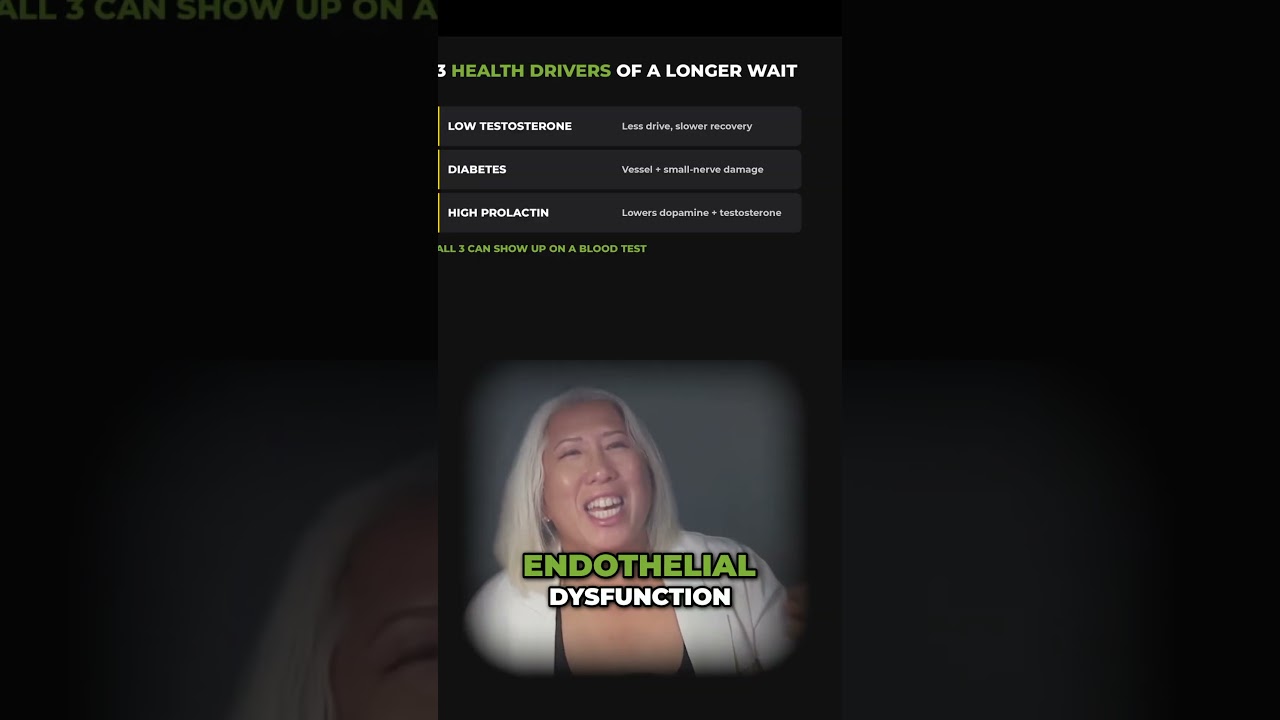
3 Health Conditions Behind a Long Refractory Period #LowTestosterone #MensHealth #shorts

Does the Refractory Period Get Longer With Age? #RefractoryPeriod #MensHealth #shorts

5 Common Medications That Can Slow Round 2 #MedicationSideEffects #MensHealth #shorts
Why Round 2 Takes So Long: The Brain Chemistry #RefractoryPeriod #Dopamine #shorts
Long Refractory Period? It Could Be Early ED #ErectileDysfunction #RefractoryPeriod #shorts

Is Your Medication Slowing Round 2? SSRIs Explained #RefractoryPeriod #MensHealth #shorts



