Groundswell Review for Regenerative Agriculture
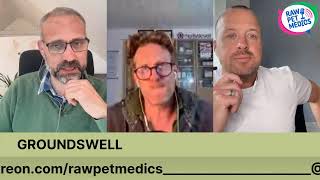
In this episode of the Raw Pet Medics podcast, hosts Nick and Brent, joined by Dr. Conor Brady, recap their experience at the Groundswell Agriculture Conference, a two‑day gathering focused on regenerative agriculture. They explain the core principles of regenerative farming—biodiversity, livestock integration, soil cover, minimal or no‑till, and living roots—while citing books such as The Song of the Reed Warbler and Surviving in Toxic Times. The conversation highlights the massive scale of the conference (≈20,000 attendees, 170 speakers, dozens of themed tents) and the variety of topics covered, from soil microbiome science to climate‑change debates. Practical on‑farm anecdotes are shared, especially about using pigs and goats to improve soil health, the importance of robust fencing, and the challenges of small‑holding livestock regulations in the UK. The hosts also promote raw feeding for pets as a natural extension of regenerative principles, and they critique cultured meat and bacterial‑protein technologies, arguing they lack the full nutritional profile of real animal products and serve profit motives. Throughout, they shout out fellow attendees (RegenBen, Andy Cato, Fiona, Ellie, Sally Tobin), promote their Patreon, and preview upcoming events—including a planned South‑Africa trip, a veterinary‑pricing discussion with Alan Robinson, and a live appearance at the Edition Dog show. The episode blends informal banter with earnest advocacy for soil health, animal‑integrated farming, and transparent food sourcing.
Chapters
Good evening. I thought we'd forget, but no, we're here.
Dr. Clark, how the devil are you?
Oh, wonderful. What a regenerative week it was last week. And it's just, I'm actually on a week of annual leave because the builders are in, and I'm doing a lot of landscaping at the moment just so that they can put in the footings finally. Yeah. So that's all good fun. And just what a week last week.
Wasn't it amazing?
An amazing experience.
So just for those guys who don't know, we went to the Groundswell Agriculture Conference. It's a Wednesday and Thursday affair. And it's all about, as the name says, it's all about regenerative agriculture. And, and what I was going to do, Bren, is just say to maybe explain to people what regenerative agriculture is, you know, just put a little bit of context on things. But before I do that, I'm going to say thank you very much to all our Patreon supporters. We really, really appreciate you. If you'd like to be one of those supporters, you just go to Patreon and you type in Raw Pet Medics and it will take you there. For a fiver a month, you can contribute to keep us, keep the lights on here. We've got to pay Pete to do the podcast, and we've got to pay Victoria. She does our TikTok, and we've got to keep the whole boat afloat. So thank you, thank you, thank you to all of those. And talking of podcasts, you can find us on the podcast anywhere you fancy. So that's really good. That's a really powerful way of getting the message out, which is brilliant. Okay, so just talking about what is regenerative agriculture. I've just been listening to a really amazing interview by a guy called Angus McIntosh, who is a South African farmer just outside Cape Town. And he says there's two types of agriculture. It's really, really simple. You're either contributing to biodiversity and, and soil health, or you're not. That's it.
Okay.
And most modern agriculture is actually destroying the soil such that there will come a time when there's no soil left. There is just dirt, which you can't grow anything. It's basically brown sand.
Yeah, yeah, yeah.
If it doesn't blow away. So essentially, that's it. The principles of, of, of regen agriculture is diversity, diversity of animals and plants and grasses and weeds and herbs within the lay, within the paddocks that you've got there. The integration of livestock with your plant growing, yeah, either the veggies or if you're growing grains, you're using livestock to fertilize and and feed the soil. The third one is protecting the soil surface so that you always try and keep it covered. But Mother Nature doesn't like barren soils, and yet modern agriculture does it all the time. It leaves it barren, and therefore you can get flooding, you can get it blowing away. I've got some amazing stats if you want to go there on, on that. It looks to minimize, minimize soil disturbance. This to try and either go minimum tillage. Tillage is the posh name for plowing, or zero till, no-till, which is where you don't plow the soil because plowing soil really disrupts the ecology of the soil. And the final one is maintaining living roots within the soil because the roots are the government of the soil. And by having those there, it helps with the bugs and with the mineral metabolism of the soil. There's one extra. Charlie Massey, in his book, The Song of the Reed Warbler, which, if you're interested in regen farming in the slightest, it is the Bible. And he says—
Book alert, book alert, book alert!
Sorry, please.
Nicole, I'm so sorry. I hope you got this one. Go on, say it again.
It's called The Song of the Reed Warbler by Charles Massey, M-A-S-S-E-Y, I think it is. But if you talk to your local bookstore, they will get it in for you quick as a, quick as a two shakes of a lamb's tail, a regeneratively grown lamb, I hope. And he adds social, such that the farm is part of the social fabric of the local town, the local village, and that the farmer is part of the social fabric for their own, his or her own mental and social well-being. So I think that's brilliant.
So that's just shouted. No, Fiona's just said she's a wonder. Thank you, Fiona, for putting the title up. Oh, brilliant. Yes, I think actually there's another— there was another book that was released, wasn't there, last week about something in toxic times. Oh, I can't even remember the name of the book because we didn't go— we ended up enjoying ourselves with deep conversation back at the center.
Yeah, yeah, yeah, that was Jenny. This is Dr. Jenny Goodman.
That's the one.
Surviving in Toxic Times or something like that. Sorry, that's two books in one show. I really, really try not to do this to you. I saw her the week before at the Better Way Detox conference, and she is a powerhouse. So basically, it's a way of— if you've got, you know, any kind of chronic illness, or maybe you've had an intervention in the last 4 years, he says, not hitting the nail on the the head and you've not been well since then, then she's got some really, really fantastic practical suggestions for how to detox. And it's just a wonderful book. Dr. Jenny Woodman.
Yeah, that was what was so wonderful about last week was, you know, everything, you know, and probably half the people on here will be, you know, thinking we're just going to talk about farming that's not interesting to me. That's just so boring. Um, why are you talking about this? And actually, do you know what, the foundation for nutrition, it lies there in them there hills. Okay. And ultimately, you know, the things that were talked about last week, um, at Groundswell, which is brilliant as far as everything from ultra-processed foods and nutrition and how we can improve foods and reducing calories, but increasing nutrient density, you know, what we can do with just some changes in farming practices. There is even some, you know, what people would think of as fairly major meat producers, you know, talking about how they can actually encourage, you know, regenerative farming in beef cattle, you know, how they monitor the nutrient density of that meat, how they look at encouraging appropriate growth rates and everything else. But and not going off on these, sticking in loads of additive foods and things like that. But literally, it's really hard just to go, here's a grass field. I'm staring out right now at the grass field with lovely cows in. Okay. But knowing that actually it takes more than just sticking them out on a field and letting them eat grass for them to actually improve the nutrient density of of their meat, of their milk, you know, and there is so much more that needs to be looked at. And so talking about the microbiome, not of the animals but actually of the soil, you know, how they can encourage that, you know, what organic matter they can put on, um, I just, you know, and we're going to get into this, but meeting people, um, you know, that are on their journey doing their own thing, um, you know, we'll, we'll talk about what we got up to whilst there because we sneakily snuck on stage. Yeah, why did we do that? Well, you'll find out in a moment. And, you know, it's just, just, you know, meeting people that were off doing university courses, you know, as mature students to, you know, get back into regenerative farming, just amazing. And, you know, for all of you out there that are stuck in CO2 land for, you know, global warming, you know, this is an eye-opener for truly what is going to save the planet. Not, you know, none of this, you know, mythology around it's just CO2. Okay, there's, there's so much more that needs to be looked at. Um, looking at, you know, what's going on with water conservation, what's going on with just by having Greenland, um, and trees, the, the reduction in radiant heat that we produced back into the atmosphere. Oh, we could go on. I mean, we totally—
we could do a whole day seminar. In fact, that's not a terrible idea one day, Brent. Yeah, one day soon. Um, it just reminds me, you were saying about, you know, who should be interested in, in this particular, uh, podcast, and, uh, it's quite a small number of people actually who should be interested. Okay, and I'm just going to describe the group. If you eat food, you should be interested in this podcast. Okay, or if you feed every now and again food to your dogs or your cats, this is important.
It's a really small group.
It is quite small. It is quite a small group, but those of you— apart from that, yeah, it's really pretty boring. Uh, but if you eat food This is really important because fundamentally farmers are some of the most important people on the planet, more than doctors, more than vets, more than, you know, all these people. They're the people who feed us. Okay. And so if we can encourage and learn about what they're doing and, you know, you know, meet your local farmer, big them up, buy from them directly, they get more margin on their product. It has less miles and it's clean because you can talk to them and say, right, what do you put on your land? It's really, really important. So support your local farmer. It's so, so, so important.
And I'll tell you what, you know, from— because everybody should be interested in it, you know, all of you guys who are watching this right now, who have switched on because you're interested in this subject, you know, get your little button clicking. Share tonight's video. Please get it shared, please, with, you know, whatever group you're in. Get it shared with, um, you know, your food manufacturer that's manufacturing for your dog's foods. You know, share it to them. Let them understand that actually there's some changes that they might be able to make in their demands for what they're putting into your pet's food that could make a huge difference to the nutrition for your pets. So Get it shared.
Totally amazing.
And something that's in your power to do.
And if you're watching on YouTube, please smash that like button, as they say in trendy podcasts, unlike this.
Oh my God. So due to a little bit of laxity in his interest, and so sure enough, I'm tempted to show him joining us right now, but on the flip side, on the flip side, he's He's not quite dressed yet. He looks like he's just taken the knotted handkerchief off his head and he's just walked in from outside.
So that's hilarious.
Without further ado.
No, well, actually, I thought the— oh, there he is. There he is. I was quite enjoying looking at that picture of the flowers because it's really very pretty. And then Brady comes in and spoils the whole thing.
I completely forgot. I was just standing in the shower. In the shower? Yeah. I was thinking about Nick and then I thought, I'm supposed to be on.
Dude, you've done this every Tuesday for the last 3 years and you forgot it.
I haven't. I'm out of habit. I haven't been here for 2 weeks or something.
Oh, I see.
And then I just realized. Anyway, I'm so sorry.
No, no, it's fine.
It's not like I've got a lot to add about our experience in Groundswell. So I am a passenger. But I mean, jump in, jump in.
Because we were just saying, Bren and I could talk about this literally all day, and I would love to do a seminar just to bring— I mean, I know nothing about the subject, but what I do know, I'd love to— so I know the absolute basics, and I'd love to share that. And Bren has got a lot to offer in this space as well. And then you could be the guy who says, that's interesting, how does it work? Or how can we possibly feed the planet? you know, with regen agriculture. Okay, we can go there if you like. I'd love to.
I think we should. And Brady, before we go a jot further, have you put your recording on? Oh yeah, I'm ready to go.
Everything's on.
Yeah, absolutely.
Okay, not both.
Oops. Okay, um, okay, so, uh, guys, this is, uh, Dr. Conor Brady, and he's joining us over from Dublin. And he's late, but we'll forgive him. We'll forgive him. It's great to see him.
We've filled the first 40 minutes without him saying a word.
Yeah, it's coming off your dock.
And Karen's got lots of oh my God faces with, yes, too much information because you were talking about Nick in the shower.
Anyway, just think about me in the shower.
Yeah, yeah.
That's such a— no, let's not even go there. I was listening.
I started listening to the podcast that you shared the South African guy, uh, the regen dude in South Africa. And so I started listening to that, and, uh, I put on the podcast when I got into the shower. And so I'm standing in the shower listening to it, and then it's like, oh, hang on there a second, uh, this is what we're talking about tonight on RPM. And I jumped out of the shower and—
bless you—
downstairs and got a cup of water.
Yeah, so the, uh, the podcast that— it's an interview, it's an hour and 17 or so. I've listened to it 3 times today. It's that good. It is the best thing I've heard this year. I kid you not. And I've put it on Patreon. Okay. So, so that's a freebie for all our Patreon people.
Thank you.
Thank you. Thank you. Best thing I've heard. And I listened to a lot of stuff. Best thing I've heard all year. The guy is a genius. We're going to meet him. We're planning to go out to South Africa next spring, March time, I think. He's just down the road, so we're going to do a big, big, big— I'd love to spend a day with the guy doing a farm visit, and we'll, you know, do some lunch and all those kind of things. So yeah, help yourself to that. It's really, really important. Really, really important. The guy is charming and knowledgeable.
And now that you've let the cat out the bag, I just need to say, you know, there is going to be a launch in August that we'll talk about a little bit more about what we might be doing out in South Africa. So guys, if you're interested, if you're out in South Africa, big shout out. And yeah, keep watching because there's going to be more information. And actually, even if you're not out in South Africa and you want the trip of a lifetime, okay. And then maybe to come and see us as well. But just don't spoil it. Go out to South Africa and visit. Yeah, do something more interesting.
Then yeah, just keep watching. Uh, I'm just talking of shoutouts. I would really like to do a really big shoutout to Fiona and to Ellie, who came with us. Ellie, my wife. Fiona, who's a great, uh, uh, staunch supporter and friend of, of the show, all of us guys.
And I'm gonna say of Andy Cato.
Well, I was thinking, shall I go there? Shall I tell them that story? Okay. My wife and Fiona were out until 3:30 on the Wednesday night. That's the middle evening. And they were dancing to Andy Cato. Andy Cato is the guy from, what was the band? I don't know. Andy Cato.
I'm checking it out now.
Oh God. I had it on the tip of my tongue for the entire time. He's very cool. He was on Clarkson's Farm. What's he from? Yeah, Andy Cato.
I'm getting, I'm getting a lot of Andy Catos here, but nobody in music.
Okay, anyway, anyway, he's a famous dude.
So he was, he was Mr. Cool, and now he's Mr. Cool and he's a regen, uh, uh, agriculture guy. And his— if you want to follow him on the socials His thing is called Wild Farmed. Wild Farmed. So check him out either on your socials. He's on Instagram and he's also, you know, he's got a website and all that kind of stuff. So that's good. So I want to do a big shout out to Ellie and Fiona who are very naughty because they stayed out so long. We were in bed at 11 or something and they were out. So good for them, they had an amazing time and, and was brilliant. The last thing I was going to say was big shout out to, uh, to Sally Tobin who was also there, who was— and, and, um, it was great to see her there. She's, she's a, uh, um, alongside about—
what was it, 20,000 others? It was huge, that the number of people that were around. I mean, it was huge. Didn't— huge. This is not some little group of farmers just having a chat around a few pails. This is like, this is a big group of—
yeah, it's not, it's not Glastonbury size.
People coming in internationally as well.
No, no, no, but I don't think anything's Glastonbury size. Yeah, yeah, yeah, yeah, yeah.
There's a good smattering of Europeans and maybe one or two Americans and, and, and, and what have you. So yeah, it's very— but, but the beauty, and this is what my takeaway from it, Brent's going to talk about what he took away, but it's a really easy takeaway. It was just, I have hope for humanity because there are so many fantastic people. And here's a little, little tip: they all congregate— not all of them, a lot of really, really, really amazing people just congregate at Groundswell. And it was one of those festivals— normally you go to a festival, you know, it's very hedonistic, you have a beer and you have a dance and you do all this kind of stuff, but This was— everybody's not there to do that, although they do do that a bit. Um, they are there because they want to heal the soil, heal the planet, get together with like-minded people. And so there is— there's— without sounding too lofty, there's— there is a higher purpose to it. And therefore, everybody you talk to is absolutely brilliant. They're gentle, they're, they, they, they, they're they were with it. And if they don't know about it, they are on a journey and they're wanting to really, really learn. So it's my favorite festival. And I just can't wait till next year, to be honest. Now maybe it's a good time to talk about us getting on stage. This was not like Ellie and Fiona getting on stage with Andy Cato.
Okay. Right.
Okay. This is us getting on stage to promote raw feeding and moving away from ultra-processed food. Brent, do you want to say hi?
Yeah, RegenBen. Shout out to RegenBen. You know, it was very much, you know, we sat around having a chat. He says, you know, he's wanted to do something a bit more ad-lib, not wanting to literally have a talk that's very staid and, you know, this is what I do on my farm, but very much introduce people that were going to Groundswell and actually, you know, what part of the journey they were on and what was obvious to them but may not be obvious to so many people in the audience. And we were having a chat and so me and Nick thought, well, you know, I wonder how many people out in that audience were actually just feeding standard kibble to their pets thinking there was nothing else to feed, and why it was so important for us to be talking about raw.
And yeah, up on stage we were, both of us on stage with, with Regen Ben. He's a good guy to look at, and he does— you can go and visit his farm as well. What's his name? Ben, Ben, Ben, Ben, Ben, Ben. He's got a double bar. Ben Taylor Davis. Ben Taylor, T-A-Y-L-O-R-D-A-V-I-E-S is his name. Check him out. He's a really big noise. He's a worldwide consultant in regenerative agriculture, flies all over the world to help guide these regenerative projects, but he's so down to earth and so welcoming. It's unbelievable. And what was really remarkable, you know, I'm a complete nerd with the book thing and the audiobook thing. He said, oh yeah, I've got 750 books on my website, all of which I've put a short review. And I thought, oh, I'm not worthy.
Yeah, Karen, sorry. Now you've got another 700 books books to read.
So, uh, yeah, the guy is absolutely fantastic, a really lovely guy, and he's in Ross-on-Wye. So I'm thinking it'd be really nice to get a party over there to go and see his farm and go and check him out.
The amount of speakers at this is unbelievable. I'm only halfway down the page.
178 or something.
170 speakers. I'm halfway down about 120 going, how many? Hours of talks with her. I mean, how long was this on for?
2 days.
2 days. There were so many streams. I mean, if you wanted interest in soil, you went to the soil tent. If you had interest in, you know, um, livestock, you went to livestock tent. If you had interests in, you know, growing, you went to the grow tent. I mean, there were just, you know, there was big top stuff, so there was just all sorts of areas that it was just, you know, actually it was, yeah, I think Fiona said about 20 tents up in there. There was all stuff about climate change and about the other stuff that we should be looking at and not getting dragged into CO2. So it's all great.
How much carbon fluff was at it?
It was pretty carbon-tastic. It was carbon-tastic. Oh yeah, I'm afraid so. But, um, there you go. Um, it'd be nice to, to engage with that as a, as a discussion, just to, yeah, to, to, to present both sides.
It's good that they have both sides on. So even if it was, you know, you know, carbon and burning and all that kind of stuff, uh, it was good that they had the other side on. That's even— that shows a bit of bravery that most people wouldn't. It's going to be either very pro-climate change or very not, you know. And it's like, okay, I'm sure we can meet in the middle, you know. So that's what— that sounds good. I like this.
I mean, even actually, do you know what? The one thing that surprised me was although they talk about regen and there was lots of stuff going on about the microbiome in soil, the number of people in regenerative farming that were still in for spraying off crops. Yeah. You know, literally to, you know, effectively turn in the material that they've put in a cover crop, you know, to spray off. I was absolutely gobsmacked that that was still a thing. And actually, half of them just didn't realize the effect it would have on the microbiome of the soil. You know, they just assumed that it was an innocuous thing that just killed the plants and they could plow that nutrition back into the soil. And you're thinking, but you're supposed to be not plowing and you know, you can't just sort of like do this. And that's the point of having livestock to graze over. But yeah, that was the one thing that shocked me.
To people that don't have their ear to the ground of this sort of stuff, when you start saying like no to plowing, but that's what farmers do, you plow, you plow the soil. And so it's like everything is flipping, you know, and it's like you can't blame people for saying, I don't know what to believe. Like, it was this way and now it's completely don't do it that way. You know, so it's a lot for people to take in, particularly when, you know, mainstream media is kind of putting out those sort of messages. And it's not, it's not on— it's called Ear to the Ground over here. I don't know what the show is called over there, but you know, where they follow— they go to the rural areas and talk to the farmers, and it's all the natural way of things. And you watch us and you watch it for about 10 minutes, and you'll— if you're into what we're talking about here, you'll turn it off after 10 minutes and go, you know. Um, so yeah, it's interesting that not everybody agrees. And then the plowing thing is interesting. Yeah, because I only heard that from yourselves there, but maybe a year ago I just thought, why, what's wrong with that? You know, you're churning the nutrients up. And it's like, well, no, there's a system going on there that's actually run by animals, not by, not by a metal plow. So it's, uh, yeah, it's very interesting.
Anyway, totally.
I'm just, I'm just trying to think of a good book. So really sorry, but I have mentioned this before, so it's not a newie. So if people are, they, they're maybe listening to this and they're thinking, that's interesting, I want a really kind of ABC guide, I would suggest you look at Joel Salatin, and he's done a book called something like This Ain't Right, Folks, with a picture of a chicken on the front. That's a really basic guide which just lays it out really nicely and shows the power of the regen thing. The other thing I was just thinking about Um, oh yeah, it's open to everybody. Yeah, uh, it, it's— you can come if you know nothing about it, you're just trying to, you know, you heard it on a funny show, you know, this year, but you want to go next.
You don't even need to have a smallholding, you don't even need to own a farm animal, you just need to have an interest in where your food comes from.
Yeah.
Um, and a little bit about how we can care for the planet. And what is going on out there?
Yeah, it's totally open to everybody. And just as an added incentive, the food is fantastic. They've got loads of stalls and they're selling absolutely amazing food. There's veggie food, there's vegan food, but there is quite a lot of meat there. So it's, it's, yeah, but just great, great quality, really beautifully sourced food. So that's, that's a big incentive. I think. Okay, so do you want to pick, Bren, what one topic or no, one lecture really stood out for you, would you say, just to give us a flavor?
Oh, there were so many good ones. So many good ones. Do you know what?
Pigs. Tell us about the pigs.
Yeah, well, pigs. I mean, just, you know, it's something that I was interested in. Charlie was interested in. We were having a little bit of a chat about, you know, what it would take to put pigs on the smallholding. So there's a few issues with bringing animals in because, you know, within the UK you've then got 6 days where you're not allowed to move stock at all. So if you're in a smallholding and you're rotating stock and some are, you know, going to be used for the abattoir or that you're rotating stock with neighbors, you know, because you've not got enough land to rotate otherwise. You can't just do that. So it's interesting, but it is a really great way to truly turn over the soil, get rid of some of the weeds that, you know, you're really having difficulties with. Thistles, you know, the lot, you know, just getting that. Yeah, yeah, they'll root through everything. You can get them to concentrate and just absolutely, they decimate all of those hardy weeds that you want rid of whilst also fertilizing their way through it. They'll eat pretty much all the rushes and stuff like that that they'll turn over. And then they're spreading the seed at the same time. So what comes back is a much better mixed sward. So a mixed pasture, if you like. Sward is all of the grasses and everything else that comes up. That the animals are going to graze on. So you'll get much more wildflower. So because if there's a lot of grass down on the land, the wildflower really struggles to establish. Okay, there'll be one or two, you know, invasive species which can get their roots down, and docks and nettles and things like that might just make it. But pretty much you need an animal to come through and properly just turn over, just till the very surface layers, munch things up a little bit, and then spread the seeds out. And that's what animals are really great at, especially pigs.
Yeah, interesting.
Brilliant, brilliant, brilliant. I love it.
So he did say the one, the one thing that you've got to watch out for when you're keeping pigs is that you need a really good fencing system. Yeah, because I thought goats were bad at escaping. Apparently pigs are even worse. And Just for you guys that go walking in the countryside, if there's loads of people out there with pigs, I really do apologize now, but please do not step over that electric fence, okay, without a serious rubber guard, okay? Because they don't just put them on a little tiny tick that you might just sort of like grab hold of the fence and think, oh, there's a little tiny tick.
Oh, that's nice.
No, this is, they will put it on buffalo strength, okay? So you won't just get a little tingle if you step over that fence in the wrong way. You will get the jolt of your life.
Oh, I hate that.
You might wake up in about an hour's time. Oh yeah, remember that in there?
Uh, it was Home Alone. Do you remember when, um, he got hit in the head and his head was on fire? Harry, Harry! Nick, you haven't seen it. I bet you haven't seen Home Alone, Nick, have you not?
Uh, a tiny bit. That's Macaulay Culkin or somebody, isn't it?
Yeah, yeah, yeah.
Hell yeah, definitely. I mean, that's a huge move.
Michelle will share some videos and photos of the event, um, on—
I'm looking at them here as you're talking. I'm on Groundswell, uh, it's groundswellag.com, and that's where you'll get all the photographs. I'm actually looking at it all there, and the exhibitors and the videos record a lot of the talks.
Yeah, so you can see actually what we saw as well.
Yeah. Oh, that's cool. Yeah, that's great. Did I tell you the story about the goats escaping? Speaking of escaping goats, did I tell you my story of escaping goats go on. Job— I was about 15 years old and I was, I was in the next town over and it's called Glenroe and it's kind of famous here in Ireland because there was a show called Glenroe that was filmed on this little farm and it's a look old-school Irish show we all used to watch it in the '80s and, uh, so I got a job on that farm as a 15-year-old kid. This is great, always wanted to be around the animals and I was given the, I was given the goats and, uh, the baby cows to look after, two separate enclosures And in these enclosures, school kids were allowed in en masse, about 15, 20 of them at a time, to pet the goats for, you know, 2 or 3 animals in each enclosure. They're not allowed to do that anymore, but in they rush. And I was the person that had to let them in and show them the animals and tell them about, and then shush them back out again. And my very first day, I was in charge of these goats, huge goats with their big floppy down ears, whatever type they are, uh, big goats.
Anglo-Nubian.
Oh yeah, yeah, I was gonna curse, but, um, Yeah, but these guys had the measure of me straight away, and they seemed friendly enough, you know, but hard to tell with a goat. And so in come these 15 kids, and as I close the gate behind me, one of the goats walks up straight up to the gate. And the way the gate closes, it was a shot bolt that shoots across like a chunk, old-school shot bolt. And there's also a big loop that goes over the fence post of which the gate closes into. And so it's a double closing mechanism because the animals might figure out one of the So the goat goes over and he puts his head to the gate and he starts going from side to side like that, and eventually his horn catches the bolt and shoots it open. And I thought, bloody hell. So I was watching him, and then he goes up and down, up and down, up and down like that for ages, and eventually his horn catches the loop and knocks it off and the gate starts to open. And I closed the gate and I thought, well done, you look at that. So I whoosh all the kids out. I'm like, this is 15, I was on the ball. Whooshed them all out, closed the gate, and said to the goat, don't do that again. And then I ran to the bus. It's maybe a 30-second run, and this is summertime, like there's school tours everywhere, flowers and everything, you know, it's beautiful setting. And in the 30 seconds, another maybe a minute or so it takes him to get the bus back, the goats had gotten out and it was just like Armageddon. It was like Platoon in slow motion, and the goats were just ramming the kids to get the school bags off their back and eat the food. They started eating all the flowers. They were like, I mean, it was, oh People were trying to catch the goats. There's no way you're going to catch this goat. They're not going to let you. So it was, it was absolutely torment. And he fired me on the spot. And he said, that was the end of my job. And he said, I let the goats out. And I said, I came to get you because the goats were letting themselves out. Yeah. And I had to walk home, the 5 miles home. And I was, oh God, I got the worst hay fever on the way home. So my face was swollen from crying and it was just, that was the worst day of my life.
Bloody hell.
The War of the Goldsins. So when you told me you were getting Goldsbrands, I just thought— I do love them though, they'll be little creatures.
Absolutely brilliant.
Wonderful, wonderful, brilliant.
Okay, I'm gonna go with my, uh, my— it wasn't my favorite, but it was the most provocative one that I saw. I saw a, uh, a presentation where they were trying to put a pretty glossy shine on the idea of cultured meat. Do you know what cultured meat is? Yeah, I thought, because they asked this question to start with. So what they do is they, they grow some, they take some cells from a cow, for example, or a chicken or a pig, and they grow it up, grow up a few in a petri dish, and they then put them in on kind of meshes and put them in this, this wash of nutrients, artificial nutrient material. And these cells, stem cells if you like, they grow, grow, grow, grow, grow, grow like that. And my— and I'll declare my interest here— is I am absolutely, totally, utterly, utterly against this thing. Is that it? Is that, um, emphatic enough? Utterly, utterly, utterly. Because funnily enough, you've got these things which maintain your pasture, distribute fertilizer, grow nutrient-dense food and milk, and give you fiber, and they're called cows. Why would you set up this plant either on a farm or in a town or something like that to make this artificial stuff where you've got these very, very clever creatures which can live on pasture that you can't use for arable? Arable needs to be pretty flat and not too, not too, uh, not too high, not too low, not too wet, you know, and everything else. But you can stick cattle and sheep and pigs out on, you know, a whole variety of things, and they will make nutrient-dense food out of barren hillsides, for example, sheep. And, and so I cannot see a justification apart from making rich people very rich. Yeah, the Bill Gates of this world. You know, we like to mention Bill Gates on here. We're going to get—
well, just done it now, hasn't it?
Hi, Bill.
I think it's a stunningly bad idea.
I can see where the market's going to come from, though. I can see that there is a lot of vegetarian and vegan people that don't want an animal to die for their meat, and I can see where the appeal for this protein is going to come from. I mean, that's quite clear. I mean, there's going to be a demand.
So tell me, so the point is you're talking a protein. Protein. So you're talking a meat cell, okay, that's going to come and the proteins that are involved in that cell. But are you talking about all of the vasculature that comes with that? Are you talking about all of the, you know, extra fat that would normally be deposited within that meat? You know, are you talking about all of the other nutrient stores, the antioxidants, everything else, are the vitamin levels truly going to be the same? Because they're only what's in the nutrient bath, they're not what they're going to experience. And we know that certain plants increase their antioxidant levels based on the fact of a little bit of hillside stress. Well, if you've got a muscle in a bath of something in a factory, is that going to go through that nutrient stressor. So, so, so was it— what, Nick, was it, uh, is it just a muscle cell and that's it?
I think on paper you could say, yep, it contains this and this and this amino acid and what I had to eat. Yeah, it'll hit the macros.
It will.
Yeah. And there's no— this, you know, so in, in meat there's going to be, uh, cartilage, and as Brent says, we've got nervous tissue, we've got blood vessels, even if you can't see them. They're there.
Yeah.
And you've got this vast array of naturally occurring substances, half of which we haven't got a clue about. You know, we're still— we're discovering new enzymes, new pathways every single day. If we base it on today's technology, today's science, that's going to be out of date in 2 years' time. Yeah, they'd go, oh my God, there's this factor that you get from, like, from, from, from real animal material, even if it's eggs or milk. It's a real thing because animals produce this. It's just we haven't found it yet. So, you know, did America exist before Columbus? Yeah, that's the kind of thing.
Yeah, but you know, they probably won't sell it as that. They probably won't say— like, they made the mistake with breast milk and bottled milk, and they ran with that for— Nestlé ran with that longer than they should have. You know, they said that this was better than breast milk is what they eventually started saying. So, you know, they can't say that anymore. So they probably won't say this is nutritionally identical to, you know, beef. But what they'll say is it's good enough for a McDonald's burger. You don't care. You're not buying a McDonald's burger for nutritional content, you know, for the carnosine and creatine content.
Oh, you know, after all their advertising about Irish beef. Yeah, it's a real cow.
You're not going to McDonald's for real cow, you're going there for real dirt and it's going to be gorgeous.
So like, you know, um, I, I, so we've now got Bill and Ronald after us.
Yeah, yeah, but like, I, I can see where, I can see the people that will, you know, this will go straight into fast food, it'll go into Bill's Burgers, which are apparently healthier for the planet, flown all the way from the US in the plastic box. Yeah, so, you know, all that nonsense will there are people make a lot of money out of it, and they will sell that well. People will buy it. I mean, look, people are selling vegan pet food. I mean, there's people, you know, as you know yourself, who you'll be talking to soon, who is a big supporter of vegan pet food but does not support fresh food for dogs. So, you know, this is how ridiculous, but that's how much money and how much you can bend people's minds. Certainly the public who aren't regen, you know, consuming all this information, they're just getting what the advertisements tell them in The Guardian and, you know, the BBC and stuff, and that's what they hear and they— that's what they buy, you know.
I, and I, I was amazed, gobsmacked by some of the fermenters that are out there that are producing bacterial-derived protein, um, but they say they can tweak it to give you the amino acid, um, expectations of beef, and they can produce 32 cows' worth an hour out of these fermenters. I mean, that's just ridiculous.
But again, it's the meat. It's just been the meat.
Well, yeah, it's pure protein. It's nothing else. It is just protein. I asked about, well, what about the extra nutrients? What about if you wanted, you know, to improve the vitamin D level within that meat, that protein? Oh no, we can't do that because as soon as you start messing with the bacteria to try and produce other stuff and increase some of the nutrient output, you kill off loads and you end up having to shut the whole plant down for 2 months while you clean it out and restart.
Yeah, so I think, I think I would rather— if I was going to the gym properly and I was using a protein powder, I think I would rather use a protein powder from a cow than a protein powder from peas and, uh, all the other stuff, whey protein and that kind of stuff. I think Oh, I don't want to be the guy on the fence about this because I'm not in favor of it either. And nutritionally, it's going to be a disaster. And then they're going to find out, you know, people are going to be relying on this as a protein source, and that's going to be a disaster for them. But, and all that. But, oh God, I can totally see them. I think everyone can see the market first, but it's, it's, it's going to be successful. A lot of money behind this. I mean, it's just crazy. Small farmers are the problem, but these big machines growing beef, it's like something out of The Matrix, isn't it?
It's just, it's, it's really hitting 5 Needless.
In fact, do you not keep touching the back of your neck just to check?
Yeah, sweating. Yeah, shit, this is real life.
Boys, boys, next week we have got Alan Robinson, who is a management— he's a veterinary— he's a vet, um, uh, and very knowledgeable. He's been a vet for 35 years or so. And he's coming to discuss, he's going to discuss all this business about pricing within veterinary medicine. What is the state of veterinary medicine? And he's also going to be talking about the, what's it called, the monopoly?
CMA.
The CMA, which is the—
so it's Competition Marketing Authority's investigation into the veterinary sector.
Yeah. So The Royal College is in, is in, uh, conversation— pretty uncomfortable conversation, I imagine— with the, the Competition and Marketing Authority, who are making sure that everybody plays by the rules. And he's going to be talking to us about that. So that's a, a cannot-be-missed show, uh, that's next week. However, we've got a lot still to talk about. Should we jump over onto Patreon.
Oh, well, before you do that, before we do that, just, uh, you were finishing your thing. Talk about the study outcome from that muscle, that cultured muscle meat.
Uh, well, they just, they compared the nutrient value, and it, well, it didn't, it did not compare, if you want a short version. Yeah, okay, it did not. So they've done that study. Yeah, what are the nutrients from here? What are nutrients from here? I think it was Zoe Harkam who did it, and if you don't know about Zoe, We should get her on, she's brilliant. She, she has, she has at least highlighted it. So if you go to ZoeHarkam.com and, and just look through, she has a big long list of the studies that she's investigated. She's got Brain Size of a Planet, and every week she does a thorough, thorough, thorough review of either a paper or or, you know, something that's in the news or something like that.
She's got a great blog as well. It's all for free every week. You know, is olive oil a superfood? Do fish oil supplements actually raise the risk of heart disease? That's juicy stuff.
Yeah, we'll have to get her on. She's great.
So just for those watching, if you want to get over onto Patreon, if you just follow us to allthews.patreon.com/rawpetmedics and you will find us over there, that will take you straight through to page for the price of a pint, that would be greatly received, okay, each month, then you will be able to be a paid member supporting us for all of the work that we do, but also the work that we've got our wonderful Pete, the sound guy, thanks Pete, okay, to do the podcast, to give you everlasting access to all of our episodes that we've had published to you. So please do join us over on Patreon. It'd be great to go through— I'm going to go through what was actually probably my favorite surprise lecture that I just caught on the way out. So that was, um, a really interesting, uh, one on the, uh, yeah, um, on global warming, really.
Okay, great. Let's get into a bit of that on, on, on Patreon. That sounds really exciting.
Yeah, and it's wonderful to see all of you guys. Thanks for all of you who've attended live, um, and don't forget we'll be back next week to talk to Alan Robinson, um, and then are you back the week after, Conor? Are you just on the long—
I'm going away for a couple of weeks.
I don't believe it.
I feel like I haven't been here in ages and now I'm late.
Okay, therefore, Brent, you do get to see this guy in person in October at both.
Yes. Yeah.
We've got a couple of conferences and we should be talking about them. You can go online. Okay. And so please do, do come and see us if you want to see us live. You'll be able to see us there in October, both in San Diego and Orlando.
Lucky, lucky you.
And yeah, keep an eye out in August for our March possible dates for South Africa, if it all works.
Oh yeah, South Africans, we are— be afraid, be very afraid, we are coming to get you.
And of course, you will find us— Karen has quite quite kindly just reminded us you will find us both live, uh, me and Nick.
I don't think—
Connor, do you ever come over to Edition Dog?
Uh, I'm coming over this year. I'm talking—
Oh wow, brilliant! Oh my God, so guys, you can see all three of us at Edition Dog live.
Are you both talking as well? I knew you were there, I didn't know you were doing a talk.
I don't know, are you doing a talk, Bren? This is Edition Dog, it's the last weekend in August.
It's a bank holiday.
Yeah, yeah, yeah, yeah, yeah, there you go. So we're going to be there. It's going to be a hoot. It's, it's one of the best dog shows because everybody who's there is on the same page. So it's great.
Stonely Agricultural College thing, middle of the country.
Yeah, so, um, uh, yeah, am I lecturing? I'm not sure whether I'm lecturing. I think I'm just gonna be around to, to talk to people and have some fun. So that would be really good. Conor, fly over to Bristol and we'll, we can drive up.
Yeah, lovely. That's a good idea. I'm actually away that week as well, and I have to leave that for 2 days, much to Elaine's delight. So I still haven't broken the news about South Africa yet. Pray for the love, because she watches the show.
She doesn't watch the show.
No, Ellie doesn't.
I'll do that while I'm over France, and she's, uh, yeah, I'll pick, I'll pick a good time to room. So yeah, you know, the States is 10 days, that's quite a long time away, you know, leaving her in charge of the fort. So, um, I have to, have to play that well.
Well, you, you'll just have to miss the safari bit, fly out, do a weekend, and then see you later.
Not going all the way down there just to work, no way. Um, but that Zoe Harcombe, uh, blog was unbelievable, guys. Check it out, go to zoeharcombe.com, check out her blog, it's just brilliant. She's tearing apart studies here Just like one thing she said, I know we're running out of time here, but a huge study came out on red meat and diabetes, and surprise, surprise, beef is a problem for diabetes. So that's what they sold, and of course people like Zoe Harkam won't let that go, and so she straightaway hops on it. 216,000 people they analyzed, in inverted commas, for this, and that's very convincing to the public, and the papers will report that when they're told to do it and paid to do it. So and in one week she said she's found 14 massive issues. And you should just read that blog and look at those issues. You go, oh my God, every single one of them is like palm-face disaster. It's clearly, clearly a setup. That paper will sit out there, it won't be redacted. And that's how this, this show keeps on the road. Diabetes is one of the most profitable diseases out there.
So we'll share her blog over on Patreon. So you guys—
and if you look at her interviews, She interviewed on her podcast, she interviewed a very, very fascinating holistic vet called Nick Thompson about 3 months ago. She did, yeah. And he was brilliant, yeah. Well worth—
I'll find him. Cool.
Stick around, kids, you might learn something.
No.
All right, brilliant.
Wonderful.
Let's go over to Patreon and we'll do a bit more.
Yeah, brilliant. Take care.
Cheers.










