Rawpetmedics Tuesday Live: Bacteria and Fermentation
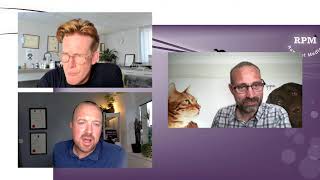
In this live discussion, host Nick, Dr. Conor Brady, and Brendan critique a recent APHA/Surrey study that reported a high occurrence of Shiga‑toxin‑producing E. coli in raw meat‑based pet diets. They argue the study is biased, over‑relies on PCR enrichment, and fails to compare raw diets with dry food contamination rates. The trio then shift to a deep dive on fermented foods for dogs—kefir, sauerkraut, kimchi—covering nutrient breakdown, probiotic benefits, dosing, salt and histamine concerns, and the impact on gut flora. They discuss PCR basics, the relevance of bacterial load versus detection limits, and the role of probiotics in out‑competing pathogens and mitigating antimicrobial resistance (AMR). Practical recipes for kefir are shared, along with guidance on using commercial probiotic products, self‑derived (host‑specific) probiotics, and fecal microbiome transplantation. The conversation ends with a brief look at sustainability of meat sourcing for pet diets and a reminder to support the show via Patreon.
Chapters
Yeah, good. Are you very well?
Yes, absolutely, I am. Um, I am very well, absolutely. Did we enjoy our weekend is the question, and are we fully recovered? Of course we are, because it was a very healthy, very, uh, very fit, uh, weekend. Those couple of laps of Birmingham you did, Nick, were incredible. I mean, that was formidable.
Just trying to keep up with you, Conor.
Yeah, but that was great fun, lads, wasn't it?
It was, it was a hoot, and I think we got a lot done. Yeah, I was laughing a lot.
It's crazy the difference, isn't it, that we look— you know, we have these half-hour, hour meetings now and again behind the scenes, but there's nothing like sitting down, uh, with a pen and paper and just the ideas just spill out. I've got a phone full of notes, which is exciting, you know, so I can't wait to get at it. But it was a touch, uh, interrupted by, uh, a paper that came out that was very relevant to what we're going to talk about tonight. Just before we get talking about that, sorry guys, if I could patreon.com/rawpetmedics. That's where you find us. Anybody that might have a price of a cup of coffee each month, that'll be all we ask. And if you can, that's great, and if you can't, absolutely no stress at all. But that's how we keep the show on the road, guys, so we really appreciate those kind of contributions. But yes, as I mentioned, everything was going fine in Birmingham until we shared this study that came out. Do one of you guys want to quickly tell us what that study was about?
Let me give you a little rundown on the study. I've got it here, I've got all my notes, so I'm not going to be able to see you so you can make faces at me. I'm going to go into Evernote here. It was called— the, the publication— High Occurrence of Shiga Toxin Producing E. coli in Raw Meat-Based Diets for Companion Animals: A Public Health Issue. And it came out of the APHA near Guildford and Surrey University. And I feel that from the outset it was, uh, it was biased against raw food. It wasn't an, uh, an, uh, a study into the risks, the relative risks of Shiga toxin in raw meat versus, uh, Tesco's chickens, or it was just saying We've got these horrendously pathogenic bacteria and cofactors and resistant bacteria in these meats. Isn't that terrible? And I was a bit disappointed in that. So that's really the background for the paper. And do you want to give one, the first criticism there, Conor? Because there's quite a lot of—
yeah, I mean, I think just as you're about to allude to there, Nick, like, they— the study was all about raw dog food, and that's okay. You can only do so much in a study. But I do think in your introduction and discussion, you do allude to the fact that there's problems in the meat sector, which is where these bugs come from, because, you know, raw dog food manufacturers don't put these things in their products. So that could have been touched on also. As always, they could have touched on the fact that dry dog food is repeatedly contaminated with such microbes. And in fact, when you compare it by volume, there's like 35 or actually 70 times by tonnage of recalls of dry food for salmonella in the last decade than raw, even though they stopped looking for salmonella in dry food in 2015. So there's massive problems both sides of the border, which at least our side accept, you know. And so it, it, it's a little bit stinky when that is not brought up and to balance the discussion as a scientist of old back in the day, you used to have to balance it and put things, give a perspective, some context, context, context, context, and now it's about, this reads poorly and make an illusion that there's been a great lot of sickness from raw dog foods when we've already got two of the biggest surveys that you could possibly have dreamed of, showing that it's absolutely very, very safe. And these are studies of whole-life dogs, not just a segment of 3 months. Incredibly safe thing to be doing, maybe even protective. So none of that made the study, which was the very first thing just from the introduction I was squirming. What about you, Bren? What bits?
Yeah, absolutely. I mean, it did start off, the preamble was very much, you know, this is, there's a lot of maybes and maybes in here, you know, almost but trying to allude that they feel that these bacteria are going to cause illness in our dogs. And, you know, something we've talked about already was the, you know, this level of, you know, they say high occurrence, but actually in order to get access to do the PCR in here, they've had to brew it for 24 hours at 37 degrees in an enrichment and broth in order to then seed it out and have a look to see what grows.
Yeah, so how would that be different from how Mrs. Jones feeds it to her dog? Just to, just to really—
it should be—
well, apart.
So I, I mean, if, if you're telling me that Mrs. Jones unpacks her frozen meat and then effectively brews it on the kitchen side in front of the sunshine and manages to get it up to 37 degrees but not only that, but adds an enrichment broth to it to actually encourage the growth of bacteria.
It bathes it in a rich gravy to encourage bacteria.
Yeah, yeah, exactly.
It just isn't happening.
And then this food, and then, you know, from this new mix where, yes, you have suddenly grown this bug which shouldn't be in there. Okay, let's say you've grown it to a point that if you were to eat it, it might make you sick. 'But if we could just rewind the 24 hours before this stewing that you did when this was perhaps present in such an infinitesimal amount that you had to use PCR,' which we've contacted the authors about and 48 hours still no answer from them. But we'll give a very quick thing about PCR. We're not going to be experts here, but if 24 hours before that brew, if a bit of the DNA of that toxin was in there, that is, and a dog eats it, a dog has a whole a very robust way of dealing with these toxins. It's got good floors and acidity and competitive exclusion from the microbes that are there. So you have to have to eat quite a lot of salmonella to get sick. Say, for example, after you brewed a piece of meat for 24 hours at 37 degrees, that's a piece of meat that's going to put you on your bum. Of course, PCR, which is quite in the headlines lately with COVID is a tool that they use in hospitals if they think you've got a very bad flu-like cold, pneumonia-like cold, and you're about to, you know, you're in trouble. They recommend PCR to find out what it is, and they replicate it up and up. They look for the, the actual nucleic acid of the actual bacteria, tiny, tiny bit of it, and they replicate it, replicate it. Amazing machine. And they say that if you replicate it too many times, well, you could be looking at a dead bacteria, you could be looking at a single leg of that bacteria, it's almost irrelevant. So if they only have to replicate it a few times, well, there was lots of virus present, so that's what it is, it's clearly flu. If they have to replicate above 30, 35, or above, as many countries are doing for COVID, The inventor and many other people that do PCR say that's just an irrelevant finding because it's there in such a degree, it'd be like finding, you know, we're full of viruses if you look for them. We're full of bits that have, you know, hugged one of you there a couple of days ago. Of course you're going to get DNA. So anyway, many questions and sadly no real answers at the moment. So it was a bit of a stinker, but— Can I just give you a little bit of background on PCR?
Because I think people are going to be familiar with PCR from— what's it— CSI, Crime Scene Investigation. It's basically if you find half a fragment of hair at a crime scene and you think, aye aye, this might be from Fred Bloggs. When you've got half a fragment of hair, that's going to contain the most minute amount of contamination, which will contain the most minute amount of DNA from Fred Bloch's. And in the old days, they'll go, well, there's not enough to, to, to, to find anything to define. They discovered this thing. This came out when I was, when I was doing my BSc in the '80s. And PCR is called the polymerase chain reaction.
Okay.
And polymerase, it's an enzyme which makes polymers. Okay. It takes a little bit and makes more and makes more and makes more and more. It's really, really clever. And they just happened to find it one day. And it's a naturally occurring enzyme that DNA uses to replicate itself. And what they do is they set it up in this chain reaction, PCR, polymerase chain reaction. And it means that you can find the most minute, tiny little pico fragment of DNA, which wouldn't, wouldn't kill anybody. Yeah. And when you're in CSI, it means you can nail Fred Bloggs, because you multiply up. But as far as, you know, in this kind of study, you find these minute pieces that the dog would laugh at, even on a bad day, would laugh at these fragments of bacteria.
It could be dead.
Or Shiga toxin. And we multiply them up and go, there you have it. Yeah, it's Shiga toxin E. coli. It's deadly.
Yeah, because cattle can share these microbes, can't they? So like, whatever the cow beside you has, that cow is going to have too. They're licking each other's faces and like, that's how you share gut flora, like so, but it doesn't mean you're in an infectious state. If you have to amplify up the mix to some ridiculous degree, it doesn't mean I'm infected with COVID it just means I have remnants of this thing, it might have bounced off me. So that's what some of the drama is behind the scene, COVID-related, which we swore we would never talk about. But talking about this, like, you know, it does bear, it's very important that you write down how many times you amplify it, and the fact that you use PCR at all. I mean, surely after you stewed it for 24 hours at 37 degrees, it'll be hopping off the agar plate.
To some degree, what they're trying to do there is actually identify the subtypes of those bacteria. So they're actually trying to give an identity to those bacteria in the PCR. So I guess, you know, but again, it's trying to work out how much do they have to drill down to find that information.
Yeah, but identifying a bug and being able to say that the significance of that bug in the original material before it was, it was, it was, you know, cooked and PCR'd. I think that's really difficult. And they always in these papers, guys, they always talk about risk and they never quantify it. You know, getting out of bed is a risk. Getting in a car is a risk.
Absolutely.
Getting on an airplane to fly to Birmingham is a risk.
This may result in health catastrophes, but it hasn't.
You know, today, so these huge surveys looking for those hotspots around our practices that, you know, for all those raw feed feeders, you know, they've just not occurred for 30 years, you know, decades, and, and yeah, they're still pointing the finger. Maybe, you know, we were talking about, they were walking across a farmer's field, you know, with all of those cows, yeah, and they PCR'd the dog, you know, after doing that, you can imagine, you know, how many E. coli there's going to be on those dog's paws, you know, then they're everywhere.
They're absolutely everywhere.
What's the significance? Yeah, exactly.
Yeah, yeah, that's just so—
yeah, Conor, you had a good example just off the top of your head in Birmingham about AIDS in the States. They've done PCR studies.
Yeah, they have done PCR tests of people, like, again, depending on how many times you amplify it up to find a vast array of viral fragments in people. So people walking around with fragments of AIDS virus, fragments of, you know, strange viruses that you'd expect you really— I never suffered Lyme disease. Yes, but you actually have a fragment of the DNA because you pick up, you hoover this stuff up, you're breathing it through the air, you're eating food that's been touched by something else. And so your body just assimilates all this. And so it's in you and around you. But as you'll find out if you were to have Lyme disease, these things can suddenly crop up in you. But you go, why did I suddenly get this infection? They suspect that you might have had it in you all the time and it was just waiting. So it's incredibly complicated. It's an amazing thing, you know, it's— and it touches on exactly what we're talking about tonight because we are talking about flora and infections and bacteria like we know what we're talking about. When actually this world— you guys would know more than me about this because I mentally, particularly for the book, I said I would not look at this world of gut flora and microbiology. I did it in college, but I couldn't do it justice because it's moving so quickly. Every year there's just— every day there's just studies that are so incredibly important that are coming out. And so I think, you know, there's a lot of drama about microbiology at the moment. It's just not relating in this instance to the disease. And I kind of feel like until we hear back from the authors and we have another good think about it, maybe we'll write up a quick response. I'll certainly write up a response to it when I hear back from a couple of other people that are microbiologists and can help me with some of the statistics used and that kind of stuff in the paper.
And we've got an epidemiologist looking at the paper as well. Yeah, she can route it out. Yeah, I've just thought of another study, guys. There was a study they did a few years ago looking at peanuts. You know, you go into a bar and there's peanuts on the side to make you—
Yeah, I heard about this.
Salty peanuts.
Thirsty. Yeah.
And they looked at them in great detail and they found significant incidence of urine and semen contamination of peanuts on the bar. In even the finest of establishments.
Oh my God.
So I think it's very funny and you'll never eat peanuts in a bar again, obviously, but it just means if you look hard enough, you will find stuff.
Yeah, yeah, definitely. Dogs' paws, you know, they're running around the ground outside and, you know, it's just— but that's like they bring—
It does suggest that the men are the ones that eat the peanuts on the bar.
That's not really the case, Brendan, if you think about it.
Anyway, lads, just a thought, just boys, just a thought.
You know, we were talking about studies. Maybe we should, we should get some kibbles, 10 kibbles, and send them off for PCR looking for Shiga toxin E. coli.
Absolutely, I totally agree. Susan Tickson did that 10 years ago called The Great Pet Food Test, and she did something similar. But there's lots that can be done with it because it can be an expensive process to do, and we can talk about all this. But, uh, and she said though she found a dizzying amount— out of 12 products, found a dizzying amount of pathogenic bacteria, drug-resistant bacteria. Type in Susan Thixton, the Great Pet Food Test, and you'll see. But, you know, these are done outside of colleges, and it does warrant why aren't colleges looking at dry food if 80% of pets are fed this, if dry food is far more likely to contain salmonella by volume, very multiples, including allowing for the fact more of it is sold. Why aren't they looking at dry food? You know, when people are being laid out by 132 people over 10 years, half of them toddlers under 2 years of age, why aren't they looking at dry food? Why isn't these warnings here for dry food? So that stinks. And, uh, look, okay guys, we've given that enough air for the moment and we'll come back to it.
But let's just reassure some of these guys that are watching in the UK as well, these were samples from Germany and Switzerland.
Yeah, yeah, yeah. Um, you would think that their meat would be, uh, you just, you see Germany and Switzerland is absolutely perfect. So it's, uh, look, we'll find out what's going on. We'll give you more details. And if there's legitimacy to the study, you're going to hear that too, because we've got nothing to hide. We're the ones talking about it. Um, so, okay guys, we're going to be talking about fermented foods tonight. And I'd have to say, of the three of us, I'm probably the most reluctant. First of all, Nick, where are you on fermented foods? You feed them?
I'm all for it, actually. Uh, I think sauerkraut. It's a great idea for, for your dogs, for you. And because I think that herbivores— no, carnivores have been eating herbivores. Herbivores have been fermenting vegetables for millions of years, and carnivores have been gurgling around in their guts getting absolutely covered in this stuff. So, you know, you can argue whether they eat rumin contents or not. I think they do a bit, but even they have massive exposure to these things.
So I haven't got a problem.
Conor's on his own here, as usual. Yeah, I'd absolutely say, I mean, rabbit stomachs, you know, I'm sorry, but I've got a dog right under my feet right now and she's quite happily eating entire rodents, entire rabbits, You know, there's not a piece of stomach left afterwards. And when it comes to, you know, if there's a venison tripe out there, she'll eat that tripe. She won't, you know, and that's going to have some of that material in it. It's not going to be absolutely washed off and bleached and clean.
Yeah.
So, you know, I think they do get an element of benefit from that fermented veg material. Okay, and I call it fermented because I think that we recognize that the bacteria go to work on that plant material through a fermentation process to produce quite a lot of micronutrients. We, Conor, we talked about this very briefly, you know, we were talking about, well, how do ruminants, you know, herbivores, manage to get all of these constituent components for their joints and things that we'd expect that we're going through or carnivores are going through, and we're talking about them needing meat to get those nutrients on board relatively quickly. And yeah, we touched on, well, there's quite a lot of micronutrients which are generated from that gut flora.
Yeah.
Through a very extensive long gut, giving much more time for absorption from any plant material.
Yeah.
Which, let's face it, our dogs don't have. No, they, they have to get that material across their gut in relatively easy form in very short order because they've only got 2.5 lengths of their body for their gut length.
Yeah. So this is in relation to me bemoaning the fact that I went through 2 or 3 knee operations but never fed my knee the ingredients needed to recoup it. So all the stuff I preach about in dogs and need to get it all their life— bone material, glucosamine, chondroitin, collagen, hyaluronic acid, vitamin C. Glucagon glutathione, all those nutrients are in joint material and bone. We feed it to dogs and they take that material and they build, they, it's like Lego, I say, you know, you eat the joint material that makes their joints, eat the bone that makes their bone. But I was a vegetarian and I was looking at my knee going, I never fed you knee, I'm very sorry. But then I had a thought, as I said to the lads, and I thought like, well, where do herbivores get it from? It turns out that those nutrients are available in tiny dose in some plants for sure, lots, very, very surprised to see, you know, glucagon glutathione, even glucosamine chondroitin in lots of different plants. But just as you said, Bren, then the herbivore takes this material and spends many, many hours offering it to the gut flora, who then can give you the other nutrients that you're missing. So yes, that's definitely where herbivores get it from.
So those plant nutrients, those plant, uh, the bacteria within the, within the gut, within the rumen, and they're going to be breaking it down. One of the key products is butyrate and propionate. Yeah, that's it. And this is the argument that all mammals eat fat. Yeah, yeah, obviously carnivores do. And but if you think of it, cows don't absorb grass, they absorb butyrate primarily, which is a fatty acid which they will then assemble into fat.
Yeah.
And they then break down triglycerides into Krebs cycle and start manufacturing proteins and things from there?
Yeah.
Does that sound about right?
Yeah, I mean, oh, there's— I'm not going to bring up that wonderful poster of, um, the biochemical energy sideways that all fit together to— in order to, um, build up and break down proteins and the pyruvate cycles and alongside all of the Krebs and everything else. But we're not going to go into that tonight.
You've got the basics, you can pretty much build up joints and— Yeah, yeah, yeah. I don't know whether you noticed, they've got quite a lot of skeleton.
Big joints.
A lot of joints. Yeah. Yeah. So they're going to have to have a pretty efficient way of turning grass into something. Yeah.
Into, into— Here I am in the middle, an omnivore who is no doubt worse at doing that because I'm not giving and I'm not eating the building blocks. And so you would suspect that I did myself a disservice. So that was kind of the start of this discussion. But in relation to your comment on fermented foods, right, so as you're saying, the dog is a carnivore and he's not designed really for plant matter at all, so he doesn't have a, a cecum, which is a thing like a dead end. It's a pouch where bacteria like to be because the food gets stuck in there and they nom nom nom. They don't have any dead ends really at all. They've just got this straight poop chute and it just goes straight through very, very quickly out the other end. Typical carnivore. So the top question that people would have about fermented foods would be, does the dog's gut, you know, is this of benefit to a dog's gut? I mean, what a strange food to feed an animal. Okay, I understand they get a tiny bit from eating rabbits' intestines and they eat whole rats, they eat whole birds, I give you that. I think it kind of stops at rabbits. I can't imagine them tucking into a full lamb, but anyway, 'But yes, they get some of this material.' So are you saying that a small amount of this material would offer the life on that material, which is what we're talking about, as well as the nutrients? Because if you ferment it, you're providing the— you're breaking down the food substrate, pre-digesting it, so to speak, before you give them the dog. Same thing as cooking it, you're making it easier for the carnivore to get at the goodies because they are really bad at plant fiber. So fermenting suddenly presents these nutrients to the animal. I get that. It's when people start talking about flora and the probiotics of it all, like, does it pass through the absolute battery soup that is a dog's stomach? 10 times lower than us. So pH 1.5 to 2.5 is a 10-fold decrease, not just one step of the ladder, it's 10 times more acidic. So, and then it's got to hit the dog's intestines, and we're assuming that this stuff that's good for plant eaters and omnivores is good for dogs. Where are you on that one?
I'll go into that. I think there's two elements. I think there's the element which is the nutrient that, you know, adding some of this stuff, okay, into your dog's food, which is effectively— so this is, so this has got everything from fermented beetroot, cabbage seed, you know, I've added ginger and garlic, and, you know, I've got all sorts of things like pumpkin seeds and stuff like that. So effectively done Nick's famous nuts, herbs and seeds, but you can do that in a ferment. And so rather than trying to blend it to break it down, you know, you can allow the bacteria to work and to ferment on that and effectively open up that cell material so that it is more easily absorbed. But in that fermenting process, you know, those bacteria are producing all sorts of things in there of their own. It's not just the, you know, those fatty acids that I was talking about, you know, there's all sorts of other vitamins and stuff also in preservation which you're not destroying through a heat process. Yeah, that is coming in. So that's one element, and I think that's separate. And I think if you feed alongside a big protein feed, you've got to be a wee bit careful that you aren't talking too much about the probiotic effect. There are some bacteria that can stand the acidification, but not all. Yeah, but I think we also look at, you know, when we're using some of the other— now just let's look at the kefirs and things like that, that if you're giving small bits, you know, things like kimchi offerings and all of those, if you're giving those at the end of a day, you know, as a sort of last-minute snack, that, that working its way through in a liquid form or adding it with bone broth on the last thing on night, that doesn't stay in the stomach that long. You know, it literally will in that form, I think, feel go through and it does supply bacteria to populate the gut. Now, how much those bacteria are needed for a fermentation process? No, I think I would look at it more of a competitive stuff. There's going to be a degree of bacteria in the gut. There is. I mean, there is no doubt there's bacteria in a dog's gut. I can guarantee you that.
Yeah.
The question is, are we allowing that to be swayed more towards friendly bacteria and away from pathogenic? So the different, you know, the this positive bacteria that do help and do release vitamins, B vitamins, all sorts of things that go on there, or as well as, you know, outcompeting that odd sugar toxin-releasing E. coli that comes across. If there is a populace of bacteria that you've got in one form and you put just a few salmonella in there, if it's outcompeted by loads of other bacteria, that bacterium is just going to go, just not enough.
Yeah. So, yeah, yeah. Brent, Beverly and Michelle are desperate for a very simple recipe for kefir. If you, if you, if you could.
Can we save that? Can we save the recipes till the end? Okay.
Because I want to write it on Patreon.
But, you know, it's so simple. No, it's so simple. This is a one-liner. Okay. On Amazon you can get kefir granules. Okay. They come through to you. You can store them in the freezer. You can purchase them really easily. All you do, you take some goat's milk, okay? Preferably organic, pasteurized, you know, unpasteurized, unfermented, and homogenized.
Unpasteurized milk.
So look, go to your local goat farmer. All right. They will— there are some around. I have got clients that have found them. They are scarce, but if you can get to them before they go through supplying their milk away, and you know, we've just been reading a couple of books that will come to that about, you know, how farms can diversify in this country and improve things. But if you can get that raw stuff, add in some kefir granules, literally just leave it to ferment for 3 to 4 days, you have—
in what, a tin, a jar with a lid on, lid off?
In a bottle, just a glass bottle with the lid off. Don't seal them, okay? You might end up with a splat across the fridge.
Can I use unpasteurized goat's milk with the kefir grains?
You can, but there's all sorts of implications of what you're going to end up feeding your dog afterwards if it's gone through a pasteurization process and all of that. And the changes that that can have to the milk.
Okay. Somebody is mentioning salt because sauerkraut, kimchi and things like this, there is an element of salt in the recipes. I don't think there's enough salt to make significant difference. Not for anybody if you're in end-stage renal failure.
Totally. Good salt gets a bad rep. Good salt is so nutritious.
Himalayan salt.
Yeah. Himalayan rock salt, pink salt, whatever you call it, as long as it has a name and it's crunchy looking. So nutritious. And you're now on a zero salt diet, raw dog raw feeders are. Have you seen what some animals do to get at salt? So they shouldn't be on zero salt diet. Salt's a really good— it's a good food in moderation.
You're not going to feed that in one go to one dog, you know. This is where you take a dessert spoonful of this and you add it into the diet, you know. So, you know, for the amount of salt that went into the processing you know, to ferment this, you know, it's not really the end amount that the dog gets is not that significant.
And if in doubt with the salt thing, you can always just offer it on the side. And if they go for it, great. And if they don't, great. Yeah.
Yeah.
You can have it instead.
You know, it is interesting with the adding of this fermented foods, right? So like I'm worried about messing with the gut flora of the dog, certainly with fermented foods and probiotics and that kind of stuff. I'm worried about that, particularly fibrous items like cabbage and those kind of items that go in. When you offer that fermented food to the dog, do you think that all the plant fiber is broken down by the time you give it to them, or just a small amount? Like, are you adding in a heap of this tough-to-digest material into the dog, which is ultimately going to create gas, which I am worried about?
So I've never really—
I've never had that.
In fact, actually, do you know what? I think that I wouldn't say— I mean, God, you know, the number of bull breeds that I've seen in the practice that have been on, you know, various diets and the flatulence that they give off when they're not on this stuff. And, you know, I think you still get some flatulence when you feed tripe, you know, to some dogs. And I think it's all about how those bacteria are reacting in there. But I think if you get the balance right, I think you find that they're very little flatulence giving off. Even when you do. And I don't think this has ever given my dogs flatulence.
So you're talking small amounts of this material anyway, aren't you? How much are you talking? Give me an example for my 10 kg cocker.
Yeah, well, literally, as I said, I would give probably a dessert— sorry, a tablespoon of that product in. So, but I always put it to the side. I don't stir it massively in. I just put it to the side. That allows them to pick and choose. For mine, they always eat it. Yes, never left.
Well, it'd be interesting to see what the guys that are listening, uh, that haven't given this to— I'm going to give this a go and I'm going to video the dog and I'm going to see if Dudley actually— Dudley's a poor choice of it because Dudley would eat anything. If I drop it on the ground, he's eating it. He's— he— boy rolls, honest to God, the dog is an animal. So, but I'll offer him the fermented food and let's see, uh, if he eats it. Um, and so, because I am definitely, um— so we want to get a recipe for this. So maybe afterwards you put it up on Facebook or Patreon, a very simple like the best, the ideal kind of recipe for this so we get an idea. A lot of people are talking about kefir and they wanted to know, is kefir good for dogs? I think straight out of the traps we can say that the sheer volume of anecdotal evidence from the amount of people that are on here, everybody on here is intimidatingly well-read, so with the amount of people on here that are speaking volumes about kefir on my page is, oh, kefir, kefir is great, kefir is great. They're not imagining it. So there's no doubt kefir seems to be working. And there's a few studies of probiotics in dogs where you can add food with life into dogs, and it does change the gut flora of the dog, certainly changes the feces, and it's dose dependent. So like Bren was saying, you put it in a liquid, it might shoot through the dog's digestive acids quicker. That's a good idea. Giving probiotics at dinner time might be less of a good idea because there's like— that's— you're in high machinery churning through battery acid designed to neutralize the thing. So yeah, so it might be dose-dependent with the kefir for all we know, but there is a savage amount of studies on kefir just in humans. Can I just dash through a few of these guys? Just give me one second here. They found loads and loads of different types of bacteria in kefir, as you'd expect. And the question is, does it get through? Well, in rats and humans, it absolutely definitely does. And we know that feeding kefir to rats and humans decreases Clostridium perfringens, decreases the ability of Salmonella and E. coli to adhere to— so when they actually give Salmonella or E. coli to rats, the rats that are eating kefir beforehand, Salmonella and E. coli can't get a grip, can't— don't start to multiply, which is really interesting. But they also— rats had reduced symptoms of infection including intestinal renal damage. There's just so many things about Lactobacilli in kefir has the ability to protect cells from Shiga toxin produced by E. coli, which is the whole point of the study that we were talking about in the first half of the show there. So kefir seems protective of the toxins from E. coli. It also helps with allergy in humans. It also helps with wound healing. So it's just, it seems to be incredibly effective. It also contains a lot of yeast. People worry about the yeast content of kefir. So as opposed to yogurt, kefir can contain a lot of yeast. And the 3 dominant yeast species are Saccharomyces. Saccharomyces boulardii is really famous these days because that's your soil probiotic that people are now giving in their probiotics, particularly for IBD in dogs. There's a great study on that, very effective. So Saccharomyces boulardii is in kefir. That's a positive good yeast. There's also Candida and another one I can't pronounce there. So there is yeast in it, but it's actually antifungal to feed kefir. So people with fungal infections drinking kefir, it's actually via probably competitive exclusion with the good guys, or perhaps just the compounds that these guys are producing. It seems to be antifungal too. So people are worried about dogs with yeast, it's not good.
And that's a really good point to just bring to the fore right now is, look, you know, we look at this with the probiotic sprays for reducing yeast on skin surface and, you know, adding those things in. But I want to also point out about AMR here. So antimicrobial resistance— people have assumed that this is generated by our use of and overuse of antibiotics. But as I was talking to you guys, this battle has been going on between bacteria and fungi and yeasts, okay, for millennia, for billions of years. Yes, ever since life emerged in these archaic forms, they have been battling with each other to outcompete in a certain environment. And how do they do that? They produce chemicals to attack the other types of colonies, okay? And they therefore develop genetic material This is why our antibiotics came from originally fungal material, because they realized that there was a toxin that those fungi produced to actually reduce the bacteria.
Yeah.
So that's, that's what it's about. So AMR has been battling around. What we've done is we've sped up the process because we've artificially introduced these toxins to the bacteria. And haven't thought about other ways to do it. And, you know, you can starve these bacteria out by overpopulating with friendlies.
That's right.
And this is why probiotics are now so much in vogue to use that. But we've then seen other benefits that those probiotics don't only improve bacterial disease, but even viral disease, you know, norovirus being improved. Improving the health of the gut around them because they work symbiotically. So actually, you know, the viral stuff, the fungal stuff, as you said, is reduced massively. So there's so many benefits.
So interesting. And as you keep mentioning, when they— when you give probiotics, it's dose dependent in dogs, is a study I'm reading there. But as you give it to them, there's a lot of different ways that those probiotics are helping. I'm actually answering my own question about good for. And as I say this, so when they go in there, they can outcompete the nasty bacteria that are there. The ones that you're putting in there, it may not be the ideal home for them, so they mightn't be there in a month. They show that with a lot of bacteria that you feed dogs, within a month a lot of them are gone, but one or two groups will stay. So they don't boost, they don't just suddenly get in there and they all grow, here we are. A lot of them, it's not the ideal environment, so while they're there, they produce a few byproducts and we know what byproducts they produce because from studies of rats and humans, it might be effective against E. coli or effective against stress or whatever. And we use those probiotics and their byproducts then help very temporarily. So their compounds help temporarily, but they're going to be gone shortly. So those sorts of probiotics are only useful as you give them. Is there a danger that you can keep feeding a dog? They say that the best probiotics are made from the host. That those have better adherence than any kind of broad spectrum probiotic. So are you of the belief that there is no harmful effects of using a broad spectrum probiotic when 80, 90% of that probably wasn't relevant to the situation?
But our bodies constantly are changing. So with disease that affects our gut flora, you know, for a healthy life, I think everybody needs to start understanding living a little bit dirty can be really, really useful to be constantly re-exposed to a variety, a wide variety of different bacteria to help repopulating the gut, you know, and actually that could be really useful. I mean, let's not go too much into depths of different therapeutic things, but, you know, back in the '20s, there was a great study done by Patterson's— I think it was a man and wife post the flu epidemics and the First World War where they started to look at the gut flora they could culture. They weren't able to look at all of the bacteria and they looked at the differences that the gut flora changes with disease and actually how if you can change the gut flora, you can improve the health of those individuals. Yeah, that's— that was happening decades ago, and we sort of lost that because we all, you know, went into antibiotic overdrive for various reasons. We're not going to get into that now. And, you know, we have just started to re-emerge into some great books. We've mentioned, you know, a few months back, Robin Tuckhan, if you want to look at Microbiome Solutions, you know, that gives you a great insight into why you want to be constantly re-exposed. Helia Enders did the gut book, you know, that says exactly the same of how constantly re-exposing can help for our modern-day challenges of various chemicals, various environments, you know, things that are mentioned in Forever Dog if you guys are going to buy that book, you know, looking at, you know, the challenges for those that have been subjected to antibiotics why it's so important to get re-exposed to different bacteria. And then we're using things like Phytospore, which do exactly what you've just said. Rather than introducing huge amounts of bacteria, they're looking at pharma bacteria that actually create an environment around them to encourage the natural growth of the gut flora that's already there. So, you know, there are products out there that are trying to do exactly that.
Yeah. Yeah, so you're saying, Conor, about self-probiotics. Yeah, I think one of the, one of the ultimate of self or almost self would be fecal microbiome transplantation, which is definitely worth everybody having a look on, on YouTube, doing some Googling. Fecal microbiome transplantation, they do it with people. If they have people who've got C. diff infection and they are resistant to every antibiotic under the sun, And in desperation, initially 20 years ago, they thought, okay, we've got to do a poo transplant. So they either give you capsules, crapsules, or they'll give you an enema to get to reseed your gut with a donation from somebody with a healthy gut. And they found to their, to their complete surprise, after they've tried 20, 30 different antibiotics for years on end, they found that these people were getting better. Incredibly. So it's not fecal microbiome transplantation. African available in the— well, a bit in the UK, but it's quite big, big news in the USA these days. Definitely worth looking at.
They're doing it hundreds of years ago in Africa. Hundreds of years ago they were doing this. Yeah, it's nuts. So, and a company in Ireland, give them a plug, Irish Equine Research, one of the top labs here, but they are taking— making probiotics for horses initially, now for dogs. I've talked about them on my website a few times. Where they take a sample from your dog, they culture up his gut flora, they tell you what's wrong with the dog first of all, and secondly they create a probiotic from his own gut flora and send it back to you in a bottle of pink juice. Not only that, but they then store your dog's correct gut flora of whatever way they get measure that and they store it cryogenically in tiny little pillules and anytime something goes wrong with your dog you email them and for €25 they post you out your dog's probiotic from his own gut flora.
That sounds like a brilliant idea.
It's crazy, but they've made such inroads in it is because racehorses are so inbred, they're so, uh, hypersensitive that they're— yeah, that probiotic is such a necessary bit to their lifestyle. So they dominate that market, but they are now moving into dogs. So we did a test on a couple of very seriously ill dogs, and, you know, maybe a 50% hit ratio, which is pretty good for dogs that were like not being able to help with anything else. So yeah, there's so much being done with all that, and And then as Brent says, the use of probiotics are the new antibiotics. Antibiotics kill life, kill, kill, kill, suppress, suppress, suppress, as if you can suppress bacteria. Now we realize, whoops, that didn't work. Anytime you're adding in a chemical, it never seems to work long term. Now it's like probiotics, like what Answers Pet Food are doing, put good bacteria in there. And then the longer the meat is on the counter, the cleaner it gets. That's a baffling statement. You know, it's It's all good. Two hospitals in Britain clean themselves with probiotics.
This is also that reiterating, you know, food should not be devoid of life.
Proudly chemically inert. What?
Absolutely no. We're trying to encourage natural foods to be full of life, you know, to still stimulate that. I think, look, we're getting very close to the end. This is something that we must mention because loads of people want to know about this whole thing of histamine, you know, and is that, you know, going to cause a problem for our dogs? And I think we have to split this.
Well, Brendan, I think this is a half-hour conversation.
Can you get it done in 5, Brendan?
Let's do a very quick lead-in to that full in-depth half-hour conversation. Guys, my belief from reading things, and if you want to go into more depth Toxic by Neil Nathan, I've mentioned before, that's got a nice line in there about these. It's all about if your dog is already sick with a disease which has heightened their mast cells to be ready to release histamine, then pretty much anything that you spike into their diet or spike into their system can cause that histamine release. Okay. There is not usually within the product enough histamine in isolation to cause a huge histamine reaction in a healthy individual. Okay. In a healthy individual, there just isn't. And usually alongside that, you will find that there are active enzymes. So within these sort of products, there will be diamine oxygenases, which actually metabolize the histamine out of an active form. And then we've got to also realize that histamine does work within the goblet cells in the gut, in the stomach, to increase acidity. So this is why we've often thought that there are some benefits to adding apple cider vinegar and other fermented foods into the food to increase acidity, so reduce the pH of the stomach. So actually making it so that they can actually digest and break down that material in a far better environment, actually kill off some of those pathogenic bacteria that we're worried about.
Yeah. Yeah.
Okay, guys, I've just put into Patreon an idiot's guide to histamine intolerance. I've just put it on there right now. So it is there for all the patrons and I need to read all of those guys.
Yeah, very good. Urine, urine, nuts, and poo pills go, Nick. Yeah, absolutely. Serious food groups there that I hopefully—
keep it real.
Yeah, absolutely. Um, okay, look, I'm a convert, lads. I'm gonna give this a go. I'm gonna give this fermented foods a go. Um, I'm kind of hoping he'll have a little bit of diarrhea so I can say I told you it would make him sick.
But like, nobody wants that reaction though. It might be getting rid of all the rubbish that you've been feeding.
Yeah, I wonder about that as well. But okay, so I'm going to give it a go. I'm going to take that recipe that you mentioned and it can be— people are making kimchi. I had kimchi one time, was delicious. There was loads of like— it was just delicious. I was just sitting on a counter. Very, very nice.
And remember, guys, some people were mentioning earlier on, if you want to cheat, you can buy some of this.
Show us the brand, Brendan. Show us the brand. Show us the brand. There you go. You can get it in— You can get it in, and they do a few different types. M&S.
M&S.
M&S. If you want to find it easily, they do it even.
Some of us don't buy. I was going to say, I hope you got it in Aldi.
So, okay, that's that. Look, guys, that was really interesting. I loved that. So I'm going to give it a go. Do we know what we're doing for next week?
How about this, guys? Beef. What is the sustainability of eating it and feeding it?
Oh, yeah, yeah. I ran aground on a stair a couple of weeks ago. So now that's a great conversation. Sustaining of feeding meat to our dogs and eating it ourselves.
Okay, do you know, we should be looking at things like the New Zealand model, yeah, the sort of meat materials that they can use.
That looks pretty sad.
What we could maybe think about within the UK.
And yeah, that New Zealand method looks a little bit sad to me, just they're being spun around a very large circle very, very slowly. Have you seen that? That does not look nice to me. Oh yeah. They keep moving them and they want them to get back on the grass at the quick growth phase. So they move that. This thing is moving in a very large circle. I hope I'm not doing a New Zealand meeting to see a disturbance and this wasn't a dream of or some sci-fi movie I watched.
I'm not talking about that. I'm talking about the fact that what they're looking at is reducing the pests of the rabbit.
Oh, sorry.
Possums, all of the invasive species. Okay. To actually use those as your meat sources. For pets.
Use invasive species as your beef?
Yeah, no, no, but no, just rather than just concentrating on beef, concentrating on all farming processes. 45 minutes of beef in isolation.
45 minutes of, uh, I think that's part of the problem that people are, um, I think we do 45 minutes on sustainability and then if we don't clear it up after 45 minutes, we should get a guest on and I know just who to ask. Give me a few days and I'll announce it. Yes or no? So that's what I want to talk about because I want to talk to this. Be great if you'd come on. Well, I imagine— anyway, look, let's not ruin it, boy. Okay, so guys, patreon.com/rawpetmedics, uh, if you are enjoying the show, please, uh, any sort of donations that you give to that is very much appreciated from us. It really helps. And that's patreon.com/rawpetmedics. And other than that, we will be here at the same time next week to fill your ears with goodness and beef.










