RawPetMedics Tuesday night live: Bad Behaviour or bad diet?!
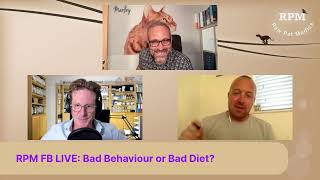
Dr. Conor Brady and the Constantine brothers argue that raw diets improve dog behavior through better mineral bioavailability and reduced water intake, while kibble-based diets increase urination and behavioral issues. They critique industry-backed studies promoting specific pet foods as methodologically flawed and lacking peer review.
Chapters
We're live and it's just the dog. Look how bad he is.
We're in prison. It's too late. We're not going to do this properly. Let's see what they say.
Guilty as charged, your honor.
This is what happens when Nick's the person who's in charge.
No, rubbish.
I'm trying to help and Conor looks like he's in jail. I'm not quite sure where you are, Conor. There's a nice calendar there in the backdrop.
So as you can guess, I'm a little bit away at the moment. I've got a lot of sun today, guys. I'm not pulling a Redner, but I am very brown. As much as I got some special skin, PP20 or P25 or something.
Have you heard of that?
It's like an oil that you put on. So I got it off some guy to fry yourself in. Oh man, it did not do the job. This is the best stuff ever. It's like an oil you put on and it's like 2 hours later, it's like, I'm burning. This is not— is this cooking oil?
It's an intensifier for The Irish.
So I'm boiling hot now, so I'm trying to cool off with a beverage. But anyway, how's everybody? Everyone doing good?
Well, looking at the things, there's lots of people saying hi. So is that Paddington? No, it's not Paddington.
A random dog Karen found online.
It's a random dog.
Yeah. So bad dogs, everyone's got this. We're going to be very busy tonight because everyone's got a— everyone likes talking about bad dogs. It's such a dangerous term to say bad dogs. Bad owners is where we are today.
Of course, a great post by Karen, actually. I nearly shared it. I should have shared it. I'm sorry, Karen. But it's— did a little review by somebody else. I think she shared it, to be honest, of our expectations of dogs. And what we would consider a bad dog compared to a bad child. And you know that, uh, yeah, we expect children to take 18 years to actually get to a point where we're quite happy with their behavior in the house. Um, yet we're expecting dogs to have modified their behavior and stopped, you know, at least toilet trained within the first, um, 18 weeks. Yeah, well, yeah, no, it's not— well, some people are, you know, it's 3 weeks from when they got it, so that's, you know, when it's 10 weeks of age, uh, and they're expecting to be fully house trained. You know, you'd never do that to a child. You at least give them 2, 3 years.
The toilet training thing is interesting. I always use that as a stick to beat the dry food brigade because like, you know, if you think about it, if you're on a high salt diet, you're just going to be drinking vast quantities of water. So if you're going to be precious about your floor after inviting in this poorly trained dope of an animal, he's going to wee everywhere. He's been weeing everywhere in the kennels, you know, and then you expect him on a high salt diet, drinking gallons of water It's one of the glories of being a raw-fed puppy. They drink very little water, so you don't get these copious amounts of wee. So it's much easier to hit the wee times with that. So toilet training a raw-fed pup is decidedly easier than a dry-fed dog. Everyone here can testify to that. I think so anyway.
Yeah, it took us 9 months to toilet train Mouse, the youngest of ours.
No way, no way! What a bad dog. What a bad owner.
What a bad dog and a bad owner. Yeah, more like it. Yeah, guys, I've got an announcement. The reason I'm wearing my cans is that I've just been to the, uh, Wilderness Festival and I've got a builder's tan.
Look at that, lovely.
I'm not doing this, I'm not doing this. I'd have to strip down and stand up.
Of course not. Good.
But I have been invited by the lovely, uh, Dr. Zoolittle Pennywood, who's on this group. So if, guys, if you want some, some details, have a chat with her while she's on tonight. She's very knowledgeable and she's organizing this thing. It's from 15th to the 23rd of August and it's the Pet and Parent Longevity Summit and it is without charge. You can jump on and hear experts and me from around the world talking about longevity. Are you on it as well?
I'm on it as well, yeah. I heard you on it, I contacted them, I said, you asked Nick Constantine and you didn't ask me, I'm not having that anymore. So that's another one.
I think she did. I think I banged my way on.
She asked all three of us. Yeah, she did. And Nick was—
I was the first to get back. Yes.
Yeah, very good, very good, Nick.
Um, okay, and so guys, you can find it at petandparentlongevity.com. petandparentlongevity.com. And I think it's a fantastic concept, looking at what makes us get, uh, live longer and with, with really good healthspan, what makes our dogs live Live longer with great healthspan, not lifespan, healthspan. That's what it's all about. So Katie Woods, person to talk to. And I'd like to just say now, Katie, I know Penny, would you like— Katie is her partner in crime for this thing. Penny, would you like to come on to talk to us next week about longevity and about your summit? It'll be just the first couple of days. If you would please email me and we will make that thing happen. And Brady and I, who are going to be on it, we can give a little spiel. And Brendan will be able to give his thoughts on, on hormesis and longevity and telomeres and all this kind of clever stuff. So, um, you're very welcome. Please just email me.
Yeah, cool. Ignore Karen Reader.
That's the right address. That's the one you've got.
petandparentlongevity.com. Let me just check. It's petandparentlongevity.com.
Yeah, so, um, yeah, I just typed it in. Works. Ignore Karen Reed there in the corner there. She says, uh, Conor groveled. I saw the emails. Just ignore her. She's drinking gin. She sent me an image. So ignore Karen for tonight. And listen, guys, we're on Raw Pet Medics at patreon.com/rawpetmedics. So if, uh, if you can, the price of a cup of tea or a coffee, it really helps us do our thing. It helps us prepare. So some of these take longer than others to prepare for. And so we do appreciate it. If you can afford it, great. Some of you are doing that, and we really do appreciate it. If you can't afford it, don't worry about it. We're gonna be here anyway. We like talking. So, so we appreciate it on Patreon. And you will notice on Patreon I shared— we're talking about dogs, this behavior stuff tonight— so, but I did share my behavior course that I have up on my website, and almost every single one of the patrons saw it. So I think 180 people or 200 people viewed the course over 2 weeks. Weeks, and I was chuffed. So if you guys liked it, I would appreciate if you told your friends about it because that's what it's there for. But if you enjoyed it, that's great because some of the stuff we're going to be talking about tonight would have been mentioned on that. But so what we— before we even get it, before we start the behavior thing, guys, I shared an image on the Raw Pet Medics Facebook page of that little handout that went to a raw feeder in the veterinary clinic. Have you seen that before, guys?
Yes. Should we go through it? Should we just go through it line by line? Just take 4 minutes, just put this one to bed. Come on, come on, come on. Uh, have you got the image?
I've got the image there. Oh, I haven't. It's on the Facebook page now, but I'm not sure if you can share it that easy. It's not the best image, but, uh, I can read out the bullet points and you can leave it to you guys to dissect us. The very first one, raw food diet risks, uh, 7 bullet points. The first one, the raw food diet itself is a combination of rejected carcasses of medicated animals or sick animals. This therefore makes the meat unfit for human consumption. Who wants to go first on that one?
Yeah, I will. So they've been reading the US and they unfortunately don't know the difference between the United States and England. So that's a geographical error because in the United States, in the kibbles and in other meats, you can put all sorts of dead, diseased, and dying and euthanized meats. They don't do it actively, but it does reach the the final product, i.e., if you take some meat from some products and look for pentobarbitone, you can find it. This is the, this is the blue juice that we use. It's, you know, it's very serious, serious drug to find in these things. So there you go. That's the first one. Uh, in this country, the, the raw food producers of any quality whatsoever won't touch that stuff, and you're not allowed.
You're not allowed to handle this.
It's not— but that doesn't mean that some people might get it off the lorry or something. Okay. Yeah. Yeah. So if they've got, if they've got any respect for themselves or for you as the consumer, they won't touch it. And, and further than that, most of the raw food products that I work with or I talk to and all that I respect will use food that is at a level which it can be served to humans. Okay, I won't say human grade because that means another thing. It is good enough for humans.
I would put it in a pan and, and, and yeah, since the BSE crisis, we are not allowed to handle in Europe food that's not fit for human consumption. Meats aren't. It all goes for cremation, not for rendering. In the US, you can send for rendering, you know, roadkill, restaurant grease, 4D animals, you know, dead, diseased, dying, disabled. They can still render them up and sell the meal back to pet food. Not in Europe. It's got to go for incineration if it's not fit for human consumption. So to say that that is even a thing in Europe, I mean, as someone says, are they describing dry food? I mean, it's just so classic. Here's the second one, Bren, what do you think? The second point, it's very difficult to achieve a balanced diet.
Do you know what?
I'm going to shock you. I'm going to shock you. I want to say you're right. It's very difficult to achieve a balanced diet. And that's why so many dry foods don't do it right.
Yeah.
I mean, the point is, the only way you can achieve a balanced diet is through giving variety. Otherwise, you're always going to have the individuality is going to mean there is no way you're going to give that individual a balanced diet for them if you're giving a generalized diet.
So that's true. 94% of canned foods in the UK in 2016 and 62% of complete dry foods are not reaching the minimum standards set by AAFCO. And you have the audacity to start accusing people.
Therefore, you should not recommend any diet that says it is complete and balanced on the tin because that, you know, you can't feed that every single day because there will be some problems down the line.
They handed this leaflet to somebody that was raw feeding, bearing in mind, they'd like to say, you know, here's a little one, Nick. There's no evidence to prove raw food are more digestible than cooked diets. That's just plain wrong. We have the same—
that's plain wrong. Some foods will become more digestible, like celery, for example, will become more digestible with heat. But it's just— and digestibility is not the be-all and end-all. There is more to just whether it can be digested. It's how it's transported, it's how it's stored.
Rapidly digested wheat. What use is that to the dog? Rapidly digested corn. Great.
Rapidly digested glucose. Yeah, you know, yeah, yeah, yeah.
We were trying to say earlier on, I think early in the year we said this, digestibility is not the amount of energy that that food can give, it's about the amount of health it gives to the individual. And I think the problem that we've got here is that too much of the industry is still hooked onto more energy means more digestibility. And of course, corrupted foods through processing are going to be higher on the digestion if that's how you measure digestion. So I think, yeah, you're absolutely— agree with you, they're wrong, but for so many other reasons than they realize.
Yeah, exactly.
Some foods are not digested at all. They're called bone particles, which pass through and help to solidify and give bulk to the stool. So digestibility has its place, but it is only part of a much bigger picture.
Totally, totally. There's that, you just hit point number 4, bones, well, they'll choke on bones, okay, we're not seeing it. The likelihood of the, point number 5, the likelihood of the meat being contaminated with pathogens such as E. coli, we've just killed that, we've put that point to death, you know, we don't need to do that again. Pathogens in raw dog food and it can jump to humans, although pets may not be sick with these pathogens, they may be carriers which risks the health of other animals and also humans. I mean, we've done that pathogen kind of stuff to death. We don't really need to beat that drum anymore. It's just— yeah, what a flyer.
Don't kiss your dog because you might give it pathogens.
Don't snog— yeah, exactly, don't snog the dog. Yeah, so that's the vets. But the vets recommend, by the way, just in case you're wondering what they consider—
yeah, yeah, I got that. I was gonna say, don't miss out on the vets recommend.
Hills number 1, Royal Canin number 2, Eukanuba, which is Mars, Vet's Kitchen and Butternut Box, you know, of all them, you know, at least something that claims to use real food is on the label. But okay, so look, that's enough of that. Who wants to start us off tonight on our main topic?
I'm going to start off, guys, because I'm just going to start off with the real, real, real, real basics, and I'm just going to run you through some papers that I've posted on Patreon. So anybody who's on Patreon, have a little look and you can do a deep dive. But The first paper here is from Wang et al. Go save that one carefully. And she talks about zinc in— this is a human paper, it's 2018, so really quite contemporary— in Nutrients, the journal. Zinc, magnesium, selenium, and depression in humans. Yeah, but I think there is a massive, massive crossover. And we've done before about dogs and depression, they get it without a doubt. But what they do is they they do a review of all the papers of that moment for evidence, potential mechanisms, and implications. So I think this is really big. And in a nutshell, zinc, magnesium, selenium are related to cognitive ability, are related to general health, are related to depression and anxiety. So we need to be aware of these things. Best place to get zinc, magnesium, selenium is a really good raw food diet. And for me, the more pasture-raised— not grass-fed, but pasture-raised— the meats that come into the, the bowl, which then go into your dog, you're going to get those minerals. The bioavailability, bioavailability is going to be much better than a synthetic, as in a vegan diet, for example. There's been some discussion on Patreon on vegan diets and they— dog, vegan dogs live a year longer and what have you. But the nutrients you get in a raw food diet, especially in a pasture-raised raw food diet, are going to be super bioavailable. And so those are things to go for. Another paper that's really stood out for me is Fazalen et al. This is vitamin D and mood status and inflammation. In humans. And I think because we're all, you know, potentially zinc deficient, we're all vitamin D deficient, and, you know, depression and anxiety is rife in the modern Western society. Then the third paper is here, Gajos et al. This is a 2016 paper saying fatty acids are negatively correlated with aggression. And so that's a really, really— in humans, there's quite a few of those. Yes, there's a lot of good stuff there. We know about it. You know, we in the raw feeding community knew about this at least a decade ago. And then finally, there's a nice little paper by Luca, and this is 2020, so we've got even even more current and cognitive behavioral correlates with dysbiosis. So if your gut is wrong, your brain is likely to be wrong. The book to read is— I've said it before, before you guys go into the clients— is called Psychobiotic Revolution by Kryan, John Kryan. Et al.
Oh yeah, is that the one that's the broccoli brain? Is that the image of the broccoli brain? That's, that's, what's that one again?
Pimentel or— yeah, those guys. Uh, no, The Psychobiotic Revolution. It's about 2017, so it's 5 years old now, so it's pretty much out of date, but it's really, really wonderful stuff in there. So, um, lots of interesting— I just want to start with the basics. Yeah, because people sometimes say to me, oh my God, you know, there's so much to to look at.
Yeah.
And as far as, as far as behavior is, if you do the basics, if you get the basics right and you feed the best diet, possibly best raw fresh food diet you can, you're going a long way to helping with anxiety.
So yeah, yeah, what you said about those minerals is spot on. Like, you know, people think that magnesium oxide is the same as fresh magnesium or, or, you know, legit magnesium. They don't understand it's completely different. Zinc, the same. Dogs' zinc oxide is used in dry pet and dogs get 1/10 of that zinc oxide. So they just use loads because it's no harm. Just, you feed iron oxide the same. So it's not the same. We only have to use tiny amounts of real zinc, hence these AFGO guidelines where you have to use so much zinc. And when you're formulating pet food, as Nick knows well, and you're going around looking for extra things to create more zinc in the pet food— oh, the pumpkin seeds or whatever— it's ridiculous. So like, you know, it's not the same thing. It's not handled the same way. I had— but he said magnesium. I said to my brother today, I was talking about what I was going to be doing tonight, and we're talking about minerals, and he goes, minerals like what? And I said, well, magnesium, I suppose, is one of them. And he goes, OMG. I said, we're all very low in magnesium. He went, OMG. Yeah, no, that is the basics. So, and you don't have to worry, you don't have to worry about any of those things when you're feeding raw dog food because you're already feeding minerals in an abundant nature. You cycle through your ingredients and there's lots of this stuff coming in all the time, so you don't have to worry about having feeding the same dry product with the crappy zinc oxide and is there enough zinc for my dog and never add another thing to it. That is insanity. If you're worried about behavior, you want these compounds coming in chelated and ready to go. You know, it's crazy. But what about the carbohydrate thing, Brendon? I mean, that's a huge thing.
I mean, yeah, we're always going to come across these trends, aren't we, that suddenly somebody thinks they're coming up with the next best idea. I mean, there was a whole thing about levels of protein, you know, excesses of protein in diets would drive your spaniel nuts. And you used to think, well, what's that? But actually increasing the energy in the food is what drives your spaniel nuts. If you've got a spaniel like me, not the protein level. So obviously protein that's corrupted in a processed food would be the thing that drives your spaniel or your dog to excessive energy to burn off and irritability and all sorts of other things because the inflammation that that sets up is also a problem. But that sort of moved on a little bit now, and there's this new thing, the serotonin diet, where— and I've had quite a few queries of people saying, look, I want to add some— I've heard adding carbs or carb loading them is going to help calm my dog. And this is an idea behind if you give them a protein meal first And then I think it can vary depending on who's advising this serotonin diet, anywhere between 30 minutes and a couple of hours after feeding, you would add in a carb load of some description, pasta, whatever, into their system. And they see it as calming the dog because you'll get an insulin spike and an appropriate change in uptake of serotonin. Because the insulin gets an uptake of some of the larger amino acids and leaves the tryptophan to be converted and be taken up and provide serotonin because it's a precursor. I know that there is a text we read quite early on when we were talking about carbs a couple of years ago, and there's the book, Nick, what was it? The Grain Brain, something like that.
Brain by William. William, William, William.
My phone is one of our guys.
Yeah.
So Grain Brain by William.
Anyway, I don't know how much of that carb loading actually gives the sort of level of opioid release that makes them appear temporarily doped up. Rather than necessarily it being a serotonin release, because there's still a query out there as to how effective this is at truly increasing the amount of serotonin in the system and in the brain to the effect of, you know, some of the drugs out there like SSRIs, you know, the serotonin uptake inhibitors, you know, that actually you would say, is it truly working? You've read a couple of papers on some people's impressions out there as well on diets, haven't you, Conor, with regards to—
Well, like, there's just so little, there's just so little backing this up, the whole serotonin diet, even in humans. The problem is with behavioral studies is that they're so hard to do because they're so easily bent by the person that is organizing the study. You nearly need someone else to organize that study. But on the serotonin kind of carb loading or 2 hours later, as if like, where would dogs get that in nature, you know? On that, I know virtually nothing. So still today, the serotonin diet approach stumps me. Because when I look through— I did behavior in college for, you know, 9 years doing it. And it's like, it stumps me. I'm looking through the 4 or 5 papers that support these really flimsy studies. And who am I to judge their study? I'm sure it's fine. But I just know it's notoriously difficult to get a behavioral study over the line. But I still haven't seen anything, anything, a study of anyone, of anything that I thought, eating carbs 2 hours later. Like, it's this idea that you can fool the kind of the absorption of these nutrients. Like, you can't. It's almost osmotic. It's like, if you need these things, you're going to take them in unless you're using these blocking receptors, nethasoroids, and all these cool little drugs that they have. Okay, but the idea that you can, you know, what they do in pet food, if I could, is that they I call it the tryptophan delusion. Tryptophan is a perfect example of this where there is no evidence of any value whatsoever that adding tryptophan to a dog's diet is of any value. There's like 2 or 3 studies that have looked at it— fail, fail, fail. And they looked at, was it dose-related? No. And the only studies, like a grain-free diet study recently, that have any effect is when the protein content of the food is desperately low, like 18% protein or even lower. Then adding tryptophan can be a benefit. And you'll go, well, yeah, if you're eating an ultra-low protein dry food and very little tryptophan and its precursors, well then yeah, adding tryptophan in, the body's going, yes, I need this, give me more proteins. It would have benefited from any amino acid you added in at that point. Tryptophan is the one you added and you're looking at behavior, tryptophan plays a huge role. So, but even in those desperately low protein studies, even then most of the behavioral things they look at, there's no changes, one or two But that's just a study of deficit. And that's the whole point of nutritional studies fall, fail terribly after study. It's a study of deficit. You wanna see omega-3, the benefit to Italians versus English or Irish. It'll work very well in English or Irish people, but not so well in Italians cuz they get so much omega-3 in their diet. So is it deficit or does adding this compound really kick you up a level? I just don't get the serotonin diet, Bren. I don't see where dogs would go munching on carbs 2 hours later. They're already on high-carb diets, these stressed dogs, in my opinion. And so I would add more carbs.
And I think there's some contraindications there because we know that actually shooting your glucose levels up, increasing your insulin levels, isn't always a good thing. Okay. And there are lots of pro-inflammatory issues that can lead from that, especially if it's a persistent thing. So, you know, you can't do this on a constant basis, so you're not going to be doing it every single day. And actually, I, I, you know, I say out there that it's there as a proposed diet because I think it's something that we need to reflect on and say, is this truly something that happens in dogs? I mean, yes, there is some talk about how it may happen in people and other species from, I think somebody pointed out, back in the '90s. But I still don't think there is any evidence that that is truly what happens in dogs.
Yeah.
And there may be an issue down to length of gut and, you know, all of those elements that, that means that it doesn't happen in dogs. But I'm yet to see the evidence to say that is— it's good theory, but is that truly what happens in dogs? And is it worth corrupting their diet to try and correct a behavioral issue.
There's one dry food out there, guys, I'm going to mention the brand, it's called Breakthrough Pet Food, and they call it Breakthrough because it's, you know, it's the first dry food that's, you know, clinically proven, their words, to, you know, help dogs in behavioral sense. And so the whole website, if you look at Breakthrough Pet Food and look at their website, I shared on Facebook, you know, I'm not slagging them off as a company, it's owned by guys in Boxer Hills and somebody else, okay, that's their buzz, and it's clinically proven. And at least when, you know, Hill's or Royal Canin say that, you can go and you can find the study where they use invariably an unfalsifiable comparison, where there was a great study of a behavior in older beagles. So this is BD prescription dry food by Hill's Pet Food, and there is a study backing that up. But what they do is they get— they feed 20 old beagles standard Hill's Pet Food, you know, and the other 20 beagles, standard Hill's pet food, but they add in 1% spinach flakes, 1% blueberry flakes, 1% tomato flakes, things that have contained the compounds flavonoids and lycopene, all these things that we know help with behavior in humans. And they add in 1% of each of these things, a bit of lemon peel actually, which is very interesting, 4 or 5 of these, a bit of grape pumice as well, yeah, yeah. And so 4 or 5 of these in 1% dry powder, and after 2 years of this being fed this diet, they gave them various brain size discrimination tasks, black and white discrimination tasks, I believe they do, and whatever, they test their brains. And these older dogs on the nutraceutical-boosted food did better. And so what they said, this is now clinically proven that dogs do better on this food. And it is, that is a study, and these are clinically proven. It's just that their control, their comparison, were dogs fed, in my opinion, desperately poor quality food. So yeah, okay, it's slightly better than comparing it to that, but it's like, is it better than feeding them real food? You know, but they're not doing that study. So they don't do those studies. They just— an unfalseifiable comparison is where you need a result and you want the result to be good. So they are the crux of the pet food industry. And with nutraceuticals, that's where they are. They took something that we know are good for humans. Why not just add in blueberries and cooked tomato and spinach and these things into a dog's diet and tailor your own dog's diet if these are good for them? So those sort of studies do exist. But with Breakthrough Pet Food, they call themselves clinically proven, and I had to share the two studies that they use. And they're not peer-reviewed, they're not published. They are almost literature reviews. You call them lit reviews. They're written by people and they're not published because they couldn't even get this. It's very hard to get behavioral studies published, in their defense. Okay, fair enough. But they use this pet food and like in one of the studies, they had 3 groups of dogs and Group C were just fed the control diet, whatever that is, we don't, we're not told. But if I wanted my product to be better than, you know, to have an effect, I'd feed them just plain Weetabix and I wouldn't add in the cow's toenail and the George Jetsons stuff. But anyway, 'cause that was the control C diet, you need to know what that is, we're not told. And then the other 2, the other A and B groups of 10 dogs, just 10, and Group A had the breakthrough diet for brains, although it doesn't have any medicinal stuff in it, and Group B was their standard complete food. Group A and B both had behavioral benefits. And it's like, that's your study? So this is a breakthrough brain diet. This is not a breakthrough brain diet, but it had also had great benefits. So setting up a behavioral study is so difficult because they did it in kennels. The other study was done in kennels. This was tragic. They said in the study, I have to read this out just to make sure I get the words right. And so this was in Woodgreen study. This is the Anyway, the Wood Green study they call it, and not peer-reviewed, so nobody checked over the data and not published in a study. They couldn't even get published. The design, they state the design of an adequate diet depends on two stages. The first is knowledge of the nutrient requirements of the species in question. How ironic, because if you look at the ingredients of the Breakthrough Diet for a dog, which, you know, most of us would agree would eats a fair bit of meat in his life. We can disagree on exactly how much, but a fair bit. Just the ingredients are breakthrough. 20% potato flakes, 18% poultry bone meal, you know, sweet potato 15%, tapioca, naked oats, whole barley. It's 18% protein, it's about 60% carbohydrates. And it's like, okay, so you're not talking about the needs of the dog. But so this diet, in preliminary results, which, you know, to say that in the study is just ridiculous. Are they your results? Preliminary results, they found 53% reduction in anxiety, but the dogs only spend 50, 60 days in kennels. So I was saying, okay, you did 38 dogs, split them into 2 groups, average time in kennels is 58 days, and they feed them the normal diet at the start and the test diet at the second group, but the dogs surely will get calmer in kennels as times go on and then they get adopted. I mean, the first week or 2 in kennels, dogs are are very difficult to handle. They're very stressed, they're in a terrible environment. And so that's why these sort of studies don't get published because somebody would look at that study and just a casual observation, you just go, do they just naturally get less stressed in time? You know, who was doing the observations? Did they know what they're observing? Was the test like— so yeah, sorry, breathe, Conor. Okay. That was the two non-published kind of studies. And it's just disappointing that this breakthrough diet was bandied around and passed to me by a behaviorist who backs us and said, check this out, what do you think about this? And it's like, well, there's just nothing to suggest that this very high carbohydrate diet is good for their behavior. It doesn't. All we have is so much evidence that good quality protein, good quality fats, as Nick said about, you know, EPA, DHA, we know when we add this to complete dry food, it's better for puppies, better for pregnant bitches, they put out better quality pups. Why would that be if it's complete? You know, the terrible quality minerals, as you said, you know, good quality gut flora that comes from eating real food that's not chemically preserved, all that stuff. You can't make dry food and get away with all that, you know.
Conor, were they blinded? Did the people who were feeding the—
Fair do's, the second study, not peer-reviewed, was a double-blind trial. And double-blind means neither the tester nor the person that's reviewing the dog on the food, the person that's setting up the study or the people that are doing the analysis, knew. But again, it's not published. This was the 3 groups of dogs, A, B, and C, where C were on a control diet, A was the brain diet, and B was just another standard food they used. And A and B did equally well. And it's like, oh Jesus, so your brain food didn't actually outcompete another standard dry food. It begs the question, what were you comparing it to? What were these dogs, these poor dogs in Group C, eating? So a proper study would have that nailed down. This is the control diet, this is why we use this. You can't pick like that. You've got— if the control is supposed to be the normal way of doing things, but in pet food land, the control is your standard products. And so that's just odious science, because normally, if I want to prove this is a performance enhancer, I would test it against athletes doing their best on the best foods and the best of, and then I'd put the performance enhancer in and see if it changes them, you know? So it's just disappointing. And there's no, there's just no science for any of this. It's just gobbledygook science. You know, I shared the two slides about the tryptophan delusion for the studies if anybody wants them. There's just nothing there. It's just nonsense. It seems like a thing to promote a very high carbohydrate diet for an animal that does not want carbohydrates in his diet. It's like you're forcing this wedge in. It might help with his behavior, just tick all the other boxes first and come back to me and tell me he needs carbohydrates, you know.
Definitely. Connor, Gail has— Gail Dimtrick, Dimitric, sorry Gail, that's, that is exactly the one. Bren, would you be able to put that link up there? We still don't know who it is, it's William someone. Brain Brain's Surprising Sugar That Kills You. That, that is definitely the one to look at. Any other thoughts, boys? Bad behavior, bad diet. I think it's really quite a simple thing, isn't it? If you feed children really poor food, you will have delinquents on your hands. However good the genetics, however well-raised they are, and what have you, you feed them sugar, you know, snack, sugary snacks all day long. They just— their blood sugar is going to be going like this. They're not going to know whether it's Tuesday or Thursday. And so just bad diet, but even good food managed badly won't be ideal as well. So I think there's a— it's very easy to get it right, though. I really do think— am I being overly rosy tinted glasses on this.
Look, something that I've always come to, and it was something that sort of sparked off probably very early '90s, and there was all of the stuff on the back of using some of the E numbers in kids, you know, drinks and things like that, the tartrazine scenario. And, and actually, the more I look at it, and I used to just say to people that try and simplify the foods, take out all of the additives, and the easy thing to do was really to go to raw because you can sort of control what's going into them. It's less processed, less preservatives, less chemicals going in there that you don't know what they are. And seeing some great results with, you know, dogs, you know, those wappy spaniels that, you know, are out working almost untrainable because they're just so hyped on stuff, and yet move them to raw and all of a sudden they became compliant, trainable, and enjoyed their interactions with their owners. And just re-looking into that and actually thinking, is it truly a sensitivity to some of those artificial additives, or actually is it just a baseline of inflammatory response because of the processed food? So actually, have you just irritated the system, or the hell out of the system, by giving them a long-term low-grade inflammatory response, which is a hormetic stress, which we'll talk about maybe next week. And if you're giving that constantly, the hormonal changes that are going on are going to corrupt all of the down-level metabolisms and start to affect the brain chemistry and leave them as high-stressed individuals. Let's think about how we can change. Sorry, is that my time up?
I'm having a difficult time with my phone lately.
I'm sorry. I was just thinking, is this this clown phobia that he's trying to emulate here?
It's not on silent. Sorry, I thought it was on silent.
Anyway, so I think we should have them. I think we should have honking horns, guys. I think just if anybody's talking rubbish, You need to jump in.
It's like the carbohydrate crash. Like, we're not quite sure why high-sugar diets drive kids mad after a birthday party. Nobody wants to be around your own kids, let alone somebody else's, after all the crap food comes out at a birthday party. The kids turn to idiots after like 20 minutes, and then boom. And they're not quite sure what the crash is. Insulin? Is it, you know, is it the sugar? Is it colors that they just consumed? Whatever. They're not quite sure what it is, but it was a great piece in The Guardian there about 3 or 4 weeks ago saying hangry is a real thing. Hangry, okay, so being angry when you're hungry. And if you think about what a high carbohydrate diet is, that is rapidly digested pellet. You eat it, it takes nothing to dissolve, and boom, you spike blood insulin. We've got all the studies you need to see that dry foods spike blood insulin. The ingredients that do it the least is meat, okay, so meat doesn't spike it. So we don't know why that is, but being hungry sure as hell isn't going to help. So after you feed this Labrador 200 grams of pellets in his food, and 20 minutes later he's starving. That's not good. We know these diets don't work for dogs. We know high carbohydrate diets with lots of fiber makes dogs more irritated. They go looking for more food afterwards and they get hangry. Of course they would, they're not satiated from the meal they had. But we don't know why exactly that is, so it just lends even less support for the serotonin diet. More carbohydrates is the answer. You know, in the face of this, it's like, oh, As Turid Rugaas said, there's nothing like a satiated dog. She was 60 years training until she saw the difference in a very agitated German Shepherd that was very close to having some bad decisions made about him, or decisions they thought was going to be good for him. And she fed him a full meal, it's a kibble-fed dog, and he curled up and went to sleep. And the owner said, my God, you're a miracle worker. And she pens me an email going, I cannot believe the difference in this dog in one meal. They came back 24 hours later because she just takes visitors to her home now, and the dog was completely different, relaxed in the shoulders. Cars backfiring, no problem. Helicopter, okay. And suddenly this is a completely different dog from like 24 hours. Nothing a trainer can do. That's why the foundation has to be right before any training is done in the dog, and that involves getting them off kibble.
Fact.
Okay, I've got, I've got a thought on this. I've listened to— I've thought about this a lot.
I can—
my parents, a doctor and a nurse, uh, they would say you've got low blood sugar you need some food. Yeah, not that you need a carb hit to reaccelerate your blood sugar and your insulin, because what happens— and you guys know this, I'll just say it for the sake— when you have a carb hit, you will get a— sorry, Pete.
So here we go.
So we've got clown honking, we've got a cock crowing. I'm going to find something. One second.
Yeah.
So you take the carbs, you get a spike of sugar. The body says, I don't like that much sugar in my bloodstream. It releases insulin to pack it away. It packs it away, but it will pack it away until you get a slightly low sugar, and then it will say, oh, okay, I will stop with the insulin now. The pancreas will go, okay, I think that's just enough. But there will always be a slight overrun. So The hangry for me is when you have low blood sugar below— not, not that you're going to have a coma and die, but you're just a little bit below. And I think that's an evolutionary thing because you're going to be the animal in the pack to say, get away from me, I'm going to be the first at the kill, you know, because you're really desperate. You'll be really hangry, angry, hungry. And the more hungry you are, the more ketones you have in your brain, the more focused you are.
You get animated.
Dopamine focused on the hunt. Yeah, you're going to, you're going to hunt better if you've got that kind of mentality. So for me, that's where it comes from. However, if you're, if you're, you know, having a picnic or whatever it might be and you've got children going up on a high and then coming down on a low and going too low, they are demonic. My children are exactly that. My son especially, and he's like me, I've learned to cope with it, but he, half an hour before a meal, he's always a demon. Within 3 minutes of eating not carby, high-carby food, he will be just placid. Even he won't recognize what's happened. And it's as simple as that.
Yeah, I think I'm like that with food, really. I get agitated and get a little bit annoyed. We all do. And then you get your meal into you and it's like, I'm grand now, you know. It's easy. I like this comment. There's loads of great comments in here. As Nicola Ferguson, in relation to Nick saying don't snog the dog, Nicola Ferguson says, my Snogwiler will be horrified. Snogwiler. Oh, that is a very kissable dog. There's a great question down here. Yeah, so Kathleen Jensen was highlighted, you know, B12 is so crucial, you know, low levels can lead to anxiety, aggression, and loss of appetite. I don't doubt that. B complex is renowned to be the kind of brain list of vitamins and hormones. It's all sorts of interesting stuff in there. But again, that's a deficiency thing. And so it's okay, that's a good point. We want to make sure we've got lots of B complex in there. I would say it's going to be hard to be deficient in B complex when a bit of dark greens is going into your diet. Dogs, you know, will happily eat that stuff, and there's plenty of B complex in dark greens. When you cook up those dark greens, a bit of green in the water, you know, so yeah, you're right about that. And you put— you could type in any mineral you can think of. And like, what is a deficiency in sodium? Behavior, plus behavior. Deficiency in lead plus behavior, and you'll get this. Yes, it will affect you because there is a behavioral tag onto everything, every vitamin, every mineral. So again, that's a deficiency thing. But you're right, B complex is the one right at the top, but you don't want to be low on vitamin C. Google D, as Nick said, Google any of them. Being low on any of them is not a great thing. But there's Gabrielle Joy, what's she saying? If you're, if you're hungry soon after eating, it's usually low blood glucose and can potentially have insulin resistance involved. There you go. I just don't see how carbs are part of the solution for a meat eater. It needs serious evidence. There isn't a single published study to suggest that these serotonin diets have any credibility at all, and I think it's just all mixed-up gobbledygook in the kibble world where they're trying to make sense of their kibble-fed dog and these he's erratic on all the things that is wrong with dry food. And it's like, guys, just try what we're saying. We're not selling you a pup. None of us are selling you raw dog food here, you know. None of us are manufacturers. We're not gonna make any money from you jumping to raw dog food. But just try it for a week or two. Behavior is one of the first things you're gonna see to change. It'll be a difference in the dog. He's not going to turn into this completely different dog that you won't love anymore. But he'll just be calmer, perfectly able for the job and everything else, but just, yeah, that hyperactivity is the first place to start. Stop feeding them M&Ms and Ribena. No offense to those brands. I do like Ribena and M&Ms, if I'm honest. They are very tasty. You don't, Nick. You don't like any candy. Oh my God, you know what sweets your kids get, Nick? Do your kids get any sweets at all?
They do, they do. They have it like crack cocaine. Seriously, they, they, they, because they feel they're quite deprived I don't deprive them of sweeties, okay? They will have sweeties. It's just I'll say, yes, you can have an ice cream. We were at the festival today, and it's, yes, you can have an ice cream, but after you've eaten well, okay? And so they eat their dinner, then they can have ice cream or they're gonna have a sweetie or something like that. What we don't do is they— it's 5 o'clock, they're feeling a bit hungry, so they get a carby snack. Snack, or they get an ice cream then, because then when it comes to when they eat, they're just not going to be hungry because their blood sugar is going to be high. And then they've eaten a quarter of a meal. I can tell, I look at this quite a lot in my— yeah, an hour after the food, they are, A, hungry because they haven't eaten enough, and B, they're coming down off the ice cream, and you've got a demon on your hands and it's 7:30 at night.
Yeah, yeah.
Yeah. Would you like some broccoli?
Yeah.
Would you like some haddock? Yeah, but it's fine. We do a deal process because there's a lot of work to say that if you have your carbs after you've had your meal, the impact, the insulinogenic impact of that is reduced by 60 or so percent because there's a dilution effect. There's all sorts of receptors at work and all sorts of hormonal effects. So yeah, that's how I get around it. Yeah, I'm not Mr. Blue. Remember back in the day, there was the Milky Way. Remember the tagline for Milky Ways? It was the snack you can eat between meals.
Yeah, it's great, great line. Can you believe it? Remember the song? The red car and the blue car had a race All Red want to do was stuff his face. He eats everything he sees. I've had a couple of beers from trucks to prickly trees, but smart old Blue, he took the Milky Way. He's looking for a chocolate treat, healthy and light, because he knows the old moon is appetite.
That's it.
Anybody else? Okay. Is it the clap?
That's hilarious.
Not only is he on holiday, he's karaokeing to excess amounts of beer and he wants the clap. What's this going on?
And he's in prison.
And he's in prison.
And he's in prison.
I'm going to send images of where I am onto Patreon. But look, guys, I thought I knew I wasn't going to get time because like, guys, we we could talk about that. But I wanted to, I strayed away from doing any sort of training tips because, you know, training moves on and I was trained 15 years ago and I'm probably a caveman with some of the things I speak about now and again. But this is a very simple dog whistle and I am going to record myself giving you a quick lesson on recall. I trained guide dogs back in the day and recall is very important to us, that the dog runs back and presents his chin on your knee. So I'm really good at recall and there's some really classic mistakes that people make and these little whistles are so handy for training people. American fans are like, well, yeah, Jenny, if you're living in America, that was a very big song in the UK. Well, apparently nobody knows what it is, but you definitely won't know what it was in America. The Milky Way is a very famous bar. Anyway, look, I am going to do a video for Patreon and I'm going to pop it up and I'm going to do recall. There's a 10-step kind of thing to recall. I'll probably remember about 6 or 7 on the way to the restaurant because it's a 20-minute walk. So and I'll shoot this little video, I'll pop it up on Patreon, show you how to train the dog from zero to hero with recall. And good recall, guys, takes all the effort out of it, you know. Can someone make a TikTok of Conor doing that? No, please don't do that. Ignore Rebecca. We'll boot you off, Rebecca. We've got power here. We can remove you. No, Jesus, I'm going to see that again, am I?
So yeah, guys, I'm going to bring this to a very fine conclusion. I'm going to say big thank thank you to all our Patreon supporters. A couple of quid a month, that's all it takes, makes us very, very happy. We are very, very easy to please, especially these two. And, um, and so next week, if, if we can talk nicely to the lovely Penny Wood, she will come on and tell us about pet longevity, human longevity, how she ties the two together. She's also a zoologist, so if any of you guys have you've got behavioral problems with your python or your gorilla or your llama, she's your woman.
Or broadening out, pythons and llamas. Yeah, yeah, yeah, yeah.
So I think it's going to be really exciting. It's going to be, uh, it's going to be zoology, longevity, and all things cool, interesting. Yeah, very good. So, uh, uh, uh, Conor, get off to the restaurant.
Well done, well done.
That's fantastic. Week. And, um, we'll just, we'll just go and work hard. Don't you worry about us.
Yeah, that's good, that's good. I know you will. I know, I don't even tell you to. Um, all right guys, and we'll say good night to everybody.
Yes indeed. Take care. Uh, good to see you.
See you.
Look forward to seeing you next week.
Great to see










