RawPetMedics Tuesday Night Live: Parts Unseen, Part 3 Conor
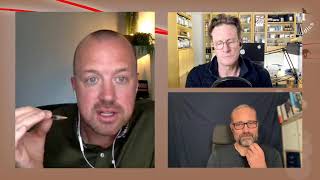
In this livestream, hosts Nick and Brendan interview Dr. Conor Brady, a former animal‑behaviour PhD turned raw‑dog‑food entrepreneur. The conversation opens with a brief reflection on the recent royal funeral before moving into Conor’s childhood love of dogs, his early work at an animal shelter, and his university studies that led to a PhD on deer diet and behaviour. He recounts his stint with Guide Dogs in Ireland and Australia, where he first observed dramatic health improvements in dogs switched to fresh‑raw diets. This sparked his passion for raw feeding, leading to the creation of his own raw‑dog‑food company, a Dragon’s Den pitch, and the challenges of manufacturing, cash‑flow, and scaling. Conor discusses the hard lessons of staying at the front‑end of the business rather than getting bogged down in production, and how he pivoted to multiple revenue streams: a scientific book, supplement lines (CaniDent, Biofunctionate), consulting, webinars, and Patreon support. He shares the ten‑year, labour‑intensive process of writing his book, its role in building credibility, and the impact of changing Google algorithms on his website traffic. The interview also touches on broader industry issues – the scarcity of natural‑vet conventions, the difficulty for non‑vet practitioners to earn a living, and the thin margins faced by raw‑food manufacturers, especially during a harsh winter that has pushed many small producers, like NutriWorld, out of business. Conor urges listeners to support independent, evidence‑based pet nutrition through Patreon, and invites small pet‑food businesses, groomers, trainers, and innovators to submit short pitches for a spotlight in upcoming shows, promising a promotional boost for two selected submissions per episode.
Chapters
Okay, good evening everybody.
Oh wow. So, um, I'd just like to say, uh, I know it's a little bit of a depressing backdrop, but it is just a little bit of a, you know, farewell to a very great lady. Um, and, uh, just like to say, uh, thank you very much to Her Majesty, who's now resting in peace. And, you know, we're going to slowly bring ourselves out of a little bit of mourning and we'll start to change some of the photos again and hopefully we can get back to some proper cheery stuff tonight with Conor because it's all just a big joke, isn't it? Really? From that side of things, yeah.
Talking of great people, why don't we talk about Conor?
That's, I think that's an excellent idea. From the Queen to the King. Do you like that?
Where did he come from?
I, I watched— did you watch the funeral, guys? Did you?
Or you're working? I watched a bit.
Did you watch a bit?
I watched it. I watched a bit of it, yeah. Just to, just to kind of— I just had in the background, just watched a bit. But I have to say, I was kind of struck. Didn't think I would be, but I was kind of struck when I saw Charles standing there and a bit of a tear in his eye. And I wrote a post there which seemed to resonate, but I think if you wrote anything about the funeral, it would resonate with a lot of people. But I just said it was very— brought it right down to me that it was like That's the reality of it. It's just a guy burying his mum. And I kind of thought, my God, it'd be hard to do that in front of all those people and standing there and trying to be proper. And tough, tough gig, I think. Yeah. So you wouldn't envy it, would you? You wouldn't envy that. That's a tough job when you think about it. Yeah. Palaces and whatnot. Forget that. Yeah. Tough gig. So fair play.
Anyway, so this evening we are going to be talking about— we're going to be talking about— no, Conor is going to be doing a lot of talking. We're going to be asking a few questions if we can get a word in edgewise. I'm going to say thank you very much to all our Patreon people. Bren, have you got the Patreon? I can never remember it.
Just www.patreon.com/rawpetmedics. That's www.patreon.com/rawpetmedics, as it says along the bottom of the screen. But for those listening on Audible And Apple and Spotify, any other Spotify training, teaching, whatever, lots of podcasts, podcasts that you listen to, you should be able to also find it.
Yeah, it's a little buzz having a look on Spotify and seeing you there with 50 episodes. It's like, oh, that's— I can't believe it. It's hard to believe. I don't know why. It's more— it's just something. I don't know. It always impresses me a bit. But yeah, anything exciting happened this week, lads, before we launch into my interest in history?
Well, I think something very, very exciting has happened this evening. Just now, Glenda Hoffman Johnson is joining us from the beautiful mountains of North Carolina.
That sounds nice. That's pretty cool.
Yeah. And we've got somebody called Karen Reid from Essex, and that's pretty cool as well. Have to say that. She's going to novel me on Friday. So yeah, good to see you. And everybody is great.
It's Friday, isn't it? Friday. We're all going to be there on Friday.
We are going to Barcelona.
Yeah, Barcelona. Can't wait, can't wait to arrive because I'm getting on a red-eye, 6 o'clock in the morning. I'm working late on Thursday night. I'll be finished at about 11, half 11, and I'm up at 4 o'clock. There's no way I'm going to sleep for an hour or two after work. I'm dreading that. But, uh, anyway, we'll get there because flying into Barcelona city is not easy. Ryanair want to put you in Barcelona, which is an hour and a half away from the city. I mean, the audacity.
Bloody hell, that's a great—
that's some business. They're like, oh yeah, we'll fly you there for €15. And then you just have to get in this bus and sweaty. No, don't want that.
Hey Conor, do you know what we're doing tomorrow?
What are you doing tomorrow?
Ellie and I are doing tomorrow.
Go on.
We are getting on the 10:20 to Barcelona tomorrow, Wednesday.
How cool is that?
Just to have a few days to chill out before we hit the ground.
Yes. What are you doing with the kids? Where did the kids go?
The kids are staying with Ellie's mum.
That's not right. That's not fair. Don't need to hear that as I sit here with my mild illness nursing a funny ghost. But anyway, yeah. So anything else happen this week? I can't think of anything else.
Any news?
Oh, just— yeah, I've just—
bless.
I want to say a big shout out to one of my vets who she won't mind me saying, had to go into hospital this last week following previous week one of my vets giving birth to a child. Okay, Gloria, welcome. Gloria May, welcome to the world. And then one of my other vets has had to rush into hospital, so it's been a little bit hectic. I've been working today.
That's the life of a small businessman right there.
There you go, isn't it? Yes, that's what happens, but it's one of those. So, But so looking forward to meeting up with everybody on Friday, you know, getting all my ducks in a row ready for that. So it's all good. It's all good. And just, you know, been having a great laugh playing with my new kitten that's been running me ragged and handling— I've now got 7 new baby goats running around the field. So it's sort of like, yeah, it's all good. It's all good.
Nice. Nice.
You can't be the parent of these babies. So let's get into— let's get into Brady.
Go for it.
So Conor, just give us a little, a brief rundown of your first early years. You can choose how, whether that's your first 5 years or your first 21, but just give us a little background because I think over the past couple of years or so we've heard a few stories, but just give us, just put it all together so we've got a little bit of foundation there, if you would be so kind.
Okay, brief.
What brought you here?
That's the question. What brought you here? The early years, I think, uh, you know, always into dogs, always had dogs, uh, from the day I was born. You all right? Has Nick been cut off, Bren? Has he been cut off for you? No, I'm here.
No, I'm here.
All right, cool. Um, so yeah, no, it's— it— for me, like, we always had dogs in the house and I was always very kind of attached to them. I always did everything with them, uh, so they always followed me to school, followed me to the shop. There's always those sort of stories. So I was obviously fairly attached to these dogs, the youngest of 5 boys, so at least somebody was talking to me in the family because they of 4 brothers, you're fighting for attention, so you can get it from the dog. And yeah, so that was— I've been around 11, 12, I was clearly not the easiest of kids. I think I was just a bit rambunctious and slightly challenging, and I've carried that with me to today, I think. But my mum said, you know, this kid is being a bit of a twat, and let's just put him somewhere that he's useful. What do you want to do? And I couldn't think of anything. We ended up driving me— she drove me to an animal shelter every Saturday morning sat in the car for 2 hours while I worked in the animal shelter picking up poo and doing all the stuff you do in an animal shelter. And within about 6 months, the animal shelter started paying me a very small amount of money, a fiver, you know. And so anyway, I did that for a couple of years, and that was the start of meeting dogs that I adored, seeing them coming in and coming out, not getting adopted. That kind of started leaving its mark. And meeting the vets and meeting my dad's mate who was the head man in the Department of Agriculture here in Ireland for 33 years. Chief vet for 23 years. That would never happen anymore. And later kind of saved my bacon a bit. But, uh, so that sort of stuff was, was my youth. And then, uh, clearly I wanted to work with animals, and I'd say I probably would have done veterinary if I got the points, but I kind of realized by 5th, 6th year I couldn't, um, I just couldn't do languages. I had too many languages on my thing. I'd chosen wrong. I'd chosen what my mum probably wanted me to choose in school. You got to choose your subjects. I, if I had my way, I should have done, you know, things that I can make, you know, that's, I thought it would be an ideal at that. Anyway, I come out of Leaving Cert and I went into science, which is what I wanted to do after, probably after vet. I don't even know if I put vet on my course. I don't think I was confident getting near. Going to science, did science. The first 2 years of science are absolutely cat, so, so hard. Just subjects I did not want to do. Straight into chemistry, honors chemistry, which I hate. Straight into maths, which I'm okay at. Botany and geology, rocks. And I was like, mother of God, is there no animals in the science category? And so that first year was hellish. The second year I had to keep cat. So like, I was just going from being what I thought was— I was an A student in the A class and all sort of stuff. I knew I was bright. I think I was just not able for some of the other lessons that I wasn't interested in. I couldn't focus on shit that I didn't want to do, and that was my problem. I was like a little bald kid in those classes, never went to them, just hated it, never saw the point. But by third year, fourth year, you start doing the animal stuff. I imagine it's the same with veterinary, you start getting into it, then it's like, oh, this is cool. And then As I left the degree, I was like, what the hell am I going to do now? And I was getting on very well with a supervisor there, and he said, look, there's a PhD here waiting for you, and you'd be good at it because it's horrible. And I'm like, okay, what's this doozy of a project? And he goes, well, nobody else will do it, but we can get you in and out nice and quick if you'll do it. And I'm like, okay, what is it? So it was studying the diet of the deer in Phoenix Park, the effect it has on their behavior and dispersal patterns and gut morphology. You track them through the seasons, a lot of culling, a lot of dead animals, pulling them out of the side of a roadside, bloaters, pulling out the guts, bringing them back to the lab. Hardcore job. One time I did it on a bus, and I'm not exaggerating, I went on a bus from Phoenix Park to UCD with a bag of stale guts. So, uh, tough, uh, project. And, uh, you might ask, why did you do that, Conor? Well, I don't know, like, I, I love— I, I knew when I was—
why were you single? Why were you single?
In my little gut room. And you could see, like, people would just look in and go, oh, you know, it's like, yeah, it's crap, literally. But, um, but that's, that's like a year or two. That was, that was hard, hard work. But, you know, I wasn't afraid of that, and I kind of had my eyes on the prize, which was I did want to come out after 3 or 4 years. And I finished in 3 years and a couple of months, 3 years and 4 months, which is fairly quick. And, uh, so I got it done and got it written up, and next thing I know, I'm coming out with a PhD in animal behavior. And I'm like 'Right, who wants me now, guys?' And it's like, nobody. There's no positions for you. So you can study yourself into these holes, as people with PhDs can do. They spend 10, 15 years in there because they don't want to come out because there's nothing for them if you've been doing— But that's when I started realizing, I started getting a couple of chats with people and they said, 'You're thinking about your project wrong. It's the discipline of the science more so than anything else. It's like problem solving. It's everything else.' So I thought, okay. I remember banking that from a really influential mentor I had in second year. Unfortunately, one of my friends passed away, and this mentor— I was dropping out of science, hated science— and this mentor stepped in. Little did I know. And I had a chat with him. I said, look, I need to leave the course, I hated this. But he kind of forced me to get to the end of the year, and I failed a couple of subjects, and I repeated then at the end of summer. And then I started getting back on track and everything else. But he actually came to my parents', my family shop, and My dad's gone now, but my family shop just 4 or 5 years ago, just checking up on me to say, is Conor still around? What's he doing now? And they said, yeah, he went on, he did his doctorate, he's got this business. And they're like, oh my, he was delighted. Wasn't that nice? His name was Hubert Fuller. But like, those little things kind of got you through. I was very lucky. But he was the one who kind of told me about the discipline of the science of it. That's where I fell in love with the process of investigating something. It sounds incredibly nerdish. I can't believe I'm talking like this, you know, 20 years on, but it's such a buzz. It's such a buzz. With an issue, a question, and it's like, why do— this is the project, because this is going to sound so boring to a lot of people, but there's an awful lot of nerds on here as well. We're all animal nerds, that's why you're listening to us. But, uh, why do male and female deer live separate during the year? Because group-living animals, you survive longer in a pack. The bigger your group, the safer you are, because it's going to be somebody else that buys it, not you. So why do male and female separate? And they cannot pin it down. Go for it, Nick. Oh geez, I hope not, because I'm after spending 4 years trying to get the answer.
The answer was no, because lucky, lucky for them, they haven't invented matrimony in the— yeah, in the deer world.
Excellent tax system. But, um, so yeah, this, this was interesting. Was it because both bucks were aggressive? It wasn't because they died or whatever? And then you can look at other groups, even animals. Anyway, I found it fierce interesting, but I particularly like the idea that everyone's got an opinion, everyone's got a hypothesis, okay? A hypothesis is an idea, okay? Eat less, move more, that's a hypothesis, okay? But when you test it, it doesn't really work out. It's not a theory. A theory is like concrete. We've tested this hypothesis every which way from Sunday and it holds up. It becomes a scientific theory. But like, eat less, move more, or eating fat makes you fat, or eating fat gives you pancreatitis and all the other bullshit that we've been told, you know, when you test them, it doesn't. So I love that. I love looking at everybody's ideas and then you have to put yourself in their shoes and listen to that. So that's been enormously helpful for me when I'm looking at questions that don't seem to have an answer out there, or what do dogs eat? And it's like, well, I don't know, but I can look at it from all these different perspectives. So that was the start of it really, and I joined Guide Dogs, a job in Guide Dogs came up. There's no need for questions tonight, by the way, guys, you can just turn off your cameras and mics if you want to, so feel free if you want to go off and do something else. Yeah, we noticed.
This is just an image, I'm asleep.
Got awake glasses on. Yeah. With away glasses. But yeah, so I jumped—
just while he's interrupted for a moment, if any of you guys want to pop a question in there for Conor, do pop them up because that gives me something to do. Because whilst he's going on, literally I can do things like that.
It's my night, it's my night, it's my night. You're not allowed to say anything mean to me. So yeah, I went away to South America to find myself for about 3/4 of a year and didn't. And then And then when I came back, my— yeah, because I was so horny. Hey, Jill, well done! Excellent.
She's talking about, she's talking about, uh, Brendan and I, uh, Connor.
That's an original, original gag. I like that. Even like, I think it's amazing that deer shed those antlers and grow them every year. Isn't that a phenomenal waste of boneage? I mean, bloody hell, a big palmate antlers on these fella deer, knock them off in April and grow them again by October. Ready for fighting.
Yeah, but they're bigger each year, bigger and better each year. If you didn't regrow them and you broke one, you'd always be left with a broken one.
So true, unless, unless the damage is so bad that it does the rooting at the same time and they grow a wonky one or a little stub. But yeah, that's it. Oh, that's an interesting point. Didn't realize what it was. I was going to say there's nothing you can tell me about deer, Bren, but there you go.
Yeah, but he's always— he always wants forgetting that he's got a little stubby old wonky one. I'm sorry to hear that.
Still does the job. But so I came back from South America and this job turned up in Guide Dogs and I thought perfect because I was always obsessed with dogs. I tried to get a doctorate doing dog stuff all around Ireland, couldn't, those doctorates are not available and it's particularly for a non-vet and so this dear project anyway went into Guide Dogs as a pup supervisor looking after 40-50 pups at a time which I adored. That was like 9 to 5 puppy immersion getting paid for it, amazing training. You can get your own dogs for the first 3 months, you're just in the kennels and living with these dogs and that kind of stuff, but you don't get to train them at all for 3 or 4 months, you're just following the trainers around. So training was just brilliant, top, top trainers, really loads of theories, was fantastic. And did that for 2 or 3 years in Ireland, looking after about 50 families at a time, training the pup up for the first year of life, training, showing the family how to rear the dog. And these dogs were strictly diet controlled, you have to feed them these bits and pieces. So when you added something in, you could really see the difference. So I started messing around with that, reading the books and learning from, you know, some of the top vets and seeing, I'm sure, some of Nick's stuff and Bill and Hurston Lonsdale. And by the time I went over to Australia to do guide dogs, I knew this was the way to go. And fresh and raw was creeping in, and I was taking some of our itchy dogs in Australia, fixing them with fresh food, going, look at this, this dog was in the vet 13 times in the last year, now he's not at all. We're a charity, this is a big saving. And then we meet Brisbane Guide Dogs who had changed 200 dogs from dry food to raw food. And in the newspaper I was reading, it's like 82% savings in vet bills. And I'm like, what the fudge? I was like, this is astounding. So I'm talking to the CEO, Chris Lane. I'm like, this is incredible. The change in behavior, the change in the ability of the dogs to train, just the stamina on the dog, the rejection rates were falling, like, but the health of the dog was so much better. Win across the board. I don't need scientific studies after that. I'm a good enough scientist to realize that is a quality kind of anecdotal testimony. She had nothing to prove, nothing, no money to make by telling me that. If she was the leader of a raw dog food company, she said that, I'll go, maybe, you know, but when you're just in guide dogs, then anyway, she had a terrible, terrible end. They got rid of her and reinstated the dry food when 3 or 4 years later, which must have meant their veterinary bills went up. I went to try and find those figures. I couldn't get them off them, so I thought that was horrific. I went around back to my superiors with this Brisbane thing and this whole raw dog food seminar that I started in Perth, and I just showed my superiors and they're like, yeah, no. And I'm like, I just gave you 3 hours of presentation and look what all this forward-thinking guide dog organization, 4 times bigger than us, is doing. And they're saying, yeah, no, we've got a good, good deal with the dry food company, so we'll just stay with them. Now I know what that deal was, and it was barely 5 figures, barely 5 figures. And I'm like, you're choosing that on a population of dogs when I'm showing you the savings? I'm showing it. And the vets were not on side. So, and I thought, well, that's what got me. And I thought, I'll show you. That's when I sat down to write the book, and that was the start of me going headfirst into raw dog food.
I was going to say, is that what— that is what started? You, you thought, I want to show you, I'll show you.
Yeah, yeah, that's what I'm going to show you. Wow. Yeah, I've got a big streak of that in me. I don't know what that is or where it came from, but it's like, uh, I don't know, I think I'm fiercely loyal. And I think when somebody you know, does something like that, it's not a quick kind of snap or revenge or a punch. That's never going to come from me. It'll be like, I'll show you, you are wrong, and you are. And I think everybody needs a bit of that if you're doing something as absolutely horrific as writing a book like the one I wrote, which is another PhD, uh, essentially, you know. And to do that at the same time as trying to— I'm going to go back to Ireland and make raw dog food. And hats off to any raw dog food manufacturers out there, because that is one dogshit job. That is hard work. Very— like, people don't appreciate the effort that goes into running that factory and keeping it clean. And particularly in Ireland, when there wasn't any raw dog food companies— there's only 2 or 3 in the UK— and I'm standing in like a football pitch and it's lashing rain, I'm going, well, there's like some ground-up fish in a tube. And they're like, what? No thanks. I'm going, okay, it's salmon, it's very good. Uh, nobody wanted it. I was like, oh, I've made a terrible mistake. I spent 50 grand, I got 50 grand for the the government. And I'm, you know, I'm in there 3 or 4 o'clock in the morning, I'm in tears. Like, it's just hard work making this stuff yourself because you don't have the money for the staff. And then got it on TV, got it on Dragon's Den, and then it started doing well. So, uh, but that's a hard business, lads, keeping the vets happy, you know. Um, very—
Dragon's Den, come on, give us the inside scoop on your Dragon's Den experience, because they've had a few food companies on, pet food companies, haven't they?
They have, yeah, yeah. I think, uh, Putting a Box Around, weren't they, or something like that? I think Putting a Box and a few others got their money. You were on Oh yeah, okay.
Uh, yeah, there's a few, a few people that have been on.
Yeah, I think a lot of people would use it as it's a great advert because you're getting, you know, in Ireland, our one's only 500,000-600,000 people watching it, but in Britain you're getting, you're getting a couple of million people watching the show. So it's a great ad, that's free advertising as long as you do okay. But I'd already been doing seminars and stuff for nutrition and health and stuff, so I was well versed. And for a lot of the questions that they, their questions were useless, but they edit us to make you look a little bit unsure at times. I'm like, while I would have stumbled here and there, the bits that they made me stumble on was like, I had a great answer for that, and that's the bit you make me look— so, but look, they kind of, they kind of flagged they were going to do that, but I was coached before I went into it by someone that won Dragon's Den beforehand, and she just says, heads up, here's the tricks, here's the crack, here's how many people actually take the investment in the end of us. You know, it's TV, it's not business, it's TV. And so, you know, if you say yes to the investment, you're going to get on TV. And I'm like, okay, you're thinking of all that. But the bloody dog— I wanted to bring on a Great Dane, and I wanted to bring on a, you know, a 90-kilo, 95-kilo Great Dane. I wanted a show winner Great Dane. So I knew all these dogs at this stage. I was supplying some of the best dogs in Ireland. And this girl Caroline had this stunning Great Dane, can't remember his name, black and white kind of markings on them, just big and beautiful, and a pig to eat food. So no matter what happened, he was going to eat the food anyway. He gets sick 2 days beforehand, and I'm like, oh my God, I'm gonna have to use my own bloody half-wit dog. Actually, no, Duffy wasn't around. He wasn't. I can't remember. So I'm thinking, oh my God, another Spaniel. Yeah, yeah, no Spaniels. All right, so she goes, oh, her sister will come on. Her sister will come on, also amazing. So great, her sister comes on, she's beautiful, she comes up the stairs, and you're really well trained, and they're all like, oh my God, look at that dog, and impressive, you know, even though she probably wasn't even eating the food. Off she goes. In fact, all those dogs were raw fed, but whether they're eating my raw dog food is a different thing because that would have been— when you own 4 or 5 Great Danes, you're not feeding them complete raw, too easy. That's a serious food bill. So the dog's walking down the stairs and Gavin Duffy, the guy I wanted, says, go on, show us her eating the food. And my food had been sitting out under lights at this stage for about 3 or 4 hours. There's loads of people watching, there's loads of cameras, and it's like, I'm saying, this is no place for a dog to be eating. The dog's not going to eat there. Do you think you— do you want to eat a big steak supper at the moment? I don't. I said no, no. So I'm saying no, no, no, no, 10 or 15 minutes of no. And eventually, because he kept pushing me and he was the guy I wanted, I said, all right, all right. And I gave in like a bloody weakling, and I said, Caroline, bring the dog back in. And I'm looking at the dog walking up, and I go, my God, I've never seen a dog less want to eat something in my entire life. She gets within about half a meter of the bowl, she just kind of smells it for a while, just walks off. And everyone in the cameras were just looking at each other going like, that's gold, you know, that's gonna be— that was on repeat on like, you know. And the dog didn't eat the food. It was like, oh shit, it was so embarrassing. But, uh, I kind of didn't really mind it that badly. I kind of knew it was gonna happen. I thought they'd put in me fighting a little bit, but they didn't. I was like, come on, bring the dog in. It was like, no. And, uh, but then, yeah, so then we— you go through the whole rigmarole into and answer their questions.
You're not alone. I do remember, I think one of the TV chefs, I think it was Martin, what's his name, Martin. Anyway, I think you had Poppy's Picnic Camp and they were feeding the meatballs and his dog just went, oh, oh, oh, the agony of us. You know, the agony, the number of dogs.
Do you remember the vegan huskies on the morning, the UK morning? Yeah, yeah, yeah, vegan huskies. And they put meat down in front of those, he just goes straight into the meat. Oh, it's just on TV. Like, these TV guys, lads, if ever you're ever doing anything with TV, they are out for that sort of stuff. They're not in to make you look good or polish your ego. They don't give a shit about— they're going to dress you down if they can. They're going to set you up. They're going to do research. So the TV is a joke, you know, but, um, if anyone is ever on Dragon's Den, ring me because I got some excellent coaching from an unbelievable businesswoman before I went in. Some good tips. Actually, you know what she did as her tip? This is just— this is how— this is why she's such a success. She's a multi-millionaire now. And then she said, come up to my house. She's living in Greystones. Come into my house at 1 o'clock and I'll give you a few tips. Okay, she approached me to give me tips, by the way. She heard I was doing it. You must come up to me for tips. Okay, same age as me, you know, you know, not this kind of gray in the beard kind of businesswoman of 80. And it's like, okay, fair enough. But she was just very experienced, did business in college, you know, did— went through the rigmarole with them, investment funding and all sorts of stuff. So I walk in and herself, two of her mates, and her husband— four of them are sitting there in chairs in the sitting room. And I walk in and I'm going, oh no, they've laid it out like Dragon's Den. And I'm like, herself and like, you know, her two nice mates, and I'm thinking, this is so embarrassing. And she goes, She goes, that's not what you say to us, we're dragons. Out you go, come back in again. And I'm like, oh, this is— and I'm just sweating cold sweat. Come back in again, I'm trying to stop. She goes, give us your presentation, you know you've done it. I bumble through the words, go back out, do it again, do it again. And after 4 or 5, she relents and I'm just sweating. And she goes, it's never going to be that bad again. And I'm like, oh, nice one. So it's kind of like a best man speech. I've done this many times. If I'm ever doing something serious, I do it in front of Elaine. I have to use you for Patricia. I do it in front of Elaine and I'm trying to get over the more difficult bits and I can't. But then once that's happened to you, the next time you do it, it's just so much easier. So I believe that's why my pitch went so well because she really dragged me through the coals. But it's a great little tip that if you have to do any public speaking, do it publicly before. Don't just learn it. You can learn it off by heart because I learn all my stuff off by heart when I'm doing it. But like my best man speech went for 15 minutes. I knew it word for word, but I had done it in front of 2 or 3 people beforehand. And they're sitting there not even laughing at your jokes. They're just waiting. Your mom's just waiting for you to stop talking. It's so embarrassing. But then, like, that's the worst of us. She's the worst crowd, you know. So, uh, anyway, that was, uh, that was—
so how would— Conor, how would you draw a line therefore from, from that point? So you've, you've been in business, you've had good times and bad times in business, you had the Dragon's Den, good times and bad times with the Dragon's Den. How did you get from that to this, to what you do? What are you doing now? How do you make your money now?
Yeah, so, uh, I was this manufacturer and I ran into a classic business issue which I hadn't seen coming ever, but people tell you about it, that Cash flow is king. And so I'm getting busier and busier and I'm making really high quality raw dog food, the food I want to feed my dogs, and I'm trying to help people and spending time on the phone and just trying to stay at the front end of your business. But I was slowly getting sucked into the back end of the business, making the food and all the stuff you're not supposed to be doing. You're either out the front of your business doing your thing— if you've done IPET or you consider yourself a canine nutritionist or you've got this, the love of the subject, you shouldn't be in there making your product. You should be out the front and there should be somebody else doing it because those two things are different worlds. I took my eye off that and I got sucked into the stress of keeping the business going, and my cash flow bottomed out, and it came into very big difficulties of trying to meet wages and all the things. You've got to expand all the time, you constantly have to buy freezers, there's breakdowns, the van's broken down. Oh man, it was so stressful. So I actually went sideways, got somebody else to make it, and I stayed at the front of the business. That was a lesson learned, to stay out the front. I was told that, don't get into manufacturing, don't ever, if you are one of us, like one of us mad dog nuts, and you can promote it and sell it to people, don't go into the back of the business, get it white labeled. So that was the first, that was advice I didn't take. It was really good advice. If you consider yourself a manufacturer and you're happy to do that bit and you have a Bren or Nick or Conor that can do the stuff for you, well then that's okay. But anyway, so I came out of that business a little bit disillusioned because I kind of thought I was going to be the biggest raw dog food thing ever, but I just couldn't get paid enough for the food I was making. I wasn't going to make it on pure carcass and crap, so it was just, it just, it just got too difficult. And from there then, really, like, I, I tried to work for a while kind of promoting a raw dog food company, like where, uh, you, you, there was an Irish company here that was making it, and you try to do a bit of that for a year or two, but I just wasn't happy doing that. It's very hard to, you know, criticize dry food companies and their hoodwinks and their sponsoring of this and that when you're trying to be with another company, you know. So but you have to pay the mortgage. There has to be— I believe in raw dog food, so I don't give a damn. Like, I'm going to choose the very best raw dog food company and ask them, and always will. Like, so I'll happily work for you. So, you know, I only want to promote outdoor organic for outdoor-reared birds and that kind of— that's the sort of stuff I like. So that's why I gravitate towards some of those outdoor kind of companies. It's just the way I do it. But it's hard to live without doing something like that, you know. It's kind of It's hard to run any society on nothing because the people need, you need something, you need to be able to pay the bills and not paying the bills is just so, so stressful. So that was a couple of years. And then after that I said, right, I'm going out on my own. And I just started writing articles, learning how to write my articles better and started designing these few supplements that I have. You hear me talking about them all the time, Candida Dent for teeth cleaning and Biofunctionate for gut health. And they start ticking over. So that with writing for us, writing articles for people and that kind of stuff, doing consults, doing seminars, you just about keep the wolves from the door. But it helps very much that your wife has a job because the income for me was like this for the last, you know, I come out of college skint, never had a bean in college, into guide dogs, 3 years, 4 or 5 years being paid, and after that I've just been broke for a lot until the last maybe 2 or 3 years. Things are starting to kind of calm down now and I've got my, my 3 or 4 revenue streams. That would be supplements, So I've got my supplement range that I like. I co-formulated with a guy that I work with. And so we've got a great business relationship where he makes them and I'm at the front kind of promoting the stuff that I believe in. These things work and money-back guarantee and all that stuff. I know that that stuff kind of works. I do some consults, do some kind of writing, and now I've got my webinars up on there, moving slowly onto the website. So I've got 3 or 4 little revenue streams that now keep me fully independent. So people don't realize, like, when they, when they go and, and as I'm trying, I need to start selling this better to them, where it's like, I will happily be an independent researcher for the rest of my life, free of any industry influence, if that's what you guys want, but I have to make money. I have to make, I have to pay my rent at some stage. I have to be paid for the doctorate that was horrific and the horrific pet food manufacturing and all the other crap we've done. I have to get paid for that soon. A solicitor or an accountant would have been paid for this from the time they were in college, and I'm still trying to make you know, so people don't understand that. They want all their information for free, but it's very hard to convince people that. So I'm hoping with the webinars, I'm saying, look guys, you know, whatever I charge, buttons for the web, I don't charge enough at all, neither do Yoonik. But, uh, like, I want people— I need to enthuse on people that every time you pay that and watch this high-quality independent information, it just frees me up to do another one and another one. And I'll pick any subject and I'll go and do it. It doesn't matter what. I can look at bloody calcum powder and I'd be able to produce a decent, as long as I can pay the bills for the time to produce it. So that's what I see for myself in the future.
So all that time you were writing the book, you were going back researching it. I mean, because I know that you're a perfectionist when it comes to some of that stuff, that you were going over it, trawling over it, writing it, rereading it, writing it again. You even got me and Nick to have a look at it. I don't know why. So what probably were— so how long do you feel that process went? Let these guys know how long that book was in process before you actually managed to get it published.
10 years. Like, 10 years is the throwaway figure. 2020. I started in 2010 on an Australian Mac that I had, and I was one year in Australia at that stage, I think. 2006, 2009, Irish Goddess. I was one year in Australia when I realized my superiors weren't picking up what I was putting down. So I created this raw dog food seminar in Perth, which is the first time it's ever been offered to people in Perth, a nutrition seminar. And can you believe that the people that sponsored Murdoch University— I'm just going to leave the pet food company out, but one of the big ones sponsored— they flew in the head person from their head nutritionist from the UK all the way down to Perth in Australia, and they put on a seminar half the price of mine 2 days before mine. 'Can you believe it?' And they hit the same people I did, and they said afterwards, 'You can take a tour of the— insert pet food company— premises in the veterinary department.' And I just— somebody, a breeder, said, 'Heads up, Conor, check out what they're doing.' And I just straight away put that up online and said, 'This is my first online thing,' whereas held up going, 'Look at this, you can have a tour of the pet food company's veterinary department premises. Isn't that something? Enjoy yourselves, guys.' So they had a crappy little turnout. I had a really good time, like 150 people or something came to mind, really scary. And the bloody rep walks in, lovely girl, lovely, dead on. She walks in, shakes my hand, she goes, just let you know, I'm somebody, somebody from insert pet food company. And she sits down in the front row and I had to do my seminar for the day. Hardcore. That was my first lesson in, oh, this is darker than I thought it was. This is hard work. So I just thought there's dirt here. And so when I started looking into the dirt, the very first thing was I fell into Lonsdale's website Bill and Hurston Lonsdale, the two natural vets over in Australia doing what Brian and Nick are doing over here. So, um, and, uh, that was the start of the book. And then 10 years later, that book nearly ruined my marriage. I'm not messing, because Lane could never understand— anybody that's outside of that sort of stuff can't possibly understand the level of, of shit that goes through, like, trying to find one paragraph on something. And it's like, I need to read up everything on this and make sure that when I say there's no studies supporting high-use carbohydrates in dogs. I need to know that's true. It's only one little paragraph in the book. Okay, the carbohydrate chapter is huge, but it's like, okay, do I understand diabetes? Do I understand what I'm talking about? Do I want to mention that? It's like everything, and that's like getting out of one chapter, it could be a year in every chapter, and it's like never-ending kind of pothole. So I loved it, and if I was on my own, I probably would have sat there. I work at nighttime. If I'm writing anything, I write at nighttime, 8, 9 o'clock. So now I get the kids to bed, but I could be up to 2 or 3 and then up again at 7 with the kids. So if you're trying to do any sort of creating, that's when I do it at nighttime with a glass of wine. I come downstairs at 2 o'clock in the morning, my head is buzzing, I can't sleep, and I'm like lying there for an hour. So I've been working very hard, and no doubt you guys have as well. But you know how it is when you're at the— your business isn't quite settled yet, so you're just putting everything into it to get it to a point. Somebody asked about the revenue stream, the books. Yeah, absolutely, the book is grand. It brings it's a consistent nice little— you might sell 10 or 20 copies a day, but because I didn't sell it to a publisher, I used Nick and Bren and everybody else that would talk about it. And I, you know, if it's good enough, it'll sell. So as opposed to like, you know, if you sell to a publisher, they do everything and you get this massive spike in sales and it peters off and it disappears a little bit. But mine's a factual book. And so it stays in— you've got these canine nutrition courses are all recommended. So yes, it's a nice Now you're getting paid for that, but if you think about the amount of man-hours that went into that, again, you'd be many years trying to get that back. But, you know, I think more to the point, that sort of book kind of makes you— makes people— people are always impressed by it. Oh, you've got a book, you know. So I'm proud of that more than anything else I've done. That book has been very— I'm proud of that, that I got that done. But geez, I don't think I could ever do a book like that again.
Do you think that that has been rather than it being a revenue in its own right, it's a— it's been a good stepping stone for improving all of the other things that you've done.
Yeah.
You feel that it has promoted you in other spheres?
Yeah, definitely. You get more, more opportunities pop out, like, and you hear of Habib's opportunities from Forever Dog. They're completely different to mine, but it does improve things. Like, you can, you can put up these dorky, horrible ads, which I'm doing on Facebook at the moment, just learning. And you're saying you're holding the book going, you know, top rated on bookauthority.org, you know, and it's just like, it's, it's just fucking Irish and English people hate doing that stuff. We are very bad at promoting ourselves. I don't know what that is. It's like, you know, you know, with the Americans, it's like, good on you, go on, go you, get, you know, get that car and go. And I don't know, I feel like Irish and English people are kind of like, yeah, don't get above your station, you know, just be a bit there. So it's very hard to hold up a book and kind of point and go, oh, I did that. It's awful, but you have to keep doing that and keep it in people's heads. They have to. So there's a bit of that going on and learning that and things. But I actually like the science of that sort of stuff. You can run a little ad and say, look, you know, this is the price of a dental clean and this is how much CaniDent costs. It's a no-brainer. Doesn't clean your dog's teeth, they'll give you your money back. Simple. And it's interesting to see that that works because so many dogs with dry, dry and canned crap need something like that. So it's like, yeah, so there's something to that. So having the book kind of helps. I was like, he wrote a book on this.
So what you've got to do is you've got to hold up— because I know Rodney's probably watching this because he's over in Europe at the moment, so he might make a comment if you're lucky. So what you've got to do is hold up your book and go— oh no, sorry, you mean that one? Sorry, I couldn't resist.
Yeah, I like his— like, there's his quality as well, you know, but it's just, it's the difference in like if you have a bit of a following, you don't really need— like, you know, if I was Karen and Rodney, I would have done the exact same way they did. That's the way to do it. But I was kind of smaller, and I kind of thought, yeah, you know, I'm just going to leak it along. I'm not sure anybody would have picked up that book before Forever Dog. Now people are thinking, oh Jesus, there's a market in pets. But before their book, nobody would have picked up my book. A big heavy scientific tome, who wants to read that? Well, tens of thousands of people did.
I think, yeah, I think quite a lot of people did. Well, before, yeah, because Forever Dog, don't forget, was probably what, a good year after yours?
Yeah, yeah, I helped them, I think. Yeah, do you think?
Yeah, absolutely. That's why they're doing so well.
Absolutely.
It was me. Rodney's going to come on here and go, he owes me money. Absolutely not. Yeah. So from a point of view of, do you feel that you've seen a market shift towards your supplement for instance, with having the book out compared to where you're at? Or do you think that if you look at your graph that that was going up anyway?
Yeah, like things are limping along. I used to have a really busy website. I used to have about 300,000 people a month, new visitors coming to my website. That's serious. You can make really good revenue from that. So if I like— you're buying— if you've got pancreatitis and you say to people, look, you need to add in some pancreas into their diet, nobody can get pancreas anywhere now. And then you can you can find a little bit of raw pancreas, usually pork pancreas. And if I said, look, dry pancreas will do the job, add in a bit of dry pancreas, where do they get dry pancreas? Well, I might as well link to the person that has the dried pancreas. And then I'll get 3% of that sale or 4% of that sale or something if they buy it. So 3 years ago, I kind of thought, great, I can actually write for a living, write engaging articles that people clearly were lapping up. I was topping Google, number 1 on Google for itch and kidney disease at one stage in dogs. Like topping all these other websites in big, big, and people are eating up. And then 4 years ago, Google changed their algorithms and said, yeah, we're not gonna do it that way, and now we're gonna do it this way. And my traffic just starts going— all the natural websites would say they got it in the back, and that information is no longer welcomed. But that's what the people were picking up. They were loving my info. And then it's now I'm down to page 2 and 3 and that kind of stuff. So you do a bit of work myself, and Karen's helping me out as well, and we you have to kind of get Google back on side. So what you're asking about the supplements, a lot of the supplement sales come from people reading an article on meaty bones or gum disease or something and then saying, okay, this product actually might work. And look, don't forget I wrote the book, I'm not bullshitting you, I do know what I'm talking about. So that's why the book kind of helps, you can kind of get it there. But, um, I think it all adds up together a bit. And doing this, doing RPM, just being seen to be talking about stuff, you know, I don't even have to be knowledgeable besides you guys, I just have to not make a fool of myself really and just ride your coattails for a while. So like, it's, you know, lucky, lucky now. Karen's got it so right. Yeah.
So just as we're coming into the last, the final furlong here, Conor, any, is there anything you want to say? This is your program. Today. We'll probably do the same thing next year, I would think, if we're, if we're spared, all three of us. But anything, anything you want to leave us with? Any— I mean, you, if you could please give us some top business tips in Patreon, uh, after we finish this show, that would be really, really good. So there's something to look forward to. So if anybody's interested in Patreon, we go to patreon.com/rawpetmedics, etc. But Just any final thoughts, final words, philosophy, or anything that comes to mind?
Oh God, no, I wish I had something prepared for this. Not really. I think it's difficult. It's difficult to be in this job. This is a tough gig to be in. It's a, you know, there's only 200 natural vets turn up at the Natural Vet Convention in the US, and I think that's people are, uh, should— and this is going to sound quite conceited, but people kind of— it's, it's— I see this as really valuable information. I see what we're doing is really valuable. And I think the temptation today is that people kind of want everything for free. And really, people don't really understand the cost of things. And there's a reason why bullshit information does so well, because there's loads of money behind it, marketing and nonsense, and they pay the right institutions. And I think that, uh, You know, supporting kind of natural vets and people that are doing this kind of stuff is a really good thing. Like, and it's going to sound like a terrible slap, but like, you know, even with Patreon, like, you know, the price of a cup of tea, you know, you're looking for per month from, you know, if we got it from 2% of our followers, we're getting 10,000, 20,000 views every video. We'd be doing grand. It's very hard for people at the moment. I get all that. But it is hard to do this and stay on top of the information coming in and reading the studies and stay independent. People want the information from an independent, but it's hard, it's hard graft to get to where we are. And I know for every one of me that is now a canine nutritionist non-vet who doesn't have the steady income of seeing clients every day, you know, so as a vet you at least have income coming in, you don't have to worry that your kids aren't going to have a new bike or something. So without that, it's very hard for someone that's a non-vet to make it to this point and working with dogs naturally. So it's really, really tough for every one of me, there's 99 people out there stressing their brains out trying to do it. It's hardcore. So I just think, uh, I don't know what the point is to that. I just think it's just, it's hard to kind of, um, I don't know, tough. It's a tough gig, you know. It's tough trying not to bullshit people and joining some joy pet food company and making loads of money. And, you know, that, that, that avenue is there for me, but, you know, you don't do it. But, uh, so I don't know what the bottom line is to that, but I do think about that now and again. I think about some people run themselves into the ground doing this this sort of stuff. And it's hardcore, you know, trying to— half of it is trying to help people. But now I'm thinking I need to make a business out of this at some stage. My wife is going, come on, this is like, you know, you're a few years in, you need to be able to buy your own shoes at some stage. So yeah, so that's it. I just— I think, I think where I'm suited to be poor, and I've done the poor thing for long enough, just like, give me loads of money now. No, I don't know what— I don't know what my point is.
It's just Well, you know what, I think you do it with really good grace and you do it with— I like the way you write because it's very factual and you don't pull any punches and it's fun.
Yeah, it is rewarding.
It's lively and it's fun and you'll eff them blind here and there a little bit in a very kind of Irish way. So it's very charming and I think you're getting the message across in a really fantastic way. Congratulations, well done.
There you go, that's good, good, good on all of us. You know, it is definitely rewarding though, isn't it? There's a bit of a buzz from it for sure.
It is, it's— yeah, it is fun. I wouldn't be doing it, I promise you, whatever you paid me, if it wasn't fun, I wouldn't be doing it.
Yeah, yeah, true.
Um, so listen, let's, let's say good night to everybody just now. We're going to jump over onto Patreon just now and we're going to just grill Conor for 5-10 minutes on just business, business, business. A lot of people coming on to Patreon who are from the, from the, uh, raw feeding business world, the nutrition business world. And we're trying to maybe, uh, get everybody together and start thinking about, uh, coming together, being strong, working together. So how's that?
Yeah, if you want to know the answers to— are there more questions about books and what he's going to write and what we might or might not write, join us over on Patreon because that's where you're gonna reveal this.
That's where it's at.
I think Pet Care there made a good— Pet Care Hutchinson Pet Supplies, they made a good point there. Many retailers in the same position. Absolutely. I posted about that 4 or 5 days ago. In my 10 minutes on Patreon, we'll be talking about small business and the tips that I took and didn't take and that kind of things that I thought were successful. But I said it there 4 or 5 days ago, tough time to be in small business no matter who you are, whether you're trying to do my thing or you're trying to manufacture as your lecky bills go up and you're trying to be a raw dog food producer. Or store, if you're a pet food company, if you're a pet shop, every single aspect is going to get it. This winter is going to be particularly hard, but raw dog food just makes it that much more difficult. So yeah, keep the head down, guys. I saw a really good company, NutriWorld, went to the wall there. Did you see that a few days ago? Really good quality company. That's such a loss. Just goes to show you, these people are operating on such fine margins. This is not Weetabix sold to you for €4 a kilo. This is fillet steak sold to you €4 a kilo, and it's bloody hard. To try and exist in that little margin there and keep the lights on. Any fluctuation kills off these companies, and it's, um, behind that is a family that, you know, that are not making good money this winter. And that's, that's, there's real shit behind that. You're not guaranteed money, and that's, that's hardcore. What can you do? So hats off to the producers and the manufacturers and the small pet shops and the groomers and all the other people trying to make it, you know. It's not easy, so good on you.
Yeah, so, uh, as, as Rach Mac says, what are we doing next week, boys? Should we have to think about it in Barcelona?
No, we're gonna—
yeah, we're gonna do a review of Barcelona. What?
Yeah, okay.
Oh, a few sombreros on and a bit of, uh, bottles with, uh, yeah, some suntan around your shades and all that kind of stuff.
Um, don't forget guys, any small producers, any small shops, any small businesses looking for a whoosh-up. I don't care if you're a groomer, a trainer, it doesn't matter. If you've got a little bit of a story or you're doing something cool or you're making a funny treat or something, anything you think that is kind of interesting, send us the message. Let us have a look at it. And at some stage in the next 2 or 3 shows, we're going to prep up because Barcelona is going to distract us this weekend, so we can't be doing anything serious. But, uh, we will prep it and we'll pick 2 each and we'll give it a little bit of a push in a show. In 2 or 3 shows, we'll give your, give your company a push because everyone's going to need it. So send in your messages, PM your messages to us on Patreon or even on Facebook, and keep it short, 100 words, 200 words, why we should give you a push. We'll pick 2 each. Okay.
Yeah, sounds good.
Great. Okay.
See you guys soon, guys.
Take it easy.










