RawSafe Tuesday night live: Talking CATS!
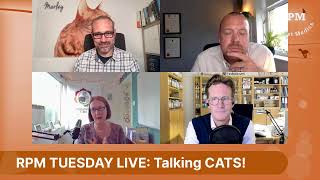
Holistic cat therapist Julianne discusses switching cats from dry kibble to raw diets, using freeze-dried treats and games to make the transition easier. She also covers enrichment through play, water provision, and letting cats self-select herbal remedies and essential oils for health issues.
Chapters
Hey, hi guys!
Hello everybody!
Yeah, Conor, you did send us a photo, we did show it last night.
Did you get that? Yeah, oh, you did! Did you show the picture of the Bon Jovi gig which I told you not to show?
Yeah, that's right, you did! It might not be the one that you thought you were going to see, but anyway, guys watching, we'll be able to tease you all the way through, don't worry.
It was a Guns N' Roses gig last year, guys, or last week, which I deeply appreciate your patience, but it was fantastic. Free ticket to Guns N' Roses, sun setting behind the stage, November Rain live. Oh my God, it was emotional. So I loved it. But then here we are this week, and in our bottom right, for people who might notice, there's 4 of us this time. And is this our first lady, the first female on the show? Oh, Karen. Oh yeah. Oh yeah, I'm Karen Becker.
Oh yeah, I'm Karen Reed.
Yeah, well, sorry, Kaz, she's listening, she's gonna kill me for that.
Anyway, she is going to kill you for that.
Absolutely.
In fact, we'll hold him down.
Okay, so Conor, you have— you've found Julianne, you've been doing some work with her. Would you please introduce her? Tell us all about her and then she can do it properly herself.
Julie-Anne is a cat extraordinaire. That's her business there, Naturally Cats. You'll find her. And Julie-Anne is a rock star, so she does an awful lot of stuff. She's kind of classically trained as a behaviorist, so that's her bent and that's her stuff. But now she is doing all sorts of holistic stuff. So big focus on energies and chakra and that kind of stuff. Loves a bit of ZooPharmacose. Which is kind of the way I found her actually, author of a book, The Aromatic Cat, which is fantastic. You can find it on our website, highly recommended. Most cat people talk about that book, so you find it in the forums when you're talking to them about things, and that's another way I found Julianne. So yeah, so Dogs First was getting approached by a number of moggy owners, and I never had anything to say except read my raw feeding cats article, which I'm 50/50 on if it's— I'm sure it's okay. And now I just direct them to Julianne, so she has taken that bit of pressure off me. So welcome Julianne, thanks for joining us tonight, eager to learn everything you know.
Thank you for having me guys, it has been a dream to come here and join you all and to talk about cats, and the work that you do is phenomenal for dogs, and every week I'm like, come on, come on, talk about cats, a little bit about cats, a bit more about cats. So I know, I know, I'm like, yes, we're doing cats tonight.
Bren's so happy.
Well, you know, I, I've none of this it's either or. I'm all for it's both. In fact, actually, there's goats and alpacas and a few other things as well. But, you know, I think, you know, cats deserve a little bit of airtime, do they not? Come on, guys.
Oh yeah, definitely they do. Yes, they do. So listen, Julianne, I'm going to get in with the first question. Um, what you, you were doing, uh, a conventional behavioral work, I presume. How did you see the light?
How did—
what was that road to Damascus, uh, event?
That's a great question, Nick. So my— it all started with my very poorly cat Pickle. She was so ill. She had diabetes, arthritis, pancreatitis, IBS, gingivitis, you know, and we just weren't getting anywhere with help with health, you know, with her well-being. So she led me— you know, I'm sure you guys have got the same stories, there's always the one, you know. She led me to trained in animal healing, zoopharmacognosy, which is self-selection, uh, Reiki, and energy work. But the biggest learning really came in when we, we got a second cat. My partner at the time wanted a second cat, and I'm like, I'm happy with this one, you know, she loves me, we've got a lovely bond. Brought the second cat in, I didn't know anything about behavior, and it all went to pot. So that's when I trained as a behaviorist to try to help the two of them get along, to, you know, establish boundaries, territory. And the learning curve when I trained as a behaviorist was like, it was really steep. It was, it was phenomenal. I mean, looking back now, I did everything like as wrong as you could do it. But the great thing is like now, you know, I see people that do the behavior stuff and, you know, it's only part of it. That's something that I've realized in the last few years, that behavior is a tool. You know, and it is really important and it's really helpful, but it is just one part of it. So, you know, the last couple of years I've particularly moved into using the remedies, the zoopharmacognosy work, particularly herbs with cats. And now I'm kind of— that's moved into chakras and energy because that's— that kind of underpins it all. So nutrition, behavior, mental health, emotional health, it's all— it's all together, you know. It's not a one it's not a one-pronged approach. So that's why, like Conor said, you know, I'm a holistic cat therapist because it's what, what can we do, which bit needs help, essentially. That's, that's how I help people, you know.
I love that. What was the answer to the question? So if the question was you thought the cat needed a bit of company, I would have thought cats are solitary enough animals. Do cats need company? What was the answer to the question you tried to find out?
It depends on the cat. And, and I know that's, that can be a bit of a cop-out, but it really does depend on the cat, I would say. So, you know, Pickle didn't like Lily at all and it didn't go very well. You know, Max is loving being with Leo. Leo's not so keen, you know. So it really does depend on the cat. They're solitary hunters, so they don't necessarily hunt together, in my experience, in my opinion. But when it comes to sort of social, how they live together, if you've got a few established boundaries and things in place, you know, they can, they can get along, but it really depends on the cat.
Yeah, I love that.
That's a very homeopathic answer. You know, the, the classic homeopath's question is, uh, is this good for this particular— you know, is this remedy good for this particular disease? And it's, uh, the classic answer is, well, that depends. Sometimes, maybe. Okay, which is exactly what you've just gone through.
It's true, you know, I do believe that every cat is an individual, so I don't think there is a one-size-fits-all in anything. You know, I think when it comes to, for example, like with medication, you've got certain symptoms that you can tick those boxes and it leads you to try it to see if that will help, you know, because that problem can be fixed by that medication. But there are other elements to consider. What's the diet of the cat like? What's the environment like? What's their overall physical health like? You know, they're It is a jigsaw. It is a really— it's about the whole approach, you know, and each cat as an individual.
That's cool. I meant to say at the start of this, guys, for the cat followers that are listening, if you've got any questions, pop them up in the feed so we can steal your questions and look really smart. But we'll do our best to get to your questions as they come along.
And I'm just going to jump in there with just to say thank you very much for all our Patreon people. And Pete, who always listens to all of these— poor guy, he has to listen to every single one over and over again— and he says please mention for the podcast people, because we are now on any podcast medium. You go to that and you can take us with you when you go for a walk with the dog or the cat. patreon.com/rawpetmedics. patreon.com/rawpetmedics. You can find us on there and anything you can do to help would be gratefully received. Thank you, Julianne. Sorry, just doing the housekeeping.
Oh, before we finish that housekeeping as well, I think a big thanks to this man down here for a wonderful exploration of dog behavior. I would just say, if you've been on Patreon and you've tried to follow his instructions on how to access this video and got lost, then if you look a little bit further down the post, I've re-explained it, and hopefully all of those guys can now watch the video. The key thing is log back into dogsfirst.ie, follow the menu, and then revisit his video postings, and you might be able to actually see the webinar for free.
That's one-third of our— one-third of our patrons have watched that video already. So one-third of whatever, 400 or 500 people watch already. It'll be up there for another 7 days or so. That coupon code is there for a free watch. So any people that are on Patreon, you can watch it for free with that code. So listen, Julianne, tell us, if we like, in the behavior side of things, do you get called out just for behavior consults, like, or is it more health consults that you do? Can you do behavior consults over Zoom, or do you have to go to people's homes with cats?
Yeah, so I can do that. I do both. So I recently did a client here in Plymouth, and their cat got stuck in a carrier bag just in the house as normal. Head got stuck in the loop of the handle. Ended up tearing around the house, got super stressed, you know, urinated, defecated everywhere, and then was reactive with the other cat in the home. So I went to their house, did, you know, 2 hours with them with some herbs, some oils, some healing, um, gave them some kind of like homework to do, you know, like in the background. Um, and a week later, you know, everyone's back together, a lovely happy home. But I do also consults online, so yeah, I was really chuffed. That's amazing. Yeah, it was great. It was. And it takes time, you know, cats when they suffer trauma, it doesn't, doesn't go away overnight. That energy imprints in their body and you've got to work to shift that, you know, from them. I also have like clients in like Costa Rica and Ireland, you know, the US. So yeah, I do a lot remotely as well. And it's really about supporting the guardians, telling them, you know, well, not telling them, helping them to understand the behavior from their cat. Why is your cat doing this? You know, what is it they're trying to tell you? Because in my opinion, no cat behavior is wrong. It's not bad. We just perhaps don't understand it. And that's where there's a bit of a miscommunication. You know, people come to me with problem behaviors and I don't use that term because it's only a problem to us humans. We're the ones that have got an issue with it. Yes, the cat's weeing in the front room. Of course, that's not pleasant. That's not nice. Not good if you've got kids and that's where you eat, etc. But the cat is trying to tell you something. So, you know, for me, the, the, it's about helping the guardians to understand what's going on, what's going on.
So what would you say, Karen? What would you say is the biggest problem in nutrition? Just bringing things down to a nutritional point. What's the biggest problems in nutrition that you get with cats, would you say?
Oh, I knew you were going to poke me on that. So it's that they're fed dry food and, you know, let's just put that right on the table and For me, it affects everything. And it's, and it's really heartbreaking because that's what we thought was the right thing to do. You know, that's what we've been told by parents, by, you know, society, supermarkets. That's what we thought. That's what we're told is the right thing to do. So I don't try to label people. It's not wrong. You know, it's not a species-appropriate diet, in my opinion. But if your cat is currently on dry food, try your best to shift it, you know, so nutrition. Affects their behavior, their emotional state, their mental state, their physical state, all of the four elements really, apart from like spiritual, that affects the cat. So when clients come to me and their cats are on dry food, regardless of why they come to me, it doesn't have to be a UTI or a urinary tract infection or problem behaviors. It could be because they're chronically ill or really out of sorts. My first question on my, you know, consultation form is, what are you feeding? Because, you know, dry food, it's just so overprocessed and so inappropriate for obligate carnivores that it's heartbreaking. Like, I can't believe we've got here. You know, I mean, I free-fed my cat dry food when I first got her, my very own cat Pickle from uni. She was— she had scabs on her ears. She was stray. She was really— she was really haggard. And I just wanted to love her. So I love through food. And I just put down a bowl of dry and just topped it up like every day. You know, and she became obese, she became diabetic, and I wondered why we couldn't get her diabetes stable. And the vet just kept saying, you know, just upper insulin. I'm like, yeah, there's got to be more to it than that. There's got to be more to it than that. And he didn't once consider changing her diet. And I did all the research, which is again why I'm trying to help people like you guys are, right? Putting the information out, out there so people don't struggle like I'm sure you guys have, and I have as well. Because, you know, as soon as we took her off dry food and even put her onto wet, she was, her insulin was coming down. We were blood, we were checking her blood glucose at home anyway, again against the vet, but felt like the right thing to do.
So I think a really common question that I often come across, and I would love to hear your answer for this, is this question that Sue sort of put up there. Okay. Can't get my cat to eat raw. You know, what little tricks do you— I say tricks. What ways—
Tricks is good. I like tricks.
Tricks.
Tricks. Tricks is good.
What advice do you tend to sort of lean into or find is really useful for clients that are trying to move their cats over to the raw diet?
So for me, I would say, you know, there's like an in-between step. I would go dry to wet, wet to raw, because sometimes dry to raw is extreme. It can be in terms of taste, texture, impact on the gut biome, digestive system. It's a big change. It's like going from like McDonald's to green smoothies. Like your body's going to be a bit, bit shocked. But you can also bring in play elements. So play into the mental health. So get a chicken wing tip and, you know, put it on a bit of string. We did this with baby Max. You might hear a bell. He's just come into my office and is playing with a toy on the floor. We had a chicken tip, a wing tip, and we were dangling it in front of him to encourage him to play with it. And the second time we did it, he had a bit of a— and he gnawed on it a little. So how can you bring it into play? How can you stimulate their innate drives? You know, so I would say think about what you're comfortable handling yourself as a human, because not all humans are comfortable touching a piece of meat or, you know, whatever it may be. Can you hide it? Can you bring in the kind of hunter innate ability in them? Because every cat's got it. You might just— it might just be buried really, really deep. You might just have to draw it out a little. So again, do it a couple of times, hide it in different places, and, you know, bring in the fun element. We get so lost in, I must get my cat on raw, or I must do this, and our energy really affects that as well. So for you and your cat, I would say have fun. Think of ways to have fun with it.
Love that tip. That's so good because owners are getting nutrition PTSD here. There's a lot of information coming from everywhere and they've got one side, the trusted vet practitioner, saying you're going to kill them, and the other side you've got the internet and very strange messages and mixed, and people are really confused and scared and I have to get it right and if I don't, you know, he'll be sick. So that's a great tip that you bring a bit of crack back into us and the movement and stuff. And what about hiding it? So what do you mean? Give me an example of hiding a treat. You mean a little bit of meat somewhere in a Kong type thing somewhere in the garden, or what? Give us an example.
So what I would do is I wouldn't use wet food because it can be, whether it's in jelly or, you know, like gravy and stuff, it can be quite messy. So we use freeze-dried treats and I call them treats, but they're not really treats. That's only because that's the way we give them. It's basically freeze-dried meat. And there's no— the brand that we use, we use— can I tell people what brands we use? I'm not like an affiliate or anything.
We'll get money off them later.
It just is like, you know, if you're cat mum, this is what we use. So we use a brand called, uh, Cosma, um, and we get it from— we get it from Zoo Plus. You can also use Thrive, and they are just like literally freeze-dried pieces of meat. So our boys like chicken, um, Max has tried a couple of salmon ones. You can get duck. But there I have some on my desk because I'm an awesome cat mum and my boys come on my desk. So you can— they're like, can you see?
Lovely, big, really big.
Yeah, nice. Okay, yeah, what's going on?
Yeah, so those are what I would use, Conor. I would flick it across the floor because then that gives them the, the run to it. You know, I would use it a little. You can get little mice, mice, plastic mice that have got little holes in so that they bop it and it rolls over and the treats come out. Yeah. Put it in the garden if they're able to have access to outside. Like, you know, your limit is your imagination, people. You know, you can, whatever crazy thing you can think of, like you don't want to put it under your pillowcase unless you want your cat like snarling when you're trying to get to sleep. But, you know, put them anywhere, you know.
And what do you feed your cats, Julianne? What do you feed your cats?
So Leo's on raw completely, uh, he's a mixture and it's pre-made. I don't make it myself. I've looked at it a couple of times, but it's not for me. So he's on, uh, 3 different brands of pre-made. And Max is on all 3 because Max came to us in February from a rescue center, and he's recently been in a referral center for a breathing problem. So he's gone back a stage. So he was, uh, 80% raw, 10, uh, 20% wet. But now we're— we've gone back to probably about 10% dry, 80, uh, 70. I can't get the maths sorted. He's probably about 10% raw, 10% dry, and 80% wet at the moment because he is— he's still not 100%.
So yeah, yeah.
I would doubt that one. That psychophysiological preempting food is just great. And actually, for those of you who are a bit funny about playing with food, I've even found just playing with the feather ticklers, just anything that's getting them to pounce and prey, you know, get onto stuff. And then also that feeding around those real impact times for cats, which is dawn and dusk. You know, if you really want to, and it's great for raw feeders because they're usually the coolest times of day as well. So you can, you know, put that food up high sometimes is also advantageous. So putting on the windowsill and actually letting them feed in those environments. But I love that you've brought up that behavioural side, that psychophysiological driver for feeding. That's brilliant. Well done.
Yeah, that's cool.
Do you give advice on waters? We've been talking about water over some previous weeks. And I know cats are particularly sensitive. And with all that you do, have you found any other things that you do with the water provision for your cats?
No, I am really straightforward and simple with that, I'll be honest. So they, they do have access to hydrosols, like floral waters, if they want it, but that's a completely separate dish. They've always got a plain filtered bowl of water down, and then we change it daily. No, that's never something that we've kind of got into that realm just yet.
Okay, great. And should cat owners be leaving food out for cats? Like, if the pile of dry food left out on the floor, is that like in dog world, you kind of think, you know, we pop the food down, the dogs eat it, so you never really have much of a problem with that. In fact, sometimes in guide dogs back in the day, it actually elicited a few kind of troubling behaviors when we were trying to deal. So we always thought leaving the food out for a dog that wasn't eating, it wasn't a great idea. For cats, is it recommended that you leave the food and And then what do you mean what happens when it's raw?
So no, I don't recommend free feeding, and Brendan may have a different approach to this, so I'd be interested to know what your thoughts are, Brendan, in a moment. So no, I don't advocate free feeding because cats can get anxious around food time. They like routine, and it can lead to cats being overweight. You know, I wouldn't— I definitely wouldn't free feed dry. I mean, that's, you know, let's be honest, you want to kind of get them off it anyway. But with structured feeding times and that behaviors that come from the human with that process, it helps to keep the cats in flow of the day. So with their energy stable and not just the energy in their physical body, but their emotional and mental energy as well. You know, like in the mornings we come down, we make the coffee and then I sort the boys, you know, and, and they kind of follow you around and they know what's happening in their day. So I wouldn't recommend free feeding. And if you are at the moment, I would advocate that you start to pick it up at times and make those times short to start with so you don't cause anxiety in the cat and then increase those times where their food is taken away. But, you know, if we think about cats that are in the wild, they would eat small meals little and often. They're not sitting there like cows grazing on grass all day long. So, you know, I would always advocate people feed 3 to 4 meals a day. And again, I know that can be a bit controversial because some people say feed twice a day, but Oh, and she's dropped out, but she'll come back.
So yeah, just a view on that was— so I always try and say to people, consider it's a mouse-sized meal. Don't overface them with huge amounts of food in any one go. So a lot of people will look at free feeding, and from that side of things, we will just say, look, from a point, don't give huge bowlfuls and leave it. Let them eat at dawn or dusk, as I like those, are great times to start. If they're eating all of that food up very quickly, and keep it at a height, don't put it on the floor. I always try and avoid going down to sort of floor level, purely and simply because they will feel threatened in that environment, even if there's no other cats or no other pets. You know, cats hate to be looked at whilst they're eating, so don't go perching over them or anything like that. Let them have a height advantage. Sometimes even clear off a bit of a bookshelf and actually be able to put the food onto that, on a piece of carpet tile or whatever it be, to give them some grip, and let them actually get to a height where they're hunkered down. And some of the hiding places, you know, is great. So actually create a little bit of a hiding place. If it's a wooden box in the garden that's raised on a perch, or it's a place in the house that's inside a wooden box, then, you know, we can have a look at that and see whether it's possible to get cats comfortable in a place, give them small amounts of food at a time You've got to look at their daily requirement, and certainly for my Spider, you know, she is a cat that loves to come up to bed with us all. She definitely has her moments in the night that she'll also go out and feed. So it is a case of, I know if I fed her at dusk and then she's had some of the food and she's finished it, I can put some more down, and because it will be cool through the night, she may go back and visit that. You know, you're not going to have the fly activity at that time of day, you're not going to have, you know, all of the other concerns. It's cooler weather, well, cooler time of day even in the summertime, so they cope through that. If I'm going out in the morning, yes, I'll feed at dawn or, you know, earliest that I can, and then if she eats that up, great. If she doesn't, generally that stuff is either taken away or binned. Okay, um, some things, well, of course I've got some you know, movable bins that are— yeah, Pippa, who are always just making sure that she has finished everything. But the other great thing for me is when I'm preparing the dog's food and that's going in the dishes, who's on the kitchen side just making sure that they're not getting anything that she'd like? But she's there just saying, I'll have a bit of that, and the dogs are looking really upset because she's got this huge dog bowl in front of her and she's delving in. And I love the fact that actually she will pick and choose what she wants day to day. I do find, and I'm going to ask Julianne about this, but that some cats are about fish, some are more chicken, and some actually just, I'm totally not either chicken or fish. There are those minority. But I love the fact that she will now almost follow the dogs in taking big chunks of whatever. Doesn't have to be macerated into tiny little things. She's a great hunter. In fact, Artie makes sure that she kills them quickly because she just tells her off for playing with her food and then leaves them for her to finish off. But she will eat that. I know that we've had some people say that they don't feed their cat, it feeds themselves. But there's plenty to be said for occasionally visiting the reptile shop for the chicks and mice. Okay. And that can be another great fiber source. Somebody was asking me over the weekend about you know, psyllium husk not necessarily working for their cats, you know, giving to cats to try and improve their motions or improve their fiber source. And if we take the data from, you know, feeding large cats in zoo environments and even what they do in the wild, actually there is the paper that we've shared amongst ourselves about the fur and sinew and skin being a really important fiber source for carnivores. And actually, hairy chicken nuggets.
Yeah.
So, well, I mean, that's what you can call mice all you like, you know, but it's a great source. You know, if they can get access to all of that stuff, then that's—
Have you gone that far, Julianne? Have you gone as far as little baby mice or baby chickens?
So I've got a tragic story and I hope this doesn't upset too many viewers. So Leo is a good hunter, but he doesn't eat it, which is heartbreaking because I'm like, buddy, if you're going to kill it, eat it, right? You know, circle of life, Pumbaa and all that. And when he brought a robin home, I actually gave it to baby Max to see what he would do with it. And he loved it. He went crazy. There were feathers everywhere. He licked just like Brendan said. He licked like the tummy bear. And then he wasn't. And then he sort of stopped playing with it. So I Oh, I kind of made a little cut on it so that he could smell the blood and, you know, everything. And then he was licking the inside.
You didn't make a finger puppet? You didn't make a finger puppet? Please tell me you didn't make a finger puppet.
Vegan, can I just say vegan right here? No, I didn't. No. And then I bought online some quails. Oh my God, they're huge. Like, I didn't realize how big quails were, like, in comparison to like a robin. Like, you know, robin quail. Like, it's massive. So I've got these 4 quails in my freezer. I'm like, what am I gonna do with that? So I've got my rubber gloves on, tempted to wear a face mask but didn't, and I'm cutting up— oh, cutting up this quail. And yeah, I gave Max the, uh, breast and he really enjoyed it, and I gave him a leg. I forgot to cut the foot off, so he's gnawing and chewing at this like quail leg, and I'm like, it's about that far from the foot, like the ankle, and then his foot. I went to grab it, he went and he ate it. I'm like, oh my God, he's just eaten the whole thing.
Yeah. Wow. As soon as you said you brought a quail in, I just had this picture of the Friends episode with Joey with the turkey on his head. He just dived in and Anyway, that's an aside.
Yeah, brilliant.
I mean, there are lots of things that you can go to and, you know, even Spider will eat chicken wings and the people will think, God, they're huge. But actually, you know, they will get through them. We've got people that have talked about their cats even hunting wild rabbits. And bringing those in. And certainly that's certainly doable by many cats out there. So don't get too concerned as long as they're wild ones and not the pet rabbit from next door.
Okay, so on a note you said earlier, Julianne, what is the difference between mental and emotional health, and how important do you think it is that a cat gets access to the outside to do his thing?
Well, that's like an essay question there, Conor.
Yeah, it's a bit long. Sorry, I want to get those So is Julianne writing your blogs?
I'm sorry, he's just recording this.
Julianne, you know where it's come from. So for me, mental and emotional health are aligned, they're linked, but they are different. So, you know, mental health is the overall well-being, you know, how secure is the cat in its environment, how healthy does it feel with its day-to-day activity, how well is it able to express its normal cat behaviors? You know, that all contributes to the mental health. The emotional health is how does it feel about all of that, you know. So do they feel comfortable, confident, secure in their environment? Do they feel that they've got good relationships with their guardians? Do they feel emotionally stable? You know, are they overgrooming? Are they displaying signs of aggression? Are they showing signs of anxiety? Are they withdrawn? You know, the emotions feed into the mental health, you know. So as much as we may talk about them separately, they are very much intertwined. And the second part of your question, indoor versus outdoor, was it?
Yeah.
Again, there's no right or wrong. What I would say is cats need enrichment and cats need to be able to thrive and to have good mental health. So for me, like, it depends— homeopathic answer— it depends on the cat. Because, you know, when we had Leo, they said to us, keep him in for 6 months and then let him out. He wasn't fully established in the home. He was still hiding a lot. He wouldn't come when called. We didn't have a good relationship with him. I wasn't comfortable letting him out. I didn't think he'd come home. So we kept him in for 12 months. By about 10 months, he was ready to go, and we were almost at the point where he'd started to overgroom as a sign of a stress response because he couldn't go outside because that's where he felt safe. So, you know, I— he would have problems if he was kept indoors. That being said, Pickle, my previous cat, she very rarely went outdoors, and it was great because I knew she was always safe because I am a worry mum. And, you know, she was always in the house, but we did enrichment for her. So yes, we did heights and, you know, levels and toys and play, but we did more. You know, we— I remember once we brought in this big branch had fallen off a tree in a storm. We cut some of the leaves off and we brought the whole bloody branch in because we were like, you know, It'll smell great. Bring the outdoors indoors. So people, I'm not suggesting you go and cut down, you know, your bushes and your branches at the back, but if you can bring in something that I would call a sensory garden, towel or a blanket, you know, some leaves, some, some weeds, some grasses, a bit of mud, a bit of dirt, you know, a rock. Like, I know it sounds crazy, but even just 20 minutes with your cat being able to sniff and smell and investigate all of that, great for their mental and emotional health. So it's really about what's right for the cat mum or cat dad and the cats and their environment. You know, we live on a busy main road at the front, so the cats don't go out the front, they're running out at the back. Now, yes, of course they can get around to the front, but, you know, we try to limit them by just going outside. We back onto some local woods. So it isn't a one-size-fits-all, you know, if you're in a busy, if you're like in London, then you probably want to have an indoor cat. You know, if you've got like 5 acres. Why would you be keeping them indoors? You know, that being said, if you've got like coyotes— I was talking to a friend yesterday, she's got like, I think it was 16 or 19 cats, and she keeps them indoors because they've got coyotes. So she's harness training one or two of hers, you know, to take them out during the day. So it depends.
Sorry, I presume she doesn't live in Croydon.
Yeah, crazy cat woman. Interesting.
Julianne, you mentioned that you're vegan. How does that— how comfortable— because you love your cats, that's really obvious. How do you square those arguments that you won't kill for yourself or be part of that process for yourself, and yet you've got these cats who you love dearly and they are obligate carnivores? Just walk us through that for a minute or two.
Yeah, I have to pick my battles, you know. I have to choose what is right for me and what is right for my boys. So if I wanted a veggie-eating animal, I could get a rabbit. If I don't know if they eat meat, I assume they're like omnivores, are they? Yeah, yeah, herbivores. Yeah, I'm not a big rabbit.
Yeah.
So, you know, I choose to have obligate carnivores as pets. You know, in fact, I don't see them as pets. They're my babies. They're my boys. But I need to do what's best for them. And that is different to what's best for me. You know, I have to separate them. So when we look at the food stuff that we get and the sources where we get some of their food, it is heartbreaking to look that some of them are farmed. And it is heartbreaking to look at what going into their tummies, but I see them thrive, and that, that's all that I need to see. So, you know, it— I have to compartmentalize it. So what's right for me, I choose that. I have to try to do my best for them, that is to, to give them a species-appropriate diet that is catered to their needs. That's not— that's not fair for me to say, well, I'm— I don't eat meat, you shouldn't eat meat. That's not— I'm, I'm, I'm their mum. I'm not their— what's the word— like dictator. Like, you know, that's that's not fair in my opinion.
So you go down the species appropriate, that you're an omnivore and you can go down into herbivory or up into carnivory, and that— but they are, they're plonked firmly in the carnivorous zone, so therefore you just have to respect that. I think that's a good answer.
Yeah, so say all of us.
Yeah, I once was away on a retreat and I put a post out on social media about dry food and I got trolled for it and I got people saying to me like, you're not a nutritionist, you know, how can you comment about that? You know, you're a behaviorist because I wasn't into the energy space then and it was by a vet nurse, you know, and I came back and said, look, if you know of any cat-specific nutritionist, I'd love to connect with them. Like, please, let's have a conversation. Like, you know, come to the table with the information. What have you got? You know, I was— I said everything I've learned is as a cat mum. It's from having a diabetic cat. It's from years and years of struggling, years of self-education. You know, and I went away on a retreat. I do it twice a year. And I was, it was, it was hard. It was a really stressful time. And I was on this retreat by myself, you know, no, no tech or anything. And I was, there was two cats there and I was sat in my room and on the balcony I heard this god awful noise, like a proper yowling. I'm not going to do it. I do, I do noises on my lives, but I'm not going to do it on yours. This cat was like yowling. I'm like, oh my God, like who's hurting the cat? Went and looked over the balcony to see this beautiful tortoiseshell pussycat playing with a dead mouse. And I'm, you know, a bit gross. I watched her because it was nature at its best, you know, it was just heaven. And I went to come back in and I heard this almighty crunch as she scrunched and ate the skull. You know, she started to eat the mouse. And I thought, if ever there was a moment where I doubted myself on what I believe, like there it is, like right there, you know. And I remember that story with Nala because I found out her name because it was really affirming to me that cats are carnivores, you know. And if you've got a cat that's on dry food or wet food, you know, if you're struggling to transition them, you're not alone, you know. I'm just going to put that out to the peeps. I think there's a lot of comments about food and things, you know. I don't know if we'll get to some of the questions, but it's not an easy road, you know. Some cats take to it beautifully. I had a client say to me I told them that their cat shouldn't be on dry. The next call we had a week later, oh, he's been on wet, he's been on raw food for 4 days and then was on it for like forever. I'm like, oh my God, like, you know, I'm a cat therapist and my cats aren't that good.
Yeah.
Like, come on.
Yeah.
But, you know, if people are struggling, it can take a bit of time. Just, just go easy on yourself, you know. But cats need the best diet that you can afford, that you can handle and you can tolerate. And see if you can get them to eat. You know, you've got to think about all those different factors because it's not a just feed them, just feed them this, you know, life's not that linear.
Yeah.
Beth B is asking.
Yeah. Before I come to my next comment, I think Beth B's asked, you know, are veggies ever okay to feed to cats? In your experience, you must have done some zoo farmer and stuff like that as well around this. Have you sort of ever thought about foods and whether they include veggies or not?
I can't see her comment. I can't see her question.
Oh, it's down the bottom.
I've just come across our screen underneath. Yeah, I put it in the bottom right in front of my face.
Yeah, it's huge.
There we go. It's right there.
Where?
There, right on the stair with clogged—
I can't— this big orange words are in my way.
Sorry about that, my first time using this software.
Yeah, veggies for cats thing is interesting because like we have videos of YouTube videos of cats trying to eat a piece of broccoli and, and, you know, a vegetarian or vegan person saying, oh, my cat loves vegetables. And what we know of cats is something similar to dogs, is that in the first few weeks of life, there's an imprinting period in cats as well where you can train the cat to say, look, this is normal food, this is normal food, and the cat will later on say, oh, okay, I'm a broccoli broccoliivore and they start eating broccoli on YouTube, and then the people start saying he loves broccoli. And so that use of the word love is a bit misleading. It's like, well, you've trained them to eat broccoli. Is it actually a useful food source for them? I don't know, do cats eat many veggies? As an obligate carnivore, I can't see it being in their pyramid at all, bar a tiny bit of stomach contents perhaps. Is there any place for veggies or berries or whatnot in a cat's life?
I love that sentence. Any, any space for berries or whatnot in a cat's life? I love that. In my opinion, I'm aligned with you. So what they would eat, you know, like Nala and the mouse, she's eating what's, you know, either partially or digested in the mouse's tummy. What I would say is if you've got a cat that is eating unusual foodstuffs, and by that I would say like fruits and vegetables and things, I would look at potentially there's a deficiency. You know, what is it they're trying to help heal themselves with, which does kind of move into the realm of the zoopharma work and the self-selection, you know, with grasses and nutrients and things. So in my experience, no, I've not had cats that have done that, and I wouldn't particularly suggest there was a place for it. I would be more aligned of the, you know, it's meat and bones and etc., etc.
Yeah, that was a nice segue there. Tell us about zoopharmacology there. You were mentioning that, that's a big kind of a part of your life. Tell us about that. A lot of the folks on here know about it in dogs, but tell us about using it in cats. How do you exploit that in cats?
So, so for me, self-selection, you know, every cat, every being has the innate capacity to know what they need to heal. We've sadly taken it away from a lot of our cats because they don't have access to the remedies they need to choose to heal themselves. So self-selection, or applied self-selection is where you bring remedies and offer them in the house. So for example, we have some, we have some spirulina. I don't know if you can see. If I tip it, I'll pour all over my desk. But we've got some spirulina on the computer.
Please not.
Yeah, not a good idea.
You could send Conor the bill.
We have, um, we have some spirulina powder, and that option is in, uh, organic olive oil, organic sunflower oil, because Leo's on steroids and an inhaler for his asthma, which we're reducing him off. But we— I basically rotate having different remedies open for them. So they've got access to the woods and the great outdoors. But I also offer other options. So it's not just a question of, oh, they're poorly, what can I offer to help them fix themselves? It's, you know, what do they need to thrive? Because sometimes, like, we need a cube of chocolate, right? Or a slice of cake or a really strong coffee or a beer or a glass of wine, or, you know, you don't need that every day. No, you don't need that every day, but, you know, you, you choose different things every day to help you feel good, and that's where I feel Zoo Pharma comes in.
That's nice.
You can ask a question a minute ago. Sorry, didn't— Nick, did you have a question?
Uh, no, no. What is it?
What—
just tell us what Zoo Pharma Cognosy is.
So Zoo Pharma Cognosy stands for animal remedy knowing, or animal medicine knowing, depending on how you translate it, and it is the cat's capacity to know what they need to heal from, for example, like a plant. So you will see cats going out and rubbing against a lavender bush in your garden or a rose bush or eating particular grasses, and they generally eat the tips because that's where the nutrients are. So when they have access to it, cats will choose botanical remedies, herbs, flowers, powders, essential oils if you use that as an option, which I do. To balance themselves, to find balance and well-being, to create homeostasis in their body.
Oh cool, yeah, so you can use it for health conditions, like so if you have a gut-sick cat, do you present the cat with remedies that you think might help and say, there you go buddy, have at it and choose your remedy? Is that the idea?
Yeah, definitely. So Max has actually had an issue with coughing and now his digestion's funny enough, you know, is now a bit unsettled. So we've put down, put down something called a herb garden. So it's a towel or blanket in the dining room because that's a quiet zone in our house. And he's got some remedies there to support his digestion. So he's got marshmallow root, chicory, ginger, and peppermint. I only put one in each corner. All dried herbs, all organic. If people are interested, you can get it from my shop on my website. And yeah, I've basically put them down for him to use. So if he wants to, he can eat them, sit with them. You know, that's just dried herbs. You can then use, you know, I could make peppermint tea, ginger tea. You know, you can steep them basically in water, let that cool, CFL ingest it. And then hydrosols and essential oils. So maybe that's another topic. I don't know how this is something.
What's the difference? What's the difference? I don't even know what hydrosols are. What's the difference between the hydrosols and essential oils?
So hydrosols are generally made from the essential oil distillation process. So when you are creating an essential oil, that's when you will, as a byproduct, create the hydrosol or an aromatic water. It depends how the essential oil is made as to what the product is that comes from that, essentially. So in terms of concentration, you've got like essential oils that are really strong and potent and awesome to make big shifts in a cat quite quickly or to deal with trauma. Then you've got hydrosols, so that kind of like in between. Then you've got herbs in terms of concentration. So herbs are lovely. They're gentle. The energy profile is really light. You know, cats are really sensitive, so they work brilliantly with herbs. I use a lot of herbs.
Okay, that's cool.
Yeah. And I would say that, you know, just to reiterate, there is that importance of how they take those things. So whether it's the smell alone, whether it's the actual ingesting the things, or whether it's actually just opening up those herbs by whatever means, whether that's chewing or rubbing and then actually having them in contact, etc. And some people perceive that they're eating stuff for purely nutrition's sake, but actually releasing some of those smells, those herbal essences, is that's what they're doing in those circumstances. And, you know, for the person that was saying about coffee there, there was a comment about the toxicity of coffee. You know, they found their cat with the head in the jar. You know, it's a really strong, pungent, herbal— I say herbal, it's a a medicine in many senses. And so they may not be truly ingesting that whole coffee jar, but just getting a really good whiff of a stimulant. So that's really where we're at with the zoo pharma. That's interesting.
And also, I would say with the coffee, that makes me think of a dark root, right? So like valerian root. What root are they trying to get to? Because coffee is a very, like you said, a dark, pungent smell regardless of the brand, the roast, whatever. There's likely to be a chemical that's made that coffee that mimics the botanical profile of a plant that the cat wants, you know. So, so that's my— when, when people come to me and say, my cat's doing weird stuff, they sniff this, they lick that, I'm like, so what does that smell like to you? What, what herb essential oil does that, you know, resonate with? Because that's probably what your cat is trying to get hold of.
Yeah. And similarly, even if they do eat it, even if they do eat it, you know, it's not necessarily— they're not going to know whether— how toxic is it it is, if they've got that need because of the smell and odor, sometimes they will still eat it. So be careful if you do have toxic things. Even some cats will eat lily stamens with pollen. Doesn't mean that they're not going to harm them. And the issues that you may have with the toxicity aren't necessarily always immediately apparent. So some of these will slowly knock their kidneys off, and it's only when they go off the cliff. If you look back at our video on kidney disease in cats, that actually they become, oh yeah, actually I probably did kill the kidneys with allowing them to continue to do that inappropriate thing.
The last thing on your CV there, Julianne, you mentioned the word chakra a lot. Do you want to tell me what a chakra is and how you work with it? What is this? Tell us about chakra. What is this thing you talk of?
I think it's time for my camera to cut out now.
It's the name of the Indian restaurant down the road and it's excellent. If anybody wants an excellent Indian restaurant, it's called Chakra and Greystones. It's very famous. Anyway, Julianne, tell us about this chakra business. I know it works for you. What is it?
Yeah, so everything's made of energy and your bookcases, your photo frames, you know, everything, everything is made of energy. And chakras are the body's portals of energy, essentially. So to give you a really high level, you know, there are 7 main chakras, the colors of which are here on my logo. There are like, for every acupressure point or every acupuncture point, that is considered a minor chakra. Um, so basically it's how energy comes into, flows around, and comes out of the body. So the 7 main ones, they start at the root, so that's by the tail for cats, and their feet, and they work up through the body, and it finishes with the crown, which is the top of the head. So each of the chakras is aligned with different parts of the body, different emotions, they've got a different frequency. And basically, you know, when I do chakra clearing, cleansing, and balancing with cats, it's to try to understand and feel in them what is out of balance, what is out of alignment. So, you know, what has got blocked? Because, you know, energy is like water, you know, it needs to flow. Now, you could have boulders in the stream and the water will still flow. It might be a little disjointed, but, you know, it still has to flow. Energy is exactly the same. So if you can remove those, those blocks, um, you know, you can help the energy to flow, which then heals and helps to balance the physical body. So energy manifests manifest itself in physical issues if it's blocked.
That's cool. How can you manipulate it? But I understand that's the point of acupuncturing, because it works so well with me. And I had a frozen shoulder, had a frozen elbow, or golfing elbow, even though I don't play golf. It was, it was frozen. And acupuncture, she started on this side of my body, and I was like, no, it's my elbow. You're going— where are you going? You're down on my knee. And she goes, no, it's, you know, these pressure points. So I totally get it, totally worked for me. But how can you help a person or a cat, or especially a person with a cat who knows nothing about pressure or these points? How can you manipulate it from far away?
So this is probably where I'm going to get a bit woo-woo for you guys. So, you know, it is the sort of— it is the— it's the energy. So it's like a radio, it's tuning into the radio, you know, I find the frequency. So basically people will send to me, you know, like I worked with a lady yesterday, her cat's in the US. And she sent me a photo of her cat, you know, eyes open facing towards the screen. I was able, once I've calmed my mind, my logic, my psychology brain, you know, I've got a degree in psychology, so the logic bit of me is like quite noisy. I quieten that and then I sort of drop into my heart center and I can almost like tune into my— tune my radio to find the frequency of the cat. And then I feel in myself what's going on. So like this cat I worked with today Yesterday, sorry, it was very angry, it was very hot, there was a lot of energy in the lower chakras, and I basically sit and help to shift it, to clear it. So it's, yeah, it's a little, you know, I know it's unconventional and it's not, you know, traditional medicine, but I've had some phenomenal results with it with my own cats, you know, with clients and things. So it's, it's the other bit that goes with the physical, the mental, the emotional it's the spiritual, you know, and it's the energy piece that actually affects all the others as well. So, you know, they're all tied together and it's really about trying to work the foundations.
That's cool. Like we say, you call it— you call it— before I met these two vets, you know, I think the best vets in the world that I've ever had the joy of working with. And before I met these guys, I would have been bordering the cynical with homeopathy. And so, uh, it was really— I got a serious telling off one night. Uh, I was out with Nick and, uh, uh, and up in Finland with one of our heroes, Professor Heim Borgman. And I said something disparaging about star signs or something, and she shot me a glance and she goes, what do you know about star signs? And I'm like, oh, uh, what? It's like 2 o'clock in the morning, you know, we're trying to— and, uh, she goes, she goes, what do you know about star signs? I bet nothing. And I was like, very little. I knew she had me straight away. I knew all the poo-pooed ideas And she goes, she goes, but everything in the sea mates at the same time. You understand in nature it happens like that and you understand gravitational pull and we're all water. And I'm just nodding to this point after point after point that she makes. And she knows there's behavioral studies, you've seen them. And I'm like, well, not really, but I heard they exist. So that was the very last time I poo-pooed anything. So like, you know, now when you hear what these guys and see what these guys can do and turn these cases around, these impossibly difficult cases, and homeopathy is often a part of it. And then you're forced to explore it and the studies and the evidence for it, then suddenly I'm like, I cannot believe this thing is still being repressed. It's so amazing. And so like every new thing, we feel like we have to kind of say, well, look, you know, not everyone does this, but that's usually where the gold is. So yeah, keep digging. I think that's really interesting.
The mind is like a parachute. It only works when it's open.
Oh yeah.
Nicholas, he's happy with that one.
But if you're— what's the corollary of this? There's two sides to every coin. The other side of that is if your brain, if your mind is too open, be careful your brain doesn't fall out.
Oh yeah.
Yeah. So you've got to be— Open, not— not—
not— yeah, it's just— it's like, it's— it's— but, you know, people— people think that science and academia, they're very confused over the two of them. And science is a simple process. If you give it a go, try it, and if it works, that's science. You've just done a scientific procedure. I did what you did, and does it work with me, with my individual in front of me, or my kids, or my body? That's pure science. Academia is having to publish it in a journal and whatnot. It's a separate kind of thing. and those two can get very, very confused. And so I love the science of it, and unfortunately our ways of looking at some things are very, very confused. Like, we bloody don't know what dark matter is. It's most of the weight of the universe. We know it's there, but we just can't measure it with the tools we have at the moment, and we will eventually. But like, uh, so I believe this. I totally believe in this kind of energy buzz. I know there's something to it. There's countless examples of these things working. Horses are great and very receptive to it. You've got Reiki and all that kind of stuff, that's going down the same route, is it?
Yeah, very, very much so. So it is very much Reiki, you know. I mean, I'm a Reiki master and it is totally to do with that, you know. It is about energy. And not being funny, like, it's not one or the other. So if Max, God forbid, like, touch wood, breaks his leg, I'm not gonna just heal that with energy, right? I'm gonna need a vet to put in a— I don't know, a pin, whatever it needs to do, you know. So it's not just it's not like the way— like I said right at the beginning, you know, it's all about complementary. So Max has just had a situation where we had breathing problems, he had to have a CT, a lung wash, you know, we've had a whole host of things going on. And, you know, as a result of that, now that's kind of behind us, his energy is not right, his appetite is still not 100%, his behavior, his personality is still not 100%. But if you take him— if I take him to my vet, she's going to tell me that he's fine. You know, and I know that he's not because he doesn't, doesn't feel right. And I can't tell you what that is, but just doesn't feel right to me. You know, I've got to— what did you say?
Give him Valium. That would be the solution. You know what I mean?
I have a little bit of that.
That's why he's not a vet.
Okay. I'm saying if you brought him to the vet, that might be the solution. Jesus, edit that out, please.
Not a pain relief. Don't do it.
Yeah, you have a good sleep. That fixes everybody. This is so interesting, guys. It's an hour in, um, so, uh, Pete has to chop this down somehow, but that, that was just so interesting. And there's clearly a lot of, um, cat people here. At the very start, Pennywood shouts out, more ferrets! So I just thought we're going down a slope here of meat-eating animals. So it's not the worst idea.
I'm sure I can find a ferret Peter somewhere nearby to come on one week, just so that we—
I know nothing about ferrets. I'd love that. Do you know anything about ferrets, Julianne?
No, nothing. I can't even give a quick whip.
No, don't go anywhere near trouser legs or drain pipes.
It's fine. So Julianne, just, do you want to just, uh, what, how would you like to close today? Thank you, Nick. So I will look at everybody's questions and comments and I will reply to people. And I would say, you know, don't forget that your cat is an individual. You know, they are unique and no one knows them better than you. So yes, we can all come on here and we'll share with you our experience, our knowledge, our suggestions and recommendations. Take what works for you and don't feel like you've got to do it all. You know, try, try one thing. What's one thing you can try? Do you want to get the book and look at herbs and hydrosols? Do you want to try moving your cat from dry to wet? Don't, don't try it all. We're human, you know, and life is busy and there's a lot going on. So if nothing else, you know, just take a moment to look at your cat and appreciate them for the beautiful being that they are, because in my opinion, they're sentient, they're sensitive, and they're really, really awesome. So I'm gonna say that I hope that you guys will have me back again, like, next quarter maybe to do more cat talk. And if you want to get in touch, you can find me on Instagram and Facebook at Naturally Cats. My website is www.naturallycats.co.uk. I offer a range of services from the energy work, help with herbs, and behavior stuff as well. So if you've got any questions, get in touch. And just to, as a final note, thank you all gentlemen for having me. It has been so much fun and I would really, really love to do it again. So thank you.
Absolutely.
That's brilliant. And would I just say, for all of those cat lovers out there, if you want to see more cats, hashtag more cats, post it on this, and we will see how many cat lovers— we might even get you back monthly. Maya wants to come on, you know, maybe we'll get rid of these two dog lovers and we'll just turn into a cat show. Yeah, we'll just do— we'll be the cool cats on the block, okay? And these guys can have holiday.
And also, your book is called The Aromatic Cat. There was links posted at the start of the show, but The Aromatic Cat, you're gonna find it, and it's also on your website as well. And, uh, check out the reviews, guys, it does the business. So, um, listen, thanks again, Julianne, that was fantastic, guys. I'm not sure what we've got planned for next week, but as always, I'm sure we'll get to talking and plotting on WhatsApp and issue it in good time. So guys, there's 7 days left on that seminar on patreon.com for my behavior seminars. That's free for our patrons. So it's Raw Pet Medics on patreon.com, free for the next 7 days. Thanks again to Julianne and thanks to the guys. And I love— that was a very quick hour for me. There's so much more we can do with that. We do nothing with cats. We must spend more time with them.
Yeah, if you've got a book, plug it on this, um, yeah, put it on to the comments that lots of people are asking about. You know, we can, uh, no, that they— we can put the comments on, uh, at the end we can go back into the post and we'll put the comments. Oh yeah, uh, for your book. Okay, so there we go. That's brilliant. Thanks guys, see you all next week. Look out for










