RPM Face Book Live: Arthritis and pain management
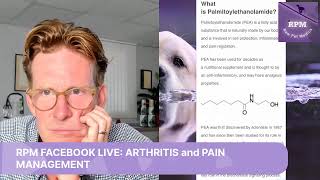
In this live, Brendan and Speaker A (often referred to as Nick) lead a community‑driven deep‑dive into canine (and occasional feline) arthritis and pain management. They begin with a quiz that highlights the importance of early, preventive nutrition—specifically feeding breeding bitches six months before conception—to set a lifelong joint‑health foundation. The conversation then moves through a hierarchy of interventions: raw‑food feeding, bone broth, and marine omega‑3s as the nutritional base; a detailed look at supplements (glucosamine, NutriQuin/Nutramed, PEA, Antenol, turmeric, and homeopathic remedies); conventional pharmacology (NSAIDs, the monoclonal antibody Librela, dose‑minimisation strategies, and reporting adverse events via NOAH); regenerative options (stem‑cell injections and platelet‑rich plasma); physical modalities (hydrotherapy, Tellington Touch, Bowen, controlled exercise); manual therapies (Western vs. TCM acupuncture, osteopathy, chiropractic, massage); genetic considerations (hip and elbow dysplasia, raw‑diet protective data, breeding strategies); and holistic adjuncts (homeopathy, anti‑inflammatory herbs). Throughout they reference community resources (Patreon video catalog, links shared by viewers, and a DogRisk study) and stress a multimodal, low‑dose approach. The session ends with a reminder of upcoming topics and gratitude to supporters.
Chapters
With his wig on, his nose out of the water. I mean, he looks kind of cute there. So you think? Yeah, I'm not sure whether that is him, to be honest.
We better say hello. Oh, here we go. Hi guys, good evening everybody. Oh, Jude's always there, she's just tied in waiting for us to start.
Very quick off the, quick off the mark. And Gabrielle is not wasting any time. Karen is As fast as you like. Jane is there and then Nishko is there.
Good evening. I hope you've got your water. Yeah, it's water, obviously, not gin.
Brilliant. Brandon, how are you?
Oh, well, yes, we're getting warm again after that wee wet spell. So everything's going well. Got horses I'm looking after. 6 horses at the moment for a friend of mine who had a wee accident last week. She won't mind me saying that part as well. And so they are wonderful company. You can go and sit on the land, enjoy the sunshine and the view, and just be. And they just come and gather around you, and you can just enjoy their energy. It is just wonderful, wonderful.
Yeah. What breed are they?
Variety. We've got everything from Argentinian whatever to American Quarter Horses to— yeah, oh, just, it's great. Just every, every mix that you can imagine.
So brilliant. Doris Lowe says, wants to ask about the difference between Cartrophen and Librella. We will definitely go there, Doris. Yes, yes, yes, we will go there.
Absolutely, absolutely.
Cool. Well, um, I'm going to be very boring as ever and say that I'm reading this—
another book.
And can you see now?
You've got to post that. So that's Cooked by Michael Pollan. So that follows on from the book you came with last week because that was another Michael Pollan.
It was Michael Pollan. I can't get enough of him. If, if, if you're, if you're into cooking food for humans, this is. It is just glorious. I don't do a lot of cooking at home because Ellie and my mother-in-law are such great cooks, cooking Indonesian stuff and what have you. So I don't really get in the kitchen very much. But this book, for the first time in 53 years, has inspired me to get back in the kitchen and start cooking some amazing, unctuous meat concoctions. It's quite carnivorous, I have to say. So if you're a strict vegan, might not be your cup of tea.
Just hold up that picture again. Was that pasta in that cup?
It was pasta. Oh, well, no, he's a food writer, not a health writer. Yeah, it is. And he would say, you know, a little bit of pasta here and there is not such a terrible thing.
Karen, absolutely.
No more books, Karen Reed. Oh, buried under the, under the weight completely, completely. But listen guys, it's just so exciting. There's so much stuff out there, and now we're getting back in our cars, we can do Audible, you know. So if, if that is— you're able to, or when you're walking the dogs, Audible, amazing. You'll like Michael Pollan. Yeah, absolutely marvelous. So I would like to, to maybe just kick off to start with to say when— and here's a quiz question for everybody. Brady likes his quizzes, so he might enjoy this.
Do you think he's watching tonight?
I bet he is.
Oh, before you do that, yeah, hello Conor. He will not forgive me if I don't do his little bit on thank you to everybody who is supporting us. It is a huge community now on Patreon, and we are loving you all for the support. So it is great. Thank you so much. And what we will do is just to continue now. All of the videos that we have done are getting categorized and cataloged into Patreon, so they'll be easier to find. So we're going to be uploading those through Vimeo onto the Patreon page. So keep an eye out for those. So thank you for all of you guys. Okay, is that okay, Conor? Have we done enough for you? So we'll just hide that. Okay, so let's crack on.
This is the Brady Quiz, and it is: when do you start to treat or initiate preventative medicine to help your dog with, uh, just degenerative arthritis? Everybody have a little think. When do you start this? Just take 20 seconds.
Who wants to do the next announcement? So whilst— take 20 seconds, you can start typing your things into these.
20 seconds, we can have a little sip of gin— I mean water.
And so that's when do you start treating arthritis?
When do you start? When do you start? When do you start making changes to help your dog's arthritis? Obviously it's a trick question, but Yeah, go for it anyway. So most people say as soon as possible. Great.
Yeah, so I'm going to give you— this is the 20 seconds, guys. We have talked about non-steroidals and anti-inflammatories, uh, and conventional drugs in the past. If you look back to January, we did something on arthritis and pain relief a little bit then, and I did talk a little bit about non-steroidal anti-inflammatories and what they do. Um, have a look back to that if you want to know more. Please, you can look up— there's an online version of this So you can look up side effects, okay, to any of those drugs. Be aware of them. There is a reporting system that we've also posted. So if you've had suffered from side effects of those drugs, you know, please look at the reporting cards that goes alongside with NOAH and is on the BMD. There is that, that posting there. Just to say, we're not going to spend too much time. There are certain drugs that we would look at minimizing dose wherever you can and look to tonight, we're going to give you some of the alternatives and then some of the more recent additions that have been in. So we are going to talk about Librala. I know a couple of you have already sprung that up on the list.
Not too much drugs, not too many drugs, you know, you can get drug stuff from NOAH. So what you do is you put the drug name in with NOAH, N-O-A-H, like the guy who, uh, built the ark. You put those two in together and boom, it just falls out of their website. It's really good, it was a really good thing. Okay, good. So everybody's Everybody's saying kind of as soon as you can, or when they're a puppy, or what have you. And I'm going to go one stage further there. Brendan, what do you think?
Somebody's been listening to your talks.
Oh, why? Hang on. Uh, Teema. Teema, but when feeding a bitch before she's pregnant? Oh, while feeding your bitch before she's pregnant. Teema Lund is getting the prize for the evening. If anybody else has got that as well, it's basically, I would say, at least 6 months before the pup is conceived. That way you start making changes to help with arthritis and joints throughout their whole lifetime. So how about we take it through from there? So it's 6 months before conception. What changes would you be making there, Brendan? The bitch is being fed kibble, just to make it—
Yeah, well, just to make it even spicier. What would you do? Not feed kibble. I think from a point of view of processed foods are just going to add to inflammatory processes, full stop. You're going to just add in genetic stresses on, you know, when you're feeding those foods. So anything you can do to improve the nutrition at that stage is just going to be beneficial to the pups that you're going to get born. And, you know, people worry about the next steps, which is how is it going to affect the growth rate of those fetuses? And the, the growth of the puppies and— oh my God, you know, actually, let's let the genes do as much as they possibly can to get the stuff right, and let's support that with good nutrition. So absolutely, you can feed raw to these bitches about to become pregnant. Okay, do not avoid that because you're worried about something else. If you've got the nutrition right you should set them off right at the start and making sure that you're including some of those things that the body needs to recognize as normal. Because those Peyer's patches— I'm going to talk about this a little bit later— those Peyer's patches within the lining of the gut, that's the lymphatic tissue within the lining of the gut of that bitch, is actually going to start looking at what's normal and damping down the immune system against it. So let's leave that process going correctly.
Marvelous. I, yeah, completely agree. And this, if you want the human version of this, you'll get it in, um, uh, what's not Michael Pollan? No, Deep Nutrition. She talks about this a lot, that don't even think about conception of children until you've been on the best diet you possibly can for— I can't remember whether she says 3, I think she says 3 months, but the longer you, you're on a really good low-processed diet with lots of bone broth and traditional organs, then that is— that's really, really—
I mean, I'm reaching sideways because I've got a stack of books, but basically both these doctors say exactly this. You know, you need to be thinking— so on the human side, okay, you— and this is the one that Nick was talking about. Sorry, that one is the one that Nick was talking about. Yeah. But both of them talk about the fact that actually, yeah, if you're thinking about, you know, puppies, well, in this case babies, but for us puppies or kittens, you should be thinking right from the offset about resetting the standards of nutrition. Yeah. At that point when you're thinking about it, not leaving it till they're born and then thinking, oh, I need to do something special.
Amazing, that's brilliant. Yes, so that's the bitch fed 6 months before conception, then you've got conception, then you've got a wonderful pregnancy. She's being fed appropriately for a pregnancy. That's a show that we should do, feeding for pregnancy. I think that would be a very interesting show. Let's make a note of that.
Vitamin B's, really, really important. Okay, making sure your B's are up. Okay, now that should come through with good nutrition. Okay, but there you go. He's right on it. And we think that we knew each other. It was like, so from a point of view of B12, these are really important there. I think too many people have to supplement them because of processed foods being poor often in them. But I think, you know, I would say they're water-soluble vitamins. It's really hard to overdo them. And I think from a point of view, therefore, of making sure that there's enough in the system, I think it's safer to have them in.
Yeah, but if you're feeding plenty of greens and plenty of liver and things like that, then you're going to be up to your eyes in B vitamins and you won't need a supplement. Yeah.
And this comes back to one of the quotes you gave last week of, you know, letting food be thy medicine. And I can't remember the guy that you quoted it from, but you did, even if you can't remember it, Nick.
But anyway, Socrates or somebody.
Well, there we go. So, I mean, from a point of view of it is, you know, good food should contain all of the supplements that you would ever be thinking of.
Yeah.
Okay.
Totally good. Okay. Another one that I would say for this lovely bitch from 6 months beforehand, but also during pregnancy, because there's a lot of—
or queen, let's just do cats as well.
And cats, sorry, um, is omega-3s, especially, uh, marine omega-3s, is really, really important for mum while she's— well, she's pregnant, for mum while she's, um, feeding the pups, and for mum and for the pups when they're weaned off her as well. That's that, you know, as well as a good, uh, raw food diet, I think extra Omega-3s, I think, is really, really important. And marine, marine omega-3s. Okay, so let's have a look. So we've got our pups, they are, they are, they're growing well and, and what have you. Anything you want to say about the management of pups to, so that they, they grow up with good—
Yeah, I've got this question the other day about, um, Yeah, we were talking actually last week in the Q&A about growth rates and, you know, what was safe for a puppy. You know, are we overstimulating? And I actually had a vet say to a client this week, trying to advise them to stop feeding raw because they were worried about the growth rate of the puppy. And actually, you know, to look at this situation. And I think what we've got to establish here is if you're feeding raw, you aren't oversupplementing calcium. You know, calcium bound in bone material and things like that is not going to be released and cause premature closure of growth plates. Whereas if you're feeding calcium carbonate and ionic calcium and stuff, and that's— yeah. Is going to be interfering things, that's much more of a problem. I think you also isolated this, Nick, last week in supplements and, and this, yeah, aberrant closure of growth plates causing deformation of, of limbs.
Yeah, we did go on about that because of the, the giant breeds. You know, we were talking about giant breeds and they thought, oh, they're giant, they'll need more calcium, and actually suppress their calcium metabolism. So it's, it's delicate. But when you go in with, with synthetic calcium minerals and what have you. It's a completely different ball game to giving plenty of bony material. Let's face it, dogs for millions of years have chewed on bones because they've eaten the carcass and all that's left is the bones. And so they're going to have quite a high bone diet, you know, without question. So bones don't really seem to cause problems. Have you ever had pups with bone deformities feeding a decent raw diet?
I've seen it when there was the crossover in the early '90s of people feeding Stress, which was a bitch supplement of an artificial calcium, onto Weetabix and cooked up mints and things like that. And then they suddenly came across these manufactured diets which were fortified with artificial calcium and other things as processed foods, and they brought them out as nutritional stage diets and they started advising to feed puppy diets for puppies. Okay. And they were really fortified with some of those things. We then started to see this early growth plate closure. And I did see the valgus and varus, which is where the bones that are in the forearm close at different rates and it twists the legs out or in to extreme. I definitely saw it then. But yeah, really interestingly, with raw food, no, neither.
No, they grow more slowly. Pups will grow more slowly. They will grow they can grow into themselves, which is not a very scientific description, but actually they, you know, when you— a kibble dog, they will really accelerate and they'll put on— they will grow, yeah, which is everything growing vaguely in proportion, but it will be quite quick because there's a lot of energy going in from all that carb. And the raw-fed pup will just will be— will do exactly the same as the kibble-fed pup, but it will take 2 or 3 times longer to do exactly the same thing.
And they will still get their genetic optimum. That's the thing, you know, for the puppies. So some people were worried because their puppy seemed to be growing, you know, and really looking muscled out and flushed and everything. And that's what the vet was worrying about and almost saying, well, no, you need to be on this because I think it's growing too fast. And actually it was a larger breed and it needed needed to just be allowed to grow naturally.
Yeah.
Um, you know, if you're giving raw, it's really hard to overdo that energy, um, you know, protein amounts, uh, and, and therefore also the mineral amounts that are going in. So do have a look at that. One thing, guys, um, you know, I saw a lot of comments there about the sort of oils and things like that. Um, this is not my product, this is something you can get online. Okay, but Actually, this is one product that I have looked at. Just, I know it's capsulated, it is effectively a sardine, it's equivalent to the Nutramiga there, okay, so we do that. That's also found in that product, which is the same company strangely enough, but just a different brand, and they are available as a capsulated form It is something certainly I would use, but even when I open these sort of tubs, I now am advising people that they at least keep it in the fridge, if not think about freezing it, okay, just so that it preserves the product as long as possible. And definitely, you know, look back to the fats one, the good fats, bad fats thing that we did online about 4 or 5 weeks ago, where we talk about the plant fats and the relative risks of using those and oxidized fats, what they become as free radicals and challenge your pet's health. So do look at that, good fats, bad fats. But yeah, absolutely, marine fish oils. I know there's krill oils, a lot of people were talking about that. If you're going to use some of the fish oils, just really, you know, especially when we're talking salmon oil, quite a lot of them are creeping in with farmed salmon and therefore medications. And those that aren't, it's also recognizing if they're in river flows and they're being caught there, yeah, what sort of river flows are there? I think that there are probably one or two salmon oils that you don't find that, or they claim not to have that issue, but it is certainly something that that you need to be absolutely aware of if you're using a salmon oil.
This one that I showed you, it's a sardine oil. So don't get farmed fish of any sort. Okay. For their sake and for the sake of the environment.
And if you notice, I did have a client who actually came in and she said she'd been feeding all sorts of oils. This is probably about 6 months ago. She'd been feeding all sorts of oils to support her dogs. And actually they were just still, they were almost like their coats were dull. They'd got, you know, she'd really gone to town with the oils. And I was thinking, this is crazy, what's going on? And we actually just backed off all of the oils and just fed the raw. And amazingly came back. And I'm now thinking, having read all of those books recently, I just wonder how much of a challenge we'd been giving those dogs. With oxidized fats rather than actually a good supplement.
Yeah, yeah, yeah, yeah. The, uh, Mazola, uh, you see, Mazola canola type problem. Yeah, oxidized. All these vegetable fats, guys, I'm afraid, are oxidized by the time they hit the supermarket shelves, especially if they're heat extracted. Especially don't go there. Okay, so good. So puppies are no longer puppies, they've come through junior. They're on a great raw food diet.
They're getting loads of cartilage, loads of fats to enhance their good brain growth and all of the nerve growth and stuff like that.
Okay. And I think really that's you. I, I will say to people, just, uh, make sure you're getting your omega-3s in. And, uh, and that's you really until the first the very early, getting a little bit stiff first thing in the morning. That's where that would be for me, the next chapter in this saga. Would you agree?
Yeah. One last thing. This is a comment made, and I chose it just because of the Labrador puppy. But from a point of view of what would you say to that?
I'd say If you've got— I'd say I don't know the answer to that is the honest answer, because I hear it in different—
so my answer would be if you're feeding and you know that you've managed to afford good grass-fed, extensively reared organic meats, lamb, goat, beef that's come off pasture, that's been enriched with good vitamin D and generally they're saturated fats. And then remember, their cells, their organs and tissues are going to contain omega-3s. That's what we need them for, is our tissues need those same things. So a good, healthy animal with very low oxidized damage, i.e., it's been extensively reared, not intensively reared, is going to be far better. Back to, you know, food is far better than supplement. So it's all about— you can save yourself money on supplements if you can afford the best meats for your pet.
Otherwise, I think using, uh, alternating between some oily fish in, in, even in a tin, in, in, uh, brine or spring water, and alternating that with some non-farmed oils. Because, and this is the easy way that I remember it, you get, you get omega-3 from leafy, leafy plants. You get omega-6, which is the pro-inflammatory omega fatty acid, from seeds. And ideally you'd have a balance of those two things. So that's where In the good old days, if you were 1,000 miles from the coast and you couldn't get any fish in any significant quantities, you would get omega-3 from the sheep and the goats and the cattle that you hunted. Clever stuff.
And remember as well, you know, naturally puppies would be weaned later. They're gonna get, you know, a lot of fats from mum in the milk. Ideally. And those fats are going to be good fats if you've done what we said, which is to feed her up properly 6 months before conception. So think about that. Later weaning is beneficial. I've got a couple of goats out on the field at the moment with kids that are still suckling on odd occasions. So it is about how they get the optimum nutrition in those circumstances You know, if you've got the time and the ability to allow those puppies a later weaning, they're going to benefit more. So anyway, that is probably the puppy stuff. And let's talk a little bit about— a lot of people asked about hip dysplasia and elbow dysplasia and, you know, what we're dealing with when we've got maybe some genetic predisposition to joint disease. So do you want to talk us through that, Nick? What's your approach to those dysplastic joints that are going to become arthritic?
Well, dysplastic is kind of a posh way of saying that the joint doesn't form properly. So let's take the hip joint, for example. Brendan's got some nice diagrams there, but I'm going to use this because you like me gesticulating, right? So there's your socket that's the socket of your hip and this is the ball of your femur, right? And this should be a big concave hole into which the ball— literally it's a ball and socket— the ball goes right into there and you get lots of really fantastic motion there. When you have a dysplastic hip, for example, this goes a little bit on the flat side and this ball is also flattened. And so there's a lot more wear and tear within that dysplastic hip. And the same can happen for elbows, they just don't form in the most fluid and engineeringly appropriate way. And then, and then because you get this grinding effect, you get inflammation, and that inflammation, you get laying down of these osteophytes, which is new bone growth. And that's what causes your pain. And so that would be how you get these things. And if you let a pup or young dog run around on your posh parquet floor or do a lot of up and down stairs, you can push a normal hip into being less than perfect. But there are also certain breeds like Shepherds and Labradors and things who are sometimes born with less than perfect hips, which is why they did the whole hip scoring thing in the '80s and the '90s and what have you for German Shepherds.
And there's so many genetic markers there that even though they tried to do a breeding scheme, it's been quite hard to actually get some of the improvements that they were hoping for because it's not as simple as good hip, bad hip. And, you know, it's— you're going to have three-quarters if you try and get all the goods there, you're going to have a 75% improvement in the whole breed as to what's happening with the hips. There's like, you know, hundreds of genes that make up that functional form of that, of that hip, let alone the epigenetics of what's going on in their gut flora that they haven't even looked at yet that start to cause other things. So let's— it's been not great. For the genetics, but we've still seen, therefore, improvements that can be made again in the structure of the cartilage if you give a good diet and getting them to their genetic optimum if you get them good diet as well, rather than actually just saying, oh, well, they had bad parents, so they're going to have bad hips. Well, actually, if you get the diet right, you might just make some significant improvements.
And there's actually some science here. Annaheim Bjorkman, her group—
science here, Nick, what are you talking about?
A little bit of science, yes. There's, um, they've done some studies looking at German Shepherds and they found that a raw, a good raw diet was protective against hip dysplasia in German Shepherds. It's, uh, if you go to the DogRisk website and have a look there, you'll be able to find that. It's a paper, it's quite a small paper, but there was a significant difference with those pups who were raised on raw, less hip dysplasia, which is pretty exciting. Okay, so we've got our 7-year-old, 9-year-old Labrador who's just beginning to get a little bit stiff getting out of bed. Where would you go first of all there? Because obviously really bad arthritis always starts with really minor arthritis, so that's the place to, to start. Get in early.
Yeah, absolutely. So there's some great supplements to think about, okay, for those. Some people have talked about Nutramed, they've talked about the Nutriquin Plus, which is also now in that, you know, you do one, I do one. Okay, so those are, you know, Nutriquin Plus is more of a glucosamines, we, we looked at these particular supplements that we've just shown you because they are pharmaceutically graded, so they guarantee what's in there. There are lots and lots of supplements out there of varying prices, and they can vary in their constituents from 0% to 500% of what they state on the label if they are a nutritional supplement. So unless they say they're pharmaceutically graded, just be careful that you're getting what you see on the tin. Okay, this actually goes for herbs as well. You know, it's knowing your due diligence on good herbalists, you know, which we're going to talk about in a moment, from those that are just going to be selling the, the back end of the, the bale that's already had the, the goodness taken out of it, and then they just shove that in to your product and say, well, it's got those herbs in, but they might have extracted all the actives out of it.
Brilliant. Jude McCoy's just put up a link. Thank you, Jude, for the dog risk study.
Isn't she a star?
Hip dysplasia— how quick off the mark is she? Jude McCoy, top marks. Brilliant. Okay, so there we go. So that's when small problems need small answers. Okay, and Everybody, if they live long enough, is going to get arthritic. It's guaranteed. This is, which is why it's so important. And what I always think is it's like a really long wedge and you start with the thin end of that wedge and as the arthritis gets worse, which it always does, you just gradually increase the number of therapies. What are your favorite therapeutics that you like to bring in early on?
Yeah, so Nutramed, which actually has Boswellia in it, okay, um, is found in the Nutriquin Plus, but there is a Nutramed which has some liver support. So often patients are coming to me that are already on, um, a non-steroidal anti-inflammatory, um, and we're looking at reducing those dosages, or they may be on paracetamol as well. And we're looking at reducing those dosages down. We can look at how we interfere with the pain pathway, so downregulating the central wind-up of pain. So there's things like the CBD oils do this, very equivalent to the— yep, there we go. So there's a couple of those. Cannadol V is also a veterinary one that's there. So they will actually act as gabapentin would to reduce the level of pain signaling that's going on centrally, the central wind-up of pain, we call that. Now, there are some other great things. So we've looked at acupuncture, are really useful in these points as an acute, and I think certainly where there's secondary muscle spasm around, you know, joint discomfort, that could be really useful. Somebody asked about the differences between Western acupuncture and Chinese acupuncture, and I would like to just— I'm not going to bear too much. We could talk forever about acupuncture, and maybe I'll get somebody onto Patreon to do more in-depth stuff about acupuncture for you guys. But for now, the very simple terms is Westernized acupuncture is very formulaic. It's looking at how we block pain and there will be, you know, they've got a knee problem. These are the needle points to put in to block that discomfort, or they've got a back problem. These are the needle points to put in for that problem. I would say TCM, and correct me if you think differently, Nick, TCM is very much more individualized and will start to look a little bit like homeopathy. Will look at a whole individual. So how their organs are functioning, when are they worse with their arthritis? Is there an effect of the environment upon that, of heat or wet or cold that affects that discomfort? And that will affect where they place the individual needles and can make a difference to that individual patient. On far greater field than just the arthritic pain, especially if they've got a concurrent condition. Maybe they've got an inflammatory gut which might also be predisposing them to having arthritis. So just think about if you've got the access to a TCM acupuncture practitioner, then absolutely I would choose that. And horses for courses. I think definitely you've got a comment about chiropractors and osteopaths that I think actually merge into using acupuncture too. What's, what's your experience with those two?
We have an osteopath who comes to this practice every 2 weeks because I think it's really, really, really important. You know, if I always say to people, you know, if you go to the doctor, they're just going to give you ibuprofen and say, take a week off work. More or less, you know, depending on what you're presenting with. But I will always say that I think we're underusing osteopaths and chiropractors. Some people will say to me, what, what's best, chiropractor or, or an osteopath? And I would say to you that there's probably more difference between a good chiropractor and a bad chiropractor, or a good osteopath and a bad osteopath, than there is between a really good chiropractor and a good osteopath. They will be probably doing very similar, very energetic type work. And I think they're worth their weight in gold. You know, you go and see a back person every year or so to keep you straight. Why wouldn't you use that for your dog? I would be using that from when they're young, they're lunatics. And so an osteopath chiropractor is a good idea. When they're old, they need that balancing so that they can use themselves properly, helps with muscle spasm. So if in doubt, go for a chiropractor or an osteopath. Brent, anything to add to that?
Yeah, oh look, so many other, you know, there's massage therapy, you know, there's physiotherapists when they can be useful, hydrotherapists. Yeah, I had the picture of the swimming dog right at the beginning to remind us. Yeah, some great hydrotherapists out there. And looking at the treadmills and things like that. And remember, guys, they don't need to swim for an hour like they're getting exercise. They're literally 4 or 5 minutes tops, some of them 2 to 3 minutes, and they will get benefits from doing good hydrotherapy. So have a look at that. Once you've got the pain management under control then to further enhance their treatment and reduce their long-term pain, hydrotherapy and some of those other physical therapies that we've talked about can be invaluable. So don't miss out on those. And I know there's quite a lot of other guys out there that are following us that have access to these. Maybe some of you guys will put up some information about those places that you found have been really good. And good access so that people can choose those around the country, around the world. I mean, guys, there's people from all over the world watching. So if you've got somebody that's close to you, I'm going to put a post up maybe after this, and you can post people that you found have been really good. Feel free to put them onto that post for those physical therapies.
Yeah, just a couple of other— I've had some good success with Tellington Touch, TTouch, Team Tellington Touch, but also Bowen, Canine Bowen. We've got a wonderful woman called Maddie Casey in Bristol. She's doing some wonderful work there. Eileen Davis was asking about a physio. I'm not sure if I've recommended any physios, but those would be workers. It depends, Eileen, depends where you are. In the UK as to where they might be. The guy who comes to my practice is called Tony Nevin, N-E-V-I-N, and his website— and he's got a lot of YouTube— he's a very fascinating guy. He is called Zooost, Z-O-O-O-S-T, because he's an osteopath. Zooost, because he treats lions and tigers and gorillas and elephants and these kind of things, as well as humans and cats and dogs. Stem cells. Yeah, there's some mention of stem cells. I've had one or two cases which seem to have done very, very well with stem cells. You got any experience with stem cells?
Yeah, quite a bit actually, and also platelet infusions. So a lot of these are looking at injection of these into the joints. There is— there are some supplements out there to try and stimulate stem cell release into the circulation because we have foci of stem cells usually in the liver, sometimes the spleen, in the bone marrow. And if you can stimulate those to start circulating, then where there's damage, they're there to try and effectively heal that damage. And I understand that I've had some people that have found that if they've had one or two treatments, their dogs have switched off and actually started to become more inflamed in those areas. So you've got to be really careful that this is done, you know, we refer these out generally. We do have occasionally an orthopedic person that comes in to do them, but I would definitely say you'd want an orthopedic surgeon who's used to getting that needle into the joint with the least excess inflammation and bleed as possible to infuse that sampling into the joint. So just be aware they should decompress the joint first, then put in the infusion of those. You know, horses for courses. Again, I think if your dog does really well, you know, then great. If it's not doing well after the first or second treatment, it's probably you need to look at something else.
Yeah, Jane Eastwith was saying about a chiropractor or an osteopath in South Wales. Tony Nevin, the guy that I just spoke about, he's in Cheltenham, which is not a million miles from South Wales, so I would maybe have a chat with him. Somebody else was saying about— oh, Eileen is seeing Tony with one of her puppies. That's good. Somebody was saying Casey is there from San Francisco. Hi Casey. Bone broth, I don't think we emphasized.
No, we didn't emphasize it.
No, no, it's amazing. It's amazing. You can't talk about bone broth.
Yeah, because actually, you know, we talk about these supplements, especially with glucosamine and things like that, but actually we touched early on about the Peyer's patches, and there are now some supplements Flexadin, that actually really talk about their research into collagen 2 fibers being exposed in raw form to those pairs patches, downregulating inflammation in joints from damaged collagen. And actually, what, what better than giving raw food for that exact issue and actually exposing raw collagen and cartilage and everything else to those pairs patches to say this is stuff that you shouldn't be overreacting to. So think about that. But bone broths, Nick, you were saying about your experience with bone broths.
Bone broth, I think it should be cradle to grave. You should have it when you're a puppy to help you with bone growth. You should have it as a preventative throughout your life, and you should have it when you're older age to help with arthritic type problems. You cannot have too much bone broth in this lifetime, you and your dog. If you're a vegan, obviously that's not, not, not, not, uh, not a good one. Um, Edie, Edie Billig, um, have a little chat with Casey. She's in San Fran and I think you're in the States. Have a chat with her. What she doesn't know about bone broth is not worth, uh, talking about, and she'll be able to talk to you about brands. However, the best way to make to, to get bone broth is to make it. It's— even I, being a cuisinier extraordinaire, you basically, you just get a load of bones, stick them in a really big pan, and, and you just cook them on a really low heat for, uh, at least 8 hours, if not overnight. And then you take all the bones out, and if you need it to be low fat, you can take the fat off. If you don't need to be, leave it, leave it in there. And you just give it as, as necessary. Stick it in ice cubes so that you can—
those electric slow cookers are Brilliant, because they're safe to leave. You're not worrying about pan on the cooker or anything like that, just a slow simmer. They do a low heat at like just over 50 degrees, which is just, you know, enhancing all of that, um, that bone broth for you. So absolutely agree, um, it's so easy to make bone broths.
Basically, if anybody asks you a question about nutrition, about proper raw food nutrition, and you don't know the answer, say bone broth and you'll probably get it right.
Yeah, yes. And so there's a wee question here about, you know, if you've got an arthritic dog and you're using bone broth with chronic kidney disease cases, have you had any particular problems there?
No, because— and this is quite new coming from Pete, Pete Colshaw— he's done some work with cats, and basically it's saying this: if you use synthetic phosphorus you can really make your kidneys unhappy. But if you're using natural phosphorus, it doesn't seem to bump up your blood phosphorus. So it seems to be completely safe. I don't know of any, any situation where, where bone broth would not be indicated.
No. And actually, I would just go back to Lauren. Lauren, absolutely. I use bone broth in kidney cases. Because the biggest concern for me is when I see referral cases or cases from the practice is the lack of appetite and their poor nutrition and them starving to death because people have tried to reduce their protein intake. And actually it's far better to give them quality of life and give them good nutrition and get that gut working, increase their vitamin B levels through the probiotic effect that this will have— sorry, the prebiotic effect on the gut flora and therefore the probiotic growth that they'll have and the release of vitamin B's, that actually it's got so many benefits that far outweigh the risks in, in the grand scheme of things. So please do use bone broth in kidney cases. There are other supplements. Look back to our kidney video if you want to know more about that. We did promise that although we would deal with not that many other drugs, etc., we did want to touch on a very common question, which is the Librella question. So this, just to give you the very brief outline, I know we're running very short of time now, is it is an antibody. Okay, this is a monoclonal antibody that has been produced from a culture of mice type genetic material that then creates a mouse antibody. They snip off the ends, they reform a dog-shaped antibody, plug that in, okay, to disguise it as far as the dogs are concerned, as if it is their own antibody production, and that then plugs on and takes out something called NGF. So that's a nerve growth factor. Now, realistically, we'll deal with the benefits or the downsides of what that growth factor can do. But basically it takes away the generation of discomfort through the nerves and therefore takes away central wind-up of pain, etc. The actual product is great in one sense because it doesn't use a cell's metabolism to get rid of. It is naturally broken down like all your dog's other antibodies through degradation of proteins and taken out by the liver over time. Okay, and it literally is a natural process that you'll get degradation of protein, so it lasts about a month if it's effective. There is about 2% of dogs with monoclonal antibodies of any sort that will still recognize it as foreign and therefore will not see it as effective. So you'll have a number of dogs that, you know, if you've not seen any effect after the first or definitely after the second injection, it's not worth persisting, okay, because they're probably falling into that 2% of dogs. There is a standard anaphylactic rate just like any injection, but particularly with any injection with protein in it, of about 1 in 10,000. And I would definitely say, guys, if your vet hasn't talked to you about this, if you are using the product for the first and second injection, you should be sticking around the vets for about 10 to 15 minutes after the injection, just in case your dog has one of these reactions. Very rare, but just in case, it's worth sticking around.
I've heard of one already. It's a fairly new product, and it's been out, what, 9 months or so? And I've heard one of them already, but I tend to get a lot of bad news about drugs.
So yeah, it's worth looking at. We've had loads of people that have said great things about the results, as this one is here. I would say it's not necessarily a be-all on its own. It can make a massive difference to a number of dogs, but I would definitely say, you know, multimodal. If there's one thing you take home from tonight, it's about multimodal effects on pain relief, okay? And choosing minimal doses but with many things coming in together is certainly worth looking at.
Before I went for Librella, I would be I would be saying, right, you've got to be on some NutriQuin Plus, you've got to be on omega-3s, you've got to be going hydrotherapy, you've got to be having an osteopath, maybe thinking of even acupuncture. And if all of those are not enough, then I'd be going for to consider the Librellas, the drugs of this world. But I'm sure we could do another— oh, we could talk about arthritis session.
Very last thing that I would add in then, um, uh, you know, before going too haywire over endless drugs is actually just thinking about the underlying inflammatory process that might be leading to your dog's arthritis, the inflammation of the joint. So think about this, N-acetylcysteine. There's a product out there called PEA. Somebody emailed us in just saying, are we going to mention it? It is this. I'll just put this up so that people can see if I just hide my video for one second. So this is a very long word. Basically, it's available as PEA. You can get it on Amazon. Remember, there'll be variability of this product, um, dependent upon who's making it, how pure it is, how accurate they are of what's in it. Um, it basically stabilizes cell membranes, so can reduce inflammation and release of inflammatory processes. So that's something that somebody's mentioned. I've not had great experience. I think Nick has tried it, not had great experience in the past. So just look, there's always things out there to think about, but anything you can do to reduce the general inflammation of your pet in those circumstances may improve their overall sense of pain and arthritis.
One last thing, we're going to do this for the rest of the evening, aren't we?
Oh, just one last thing.
This is a really lovely product. I didn't think it was going to be that special, but it actually can pimp the effect of your omega-3s in the most spectacular way in some individuals. It's called antenol. Yeah, you can get it, you can get it on the net. If you can't find it, give me a shout, we can send you some.
And I would be doing myself a disservice if I didn't mention homeopathy at the end. There are some great first-line treatments. I would just say, look, have a look into them. Rhus tox, Ruta, and Arnica is a classic that is talked about for arthritic pain for those dogs, especially those that suffer with cold damp. There are some other great complexes for those of you in Europe and possibly into the States from the Heal products with Traumeel, Osteo Heal, and Zeal T. Okay, can be really available. If you look in the comments list, I know that somebody made a comment about this earlier. Yes, I've had some great results with those. People have I've sworn by them, especially, you know, when you're dealing for cats and you're really worried about drug side effects because they do succumb very quickly to drug side effects. Some of these products can be really, really useful, or especially if they've got organ damage, you know, looking at that. So, so have a look at those. Speak to your holistic practitioner. If they practice homeopathy, they can give you more specifics for your individual pet.
Oh yeah, we haven't mentioned turmeric. And Elaine Clark says we can't get half of these in France. Email me or Brendan, Elaine, and we will maybe get something sent over to you from here.
That's not— and definitely the Heal products, I know that you can get in France. So, but those are certainly— there are remedies that you can get. There's loads of homeopathic practitioners over in France. In fact, actually, you can get them from most pharmacies because it's quite a mainstream thing over there.
Yeah, it is. Right, Bren, that's us. We have to stop.
It is. We do. Thank you guys for all your support. We will continue with another subject next week. We haven't even thought about that. There is so much to talk about. Okay. Thanks for all of your support. Um, again, um, look forward to Patreon, guys. Yeah, uh, look forward to seeing you guys next week. And, uh, wow, what a mind-blowing, uh, week this, this has been.
It's been a goodie. Thank you, really enjoyed it. Thank you, guys. Really, really, guys, amazing. Take care.










