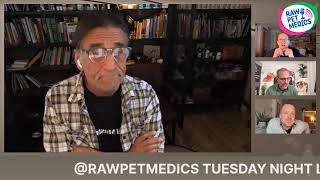
Dr. Rob Silver, Chief Veterinary Officer for Real Mushrooms, explains how medicinal mushrooms work in pets. Lion's mane supports cognition, turkey tail shows promise in cancer studies, and cordyceps help with kidney and adrenal function. Proper extraction through hot-water decoction breaks down chitin so dogs and cats can actually absorb the beta-glucans.
Chapters
Good evening. So somebody's going to sing the Magic Roundabout.
Uh, I was, I was going to. Well, I just tried, but you didn't like it, so I'm not going to bother.
Nobody, nobody knows what the Magic Roundabout is anymore. I mean, well, I, I think Magic Roundabout was— had stopped being on the TV just like in the '80s because it wasn't in the '90s. I remember just the little glimpses of it, but I couldn't tell you the theme tune. So that might tell you when it's from. Is it a '70s show?
I was, I was raised on it. There was, uh, Dylan the stoned rabbit, and there was Dougal, who was a big shaggy dog, used to shuffle about like this. It was very educational, I have to say. But more importantly, we have Dr. Rob Silver, who— Rob, here's a joke. What's the closest thing to silver?
I'm sorry, you got me stumped on that one.
Come on.
The Lone Ranger's backside.
Oh, good one, good one.
You can tell he's a father who's missed his wife over the weekend.
I used to love that joke. I thought it was cleaned up slightly.
The horse's butt would be closer to him than, than the guy's actual butt. Do you know what I mean? If you think about it. Let's get into it, guys. Guys, this is Raw Pet Medics. I am here with the two and now three best vets in the world. And tonight we are going to be talking about mushrooms. Before we do, you will find us on patreon.com/rawpetmedics. So if you can support us there, we deeply appreciate it. Helps us bring on these big money guests like Rob Silver. It does not come cheap, let me tell you. And, uh, so, uh, and those who can, great, and those who can't, not to worry, we're going to be here anyway. Um, listen, I suppose we just want to get straight into it. There's no idle chitchat we need to get through, guys. There's nothing burning on your chest that you need to know.
Oh, let's not— no, there is so many questions. Thank you to everybody who's, uh, added questions to our posts on tonight. Uh, I think, you know, I've, uh, got so many things to go through, but let's crack on. I just think it's really great if we could First of all, Dr. Rob, if that's how you'd prefer to be referred to.
That's better, better than, you know, better than some other epithets I've been called.
Well, you know, some, some of them over here start going, no, surnames only. And I'd prefer to say no, first names is much more friendly, and that's who we are. So, Dr. Rob, just for the guys out there to understand, you know, give us a little bit of background. What, what really brought you into your position now with all of the holistic traditional Chinese medicine, everything else. How did you get here? You know, what was your start point and what got you to this point?
Good, good, good question. It's, you know, it's a bit of a, bit of a lengthy answer. But when I graduated vet school in 1982, I called it Colorado. I thought that I had been taught all the tools I needed to know to do battle with the diseases of the world. And, you know, after a couple of years in practice, I found that, you know, the stuff I learned was pretty good for some things, mostly acute problems. But when you get to the chronic things— diabetes, cancer, Cushing's, and, you know, epilepsy— that the conventional approaches really were not adequate. So I started looking for things to augment the conventional approaches. And over a period of 30 to 40 years in practice, I've developed, you know, expertise with the use of alternative therapies blended with conventional therapies in what we kind of call integrative medicine. I became an herbalist, still am. And, and then so when cannabis started to get a little more legal here in the US, I— it really got my interest, in part because I'm a product of the '60s and very fond of cannabis, but also because I really didn't know all the scientific details about how cannabis works in an incredible way, you know, in, in all bodies. So then from cannabis, and then so I And so there were not very many mushroom compounds available in products that were easy to use for veterinarians until relatively recently, like the last 8 or 10 years, really. So what I was stuck with in terms of using mushrooms, because I would use them for my cancer patients and other types of immune modification, is I would get the dried mushrooms from, you know, the dried mushrooms, and I would decock them in hot water and then use that as my medicine for my patients. So when Real— so when mushroom products became more available, and I'm speaking specifically about Real Mushrooms that was founded 8 years ago, that, that have their, their mushroom extracts are all standardized and under USDA organic standards, that was when I felt that I had the ability to be able to educate the public and educate myself about all of these amazing new products that are available with all of these different mushrooms. I mean, with cannabis, it was just one plant, you know, and I thought that plant was like a huge polypharmacy with everything that was in it, you know. And then I started looking at mushrooms, and each mushroom is a cannabis in and of itself in terms of the complexity of all the ingredients. And yet at the same time, there's a real parallel between cannabis and mushrooms in terms of the categories of ingredients ingredients that they have. You know, cannabis has cannabinoids, mushrooms have beta-glucans, both have terpenes, both have flavonoids, both have phenolic compounds, both have, you know, so, so there's a lot of promiscuity of these ingredients with all of these membrane receptors in the body, which is why we see such robust activity both for cannabis and for mushrooms. That's my story.
That's cool. I love it. I love it. And you were saying just before we came on, Rob, you just made a casual note that we share 30% of our DNA. I mean, what is it that, you know, I think first of all, like, there's a little bit of a kind of a— mushrooms used to be an extremely important thing. We have a lot of Eastern Europeans over here in Ireland, and Eastern Europeans are raised on foraging and picking mushrooms and whatnot. And it's seen as a, you know, when the berries come out, the right berries, they're out picking them and we're not. It's seen as a little bit And kind of, it's just not done anymore over here. There's a little bit of a kickback from just not picking mushrooms for medicines. Don't do that. You don't know what you're doing. How do you like— is there a barrier? Would you recommend that people get into this like from a learning point of view of how they might pick one or two mushrooms themselves? Or is it that like, you know, there's a, you know, there's a hurdle when you talk to people about mushrooms is what I'm trying to say. They don't seem to pick up what you're putting down when you're trying to say that all these incredible plants, they're very nervous of them. There's a fear there that kind of we're used to in raw dog food world. And what is that? Where did that come from?
Well, you know, that's a lot of questions. I'll try to unpack here. No, it's okay. But first of all, we recognize that there are mycophiles and mycophobes, and a lot of it has to do with the culture that they— that you're looking at. Eastern European culture, Asian culture, very much mycophile, and they have the experience of hundreds of if not thousands of years of being able to identify wild mushrooms accurately in the wild. But we still see a lot of ER admissions in Asia and in Eastern Europe for people that are foraging and make that mistake. Okay. Okay. So I think that, you know, there's a— there is also a mistake in terms of feeling that just because there's a potential for toxicity with foraging, that mushrooms which are intentionally grown, that we know what the species is, grown properly on the proper substrate with everything else. Those, that's it. That's, those are two entirely different things. Wild mushrooms that you forage, yes, you can forage them accurately if you know what the hell you're doing, but most people don't. You know, now we have companies that start with the spores, they've got, you know, DNA identity, and then they grow them under, under special circumstances that enhance the activity of it. And then they, they process it using hot water because the cell wall of the fungus, the mushroom, is so fibrously durable. It's got beta glucans and chitin in them. You know chitin from the hard exoskeleton of lobsters and crabs. So the mushrooms need to be— the cell wall needs to be broken down. We can use the beta glucans and we can use the chitin, but we can also use the terpenes and all the flavonoids and everything else that's in there. Once we disrupt that cell membrane. So in order to really get the best value from a mushroom, even a fresh mushroom, you need to cook it quite a bit, at least 15 minutes, more likely closer to an hour or two, which is why cooking mushrooms or putting mushrooms into stews or soups is really the ideal place for them in terms of being able to create more bioavailability, both of nutrients and of the medicinal compounds. When I cook with mushrooms, which is like every day, I generally chop them pretty fine, especially if I'm putting them in a soup or something, which allows them to be cooked through and through very thoroughly, which also helps to disrupt that cell wall. In industrial commercial operations where they're doing this kind of processing, they generally keep it at about 90 degrees centigrade, almost boiling, for 2 hours, and that's what they need to get the optimal extraction of that. So did I— did that— I mean, there were a lot of questions there.
Yeah, no, that's it. It's, it's, um, there's a lack of knowledge, you know, there's a huge lack of knowledge, and, and there's nobody teaching it to you. This— it's hard to find the guy that's doing the foraging course, you know. I was lucky. Yeah, and he was mobbed. There wasn't any places. I had to wait a year before he'd bring 30 of us into the woods there's— it just seems so niche. It seems like it's still, you know, guys in a gloomy tent in a carnival and they're talking to you about mushrooms, you know.
Well, you know, I guess it depends where you are, you know. Um, here in the US, every state seems to have a local state mycological society. Maybe you've got— I'm sure you've got something.
I'm sure we do.
Yeah, UK. And oftentimes with these mycological societies, they have programs weekly or monthly, and then they also organize these, these events, these foraging events. So I'm sure there's more than just that one guy around, you know, to do that. But, but it does take someone with a lot of experience. I'm, I'm still a novice in terms of learning identification. There's some apps on the phone, in fact, that you could use that are pretty good to— can really kind of help you narrow down what the category of mushroom is based on the gill structure and the, the shape and the top of it, you know, and the top of it, those sorts of things. But really, when we're talking about using mushrooms for health, which I think is what the topic is today, I think that in general you're better off buying mushrooms that are already identified and you know what they are. So we don't have that problem. If you're buying fresh mushrooms, even the common white button mushrooms— and I was at a mushroom conference 2 weeks ago and there was, there was a guy, a researcher from a cancer center that found that white button mushrooms contain aromatase inhibitors. And this is why they're starting to use— even recommending white button mushrooms for prostate cancer, you know, and also for breast cancer because of the aromatase inhibitors as food as medicine. Because I know that's something that we're— that's a topic that we're really into. Yeah. Is that now— but the button mushrooms still have to be cooked. Amazing. Yeah. And that's—
well, that's, that's amazing. Just common garden button mushrooms that you can just buy in the supermarket.
Exactly.
Are maybe indicated in prostate cancer. Unbelievable. Where can people get references? So, so websites, podcasts, webinars, but also books that you might recommend just from an education perspective?
Well, there aren't a lot of great books out there right now. There is one that I think is really the Bible from the human standpoint, which is written by an acupuncturist named Christopher Hobbs, and it's called Christopher Hobbs' Medicinal Mushrooms. It's published by Storey Publications, S-T-O-R-E-Y, and it should be available widely through Amazon and other sources. It's a great book. The color, the illustrations, everything in it. And Hobbs, you know, this is his second book. His first book he wrote in the mid-1980s. So the guy is one of our are experts in that area. And I count myself fortunate to kind of know him in a collegial fashion. I'm just finishing my own book, which I'm entitled There's a Mushroom for That. And in it, I tell 8 stories about pets and their problems and how I solve them using— oh, there you go. We don't have a cover art yet. That's kind of a mock-up. But in the book, I cover 8 different pet problems and tell the stories of how I solved them. Or tried to solve them. You know, not everything's 100% successful in our world. And how I solved them both with conventional medicine and integrative medicine, mushrooms, cannabis, herbs, you know, the whole shoot and match. And I'm hoping, you know, we're— I'm self-publishing it where it's, it's a struggle. I'm hoping to get this out by May or June, pretty soon of this year. I am hopeful.
But that's fantastic. What about— okay, so what about web sites or just places people can go for courses, online courses?
Okay, well, there's a couple of places. The company that I work with that I'm Chief Veterinary Officer for, Real Mushrooms, it's a Canadian company, although they're global now, and I believe they've just opened up their website on Amazon UK, in fact, so their products should be available there, or if not, yet soon. They have an amazing website, and for customers, you know, for people, pet owners and people in general, there's a lot of good information there. But for veterinarians, you guys can sign up for a practitioner's account, and you can as well, Conor. Yay!
Appreciate it.
Don't mean to sound exclusive here, you know.
I just want to know, is there psilocybin in that?
Yeah, it's like, I'll find it. But, but anyway, that the Practitioner's Portal on the, on the Real Mushrooms website has a ton of stuff. And I am writing every week, I'm writing informational blogs. And we've got other— we've got— we— I don't know if you know Lee Carroll. Lee Carroll is a medical herbalist. He used to be with MediHerb, with Standard Process. He's Australian. And we now have him on board. We've got, um, Lee Carroll and myself, and then a Canadian naturopath named, um, Dr. Mason Bressette. And so we've got quite the professional team, quite the practitioners team to write educational materials. We have monthly roundtables, we have monthly fungi forums. Last month we talked about— we kind of introduced ourselves. This month, this is Women's Health Month, and so we're doing a piece on women's health. I interrupted Brendan, he was doing something on estrogens, which I assume is probably also current with, with the Women's Health Month.
No man, no man talks more about women's health than Bren. That is a serious hot topic for Bren.
Yeah, well, you know, you've got, you've got to take care of the better halves in our lives sometimes.
And that's great.
And, you know, actually, I just love the relevance of looking at all of the work which has put into women's health and hormones and hormone metabolism and all of the menopause and perimenopause stuff that's going on and being able to translate that and actually also reflect that to some owners for what's happening with their dogs, you know, if they've been surgically put into menopause, you know. So all of this, there's so much work to go there, but I'm not gonna— it's not about me tonight, it's not about my desires and loves and things. I think Dr. Silva, let's get back to, you know, great products. How did you— just, just bring me up to speed. What merged you into Real Mushrooms? What was it about that company and how, you know, you wanted to— what's the ethos behind that? What's the, the real nitty-gritty that brought you from doing day-to-day practical stuff with patients and drew you into, you know, wanting to promote a great company?
Well, first of all, let me finish the last question.
Okay.
So, so if you, if you do sign up for the Practitioners, you have all that accessible to you. We have these, these live roundtables. Lee Carroll himself is doing an online educational course at a high professional level on mushrooms. And so you might want to take a look at that as well. We can— I can give you links to that later if your listeners also are important, are interested in that. Okay, so the second question was, you know, what really brought me to real mushrooms. And for 25 years, well, other than being in practice for 35 years or so, I, um, for, for like the last 15 years of my practice, the last 25 years of my practice, I was working for a company called Rx Vitamins. It's a US company that introduced nutraceuticals to veterinarians 30 years ago. And I helped them build their products, all 40 products I formulated. Well, they were very successful. And during the pandemic, they sold to a large multinational, SwedenCare. And as happens with these mergers and acquisitions, I was the high earner. They let me go or they offered me something that was lowball and I couldn't take it. So, you know, and I know that mushrooms are on the rise, you know, in terms of the public's interest, and they're certainly on the rise in my own interest. And I had worked with the parent company to Real Mushrooms to develop a mushroom product for RxVitamins. So I knew the quality of the company, the quality of the products. And so I just— and I knew the owner. The Real Mushrooms is owned by the two sons, and the parent company is the father's company. So I knew the father, and I called him up after I lost that job and said, hey, you guys think you might want to get a pet product line going with your, with your mushroom company? And he goes, well, we were talking about it. Yeah. So that's kind of how it all started.
Yeah.
And, you know, honestly, I didn't really know that Real Mushrooms was quite as amazingly large a company as it is, you know, one of the top global, you know, mushroom companies, really. And so it's great to be a part of this company with these many resources and with so many people who are dedicated to, to teaching and learning and understanding and creating, you know, really high quality products.
I love it. Rob, what— and I remember Habib, you know, Rodney Habib is a fan. I'm sure you've been on their show, and he shared a lovely study there recently about dogs with an aggressive form of cancer, and they lived an extra year longer. Her mangiosarcoma, was this when they were taking a medicinal mushroom mix? And I thought, that is a staggering result for mushrooms. What is your favorite study? What's your go-to study when you're talking to vets begging for evidence and papers and research. What's— is there any good studies out there on dogs? Is there people doing a bit of research on dogs at the moment?
There is, there's very few studies, you know, other than, you know, looking at— and generally, you know, studies are expensive. And so generally we're also going to find companies that have ingredients or products that they want to validate so they can sell it, paying the money to fund these studies. So in a way, it's studies are kind of narrow-minded. I mean, they're not bad, but yes, single compound and single, single problem you're looking at, and not really, you know, there really isn't a good scientific method to really objectively determine all the little details that we do, you know, with our integrative work. But I would say, and there's, there's two studies on hemangiosarcoma with turkey tail, and Rodney only spoke to the the first study. The second study, 10 years later— the first study only had 5 dogs in 3 study groups. The second study, 10 years later, had 100 dogs. They had a placebo— they had 25 dogs that received a placebo, 25 dogs that received chemotherapy and the turkey tail extract, and they had 50 dogs with the turkey tail extract as well. And what they found was the results were not as good as that pilot study because they had a larger population, and the original pilot study wasn't really skewed to tease out gender differences. Speaking about Brendon's interest in women's health and the whole estrogen thing, they found that women— that female dogs had substantially poorer survival times than male dogs simply because of their gender. And then in terms of the stage that they are first diagnosed at, that also was a prognostic factor. But the most important prognostic factor from this study was that dogs that are diagnosed with hematocrits higher than 30% have a much better chance of survival and longer survival than dogs with less than a 30% hematocrit. So I thought it was a good study. It maybe didn't validate that the turkey tail was as great as everybody thought it was, but I thought what it did was it provided us with a lot of details that we as veterinarians, or we as as health consultants to pet parents can advise them, you know, because who wants to do a surgery on a dog that might only live 2 months, you know? So having those statistics and being able to figure out, is it male, what stage is it, what's the hematocrit, would give you a better, a better handle on how to advise, you know, your client on what's the best thing for their dog. Yeah, so that— so it was a good study. There were— these were good studies. There also were studies with Mitaki D-Fracture. Now, Maitake Defraction is a proprietary liquid formula of the Maitake mushroom, and the Maitake mushroom has been known to be very potent as an anti-cancer mushroom because the beta glucans, which are polymers of sugar, have these— have more cross branches coming off of them than any other beta glucan for any other mushroom. And that conveys a very strong immunogenicity to the beta glucans, and that's the beta glucans that fire up our immune system to take care of that cancer. They don't actually do it themselves. You know, they work through intermediaries, through our effector cells of the immune system.
Fabulous.
Rob, when it comes to— could I just— I'll go, yeah, jump in because we've got a real, real interest in that because I see so many cancer cases and constantly, you know, in recent years Everything's come away from just turkey tail to massive combinations from 7 shrooms to— yeah, he's just so proud that he's just got his own little—
did you find that one? Did you find that one?
I've got a whole tray drying out there. Oh right, it's only because it keeps coming up. Sorry, Brent, go ahead.
But then you need to then extract them, you can't just have them.
I don't know what to do with them. I was going to ask Rob, that's the next one after Nick's.
Yeah, that's the next one indeed. So, so when you've sort of gone through this, what sort of combinations are you now looking at with real mushrooms? If somebody's going, look, I really want to have a combination that's going to help my dog's immune system in face of cancer, what, what are you doing at the moment to combine?
And you know what's interesting, Brandon, is that— and there's a study, I've got at least one study that supports this, that that mushrooms, when used together, have more of a synergy and have more potency than used singly. So there is definitely some science behind the use of multiple mushrooms at the same time. So that's actually what I'm currently working on with Real Mushrooms, is developing a variety of different blended mushrooms that are, that are combined with with nutraceuticals and nutritional compounds to produce a given effect on a given system. But there is already a proprietary product for Real Mushrooms that includes, includes 5 of the most potent immune-modulating anti-cancer mushrooms out there. It has reishi in there, the Ganoderma lucidum is the botanical name. It's got the turkey tail, the Tremetes versicolor. It's got the shiitake, the Lentinula edodes. It's got the maitake, which is Grifola frondosa, and then it has the chaga, which is Inonotus obliquus. And so those 5, it's the single most popular product. We get huge positive, you know, feedback from our human customers and from our pet parents. We have that in a bulk powder format. It's all organic. It's a bulk powder format. We have that in larger-sized capsules. We have that in smaller-sized capsules and bottles that are labeled for pet dosages. We also have those in soft chews, and the soft chews are also labeled for pet dosages. Plus they have ashwagandha, astragalus, blueberry powder, and olive leaf extract in it for that particular blend. That was my own, my own flavoring of it with that. And so, so yeah, so that's— but you know, there are other— there are many other great mushrooms that one could combine. Line, you know, and we're seeing a lot of interest in lion's mane, for instance, because of its benefit with cognition and with memory and with stress. And we're— and there's other mushrooms which have similar effects, like reishi, for instance. Reishi is— you often— has been used for centuries by Zen masters as a meditation aid because it's very settling. You know, if you know Chinese medicine, the heart, which is not just— doesn't just pump the blood, the heart also houses the mind in Chinese medicine. And so it also, when you have anxiety, you— it's also the Chinese think of it as the heart. Well, reishi works directly on the heart in that regard. So lion's mane and reishi are a good combination when we're looking at more of a mentation, more of a cognitive, more of a neurologic type of approach. But I'd probably add a third mushroom to that, a new mushroom that most people don't— haven't heard about called tremella, which is, which is also known as the snow fungus. And tremella is kind of a gooey fungus, and it has a very specialized polysaccharide that's very similar in its hydrating function to hyaluronic acid, although it's not a glycoprotein, it's just a polysaccharide.
That's cool.
God, that was my question. I was going to say, did I answer it? Yeah, yeah, you did without even having the question. We're obviously, we're linked here in— that's before the mushrooms— in astral on astral planes, which is— no.
Yes.
Yeah. So I was going to say, what's your favorite— what's your favorite mushroom or mushroom combination? Sounds like you've got lots of combinations. So just tell us about your favorite mushroom and why and how you use it for cancer or for kidney disease or liver disease or skin disease. Where do you get— where's your love?
Well, when you say favorite, to me that means more Me? What do I like for myself? Because if you want to ask me what mushroom would I use for what condition, that's different. What's my favorite mushroom for a given condition? I could also talk that to you. But for myself, I am a reishi head. Reishi is my mushroom, the mushroom of immortality. It's uber bitter. And I mean, I've been taking to drinking it in my tea now. There's something about that bitterness that seems to really set my setting me going. You know, it's really very positive. So I like the Reishi quite a bit. I take the Five Defenders so I can kind of get a broad spectrum of other things as well. So I do a lot of Reishi and more and more Five Defenders. But there was a while ago when I was looking at cordyceps. Cordyceps is a fascinating mushroom. It's an adaptogen, which means that it has an impact on the HPA axis, but it also has an influence on our gonadal hormones, including 17-beta estradiol as well as testosterone. And a Originally cordyceps was thought of, or actually it still is thought of, as an aphrodisiac. And there's an interesting story about that. Do I have enough time to tell?
Oh yeah, don't stop now. Don't stop there.
So cordyceps grows on the high steppes of Nepal, Bhutan, and Tibet. And in the springtime, after the tundra melts or breaks, the little mushrooms come up up from the ground. And Cordyceps is a parasitic fungus, and its spores will infect insects such as moths and ants. And when the Cordyceps mycelium takes over that caterpillar or that ant, it actually takes over its nervous system as well. And maybe you've seen some of that. I think Merlin Sheldrake talks about this, and we've seen it quite a bit. It's fascinating. And they've got that Netflix horror film about Cordyceps taking over the nervous system. Last of Us.
Last of Us.
I watched about 20 minutes of that first episode and I said, I don't think I'm going to watch this one. But so, so, but in the springtime, the yak, the yak herders would watch their, their, their herd kind of break through the tundra and start to graze on the grass and, and forage that was underneath it, which would include these cordyceps mushrooms that would be coming up out of the soil where the caterpillars had buried themselves in the soil and then that was when the mycelium would take over the caterpillar and then they'd send up the fruiting body. But they would notice that in the springtime, after the yaks— long story— after the yaks would eat the cordyceps, that they would go into rut, they'd go into season, and that they would also notice their fertility was pretty good. And so this is how the folk tale of it being an aphrodisiac and being for fertility actually has some basis in objective reality. But the cordyceps is nice because it also has a good protection of the kidney. It's renal protective, it supports the lungs, and it's very, very tasty. Cordyceps is a relative of truffles and it's a relative of morels. And so it's— I've never— I had morels, I've never had chanterelles, but, but it's very tasty. And so for our kitty cats to have a mushroom that they will accept readily weight so you can get better dosages of it. That has a protective effect on the kidney. I've got a couple of studies with experimentally induced chronic kidney disease where the creatinine is lowered with the use of corticoids. I'm trying to get a study going with some vets with chronic kidney disease in cats to prove that. Right now with corticoids, I'm working with some equine vets. You guys do any equine? Apparently in equine, there is a disease like Cushing's disease that we see in the dog and in the human, but it's primarily from the pituitary. It's called PPID. It's the posterior pituitary disease. And they're using— they're doing a study right now with using cordyceps because they're seeing benefits when we use cordyceps to help stabilize that adrenal gland. So as an adaptogen. So, so favorite mushroom? I love them all. Yeah.
This is so evident. Wouldn't we all say? That really aligns. Somebody did ask you, are there any specific mushrooms— so you get that I've got cats in the background and that there's a reason for that. There are, you know, are there any specific mushrooms in that light that they should avoid for cats?
No.
In the medicinal ones? No. So they are good for cats. You just got to dose them according to size.
Yeah, well, you've got to get it down. That's the problem with cats. You know, they're not— there's nothing in these mushrooms that their poor glucuronidation, you know, liver issues are going to have problems with, you know. So it's really just a matter of how do you get it into the kitty. And that's why I say cordyceps, it's good because it tastes good. That's also— it's good for the kidneys to me. Bingo, cats.
So same for kidneys for dogs, Caroline, you know. Yes, it's a cross species, so don't just worry about, um, cats or horses, etc. Okay, grand.
Sorry, Dr. Conor Brady. Bob, do horses eat mushrooms? I mean, do ungulates and whatnot, do they pursue mushrooms? Would you think, like, if this is so good for horses, would they not seek out the mushroom in a zoo-pharmacological way, you know, healing themselves? Is there any sort of record of that?
I don't know about horses or livestock. I do know that we have, that we have seen wildlife who are ungulates such as deer and elk munching on mushrooms. We even seen— and reindeer, for instance, you know, reindeer can eat Amanita muscaria, which is hallucinogenic and could be toxic, you know. And, you know, you know the whole story about Santa Claus and the Amanita mushroom, don't you?
And that's right.
And that, you know, it's no accident that they— that the myth is about Santa Claus in a red and white outfit Amanita, red and white dots, is in a sled that's flying, being, you know, being led by reindeers.
Where did you think it came from? I know.
Well, but, but, you know, but, but, you know, back then, and maybe even now in these indigenous cultures, they feed the mushrooms to the reindeer, and then the reindeer's system would detoxify it, and they would urinate. The hallucinogen would be in the urine. They would drink drink the urine. Wow. But they wouldn't get toxicity, and then they could have their ecstatic ceremonies that they would have with the amanita mushroom. So yeah, mushrooms have been an important part of human civilization ever since the get-go. I mean, we've been a readily available forest edible. I mean, it must, you know, it has supported— and I'm sure, you know, through trial and error they learned which ones were good to eat and which ones weren't good to eat, but probably a lot of a lot of dead cavemen in there.
Yeah, the two oldest, the two oldest, um, intact specimens of people that we have in Europe, one of them is from Ireland, Bronze Age type dude, I can't remember what his name is. And, uh, uh, oh, do you know this one? Pulled almost complete from the bog because it's— there's no oxygen there so he doesn't rot. And, uh, he had a little pouch on him, and in that, on the pouch, was two types of mushroom. One was for healing and the other one was for something else. or that's what—
fire starter.
Oh, you know the story. Okay, this is—
well, I don't know about the fellow in Ireland, but I do know that Ötzi, who was found in the Swiss and Austrian Alps when the glaciers were melting, and apparently he had been killed by, uh, you know, the enemy, that he did have, um, those two mushrooms with him, one which would be for intestinal parasites, the other would be as a fire starter. So I commonly use the photograph, you know, reconstruction reconstructed photograph of Atsi. When I'm talking, because when I teach about this, I like to let people know that mushrooms have been a part of human culture and human cuisine for millennia, if not longer. They probably preexist history taking, you know, because they've been such an important part of human civilization.
Yeah, there's a book there on the origins of democracy where the role in the Greeks were using them for along with their wine drinking. And there's the— what's it called? The Mushroom and the Sacred Cross, which was— did you read that one? Which is very interesting. But it's, you know, just these have been used for thousands of years in rituals, and probably some of our more deeper kind of understandings probably came from these rituals. And yeah, but then when paganism fell out of the way, when Christianity was taking over 2,000 years ago, Paganism was kind of pushed away. It was kind of like, you guys have quite a lot of power, so we're just gonna move you over there, borrow some of the ideas to bring some of your followers in. But, and so that was the end of mushrooms being used to kind of, you know, yeah, getting people together, community, that kind of stuff. That's not— they're not the sort of messages you want to push when you're trying to rule millions of people. And Rob, look, in the last 5 minutes, what is the future? What's what's the next, what's the next thing? I mean, you are obviously going to pursue different health issues. Is it your dream to have mushrooms for different health issues, compounds for different health issues? What's the next 5 years?
Well, this is what— yeah, this is what I'm currently doing with Real Mushrooms is creating mushroom products for specific conditions, you know, or specific species. So, and we're trying to get some research research studies done, maybe not, you know, publishable big peer-reviewed studies, but at least pilot projects that give us some, some, you know, proof of concept, you know, and maybe some dosing information. So like I say, I'm working with the horses with this PPID. I like to get together some kitty cats and some dogs for kidney disease and whatnot, and Cushing's disease. So yeah, so I'm coming out with them with things, a variety of different, um, um, uh, um, products, you know. And, um, at the moment I'm not really supposed to be revealing what those are. Yeah, we just, we just, we just came out with a new one called the Daily Dog, which is meant to be an all-in-one daily topper. And it's got maybe 13 different ingredients, and it's got some very unique ingredients— 7 different mushrooms. It has the 5 Defenders in it, but I also put cordyceps and lion's mane in it, which are not in the Defender. So in many ways, it's got the 7 Defenders. I've got extracts of seaweed, something called Marinova, which is a very unique polysaccharide derived from seaweed. I've got Saccharomyces boulardii and a variety of really good ingredients that would be good to help keep a dog healthy with a daily topper in that regard and also support the microbiome. And soon we will probably be having something like that for cats as well. That'll be more focused on cats, higher levels of cordyceps, that sort of thing.
Do those products cross borders? Can people from the UK that are listening order this from Real Mushrooms?
So here's the deal, and I reached out today and I didn't get a direct answer, but we do have now— I do believe our Amazon UK is open and available. Whether we have those pet products right now on that inventory, I'm not sure, but I can tell you that we will They will be there. So that'll make it very easy, you know, for the folks in your regional area to order because, you know, place your order and you get it. So, and there's good products. I mean, the pouches are really the best if the animal— if it's palatable to the animal. They're most cost-effective. You can just kind of go in and scoop it. I've developed some dosing algorithms based on weight and based on the severity of the condition. You know, so, yeah, I think you should.
And so with those dog dailies, is there a sort of starting point? Some people have asked, you know, is it safe to start young with these mushrooms?
Yes, of course. They really know mushrooms are a superfood. They're food. There's no problems with any of the mushrooms that would be available commercially, let's say, through Real Mushrooms. I can't speak about other companies. But there's a study that came out of Eastern Europe, came out of Hungary, and in it they were using the beta-glucan extract of oyster mushroom to improve the, the duration of immunity derived from rabies vaccinations, because they found that these shelter dogs were immune suppressed and were unable to get any sort of protective titer with rabies vaccination until they preconditioned them for a month month with beta glucans, and they used oyster mushroom beta glucans, but really any beta glucan is going to prime the immune system. So when— and they're good companions for vaccination because they reduce side effects, they improve the efficacy of it, and you may not even need to keep reboosting it because you get such a durable duration of immunity. So no, I think you can start at any age with them. I started my, my black lab at 6 weeks of age on black reishi and black beans. I believe in the diet, the color diet.
You know, and you're going to be giving those interventions week after week, month after month, year after year. You're comfortable with that?
Mushrooms are best when they're taken every day for a long period of time. Now, there's something— there's a new concept with immunity called trained immunity. I don't know if you've heard that, but apparently the beta glucans in mushrooms can go to the stem cells in the bone marrow and can invest in them through epigenetics, some sort of memory, even though we're talking about the innate immune system, beta glucans can train the innate immune system to have a limited sort of memory, not as long as with the acquired immune system. So yeah, we want to use it for a long period of time. Now you can take a break. For myself, I take my supplements 5 days a week. I take the weekend off. You know, why not? Yeah, leave more room for beer.
Yeah. So can I have one more question before—
one it.
Um, cannabis for dogs— how do you feel about the fact they've taken THC out of the products, uh, the cannabis products?
I think that's a very good thing personally, although I know there's people that will disagree with me. The reason why I think that it's good not to start dogs on THC but to use the THC separately and to titrate it in in a very safe manner is that of all the animals out there in the world, the dog dog has the highest concentration of THC receptors in its cerebellum and hindbrain. And for that reason, we tend to see a high rate of side effects when we use THC in dogs. And so I think for people who are generally wanting to use CBD, they want something safe and effective for their dog's arthritis, their dog's anxiety— those are probably the two highest callings for it— you know, they reach for a product that has THC in it. Maybe it's not labeled right, maybe it's a large dog and they're giving a lot CBD, which means they're going to give a lot of THC as well, and the dog winds up getting a little loopy. It has some kind of a reaction to it. If you're a manufacturer of that CBD product, you're going to have to deal with a lot of customer support pushback. So I have my own brand of CBD product, and mine is broad-spectrum. I keep the THC out of there. I think THC is very good and can be used for a lot of things, but it's dangerous to use it in a dog without veterinary supervision. That's my opinion. And I'm going to stick to that.
Interesting.
That's good. Because you have to start at a super, super low dosage and allow the dog to develop tolerance before you can escalate the dosage to more therapeutic levels.
Yeah.
So that's my take on THC in dogs.
That's amazing. Uh, Conor, you said you had to go about an hour-ish.
I'm dashing.
I've got to go. I've got to go. Yeah, you guys are going to go to the bit on the side with, uh, and extract a bit more information. Is there any way, Rob, you'll be able to tell people You know, this mushroom grows everywhere in Ireland. It's stuck to the rocks, it's stuck to the logs of everywhere in the woods. And I believe Japanese people— this is like turkey tail. Yeah, it looks like turkey tail. I think so anyway.
It's actually chopped up bracket mushroom. You can start fires with it, but it's useless at smelling.
But I heard that it's like a delicacy over in Japan, but it's hard to move mushrooms from A to B. Like, not a delicacy, but they're of high value in Japan. Like, because I don't know if this is true or not, because I should have Googled this before I came on. Now it looks stupid, but like these sort of mushrooms are highly anti-cancerous, I believe. And over in Japan, I heard they don't grow these, this exact species. And so apparently they pay a lot of money for this mushroom, but getting it over to Japan and keep good bits intact is nigh impossible. They said it's the same as a truffle. When you get truffle in a restaurant, the chances of it being actual truffle is tiny because truffle only has this 48-hour window. That smell off a truffle truffle, it actually leaves the truffle. So when you dig it out of the ground, it starts— the smell of the truffle starts leaving. I wonder, is that the same as the medicinal compounds in turkey tail, or have I just totally confused a lot of different stories?
Well, again, you ask a very complicated question, but let me interject. Did you know that smell that you get from truffles, do you know what that is? No. That is anandamide. Do you know what anandamide is? Anandamide is our body's THC. When we take THC, it binds to the receptors that are meant to be for anandamide, but it's much milder than THC, so it just gives us a sense of runner's high or euphoria as compared to what THC does, which is, you know, depending where you're at, you know, could be a lot stronger. So I'm not quite sure. I need more information, Conor, about the Japanese thing and the mushrooms which you're talking about, I can, I can answer it, but I just— it's the information you're giving me is not—
yeah, I heard very much the talk on the bit on the side. Uh, for those of you who want to join us on, um, the, um, patreon.com/rawplantmedics, we're going to talk a little bit about extraction, you know, actually how to activate those mushrooms so that they are not just eating raw stuff, but actually eating medicine. So let's put that over a bit on the side. Great. Thank you so much for this live. There are so many requests for you to come back because definitely, definitely there are some great books. If you go to realmushrooms.com, if you're in the States, you've got 20% off at the moment. You've got a functional medicine, functional mushrooms book You wrote a book for pets, I think, as well.
Yes, I wrote that one. Yes.
Yeah. So there's loads of stuff if you want to go. We're going to maybe quiz you over a bit on the side about how to become suppliers of your products, because it sounds like so many people in the UK want them too. So let's talk about that over on the other side. Let's let Conor get off and sort out the kids before he gets into trouble. Great to see you all. See you all next week, guys. Uh, really looking forward to it.
Pleasure meeting you, Rob. See ya. Yeah, Conor, bye-bye.
Nice to meet you. Bye-bye.










