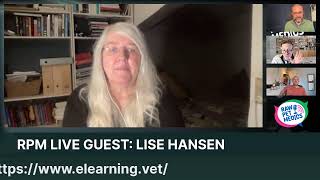
Dr. Conor Brady and guests examine research showing surgical spaying and neutering in dogs increases cancer, joint disease, and behavioral problems. They discuss alternatives like ovary-sparing spays, vasectomies, and chemical castration, plus dietary strategies to reduce mammary cancer risk in intact females.
Chapters
Good evening. Great. Good evening. Good evening.
Good evening.
Is this coming through on Facebook for you, Nicholas?
No, I can't see it, but I can't work Facebook.
Oh, it's always so exciting when we start off. It's like, are we, are we live? Are we on? Is it working? Are we on Facebook? Do people hear us? Are people coming? Where's Rachel Mack?
I'm nervous.
This week, actually, we don't have, we, we don't have people coming in the sides this week. Isn't that right, Bren? So we don't need to worry when we don't see The usual suspects, we find them on Facebook.
Well, yeah, they'll be coming off on Facebook, so I need to work out if this is— it should be going live on the event. It is indeed, I can see it. So it's live, we're live.
The event, look. Oh, there's Nick, look at that.
I don't even think we've done this before.
We're actually a very professional effort, this is why they pay us to do it.
This is how good you can get after 3 years of practice.
How many shows was that? Remember one of the questions that we got asked? 150 shows we've done. That is nuts. I don't remember 5 of them. I'll remember this one.
I hope we're only this far on.
Yeah, totally. At least we're on anyway. That's a good thing. Guys, we are Raw Pet Medics. You will find us on patreon.com/rawpetmedics. There was a little glitch on Patreon there during the day. Or during the week, I think there was something that had occurred where I think things had happened, but we were getting on top of that and we're fixing it. But it was some changes Patreon had made, so sorry about that. But if you can afford the price of a cup of tea or coffee for our shows, we deeply appreciate it. If you can, great. If you can't, not to worry, we'll be here anyway. Don't forget we're also on podcast wherever you listen to it. And if you're on podcast, don't forget to give us a little rating, ideally 5, nothing less will suffice. So yeah, guys, thanks for joining us tonight. Will we let— will we just crack straight into, uh, into this tonight, or has somebody got something terrible?
I've got an announcement. I'm, uh, one of our guests at the Live Live came all the way from Montreal, and that is, uh, Alana Cordes. And so I just want to say a big shout out to Alana. She's probably watching, if she's not watching a Johnny Depp movie, and I just want to say a big, big shout He said hi. She did.
She said hi. Nice.
She said hi on the— you guys are not looking at the comments.
I can't see Facebook. Johnny Depp was in Dublin a few days ago for Shane McGowan's funeral, and Depp was there. And, uh, you know who was playing at his funeral? Nick Cave. And I thought, so all the greats apparently turned up for the great man. 65. I can't believe he made it to 65. That's the equivalent of a normal person reaching 150. I mean, he really gave himself some abuse, but what a legend. What a loss. Um, Yeah, so what else has got— I've got a hole in my tooth. I just want to talk about my tooth for a moment because natural—
natural.
That's interesting.
Yeah, I've got a hole in my face and this one's not supposed to be there. And so I had to get a tooth out. I got a crown a couple of years ago. And anyway, the crown didn't work and I had to get it taken out of a funny bite apparently. And when you take out a pretty big tooth, you're left with a hole. We can hear all that, Nick, by the way. Just like you're just watching a movie or something. Sorry.
Yeah.
And so the whole—
I'll put him on mute, don't worry.
Yeah, that's better. It's like kind of your granddad just with his earphones pointing out the wrong way, just blasting music around the kitchen. But yeah, so the socket, it's called dry socket where the scab doesn't— I hope you've all had your dinner. The scab didn't heal over quickly. It was just— and I thought what was— I thought it was like a white scab as you'd expect scabs to be in your mouth. But they're like— it's actually your jawbone you're looking at. It was like, oh my God, that's just a big hole in my face. And so after 3 days or 4 days of painkillers, I'm thinking this is not normal to use painkillers in the 4th day, I was using anti-inflammatories, not painkillers. But anyway, I get talking to a veterinary herbalist and she goes, oh, Manuka honey, clove oil, don't forget to dilute the clove oil. And I forgot, I didn't think about the dilution of the clove oil, just mixed the Manuka honey and clove oil, slapped it into my jaw, and then went on The Inside Scoop with Karen and Rodney and you two guys. I was like, my face is numb. I couldn't believe clove oil was so strong. But that Manuka honey, 2 days of using it, and you can see that it's like it's having an effect on other people that got this dry socket are going through weeks of turmoil with it. If the first scab doesn't take, you can be left with serious problems. It's open to infection because it's your mouth. And so that Manuka honey tip was just amazing. And what a lovely simple cure. I just fill it up with sticky, good quality Manuka honey, little bit of clove oil. It's wonderful. So I thought I'd pass on that natural healing tip that worked a treat for me. I'm sure you guys You're silenced, Nick. Oh, Brian has to do a parental—
I know, I have to do this because— have you sorted out your audio now? We're not getting live.
How do I switch off the audio on the Facebook? I've got the Facebook on the phone.
Go to your phone and you have to mute your phone.
Oh, I see. Okay.
It says you have to mute your phone, Dad.
Ah, yes, your technical prowess, boys. Shines through.
Anyway, guys, we've got a lot to do. Brandon, have you had anything?
Okay, yeah, we have, we have. We're mucking about here.
Yeah, let's go.
Yeah, sorry.
No, no, let's, let's crack on. Lisa, hi, welcome back. I think, you know, it's been, you know, so many people have said we had a dodgy sound. We've been playing about with how to get on Facebook Live properly without us being interrupted. I think we finally sussed it. Sort of in a roundabout sort of way. So I am so looking forward to seeing how this goes tonight. But there's so many questions that just because of the last 15 minutes or so of what we did last time, we've got to reiterate. So I think it'd be great if we can go through those tonight. And it's just always great to talk to you as well. So, you know, I'm sure there's lots of stuff. And did you see the thing from Virbac on Superlórien?
Yes. Michelle Cuttsler, whose name I've been saying wrong all this time apparently. She's called Cuttsler, but she's the, you know, she's the guru when we're talking neutering, and she's the one to follow really. And if anyone's having any discussions with their vets about this, you know, ask the vets if they've followed Michelle Cuttsler.
Yeah, guys, if you want to see Michelle, I believe her video is free to view if you go to elearning.vet, sign up for the free account and it's available to have a little look through, and there's a little bit of a Q&A afterwards as well. So it's elearning.vet. Just set up a free account. I think you're supposed to give a practice, so just pretend you're in Nick's practice or something and put yourself down as a veterinary surgeon. They'll never know. No, honestly, do whatever you need to do.
But, but I mean, shall I summarize it? Because, because she spoke for what, an hour or something? And I can summarize it in one sentence. Um, she said neutering dogs is harmful. Um, and that's really the takeaway. And I actually, I wrote down, I played it back and I wrote down what she said. She says, as a veterinary surgeon, and, and she is really the expert in this field, she's not just a vet, she's the Professor in small animal reproduction and the person who is doing the research into this, and she said, and I quote, we cannot recommend surgical neutering of dogs unless there are absolutely no other alternatives. As a vet, you are responsible for the long-term effects of the procedures you do, and high levels of LH can really cause harm to dogs. So that's really the take-home message, you know, neutering dogs is harmful. And we can talk about the mechanisms by which it is harmful, mechanisms that we're only just understanding in the last year or two, thanks to Professor Katzler. And we can talk about the conditions that happen as a consequence of neutering. But really, I think what it looks like at the moment is that pretty much everything that can go wrong for a dog, you're increasing the risk if you neuter the dog. So It doesn't have to be more complicated than neutering is harmful, so we need to stop doing it. And it goes from— we're talking dogs though, neutering dogs, um, that goes without saying. Cats are a slightly different matter in my opinion. And anyway, she was talking about dogs, and I think the research is about dogs. But neutering dogs is harmful, and it goes for males and it goes for females, and it, it irregardless of the age of neutering is not the key point. Sometimes, I mean, this topic is— my clear impression that this topic is particularly challenging in the States where for so long everybody have been conditioned, you know, the propaganda over there has really been you must neuter and spay, you must neuter and spay. So it's really difficult for them to turn around and even begin to embrace the idea that, you know, entire dogs can be a normal natural thing that you can actually live with. So over there, when I hear the discussion from Americans, it's pretty much we shouldn't do early neutering, you know, we should neuter later, or we should do different forms of neutering. And I think that's getting the whole point sidetracked a little bit. I'd just like to bring it back to that one sentence: neutering is harmful. Neutering at any age is harmful. Neutering males, neutering females is harmful.
Is there data— is there data for sure? Is there data that shows neutering later is also harmful, or is all the studies of 1-year-old and before?
I— to my knowledge, the studies on age of neutering have not shown— I have not— I mean, I think I think the main point is that vets used to think that we knew— well, we used to not know that it was dangerous to neuter, and we used to think that neutering— we're going to talk about mammary cancer because someone was asking about that, so we'll get on to that. But we used to all quote some data that was back to one study from before I was born, and it was just that no one else had been studying this field. So everybody— well, it was like an echo chamber. Everybody everywhere were repeating this study. So because everybody was saying it, everybody were hearing it, and everybody were repeating it, so we all used to say— I mean, this doesn't go back more than 5 or 10 years— we all used to say, didn't we, that if you neuter before the first season, you can reduce the risk of mammary cancer by a certain— and after the second— I won't repeat the numbers because they're not true, but this is what we used to— this is what we used to say, and it just came back to that one study. And I think What the big realization in the last decade has been that what we thought we knew was just nonsense. It was one small study from nearly 60 years ago, and we can't keep repeating it. It's not up to modern standards. It's not relevant anymore. So, so the first step is to realize actually everything we thought, we thought we knew was wrong. So now we start over, and now we start looking at the data again. And sorry, uh, Brent, this is a very long answer to a very clear question, um, but But I think the first step is to say that we probably don't know whether age plays any role, but I've not seen any data that shows that it does. And I've heard clever people say, we don't know, but it doesn't look as if it does. And certainly Michelle Cutlass's webinar last week, she said several times, she said at any age, you know, when she was talking about specific diseases and neutering increases, she said again quoting, she said neutering increases— neutering at any age significantly increases the risk of cancer.
So in a nutshell, Lisa, you're saying that we have dramatic— the veterinary profession has dramatically, unintentionally, dramatically underestimated the negative impact of neutering.
Absolutely.
For 60 years.
Yeah, yeah.
Wow.
Yeah, you just don't look at it until you look at it, do you? And everybody were repeating the same thing and no one was no one was looking at it.
I remember Karen Becker, 10 years ago, 2013, her video on YouTube came out where she was crying saying, I've done a lot of damage with the advice I've been giving, but I'm backtracking now. And the rebuke from particularly the veterinary side of things wasn't good, it wasn't supportive, it was just like nonsense. What are you saying? As soon as I saw that video, I instantly knew what she was saying. I said, I'd never even thought to look for the science. And then you look at the studies she's mentioning and it's like, oh, that doesn't look good. And 10 years later, here we are. Things move slowly, but I guess the US will come on side now that the higher echelons are producing the goods and, and warning people.
So, but 2013 was exactly when— that was, that was day one in this, this new, um, finding out about the facts of neutering, really. 2013 was when the first study came out, the Golden Retriever study.
Yes.
Yeah, that showed that neutering can be harmful. And the amount of studies that have come out in the last 10 years, I mean, it's crazy. It's a, it's a new study every week almost showing new harmful effects of neutering.
At least, where can people get the references? Is there a one-stop shop where you can get references in my book?
But you can also— where else? Where else?
I can put that on that e-learning video. Can I just say, on that e-learning video, Michelle herself puts loads of the references on the slides as she goes through. Okay. So, you know, if you really want to get dive into that, do go to that site and just access the video. Do you know what? Anything that does that increases the popularity, will increase platforms like that sharing that sort of information and going through there. Yeah. And for anybody who wants to put it into reality terms, okay, neutering— what they were saying is pretty much neutering creates, whether it's for a male or female, creates the symptoms that you would associate in the same sort of order as menopause. And I think that's probably the easiest way to look at it, is if you are taking out those organs, you create all of those symptoms, all of the things that she was talking about. If you look at the human literature, you know, whether it's for joints, whether it's for anxiety and behavioral issues, whether it's for what's happening with increased thyroid problems and immunity issues, they're also reported on the human side. With menopause. So I talk about it now to clients as, look, you are risking putting your dog into surgical menopause if you do this, and you need to deal with the consequences of that. And I think, you know, all of that goes— and the earlier you do it, the more dramatic some of those changes are. So that's just to put it into reality for for some of those people. And I absolutely agree with, with Lisa that, you know, it's something that we need to think long and hard about. And there is a point that we were at last time that we didn't quite get to talk about, and that is because even with that, we still talk about, but what if they've got false pregnancies? Yeah, what is it that actually, you know, surely that's a reason to remove the gonads because that will just mask over all of those problems. And I think that's been asked you know, false pregnancies and what's normal. And, and Lise, I'd love to hear your answer on the false pregnancies question.
I'd love to talk about false pregnancies because it's one area where there are so many myths and so much just rubbish advice out there, really. And I think it's part of the same— I mean, it is part of the same topic, but it— but I mean, just what we were saying about neutering I think there is a risk of overcomplicating it and of making it a really hard decision. And we can see when we read some of the threads when people are discussing this, there's a lot of fear and there's a lot of confusion. And you hear people say, oh, neutering is harmful, but there's another way to neuter that's better. And, you know, there's just a lot of really unfortunate misunderstandings. And I think, if I can just say that really, really simply, neutering is harmful and we shouldn't do it. We need to normalize having intact dogs or entire dogs. So the next step is— that's an alien concept to so many people. If you've always had neutered dogs and if you're used to neutering dogs, well, what's it like living with dogs that are not neutered? And for female dogs, um, you need to deal with the seasons. And false pregnancy is a part of that. You need to become acquainted with a normal, healthy hormonal cycle of a female dog. A female dog comes into heat twice a year. I've got two entire female dogs. There are two things that I do when I come into season, and two things, two things only, when they come into season. One, I put sheets on the sofas. Because they'll— that's a little bit of spotting. A dog being in season is not like a woman having a period. It is very light bleeding in most cases. Some, you don't see it at all. They lick themselves and there is no mess. Sometimes people think this mess is horrendous and it'll be a bloodbath. Generally, you know, if you've got nice furniture and the dog goes on the furniture, put a sheet on and protect it a little bit, and that'll be that. That's the one thing I do. I get the sheets out to put on the, on the nice sofa when the dogs are in heat. The other one is, from now on and the next 2 or 3 weeks, it leads only. You know, you do need to supervise them, and you need to supervise them all the time, um, because you can't be completely sure when they're ready to be mated. And it may be that they have never run away, it may be that male dogs have never jumped your fence to get into your, your yard or your garden, but they are now— they now have a different incentive, and they may do it now. So it's— so you you can't let her out unsupervised, you can't let her off the lead. But we're talking about a couple of weeks twice a year. It's nothing. I mean, it's really nothing. It's so easy once you accept it as, as a natural part of life. If you have male and female dogs, you either need to, to work out a way— maybe your male dogs can go and stay with someone else for a couple of weeks, or you need to be really careful with gates and keeping them apart, etc. But It's just organizing your life around it, and it's really no big deal. Then, like I said, the dog comes into heat, lasts 2 or 3 weeks twice a year. When that heat— um, a dog being on heat is kind of the opposite of a woman having a period, because the dog is on heat when she's fertile, um, which is obviously why you need to make sure she doesn't mate. Which again, I mean, it's not difficult. It's really not difficult. It's just leads all the time, take no risks, and it's a short period. Then after ovulation, when she no longer wants to stand for a male, when she's coming, when she's no longer fertile and she's coming towards the end of her heat, comes this completely normal part of her cycle, which is called diestrus, which is the period after ovulation, which is dominated by progesterone. So it's the progesterone phase. It lasts 2 to 3 months, um, following— sort of starts towards the end of her season. Um, this is, this is where it becomes really miraculous, I think. And, and it's a bit of a mystery, and, and nobody really knows, knows the reason for this, though you can, you can guess at it. But I mean, I just keep comparing with humans because I think it's also one way to normalize it and say we live with hormones. You know, if you're a female you live with hormonal changes and it's just part of life and there's no way around it really. But when women have ovulated, if they don't become pregnant, the corpus luteum in the ovaries that produce progesterone dies away and you are over that phase really quickly. Then comes your next period and you're out of it. But for dogs, for some reason, after ovulation, that progesterone-dominated phase just goes on whether they have become pregnant or not, whether they have become mated or not. And what this means— and I just think it's, it's fantastic, I think it's really interesting— but what this means is that the dog, the female dog, after ovulation kind of is pregnant, you know, hormonally she's pregnant. In her mind, in her body, in her physiology, she thinks she's pregnant until more or less the time that the puppies would have been born, and then the hormonal— the hormones change very dramatically, and then she's out of it. And very often it's like one day to the next, oh, it's gone now, I'm back, I'm myself again, when she goes from diestrus to anestrus, which is the period that then lasts until the start of the next season. And, and, you know, nobody can say why. Um, it's been suggested, and it makes perfect sense to me, that this may be because dogs live in groups, and if only one or two of the female dogs were bred— I mean, obviously they can't all have puppies because someone needs to hunt and, and get food for the group. So if there was, if there was one mother and something happened to that mother it makes sense that you've got all these, um, wet nurses or nannies ready to take over. You know, they are hormonally ready to lactate, they are emotionally, mentally, physically ready to be mothers even though they weren't pregnant. So as a, as a, as flock animals, it just, it just makes sense. But what it means is that all female dogs, absolutely all female dogs, when they come out of heat, they have The same— so what I'm trying to get at is that this false pregnancy happens during diestrus, and it is completely normal. It is a phase where you have high progesterone, you start your— you know, the breasts will grow, there may be milk, they'll be digging, trying to make nests, get accumulating fluid, maybe adding some weight on. All of these changes are completely normal, and all female dogs will go through the same phase. It's just part of being a female in diestrus, and it happens after every season. But for some dogs, you don't really notice it, and for others it's really, really pronounced. But the problem, I think, is that it's being addressed as if it was a problem, as if it was a disease almost. I can't tell you how often I hear dog owners say that, you know, my dog suffered. It's like they caught an illness, you know, they suffered from false pregnancy, and they took them to the vet, and the vet treated it with hormones. And if you are— when you ask what were the symptoms, it was just that their breast tissue was enlarged, really. That was just about it. And it's being treated as an illness, and that's just a huge misunderstanding. Yeah, I mean, I think you've heard it explained like that.
That seems so normal. They're just hormonally driven to behave like that, and if you've got a female dog, live with it.
That's what happens, and that's what it is. It's completely normal. Exactly, that you go through a phase, and when progesterone dominates you are not out there partying, active. You are motherly, nesting, gaining weight, nesting. Yeah, you are. You're feeling cuddly and, and, and, you know, you want to— you want— maybe, maybe they— owners often describe, you know, the dogs will just get more sort of more attention-seeking. They want to cuddle more, they want to— they want to be stroked more, they want to— you know, it's— they're in that kind of a mood because it's what their hormones it's the hormonal phase that they're in, and it is totally normal. So it's not— let's not make it into an illness, because it's not. It's fine. But just like women, again, um, for some it's not noticeable at all. For many, it's like, well, this is how I feel now, it'll pass. And for a tiny minority, it becomes pathological. You know, there are also women who become really ill in when they go through normal hormonal changes. People get postpartum depression or, you know, all sorts of problems.
I believe there's a big biome link there as well. That's the most recent kind of data on that. What about Pyometra in intact females? How normal is this? I mean, two questions one after the other on the page to go straight to Pyometra. Where are we with Pyometra, Lisa?
Well, I mean, Pyometra is an infection of the womb, so obviously it only happens— well, not maybe not obviously, but it only happens in intact females. It doesn't— when we neuter, there's two, um, there's two procedures, um, when you neuter a dog. You can either take away the ovaries and the uterus, the womb, or you can take away— which is a more modern, I suppose, more common procedure these days— is you only remove the ovaries and you leave the womb, because all the hormone production happens in the ovaries. And if you're taking away the ovaries, the womb does nothing really. So when we neuter, because the hormones are gone, there is no risk of pyometra. Whether the womb is there or not, it's not gonna get infected. If you have— I mean, I sort of— I'm tempted to be a little bit flippant and just say, well, if you have an organ, it can become, you know, problems can happen with it. And intact females can get infections in their wombs. It— you— I don't want to belittle it, it can be serious, but it used to be more serious. Brendan, wouldn't you agree? I mean, when you— when I was a young vet, it was— there was two things you prayed for not to happen when you were on weekend duty alone. One was a gastric torsion, the other was a, you know, really kind of acute pyometra. Just like, dear God, not, not this weekend when I'm on call. But I, but it— but I think today we much more able to deal with pyometra without surgery often even. You know, we've got better diagnostics. Every clinic has an ultrasound machine these days, and we've got better drugs so that often you don't even have to neuter them. You can treat it with them just with drugs and they're okay. The list of things— I mean, if you— if what we're getting at, and I suppose it is at this point, is the pros and cons in terms of what can, what can go wrong for a female if she's neutered compared to if she's not neutered. And I would say it's not a situation of, oh, it's a difficult choice. It's very clear because the list of things that can go wrong if she's neutered is very, very long, and it includes a 4 to 5 times increased risk of most cancers. But the list of things that are more likely to happen if she's intact is really two things. It's mammary cancer and it's pyometra, womb infection. And what clever people like Michelle Kutzler say about that is that the two things that are more likely to happen in an intact female are two things that are fairly easily detected. And if you detect them early, you can treat them. So if you have an observant, vigilant, well-educated owner, it's quite unlikely that one of those two diseases is going to kill your dog. And what it means is, if your female dog is ill, if she's, you know, lethargic, won't eat, you take her to the vet, of course you do. And if she has a discharge from her vulva, you take her to the vet and you keep an eye on that, particularly for the couple of months following a season because that's when pyos tend to happen. And if your female dog has a lump in her breast tissue, you take her to the vet and you have it examined. So the two problems, mammary cancers and pyometra, that are more likely to happen in entire females have quite high morbidity but really low mortality. So they happen quite commonly, but they don't have to be— they don't have to kill the dog. It happens, but it happens a lot less than it used to, and it happens a lot less if you react quickly. So whereas the, you know, hemangiosarcomas, lymphomas, the diseases, osteosarcomas, the diseases that are 4 to 5 times the cancers that are 4 to 5 times more likely to happen in spayed females, once that diagnosis is made it's too late, your dog's not going to survive. So it's more about information, it's more about teaching pet owners, okay, in 2023 onwards, 2024 soon, we're not going to be neutering anymore because it's not safe. So let's talk about how to live with intact animals, let's talk about how to look after them when they're in heat, let's talk about how to look after them when they're in diestrus, educate people about false pregnancies. And let's teach owners how to look out for the diseases that happen more commonly in intact animals.
What about ovary sparing techniques? Is there like gonadal sparing techniques in males and females? Where are we with that? It doesn't seem like there's a lot of vets in the UK anyway offering that, so people are very interested but their conventional vet isn't offering it, so it's a bit of a bind when people think that this might be the way to go. Is it the way to go?
I don't think so. I think it's the way to go in some situations. For instance, if you have adopted a dog from a shelter and you've signed a contract that means that you're obliged to neuter, for instance. I mean, we should say maybe that what we're talking about here are surgical techniques that make the dog infertile but hormonally intact. So an ovary-sparing spay, you take away the uterus the womb, but you leave the ovaries. So that— so it, it's almost a misnomer if we call it neutering, because they're— I mean, they're infertile, but their hormones are completely intact. And a vasectomy is the same as you do for men. Their sexuality is not affected, but they're no longer fertile. And to me, that would only— I think it's a big, big— I think it's really, really unfortunate if the conversation becomes, we should no longer neuter, we should do these techniques instead. I think that's a bit crazy if that's how we talk about it, because I can see very few situations where a vasectomy or an ovary-sparing spay makes sense. Because, I mean, then you'd have to live in a world where you just let them roam and you let them mate, and I wouldn't think that was safe. I mean, there's going to be fighting, there's going to be accidents. There's— I wouldn't want to say, oh well, you've had your womb removed, you can go and party now, you're not gonna, you're not gonna become pregnant. I would, I would, I would really say that even if you've had an ovary sparing spay, you need to be as careful. Keep your— she's still going to come into heat, it's going to be less pronounced, as pronounced, there's going to be next to no discharge, but the behavior will still be there. And, and which means that you have to still keep her on a lead. You have to be as careful as you did before. So what's really gained by putting your dog through quite a significant piece of surgery?
I forgot the hormones were there, so the behavior— if there's problematic behavior that they're struggling to cope with, that won't be affected because the sex hormones will still be in place. Yeah. Yeah, the only solution.
It's a question because Michelle Kussler said— went into this in some detail about, look, it may change the dog-on-dog aggression if there's a bitch around on heat. It may change the female or the roaming issues around being, you know, sexual activity. So neutering neutering itself actually has a risk that it will effectively increase dog-on-owner aggression. So it, because it can increase that anxiety, uh, from that side. Leaving the hormones intact, I see very little change in some of that underlying issues around behavior. And I think that the anxiety that I see in a lot of neutered dogs that come about behavioral issues that usually revolve around when they were neutered are not there when you can keep the ovaries intact. Now I get what you mean, Lisa.
I think we've had this conversation before, Brendan, and I said it poorly then as well. I don't mean that I think an ovary-sparing spay is not a good choice if you compare it to neutering. My point of view is that neutering is done. We're not neutering anymore. Neutering now is crazy. And in the threads following this discussion, people say, oh, my dog is booked in for neutering next week. And I can only say, well, hopefully you're canceling that tomorrow because that's mad. We're not neutering anymore. I'm comparing the, the, the oversparing spay or the vasectomy to just leaving them intact. And that's where I can't quite see the justification because unless you're legally obliged to neuter your dog for some reason, then I can see that it would make sense.
And you are in some states.
—exactly, you are in some places if you get a dog from a shelter or whatever, and then it can be a nice way of keeping them hormonally intact, but, but, but they're infertile, so it can be a nice little get around that one. But compared to just leaving them be, I can't really— I think there are a few situations like we just mentioned where it can be a nice solution, but for the vast majority of dogs, I would very strongly urge people to just just let them be. And I really think we need, rather than say we used to neuter, it was really bad, now we need to do OSS, I think we need to normalize having intact dogs.
One of the questions, Lisa, was from last time when we, when we lost the sound, was if you've got a bitch who, like some women, get horrendous period pains, they get horrendous mood changes and what have you. So the— so I realized that menses and season are two different things, just to emphasize it. But if you've got somebody who's got a bitch who really suffers for weeks and weeks and weeks, what are your approaches to that? I know you're going to talk about—
you know what I'm going to say now. Yeah, absolutely. Just for the sake—
just for the sake of everybody, tell us what you do.
Yeah, no, absolutely. And I think it is a real thing, you know. Some women, some dogs suffer, um, really suffer. And I, and I, I don't think it is hormone imbalances, as it's often referred to. I think it is an over— you know, a huge sensitivity to normal hormonal variations. But for some, it, it is a huge problem. And for those women and dogs we have homeopathy, and homeopathy is, it's, it's the bread and butter of homeopaths. It's, homeopathy is fantastic for treating hormones. I would never, ever, ever neuter a dog because of false pregnancies. I think that 90% at least of false pregnancy behavior can be completely tolerated once it's understood, you know, once the owners don't think, oh my God, your breasts are swollen, we must rush you to the, to the vet, but understand, ah, you're going through this phase 'Come and have a cuddle, you know, we want— we will do whatever, you know, I'll— let's be snug, let's snuggle up together and enjoy this phase that you're in. Um, in a month or so you're going to feel differently. Um, let's be cozy, you know, let's enjoy it.' And of course, but, but, but, yep, no, sorry, sorry, just, just to finish that sentence, I think, I think 90% will be fine, but there is that small minority that really suffer. And, um, and homeopathy well, that's what homeopathy is for, really.
And I totally agree. And some of those that really suffer, it's down to like a polycystic ovary, you know, that actually investigate it. You know, if your dog's really having some issues with that false pregnancy into persistent cyclical behavior that's, you know, not resolving as it should do 2 to 3 months after being in season than actually getting them investigated, as any woman would go to hospital and be investigated if they're having persistent problems, because there actually could be a pathological process going on, such as a polycystic ovary, where the ovary is becoming enlarged. It's hormonally active all the time. It's got these cysts on it that can be extremely uncomfortable. It can lead to other behavioral changes as well, just because of the discomfort, let alone the hormonal influence. And that again, I agree totally. You can start to look at what you use, whether that be supplement, whether that be, you know, a hormone change, whether that be homeopathy, herbs, whatever, to actually try and adjust that. Doesn't need to necessarily be a dive-in surgical removal at day one, uh, for those.
Yeah, but again, can we agree that we're talking about the 0.5% here or something that are really suffering? The vast majority are just feeling tired and feeling like they want to nestle and be cuddly and, you know, and because that's the hormonal phase they're in. Yeah, and that's not something that needs investigating. They just need a cuddle and they'll get over it.
Yeah, there's an interesting bit here on that. A lot of, I think a lot particularly of vets, they would kind of recommend that castration would be a way of helping with behavior in dogs. And the majority of the questions on my page when I posted about this tonight came from behavioral considerations, and they want to know— the question will be, what effect chemical castration— do you ever recommend it, and will it have an effect on their behavior? Is it going to affect their sex hormones? Is it going to affect their behavior? But if you look at the data on actually castrating dogs and aggression It is completely confused, it's right down the middle. And just to quote this, this 4 or 5 lines: the effects of castration, proper castration, removal of the testicles of these dogs on aggression are particularly unclear. Some studies find a decrease of aggression in castrated dogs— she quotes 5 studies after this— whereas others find opposite effects, and she quotes another 6 studies after that. Some no significant differences at all, 4 studies. Furthermore, one study reported dominance aggression decreased after castration in male dogs, whereas it increases in females. And it's like, the whole aggression thing is very interesting, and I think that's one— with females, I feel like sometimes it's because the mess. I honestly think that seems to be one of the dominant reasons. Fear of pregnancy, I think most people are fairly confident they can stop their dog getting pregnant. I think it might be something as small as mess. Now, I've never had an intact female, so it's easy for me to say these blasé things, but in terms of aggression and behavior, these— have you ever heard of people reaching for something like chemical castration to help with problem behaviors? Now specifically talking about male dogs.
Yes, but, and I think the very typical time that people ask about this or people do this is when they have a teenage dog. Yeah, you know, I mean, a male, male or female, you know, 9, 10, 11, 12 months old, and they're for sale really cheaply, you know, whose idea was it to get a dog kind of situation because they're teenagers. And that's when people jump to castration, because maybe that'll calm them down. I mean, that's what we used to say, wasn't it? Yeah. Um, I tend to talk to people about teenagers, you know, just try to guess. I read someone once, and I think she actually said it about human children, but she said the teenage period, you— your ambition should be— you should, should not go beyond trying to get through this period and still be friends after afterwards. And I think whether we're talking about dogs or children, I think that's quite nice, you know. Don't try to train them, don't try to compete with them, don't try to— just try to be friends. And remember that when they're 13 or 14 months old, they'll remember everything you taught them when they were small and cute. So I think that age when all dogs are impossible is a really bad time to make decisions about rehoming or castration or anything else. You know, just get through it. A bit of humor, a bit of patience, know that it's a phase and they'll grow out of it. Having said that, for older dogs or dogs that are adult, if people struggle, I don't have— I'm not overly concerned about chemical castration of male dogs. I think it's reversible, you know. I mean, I wouldn't surgically— I wouldn't suggest surgically castrating a dog without having chemically done it first, just to because it's a chance to see what's my dog like when he's castrated. And I see so many people who think, thank God we didn't jump straight to the knife because this is gonna pass and we really don't like him like this. Did you see—
so that the interesting thing that you've raised there, Conor, is that confusion about what is aggression, where is it, you know, aggression dog on dog, aggression dog on owner, and Michelle, as I said in the lecture, does talk about this. And actually, the implanting, you know, the suppression of LH, luteinizing hormone— I know that your spell check went slightly crazy when you were putting it on your holistic vet. It didn't like it at all. Yeah, so luteinizing hormone, which stimulates the gonads, whether it's male or female, that suppression does have effects on some aspects for dogs. But neuter does not mean— if it changes your dog when you suppress them with that injection, that implant does not mean that if you neuter, you will get the same reaction. And that's what Michele was saying within that lecture, purely and simply because one is reducing LH and the other is taking out, whether that be testosterone or oestrogens, and that lack of feedback on the hypothalamus for the GnRH and the pituitary for the luteinizing hormone, those levels can suddenly rocket up and they have receptors elsewhere that can lead to firstly, yes, more anxiety. So we've heard about, you know, the anxious-aggressive dogs, and then you've also got an increase in dementia cases. With those raised LH, so in later life. So just, you know, do think about the impacts that that could have that's different from when you are suppressing LH. And does anybody know—
guys, uh, 1945, I'm going to call it a halt there.
We can't jump to Patreon yet, Nick, until we sort out the few issues that are happening with it.
So yeah, we can't go to Patreon.
Well, listen, we, we can, but we can't Oh, we can.
We can record the extra bit because that could be released anytime.
Yeah, if you want. Or we could just do another—
Do you want to squeeze one more bit, one more question in for Lisa? That was—
I was going to add on the end of Facebook, Nick, maybe, and then just— and then let the chips lie where they fall. Okay. Yeah, it was sort of Patreon thing. Yeah. There's a— the chemical castration. As soon as I hear the word chemical, I'm on edge. Because I don't know anything about this Supraluron, whatever the name of the drug is that you use.
It's not as bad as physical, as a surgical castration.
Yeah, that's the take-home message. That sounds good.
One, it's not as bad, and two, it's reversible.
That sounds good. I had a look around to see, okay, listen, what's the data? Is there any data online for long-term use of Supraluron to control these chemical castration in dogs? And I couldn't find any data on dogs at all, the long-term use. There's no long-term study of the impacts of it. And then I went looking for other animals, and they're using it in ferrets and whatnot, and didn't find much on that either. And then I thought, what about humans? Because they use chemical castration in humans. And I found a little bit of data here because they use chemical castration in people that did sexual crimes on young kids, particularly in Korea. 2011, they brought it in. And so they've been tracking the side effects of the drug. So they've got 10 years of data on using this on people that have been using for 10 years.
First of all, exactly the same drug or different?
I have no idea. It's just this article was on chemical castration.
Yeah, just be careful because sometimes it's different drugs for chemical castration.
Okay, good. I'll stop then. They found a few issues, in other words, over long term. They said the long-term use, and the longer you use it, the more the issues accumulate. Yeah, sure.
I mean, I think that, I think the bottom line, the take-home message has got to be neutering is harmful, normalize having intact dogs. But if there is a situation where having an intact male is just not possible, then chemical castration does seem— does look— I mean, according to the information available at the time, is a lot less harmful than surgical castration because it's Supralorin. Yeah, yeah, yeah, yeah. Because it's not reversible.
Because what you get, a 6-month implant or you get a 12-month implant, once it's in, it's in.
Yeah, sure, but they come back, it wears out.
Yeah, yeah, I know, but what I'm saying is that it is finite, whereas castration is for life. Yeah, yeah, that's the way to say it.
Okay, okay, okay. But it doesn't cause the high LH levels. In fact, it causes very low LH levels. And it's the problem. Yeah, yeah.
I'd like to know more about, like, you know, the stats on breast cancer are, you know, pretty high in dogs. And then I'm thinking, I wonder how many of those are dry-fed dogs, because we know breast cancer in humans is highly aggravated by high-sugar diets and ultra-high-carbohydrate diets. And I wonder what the incidence of breast cancer would be if you were worried. If you had an intact female, I would say definitely don't feed her a high-carbohydrate diet. Feed her things that we think should decrease the chances of cancer, which is getting off poor quality fats, seed oils, you know, high carbohydrate, poor quality protein, chemical preservatives. In other words, feed fresh food, and you've probably increased your chances again of avoiding, you know, one concern with having an intact female, which is this mammary cancer which keeps popping up.
Very much. There's the 2018 study from France where they studied 6,000 people over 7 or 8 years or so, and they found that for every 10% increase in ultra-processed food, NOVA Group 4 ultra-processed food, there was an increase, a general increase of 10% of chance of getting cancer. And in women, an increase in 12% of mammary cancer. Wow. Okay. This is 2018. And what was I going to say? And yet we, the industry, are fully supported by the pharmaceutical, by the big food to feed 100% ultra-processed food. So that takes you, you know, if it's 10% for every 10% increase in humans, what happens when it's 100% ultra-processed food to our dogs? Is there any wonder that we're seeing so much cancer in our dogs? Yeah, with that and glyphosate. I don't think dogs or humans who choose to eat ultra-processed food and are passively exposed to glyphosate, we don't stand a chance. Yeah, really.
Definitely not going to help. That's a fact. And any closing thoughts on this? I'm pretty sure what your points are going to be, Lee, and I think your point is perfect. Keep it really simple. Like we now absolutely know neotrine is out. How do Danish vets feel about this? How are European vets compared to American vets? That kind of thing? Are you open?
I think the UK is kind of in the middle, and in America, there's— everybody neuters their dogs. And it's going to be really interesting to see because I think, I think that's where the ovary-sparing spay and the vasectomy may have to play a role, not really for the sake of the animals, but just because it's too much for the owners to— you just— the thought of having an intact animal, because they've just been brainwashed for so long that you must spay and neuter, which is a little bit crazy. I don't want to be overly dramatic, but to maim— and you know, I mean, I will say maim an animal just because you're uncomfortable with the idea. It's a bit weird. Why are cats different?
You mentioned at the start that cats may be different. Why would cats be different?
I don't know that these studies have been made in cats, but it's also really difficult cult in most situations. I know there are people who have intact cats and they make it work. Having intact female cats is really difficult because they will be on heat until they are mated, and it's not fun, you know. It's— they'll be throwing themselves around screaming. Oh, you can't—
you can't be like that. No, it's normal behavior for dogs. It's normal behavior Cats, that's not on.
I'm sorry, you can't have that.
There are some studies for cats, WSAVA, or yeah, WSAVA over in Copenhagen in 2017. In that stream, they were actually talking about the cats. There were some cat studies in the later lectures that they were talking and bringing that in. And obviously they did that whole, well, actually you know, people can't cope with the smell of, you know, the intact toms quite so readily, so of course they're going to castrate at some point. Just leave it as late as you possibly can cope with. The same with females, that as Lisa's just said, oh my God, they come into season and then they're just in season constantly, you know. If only there was a way of— and I guess it comes back to a hormonal change that we might need to develop if we were going to leave those queens intact, that we would have to mimic them becoming pregnant so they came out of season in some way, whether that be, you know, some various topical peptides now that can do that in creams in humans, you know, very adequately. So that, that may be the next version of what comes forward if you've got people that want to avoid you know, effectively maiming, as, as Lisa put it, um, their cats in these circumstances. Because it, again, it's just as important. Those gonads have an important role beyond sex, beyond reproduction, in the health of us all. And it's all mammals. It's not just dogs, it's not just humans, it's all mammals, whether it's a cat, a mouse, a rat, you know, whatever, zebra, those hormones have a role to play in health, and we've got to be thinking again how we treat those very carefully.
Somebody was saying, what about if you have a neutered male? And is there— first two questions, I'll answer the first one myself, but they said, first of all, can you feed testicles to a neutered male and expect a testosterone hit? And very, very hazy information on this online. But because testosterone is kind of protein-based, you're not quite sure if it gets through. Like insulin, you can't just eat insulin, you just digest it, doesn't get in. But with testosterone, there is tiny little peaks of testosterone potentially. This is according to Harvard, which I don't trust at all. But, um, so they, they said that there is tiny peaks in testosterone, but the problem is it's just too temporary. It's like if you've got chronically low testosterone, you can't just go around you have— they have to be raw as well because cooking kills testosterone. So you have to constantly eat raw testicles. So yes, if you've got a neutered male and you're giving them testicles every single day, then that might help. But then that might be a secreting organ that you probably shouldn't be feeding a whole lot of every single time to save it. Who knows? So I'm not quite sure the answer. I did like the tag-on bit. They said this is why Olympians back in the day used to eat raw testicles before they performed, because it would give them a shot of testosterone, a natural boost of testosterone.
Um, You'd be taken by WADA now.
That'd be you out. I'm going to give it a go tonight.
But hey, wherever you— where you going to find those, Dr.
Conor? Hey, follow up.
Could I just say, could I just say from practical experience, I have used that. I do use that in some cases that come to me having had issues. And have found success if I use a testosterone or testicular nosode from the homeopathic form alongside it. Okay, um, but I, I wouldn't say that it's ideal, and I think there are lots of other things. And, and looking at— for some of those cases, I had some great success because I looked at the hormone replacement clinics that were coming up versus putting a SuperLaurin implant implant into those castrated males, especially for a sarcopenic case that had behavioral issues, and the behavior resolved by between 80 and 90% in the anxiety of those guys.
Why would a supralaran implant help a castrated male?
Because it lowers LH. Yeah, the LH escape is often responsible for the majority of their problems.
Okay, okay, cool. That's interesting. What else have you got in the bag of tricks? For a neutered male or a female? What can you do for them?
Well, I mean, I don't think there is a one-size-fits-all. I'm not an advocate for— I mean, if you've neutered your animal and they seem well, I would quote what Professor Kotzler said in her thing: if they have seemed well, don't do anything. If they develop problems, then you need to treat those problems on an individual basis. And I would totally go with that. I do not think we should start trying to somehow undo what we've done. I don't think it's possible, and I don't think it makes sense. If the animal is clinically healthy, um, keep your fingers crossed, do better next time. I mean, can I make one last point about this? Is that I— there is a whole load of blame and guilt. I mean, it makes sense, doesn't it? I mean, I find when we talk about this, a lot of people immediately reject the idea that neutering is harmful, even just on a sort of gut level. Well, that can't be right because I've always heard different and my vet doesn't think so, and I've always heard differently. And the only thing you can say to that is, well, that's kind of the point. And that's where the reason we're talking about this is that all of us, we didn't know this. This is only in the last couple of years that this information has come to light. So it's— there's no doubt about it. It's fact, but it's new. And people will, people will of course say, but I neutered all my dogs and I had 3 dogs that died of cancer. That might have— that might be the direct cause for that happening. And then yes, but if you're a vet, I mean, most vets probably neutered— most vets in practice have probably neutered an animal every day of their working lives. Yeah, yeah. And you go into this, I mean, you dedicate your professional life to helping animals, and suddenly you're hit with this, oh my God, hundreds of dogs at least have died because of something I did out of ignorance. But I think, I think it needs to be said, but I think we need to not, you know, we cannot blame ourselves. Dog owners cannot blame themselves. We cannot blame ourselves for the harm that we've done. We did what we could with the information that was available to us. Yeah. And just let it lie. Let's let's forgive ourselves and each other. But the other side of that is the information is available now, so let's all help each other prevent someone out of ignorance having their dog neutered for no particular reason other than habit next week, because that's pure madness, because now we know better. So it really mustn't happen anymore. There's no doubt that neutering of dogs is, is is, is finished as a procedure, but there will be a period of transition, and the more we can speed that up, the more lives we can save looking ahead. Yeah, that's interesting.
Liz, thank you very, very much. Brendan's put at the bottom— this is the link, guys, if you want to see the Kutzler lecture. It's, it's 40 minutes, and then after that it's question and answer.
So it's basically responsible for them taking it down now because I think Okay, no, it does actually say that you can choose an account which says for, um, reception or, um, trainee nurses in there. So, okay, so non-vets, you know, it's not just, it's not just vets, it's anybody who's working in the animal sphere.
Um, animal sphere, that'll do. She's, she's been around for a while, and I would imagine she's on YouTube, so it's definitely worth having a look. Having a little search there. Uh, Liz, how can people get in touch with you? Because you're massively convincing and you're very, very— your book is brilliant and the book is fabulous. How can people continue this conversation with you or bring their animals to you or have conversations about their animals with you? Sure.
I mean, there's a chapter about this topic in my book, so if anybody wants to sort of recap on it, it's in the book. My website is alternative-vet.co.uk. Alternative-vet.co.uk. Uh, you're mirrored, Brady, you're mirrored.
Bren, can you put the book up? Right, this is the book by Liz Hanson. Are your contacts in there somewhere?
Your contact details? My email is in there, my website is in there. Yes, it's, it's been released worldwide, so anybody, you can go into any bookshop, and if they haven't got it on the shelf they'll know how to order it. They can order it, so it's available.
It's a great book, guys. Christmas is coming. If you know anybody who's got a cat or a dog, and I imagine there's one or two of you who do, this is just a stunning book. It covers many, many areas, and the neutering thing is just one of them. It's a really well-written book. Congratulations, Liz. And Liz's email is within the book, so if you've got a problem with your dog, you can contact her through that. So this is brilliant. There we go. And there, oh, Brendan's even doing it.
Alternative-vet.co.uk.
Alternative-vet.co.uk. Alternative-vet.co.uk.
You used to be in the UK, Lisa. Are you back in Denmark? And is it freezing?
Yeah, it's a little bit open. I've had a practice in London for many years and COVID kind of put an end to that, and now I'm struggling with the idea of flying too much. So I've left it open with them. I do a lot of telemedicine, I think it's called these days.
That's what people want to do. And a little Christmas present to you all, okay? We have a couple of signed books. Signed? Signed books!
The great Hanson has got her hands on the book.
So you need to watch out this week. Okay. We want a number of things that we are going to ask. And I think the winner of the prize decided we'll get this posted out to them. Okay. There's 2 of them to be given out. So we should be able to get it out to you for Christmas. So please keep posting, have a look on our Facebook page, look out for the competition. We're going to come up with something for you to win.
TVSB competition as well. Oh, yes. Get to the top. A Big Ben. Yeah, take a photo.
Take a photo. However, you've got to have a banner saying ban neutering dogs.
Okay, so what we'll do is we'll ask Lise, uh— No, this is not my question.
Please, please, please don't, don't do that. That was just a joke. Do not climb on the—
No, no, don't try this at home, folks.
Oh, that'd be pretty cool.
So we're going to ask Lise two questions, and we're then going to set those as the questions during the week. So follow and you'll see the questions and the person with the best answer. So some kind of, some degree of creativity. Oh, we'll think of something.
Okay. Oh yes, we'll think of something. Yeah, Lise, thanks so much. That was so interesting.
I learned a lot. Amazing. Thanks for having me.
Yeah, no. So cool. Nice simple message. Love it. Brilliant. Absolutely brilliant.
Thank you. Thank you, Lise. You're great. I could listen to you all day. Brilliant. I love it. We will see you all. See you all next week, everyone.
Thanks for listening. Talk to










