RPM Tuesday Night Live: Resistance is futile! AMR
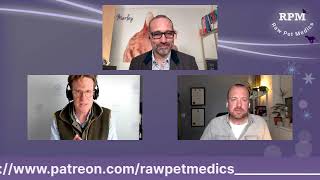
Dr. Conor Brady and Nick Thompson examine antimicrobial resistance in pet food, contrasting raw diets with processed kibble. Studies show antibiotic-resistant bacteria in both, but the hosts argue poor product quality matters more than raw feeding itself. They suggest probiotics and high-quality meat can strengthen pets' defenses against infection.
Chapters
Well, he says we've actually made it. I'm waiting for people to appear in the right-hand side.
But we've made it.
Somebody needs to check online. Oh no, there's somebody there. That's great. They will expect us to come on at about 10 past now. That's the thing.
Yeah, there she is.
Rachel is always first. Rachel's like coming home and your dog's wagging their tail behind the door. She's always there. It's like a warm hug seeing Rachel Mack come on.
Amazing. Great, great, great. So guys, how's the last fortnight been with you?
What's happened the last fortnight? Good, I suppose. What has happened in my life? I can't really think of anything. Bren, do you want to go first and I'll think of some lies and make my life sound more interesting?
You know, so much happens in life, isn't there? I think first thing I would want to say is to dedicate this to somebody who's— we've missed She passed away last week. She's an ex-president of the RFVS, and you know, Lynn Thompson, bless her, has passed away. And so I think if we can spend, you know, it puts everything into context, okay? And I think if we can spend some time being positive online, being positive with each other, which you guys, you know, viewing us Always are, to be fair. I, you know, I'm amazed every week that you— we see you appearing, coming in with your comments. Um, but yeah, it's, um, I think that's the one thing that struck me, and it sort of overshadows everything else, really.
Yeah, so positive.
We all knew her, you know, it's not just me.
Yeah, Lynn was actually the first editor of my, of my book, Lynn and her mum, actually. Um, so when she had helped me out, she was the one that helped me out with gastrointestinal kind of ideas because I looked at her as the kind of queen for that. She was over in New Zealand doing her thing, very successful business person as well, very successful company, and she was the raw person in New Zealand and their powerful intellect. So should be before you two guys, I was talking to Lynn, or maybe Nick put me on to Lynn, but she was so helpful. And yeah, just that, that is a serious loss. So yeah, very sad to hear that bit of news. All right, so right about trying to say, say positive things because there's a whole lot of negative stuff coming down the radio waves at the moment, as there has been for the last two years, and we're like like straight from one frying pan into another fire here with more. So it is very easy to get, uh, swamped with this negative stuff. So, um, that said, I'm gonna struggle to keep today's show very, very positive because it is a touchy subject.
Uh, do I need to type in a rant alert thing?
I'm gonna be quiet and calm this week. But, uh, yeah, no, you're right, Brad, she was a lovely person. So you were very close to her as well, Nick, weren't you?
She was great. She, she took over from me as the president for a short time and she was an absolute ball of energy and she got some good initiatives started. But I liked, I liked listening to her lecture because she was so incisive and so she was thinking things that nobody else in the room was thinking. And she was the first person I heard talk about bone broth for healing, healing the gut, for example, which is maybe I'm a bit slow on the uptake, but She was talking about it really seriously and why it's so useful for healing the gut. So my God, we're going to miss her. So God bless her and her family. And tonight is dedicated to Lynn Thompson, same, same as me, but without the P. T-H-O-M-S-O-N. No relation. So that was, that was her. And we'll sorely miss her. So here's for you, Lynn.
Yeah, absolutely. I don't feel like I want to talk about my week now because I can't think of anything very exciting that's happened. But yeah, so I don't really— we could just get in straight in.
Can I bring in a book? Can I bring in a book?
Okay, it would be weird if you didn't, Brad.
So I've been doing a bit of review and, you know, I think I really like to try and cross-connect what humans are doing in functional medicine and what we're doing with animals. So just reviewing some of the text. Now, I'm not saying that this is the best book to read and follow and saying that it's ideal. There's lots of elements of errors within it. But Dave Asprey's Bulletproof Diet, which actually he's updated in his Audible version a little bit. So some of the things, I mean, some of his sense of humor is a little bit sort of 10-year-old child. And he did think it was funny because it was relating to his son and his son used to laugh at the jokes. If you can put that to one side, there's some really good little elements in there that sort of follow some of the stuff that we're talking about, gut healing, reduction of inflammation. So yeah, if you want to get on board with that, I would say take a look at that book and sort of review in light of some of the things that we've talked about over the last year. And maybe we can do a little bit of a review of that.
And Dave Asprey is prolific online. He's always, always posting stuff. It's nutrition stuff, it's all sorts of stuff. And he's a bit of a He's a bit of a live wire, I have to say. And he talks to everybody, he knows everybody, he talks to everybody. And he can communicate at that level with whoever he talks to, whether they're a nutritionist or a physicist or whoever it might be. So he always does it with a bit of a kind of a wry smile.
Yeah, I'm just about to plow into Headstrong, which is actually supposed to be a review and a better version, but I love to get into people's heads and process of how they got to a place rather than just get to the end text that is the updated one. I love to sort of like understand that process and get there. A little bit like the paper you were talking about with bladder stones and calcium oxalates and stuff.
Yeah, interesting stuff that one.
Yeah, yeah, yeah.
To get behind the—
Is Bulletproof the guy that got everyone putting butter in their coffee in the morning?
Yeah, only it's not. It's C8 MCT oils, really. And it was about—
has that not come around again from all the functional nutritionists are kind of saying if you're just talking about keto now, you're probably a few years behind? Is that what his new book is about?
He's updated it a bit. You see, if you look into the depths of it, a lot of people just felt it was keto and actually became really gaunt and wasted and you didn't have any glycogen reserves and there was all of this problem. But if you listen to it carefully, he does talk about using for humans some intercalated carbs at the right time of day and actually building up your glycogen stores. So there is interest there that a lot of people— it's how people interpret it, isn't it? How they read a text and they fish out the bits that hits them in the brain and then they go off and do that and they're not necessarily looking at the whole picture. And I think it's good for us and people like us on the human side to review that for people that are trying these diets and point out some of the weaknesses that are going on that they maybe have missed from those texts. And that's what I love. And then, you know, if we can draw that together for our pets and see how we can improve their lives in the same way, that'd be great.
Yeah, totally.
Yeah, I think people often take an extreme view. It's a bit like Who was the American who kicked off the whole ketogenic thing? What's his name?
Atkins.
Atkins. Yeah. So everybody thought, oh, Atkins is just steak and eggs all day long. And just, you know, initially the first month or so it is very high fat and high in protein. But actually after that, he is a big one for bringing in vegetables and salads and what have you. But that salad doesn't make headlines. Whereas everybody eating, you know, eating, uh, steak and eggs and losing weight, that makes, that makes a lot of headlines. So beware, journalists, sometimes, you know, try and get the original information where possible. Go back to the original book, the original Atkins, the original Dave Asprey, or even some of the original, original studies that he's quoting from.
You know, don't just you know, the bits he'll pick out, bits from those studies that interested him. But actually, there's sometimes so much of a depth of information in those studies that you'll get from reading that.
Yeah, yeah.
So let's, let's, let's get into the show tonight. Uh, Nick, you wanted to start it off. So we're talking about antimicrobial resistance tonight. Uh, a lot of, uh, stuff has been coming out. I mean, you know, the industry will call us the darker side. I do believe that a lot of investment is being made to induce fear and terror. And antimicrobial resistance seems to be a big thing coming up a lot. There's a few studies that have popped out, one in Portugal. And the concern now is, it's always concern with feeding fresh food, is that there's a lot of danger, danger to feeding fresh food because we can't compare the two products for nutrition, dare we dare to dream. So it's all about fear. So Nick, did you want to start off and tell us, can you give us a broad scope? What, like, Can you start? You love this stuff. What— can you start people from the start a little bit? And then, yeah, I think you had a few slides.
I've got some slides. Yeah, Brian, if you can get me really big.
Share screen. You just press share screen. I'll hide our videos for now.
Let's do that. I'll be 5 minutes tops, guys. Okay. Okay. So, uh, where did I put it? Over there. No.
And Conor, they can still hear you, so please no swearing.
Yes, exactly.
Don't make your usual comments, you cheeky monkey. Okay, so this is from the presentation which I did probably 2016, and we were asking the question, what is resistance? And so Ellie, my very, very clever wife, put together a load of graphics. Okay, these are original graphics. Unless you've seen this presentation, you will not have seen this before. And I always like to make things as simple, simple, simple as possible, because if you can't read Peter and Jane, no way you're going to be able to read Tolstoy. You know what I mean? You, you have to be able to get your head around the simple stuff, right, you know, primary school level antimicrobial resistance before you can start thinking about, you know, transfer of genes between plasmids and, you know, all this really crazy stuff. So here we go. This is my ABC of antibiotic resistance. And if you know this stuff, fine, great. Just take 5 minutes off, go and get a coffee. But if you don't, I hope this will really, really help you to come, just so that we're all on the same page, because it's really exciting stuff. This is very, very interesting. So here we have Fred and Dobby, and inside Fred and inside Dobby there are a mixed population of bugs, some of which, the pink ones we'll say, are antibiotic resistant. Okay, that means that They've, they've, they— if they see a certain antibiotic, it will not kill them. Okay? And everybody has got these in their guts. And what— so what happens is if Fred or Dobbin take an antibiotic, what will happen— sorry, that should—
is we'll see his emails.
You'll see my emails. Yeah, look at that. So if Fred— that's what happens when you share your screen. So Fred and Dobbin take an antibiotic, okay? They both take the same one, and because they've got the same bugs inside and they've both got the same infection, okay? And so what happens is all the little bugs, the smaller ones, the greenish bugs, are killed by the antibiotic because that's what it's all about. That's why it's called an antibiotic. It means kills life, kills bacteria. But of course, by definition, the ones that are left are still left there within the gut. In this, in this example, actually, they're left everywhere in the body. And so what happens is those bugs that are left have less competition by all the other bugs that were there, which have now been killed by the antibiotic. So the antibiotic-resistant bacteria flourish. And so within days, you've got more antibiotic-resistant bacteria. If, if Gobbin or Fred then take the same antibiotic for a similar type of infection, they will not get better because all the bugs in there just, just laugh in the face of that antibiotic. And that is why antibiotic resistance, how it grows and grows and grows. There's another slide just to put it in contact— context. This is from The Telegraph, and if you look, so this is the history of antibiotics from 1928 when penicillin was first discovered right up until 2005 or so. And if you look Remarkably, this I think is a really, really amazing slide because if you look with penicillin, even by 1941, so this is before D-Day, they had found evidence that there were bacteria which were resistant to penicillin almost before it hit the shelves. And so what they did is in 1932 they invented another antibiotic because they thought, oh blimey, we might get resistance. And that by 1942 it had resistance. And if you look, every single class of antibiotic, the tetracyclines, the polymyxins, you know, to take, take your pick, the longest that they've been is about 30 years. The polymyxins, which are very, very good at resistance, they only lasted about 30 years before. But And some of them have resistance within 5 years. But what you can guarantee is that whenever you invent a new class of antibiotic, which they haven't done for quite a while, you are going to get resistance pretty quick. And so you've got to be very, very careful, which is why I love using herbs for bacterial situations. And I love using herbs in, in worm situations because you will not get resistance to these very, very complex things called herbs because of all the all the many things in there. So with the antimicrobial resistance, just to put it in context, they think that by 2050, that could be causing the loss of 10 million lives a year, 10 million lives a year by 2050, and the loss of $100 trillion a year. That's $100 trillion with a T. That's quite a lot of dosh. The World Health Organization says it's the single greatest challenge of infectious disease today. Okay, this is pre-COVID, but I think that that would pretty much still stand. There you go, boys and girls. That's just a little, a little graphical resume so that we can all get our heads around this, this, this thing of antimicrobial resistance. It's about bacteria that don't get killed by popping antibiotics. That's essentially what it is.
And I would like to just come in So some of the reasons that that resistance appeared so soon after the discovery of penicillins is that we need to understand there has been millions of years of competition between fungi, you know, yeasts and single cellular fungi and all of that side of things, and bacteria going on. And what do they use? They use effectively, you know, the fungi use antibiotics, okay, and the bacteria get resistant to it so they can reinvasion that space. And that has been a competition that has gone on for so long. That's why natural antibiotic resistance is so readily seen. And we need to understand this is not just because of our use of antibiotics. It has been going on before. And, you know, we need to understand that actually riverbeds will be full of bacteria that are resistant to antibiotics, and some of that is because of how we've misused antibiotics. Absolutely. And, you know, through cattle, etc. And some of it is purely natural resistance that's out there. So we've got to be really careful when we read some of the reports exactly what's going on with that. Why is antibiotic resistance there? Are we causing antibiotic resistance with the type of bacteria that may be in food? We're going to talk about that in a moment. Or are we actually dealing with, you know, antibiotic resistance is around everywhere and actually the new phase of trying to overcome that is by something we've talked about many, many times on here, you know, probiotics and actually pushing in more of the army of friendlies to sort of starve out the horribles.
Any thoughts, Conor, just before we dive in, any kind of just the big general problem.
I thought on a broader scale, I would have pointed the finger at the mass production of meat, and I really thought that the biggest problem was that. Now it's probably because I'm obsessing about raw dog food, but even coming into raw dog food, I thought the way we're rearing animals— because people don't understand that salmonella and E. coli, the number 1 and 2 causes we're going to get food poisoned, although the number 1 and 2 causes in humans isn't actually meat, it's actually fresh fruit and veg. It's from fresh fruit and veg that hasn't been washed properly, so it does contain a bit of fecal matter, and then we get it. So I think people kind of don't quite understand that salmonella, E. coli is usually some sort of fecal contamination. So that's kind of interesting for me when we're talking about poisoning, because normally you see it on lettuce and fruit, you don't associate it with, uh, with poo, you know. So, so with— and our problem here at the moment in the meat sector is that we have these mass-produced, uh, massive production facilities And they kill chickens on a line. There's no humans involved. You know, they're zapped in a bath upside down, heads chopped all similar sizes. They're eviscerated by a machine, which is a Hoover up the butt, or a vacuum cleaner, I should say, up the butt and just suck it out. And the gastrointestinal tract snaps at the throat and the anus, and they suck this goo out for your chicken nuggets and dry pet food. And anyway, so you're left with this carcass. But what happens is that the inside of the gastrointestinal tract, you're in very you're going to get some splashback. As soon as that tube, that neat tube that keeps everything enclosed, the gut is enclosed, as soon as that breaks, you're going to get some splashback. And so the splashback doesn't happen in the chicken fillets and the wings and the drumsticks because they're away from the chicken carcass center. Where you're going to get that splashback is actually the chicken carcass, the inside of the animal where the thing breaks. And what is raw dog food made on? The necks and the carcass. But anyway, We know that when we talk about Salmonella coli, it is— am I right in thinking that it is all from, uh, polluted— like, is it, is it not initially from a farm animal thing, or is it also, uh, fecal contamination from infected humans in our food chain? Or I was just blaming the intensive reared mega farms. I'm just blaming mega farms for everything because outdoor reared animals don't have the same microbial, uh, the nasty microbials that, uh, intensively They do. Yeah, absolutely. Had like 300 times less salmonella, organic beef. Is that not right?
No, no. So the more intensively reared the animal, the more likely the stress of that animal is going to reduce their immune system and their ability to fight those infections or to have a normal gut flora that can outstrip those pathogenics. So it's going to be an increased, you know, nose to tail contamination. But I think if you went out and, you know, not advocating people go and do this necessarily, but if you went out and killed 100 squirrels, I'm sure you would come across some horrible bacteria at some point within them.
Yeah, there is small amounts in the general population, but not like this huge amounts in every cow that's been slaughtered. Like that's a different level of risk. Like there's a study there, 2021, even this in the US, or their organic meat is 56% less likely to contain multi-drug resistant bacteria. But I actually saw some study where in the UK, outdoor reared meat was hundreds of times less likely to have the pathogenic Salmonella because they're not like animals pooing on top of each other type thing. That's what I was—
Yeah, the K-fairs of the States, you know, that's just obviously going to be horrible because you've just got nose to tail cows, you know, around food, you know, that's in a trough. They'll turn around, you know, that's contaminated as soon as the cows turn. You know, you've got that recycling scenario going on, whereas in more expansive farming, of course, there's less of that contaminant. But it's about how you can improve their general gut flora if they've got more expansive grazing, etc. Not necessarily that it's just that recycling and building of those horrible bacteria.
Because the more you stress them, the more you have to use antibiotics to prevent them from getting the diseases of, of confinement. So the pneumonias and the diarrheas of this world, because as soon as you get any population— and human populations are the same— and you stick them in a concentration camp, the, the general level of bacteria rises. And so if you're trying to make those, those animals grow quickly and not die, which is quite a favorable way to make animals grow, then you're reliant on antibiotics. And also in the CAFOs, yeah, these are the big, the big feedlots in Middle America. They, they, because they stress the gut so much with grain, they have to use antibiotics to stop overgrowth of bacteria within and to stop acidosis, which would kill these young calves which are growing, growing, growing so fast. And so they have to use antibiotics to reduce acidosis. In the UK, you're not allowed to use those antibiotics in that situation. And so what they do is they use bicarbonate to keep the acid down. But they do—
What's the acidosis, Nick? Where did that come from and why do antibiotics help?
From the grain.
So effectively the fermenting of that, isn't it, by the bacteria.
Yeah. So cattle are meant to eat grass. Surprise, surprise. You feed them grain. They do grow much faster because of the fatty acids that are produced and what have you. They do grow much faster, but they do get very acid. They get a lot of acid in their stomach, which more acid than they're supposed to. And one of the cheapest way to do it is you just dump loads of antibacterial. You put the antibacterial in with the food so, and that keeps the acidosis down. And so that they're allowed— they're able to grow as fast as possible and not die before they're caught. But before they're cold, okay.
And this is a really disgusting— this is how you can find information everywhere. So in the Bulletproof, he even goes through, you know, if you feed yourself grain, okay, so high starches, it's about how it creates inflammation and increases insulin growth rate and deposits more fats within your muscle. Okay, exactly the same thing happens to those cattle if you take them off pasture and fatten them up with grain for the last 30 days of their lives before they're served up. It's actually a stress reaction of them depositing fat to marble the meat. That is going on. It's not healthy meat necessarily, it's just fat marbling. That's not healthy fat in those circumstances. And that's, you know, isn't it ridiculous that we've thought that that's the best way to finish, finish these cows?
No, it's not the best way, it's the cheapest way. It's the cheapest way. I've got some figures here. In the 1950s— this is WITCH, so this is, this is a WITCH report, not a 2019 WITCH report— and in the UK in the 1950s, what do you think the proportion of income that was spent food, gentlemen? What do you think? How much of our income was spent on food?
40?
30?
30%, okay, 30%, 30%, guys. And then in '74 it was 24%, and in 2016 it is 10, 10.6%, 10.5%, okay? So, so that means food has got, got One— yeah, what else is it? It is a third as much, yeah, to feed a family today than it was in the 1950s.
Okay, I'm waiting for the comment to come up about, but food prices today. But anyway, fuel prices have gone up, so people will probably still be spending 10%.
And, and why— how can they produce food so, so cheaply, it's because they've got these intensive units. Yeah, the more extensive, the more grass that that animal sees, the more expensive it is to produce because they grow more slowly. They are a lot happier, they're a lot healthier, and they're good for the planet. But who cares about that? Let's just get— let's just make sure that we get, you know, some chicken nuggets and what have you.
I want my 25p burgers, and then everyone complains when they're Irish people are selling them horse meat. So tell me, why is there so much, like, the likes of MRSA in hospitals? Just keeping it broad, keeping it broad before we get into— why is there so much antibiotic-resistant bacteria in hospitals, located in hospitals?
What's MRSA? Just define what MRSA is first of all.
Methicillin-resistant Staphylococcus aureus. Yeah, yeah.
So it's basically a bug. It's really, really, really, really common. Okay, I'll give you my take on that. It's because in hospitals they use— no, in hospitals there are a lot of sick people, and in hospitals there will be people who've had a lot of antibiotics because, you know, antibiotic, antibiotic, antibiotic, boom, you're so bad you're in hospital. And also, you've got lots of sick people together sharing their bugs. Yeah, which COVID has shown that you can share bugs very, very, very easily.
Yeah, yeah.
Okay.
So it's the antiseptic stuff. People don't realize that just some of those challenging chemicals that they're using as cleaning agents will also get you to a point where you are stripping out all of the friendly bacteria in the environment. And some of these resistant bugs can survive those chemicals. And that's why when you swab the environment, you can pick up those bugs.
Probiotics. I wanted to come in with that bit. No, but great minds, great minds.
You've spoken to us before about it, about probiotics. Just give us a little, a minute or two on the use of probiotics.
I was talking to Joe, the guy who has Lusa probiotics, and at least in the UK, Ireland, he's got the distributorship. It's a Luxembourg product, I think, or something like that. Anyway, but he was the guy who first turned me on to this study, two big studies of two hospitals in Italy. And I'm not gonna, I'm gonna totally ruin the bastardize the data here, but in short, they compared like antibacterial spray downs of their hospitals and their cleaning floors and surfaces and stuff with antibacterial wash, as most people do in their houses, and compared it with a probiotic cleaning down solution, essentially whey wash but with a fancy name, Lactobacillus bifidus in some water. Sprayed on the surface. And the idea is, as you said, Nick, and as people are aware, most of us here, we've touched on Answers Pet Food and the story behind that. It's come up once or twice, but these hospitals took the unbelievable leap to compare the two, and they found that when you use probiotics, it doesn't work absolutely instantly as antibacterial does, but antibacterial doesn't kill everybody because the ground, when you're at the size of a bacteria, is like a mountain range. You think it's a smooth piece of grass, but it's cavernous. And when you wipe the surface with antibacterial, you're killing a small amount of them and you're leaving some little hardy lads left who will grow back lickety-split. An hour, maybe two, and that surface has just been recolonized with bad bacteria that you didn't even know was there. So it's ridiculous to think I've cleaned down my kitchen with antibacterial, an hour later you might as well have walked on it. It doesn't— well, obviously not the same bacteria. So these probiotics, you spray them on the surface and they just get to nibbling. And if you put enough of them down and repeat it, you know, morning and night as your cleaners come through the hospital, after 2 days, it takes 48 hours, the resistance to bad bacteria, like of 4 of the 6 most nasty antibiotic-resistant bacteria that plague hospitals. They got a certain name because they live in hospitals and kill people. 4 out of the 6 were just down on the ground because of these probiotic sprays. And what's more, the probiotic spray is perfectly safe. You could eat your dinner off the floor and not worry about it. And I thought a great ad for Luce's products, L-U-C-E-A-A, check them out, makes a lot of different products for pets, very good results in all sorts of issues. I do, I've got a lot of faith in it. But I thought like a great ad is like when you spray down your babies, I've got kids at home, baby eating food, and when she's finished, you're looking at the manky table, jammed, mashed into apricots, and it's like, how am I even going to get that off? And so you're cleaning it and then inevitably there's an antibacterial spray. The temptation is when you're finished cleaning it down, clean it with antibacterial spray so it's nice and clean. That's the temptation. And I thought a great ad would be a probiotic spray would be the alternative after you've washed it down with a wet cloth that's reasonably clean. I imagine if it's in your kitchen, that you give it a probiotic spray and off you go and you leave it there. And a great ad for those products would be a probiotic spray and you spray it on your finger and you put it in a baby's mouth. You would never do that with antibacterial spray and you need to ask yourself why? Because antibacterial sprays are nasty. We put these antibacterials in dry food and brag about their food is chemically inert, isn't that great? That is napalm in your dog's gut flora as are the treats they're fed and the rawhide chews and all the crap crap crap antibiotics. When you get a gut issue from this crap food, what do you get? Antibiotics. So now you've got this probiotic approach that I just thought was wonderful. And the more the guy talked to me, so got his products in about a month or two ago, shout out to him, fair play, Joe. And I got a probiotic spray for my wash, my floor. You put a cap into warm water, clean the floor. I've got this 2-liter jug of this green liquid that smells like mint, and I put a tiny bit in my spray bottle and I wash it down after I've cleaned the surfaces, spray down a bit of probiotic. Now I'm not worried at all. I was always looking at the baby crawling on the floor, picking up stuff off the floor after we had washed it with Dettol. I didn't mean to say that, with antibacterial. And I'm thinking, how good, how good is that, that she's crawling around licking her fingers and eating food off the floor? I was more worried about the antibacterial I put on the floor.
Phenolic compounds going down to poison the family.
Yes. Yeah. VOCs and all the crap that's in that. And now it's like, I just washed the floor with the mop. It's not dirty. So why am I putting antibacterial in there? It's a false economy. You think you're cleaning your surface and studies show, unless you're like surgically getting in there with a heavy brush and heavy, you know, Milton and that kind of stuff. Other than that, that surface is going to be recolonized in a heartbeat. It's in the air. The stuff is just landing back down on top of it in a second. So that was a real eye-opener talking to him and the hospital studies. I will share them on Patreon. uh, now, but they are just— they are gold dust.
Yeah, brilliant, brilliant, brilliant, brilliant. Okay, where to now, guys?
Um, uh, there was a recent, um, study, a recent study you were talking about, Conor. Have you, um, got some insights into that? Um, yeah, with yet more alarmist study.
Um, yes, very, very alarmist indeed. Um, I popped it up. From now on, I'm going to put my jog notes on Patreon before I come on, so people will see there on patreon.com/rawpetmedics. So I'm just going to consult that now. So yeah, those two studies have come out. So the industry at the moment is pushing, pushing, pushing the problem with raw dog food. And the problem we have is that, let's say in the US, which is way worse than here, in the US they are permitted to have 6 to 10% salmonella, up to 16% Campylobacter in their foods that are coming off the line. Let alone the stuff that sits on supermarket shelves. They're permitted this in the food chain, but raw dog food in the US has to have zero Salmonella and E. coli, so that— or Campylobacter, which is very difficult if the ingredients you're getting actually have the stuff on it and you don't add anything in there like chemicals to get rid of it. So raw dog food is up against it. Dry pet food uses chemicals and ultra-processing to kill the bacteria. Raw dog food doesn't have that. So the raw dog food companies in the US are coming up with some novel ideas. Answers Pet Food, we've talked about them before. They use high-pressure tolling to squish all the life out of it. But Europe and the UK were scared silly after BSE, and we cleaned up our meat chains as much as we could, and we permit zero salmonella and E. coli in our products for humans and for raw dog food. So raw dog food is easier to make here in Europe because we get the ingredients that we assume is clean. Studies show they're not fully, you know, you can't get this out of the food chain if you're going to intensively rear chickens and cattle. It's just not possible. But we're told that the ingredients are perfectly safe. And yet, as a producer, and I was one for 2 or 3 years, you check the ingredients and it's like now and again they fail. And you go back to this massive multi-million meat industry and you say, hi, I'm the tiny little twerp that's out in Wicklow making a tiny bit of dog food. And they go, yeah, yeah, I'll tell you what, we just won't give you that food anymore. See you later. And you're cut off and your supply is gone. There's not like this, you're dealing with the lab assistant who sends you their antimicrobial readings. Believe me, that's not what's happening in Ireland. It's sure as hell not what's happening in Britain either. But obviously we have that problem, so raw dog food stews up the ingredients it gets, grinds it all up, freezes it, and sends it back to you. Freezing doesn't kill any nasty bacteria that we're concerned about here, Salmonella, E. coli, to any degree that's worth a mention. And we defrost the food, and studies show when you test those foods in Holland, in the UK, that some of them are failing for Salmonella, as is dry food when you test dry food. We've done a number of studies of dry food. There are studies of dry food containing antibiotic-resistant bacteria. Susan Thixton picked 12 off the shelf and 9 of them failed for hazardous bacteria off the shelf just in one little test. So dry food has these issues and dry food has given 132 people salmonella over a decade, in a decade where raw dog food poisoned exactly zero people in the studies. So we know there's a problem with dry food as well, but it's all talk about raw. So this is where we are until we start producing studies to counter it and go, look how filthy dry food is, look at the studies where humans are getting infected so the two latest studies, in answer to your question, Bren, sorry for that very long introduction, is that yeah, Europe is— your raw dog food is not going to be perfectly clean. As well-intentioned as everybody is, it's just not possible. And you're always going to have a few cowboys. You know, there's good, great raw dog food products, there's plenty of people selling really cheap beef at the back of a van, and people are more than happy to buy it because they have 4 German Shepherds and it's like, I can't afford to feed them any other way. So here's the two latest studies that the industry, I'll say, is beating the raw dog food industry with because fresh is dangerous. Of course, it's dangerous to feed animals fresh food. So the first one was a few years ago, UK dogs, and they found that there was antibiotic-resistant E. coli in the feces of these dogs. In fact, raw-fed dogs were 5 times more likely to have it, 25% of the stool samples that they selected. I'm not sure where those dogs came from. If you went to a greyhound industry, you will find dogs eating crap quality meat so you're going to find more issues in the poo. So when we have studies of contaminated dogs, in fact, the one or two studies we have of dogs getting Salmonella osis, both greyhound dog studies, highly stressed, fed crap quality food. Sorry, greyhound industry, but that's where you find the dirty, the dirty stuff. So I'm not quite sure where they got these dogs where 25% had antibiotic-resistant E. coli because that sounds incredibly high compared to the other studies they have, but who knows, I'm not going to doubt them. What they did find in 5% of the dry-fed dogs, they also had antibiotic-resistant bacteria. So that was okay. It's a bit of a warning. Raw-fed dogs eating really poor quality raw dog food, it's to be considered, in my opinion. The second study has a major issue, and they are saying that they tested puppies within a 50-kilometer radius of human urinary tract infections. And how on earth did they do that? I swear to God, listen, I'll read it out verbatim, you'll enjoy this. Comparisons between E. coli isolates from puppies known to be located within a 50 by 50 kilometer region with those isolated from urinary tract infections, human urinary tract infections, isolated in parallel in the same region.
In which country? In which country? Because if you go—
which one was that?
I would have thought in any town of any size within any square mile, there's going to be at least 5 urinary tract infections.
Yeah, that was the UK, of course. And I mean, what are those people eating? What are they doing? Like, bloody hell. So we conclude— here, listen to this for a definite statement— we conclude that raw feeding is associated with carriage of ABE, or antibiotic-resistant E. coli, in dogs. It is, even at 16 weeks. And that bacteria carried by puppies are shared with humans. So they said that bacteria is shared with humans, and that is absolutely not what they found. What they found was they isolated it in these puppies, and then they isolated it in these humans, and they said maybe that's a link. The fact remains, when people do proper studies investigating this, like Helsinki did with their 16,000 households— have you ever encountered an infection from your pet food? And so you're asking someone looking back over years, many dogs, thousands of meals each person, and they found 2 or 3 samples where they reckon they might have got sick from the dog. And then most recently, Nikki Desacrantis, 6,000 households zero linked to raw dog food. So it seems to be an incredibly safe thing to do. In fact, Helsinki suggested there might be an oral vaccination approach to having this food and living with this stuff in and around the household, which I don't want to get into the weeds about. But the point is, when we look at it, there's zero evidence of this. There's only evidence that dry food is causing this, and yet this is the same thing popping up. But it's not a reason to get complacent because there is— God knows we need to do a show on bad quality raw dog food as well because there's more and more people selling bags of chicken, bags of beef, but it's not labeled. There's no company number, there's no recourse for you, and really poor quality meat with poor refrigeration and poor handling practices is nasty. And that if you feed dogs that nasty meat, they're more likely to poo out the nasty meat. So I believe in there is raw dog food's weakness because, you know, that's the summary of where we are. Those two most recent studies didn't find an issue, it was suggested that this may be an issue, but that's not the language they use. They use is associated, are, or we did find is a problem to humans. No, it's not. It may be, but there's no evidence of that yet. And when we look for it, it's not there. So more—
how would you—
I always use the example of, you know, the practice before I was even there, you know, they were advising on raw food feeding. So over 30 years, the practice in Northwest Leeds has been advising on raw food feeding. If, if it was a definitive that raw food feeding was spreading nasty E. coli and salmonella infections to their parents, their, their, you know, families, um, then why hasn't Public Health England been all over the northwest of Leeds? And if you're out there, I challenge you, I actually challenge you to come to the northwest of Leeds and show me the cases, okay, of where that's gone, because it's not out there. It's, it's a proposed risk. We're back to this, you know, there's a proposed minimal risk, but because it's a risk that we can't say is never going to happen, we get beaten with it. And I think that's something to be said. But you're absolutely right, Conor. I mean, look, you know, I thought there'd just be a couple of raw food producers in Scotland and Food Standards Agency Scotland having a chat to them, they actually have said there's 50— 50, 5-0— producers of raw food just in Scotland under their remit. Um, and a lot of those are companies that are effectively going out there, and that meat that you said, no, I don't want it, it's contaminated, they go out there and they just say, we can sell you this at X and those people just take it on.
Because that's where the dogs are getting the resistant bacteria. It's from meat which is infected with resistant bacteria, and the poorer the quality of the meat and the more confined that meat was grown in, God bless it, the more likely that's going to get passed to your dog. But also because you don't have a kill step, because you're not putting it through factory to kill the bacteria, there is going to be a greater passage of these bacteria to dogs, which really for me says that British agriculture needs to continue cleaning its act up so that there's less of these things in the meat, which can then— there's going to be a reduction in transfer. So yes, that raw meat does contain these bacteria, these resistant bacteria, but it's only there because it's present in British agriculture and because the quality of meat that some companies are choosing to put into our dogs. So I think we have got a responsibility to, to choose the best meat we can possibly afford and the most free-range that we can possibly afford, but also we need to choose meat from sustainably or regeneratively farmed meat. Okay, so I think that the pet owner of the future is not going to have 5 German Shepherds, they're going to have one petite German Shepherd, and the cost of the meat will be higher, but it will be much better quality. And so that's, I think, how things are going to level out. There's a lot of resistance all around the globe, the resistance that is created by feeding dogs raw meat is just a drop. It's half a drop in an entire ocean. So I think they need to clean themselves up before they start coming after us. Okay. Therefore, I think there's politics involved. They're going, oh, look, there's resistant bacteria. You know, there's this much resistant bacteria. This is going to be a disaster when you've got all the CAFOs in America. Producing all this. Yeah, it's like, it's politics, guys, remember that.
Yeah, and I would say that another task that we can take on is what can we do to fortify our pets' guts, you know, their normal good bacteria. What can we do to establish that? Because that will further reduce those challenges, because even if there are challenges If you've got a wave of a million bacteria stood in the face of, you know, 100 salmonella, are they going to have space to actually survive? Are they going to actually be able to overwhelm that? If you've got a really poor setup, of course, you know, there's a risk. But I think, you know, if we can fortify our pets' gut flora and we've talked about this many times with the types of foods, the supplements that we can give, the probiotics that we can give, then it further reduces that risk from even the harshest environmental meats, like the rotting carcass under the hedge that they may come across, the rotting fish on the beach that they've rolled in, the fox poo that they've decided to eat, all of those things that we know our dogs Okay, yeah, way more worrying. So those, those are always challenges that are going to face our dogs, and if we can help fortify them, I think that helps. Look, we've got a hats off to the British farmers that have actually got, I think it's now up to 60% reduction in their antibiotic usage. Yeah, I mean, that's a massive help, and I think there's a lot of countries out there that are also following that. And I think we should, you know, say to those guys that are managing to reduce, that's really well done, but more work can always be done.
Yeah, I want to touch that one more time, what Nick was alluding to there, or said, like, raw dog food is the canary in the coal mine for an issue that most people don't realize you have until you work with the meat industry. The meat industry, when you work with it, teaches you habits that you wouldn't admit to too readily because the meat industry has major issues and you only when you work on the inside of do you know what they are. For example, if you're a raw dog food manufacturer, you get offered all sorts all the time. People will pull up outside your door in a van with their 10 dead deer in the back of it and go, do you want some venison for your raw dog food? And unfortunately, some people say yes to that, but you need a vet to go through those and make sure that they don't have TB and whatever else. You know, there's a proper procedure in place, but proper procedures are expensive. I don't want to spend the money, I want all the margin for myself. So you take the venison, stew it up, sell it as top quality venison and make lots of money. It is very hard to say no to that. The fact is that raw dog food, if you find a study in Portugal, one raw dog food study in Portugal where the raw dog foods, you know, they didn't come out too well and had some worrying things in it, and this was done, this study was just produced as a raw dog food. Look how bad you are. And it's like, do you think they're in there like, oh, I'll put in some antibiotic-resistant E. coli and I'll mix in some Campylobacter? It's like, no, these guys are highlighting a mega issue that the people don't know anything about. You think your meat is perfectly clean because that's what you're told. Well, we don't have a very clean meat chain, unfortunately, because you guys are insisting on cheaper and cheaper meat. Listen to this for a start. Um, somebody was just comparing about the different levels of bacteria in humans as well. Listen to this. Incidentally, pigs in the Netherlands are reared in such deplorable conditions that workers in the sheds are 760 times more likely to test positive for MRSA than the general public. Unbelievable. 760 times more likely. Those people, they go home to their families and they spread it and everything else. So it's like we have a major problem with our meat chain and, uh, I'm not sure how that's going to fare, but if this was a lesson to say the biggest tip you could give for avoiding antibiotic-resistant bacteria would be going with reputable companies, because reputable companies, when they're offered cheap venison, when they're offered chicken that's 2 years— it's got a shelf life in deep freeze of 6 months, I think some parts can get up to a year, year and a half— but when they're finished their shelf life at year and a half, that company has to get rid of that, and it's supposed to be incinerated. Do you think that every meat in, you know, reseller. It's a cut that industry, the wholesaling meat sector, so the people that produce the meat are selling birds for like 30p, 40p, whole animals. But when the guys that get the meat and distribute it, they are working on tiny fine margins. And if they have 4 or 5 tonnes of chicken wings that are now 18 months past their best-by date, they don't just go to the local rendering plant and incinerate it. Bye-bye product, not where I'll drive it out there and spend my money in diesel and staff member or call in the renderer and what they do is they find someone to sell it to. Find the greyhound lad that'll buy half a ton of chicken wings off me, find the raw dog food producer that'll take it and stew it up as chicken. And that's where the dodgier stuff can happen, and it happens all the time. And it particularly happens in companies that don't even stick their name on the bag. If you are buying that stuff, it's not that you're dancing with death, it's not like your dog's going to go four paws up, but you are increasing that's the, the dangerous stuff in the food. And that's maybe a talk for another day. The top companies don't risk that because you have to have very serious in-out procedures, and vets are coming in constantly keeping an eye on them because they're multi-million. It's the smaller companies who are trying to get off the ground, and, you know, the temptation is— it's difficult for people. Most of them are fine, but, you know, there's money to be made, and that's unfortunately where—
So how about this, guys? How about next week, just as a thought, We do bad raw food and how to spot it.
Oh, that's a gem. Yeah, yeah. Good and bad premades. Yeah, yeah, yeah.
And complete. What is complete?
Yeah, yeah.
So I think that's a rabbit hole. It's pretty juicy. It's a pretty juicy one. So yeah, for next week, we'll do Bad Raw Food and How to Spot It. Okay, yeah, so I'm going to say, I'm going to say thank you, thank you, thank you to our Patreon supporters. They allow us to make this happen and to do research and, and, and get all these, all these things happening. To say God bless you, Lynn Thompson. Uh, wish you were here to share, you know, we would have been interviewing you by now, but you know, so, but, um Yeah, thinking of her and her family. Any final thoughts, guys?
No, not really. Let's just leave it at that. That's a good way to finish. Yeah. Yeah.
And God bless you all for watching us today and putting up with our little rants here and there.
Sorry, that was a bit ranty, wasn't it?
I was holding back. I was holding back.
Yeah. So we look forward to seeing you next week. So it's how to spot poor raw food. And, you know, we're quite happy to hang that out there and to help people.
So, yeah, you know, we're obliged to, guys.
Yeah, we are obliged to. Yeah, absolutely.
Yeah, yeah.
Cool.
Yeah.
Okay, fantastic. Juicy.
Great. See you later, guys.










