RPM Tuesday Night Live: Sustainable Nutrition with guest Patrick Holden
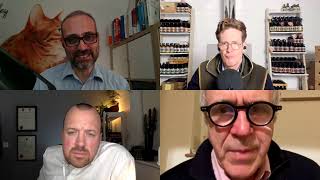
In this RPM Tuesday Night Live episode, hosts Nick Thompson and Brennan McCarthy interview Patrick Holden, founder of the Sustainable Food Trust and former Soil Association leader, with Dr. Conor Brady joining the discussion. Holden recounts his unconventional upbringing, early experiments with community farming, and his role in drafting the world’s first organic dairy standards while at the Soil Association. The conversation traces the history of the Soil Association, its evolution from aristocratic roots to a hippie‑driven organic movement, and the need to move beyond niche organic markets toward a systemic transformation of agriculture. Key themes include regenerative grazing (mob grazing), soil carbon sequestration (the 4‑per‑1,000 initiative), composting and desert restoration projects (Sekhem in Egypt), the microbiome’s importance for human and pet health, and the rise of raw pet food. Holden critiques current regulatory frameworks, the consolidation of slaughterhouses, and the over‑use of antibiotics in veterinary practice, advocating for a culture of partnership with vets. He outlines the Sustainable Food Trust’s education efforts (the Harmony Project), proposes a Global Farm Metric for true‑cost accounting and labeling, and calls for policy changes to support regenerative farming and trade of sustainably produced products. The interview also touches on the role of ruminants in a sustainable food system, the challenges of vegan narratives, market dynamics for organic and pet foods, and a vision of feeding the world through mixed, small‑scale farms with reduced grain fed to livestock. The episode concludes with recommended reading, resources, and a hopeful message about interconnectedness and restoring planetary health.
Chapters
The only word they can use. We are stimulated and scintillated with the fact we have the founder of the Sustainable Food Trust, Patrick Holden, is with us this evening. Patrick, are you there? There he is. Great stuff.
Technology, finally.
Absolutely great. We've introduced ourselves very, very briefly to you. Our many lovely followers know who we are. Can you give us a brief introduction to who you are so that we can place you in the constellation of science, of agriculture, of contemporary food?
Okay, well, I'm part of the constellation of humanity, and I grew up in London in the '50s, well, in and around London, '50s and '60s. My dad was a doctor, actually a psychoanalyst, a child psychiatrist. He, because when he was training as a doctor, moved around a lot. And for some reason, which I think it might be connected with epigenetic inheritance from my grandfather, I kept— I became very interested in keeping animals as pets. So I had an absolute menagerie when I was young. I mean, I had various childhood holidays in wild places in the Hebridean Islands and on farms, but basically at home, which was Peckham in London and then North London, Barnet. I, I built ponds and watched frogs and newts and had a minor bird and bred rabbits and mice, budgies, you know. I was just really always interested in animals, and I was going to study ethology at university because I read Konrad Lorenz and all those kind of animal behavior books. But then I kind of turned on, tuned in, and dropped out, as one did in the late '60s. And completely flunked out on university. I went to the University of Life, and my dad was then posted out to Palo Alto in the San Francisco Bay Area. He was a visiting professor at Stanford, and I went out and joined the family, and that was even more extraordinary experience at that time, being in the San Francisco Bay Area. So I came back determined to sort of get back to the land and set up a community farm. So gathered a few friends around who were interested in that kind of thing and read the Communes magazine, which is very sort of prevalent at that time. And that's what we did. We bought a farm, got back to the land, bought a dairy herd. And actually, I did prepare a bit. I studied biodynamic agriculture at a college in Sussex, and I worked on quite an intensive dairy farm for a year. But basically I learned by doing. And right from the start, because I'd drunk the Kool-Aid, I sort of thought that you should farm in harmony with nature. And I was interested in— I think it just dawned on me that health was not the absence of disease. It was something much more mysterious and positive than that. And I think that we have, you know, a National Health Service, which would be much better named the National Disease Treatment Service. And I became interested in the idea of positive health. And so I guess that's the reason why you probably asked me to have this conversation with you.
Absolutely.
I've done other— you know, I worked in the Soil Association 20, 25 years, and then I left that, set up the Sustainable Food Trust. And meanwhile, I've been, you know, doing my— that's my day job, but I have been carrying on on the farm. So milking cows basically and looking after all the animals on our farm. We have a dairy herd of about 80 Ayrshire cows. We turn nearly all the milk into cheese on the farm, raw milk cheese when we're not closed down with TB. That's a discussion, lots of discussions.
Conor, you're very interested here, do you want to jump in?
Yeah, like, I just— you spent 15 years in the UK Soil Association, and considering that's such a big part of life and your, your kind of stuff after that, what, what does the UK Soil Association do with itself? What did it do before you joined, and how did you leave it? What was it doing?
Well, that's a great question because, um, I have to go back into history about 100 years to answer that question properly. At the beginning of the 20th century, a man called Sir Albert Howard, who was an expert in plant diseases, knighted for his services to agricultural research, was sent out by the British government to India, actually now Pakistan, northwest India, to the Hunza Valley to teach the peasant farmers how to adopt Western methods of agriculture. And he had the enormous humility when he arrived there to realize that they knew more than he did about truly sustainable farming. And his observations were based on seeing that the, the soil, the way they looked after the soil, seemed to produce very healthy plants. They were sort of farming organically, although they wouldn't have called it that. And they were composting all their wastes. He noticed that the plants, although all the diseases were there, the plants didn't seem to suffer from them. And then the animals, which of course ate the plants, they were very healthy and they didn't seem to get diseases. And finally, the Hunza people were specimens of health and vitality, lived to 100 years, were feared fighters and all the rest of it. And he concluded that there was a vital link between the health of the soil on the health of the plants, animals, and people. And he spent 35 years in India, wrote a book called An Agricultural Testament when he got back, which is his homage to what he'd learned from these peasant farmers that he called his professors. And Lady Eve Balfour, niece of Prime Minister Balfour, who was involved with her sister in a farming operation in Suffolk, read the book and was so inspired that she thought it would be important to set up an organization to promote this idea that health is not the absence of disease, it's a positive state. That was the Soil Association founding meeting, 1946, 4 years before I was born.
Ah, cool.
And the Soil Association went through a sort of development phase with all these lords and ladies and aristocrats involved, but then a bunch of hippies like me came along in the early '70s and kind of challenged the orthodoxy. Not that we disagreed with the views of the founders, we violently agreed with them, but we thought this has got to go mainstream because we wanted to farm and sell our products at the marketplace. And there was quite a difficult period there then because we sort of took on the aging council of the Soil Association as it then was. And by this time, Lady Balfour was in her 80s, and I think she was confused by what the hell was going on. But anyway, long story cut short, we kind of took over the management of the Soil Association. This is by the '80s by this time. And I was, I was there for 20 years. And I think that all our inspiration derived from Lady Eve herself and those people in the early 20th century who understood these links. Like there's another man called Dr. Robert MacHarrison who set up the MacHarrison Society, which is a society for medics who are interested in this stuff. And basically they were right. And then meanwhile, agriculture was industrialized. And now we have what Howard described as a nation of impaired physical and mental health as a result of two generations, maybe even three, of eating poor food from industrial agriculture.
Yeah.
So that then when I came along to the Soil Association, we thought, well, we've got to build a market for organic food because we thought, call it something, call it organic. And we realized that if you farmed in an organic way, you probably make make less money than if you farmed in a conventional chemical way. So we thought, okay, we better write down what we're doing on the back of an envelope, as it virtually was then. And they became the drafts of the organic standards. And I can claim immodestly to have written the world's first draft of the organic dairy standards, because we happen to be first in the field in the Soil Association. So I spent 25 years developing the organic market. But now with climate change and everything, we can see that It's much bigger change that's needed than just an organic niche market. The whole of agriculture has got to change. So that's kind of partly the reason why I set up the Sustainable Food Trust, because I could see we needed to work on a broader canvas.
Yeah.
What is the most important thing, do you think, Patrick? Very simplistically speaking, you know, there are—
you can probably think about farming for health, to save the planet.
To stop us eroding our soil and disappearing as a, as a society? What's the most important thing that we can do, and what's the most important thing that the globe should do, perhaps?
Well, people need to realize that, you know, notwithstanding David Attenborough, who I have met and admired enormously, it's not any longer about saving the rainforest and reinstating the lost biodiversity. Most of the planet is farmed. And it's been farmed in a really intensive way. So the planet now is sick because the lungs and the digestive system of the planet is its farms. The farms are sick, so the planet is sick. So we have to restore the planet to health by changing the way we farm at scale. All farmers have to do this. So we, because we are citizens who eat, need to eat in a different way, including our dogs. We have to eat the food from regenerative and sustainable and organic farming systems, because if we all do that, the world will, you know, that helps the farmers go on the journey.
Yeah. Yeah. Because that's the, we can see we have got organic brands of raw dog food. We call it fresh dog food and they use organic meats, organic vegetables, a couple of decent companies doing it, but they struggle to find, like they, they produce tons per day, so they, they struggle to get the amount they need. But isn't that a good thing? Because they didn't struggle too hard 10 years ago, but now the demand for their products is so high. 1 in 5 British pet owners is now feeding real food to their pets and they're struggling. So that's a good thing because it means there's going to be an organic farmer going, what, this guy can't produce enough organic chickens? Maybe I can get in on that business. So suddenly it fuels— we're kind of hoping that we use the bits that the humans don't eat in raw dog food. So, you know, yeah, the tripe of the belly of the cow is a piece that we're happy to use, and beef apart, and until, you know, Jamie does a kind of a chef show on how to use organ meats, we use those pieces. So we increased the value.
I've got to tell you this, I've got to interrupt and say we did a home kill the other day and we had visits from Neal's Yard Dairy who buy all our cheese, or a lot of our cheese, and because we had the home kill we thought serve them heart. So it was a male animal about a year old and we slow cooked the heart. It was a recipe from Doreena Allen of Ballymaloe Cookery School. It was absolutely delicious.
No way, I've never had it.
So I'm not saying the dogs shouldn't have it. We can have it too.
Yeah, absolutely. But isn't it a good thing that this, hopefully this sector that is growing so quickly is creating more money from the spurious bits of the cow? So suddenly the organic meat doesn't have to be this price. It might be slightly cheaper because I'm making more from my heart and tripe and and bits and pieces. That's the dream. And but the humans have to sign on to it as well and not look at food as expensive, but an investment. You can put cheap food into yourself as a poisonous, or you can spend slightly more on your apples and look at it as something healthy and good for you.
And it's a great idea. But the problem, of course, we have is that we, we live in such a regulated world where, you know, doing a home kill of an animal is barely legal. And all the small slaughterhouses that used to exist all over the country to take the animals locally and slaughter them have all gone out of business. Not all, but a lot of them have, and they're replaced by these enormous abattoirs that you couldn't possibly buy the offal from even if you wanted to. But we need to change that, and we will change that, as we must. And it's interesting, I, I just come off a conference call with Nestlé and a load of other people who talk about true cost accounting in agriculture. The senior, whatever he's called, vice president of Nestlé was on the call because they know all this stuff now as well. And I met the guy who's running the pet food company. This is a few years ago now called Purina. And Purina are enormous pet food company. And the guy who was running it in North America, he was a really interesting guy. And he said, well, we take exactly what you just said, the drop, he called it. They call it in America. The stuff that we don't eat and they turn it into pet food. And there's nothing wrong with that. I mean, they're obviously making it into a global business. But what we need is the farming system so that the products that go into the drop are regeneratively farmed, not intensively farmed. And then our pets will be healthier too.
Yeah, that's cool.
So could I ask, what did you really find challenging? Because you set up the community farm back in the '70s and you were sort of driving that? And then there must have been some real challenges at that point. You buy a dairy herd, you're not really buying a biodiverse type of farming. So, uh, you know, what were your real challenges at that point and how have you overcome those?
Well, we went up to— I— somebody said you should keep Ayrshires, not Black and White Friesian cattle, uh, and it wasn't very sort of, you know, it was just a chance meeting I had with a guy and he said, well, they, you know, they convert grass into milk. Well, they're bit smaller. They're good, good on eating clover and grass and turning it into milk. And also they've got good milk for cheesemaking because the protein and fat ratio is good. So I went up to Scotland, as you do, or I did, and I found some animals. We bought 22 cows and they came down in a lorry from Scotland. One of them actually calved in the lorry on the way down, and she was called Aunt Nora, after my aunt. And also she was A. So we had— now we had all the cows were named letters of the alphabet. And of course, needless to say, Aunt Nora got mastitis and we didn't know what to do. So we called the vet in and the vet said, oh, treat the quarter with antibiotics. So we duly did. And we kind of learned by, you know, we just learned through practice, to be honest. And I think, um, that was a very good way to learn. But obviously, you know, it took its toll at times. So we had a really poor rundown farm, and also we had a very bad drive. And the vet who lived in Lampeter, he would— he refused to drive up our farm drive because it was too steep. So we had to go down with a tractor and trailer and an old Morris Minor seat tied onto the trailer and drive him up the drive. That's very funny. And we've had a lot of vets in our time, and one of them was honest enough to say, do you know I think half the animals they've ever treated would have got back— got better anyway if I'd done nothing.
Yeah, yeah, yeah.
But I think that it's a very interesting situation with vets at the moment because so many veterinary practices have been fueled by drug sales, and farmers are getting so little for their animals these days that it's hard to justify paying a vet. And that's wrong. You know, we, we need a culture of veterinary practice where we respect the knowledge that vets have And it's a partnership and that's been very difficult, I think, because of what's all the changes that have happened in agriculture.
Yeah, that's interesting.
Yeah, but we— Bren, after you, after you.
Yeah, I was just going to say, so, you know, you talked then earlier about, you know, not disposing of the drop, you know, all of the waste, because we've now got regulations because of the huge abattoirs and how things were with how we were feeding cattle intensively and everything. Do you see there being any change in that legislation with, you know, taking away the way we're feeding our cattle and making it more appropriate, you know, more biologically appropriate feeding to our farm animals so that there's less likelihood of these prion diseases, etc.? Or do you feel that actually, no, we're stuck in this rut now and, you know, that's not going to be a way forward?
Well, I definitely think we're stuck in a rut and it's difficult to see a way forward, but I think we have to change it. I don't think there's any alternative. How we change it and how disruptive that will be is an open question. But I've just been invited by Susan Jebb, who's the newly appointed chair of the Food Standards Agency, to have a meeting with her, her request, not mine. And so I'm just going to— I mean, I think it's a week or so's time, which is really, really interesting. And, you know, she, like all the people in the regulatory world, it's a world of fear of bacteria, isn't it? You know, it's incredible. I mean, as a nation, we have a paranoia about bacteria. And as a friend of mine, Richard Young, who also works in the Sustainable Food Trust, you know, we have a fear. He said we have a fear of bacteria, but it's bacteria that are going to have the last laugh, which I think is rather great, actually. And all these environmental health officers I mean, they scare the dairy farming community, especially if you're a cheesemaker. I mean, it's very interesting. If you milk cows, you're in a parlor and, you know, the udder and the anus of a cow are quite close together. And it's a world of poo, really, you know, and it's lovely because it smells delicious of grass and stuff. And, you know, it's just how things are if you milk cows. And then we make cheese. You go into the cheesemaking room. Oh my God, you put a hairnet on, you have to alcohol your hands, you know, you have to pass procedures, and people are really paranoid if you possibly put your hand in the cheese vat, God forbid. You know, you come out of the milking parlour and you're just milking cows. You make— we make a cheddar and you put them in the cheese store And guess what? The cheese store is a culture of molds. Yeah, yeah, it's really weird. So we make our cheese, which is encouraging bacterial fermentation. Yeah, but in the cheese room, we have to sterilize the shit out of it.
Yeah, I have, I have an image of it. I have an image of you coming into the cheese room, uh, covered in poo and taking your glasses off and just having white eyes for your career. You put on your white gown and hat and make the cheese all crispy.
Yeah, um, I mean, it really got— it's gone deep, is my point. So we have a societal fear of germs. The supermarkets and all the food companies have to practice due diligence, otherwise they'll get prosecuted. The Food Standards Agency, which I thought was a mistake when it was created, uh, is reinforcing all this legislation. Fear of regulation, you know, and overregulation is the blight of public health. It's as big as that. We're in a very dark situation, and I think the antidote to it is to de-industrialize farming, relocalize it where possible. I mean, obviously you have to have some big systems because people live in cities these days. We have to completely change things, and it's very interesting to speculate what the route map will be. I mean, we have pandemics now. We're a nation with, you know, so few children grow up on livestock farms these days, but I've got 4 boys, only one of whom has ever had an antibiotic treatment. And that was only because he was at school and he had a burn or something. And children who grow up on livestock farms, it's well known, don't get sick. They don't get so many food allergies. You know, they don't suffer from the diseases of the immune system. It's all because we, we are, you know, we depend on the bacterial for our microbiome.
Yeah.
And it's just gone right out of the whole ethos of society, and we have to get it back again. Obviously there's a complicated route map to do that, but I think it's no choice really.
Yeah, there's a wonderful raw dog food company over in the States called Answers Pet Food, and the concept behind it is that they use probiotics in their meat mix, a probiotic mix for the good bacteria to outcompete the bad and keep their meat clean in a industry where the meat isn't always the cleanest over in the US. But they got the idea from the Amish farming community. Some guys were standing there one day when the Amish was making— he cleans down his cheese room and he gets the whey wash, and after wiping down all machines, he starts spraying milk everywhere, or the equivalent of it, whey. And the guy standing beside goes, what are you doing? You're just cleaning your machines, you're covering them in milk. And he goes, well, that's whey wash, and that cleans them. And within 5 years, they had this industry of using probiotics in skyscrapers, in the ventilation systems, to keep the air clean, to help people to bacteria. Two hospitals in the UK did a big study that washing down with a probiotic wash, it took a couple of days to really for it to work, but it outcompeted for the four of the six top hospital bugs that lay you out. It outcompeted regular chemicals. So this whey wash idea took off, and the guy from Answers Pet Food goes, I could probably clean meat with this. So his meat gets cleaner the longer you leave it out at room temperature. I mean, wrap your head around that. So many possibilities.
Brilliant.
We just see the fear and never the positive, not never the positive. It's always antibiotics, antibiotics for your gut. It's like, well, you could use probiotics on that gut just the same. Uh, so like there is a shift happening though. These guys, I tell you, these are the two top natural vets in the country.
I mean, the microbiome thing, you know, it's revolutionized people's understanding of, of, you know, our relationship with bacteria and the, the whole idea that, that, you know, our own digestive system is primed at birth by, you know, the anal and vaginal bacteria of the mum. And then this guy called Martin— I've got his name now— he is the medical director at NYU. He's written a book called, um, Missing Microbes, and they did a study.
Martin Blaser.
Yeah, brilliant book. And he basically, um, did a study on babies from cesarean births, and he found that because they didn't have the the fingerprint primer of the bacteria of the mum, there were long-term consequences to their health. And isn't that fascinating? And you just know intuitively that it's right. And so we've got to really change our relationship with our farming and our food, and we've got to overcome some of these regulatory barriers. You can understand why governments have put them in place, because obviously these heavily industrialized farming systems, particularly the livestock systems, they are a breeding ground for E. coli, and if something goes wrong, it'll get into everyone's food because they're all so centralized. But we have to change it.
Yeah.
And Patrick, just to take us on a slightly different tack, this is fascinating stuff, but where time is short, so I want to cover as much as possible. Um, all the vegans I know are very concerned about the health of the planet and, and/or their own health. And they would, they would suggest that animals might not be part of the answer to their health or the planet's health. How do you personally converse to those arguments?
Well, I think there are a lot of young people today. I, I listen to Heart Radio when I put up the silage for our cows because my excuse is that the other person who milks the cows puts Heart Radio on and I don't change it. But actually, I don't even want to change it because I sing along, you know, and there's some real bangers on it. Anyway, basically all the food companies now, they're all advertising for vegan foods. I mean, it's incredible. Sainsbury's, McDonald's, Aldi, they're all at it. Advertising these vegan alternatives. And I think what they are doing is catering for a large number of young people who, in my view, understandably but perhaps mistakenly, think that to go vegan is to, you know, address climate change and be part of the solution. And you can— I think a lot of those young people have a revulsion of industrial livestock farming, and rightly so. But I think their reaction in their reaction, they are failing to differentiate between the livestock which are part of the problem, which is the intensive pigs and chickens and mega dairy herds, and the livestock which are emphatically part of the solution, including grass-fed and mainly grass-fed sheep and cattle. So I think it's really a symptom of amazingly poor education that we've got ourselves into this mess where actually all the arable farmers that have been producing plants intensively mainly grains, which are mainly fed to animals, which is without which you wouldn't have intensive pigs and poultry. They're now thinking about going regen, partly because the price of fertilizer has tripled. But they're looking at the market for red meat— beef, lamb— and they're thinking, well, why would I do that? Because no young people want to eat it anymore because David Attenborough says it's bad. And yeah, it isn't actually. If you eat the right meat, it's not just good, it's essential because it's part of the climate change solution. Because the only way that you can switch to sustainable farming if you're a farmer in England or Wales is to farm with the grain of nature and give up using chemicals. And if you want to do that, then you will have to have a crop rotation or use clover in your grassland or both in order to rebuild the fertility, which would, would be lost when you take an arable crop out. And the only way you can turn that grass of which there's about 60% more than that of the whole farmed area in the UK into food that we can eat is with ruminants, cattle and sheep. So if we don't eat the products from those ruminants, the farmers won't be able to transition to regenerative farming. It's as big as that. So we need a massive reeducation program. Of course, intensive livestock's bad, but we don't— we must understand that It's not all intensive, and if the farmers want to go regen, we have to support them by eating their products.
Yeah, and is the education— is that what's behind the Harmony Project that you're doing with— through the Sustainable Food Trust? Is that about education? And like, how do we sort out this education issue? Where does that start?
I do think we have to start in schools, and the Harmony Project is a little bit sort of— it's bigger than that in a way. It's about— it's initiated by a man called Richard Dunn, who was a head teacher at a Church of England primary school in the Thames Valley. And he read Prince Charles's Harmony Book, which the key message of which is nothing's separate, everything's connected. And if you want to understand your relationship with the world, just be in nature, look at nature, not just nature. Everything in the universe is connected through common mathematical and geometric laws, which are expressed in plant growth, in animals, in our stomachs, in bacteria, everything. And if we can understand the world through the prism of interconnectedness, then we will have a better relationship with it and know what to— how to make it a better place for the future. And he's convinced that unless we put this— these sort of streams of thinking into our children by getting to ask good questions about sustainability, we won't have a livable planet. So I do think education is really important. And the Harmony Project is is that strand of our work.
Okay, cool. Yeah.
You talk about a livable planet.
By the way, if anybody wants to follow the Sustainable Food Trust, we've got a website, Instagram, all that kind of stuff. And if you go to our website, you'll see lots of interesting stuff. Or if you want to see what's going on my farm, we've got an Instagram called Havod Cheese, H-A-V-O-D Cheese, and we post quite regularly. And it's just the story of our farm. And it's, you know, I, I think it's— I, I posted the day before yesterday a 16-second video of our cows chewing the cud after morning milking. It's so beautiful.
Lovely.
There were 60 cows lying down in the cubicles, all looking incredibly peaceful chewing the cud, and the atmosphere was amazing.
I'd love that.
I've got to say, I can imagine that that's a new YouTube channel in its own right, isn't it? Yeah, in the cut.
It's meditative.
Yeah, I bet. Yeah, it is beautiful.
Sorry, check it out.
Sorry, 3 cows and they're all chewing in harmony. Harmony.
Um, the regulation thing, just to come back to the regulation thing, isn't that a little bit of a part of the problem where like Bren, let's say, wants to be an organic farmer, but like the regulation is such a pain in the —put pain in the arse. It's like, I don't want to have to go for the regulation, but then I'm just not organic. Is there not a huge happy medium of farmers, like in Ireland, because they really have a problem with it in Ireland because regulation? We did everything you guys did, so we took your large slaughterhouse idea, we shut down all our slaughterhouses to the detriment of the animals.
Hey, I want to apologize on behalf of the United Kingdom.
I'd like to apologize. But our Department of Agriculture is very much modeled on the British Department of Agriculture, and our idea of regulation is way worse than yours. It's much— it's oppressive. So our farmers, yeah, good luck trying to produce organic material in Ireland. So like, is there not a happy medium of farmers where the problem is they don't get rewarded enough for— it's like you hear them on the radio saying grass-fed cows are a good idea, but there's no actual group taking that message that this guy is trying to say, which is— people would say, well, you would say that because you're a farmer. But like, there's no actual group grabbing the politicians. You mentioned some French guy in a blog there recently, Stéphane Le Foll, and he's trying to push this 0.4%— Oh, he was the French minister. French minister, was he? Okay, all right. And so the idea was that farmers build the soil, wasn't that it?
He, yeah, he basically— the COP21 in Paris, when there was a big Paris climate agreement, He launched this initiative called 4 per 1,000, and he set a target of farmers building 0.4% organic matter more each year in their soils. And the British government signed up to it, but of course they did absolutely nothing. And, you know, actually he was right. And so that's what we need to do, because if we, if we built, rebuilt the soil carbon that we stripped out of the soil during the intensive farming period, we would take up to— I think it's 150 parts per million, it's been estimated, if we did it globally— of CO2 out of the atmosphere. And the soil is the second largest carbon bank in the world. It's the only way where we could actually sequester, re-sequester carbon in a hurry. But the climate change committee, UK climate change committee, just don't get that. And I'm hoping to go and talk to them very shortly with the chair, who's called Lord Dieben, who I know, and basically get— put them right on that. But it's interesting, the, the whole thing which you say about organic regulation, it's ironic, isn't it? If you try to do the right thing, they regulate you to bits and it costs a lot of money. But if you're just doing normal farming where you're causing harm, you, you don't get anything like as much regulations. So we have to reverse that in a way. And we are trying to do something about that in the Sustainable Food Trust. We think all farmers should have an annual audit to measure the impact of their farming practice on emissions, biodiversity, animal welfare, everything. And it should be one audit for every farmer, not just in the UK, but globally. We're calling it the Global Farm Metric. And we think that ideally, the annual audit should be supported by governments. and then it could be transferred onto food labeling. So you'd be able to buy from the more regenerative farmers.
That's good. And then what, you get some sort of reward if you are sequestering lots of soil? Well, then surely that's a carbon reduction. And if we were to reverse the whole, what, the carbon punishment, well, then maybe there's a carbon reward for the larger farmers that are actually sequestering soil. So there's a reward system as opposed to just all stick, there's a bit of carrot. And you mentioned one thing that's interesting, you said about in Egypt, they're composting everything. And so they're taking a lot of the biological biomass and biological waste from Cairo and using that on the fields. Now, am I to believe that my, my bin here, my compost bin, can be used— that material, as opposed to being used as an energy regenerator— I don't know where it really goes, but that's what I'm hoping— can that be spread on fields? Am I going to see paper cups rolling through the fields and think, hey, I'm growing carrots?
I think composting could save the planet, actually. And interesting that COP27 is going to be hosted by Egypt. And just south of Cairo, where actually my grandfather spent the whole of his working life because he worked for the Egyptian government, there's a place called Sekhem, S-E-K-E-M, check it out, where they have restored thousands of acres of desert just by using compost. And it's amazing what you can compost. Obviously, you don't want to compost contaminated stuff, but anything which is, you know, reasonably organic, including, you know, green waste from households, park waste, straw, I mean, just anything literally which has got an organic base. It's surprising how quickly it will compost. And you can even compost wood chip. It just takes a little bit longer and a little bit more turning. And what they are doing there is they're restoring the desert. Obviously, It has to be irrigated because there's no rain out there, or virtually none. So, but they find that you only need 40% of the water from the Nile in this restored compost-produced soils than you do in conventional agriculture. And I'm hoping that that project will feature during COP27 because I think it's really important that more people should know about that. They produce amazingly high-quality food, biodynamic farmers they are. But they're really big influence in Egypt, which is amazing. And I think it could be the solution to desert farming. But actually compost— we've just started composting our own manures on our farm, and livestock farmers tend not to do that. Although actually, do you know Ballymaloe Cookery School down in Cork? Well, they do that there. They compost their organic manures and doing a fantastic job there, actually. Nice. Cool. But one other thing I'd like to say about I know all the dog food that people buy has to be probably quite well heat treated, but I don't know if you've heard of a man called Pottinger who was an American scientist who did some experiments on cats in the '30s, and he fed the cats raw milk, pasteurized milk, and sterilized milk also, and meats as well. But anyway, the, the cats that were fed the sterilized milk died. And the cats that were fed on the pasteurized and raw milk survived and thrived. But in the second generation, there were differences in the litter size and the health of the kittens between the raw milk and the pasteurized milk. In other words, raw, unprocessed food is the best food you can eat. Not, not for everything, obviously, but certainly for cats and for dogs. I'm sure that's true as well, that there's nutritional benefits of raw food, which basically are lost in processing.
Well, you'll be very, very pleased to hear, Patrick, that is exactly what we are pushing to feed cats and dogs on raw food, species-appropriate food, high nutrition density, organ meat for their health. And it pays off. All these people who are watching They are veterans of having taken their cats or dogs, mainly dogs, onto raw food and seeing a transformation in the health of those. So we're with you 100% of the way in thinking raw food for dogs and cats especially is really is the future and real food for human beings, real, real, just appropriate food. For humans.
Great. Yeah. Yes. And it's interesting when you milk cows, you know, with us, the metabolism is slower. And also there are other factors, not so much smoking now, but drinking, emotional stress, other forms of abuse. And they mask diet perhaps. And anyway, it's a little bit of a slower thing. But with cows, you can literally turn our cows into a field. Each field is different. It has, you know, terroir. Has a different kind of quality of growth than the grass. And on the best of our fields, you can turn them into the field in the morning and there will be a bloom on their coats and the milk will be up 12 hours later. So this relationship between food and vitality and health is very observable if you look after animals because their metabolism is quicker and also they don't have all these other nasty habits.
Yeah, yeah, very much so. Do you have to move your cattle through the field the same way the Kiwis do it? Is that the same idea, that you're kind of— is it like a real— is there a lot of mechanization to keeping the cattle moving? Like, you should be here for 2.5 hours and then to this field? Or is it more, you know, they're in that field one day and then that field the next, you know?
Well, we used to just graze field by field, but actually we're adopting this system called mob grazing now, and this was the insight of, well, various people, including a man called Allan Savory, who was from Zimbabwe, a white guy from Zimbabwe. And he observed these herds of wild herbivores, antelope, whatever, grazing in vast herds for safety and then defecating and urinating on the grass and therefore contaminating it. So they moved on, but in the meantime trampling it. And he realized that that was soil building. And they did that because that was the way they'd evolved to be safe. But his hypothesis was that farmers should replicate this idea. And it's based on sound science because when you defoliate a grass plant, it has an above and below ground root ratio. So it has a lot of biomass in its roots and quite a lot of it's like a hay crop above ground. And if you just cut the hay or the grass or your lawn or whatever, You notice it grows back very quickly the next day. And that's because the plant needs to maintain this ratio. And if you turn a herd of cattle into a field and leave it and leave them in the field for a week, the grass keeps trying to grow back when it's eaten, but it can't because it keeps getting eaten down. So it sheds root mass. So the theory behind regenerative grazing is that if you allow, if you defoliate either by cutting or grazing and then allow the grass to respond, to recover for a month, you will actually build soil as well as improve the yields. So I think there's a good philosophy behind that. And also I think you get more interesting varied grasses and herbs and all the rest of it.
Cool. How popular is it in, in agriculture today, the mob grazing idea? Because I don't see it happening anywhere around us.
Where are you exactly?
We are just outside Bath.
Bath, Nick. It's changing. There's a lot of farmers interested in it now, especially dairy farmers, but because they come in anyway. But I think even beef and sheep farmers are realizing that it's— if you want to be— if you want your grass to be a carbon store, That's what you need to do.
Yeah, Joel Salatin is a big exponent of mob grazing, and he talks about it very eloquently in his— in the book, uh, Folks, This Ain't Normal, is a very good— so if you want a little background, he's a great guy to share his video, Nick, that you sent me.
Do you remember that? Yeah, I'll put it up on Facebook after this. Just his 20 minutes explaining something. It's TED Talk. It's just Oh, so obvious.
He's a fabulous communicator. Yeah, yeah, yeah.
Oh yeah, Polyface. Yes, good, good, good. What about Alan Savory? Has he done a TED Talk?
I think Alan Savory has done a TED Talk as well.
Yeah, okay, we'll get that up so that everybody can learn about these things. I think they're so, so, so important. So just in the last few minutes, please, Patrick, recommended reading, recommended websites that you would suggest we and our our people can go to to take this forward and help you to do what you do and help us to understand? What would you say? Good books and good websites.
Well, I've mentioned a couple already. An Agricultural Testament by Sir Albert Howard. I mean, it is probably the greatest book on agriculture ever written. And, you know, might have been written as a farmer in 1940, but it's timeless, really. And so many, you know, he's got this amazing chapter, Critique of the National Health Service. It's just devastating. You think, wow, many people could— funnily enough, George Eustice, sometimes known as the Useless Eustice, our Secretary of State, he actually has read the book and thinks it's a good book. It's just, I think he's just got— he's under Boris's cosh. So, you know, it's a bit sad, really. He's not, he's not a leader. Um, but, um, other books, well, I mentioned a couple of websites are our own, obviously. I would say that, wouldn't I? Yeah, I mentioned Missing Microbes, the book by Martin Blaser. Um, let's think, what else would— well, it's Nicolette Hahn-Niman's book Defending Beef. That's a good book. It's just been upgraded. Be good to, uh, recommend that. Um, you know, my mind's gone a blank. I should, I should be able to rattle about 10 of them off. Uh, what about, what about Gabe, Gabe Brown?
You're a fan?
Yes, great book to read. That's a must-read book. Yeah. And that's also, there's the film, um, which is, um, what the hell is it called? The film with Gabe Brown is in Kiss the Ground. Kiss the Ground. Watch Kiss the Ground movie. Great, love it. On Netflix. That's really—
that's a great one.
That's got a lot in it.
Is it true, Patrick, that I read a piece in The Telegraph, I think it was, who they were selling the benefits of like a huge portion of Britain is upland crappy grass that they do very little with. And this guy was saying, like, we don't have trees because we allow— you allow the ruminants to run free like we do here in Ireland. We've just got deer keeping it as waste grass, essentially, and keeping away all the big trees. So we don't have— you don't have forests of any mention in this upper land, but you have got this tough grass, and there's a number of ruminants that are happy to eat that. Is there not a way that you can farm the hell out of the top? Like, you know, animals like wildebeest and zebras, they live on virtual sticks sometimes. I think they have the poorest quality diet. If they're not ruminants, so we can just let loose in the upper lands that still have grass and, and, and, you know, do something more useful with those empty patches of a couple of sheep per hectare.
I think there are, and I think it's a very interesting point. I was up last night actually in the Cambrian Mountains above an amazing area of wilderness above Strata Florida Abbey, which is a Cistercian abbey up in mid— Midwest Wales. It's just complete— it's Britain's biggest wilderness south of the Highlands and Islands, much bigger than Dartmoor. And, um, there's so much grass up there, and it's been overgrazed by sheep. And I think the trick is to reintroduce a balanced system where you have some trees and you have mixed species of cattle and sheep that are capable, the breeds that are hardy enough to cope with that sort of environment, and also versions of mob grazing. I don't think you can fence everything off, but I think we need a new kind of ecologically based farming, taking into account all the issues. And I think the point is that a hell of a lot of the United Kingdom is not suitable for arable cropping, but you could produce ruminant grass-fed meat, sheep and cows, and you could grow vegetables through composting and maybe polytunnels. I think there's an enormous scope for that. And there's a book that hasn't yet been published, but I've just read the proof of called Gone to Seed, which is an autobiography of a man called Simon Fairley, who I heard give a talk. A couple of years ago, and he said, um, I— he said, I farm 10 acres in Dorset. It's not particularly good land, you know, it's a bit hilly, a bit rough, a bit this and a bit that. But he said, there's millions and millions of acres of land like I farm in Dorset, which is similar to it. And he said, I've got an acre of veg, an acre of wheat, and 8 acres of grass. And on that grass, I have a dairy cow and her male calf, beef cross maybe, and a heifer replacement, milk the cow, make cheese, drink the milk, and grow the vegetables. And he's got some community, I don't know if it's a Camp Hill community or, you know, some resident community that eat all this food. And if you think about feeding Britain, there it is, you know, it's the model. And the reason why it's called Gone to Seed, I think he was, he's called Simon Fairley, he's born the same year as me. Apparently Timothy, he was a bit of a hippie in his time, you know, he'd got thrown out of boarding school and all that kind of thing. Basically, Timothy Leary, who was some acid guru, was once asked what had happened to all the hippies, and he said, they've gone to seed. That's the title, I love it.
Patrick, sorry, were you going to wrap it up there, Nick? I was. Isn't it crazy that like you were talking about like local farming on small local farms and how we need to get back to that, and yet with Brexit Britain is turning to bloody Australian beef which is grown in CAFOs with filth. Don't get me going. And you want to bring that in. Think of the carbon footprint of that crap. Stuff that you can grow 50 bloody meters from your house.
I mean, we need a trade deal which restricts international trade only to regeneratively grown products. Yeah, fabulous. It's crazy the government did the Australia and the New Zealand trade deals. It's a scandal.
Yeah, it's crazy. We have it as well. We've got New Zealand.
Just make sure you don't get Liz Truss for the next Prime Minister because she's a free trader. There you go. No more Liz.
Sorry, Nick. Can we feed the world using this micro farm and mixed farm model?
Yeah, we'd have to eat differently and waste less food. We waste nearly 50% of the food that we, you know, on the farm and off the farm. So we have to stop eating cheap chicken altogether. Sorry, guys, no more cheap chicken or cheap pork or mega dairies from cows that never get out to grass. More vegetables. And if we, if we went regenerative, nationwide, the grain production would half, half. But that's okay because half the grain is currently fed to these hapless animals in sheds. So we just won't have them anymore. And chicken will be expensive and a treat like it was when I was growing up.
Sunday thing that you get. Yeah, exactly.
We could, we could feed ourselves and have no less self-sufficiency than we have today in our staples if we did it that way.
And a lot more people employed doing meaningful work that they love and care about and they wag their tail to get up and do on Monday morning. I read, I read stories about farms to my kid and about farm animals. But we stop reading those stories at 9 or 10 when you start realizing that that pack of rashes is actually the pig that you sleep with at nighttime in the teddy. So it's ridiculous. We know these things make us happy. This is meaningful work. What is my point on the earth? These questions we ask ourselves, bloody ridiculous. Back in the day, it was grow food, protect your family, get back to that sort of stuff. And there's your meaning.
And you'll love it. Yeah. Meaningful physical work is at such a premium today. And that's what farming, proper farming is. It's amazing. You feel so— your thoughts come better when you're working. The human body was designed to work physically, and now we all have to go down to the gym or something because we, we don't have enough of it. So yeah, a lot more people would work on the land, I think.
Yeah, yeah, it's true. Yeah, guys, just before we wrap up, thanks very much everyone for listening. Uh, thank you so much, Patrick. Nick's going to wrap this up again, but I want to direct people to our Patreon, uh, Patreon page, forward slash Raw Pet Medics. Uh, guys, if you can visit it, it's great. That's what keeps us going, getting people in like Patrick and helping us prepare for these shows. It's patreon.com/walpetmedics. But Nick, you probably wanted to wrap it up, so I just want to say, Patrick, pleasure meeting you. You've given me so many ideas, but, uh, it was just such a brilliant, brilliant chat. I could have done another hour of that, no problem. But, uh, I know, Nick, you've been a huge fan for, for years, so it must be a—
well, it's actually Sorry, you live in Ireland?
I live in Ireland.
Yeah, I went to a conference in the Wicklow Mountains, Glencree Center of Peace and Reconciliation.
Very nice spot. Yeah, that's a very zen spot. You're a bit of a hippie, Patrick, I think, underneath it all.
I'm more than a bit of a hippie.
You've been absolutely fantastic. We had high expectations and you've surpassed them all. We're so, so, so delighted. We would I would love to get you on in a year's time just to see how the lay of the land is then. Your optimism and your knowledge is inspiring. I feel, I feel so much happier than I did at the beginning of the show. Thank you so much. Is there a final message you'd like to share?
Well, you can't say no. We're all connected, aren't we? You know, it's— I think each human being is, you know, where the cells of humanity and the— if humanity is a giant organism or the food system is a giant organism, the farms are the cells and we are the cells. And if we can restore ourselves to health, physical and mental, then we can create a healthy planet together. And I think all the knowledge that we need is contained in our own experience, in our own bodies. We don't need to look any further.
Yeah, I love that. Wonderful.
Great. It's a great place to finish. Thank you so much for sharing your knowledge and everything that you've learned over the years. Thank you. Thank you to everybody who's been watching today. Thank you to the guys It's been a great show. I'm blown away. I'm gonna— Q&A next week. I'm gonna be thinking about this. Please, guys, come back and ask plenty of questions.
Yeah, and we'll share that Salatin video on Facebook in case we haven't done it already, because it's just to explain to people this very simple process of— we think trees are a way to sequester carbon. It takes 10, 15 years before a tree is any substance. Grass just grows like cereal. And the cow gets the munch and she poos out all this and off she goes. This is fantastic. So next week is Q&A to the people that were listening. There were so many comments in there, but we don't have time to get through them, guys. So yes, we will be answering some of those next week.
Yeah, absolutely. Thank you so much for watching. Thank you, Patrick. Thank you very much.
Yeah. Okay, bye-bye. Great stuff. Bye-bye.










