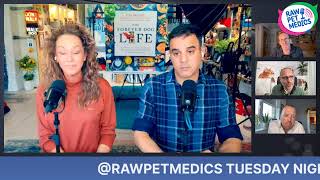
Dr. Conor Brady, Dr. Karen Becker, and Rodney Habib discuss their new book The Forever Dog Life, coming June 4, 2024. It offers practical guidance on pet health through the L.I.F.E. framework: lifestyle, microbiome, food diversity, and environmental toxins like Teflon and flame retardants, plus recipes and cleaning hacks.
Chapters
Greetings all, it's just Nick and then Brad and then me.
Good evening boys, how are you?
Very, very well. Well, you know what, I'm feeling good. Not that anybody's asked me in the last few weeks, but that was the longest— that was the lot, just like my birthday. Remember you forgot my birthday again? Yeah, and just to remind us, uh, but 4 weeks I was getting over that cold. 4 weeks. I've still got the sniffles. But I feel totally healthy and, you know, back to full. That was a long one.
Yeah, but mate, that was 4 years of running yourself down.
4 weeks is a pretty, pretty quick comeback. I don't often get badly sick, but that was a long one. But I am feeling fighting fit now. Bren, how did you get on over the weekend? You were doing fancy things.
It was great. I would just say, look, to anybody who hasn't been to the Natural Dog Expo in Solihull, thank you, Caroline, for inviting me. Thank you for some Coke. Brilliant co-speakers. I mean, I just couldn't believe it that I then actually had a whole 4-hour dinner date with Rita Hogan afterwards where we were just bouncing stuff off each other. She is absolutely brilliant and bless her, she'll be on her way home, so I hope she catches this on catch-up. But Rita is just great. Just listening to some of that stuff, I'm going to pump Karen and Rodney for some information to see whether they included that in their book or not.
Oh, very good.
But it was great. Absolutely wonderful crowd. I even cleared the stage ready to do the dance routine because you warned me and they didn't get me up to dance. I was really mortified.
But, you know, hey, and you had it ready. You had a routine.
Absolutely.
I didn't. I didn't. Filled me with absolute terror. I still have nightmares about it. I still have PTSD. Being chased around the bloody room to dance. My God, Nick, you know what? You'd be able to dance, Nick. I have a feeling that if Nick was asked to dance, I think you could probably do something.
On a good day.
Yeah.
If I'm— if I'm—
yeah.
Have you never seen him dance?
If I'm nervous, I'm like a robot.
Yeah. Yeah.
I think a little bit later in the evening, then things can happen.
Yeah. Guys, we are Raw Pep Medics. You will find us on patreon.com/rawpepmedics. and we see you all there, and we appreciate you. Thank you very much. Uh, so, uh, for all the Patreon people, we do a little bit on the side, so we do an extra 15-20 minutes of chat. And, uh, so thanks very much, uh, for everyone there. If you can afford it, great, and if you can't, doesn't matter, we're going to be here anyway. So, uh, lads, let's get straight into it. There's nothing really more interesting to talk about except the two we have hiding behind that wonderful image. So should we just bring on the legends that are Dr. Karen Becker and Rodney Habib. Welcome.
Let's get, let's get them on.
Where are they?
Oh, I feel really sorry, Nick. Nick, I've hidden you behind the sign. We're gonna bring you on later.
That logo should be just a little bigger. I mean, it's just a fraction bigger so we could notice it.
Yeah, for those on podcast, we have an emblem in the top right corner of the screen, and Nick is hidden behind it. Oh, you can see him. We can see you at the bottom of It's fine. Yeah, it will do. How you doing, guys?
Wonderful.
How's—
so much for having us.
How's life? Huh? How's life?
Uh, listen, like the last time, the last time we were invited on the podcast, you set us up for the FD the entire time. I did.
I remember.
You set me up. It was wonderful. Listen, we just mentioned before the podcast, our very, very first podcast that we did during the Forever Dog original book launch in 2021 was with the Raw Pet Medics, man. And flash forward 3 years later, and here we are again, our very first podcast with the 3 handsome Euro/UK/Irish gentlemen.
Humans to spend time with at all. So thanks so much for hosting us.
Yeah, absolutely. Yeah, and we're going to be seeing you guys soon as well in real person. I mean, we're going to be meeting by the end of the year. I mean, we haven't actually met physically. Met— have you met any of us yet? At all?
Yeah, yeah, yeah. I've met, uh, Rodney and Karen, and we presented in 2015 with one of, um, Caroline's, um, uh, things. And then I remember having breakfast with Karen in Birmingham one day.
I so remember that.
Do you remember?
I was there too, Nick, but that's okay that you forgot.
Do you remember? Do you remember what we talked about?
I do.
I think we probably talked about raw food, the future thereof, the Raw Feeding Veterinary Society, all of that stuff.
It was so fun. You said to me, I have this vision, I have this idea about this Raw Feeding Veterinary Society. I think I'm going to start this thing. And I was like, I think it's amazing. And then you did.
Nicely done.
Nicely done, my friend.
Wow.
Wonderful.
Thank you.
Listen, you guys have done a phenomenal job, all three of you. What you are doing over on the other side of the pond, it's breaching its way globally, worldwide. It's absolutely absolutely phenomenal. Like, I can't tell you how awesome it is to see week in, every Tuesday, you guys going live and just talking about the topics that people normally don't want to touch, normally don't want to go near, and just, man, cutting right through it. Yeah, it is, it is awesome.
Do you watch them, Rodney?
Do you watch?
I do watch, I do watch them, and I troll them when I can, but I like to— I only like to comment when they're live, so I have to catch them after the math because your guys is like— the time zone can be a little bit—
now and again I see, I see your name coming up and you're saying something, and I have to admit, uh, messages are reliably humorous. You know when you've got a friend in a WhatsApp group? I don't know if you use WhatsApp over there, but over here we all use WhatsApp, and some people don't say a lot, but when they say something, you listen. It's funny, you know? So I do appreciate your ninja-style messages. It's awesome.
I did get a shock because I looked at, I think it was 7 AM this morning, and there was a message came up with Rodney Habib And I was like, at 7:00 AM, Rodney, what are you doing up? What were you dirty stopping at? Were you drinking?
I'll tell you.
3:30, man.
He gets up like at 4:00 AM. He goes to bed at 8:00, but he gets up at 4:00.
He's one of those people. I just go right into PubMed. Conor, you know that I was sending you studies at, I think, at like 4:00 AM in the morning. I just geek out, read a bunch of science in the morning if I can. And yeah, and I go trending through it like that. But it's a grind. And as you know, it's been quite a grind. Now we're getting close.
Yeah.
Yeah.
Guys, when does the book come out? Tell us about the book. But most importantly, when can people get a hold of it? Where can people get a hold of it?
Yeah.
Start with the basics. So this is a great question. So we know that the dates have been locked and solidified in North America. So the actual release date will be June 4th. So, we're about 3.5, 4 weeks away from North American release. Now, on your side of the pond, it's going to be on July. So, I think the date is July 4th. I think it's 30 days afterwards, which sucks. But yeah, sadly, there'll be like a little 4-week delay before it makes it there. In the English-speaking world, it'll be available to people worldwide in an English format. And we've gotten 2 countries thus far that have taken a chance on a recipe book Would you believe South Korea and China?
Isn't that crazy?
All the places in the world are the first to take it into transit.
Wow, China took it on. That sounds like a very important one, in fairness. I heard it's quite big. Yeah, I did a talk in China. I did a talk in Beijing a few years ago, and that is one incredibly switched-on group of people. And you would, you know, they're just really getting on the whole kind of pet thing, you know, and it was still relatively new, but my God, they were switched on. A room full of people that had better questions than I would have had if I was listening to me. So, uh, yeah, huge. That's great. That's good news. How do you know if it's been translated well? I mean, if your book's been translated into Chinese, does anybody proofread the proofreader in case they don't like you or dogs?
It's— I mean, honestly, they could, they could be saying whatever craziness they want. It would be like, okay, no, no, of course we're not proofreading. You just have to trust. You have to trust that the publishing company hires a good translator.
Okay.
Yeah, okay, but there is no proofing of the proofreader, but that's an excellent—
it is. And, you know, I will say this, we were— it's, it was such a blessing, you know, when we came out with book number one, we had no idea, you know, when we were talking to you guys, we had no idea what the heck was going to go on. That book blew up, and with your support, you helping us in getting the message out in the United Kingdom, The Forever Dog hit the UK Times on release date in 2021. We had no idea. Would you believe no one told us? We had a tiny, like, little library. Yeah, take a picture and email and said, holy shit, The Forever Dog just hit the UK Times. And now it's been translated into 22 countries around the world and the most all-time selling dog health book of all time, which is just mind-blowing.
Oh, I'd love to be able to say that.
I was going to hope that he was going to say, well, after one other.
It's such, uh, it's such a good one-two punch though. I mean, really. So the Forever Docs, kind of the, the why, you know, just like some, you know, the common sense science as to why. But Conor, we do really appreciate you putting a decade of your life into the how. Yeah, to give people that.
It was very important. Yeah, it is.
And the science as well.
Well, and you probably saw it— sorry, I didn't want to cut you. And you probably saw, Conor, that your book was the number one trend to our book. So it was like people had brought in our book. Yeah, it set up the foundation, and then they brought in your book, which not like just built like a monument on top of the foundation.
Yeah, yeah, keeps telling me that. Amazon keeps telling me that when people buy Forever Dog, they recommend my book behind you. So I've been, I've been riding those coattails and, uh, being absolutely delighted for it. But like, listen, guys, you got— you guys know how hard it is to put a book together, and, uh, And so that first book would have been an undertaking. I have a little bit of PTSD from that first book. I'm thinking, would I ever do it again? How did you get on with this second book? Has it— I mean, this is a different type of book. What type of book is Forever Dog Life? What, you know, compared to your first book, which is more information and telling the story, this second book, you've used the word recipe. Like, what's this book contain? What's it about?
Well, first of all, I also have PTSD. So part of the deal for this, for this book— well, let me just back up and say the kind of the crazy backstory. A second book wasn't really on our radar. I didn't realize that if you hit on the list, your publisher comes back exactly 2 years later and says you need to publish again. And we're like, what?
Huh?
Like, was it— we were not planning on this. But if you don't, they're like, did you want to publish or just kind of— we want to be kind of, you know, blackballed from the publishing industry. We're like, no, we don't want that. We don't really want that. They're like, well, you need to— you'll need to produce something.
Play the game.
Follow up, right? Right. I mean, you have to follow up. So my thought was the biggest want that was left after people read Forever Dog was this is great. It's overwhelming with the science, but where are all the easy how-tos? Where are all of Rodney's pictures that show people the steps? Because the science is amazing. Thanks. We got it. But now what? Like, what do we do now? And how do you implement both better bowls and healthier homes? Like step 1, what do you do first? So this book really is the how. And it was important to us because so many people felt inspired by Forever Dog but also overwhelmed. They were overwhelmed by like, what do you do?
Yeah.
So this is the— this is literally— I do not have PTSD from this book because Rodney did it all.
Rodney has PTSD.
Yeah, it was— it, it, it was— you know, you know what the hardest thing about it is? It's the— it's, it's food religion, right? It's food culture that makes this such a difficult task. So, like, I know, you know, here in North America, we probably correlate it to, like, football teams and sports. But over on your side of the pond, your football teams, which, aka soccer over here, imagine going to, like, all of the teams in the leagues who are all against each other, trying— like, I wouldn't want to say against each other, but all trying to get to the top. In our case, all these different food religious groups trying to grow the largest followings and saying to every football team, We are going to write a story about every single club in the league equally. Yeah, that everybody can celebrate.
That's a hate.
Good luck. Yeah, listen, you have, you have, you— so first of all, you have camps of minimally processed food, processed food, ultra processed food. So how do you speak to everybody? You had board-certified veterinary nutritionists, you have veterinarians, you have scientists. How do you talk to all of them at the same time? right? And then you have food manufacturers, kibble manufacturers, raw food manufacturers, canned manufacturers, freeze-dried manufacturers. How do you talk to all of them? It was, it was probably one of the most difficult tasks in the world. But listen, if you were ever to try to tackle the task on where you said, I want to talk to the world, I want to talk to everybody, I want to celebrate food. Obviously, we know we're all part of the same family of eat as much minimally processed food as possible, whatever you can afford and whatever you can do. How can we honor that? And how can we take all the longest-lived dogs in the world and take their plates and somehow blend it into the book following the L.I.F.E. strategy? And that's the strategy that Karen put together. The first book was the DOGS strategy— diet, exercise, genetics, and stress. O for optimal movement. Those are the 4 keys to longevity. But how do you build the 4 keys pertaining to a lifestyle book, and that was a monumental task.
What does L.I.F.E. stand for?
Yeah, can you tell me?
So, oh, this is kind of—
yeah, I think you up though.
The big reveal, drum roll.
Um, to actually write a cookbook, it's like one little paragraph under recipe and then, you know, all the science, but it's just so— it's like bullet point. This is like the Cliff Notes of the science. So it's really— we have like over 300 references to science. But, you know, it's just like literally one little paragraph. I had the easy peasy part. Rodney had to set up all the— set up all the— he— Rodney took all the photos. They had to set up like thousands of different photo shoots and do all of this incredible editing. But so then we wanted to encompass all of the things that people need to be thinking about if you're going to consider taking on the— I believe the ethical, moral responsibility of doing everything we can to intentionally want to create exceptional health in our animals. That is, if we decide to care for another life, I do believe foundationally that is our moral responsibility. So if you're going to tackle it, like, it is overwhelming. How do you break it down? So we came up with L. Do you— would you like to start? Lifestyle.
Lifestyle.
Lifestyle. Yes.
I—
so I— if you guys could guess, well, maybe it would be impossible.
Maybe impossible.
Okay, so If you— intestinal microbiome, right? You're— we're looking for good, optimal gastrointestinal health. And really, the health of our animals really lies in how resilient and strong, diversified their guts are. And that's the point that we've really tried to focus on in this book, is creating an ideal microbiome. So the I is ideal microbiome. You can guess for that one.
F would stand for food diversity. I mean, obviously the multitude— you sit down with any microbiologist, the multitude of different types of polyphenols, different types of fibers you can incorporate to the diet, according to, uh, some of the most incredible microbiologists out of the United Kingdom. Uh, you feed different types of chemicals, uh, those chemicals that are produced from those foods will feed different types of bacteria in the body that produce that chemical pharmacy, your microbiome, which can repair things. And sometimes when pet parents struggle to get their animals to feel better and you're trying to do everything, you may be missing subsets of bacteria that could be an issue. So food diversity was huge for us.
And then obviously E Environmental composition, environmental and stress. And environment and stress are something that I think, generally speaking, certainly I'll just speak from the veterinary standpoint. I think that veterinarians tend to underestimate environment and stress. Stress meaning physiological stress, emotional stress, mental stress, but also chemical load, right?
Pharmacological stress.
Pharmacological stress, right. Law chemicals. So when we think about all of those different variables, it's a lot. To try and manage and make sure that we're doing it in a way that doesn't stress ourselves out.
Yeah.
But also with a beautiful— my goal for this book, and Rodney's certainly too, to make it so darn easy that no one feels overwhelmed. You can just start with, if you run out of toxic window cleaner, first start by filling, you know, start by not buying that again and making your own non-toxic window cleaner. Just start there. When you run out of crappy chemical-based dog shampoo, switch to a DIY homemade dog shampoo recipe. When you run out of your, you know, your counter disinfectant that would otherwise be totally disrupting your microbiome, your animal's microbiome, and introducing endocrine disrupting chemicals into your whole house, when you run out of that, switch to one of our 7 different cleaners that you can use.
Are you saying, are you saying you give recipes? You give a recipe? You talk about a window cleaner that you can use in your home in this book as well?
It's everything, Conor. Yeah, it's half. So we didn't want to call it a recipe, but we really tried to stay away from the word recipe.
Right?
Like, we did not want to even go near this word. It's just— listen, it was such a debate back and forth with the publishers. They were going to call it a lifestyle book, but that sounds like some sort of like modern type of— so they ended up pulling the word style off of life, and they were like, hey, we like your acronym, we're just gonna call it the Forever Dog, and then we're gonna fire the word life in there. And yeah, so long on your journey. So this—
it's so—
it's such a multitude of things. But environment, like Karen said— listen, Dr. Kendra Pope, board-certified veterinarian, a veterinary oncologist last week. Best quote ever. We talked about dogs, we talked about cancer, we talked about like the best foods in the world. She said, my friend, genetics loads the gun, but the environment pulls the trigger. If you're not focusing on environment, you are going to be, you are going to be devastated as a pet parent because you can feed the best food in the world, but if you're not helping to control that environment around your animal, there's a lot of issues.
When we're interviewing scientists for this book, my God, the environmental chemists that we interviewed, dogs and cats are the most toxic mammals on the planet because they stay stuck, especially in modernized countries. They're stuck inside our homes where we're using all of these chemical-based products that are not just disrupting their microbiome, disrupting their gut-skin axis, disrupting their, their mitogenic health, just raising havoc. And we, they, you know, we walk our dogs, but most dogs aren't outside hours a day being able to literally off-gas what they've collected from our toxic homes. So we, we hold them captive in our beautiful homes and their tox, their, their tox reports are significantly higher than kids, human kids in homes, which is also pretty scary.
I remember, I remember Rodney sharing a study there which was, you've been sharing a lot of cool studies lately, Rodney. It's, it's, it's, I get envious because it's like, how did you hear about that dog study so quickly? It's because you're up at 4 o'clock in the morning looking at PubMed. Now I know. But you shared a great study of how much higher these forever chemicals the pets were. And there's a guy over here, Probiotic Joe, and he's big into probiotics. And he explained something really simple. Like, you wash your floor in these chemicals or your surface, and they dry in 15 minutes. But when they dry, the powder that created that chemical, that chemical sits dry on the counter, and then it's blown into the corners of your house dust and into the corners of your home. So it's not like the chemical disappears. It's such a ridiculous way of cleaning your home. So I remember I cleaned my floor one time with a mop and some Dettol or something, and my kid is crawling across the floor and she drops the soother out of her mouth onto this wet floor. And I remember thinking, don't put that back in your mouth. I'm thinking, I'm after cleaning my floor and I'm worried about the— I would have rather the floor was dirty when she dropped this soother on the ground. And he said, that's exactly what I'm talking about. It blows into the corners of the home. And he said, now think of dogs, no hands, all nose, sniffing up everything all the time. And then you shared that study within a week of me talking to Joe, and instantly, I instantly got rid of all the chemicals in my home. All of them, every single one just went down the drain. I mean, people hang on to their bleach and go, oh, wait till my bleach is finished. It costs 50p, guys. Just move, get them out. You don't need them. You know, I'm really looking forward to just even that bit of it. You know, that's amazing. That is a serious undertaking.
I love, I love the compromise there, Conor, that you immediately went, I'm going to get rid of all the chemicals, So what am I going to do? I'm going to contaminate the rest of everybody else's water. Put it in the sink. Thanks, Conor. We love you. Yeah.
Listen, it was that undertaking, you know, it was interesting because we had talked about all that research that comes out, especially when you're using green products, right? Like this was a really big one for us. Limonene, which is in most green products that gives you that beautiful scent. The research that had come out that opening your windows and doors immediately after you mop and that limonene coming in contact with the ozone from the outdoors, creating those secondary volatile organic compounds, those aerosols that get into the air that can be super harmful for your pets. We know that people can't afford— one of the big things is air purifiers, right? So we know how toxic our homes are. We can't control the day-to-day. Are you frying with Teflon pans and unleashing Teflon into the air? Are your couches Scotchgard? We've talked about this before. University of Purdue, I believe, found that 12 times increase in hyperthyroidism in cats, 200 times more than 10 years ago because of the Scotchgard that there are on couches. I keep pointing on my couch over there, but there's no Scotchgard on it.
But what's Scotchgard for people that aren't familiar?
It's chemicals that are sprayed not just on couches, upholstery, carpets, anything, Conor, that stainproofs or waterproofs. If you see, you know, this fabric is waterproof, or this is a stainproof carpet, or stainproof upholstery or stain-proof anything. Stain-proofing chemicals are forever chemicals that are powerfully damaging to our DNA. Powerfully.
200 times uptake in hyperthyroidism, hyperthyroidism in cats because, you know, cats are sitting on the couch and sitting on these upholsteries. But that's the other thing, right? Teflon pans, same thing. They've got that guard so the food doesn't stick. You're frying it. You're launching things like acrolein into the air. Animals are inhaling them. That test that I posted, 30 times to 30 times, 32 times the amount of safety levels of acrolein in dogs and cats. So what do you do? Air purification is huge. People can't afford it. So how do then we show people in the book how, according to the CDC, to build an air purification system for under $30 that can be more effective, according to the New York Wire who posted, more effective than a hundred a $1,000 air purification system for building it under $30. So that's what I mean, like, it's hard to call this like a food book per se because it was like, these have to be home hacks. How's— if you have no money, what are these hacks you can do to clean up your environment the best way you can? And those are the things that we were really excited about.
And a point to make just there is that's one of the most common upgrades people make when they purchase a car is to get the stain stuff put on there. Yes, upholstery. And you're then going to stick your pet in that car with you, with you, and you're going to get warm days where all of those volatile organic compounds are going to be flowing around that car.
Yeah, hot box.
You keep nice and warm, you know, on the heated seat.
Yeah.
So guys, just think, it's not just the home, it's everywhere.
And like, on the kids' mattress, flame retardant, you know. And did you hear how this— I be— everyone probably knows this at this stage. I think, uh, what was it? Thank You for Not Smoking. What was that cool movie that was about the cigarette industry? It was cool. But, um, uh, Thank You for Not Smoking is the name of it. It's great. But, uh, the flame retardant bit was because the insurance companies were going after the cigarette companies saying, hey guys, people keep falling asleep with a cigarette in their hand and burning to death in their house on their couches. And instead of, you know, trying to control cigarettes, the cigarette companies got to work and quickly came up with a chemical that you could spray in your home and make everything flame retardant. And now it's like an industry standard thanks to the cigarette companies. And so my kid's mattress has like flame retardant on it. I said, you buy mattresses without flame retardant? I think it's like it has to be on the mattresses. Uh, it's just crazy, this stuff that's in our homes.
And it is—
we wonder why cancer rates are going up. And like, it's everything. You're just— it's, it's a toxic soup of crap, you know.
When you overlay the SIDS incidents over top of when, um, flame retardants became the law on mattresses, Connor, do it. It'll, it'll make all your hair stand up. Sudden Infant Death Syndrome over time because they're right down breathing. They're all— they're breathing in off-gassing. I mean, that's not to say there are other reasons for SIDS, but overlay those two stats and all your hair will stand up on your body. So yeah, all that to say, our houses— our animals can't get away from some of these chemicals that are insidious that many, many pet parents don't even know are present. And then, you know, cats end up with more asthma and dogs end up with more nasal adenocarcinoma, and there's more esophageal and GI issues happening with animals. So all of these things where people, you know, we're, we're also focused on food. We're pa— all of us are passionate about food, but we tend to forget that the animals are struggling within managing their detoxification systems from the very environments that they're living in. And so making sure that we're doing all we can to make our environment as longevity-friendly as our foods that we're offering is a big piece of this book.
What about the— what about the chemicals that go on pets? I mean, that too. That's covered as well, because I've seen some of your posts. Actually, you said earlier that you take all your own— is that all your own photography, Rodney, that I see up there? That's all yours. Some of those pictures that you've taken during the year are unbelievably good. It's like, did you go to, uh, college for all this? I mean, where did you learn?
No, brother. Yeah, you go ahead.
Oh Christ.
Uh, so he, um, this is not my prostate. No.
Yeah, please.
He, uh, Rodney just started fiddling around with a camera that he bought for $200. But I said when I very first met him, and he was just taking cameras with no flash and everything, I said, hey, listen, you should really like This was in the UK at Nick's conference. We were flying home from the conference where we had breakfast, Nick. And I said to Rodney, you really need to like watch some YouTube videos. So I kid you not, the entire flight home and the whole next weekend, he just watched videos on how to take pictures and how to make video. And like the following weekend, he goes, I think I got it.
Can I add to this? Nick, when we were invited in 2015 to the conference to speak in the UK, all of you great veterinarians, and everybody got up on stage to talk. Everybody said, who is this guy, right? So people would come up to me, no one had any idea that why is he here, why is he speaking. So I used to make these pictures of where I put herbs on a cutting board and these pictures that would go viral, but I never put my face behind anything. So I would have to walk around with like my little duotang, I call that here in Canada, and I'd open up the picture, I'd be, oh, I, I did this picture, and people Oh, I saw that. Yeah, that guy, you're that guy. So the whole time, and she barely— she kind of just knew me, we kind of just met, and she looked at me and she was like, you know, you really should learn how to use that camera properly.
Yeah, so he watched some YouTube videos and now he knows how to use his camera. And he made— and he— every single picture you see in this book, every single picture, Beatrice Adams and myself.
Yeah, yeah. And B is the same thing, right? So like, shout out to B Adams. Like, she came into All right, we met her in Brazil, same thing, dog mom, and looked at me and said, you know, I didn't— I don't have any training in this. I said, you don't need training, right? You just need to pick up your camera and just make a whole bunch of mistakes with it. And yeah, she is— she's, uh, she's been a pinnacle.
So I need to get this right. So we're not going to open that cover, which is glorious, by the way. Again, yeah, just repeating that.
By the way, that's Karen. By the way, Karen made that cover. I— you know what, listen, let's also talk about Karen. Karen created the COVID Of the book. She built—
I like color.
Yeah.
And so I like laying out color, but I don't ever push any camera buttons. Don't be silly.
So what we're saying is that Karen's made a wonderful outer part to this book, and inside are all the pictures you've taken.
Yes.
So are we going to see your classic felt-tip pen on a piece of card diagrams all the way through that book?
There are a lot. There is some cardboard Yeah, Brendan, there is some cardboard and there's some, um, Scotch tape and there's a lot of Sharpie.
When things are low budget, when things are low budget and you have a lot of Sharpie labels. So my family are hard-working blue-collar Lebanese family, migrated to Canada in the '70s with a little convenience store. My dad would have a lot of chocolate bar boxes he would throw in the cardboard bin. So I didn't have very much money to my name, so I go back there at my father's cardboard bin, I cut up the cardboard boxes, and then I would write with a marker on cardboard. Yes, because construction paper was too expensive back in the day.
Yes, it's still in the book.
Well, listen, right, it's, it's working. Like when you were talking about some of the— when you were putting in some of the formulas and recipes, that's some of the trickiest stuff to do because, you know, I am wordy, uh, I don't— you know, it's so much to say and tell people, you know, which is probably the problem with my book, as you said earlier on, that the science— and you want to give all the science, but people are left reading, going, what do I do? And so actually just putting in those concise little messages about each point that you're making, that's a skill in itself. I'd find that quite stressful. And I think that, I think that those little takeaway points are— and the way you do things on Facebook, the way you deliver these messages concise and use your Sharpie pen, that is— the information is picked up so much better, it's picked up so much quicker than any other type of information. You know, it's, it's, it's a skill. It's a skill that I can't believe you're self-taught on the camera and that everything you do on social media really has just been a trial. It's like, you know, I'm going to do it this way, do it that way. It's clearly working for people. So I'm positive this book is going to work for giving people some direction, you know, and I think there's a lot of fear out there. People are worried that they're going to do it wrong, you know, even with the first half of your book and you're talking about the diet, that is such an important addition. There's nothing out there for people. And if you go to different camps, each camp will swear that their method is right and that all the others is going to harm your dog. You are up against it trying to put out recipes for people and saying, look guys, this is what food can kind of look like, and give people some inspiration and imagination. And it's good, you know, so that's not easy to do. So I've made a big long point there and melded a lot of different things, but the diet side of things is going to be tricky, and it's It's so needed because there isn't anything out there like that. You know, all the recipe books out there for humans, or, you know, thousands and thousands and thousands of these coming out, and this is one that we have coming out with just some ideas for food, let alone all the rest of it that it offers you.
And Karen's just thanked you for, uh, one day you will make a post, or indeed a video excerpt, that is short enough for her to put on Instagram.
I can't do it. I am, I am now moving, I am now moving trying to do videos. I just can't. I'm just too wordy. Just nobody wants to hear a half-hour diatribe on—
it is important though. But, but Conor, both— I mean, the whole backstory as to why, especially if you're— if you are— if you learn like me, which is very logical and stepwise, and A needs to lead to B, but I need a thorough explanation of A before I'll believe B. I need longer format explanations. So your information is perfect for someone who really wants those details. For most people that are a little overwhelmed, short on time, are like, listen, I trust you, I know you, just tell me what to do.
Give me the baby, not the birth.
Yeah, that's right.
Yeah, yeah.
So bullet points. Nick's bursting for an input as well.
Yeah, guys, I'm fascinated to know what's in the book. So take us through some of your favorite chapters. Yeah, no, take us through some of the chapters, and then if you can pick the one that you really, really resonated with the most. That would be fantastic. It'll be a highlight for people to look forward to in 3 to 7 weeks when it comes out.
Sure. What do you think? So, I'll tee you up kind of on this. So, and Conor knows this very well. And anybody who writes a book about this very well, not everything can go in your book. Your publisher will eventually call you and say, this book will cost $7 million. It's too big. Start cutting things out. So, step number 1 was all of these key jewels and all of these gems that we had. I mean, this is going to be the first recipe book of its kind with over 330 scientific science-based facts and studies that go behind it. So what we wanted to do was, how do we mix in a whole bunch of education pieces in with this, right? So the, the first aspect of it is, all right, what if you had no money and you're feeding ultra-processed food, or maybe you're feeding the best food in the world? Are there specific longevity foods? What is the science behind these longevity foods? And what would be like the top 5 longevity foods that you would pick to add into your diets as these core longevity toppers, as we called them in the first book? So when we sat down with like people like Dr. David Sinclair, Time Magazine's 100 of the most cited scientists, excuse me, 100 of the most influential people on the planet, Dr. Tim Spector, 1% of the most cited scientists in the world, Dr. Satchin Panda from the Salk Institute, the folks that won the Nobel Prize in 2015 for circadian rhythm. If you put all of the world's top longevity science together and you said, look, here are the longest-lived dogs, here's what they ate, here's how they lived, and what you know in science, if you could only pick 5 things to go to an island with for the rest of your life, what would those 5 things be? Put those into the book, build around them, and then figure out how to incorporate them whether you're feeding ultra-processed, minimally processed, or let's say processed foods. So the first section kind of opens in with a blend.
Yeah. And for me, uh, the hardest part is I really wanted to reduce food fears with this book. There are so many— there's just so much fear out there. People like, God, I'd just rather— I'd rather not introduce anything because what if I do it wrong? Like, that was my first goal. And my second goal was, if people are stuck in fear and maybe just thinking about food for their animals and go to a very conventional veterinarian who has never learned anything outside of what they learned in vet school, I want this book to meet them where they're at. And if they've been a raw feeder for 35 years, I want them to still learn something and be like, oh my gosh, I didn't know that. Like, I need this information. So for me, it was really trying to capture the, the newbies who are paralyzed with fear and meet them where they are at, but also our well-seasoned raw feeding community that is growing, growing and knowledgeable. And we're getting the science just between book number 1 and book number 2, the science that has come out, especially about microbiome. Oh, it's just powerfully fabulous. So for me, it was cramming all that in, but not overwhelming the newbies, but enough that our seasoned 30-year raw feeders are like, yes, bring it. You know, they want to see it. So that was really my goal. And I did that, uh, my favorite chapters, to answer your question, Nick, are treats, toppers, treats, toppers, and add-ins. Because regardless of what you're feeding, especially if you're doing it on a budget, you can really, you know, you can increase polyphenol content, flavonoid content. You can really do a lot with really cheap foods and a small amount quickly and bolster that bowl with a dollop in 1 second that provides unbelievable transfer of nutrients in a very small addition, and that was important to me.
My favorite was the, the chem-free section because, as we just alluded to and Conor had hit on it early in the conversation, what about all these chemicals that are going on to our pets, right? Today's broadcast— and shout out to all the people that didn't get the flea and tick broadcast today, we apologize for the last-minute cancellation and the Raw Pet Medics bringing us on. I look forward to their segment.
I think we should just simply tick suggestion.
But that— it was really important. Look, right now in the United Kingdom, scientists are urging veterinarians to stop prescribing flea and tick medication. I don't know if you guys are getting the same headlines there that we are getting here in North America. It's clear as day, scientists urging veterinarians to stop prescribing these pesticides. They— the latest study that we tried to talk about, 28 days they are finding it lasts on your hands when you come in contact with your dog. After applications. 28 days of hand washing. Go wash your hand for 28 days. You're not going to get it off your hands. This is a scary, scary problem.
Anna Heimbrookman from Helsinki was saying exactly this. They did a study on flea preparations spotted onto a dog, and literally it's not just the dog you spot it onto, it's all the dogs in the environment. But they were even doing it where people go to hydrotherapy places. Oh, and literally what they were finding is that as that dog went in, all the dogs after were then being contaminated with those flea and tick products.
They got their free chemical dip.
Yeah, yeah.
Okay, guys, yeah, these children—
one, people will be saying, well, yeah, they're going to be saying, well, that's all very well, but what about tick-borne disease? Because the level of fear— Karen, you're talking about fear— the level of fear of tick-borne disease— 8,000 people in the UK every year get Lyme disease, and Lyme disease is potentially a lifelong nightmare.
It is.
So how do you, how do you square those two things? On one side, you're using these toxic chemicals. On, on the other, if you get bitten by, you know, 1, 2, 3% of ticks that do have some kind of tick-borne disease, that could be you for years as a human. God knows what it does in dogs, probably the same.
Where do you—
how do you square that? That's a really difficult question, and I apologize.
It's true. However, here's my Cliff Notes version. We know that 90% of animals, including humans, dogs and humans exposed to Borrelia burgdorferi, the etiologic agent that produces Lyme, the spirochete that causes Lyme disease.
Yeah, yeah.
If you have an immunocompetence, if you have a thriving, robust immune system, 90% of mammals exposed to that bacteria, their immune systems do what it's supposed to do. You have exposure and your immune system mounts an immune response and you produce antibodies and you don't become infected. So, are you exposed? Check. Does your body allow disease to produce? Nope. The body does exactly what it's supposed to do and mounts an immune response. Now, the question then becomes, so when I first heard this stat, that 90— the majority of dogs have had exposure in hotspots around North America, particularly Northeast US. It's— ticks are everywhere. 90% of animals had exposure. And most of those immunocompetent animals— this is a big plug for making sure your animal's immunocompetent, which comes down to environment and nutrition, right? So you make your animals as immunologically as resilient as possible because you want them to fall into the 90%. Then what do you do? You do a 40X or Acuplexus, you do the screening test for tick-borne diseases twice a year because you and I both know how easy peasy it is if you are screened for Lyme. And if you screen positive, then you're able to do a quick, easy add-on quantitative C6 test to determine, are you, do you have infection or do you have exposure? I'm gonna say 98% of dogs in some environments are all exposed.
Woo-hoo!
That means that they're exposed. They fought off the disease and they're fine. Here's the kicker because veterinarians aren't having this conversation, Nick. What ends up happening is that people can see the exposure like, oh my gosh, I had exposure. I must be infected. No, no, no, no, no. You're not infected. If you've had exposure, you're— the immune system is doing exactly what it's supposed to do. If you, if your dog pops on a Forti-X or Acuplex, I do one in December and do one in June, July. If your dog pops on an exposure screening test, you just automatically do the QC6. And if your dog is in that 10% whose immune system was not successful in fighting off that disease, you and I both know how easy it is to to treat asymptomatic, subclinical, recently infected dogs before the spirochetes get into joints, get systemic, goes into the central nervous system. It's pretty easy to treat. It's a bacteria. It's pretty easy before it becomes, before it becomes a crisis. And actually, I don't use doxy, Conor. I, I mean, there's most people in the functional medicine space, no one uses doxy.
Nobody else? Oh, that's what they use in the army.
It's just you, Conor.
Yeah, that's what they use It's in his coffee right now.
I saw him putting doxy in his coffee.
That's because his doctor told him to for his cough.
Yeah.
So to answer your question, to answer your question, Nick, the key is screen, but you have to educate veterinarians that just because the screening test popped doesn't mean your dog has it. It means your dog had exposure like all the rest of us. So just do a quantitative C6 for crying out loud twice a year. And it's easy. It's simple. I've been doing this protocol since 2002 and I've never had a chronically infected dog pop because I'm doing my diligence and screening.
That's all.
Just make sure you're testing, testing.
The 4DX, the 4DX test, uh, Karen, is that, uh, a decent reliable test? Do they say kind of Lyme disease and co-infections? There's all sorts of bits and pieces.
So for, for the spirochete, yeah, but you have to remember, you have to remember it's checking for Anaplasma erlichii, Lyme. It's not checking for Babesia. So if you're nervous about Babesia, I mean, you have to think about co-infection, certainly. But I think if your big concern is Borrelia, Lyme, then screen for Lyme twice a year.
Yeah. Which does that cost?
Well, it depends. I don't— I'm not going to give prices because I don't know what prices are there. But I would say that compare— call around and get a couple of different prices and make sure that your veterinarian is—
I do know some clinics here, $40 for a snap test. Yeah. You do a snap 40X test, about $40.
Is it a quick test kind of idea?
It's a quick test, 99.9% accuracy, it says on the box. Out of the box, right? But you have to be very careful. If you test positive on that thing, you don't go running to 30 days of doxy without doing step number 2. The problem is, as Karen alluded to, in very layman pet parent way of saying it, because the conversations are not being had, if somebody— if somebody— because you can't say it as a scientist, I'll say it for you— if somebody tests positive on the damn thing, rather than doing step 2, which is what it says on the package and what the company's website says to do, They're issued 30 days of doxy.
And that's when—
and then you get it, you come home, you come back home with a monsoon of other issues. You take care of one problem to create like the ultimate dysbiosis and create a whole bunch of other problems. But that's another story for another time.
That's— I think the biggest key, the biggest key, Nick, to answer your question, is we need to help veterinarians understand screening testing exposure versus infection.
Yeah.
Most mammals in the world will eventually— if you live in a tick-endemic area, you're gonna have exposure.
Exposure.
The question is, are you infected? And you can do a simple, easy test twice a year to just know in your heart, you and your animals are fine. You, you probably have exposure, but you are not infected. And that's also your motivation to make you and your dog's immune systems as resilient as possible. And that's, that's the other piece of this. But what I would not recommend is that you hope and pray and use natural protocols and assume that your dog is not infected. Why wouldn't you just every 6 months, make sure you know in your heart that your dog— is absolutely Lyme-free and then go hiking and spend, live your best life and be responsible checking every 6 months. It's easy, it's simple common sense, right?
Love it, love it.
That's a great answer, Karen. Really good, really good.
Well done.
Love it.
You're gonna love that. Just to, I mean, not to put you on the spot, but if you do detect an active infection, what are the options for people? What, like, what are the kind of holistic options for people? I know what they do in humans because my wife went through it, but what do they do in dogs? What what's the go-to from in conventional medicine and what's the go-to in holistic?
I've put, I've put a link into our Patreon of the holistic approaches to, uh, to Lyme disease.
Yeah, so then had some success there recently, Bren, and you didn't go near antibiotics. So what, like, uh, there must be a myriad of options out there that don't—
I think at that time that actually we should be sharing this on Patreon for all of those people that want to join us over to You can find us on patreon.com/RAWPetMedics. Join us on there for extra bit on the side with Karen and Rodney, and we will, we will, you know, welcome you over there. For the price of a pint, you can watch us have some fun. You can gain, I think, some insights. I think we're going to ask Karen and Rodney for the recipe that they released you know, a little bit of insight as to what they did for tick repellency. I think we can probably get that because you've already released it anyway, haven't you guys? Went viral, I think.
And we'll gladly share.
And we're going to maybe just talk a little bit more about how you overcame some of those variances in people's thoughts about diet, especially in the complementary world, you know, Ayurvedic and TCM and all of that starts to come into it. And how do you deal with all of that? Complexity.
So I'd like to ask you about Tim Spector, biodiversity, carnivores versus omnivores.
If you want to see another hour, be on the side and we'll finish the conversation on Friday. There you go.
So just as a teaser, just as a teaser.
Thank you guys, thank you so much, uh, for coming on board with us. Uh, hold the line and we will be with the people on Patreon shortly.
Cool.
You're looking good, you guys.
Thank you. Thanks.
Thanks, everyone.










