Dr. Tom Refai (past president, National Board of Physician Nutrition Specialists) reviews a large Wuhan, China cohort study comparing lifestyle-based treatment versus antihypertensive medication for people with hypertension. He reports that a favorable lifestyle (measured by weight/BMI, smoking, diet, physical activity, sleep, etc.) was associated with markedly lower all-cause mortality (HR ~0.34, 95% CI 0.25–0.46) and lower cardiovascular (HR ~0.4) and cancer mortality (~67% reduction) even in those not taking antihypertensive drugs. He emphasizes that medication alone without a healthy lifestyle showed no reliable reduction in CVD or cancer mortality (confidence intervals crossing 1), discusses sodium reduction and potassium-rich foods, and promotes his Flex 5 masterclass for lifestyle medicine.
Questions this video answers
Wuhan, China
HR 0.34 (95% CI 0.25–0.46) — ~66% reduction
About HR 0.4 (~60% reduction)
Approximately 67% reduction
February 2, 2022
Chapters
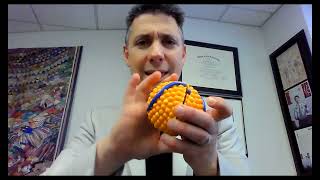
This is Dr. Tom Refai, metabolic health and lifestyle medicine specialist, past president of the National Board of Physician Nutrition Specialists. A blockbuster study on blood pressure, lifestyle and drugs which lowers your risk of mortality more. If you've been following this page, you might not be shocked, but even if you have, you might be shocked at the power of lifestyle. When you hear about this study on blood pressure treated with lifestyle as medicine versus drugs. Excellent article in Helio, so we'll use it as a background. I'm going to share the screen here and we'll go through the article in a discussant type format. Okay, let's go ahead and start. Healthy lifestyle and medication adherence tied to lower mortality and hypertension. But how much each contributed lifestyle versus medication. This study came out of Wuhan, China. Very, very large study looking at the combination of the two. Finally, a study that looks at lifestyle and medication. Look at these hazard ratios. Look at these reductions. We're Talking about a 68% reduced risk of all cause mortality, not just cardiovascular mortality, including cancer mortality. Because I've said many, many, many times, what's good for the heart is good for the brain, is good for reducing cancer risk reduction is good for longevity, wellness, diabetes and yes of course hypertension. There is no different lifestyle for all of these in any dramatic way. The Flex 5 lifestyle, a lifestyle based on the principles of longevity for instance, is one of those and I would say probably the best damn choice. And if you want to learn how, I'll tell you about the masterclass opportunity in a little bit. First, let's go off into this data looking at lifestyle factors including weight, bmi, smoking, food, physical activity, sleep duration and the way that it was scored is discussed. Let's get down to some bottom lines here. The association of lifestyle was for hypertension and all cause mortality in hypertensive patients. Lifestyle and medication was independent of blood pressure's duration and common comorbidities, particularly diabetes, which we know predicts heart disease and I mean it does predict heart disease, also predicts hypertension. Hypertension predicts heart disease and diabetes. These are all part of the cardiometabolic syndrome, including control for blood sugar, controlling cholesterol, controlling medication, metabolic biomarkers, stress. This really looked at the independent effect of lifestyle in those patients with hypertension on reduced risk of all cause mortality, not just cardiovascular disease. Let's compare it to hypertension, right? Those who did not take any medications but adopted a favorable lifestyle had a lower risk for all cause mortality. Look at this hazard ratio versus almost the entirety of the reduction in all cause mortality. Was driven by healthy lifestyle. Those who had a healthy lifestyle with hypertension, even though they didn't take medications because they treated their hypertension with lifestyle, had a dramatically reduced risk versus those who did not adopt a healthy lifestyle. We're talking here at a hazard ratio of 0.34 of about a 66% reduction in all cause mortality, all early mortality, and a confidence interval well into a confident range. When you have a confidence interval that crosses 1, which this isn't even close, 0.25 to 0.46. If the confidence interval crosses 1, you're really not so sure about the quality of the data. Basically, to make a long story short, we're talking about here cardiovascular disease mortality as well. Heart attack stroke hazard ratio 0.4. That's basically a 60% reduction. And cancer mortality, a 67% reduction with a lifestyle in people with hypertension who adopted a healthy lifestyle even if they did not take hypertensive medication. Now, let me read on. Compared with those who did not take medication and had an unfavorable lifestyle is what we just talked about. But participants who were taking blood pressure medications but following an unfavorable lifestyle experience no reduction in cardiovascular disease mortality or cancer mortality. You see how there was a risk reduction that 29% here, but a confidence interval that crossed one. That means that you cannot rely on that observational reduction. It's not strong enough. There was essentially therefore no detectable reduction in and cardiovascular mortality or cancer mortality from taking drugs alone for blood pressure without that healthy lifestyle. Now imagine this. We have been talking myself, my Harvard colleague, Dr. Beth Frates, about the power of lifestyle as COVID 19 prophylaxis. Since June of 2020, we published in the American Journal of Health Promotion. We begged the United States take the opportunity for a national campaign to treat metabolic disease that we saw incoming from Italy, from China, from New York. And here we're in Detroit, where we had a massive outbreak because of the auto industry and travel from Italy and China, the auto industry being so center here, and nobody listened. Hypertension got worse. Hypertension is now worse, especially for women. Now is the time. And it was going to pay off anyway, because at this point in 2021, heart disease is dwarfing COVID 19. In 2021, 700,000 heart disease deaths largely preventable. Probably 80%, at least 70, maybe 90%. Around 80% of early death from heart disease preventable. 700,000 deaths. There was 350,000 as a comparison. It is the pandemic that has been floating with us all along. Cancer Heart disease, the big behemoths are still here and treated the same way. What are the healthy lifestyle changes we are talking about? Well, I can't ignore that. We are talking about hypertension. Reduction in that stealth sodium. It is everywhere. Attracting fluid in the vascular system, increasing blood pressure. And. And when blood pressure increases on one of these cholesterol plaques, which is like a pimple, like squeezing a pimple, it ruptures and you fill up the rest of that plaque, the rest of that coronary opening with a blood clot in seconds. Bye, bye. That is what happens in one third of cases. The first symptom, the first sign I should say, of coronary disease is sudden death. You don't get chest pain from a partial blockage like this. It is not partial blockages, less than 50% that cause symptoms typically, but they're soft plaques similar to a pimple in structure. The invading factor being LDL particles invading the arterial wall. Microscopically. Electron microscopically. These are LDL particles. Low density lipoprotein shells. You crack it open and you see yellow cholesterol, blue triglycerides. They carry both. They penetrate the artery wall like bacteria would penetrate the skin, cause an immune reaction. And similar with a plaque. You have this soft bubbly plaque, like squeezing a pimple and rupturing it and then a blood clot develops on it. Same thing with a sudden plaque rupture. Hypertension is the squeezer. It's going up. Drop that sodium. Processed breads, processed grains. You look at some cereals, it's amazing how much sodium breads widely vary. 300 milligrams almost per slice, some less than 100 milligrams. Look at the labels. Look. Processed meats, second highest contributor to sodium. Look for that. Salt injected chicken, salt injected pork, deli meats, bacon, sausages. Careful, careful. Okay. Up potassium to lower blood pressure and block some of sodium's absorption. Potassium poster children. Fruits, vegetables. Don't worry about the fruit. Don't believe that's going to be too much sugar. 250 calories per pound of whole fruit. Not talking about fruit juice, I'm talking about dried fruit. Talking about whole fruit. 250 calories per pound on average. Eat five pounds. Almost no one eats more than five pounds of food per day. At 250 calories per pound, that's 1250 calories. You are not gaining weight, America, from eating whole fruit. You do not have a sugar problem with whole fruit. It is so tiny, easily manageable metabolically. Amount of sugar for the fullness, for the fiber, for the potassium that lowers that blood pressure. These are core components of a healthy lifestyle. Obviously not smoking, which raises blood pressure. Obviously not drinking too much, which raises blood pressure, physical activity, and through that getting full and less calories from that fiber, from that fullness, you're going to end up secondarily, almost assuredly, losing some weight, also lowering blood pressure. Look at the power of lifestyle as medicine. And we know that all these things will reduce your risk for Covid and almost any other infectious disease outcome in terms of contracting, but even more importantly and more likely surviving. And we know that it enhances the efficacy of vaccines. So America, for the love of every higher power that you might believe in, on this little third rock spinning around a small sun in the periphery of a violent and vapid universe. And the miracle of life as it is is so precious. Don't miss this opportunity. Don't miss the messaging, whether NBC Nightly News and it's panic music and everything it's covering or any other outlet from Fox to CNN to whatever is not covering it. I am telling you here on the Dr. Tom channel, look it up for yourself. I am not making it up. The power of lifestyle is amazing. I promised you some information about the Flex 5 masterclass. You want to really become a martial artist of healthy lifestyle? Become a healthy lifestyle warrior. Learn all of the five areas key knowledge and skills in the five key areas of longevity, psychology, nutrition, physical activity environment management and accountability. DPM disease prevention masterclass, right? Dpm.drtommerfai.com that's DPM David Palmeri. DrTomrafai D R T O M R I F A I.com you'll see the information page. Scroll all the way to the bottom. Check out the content on the way and you'll see a dropdown menu of the full content. Three months, an hour, a week. That's all for three months to become at least a brown belt in longevity lifestyle. Only you can take yourself to black belt. Coaches like myself are navigators. You are the pilot. You choose. Discipline without extremism is the Flex 5 Flexitarian way. We'd love to have you. I hope you found that informational and we'll see you on the next episode. Here please don't forget to click like click subscribe. Hit the notification bell and we'll be back soon enough with more information here on the Dr. Tom Refai YouTube page or if you're watching this on Facebook. Same thing. Click like click love, click hate, click whatever. Share it far and wide. And like the page. Thank you.